• About Us
    • What Is Street Harassment?
    • Why Stopping Street Harassment Matters
    • Meet the Team
      • Board of Directors
      • Past Board Members
    • In The Media
  • Our Work
    • National Street Harassment Hotline
    • International Anti-Street Harassment Week
    • Blog Correspondents
      • Past SSH Correspondents
    • Safe Public Spaces Mentoring Program
    • Publications
    • National Studies
    • Campaigns against Companies
    • Washington, D.C. Activism
  • Our Books
  • Donate
  • Store

Stop Street Harassment

Making Public Spaces Safe and Welcoming

  • Facebook
  • Instagram
  • Pinterest
  • Tumblr
  • Twitter
  • YouTube
  • Home
  • Blog
    • Harassment Stories
    • Blog Correspondents
    • Street Respect Stories
  • Help & Advice
    • National Street Harassment Hotline
    • Dealing With Harassers
      • Assertive Responses
      • Reporting Harassers
      • Bystander Responses
      • Creative Responses
    • What to Do Before or After Harassment
    • Street Harassment and the Law
  • Resources
    • Definitions
    • Statistics
    • Articles & Books
    • Anti-Harassment Groups & Campaigns
    • Male Allies
      • Educating Boys & Men
      • How to Talk to Women
      • Bystander Tips
    • Video Clips
    • Images & Flyers
  • Take Community Action
  • Contact

Archives for July 2009

Chicago's Transit Changes Policies Due to Women Activists

July 16, 2009 By HKearl

Thanks to the efforts of the Rogers Park Young Women’s Action Team (YWAT) who have been documenting the high rates of sexual harassment on public transportation in Chicago, the Chicago Transit Authority (CTA) is expanding its policies on how bus and rail operators deal with harassers. The YWAT surveyed 639 CTA riders and found that half had been sexually harassed on the system and 13 percent had been assaulted.

From the Chicago Sun Times (where the article is a homepage feature!):

“Before, if a customer felt she was being threatened or harassed by another passenger, the operator may just decide to ‘keep an eye’ on the situation, or tell the offender to move, or call the Control Center if they felt the situation needed an immediate response, according to Amy Kovalan, CTA’s senior vice president of safety, security and risk compliance.

‘Now, operators are instructed to ask an offending individual to stop the behavior,’ Kovalan said. ‘If that person does not cease, the operator immediately will call the Control Center and will be instructed on how to proceed.’ The rule applies to any kind of harassment — not just sexual.

The CTA also is updating its public safety tips brochure to include information about harassment, and how to report it.

In addition, the CTA is expanding its ‘If you see something, say something’ posters and audio announcements to include sexual harassment. Harassment complaints to the CTA customer service line will now have a special code, so that the agency can better monitor the problem.

YWAT just came out with their survey a few weeks ago, so to have the CTA already respond with changes is huge!! Congratulations to the YWAT. I said it before, and I’ll say it again: I really admire them and their work!

I also think this is very encouraging for people who live in other areas where there are high rates of harassment on public transportation but little being done to address it. A group of individuals can make a difference!

Share

Filed Under: News stories Tagged With: chicago transit authority, CTA, harassment survey, rogers park, Ronnett Lockett, sexual harassment, street harassment, young women's action team

If Passed, Hate Crimes Prevention Act to Cover Gender, Sexual Orientation, Disabilities

July 15, 2009 By HKearl

Here’s a chance to make a difference in a few short minutes!

Thursday (tomorrow) the U.S. Senate will have a cloture vote on the Matthew Shepard Hate Crimes Prevention Act (S.909), which is offered as an amendment to the current Department of Defense authorization bill. From an AAUW action alert:

“Current law only allows federal involvement in the prosecution of non-federal hate crimes when the victim was targeted because of race, color, religion, or national origin. This legislation would fill a gap in the law by also allowing the Department of Justice to take on cases motivated by the victim’s actual or perceived gender, gender identity, sexual orientation, or disability.”

The more violent and hateful forms of gender-based public harassment and assault (street harassment) are what I would consider a gender-based hate crimes because the targets are selected and harassed or attacked first and foremost for being female. With all the crimes targeted at people because of their disabilities, sexual orientation, or gender, I’m amazed these characteristics aren’t already covered in this kind of law.

Here’s more from the AAUW action alert, including info on how you can help:

“The Matthew Shepard Hate Crimes Prevention Act is necessary to ensure an appropriate response when local law authorities cannot or will not give gender-based hate crime victims the protection they deserve.  By strengthening protections against bias-motivated crimes and removing some restrictions on when the federal government can assist local authorities in the prosecution of such hate crimes, fewer of these disturbing cases will slip through the cracks.

Take Action!

To call your senators TODAY and urge them to support the Matthew Shepard Hate Crimes Prevention Act, click on the “Take Action” link in the upper right corner or copy and paste the following URL into your Internet browser.  Then, follow the instructions to call your senators.

http://www.capwiz.com/aauw/callalert/index.tt?alertid=13736846&type=CO

Read more about this legislation, see if your senators are cosponsors, and read AAUW’s position paper on hate crimes laws.”

Lastly, the House already passed a companion bill in April, and President Obama is supportive of the legislation, so contact your Senators and make a difference today!

Share

Filed Under: News stories Tagged With: disability, gender, hate crime, hate crimes prevention act, matthew shepard, S. 909, sexual orientation

Flogged for Wearing Pants

July 14, 2009 By HKearl

Friday, during a random raid on a cafe, Sudanese police arrested 13 women for wearing pants. There was a quick summary trial and ten of the women were flogged and fined 250 Sudanese pounds ($120). Two of the women chose to go on trial. Via AP News:

“Hussein [one of the two women] said she decided to speak out because flogging is a practice many women endure in silence. She even sent printed invitations to the press and public figures to attend her expected trial.

‘Let the people see for themselves. It is not only my issue,’ she said. ‘This is retribution to thousands of girls who are facing flogging for the last 20 years because of wearing trousers,’ she said. ‘They prefer to remain silent.'”

Good for her! (Aside: I can’t believe flogging still occurs . It seems so 19th century) While this isn’t directly “street harassment” per say, a lot of discussion about street harassment ends up touching upon “what was she wearing” so I think this story is relevant from that aspect. Also, street harassment can be viewed as a kind of social control that keeps a lot of women off the streets at night and/or when they are alone and this incident in Sudan shows blatant and extreme forms of attempted social control over women.

Share

Filed Under: News stories Tagged With: arrested, flogging, pants, street harassment, Sudan, Sudanese, trousers

Women Drivers Mean More Harassment?

July 13, 2009 By HKearl

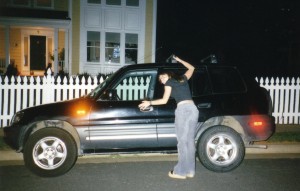
the car I often drove in high school

I love the freedom driving provides. As soon as I got my driver license at age 16, I was on the road a lot. Gas was cheap and it was a good way to have some alone time for thinking and it also improved my social life as I no longer had to rely on my parents to drive me places, especially once my family moved to a suburb without public transportation. Also, anecdotally, I’ve found that many women in the U.S. feel that being able to drive rather than being reliant on public transportation or walking cuts down on harassment from men in public.

So today when I read an article in the Miami Herald about how some of Saudi Arabia’s restrictive policies are slowly changing, the following part of the article touched a nerve for me, not only because it reflects an antiquated attitude that it is better to cloister women than to teach men not to harass them, but also because I feel outraged that so many women will never know the freedom and power of getting in a car and driving wherever they want, whenever they want, just because they are female.

An excerpt from the Miami Herald:

“Like many fathers with teenage daughters, the time finally came for Abdel Mohsen Gifari to have an awkward talk.

The 44-year-old researcher for Saudi Arabia’s feared religious police sat one of his girls down to discuss an uncomfortable topic: She wanted to drive.

In a country where women are barred from getting behind the wheel, his daughter’s desire is not only forbidden, it’s also a touchy subject for Gifari, who’s spent nearly half his life working for the government body charged with enforcing the law.

“‘I told her that driving is allowed in Islam,’ Gifari said in a rare interview with a Western reporter. ‘But it is more of a cultural thing. We already have a lot of problems on the road when it comes to sexual harassment, with guys flirting with girls in the car. If a woman drives, it’s only going to bring more problems.’

Change is seeping slowly into Saudi Arabia, a Persian Gulf nation of 28 million residents – half of whom are under age 25 – and nowhere is the social friction more apparent than inside the religious police force that imposes the Kingdom’s conservative interpretation of Islam…

As for his own daughter’s desire to drive a car, Gifari said, after a half-hour chat, she agreed with her dad that the timing wasn’t right.

‘Maybe in a few years traditions will change,” Gifari said. “But right now it’s only going to bring problems – and it’s not one of the government priorities.'”

I hope that one day she and other women who want to will be able to drive, and I feel humbled that it took reading her story for me to remember not to take for granted the privilege I enjoy every day of being able to drive.

Share

Filed Under: News stories Tagged With: Abdel Mohsen Gifari, car, driving, driving restrictions, flirting, no driving for women, saudi arabia, sexual harassment

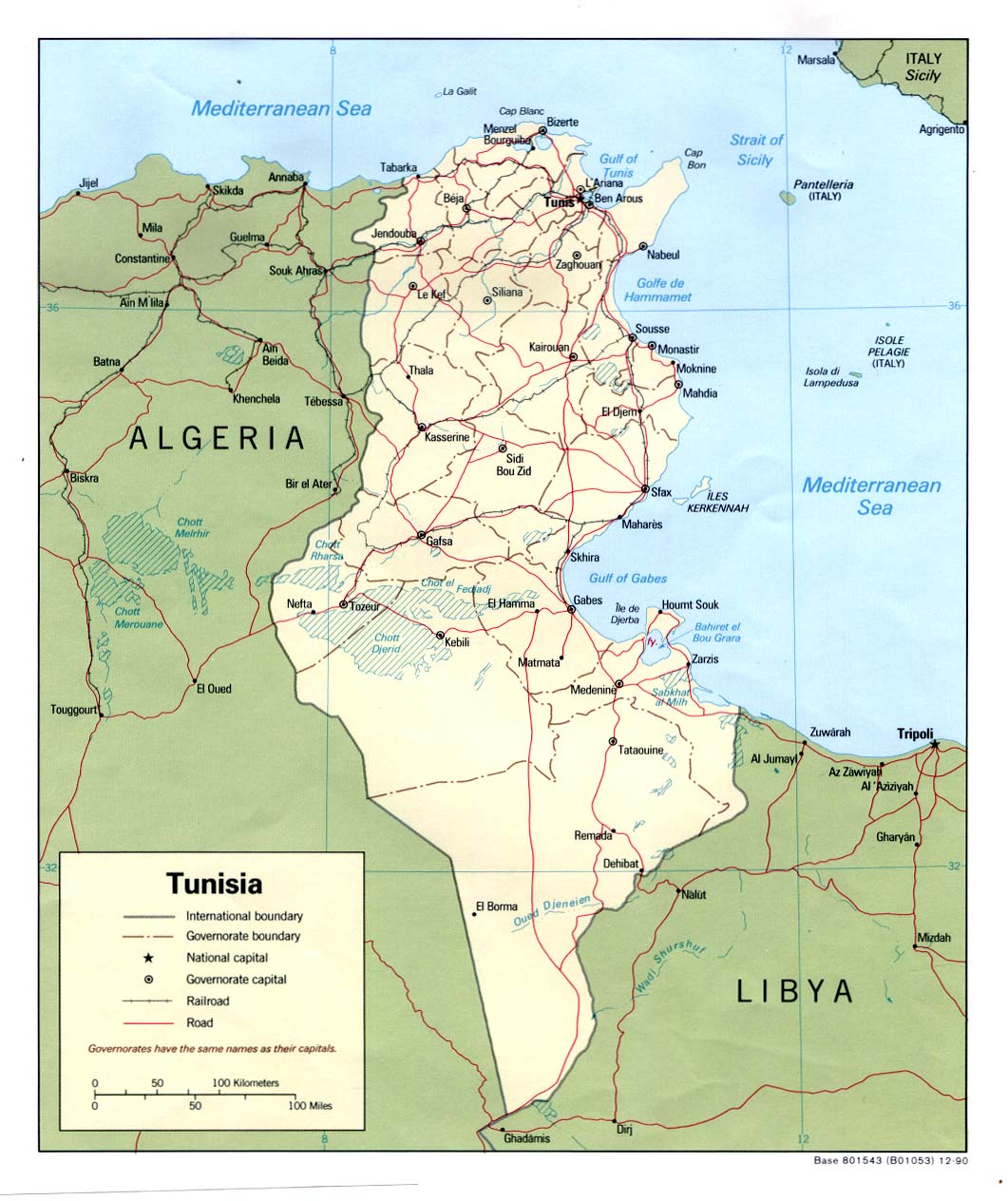
Tunisian street harassment

July 12, 2009 By Contributor

Being in Tunisia for the summer, street harassment is an incessant issue for me. I’m often told by other Americans that I just need to deal with it, because it’s just part of their culture and I shouldn’t insult a different culture. I’m told by Tunisians to just ignore it, which is hardly a satisfying response, but provoking them is often just as worse. I’m also told by people, like my mother, that i should stop complaining because it’s a compliment, and I’ll miss it when I’m old and don’t get cat called anymore. (I even wrote about this in my blog, http://independentlyowned.wordpress.com/2009/06/29/transnational-gender-stereotypes/)

The harassment is usually low-level, and comes in the form of “Hello, miss,” “Bonjour,” “Very nice,” kissing noises, or other such small yet obnoxious comments. They usually say it when they’re just about to pass me, when they’re closest to me for that one brief second. They obviously don’t expect me to respond, otherwise they wouldn’t wait until the last moment. It’s merely a way of asserting their power over women, because they feel that they have a right to comment to any woman that they wish but they’re not giving us the right to respond back. It’s like getting into an argument with someone where they go on a rant and then hang up the phone, or sign offline. They don’t respect you enough to allow you to respond, nor do they care.

Other times harassment comes in the form of intense stares. They might not say anything, but instead glare you down until you’re out of their line of vision. Nothing will come of it if you do or don’t respond, but it is the most unsettling feeling. It is especially bad when dozens of men are all sitting at a street cafe and all stare as you walk by. It is not flattering, and I feel like an animal on display at the zoo.

Most people say just to ignore it, but this is hardly satisfying, and often impossible. Even if I pretend like they don’t exist, they still did what they wanted to do and I feel used. They still leave the situation satisfied and thinking that what they did was totally okay.

No matter what I wear I will get harassed, even when I was here in the winter and was completely covered I still got harassed. Some Americans suggest that I wear hijab to avoid it, but especially seeing as it is not required of women, and in fact more than half the women do not wear it, I feel like I shouldn’t have to resort to such (in my opinion) oppressive measures just to be able to walk freely down the street. Also, I might still get harassed simply because I’m white and thus foreigner. The burden should not be on me to cover myself and look “less desirable,” especially when most women wear the highest fashions, but it should be the responsibility of the men to behave in public.

– Katie Franklin

Location: Tunisia

Share your street harassment story today and help raise awareness about the problem. Include your location and it will be added to the Street Harassment Map.

Share

Filed Under: Stories, street harassment Tagged With: cat calls, catcalling, hijab, sexual harassment, street harassment, Tunsia

« Previous Page
Next Page »

Share Your Story

Share your street harassment story for the blog. Donate Now

From the Blog

  • #MeToo 2024 Study Released Today
  • Join International Anti-Street Harassment Week 2022
  • Giving Tuesday – Fund the Hotline
  • Thank You – International Anti-Street Harassment Week 2021
  • Share Your Story – Safecity and Catcalls Collaboration

Buy the Book

  • Contact
  • Events
  • Join Us
  • Donate
  • Facebook
  • Instagram
  • Pinterest
  • Tumblr
  • Twitter
  • YouTube

Copyright © 2026 Stop Street Harassment · Website Design by Sarah Marie Lacy