• About Us
    • What Is Street Harassment?
    • Why Stopping Street Harassment Matters
    • Meet the Team
      • Board of Directors
      • Past Board Members
    • In The Media
  • Our Work
    • National Street Harassment Hotline
    • International Anti-Street Harassment Week
    • Blog Correspondents
      • Past SSH Correspondents
    • Safe Public Spaces Mentoring Program
    • Publications
    • National Studies
    • Campaigns against Companies
    • Washington, D.C. Activism
  • Our Books
  • Donate
  • Store

Stop Street Harassment

Making Public Spaces Safe and Welcoming

  • Facebook
  • Instagram
  • Pinterest
  • Tumblr
  • Twitter
  • YouTube
  • Home
  • Blog
    • Harassment Stories
    • Blog Correspondents
    • Street Respect Stories
  • Help & Advice
    • National Street Harassment Hotline
    • Dealing With Harassers
      • Assertive Responses
      • Reporting Harassers
      • Bystander Responses
      • Creative Responses
    • What to Do Before or After Harassment
    • Street Harassment and the Law
  • Resources
    • Definitions
    • Statistics
    • Articles & Books
    • Anti-Harassment Groups & Campaigns
    • Male Allies
      • Educating Boys & Men
      • How to Talk to Women
      • Bystander Tips
    • Video Clips
    • Images & Flyers
  • Take Community Action
  • Contact

USA: Street Harassment Doesn’t Stop in College

August 13, 2015 By Correspondent

Laura Voth, USA, SSH Blog Correspondent
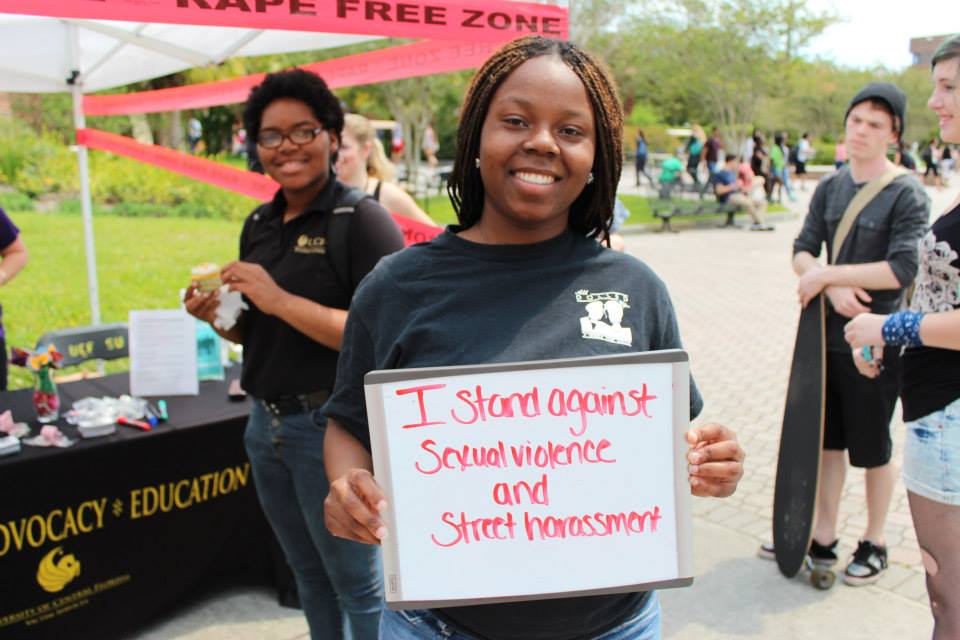
University of Central Florida, 2014

One of the most disheartening aspects of being a woman in this world today is the unpredictability of our environments. Even in spaces that we would expect to be more respectful or tolerant than others (for example, an art gallery compared to a city street), we still encounter threatening situations.

Street harassment on college campuses certainly exists, but it manifests itself in quite a different way than in other spaces. During the day at least it involves much more staring and leering than derogatory comments, and even then it isn’t so prevalent as it is on, say, a city street.

At night, and especially on weekends, the mood shifts. Groups of college boys, already slightly drunk from pregaming, hassle any lone women they spot. Like in any situation, it doesn’t matter what the woman is wearing or how she is acting: they harass indiscriminately. They call out whistles and commentary on their target’s appearance, sometimes even following the woman until she ducks into a well-lit building. The perpetrators will slap each other on the back, hooting and laughing, proud to have asserted their dominance in the presence of their peers.

Shockingly, some of the biggest harassers at my school are actually high school students (at least, that’s the word on the street, and they certainly don’t look any older than sixteen or seventeen). They drive around campus and whistle at the college women, only to floor it when their targets notice them.

This summer, a guy has been using a pseudonym on Facebook to send friend requests to women at my college. He sends messages claiming to be a research student in the psychology department (I’m not even sure what he thought he could possibly mean by “research student”) who is performing a study that would involve a free foot massage.

A close friend of mine alerted the psychology department as well as the Dean of Student Affairs, both of whom have reported back to her saying that there is no individual by that name at the school. They are looking into the situation, but I’m still concerned. Incoming first-year students frequently use Facebook to connect to others at my college, regardless of whether they have met the people they’re “friending” in person. They have questions about everything from life at our school to specific classes and have no reason to be suspicious—and they shouldn’t have to be.

Students frequently forget about the realities of the world while we’re in our little college bubble, especially if we are living in a small, remote town. We pay through the nose not only to get an education but also to fund our safety on campus in the form of better lighting and security, but too frequently we find that those have little impact on our experiences. For women, the facts of what the world is like never really disappear.

What street harassment have you experienced in college?

Laura is an emerging adult-slash-college student studying to enter a healthcare profession. In addition to studying and writing, Laura works at her university’s women’s center where she helps design and implement programs on all things lady. 

Share

Filed Under: correspondents, street harassment

Share Your Story

Share your street harassment story for the blog. Donate Now

From the Blog

  • #MeToo 2024 Study Released Today
  • Join International Anti-Street Harassment Week 2022
  • Giving Tuesday – Fund the Hotline
  • Thank You – International Anti-Street Harassment Week 2021
  • Share Your Story – Safecity and Catcalls Collaboration

Buy the Book

Search

Archives

  • September 2024
  • March 2022
  • November 2021
  • April 2021
  • March 2021
  • January 2021
  • April 2020
  • March 2020
  • February 2020
  • December 2019
  • November 2019
  • September 2019
  • August 2019
  • July 2019
  • June 2019
  • May 2019
  • April 2019
  • March 2019
  • February 2019
  • January 2019
  • December 2018
  • November 2018
  • October 2018
  • September 2018
  • August 2018
  • July 2018
  • June 2018
  • May 2018
  • April 2018
  • March 2018
  • February 2018
  • January 2018
  • December 2017
  • November 2017
  • October 2017
  • September 2017
  • August 2017
  • July 2017
  • June 2017
  • May 2017
  • April 2017
  • March 2017
  • February 2017
  • January 2017
  • December 2016
  • November 2016
  • October 2016
  • September 2016
  • August 2016
  • July 2016
  • June 2016
  • May 2016
  • April 2016
  • March 2016
  • February 2016
  • January 2016
  • December 2015
  • November 2015
  • October 2015
  • September 2015
  • August 2015
  • July 2015
  • June 2015
  • May 2015
  • April 2015
  • March 2015
  • February 2015
  • January 2015
  • December 2014
  • November 2014
  • October 2014
  • September 2014
  • August 2014
  • July 2014
  • June 2014
  • May 2014
  • April 2014
  • March 2014
  • February 2014
  • January 2014
  • December 2013
  • November 2013
  • October 2013
  • September 2013
  • August 2013
  • July 2013
  • June 2013
  • May 2013
  • April 2013
  • March 2013
  • February 2013
  • January 2013
  • December 2012
  • November 2012
  • October 2012
  • September 2012
  • August 2012
  • July 2012
  • June 2012
  • May 2012
  • April 2012
  • March 2012
  • February 2012
  • January 2012
  • December 2011
  • November 2011
  • October 2011
  • September 2011
  • August 2011
  • July 2011
  • June 2011
  • May 2011
  • April 2011
  • March 2011
  • February 2011
  • January 2011
  • December 2010
  • November 2010
  • October 2010
  • September 2010
  • August 2010
  • July 2010
  • June 2010
  • May 2010
  • April 2010
  • March 2010
  • February 2010
  • January 2010
  • December 2009
  • November 2009
  • October 2009
  • September 2009
  • August 2009
  • July 2009
  • June 2009
  • May 2009
  • April 2009
  • March 2009
  • February 2009
  • January 2009
  • December 2008
  • November 2008
  • October 2008
  • September 2008
  • August 2008
  • July 2008
  • June 2008
  • May 2008

Comment Policy

SSH will not publish any comment that is offensive or hateful and does not add to a thoughtful discussion of street harassment. Racism, homophobia, transphobia, disabalism, classism, and sexism will not be tolerated. Disclaimer: SSH may use any stories submitted to the blog in future scholarly publications on street harassment.
  • Contact
  • Events
  • Join Us
  • Donate
  • Facebook
  • Instagram
  • Pinterest
  • Tumblr
  • Twitter
  • YouTube

Copyright © 2026 Stop Street Harassment · Website Design by Sarah Marie Lacy