• About Us
    • What Is Street Harassment?
    • Why Stopping Street Harassment Matters
    • Meet the Team
      • Board of Directors
      • Past Board Members
    • In The Media
  • Our Work
    • National Street Harassment Hotline
    • International Anti-Street Harassment Week
    • Blog Correspondents
      • Past SSH Correspondents
    • Safe Public Spaces Mentoring Program
    • Publications
    • National Studies
    • Campaigns against Companies
    • Washington, D.C. Activism
  • Our Books
  • Donate
  • Store

Stop Street Harassment

Making Public Spaces Safe and Welcoming

  • Facebook
  • Instagram
  • Pinterest
  • Tumblr
  • Twitter
  • YouTube
  • Home
  • Blog
    • Harassment Stories
    • Blog Correspondents
    • Street Respect Stories
  • Help & Advice
    • National Street Harassment Hotline
    • Dealing With Harassers
      • Assertive Responses
      • Reporting Harassers
      • Bystander Responses
      • Creative Responses
    • What to Do Before or After Harassment
    • Street Harassment and the Law
  • Resources
    • Definitions
    • Statistics
    • Articles & Books
    • Anti-Harassment Groups & Campaigns
    • Male Allies
      • Educating Boys & Men
      • How to Talk to Women
      • Bystander Tips
    • Video Clips
    • Images & Flyers
  • Take Community Action
  • Contact

Archives for June 2016

“Stop making women feel uncomfortable”

June 17, 2016 By Contributor

I performed as the only woman at an open mic, which is its own bad story. One comedian was so blatantly misogynist, but thought he was funny and meta, that I had to go outside to save myself from that toxic environment of drunk guys cheering him on and women looking away politely.

Outside the club, I got street harassed by two guys, throwing at me dirty looks, kisses and commenting my appearance. Even though I was alone, I talked back at them, “Stop harassing me, stop making women feel uncomfortable, don’t comment on my looks, leave me alone.”

I could see in their eyes that they didn’t expected my answers.

One then insulted me, “Bitchy, psycho, can’t take a compliment” and got so close I was afraid he was going to hurt me. He also said I was a racist (he said, he’s from another country). Three men passed by and LAUGHED at the situation of him threatening me. I felt like I was the only person on earth. I felt so hurt and alone.

I went back inside the club, because it’s dark in there, to go into the restroom and cry. Yes, a comic, who just made an entire room laugh, cries on the toilet.

I went back outside with swollen eyes because I wanted to just leave, but people held me up telling me how great my set was. I excuse my swollen eyes “because of allergies”. No one knew. Who could I have told this?

I cycled back home and got aggressively catcalled once more, alone in the dark street by a group of three men. I just wanted to be home and wash myself and, at that moment, die. My boyfriend texted me, “Are you sure it was this bad or bit of hormones as well”

Now, after getting this off my chest here, I’m writing my next comedy set to make people laugh again.

– Anonymous

Location: Outside a comedy show

Share your street harassment story for the blog.
See the book 50 Stories about Stopping Street Harassers for more idea.

Share

Filed Under: Stories, street harassment

“It’s always a challenge for me to get out of the house because of it”

June 16, 2016 By Contributor

I ordered pizza just last night so I wouldn’t have to go out late at night to get food. Obviously to dodge the trouble of sexual harassment and people following me to my apartment. So I ordered my food and a delivery man called me saying he’s outside. I go outside, pick up the food, and sign the receipt. As I give the man the receipt he looks at my legs and mumbles, “I could have cooked THAT for you”. I ask him to repeat that and he began to mumble the same quote again. Disgusted, I sped back inside and walked up to my apartment as I called the restaurant about their delivery person.

The woman on the phone never heard of cat-calling and it was hard for me to explain to her at the moment. I really did not think that woman took me seriously.

The fact that I researched for a delivery restaurant, ordered, and paid for delivery in order to avoid sexual harassment makes me really bothered that an employee on the job would give me such a disturbing and creepy comment like that and make me not want to order from that place again. To me, it seems there is no way of avoiding sexual harassment, but it’s always a challenge for me to get out of the house because of it. All because of the fear of being followed or attacked by someone who doesn’t like being rejected or ignored.

Optional: What’s one way you think we can make public places safer for everyone?

By influencing local businesses to be aware of cat-calling and take action in regards to the matter.

– Pepper

Location: Savannah, GA

Share your street harassment story for the blog.
See the book 50 Stories about Stopping Street Harassers for more idea.
Share

Filed Under: Stories, street harassment

USA: Can Teaching Women They Have to Be “Ladylike” Place Them in Danger?

June 15, 2016 By Correspondent

By Shahida Arabi, New York, USA, SSH Blog Correspondent

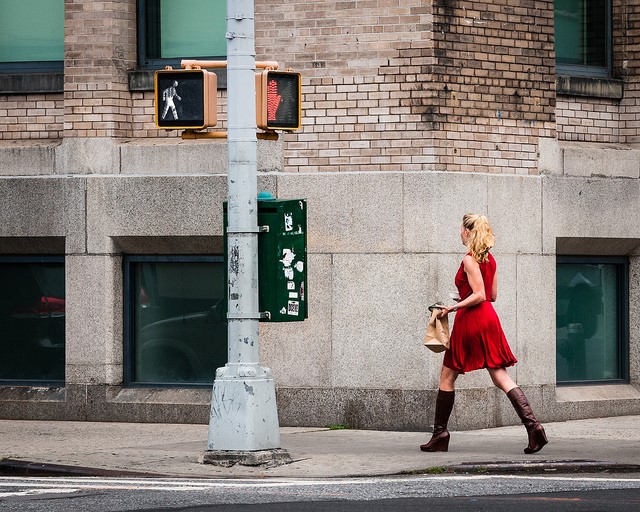
Photo Credit: Opposite Strides by John St. John via Flickr. License.
Photo Credit: Opposite Strides by John St. John via Flickr.

Rose McGowan’s short film “Dawn” takes the viewer on a journey that encapsulates the female experience under the male gaze – a male gaze that can sometimes lead to dire outcomes. The protagonist in the movie falls for a dangerous male lead and is lured into a deadly situation because her need to be polite overrides her nagging gut instinct that senses danger. McGowan’s film makes it clear that women are socialized to be “ladylike” even at the expense of their own self-preservation. As she notes in her Vice interview, “The fear of being impolite is deeply ingrained and can have tragic consequences.”

Although the film is set in the 1960’s, the societal demand for women to be “nice” in all contexts still remains entrenched in our everyday behavior. Over the years, I’ve witnessed a few female friends of mine be overly friendly to street harassers, allowing them to invade their personal space and take up their time while they excessively catered to the street harasser’s whims in an attempt to be “nice.” Despite their seeming responsiveness, none of my friends were actually interested in their harassers, nor were they at all comfortable with the harasser’s tactics; they told me they felt they had to maintain a friendly demeanor because of social norms that compelled them to be ladylike and polite. One even told me it was because of the fear of what the harasser might say or do if they were not nice to them and did not respond.

Such a fear is, unfortunately, valid and warranted given that there have been harassers that have retaliated against their victims. In addition, the amount of backlash that victims experience when they try to report harassment, abuse or rape can be staggering. Newsflash: we actually live in a world where women can have acid thrown on their faces for refusing marriage proposals, shot when they refuse the advances of their harassers, and on a larger scale, bullied to death for being raped or bullied for speaking out about their own assault.

In the case of major YouTube star Sam Pepper who made “prank” videos of sexually harassing women on the street, retaliation for any victims who spoke out about being assaulted or even raped by him was major. The claims that he had harassed women outside of these pranks were often dismissed and minimized while the women who spoke out received a tremendous amount of bullying and hatred online.

Dottie Martin, a victim of Sam’s inappropriate harassment during a date, noted, “Unfortunately I felt like that was to be expected. I felt I was doing something I wasn’t meant to be doing, which was refusing.” Some women who were groped at a YouTube gathering in London were also afraid to complain about the way Sam had groped them because they felt that because it was done in a “playful” way, they “couldn’t complain.”

When we live in a society where refusal to inappropriate behavior is seen as rude, we teach women that their rights don’t matter, that their bodies are not their own and that the desires of men surpass the needs of women. How many of us walk the streets every day thinking that we can’t complain because we’ve been desensitized to so much harassment that it feels like a normal part of life? That when a man tells us to “smile,” we should simply smile to keep the peace because it’s really not a “big deal”? Or that when a man gazes at us up and down and says, “Bless you,” we should ignore the true intention behind their comment because it’s playfully packaged? How many of us avoid complaining about a rude remark, predatory gaze, or inappropriate touching because we feel it would be “impolite” to do so and that we should see it as a “compliment” rather than a potential trigger?

What about in situations where being assertive and honoring your instincts can save your life? How often do we, as women, feel compelled by the social norm of being polite and ladylike – even when we feel that we may potentially be in danger?  How often do we stifle our “no” when a man offers to walk us back to our apartment despite that “bad feeling,” smile through a bad date with a man who’s overly handsy or say nothing as a man gets too close to us when we ride the subway, only to later wish we had said something? How often do we engage in conversations with strangers because we feel we “have to” rather than because we want to? How often do we keep silent when we wished we had used our voices? How often do we use our voices, only to regret it because the retaliation far outstripped the reward of standing up for ourselves?

In contrast to my friends, I was often on the opposite end of the spectrum when it came to street harassers.  I usually ignored the harasser with a dirty look, avoided their gaze altogether, spoke back with a sassy remark or was forced to assert myself more aggressively when they continued to stalk and harass me. I even snapped a photograph of a man who harassed me on the train. Neither assertive nor more passive reactions were necessarily “wrong.”

They were right for us, how safe we felt, and what we felt would be empowering to us personally in those specific situations. For me, assertive responses were my go-to, but that didn’t mean they were always effective or that the polite responses of my friends were any less valid. There are many different ways you can respond to street harassment and any one of them can be safe and empowering for you in that given moment.

Sometimes we won’t act like we normally do when it comes to harassers because each situation may call for something different. We may not feel safe talking back in one context, whereas in another context, we may feel comfortable putting the harassers in their place.

Sometimes being polite can save your life, whereas in other times it can endanger it. There are also many cases where it doesn’t matter what you do, because the predator seeks to attack you regardless. Remember that the actions and reactions of a street harasser are never your fault, much like the responsibility of rape always belongs to the rapist.

This is certainly not a black or white issue and each set of circumstances calls for something different. We can never be truly certain whether going the nice route or the assertive route will work for us until we’ve experienced the outcome, but as the film Dawn teaches us, listening to our own intuition can be essential to our self-preservation.

The danger comes in when we demand that women be polite, nice and respectful in all circumstances where they may otherwise benefit from being assertive in a specific situation. If you call an assertive reaction “rude,” then you are teaching women that they have to respect men who do not respect them. Essentially, you teach them that their emotions, their triggers, their boundaries when trespassed, their values when violated, do not matter. Rather than teaching them to coddle the feelings of men who see them as objects, why not teach them to validate their own emotions and their right to assert themselves if needed? It is this same intuition and assertiveness that, if honored, could save their lives.

While practicing courtesy, etiquette and respect is an ideal way of life for everyone regardless of your gender, street harassment is not a context where “ladylike” behavior is always appropriate or even applicable. In some cases, it can be dangerous. We need to stop teaching women that they always have to be “nice” in contexts where it’s more effective and safe for them to be discerning and assertive.

Shahida is a summa cum laude graduate of Columbia University graduate school and is the author of four books, including The Smart Girl’s Guide to Self-Care and Becoming the Narcissist’s Nightmare, a #1 Amazon Best Seller. As a passionate advocate for survivors of abuse, sexual assault and trauma, her writing has been featured on many sites. You can follow Shahida on Twitter, her blog Self-Care Haven and join her Facebook community.

Share

Filed Under: correspondents, street harassment

Gay Clubs Should be Safe

June 14, 2016 By HKearl

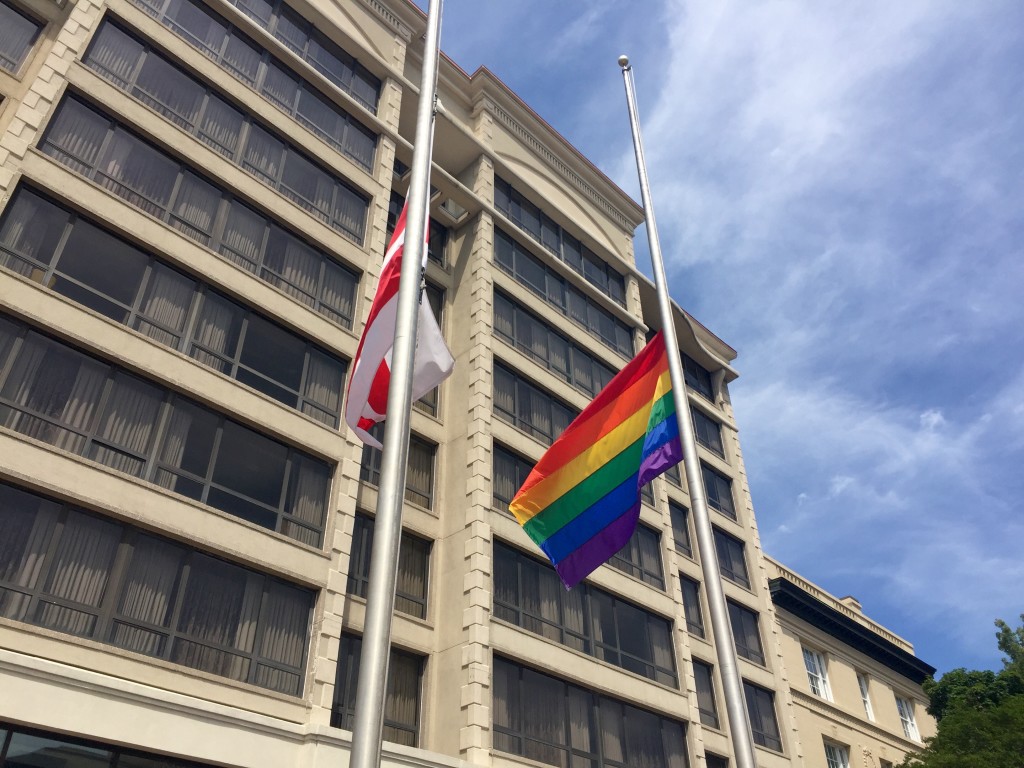
Half-staff LGBT flag in DCThe shooting at the Orlando gay club over the weekend is horrendous. That Latinx LGBQT-identified people were attacked and killed in a space that was supposed to be safe is disheartening and enraging. We mourn the victims and stand with the survivors and the families affected.

We stand with those who strive for equality, acceptance, and a world where people are not hated, harassed, abused or killed because of their identity.

As a HuffPost blogger Denise Frohman wrote:

“We know homophobia didn’t end with marriage equality. We know the shooting in Orlando didn’t happen overnight — we have a cultural problem that perpetuates homophobia, racism, sexism, and Islamophobia in our schools, our streets, and on our televisions.

We are the work we have to do.

I want feel safe everywhere I go. I want liberation for all of us who live under the threat of violence…

I mourn those killed in Orlando, their families, their partners, and the peace of mind we cherished in these spaces. Tomorrow and the day after, we will work, as we’ve always done to reclaim space, even the ones we built for ourselves.”

Share

Filed Under: LGBTQ, News stories Tagged With: hate crime, murder, shooting

West Philly Conversations about Street Harassment

June 13, 2016 By HKearl

Check it out! And many thanks to FAAN Mail co-founder Nuala for letting me know about it.

“Conversations From The Bench is a collaborative web-video series addressing important social justice issues in a participatory documentary format.

In Episode 2, we go “Under The El” in West Philadelphia to start conversations with passers-by about street harassment,“catcalling”, questions of having to grow up too fast, and if the way a woman dresses defines her…This project was a collaboration between four grad students from the University of Pennsylvania (located in West Philadelphia) and four West Philadelphia High School (WPHS) students as part of a class entitled “Social Change Through Participatory Filmmaking”.”

Share

Filed Under: Resources, Stories, street harassment

« Previous Page
Next Page »

Share Your Story

Share your street harassment story for the blog. Donate Now

From the Blog

  • #MeToo 2024 Study Released Today
  • Join International Anti-Street Harassment Week 2022
  • Giving Tuesday – Fund the Hotline
  • Thank You – International Anti-Street Harassment Week 2021
  • Share Your Story – Safecity and Catcalls Collaboration

Buy the Book

  • Contact
  • Events
  • Join Us
  • Donate
  • Facebook
  • Instagram
  • Pinterest
  • Tumblr
  • Twitter
  • YouTube

Copyright © 2026 Stop Street Harassment · Website Design by Sarah Marie Lacy