• About Us
    • What Is Street Harassment?
    • Why Stopping Street Harassment Matters
    • Meet the Team
      • Board of Directors
      • Past Board Members
    • In The Media
  • Our Work
    • National Street Harassment Hotline
    • International Anti-Street Harassment Week
    • Blog Correspondents
      • Past SSH Correspondents
    • Safe Public Spaces Mentoring Program
    • Publications
    • National Studies
    • Campaigns against Companies
    • Washington, D.C. Activism
  • Our Books
  • Donate
  • Store

Stop Street Harassment

Making Public Spaces Safe and Welcoming

  • Facebook
  • Instagram
  • Pinterest
  • Tumblr
  • Twitter
  • YouTube
  • Home
  • Blog
    • Harassment Stories
    • Blog Correspondents
    • Street Respect Stories
  • Help & Advice
    • National Street Harassment Hotline
    • Dealing With Harassers
      • Assertive Responses
      • Reporting Harassers
      • Bystander Responses
      • Creative Responses
    • What to Do Before or After Harassment
    • Street Harassment and the Law
  • Resources
    • Definitions
    • Statistics
    • Articles & Books
    • Anti-Harassment Groups & Campaigns
    • Male Allies
      • Educating Boys & Men
      • How to Talk to Women
      • Bystander Tips
    • Video Clips
    • Images & Flyers
  • Take Community Action
  • Contact

Archives for June 2017

National Speech & Debate Tournament Piece on Street Harassment

June 30, 2017 By HKearl

Congratulations to Emma Warnecke who won 3rd place in the National Speech & Debate Tournament for a piece on street harassment, specifically harassment on public transit! She won 5th place nationally last year for another piece on street harassment and in it, she incorporated excerpts from my street harassment books! Cool.

Way to bring national attention to this important topic, Emma!

Share

Filed Under: Stories, street harassment

USA: Street Harassment Looks Different For Women of Color

June 22, 2017 By Correspondent

Dee Rodriguez, Reading, PA, USA, SSH Blog Correspondent

If you’re reading this, you may already know that street harassment is a big problem. For people of color, particularly Black and Latinx folks, street harassment is an even bigger issue. According to Stop Street Harassment’s national survey in 2014, Black and Hispanic people more likely to experience street harassment. While the survey uses the term Hispanic, I will be using the term Latinx throughout this blog.

The results are not surprising seeing as how sexual violence in its many forms, including street harassment, is a tool of oppression. It is estimated that 40% of Black women report coercive contact of a sexual nature by age 18 and 1 in 3 Latinx women report sexual violence other than rape. Black and Latinx people experience oppression in society due to their race and/or ethnicity and women that identify as such experience an added layer of oppression due to their gender. Street harassment is a gender-based harassment. Therefore, it’s important to note gender and race and/or ethnicity when discussing street harassment because the harassment may have racial overtones but also that Black and Latinx women are experiencing this at a higher rate.

Even more alarming, is that the Stop Street Harassment survey found Black and Latinx people were more likely to experience physically aggressive street harassment. Since street harassment is a way to exert control, it seems that the harassment escalates in cases where women of color are the targets. The graphic below shows how violence intensifies in rape culture and where street harassment falls. Following, catcalling, and whistling all fall under street harassment. Whistling and following can escalate to threats and then to rape and/or murder.

11th Principle- Consent

Sadly, we have seen cases in which street harassment became very violent towards Black and Latinx women of color. In Detroit, Mary ‘Unique’ Spears was murdered for saying no to a man who approached her and asked for her phone number. She left behind a fiancé and 3 children.  In Brooklyn, NY during J’Ouvert, the celebration prior to the annual West Indian Day Parade, Tiarah Poyau was killed for telling a man to stop grinding on her. Tiarah was a college student with a bright future ahead of her. In Florida, a 14 year-old Latinx girl, was strangled, kidnapped, and ran over with a car for refusing to have sex with a man who approached her. He offered her $200 to have sex with him. Fortunately, she survived. All of these women are Black or Latinx. These stories serve as a reminder that street harassment continues to be a pervasive problem in society and can be lethal, especially to Black and Latinx women of color.

Dee is a volunteer coordinator and domestic violence/sexual assault advocate for a non-profit social services agency and works on a project to better serve Latinx women survivors. She has a bachelor’s degree in Global Studies with a focus on Latin American Culture from Penn State University. She originally hails from New York City and is a proud daughter of immigrant parents from the Dominican Republic. You can follow Dee on Instagram at @missdeerodriguez.

Share

Filed Under: correspondents, race, street harassment

“They need to be told they are wrong”

June 19, 2017 By Contributor

I was cat called yesterday by a man in the passenger seat of a white van. I was on my way back to the car after work and minding my own business when he said “hello darling”. I wasn’t frightened, more angry. There is a girl’s school literally metres away and I wondered whether he did that, or worse, to the girls. I gave him a withering look, turned round and showed my middle finger before taking down the license plate of the van. Reported to the police. Pig.

Optional: What’s one way you think we can make public places safer for everyone?

Continuing to highlight how it affects women. I have read that some men think we like it, so they need to be told they are wrong.

– Heather

Location: Wokingham, UK

Need support? Call the toll-free National Street Harassment hotline: 855-897-5910

Share your street harassment story for the blog.
See the book 50 Stories about Stopping Street Harassers for idea
s.

Share

Filed Under: Stories, street harassment

Nepal: How safe are public spaces for gender non-conforming people?

June 19, 2017 By Correspondent

Pritha Khanal, Kathmandu, Nepal, SSH Blog Correspondent

“I don’t want to rank levels of harassment because the thing about harassment is that even after the act you are traumatized by it. And trauma doesn’t have hierarchies — sometimes I can be more hurt by a word than I can be a fist.” – Alok Vaid Menon

Gender is a social construct and it hasn’t been very inclusive. In many societies, it only has categorized roles for heterosexual males and females. The population of LGBTQ thus is largely excluded by this inherently patriarchal system. The third gendered community is flatly denied by large amounts of population, and hatred for them is twice as much. People, including some ruling governments, policy-makers, politicians and icons, believe “God” only created two sexes and any others are showing themselves up, seeking attention or going against the natural law.

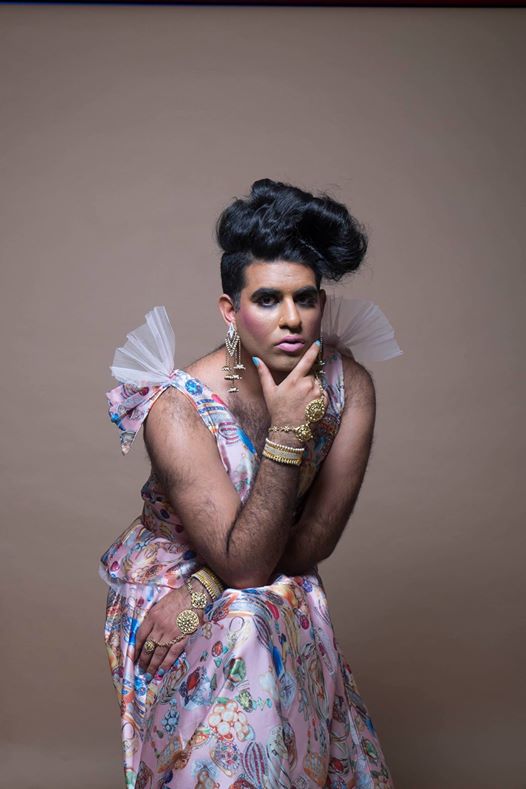
Gender non-conforming people are often known as queer or femme or trans-sexual and they are slowly coming out of closet through various forms of art and literature. One of these great and rising artists is Alok Vaid Menon who uses the pronoun they/them and is originally from India and is now residing in the United States. They represent and promote not only LGBTQ rights, but they also protest against a patriarchal system of gender division and roles, white supremacy and cis supremacies.

Having followed them on Instagram for quite some time now, I noticed that they face harassment ten times worse than me and other cis gender women I know.

Courtesy of Alok Vaid Menon’s Facebook page

Last month on 22nd May, Alok Vaid Menon set the stage on fire among Nepalese poetry lovers in Nepal Tourism Board, Kathmandu. In the event organized by QC bookshop, the popular queer artist and writer Menon enlightened the audience with the problems the transgender community have been facing on a daily basis. The issues which were so surprising to us were expected and every day for them and include: hatred, domination, bullying, being called at, being misunderstood and judged and HARASSED. (Excessively and severely harassed.) They shared the story of being beaten up inside an Australian metro once and how not a single person intervened to help.

Dressed in floral gown and high heels, carrying their body hairs as a pride and shining in the neon lip paints, Menon sings loudly, “I don’t call harassment as harassment; I call it torture. Torture of Patriarchy.”

Alok Vaid Menon agreed to do a short interview with me after I attended the program. The interview is focused mainly upon street harassment and their say on it.

1. As a member of the transgender community, how do you define harassment?

I don’t believe in harassment I believe in torture — by which I mean, I understand harassment to be an intentional use of intimidation, pain, fear, and violence in order to break down marginalized peoples.

2. What are the most common forms of harassment you come across on the street?

Being stared at. People literally just stop what they’re doing and stare at me, take photos of me, point at me.

3. What is the worst case of harassment you’ve ever experienced?

I don’t want to rank levels of harassment because the thing about harassment is that even after the act you are traumatized by it. And trauma doesn’t have hierarchies — sometimes I can be more hurt by a word than I can be a fist. So what I would say is that the most severe and intense forms of harassment that I experience are in the Western world (specifically the US and Australia).

4. How do you usually react during these moments?

I enter survival mode. I look down and try to take up as little space as possible. I start thinking about my options and how to get away safely.

5. How does it impact you psychologically?

I am traumatized by the level of harassment that I experience. It has had an extremely negative impact on my mental and physical health. It’s made me incredibly anxious and I have to constantly find ways to cope with it.

6. What according to you is the solution of these problems? Do you believe change is possible with more awareness and proper education to people or is it effective when victims react back?

The solution is ending patriarchy and the gender binary that upholds it. I notice that a lot of strategies when it comes to ending harassment are oriented around making women and trans people modify our behavior and appearances, and never around actually challenging societies which enable and encourage harassment against us. I don’t think education is necessarily the right approach because this is about power not prejudice. What we need is to name systems of violence like patriarchy, caste, and race — and strategize how to address them at their roots rather than their systems.

7. What do you want to say to society specifically in regards to street harassment and to the victims regardless of gender to rise against it?

It’s not your fault.

Pritha is doing her Master’s degree in Anthropology and her thesis is on the menstruation practice issues among rural teenagers in Nepal. She received a Bachelor’s degree in Social Work. She works in a non-governmental organization focused on women empowerment. Follow her blog www.prithakhanal.com and my Facebook account: @pritha.khanal.

Share

Filed Under: Activist Interviews, correspondents, LGBTQ, street harassment

To the man who groped me at Wal-Mart last week

June 17, 2017 By Contributor

To the man who groped me at Wal-Mart last week:

To you, I am just an x-chromosome
whose molecules were formed
to fit your whim.

I understand how my high-necked, long-sleeved blouse
in combination with my black work pants
were outrageously irresistible

or, most likely, how they flashed a sign that read:
“too nice to make a fuss.”

Were you surprised the way I yelled at you
and made a fuss?
Or how the sales associate, like spider-man, leaped across the aisle
and was by my side in an instant?

Did you think you were home free
when you left the Wal-Mart
exiting the doors like a normal customer
unscathed, uncaught, unpunished?

What went through your mind across the street at the Texaco
as you filled up to make your escape?
Was it McDonald’s, porn, or your next victim?

But what I really want to know
was what flashed through your mind
as you rolled down your window as the police asked for your license and registration
because even I didn’t believe how fast they responded
and caught you.

You didn’t have a mom like mine
or you wouldn’t have seen me
as an opportunity.

Instead, you might have seen me as
a teacher working nights
to pay students loans,

or a sister buying a bridal shower gift
for the bride-to-be,

or a daughter, who, after swimming for an hour with her mom
became sunburned
and only came into the store
for some aloe vera
to soothe her unseen pain.

Now, a shadow of you follows me,
despite my best efforts,
to not just stores, but work, home,
the bathroom, and as I lay down,
my bed.

Though I think I have forgiven you,
if you come near me again,
I must warn you
I have replayed what you did to me
on that aisle
with security cameras
and other shoppers around
1,000 times, and how I should have,
could have, would have reacted

so that next time you will carry me
like a shadow
chaining your hands to your side
and saving others from becoming
your victim, like me,
and from becoming part of the 87% statistic,
a club I joined without even signing up.

I still grieve the confidence you stole from me,
but I know, over time, I will get that back.

And I will heal.

You, on the other hand,
will probably take more than a lifetime
to understand the character you have built in me,
forged by stupidity, impulse, and selfishness.

Optional: What’s one way you think we can make public places safer for everyone?

Education, good families, love, respect, and for Jesus to come again.

– CS

Location: Wal-Mart in Payson, Utah

Need support? Call the toll-free National Street Harassment hotline: 855-897-5910

Share your street harassment story for the blog.
See the book 50 Stories about Stopping Street Harassers for idea
s.

Share

Filed Under: Stories, street harassment

Next Page »

Share Your Story

Share your street harassment story for the blog. Donate Now

From the Blog

  • #MeToo 2024 Study Released Today
  • Join International Anti-Street Harassment Week 2022
  • Giving Tuesday – Fund the Hotline
  • Thank You – International Anti-Street Harassment Week 2021
  • Share Your Story – Safecity and Catcalls Collaboration

Buy the Book

  • Contact
  • Events
  • Join Us
  • Donate
  • Facebook
  • Instagram
  • Pinterest
  • Tumblr
  • Twitter
  • YouTube

Copyright © 2026 Stop Street Harassment · Website Design by Sarah Marie Lacy