Heather Frederick, USA, SSH Blog Correspondent
The month of February in the United States is Teen Dating Violence Awareness Month. Before making the link to street harassment, let’s start with a little education about the issue from LoveIsRespect.org:
* One in three adolescents in the U.S. is a victim of physical, sexual, emotional or verbal abuse from a dating partner, a figure that far exceeds rates of other types of youth violence.
* One in 10 high school students has been purposefully hit, slapped or physically hurt by a boyfriend or girlfriend.
* Approximately 70% of college students say they have been sexually coerced.
* Girls and young women between the ages of 16 and 24 experience the highest rate of intimate partner violence — almost triple the national average.
* Violent behavior typically begins between the ages of 12 and 18.
* Violent relationships in adolescence can have serious ramifications by putting the victims at higher risk for substance abuse, eating disorders, risky sexual behavior and further domestic violence.
* Being physically or sexually abused makes teen girls six times more likely to become pregnant and twice as likely to get a STI.
* Only 33% of teens who were in a violent relationship ever told anyone about the abuse.
* Eighty one percent of parents believe teen dating violence is not an issue or admit they don’t know if it’s an issue.
* A teen’s confusion about the law and their desire for confidentiality are two of the most significant barriers stopping young victims of abuse from seeking help.
As you can see from these shocking numbers, dating violence has a huge impact on youth culture in America.
The link between street harassment and intimate partner violence couldn’t be more glaring. Early on children are subjected to bullying, street harassment, and domestic violence. Even if they are not the ones being directly hurt by the words or actions, they are affected too.
Children can hear catcalls and see lewd gestures as easily as any other bystander, and for some women their personal experiences of being harassed in the streets start when they are still children. When kids of all genders grow up seeing and hearing such behaviors they become normalized and acceptable. Boys pull girls hair to show they like them and then we collectively wonder why grown women don’t feel they can go to the police when they are harassed, assaulted or abused.
We each have control over our own words and actions, so there is no excuse for violence. Whether in the form of street harassment or dating abuse, violence is always a choice.
Sometimes though things you experience aren’t so black and white, and it becomes difficult for people to distinguish whether or not something is abuse or harassment. The easiest rule for harassment is that if it makes you uncomfortable, it’s probably harassment. As for abuse, if it’s about power and control, it is abuse.
 One thing that can help put a stop to this cultural cycle of violence is to teach children from a very early age about setting boundaries they are comfortable with, and teaching them that their bodies are their own, just as their friend’s body is his. Teaching every individual that if their boundaries are violated they have a right to seek help will not only empower those individuals to speak up for themselves, but will help all of us heal knowing that we’re in this together for a better future.
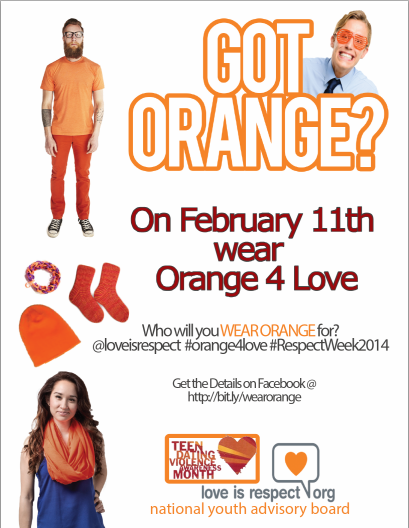
Want to get involved? There are so many fun things you can do to get involved in #TeenDVMonth! Are you wearing #Orange4Love? Post your pics on Twitter (@loveisrespect) and Instagram (@loveisrespectofficial) with #TeenDVMonth and #RespectWeek2014 or on Facebook at www.facebook.com/loveisrespectpage. You can also participate in the National Respect Announcement Thunderclap on Valentine’s Day, February 14th!
If you or someone you know is experiencing dating violence you can contact Love Is Respect 24/7 at 1-866-331-9474, by chatting at loveisrespect.org, or by texting “loveis” to 22522. No one ever deserves any kind of abuse.
Heather Frederick works a Supervisor for The National Dating Abuse Helpline, www.loveisrespect.org. Her passions include intersectional feminism, reproductive justice, languages, travel, blogging at www.FeministActivism.com (@FeministSNVA) and bringing an end to human rights abuses.
