• About Us
    • What Is Street Harassment?
    • Why Stopping Street Harassment Matters
    • Meet the Team
      • Board of Directors
      • Past Board Members
    • In The Media
  • Our Work
    • National Street Harassment Hotline
    • International Anti-Street Harassment Week
    • Blog Correspondents
      • Past SSH Correspondents
    • Safe Public Spaces Mentoring Program
    • Publications
    • National Studies
    • Campaigns against Companies
    • Washington, D.C. Activism
  • Our Books
  • Donate
  • Store

Stop Street Harassment

Making Public Spaces Safe and Welcoming

  • Facebook
  • Instagram
  • Pinterest
  • Tumblr
  • Twitter
  • YouTube
  • Home
  • Blog
    • Harassment Stories
    • Blog Correspondents
    • Street Respect Stories
  • Help & Advice
    • National Street Harassment Hotline
    • Dealing With Harassers
      • Assertive Responses
      • Reporting Harassers
      • Bystander Responses
      • Creative Responses
    • What to Do Before or After Harassment
    • Street Harassment and the Law
  • Resources
    • Definitions
    • Statistics
    • Articles & Books
    • Anti-Harassment Groups & Campaigns
    • Male Allies
      • Educating Boys & Men
      • How to Talk to Women
      • Bystander Tips
    • Video Clips
    • Images & Flyers
  • Take Community Action
  • Contact

Today: Facebook Discussion on Street Harassment

September 19, 2013 By HKearl

TODAY, 4 p.m. EST, We End Violence is hosting their bimonthly Agents of Change Facebook discussion with SSH and Hollaback!

The discussion will cover: street harassment and how it’s NOT a compliment, how we can respond to harassers, and how to talk about it with friends.

RSVP to join!

Share

Filed Under: Events, street harassment

Craigslist Missed Connections Writer Calls Out Street Harasser

September 18, 2013 By HKearl

A few days ago, a woman in Minneapolis used Craigslist’s “Missed Connections” to tell her street harasser how his actions made her feel and why street harassment isn’t okay. She was on foot, waiting at an intersection, he was in his car.

“So, that’s where we were. Me, minding my own business. You, apparently observing my ass. At that point you had options. You could have driven past me and said nothing. You could have turned up your radio and waved, ensconcing us in some beats and camaraderie. You could have shouted out, “Happy Friday! Yeehaw!” Any of those options would have been great. I probably would have waved, smiled, and started my weekend on the same high note as you.

Instead, you chose the most pathetic option available to you: You leaned out of your window and made some ridiculous series of leering comments about whether I was wearing a thong, right as the light changed and you peeled off, pleased with yourself and saved from any consequences.

If you’d stuck around, I would have happily shouted a few things of my own at you: that it’s people like you that make women avoid walking alone or taking transit even in broad daylight in their own cities; that no matter what screwed up metric you use it’s not a “compliment” to have someone interrogate me about my underwear; that thanks to you I would spend the entire train ride home feeling scrutinized and gross because you didn’t have the willpower or maturity to keep your mouth shut; that your wife and daughters or at the very least your mother deserve better than a cowardly man who shouts at women from the safety of his car.

Let me make this abundantly clear, to you and to the other men reading this: when you comment on a woman’s appearance, you are not doing it for her. You are doing it for you. It’s not some great way to make a woman feel sexy and appreciated. It’s not flattery, even if you mean for it to be. The only thing it is is a great way for you to create a shitty power dynamic, by which you have announced yourself as the arbiter of her value, and you’ve deemed her fuckable, and she is supposed to be happy or impressed by that.

If you really find a woman beautiful, don’t choose the juvenile selfish route that makes her feel weird and you look like an asshole. Just take a deep breath, commit the image to memory, and get on with your life. Or, if it’s really that great of an ass that you can’t possibly survive without commenting on it, post about it on CL missed connections after the fact and let her decide what to do about it.”

Awesome post. What would you tell a street harasser if you could do so safely?

If you loved this story, look out for my new book, 50 Stories about Stopping Street Harassers, next week.

Share

Filed Under: Stories, street harassment

Street Harassment Workshops in Kabul

September 17, 2013 By HKearl

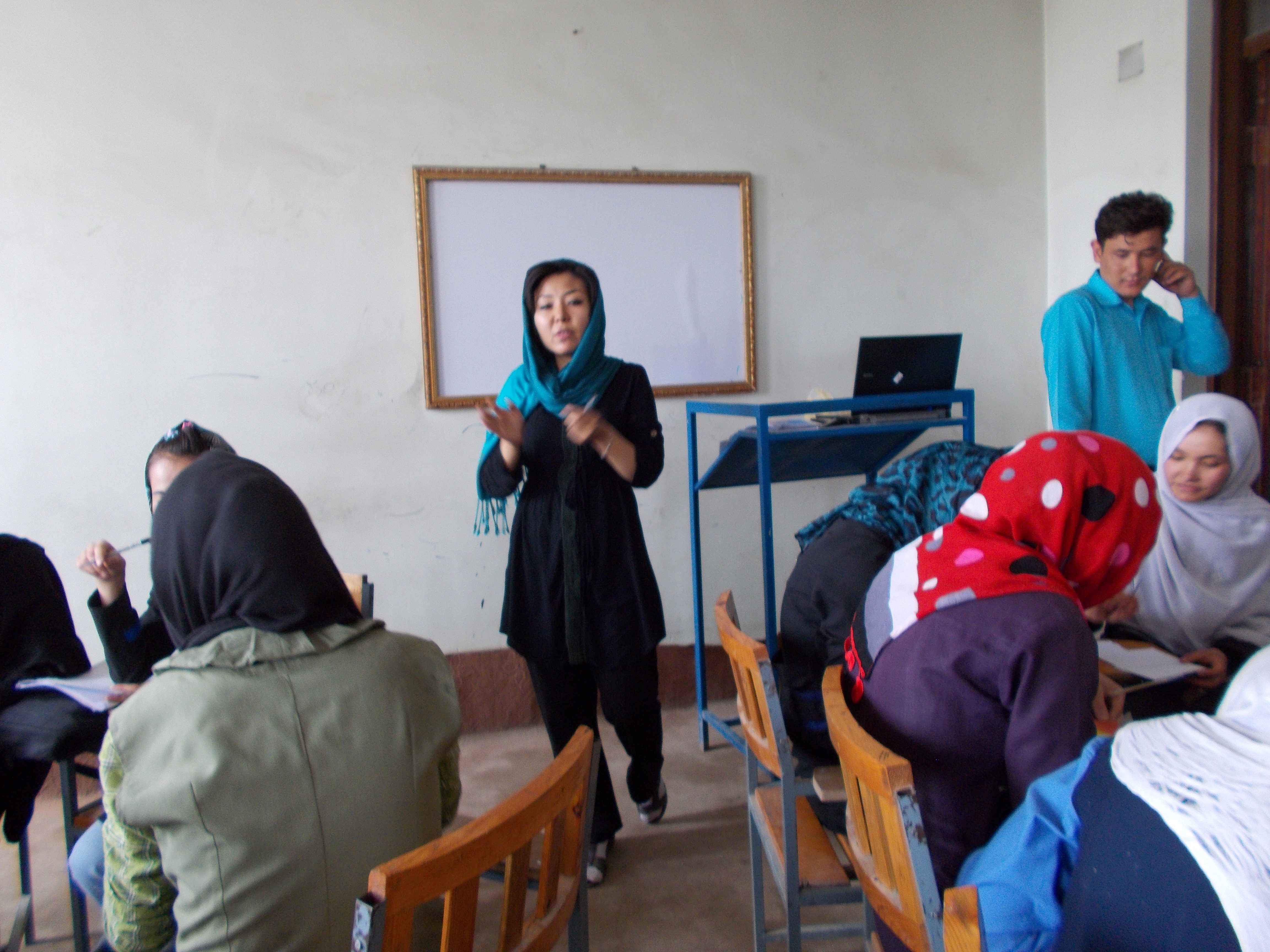
One of SSH’s Safe Public Spaces Mentoring pilot sites is in Kabul, Afghanistan, where college-age young adults led workshops on street harassment in several high schools. Their project is nearly complete. This is an excerpt from a report that was recently submitted by project co-leads Masooma Maqsoodi and Zeinab Noori.

“If we claim walking in Kabul’s street is a daily mental torture for Afghan women and girls we have not exaggerated. Streets in Afghanistan are men’s territory and they consider it their right to harass these “second class creatures” who have dared to find their place in the territory. Even a 6-years-old boy who is playing in the side walk or in front of a house thinks if he can make fun of a female passerby by verbal harassment, he has scored another point to toward gaining masculinity and becoming “another man” dominating the streets and public spaces of his country.

Almost all Afghan women experience various forms of street harassment every day in their life, but it’s not just a daily experience to be forgotten a few seconds later; it leaves long lasting scars on women’s spirit and sense of confidence which discourages and limits women’s participation in public life. However, due to the predominant culture of “shame” and “honor” and high social stigma attached to issues of sexual harassment, Afghan women often do not talk about their experiences of street harassment. The scar remains invisible and women continue to suffer, generation after generation.

We, ourselves, have been constantly victims and witnesses of street harassment back home. We strongly feel there is great need for public education about women’s right to safe public spaces and social respect and acknowledgment of this right. There were few activities in the last two years to raise awareness about and to combat street harassment in Afghanistan, mostly done by women activists and members of Young Women for Change. These activities included conducting rallies, debates, talk shows, movie screening, poster distribution, and collecting data about street harassment.

We, however, for several reasons wanted to approach a specific group of audience: teenagers and high school students, mostly male students. The first reason was that we wanted to start the discussion about street harassment at schools, where students had never had such kind of programs conducted for them. In addition we wanted to create a bridge among male and female students by helping them exchange messages and ideas through us in order to give them a deeper understanding of the issue. We wanted to hear their opinions and see how these young people think about street harassment and what solutions they offer.

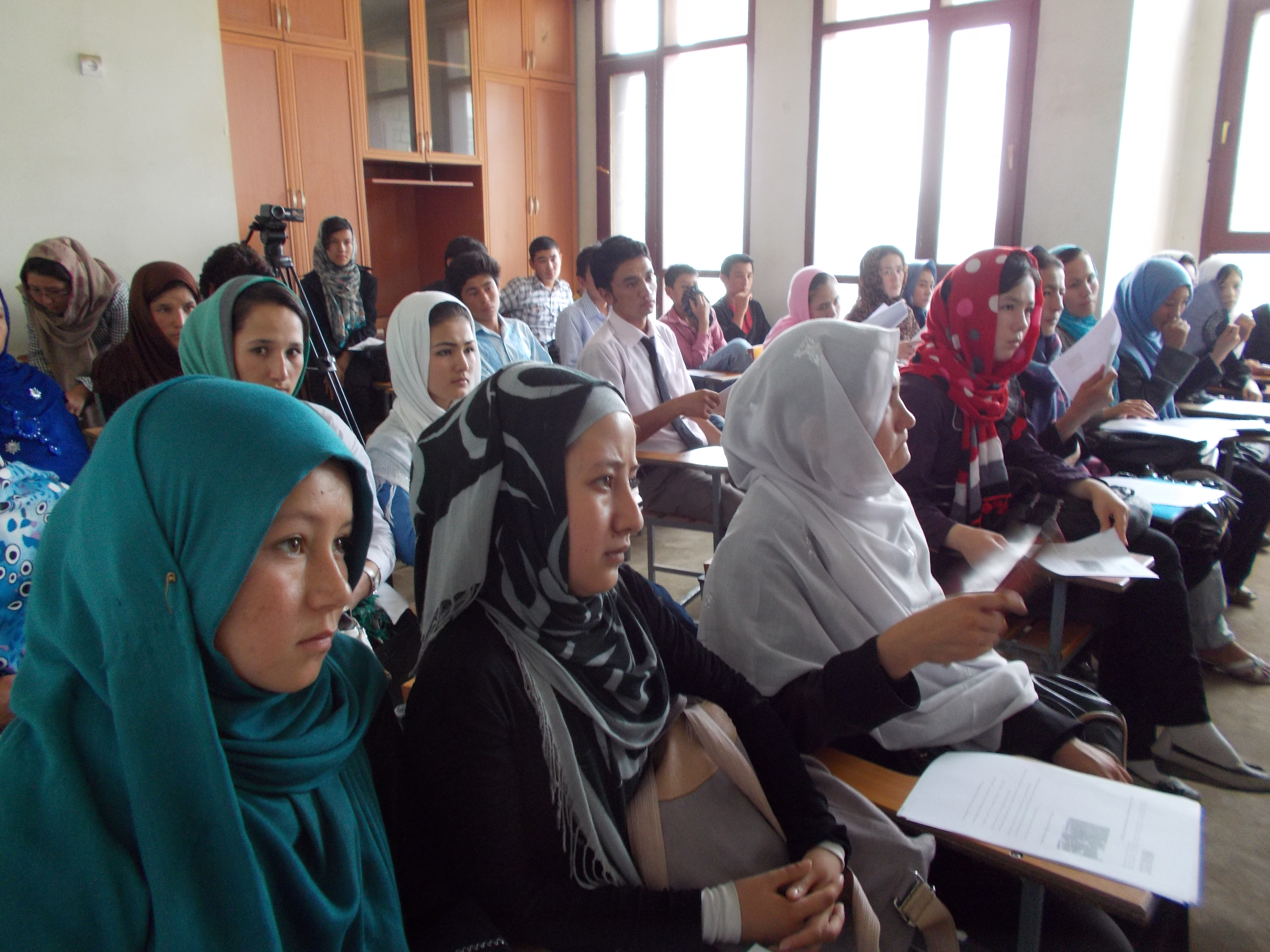
As part of the Stop Street Harassment Safe Public Spaces Mentoring Program we started with a a series of workshops at Star Educational Society, a private coed language academy in west of Kabul. Mostly girls showed up for the first session on 30th July, as we expected (this issue is not of interest to most men in Afghanistan). We had around 30 participants, 8 of whom were male.

The first session in all of our workshops was designed to be an introductory session with Afghan women narratives about street harassment, especially Noorjahan Akbar’s “A Letter to My Harasser” and “The Pathway of Agony” by Fatima Hussaini. It was for the first time that women’s stories about street harassment were read to most of the students. The narratives could literally grab the attention of all the students. We could see profound empathy in the faces of all female and some male audiences. These narratives talked about women’s daily struggle with all kind of harassment. One of the narratives highlighted deprivation of Afghan women from doing natural activities, such as running or laughing on the streets, activities that women are not supposed to do in public spaces only because of the strong and well established traditional, cultural and religious norms that expect women to avoid any kind of behavior that might attract men’s attention toward them.

After reading the narratives we handed the participants some worksheets including some handouts about different ways to help stop public sexual harassment, a questionnaire and a listener’s guide so that the audience learn how they are expected to approach female members of their families and ask them about their experiences about street harassment. The interview activity was designed to encourage boys to listen to women, who live in the same society, but they have never been listened to. We thought it makes more sense for the male participants when they get to know that street harassment happens to women in their families too. Afghan women usually do not share their experiences with male members of their families because they know women are the ones to be blamed for it first. “There must have been something provocative about your dressing or attitude” is what most of whom will hear.

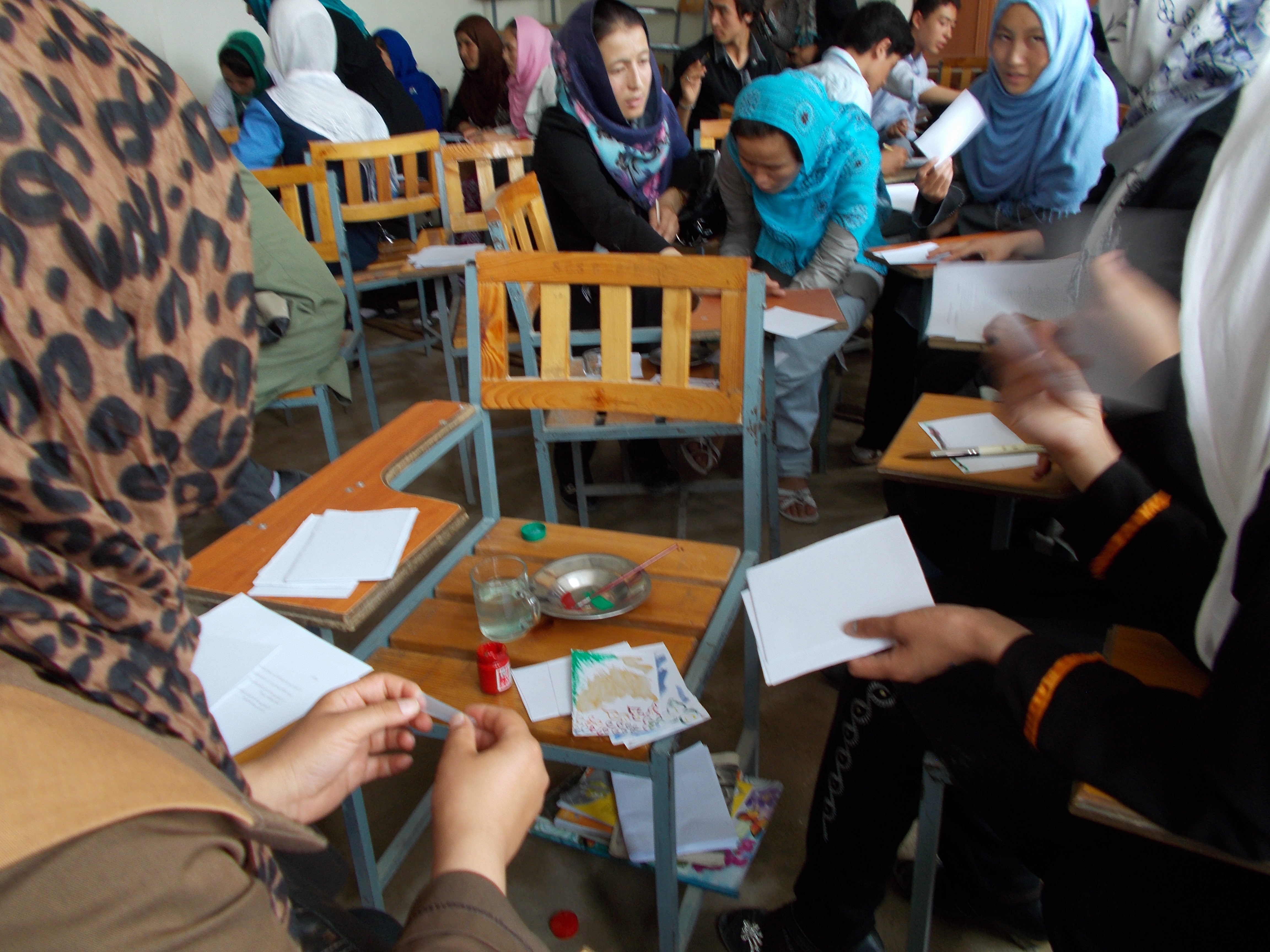
After explaining the assignment to the participants, we had the handicraft activity as an ice breaker and fun part of the program. Participants were instructed to paint papers with water color and write their messages about street harassment, which most participants enjoyed doing it.

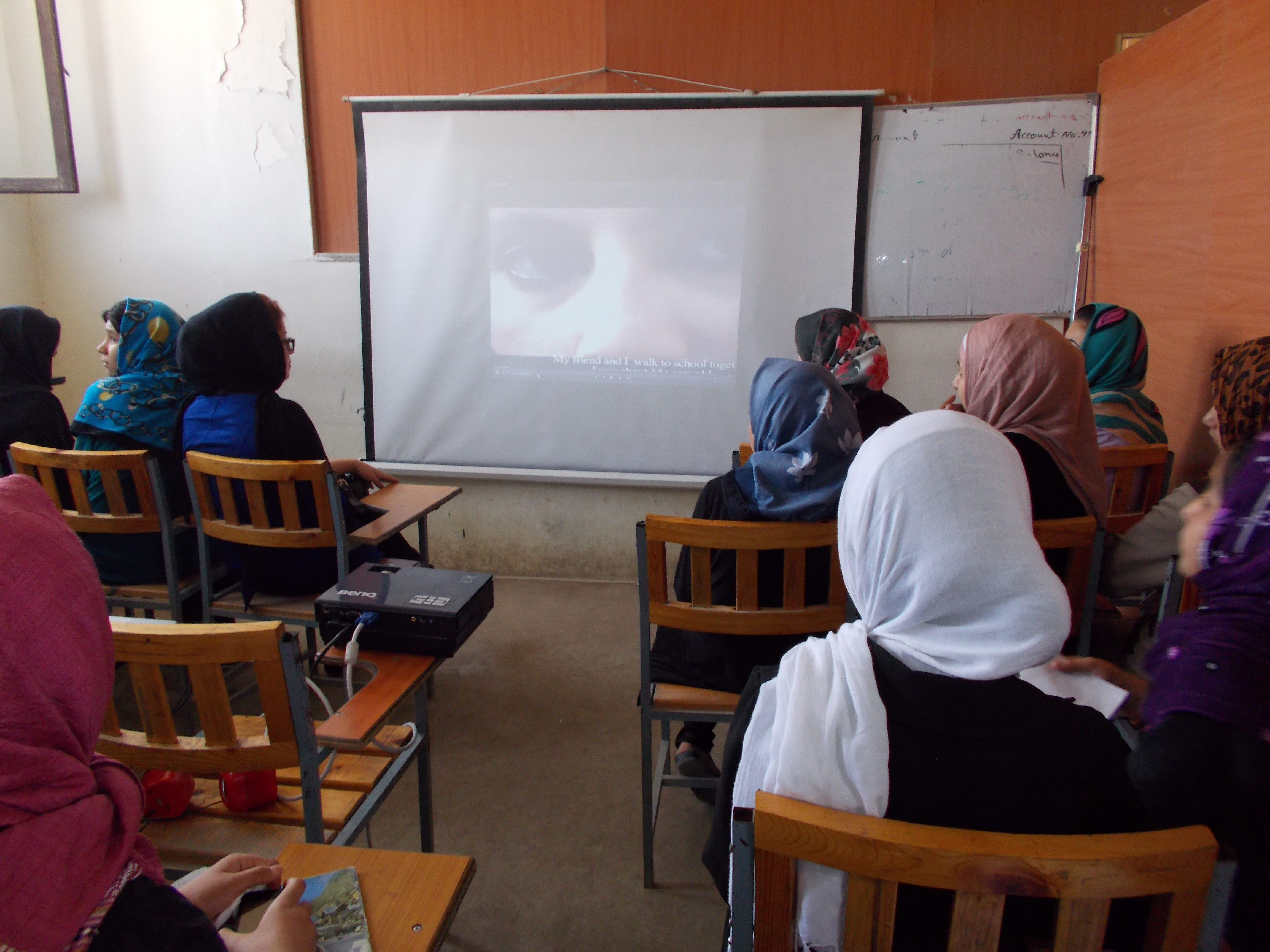
During the second session, we showed some documentaries made by Afghan filmmakers in addition to some TV reports and a talk show about street harassment, all in Dari. The challenging part started after presenting the documentaries, when students were encouraged and given the opportunity to have a discussion on the issue and express their opinions freely. Both at Star and in public schools the teachers and other administrative staffs were sent out of the room for creating a more open and comfortable space for students to talk.

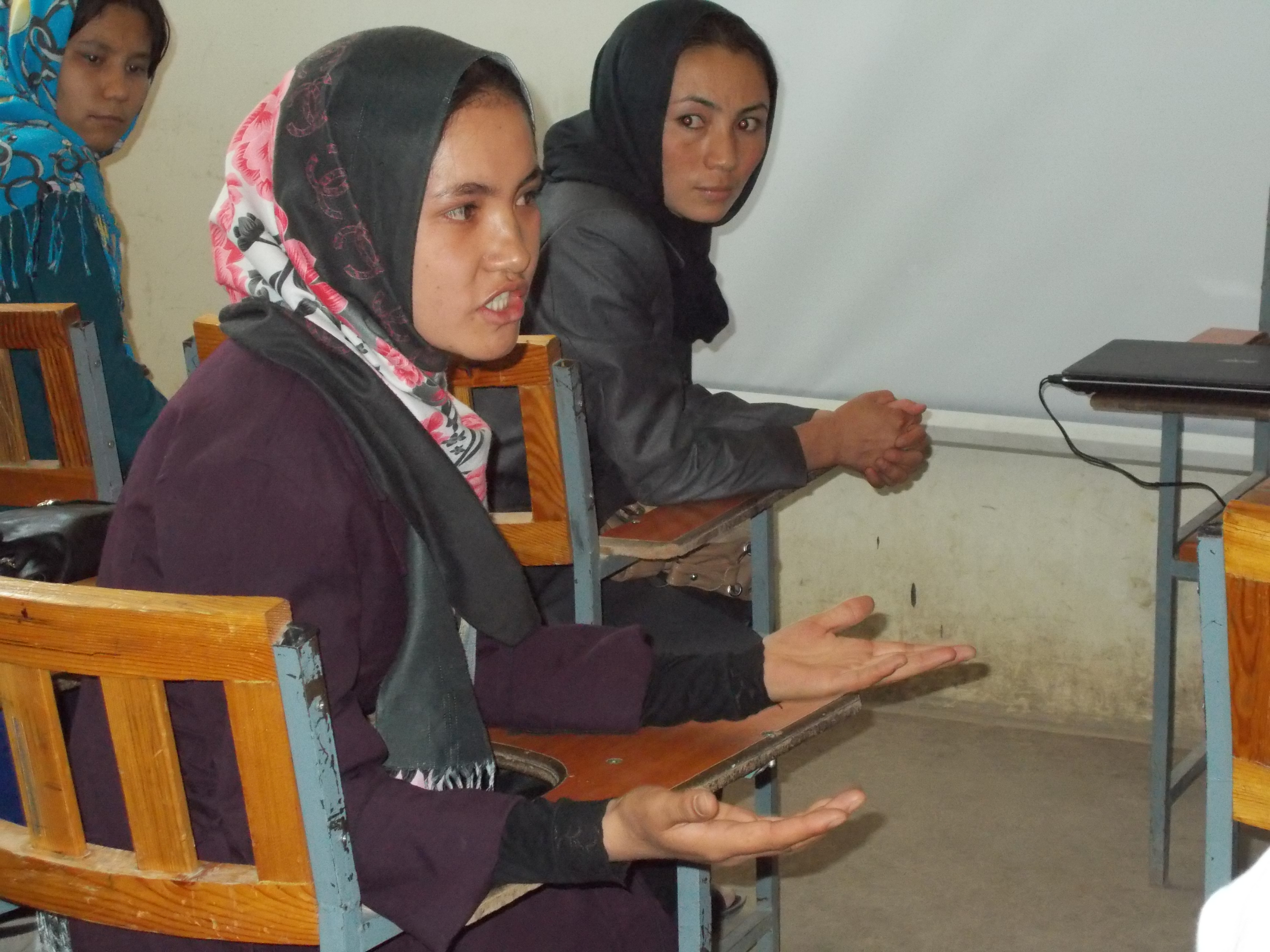
Our male colleague, Ali Shahidi, helped us organize and lead the discussion session at Star. The discussion boomed after two of the male participants said they thought women were responsible for attracting and provoking men sexually. One of them complained about one of his classmates talking to male strangers and exchanging contact numbers with them. The other one stated that according to Islam women were only expected to have makeup for their husbands and those women who did not have Islamic dressing were inviting harassment themselves and should not complain. Female participants responded to them firmly that in most cases women were not in any way to be blamed for being harassed. We also had male participants who strongly disagreed with blaming women for street harassment.

There was a participant wearing a long dress, dark scarf and no makeup. She stood up to show her dressing to other participants and said harassment has nothing to do with women’s way of dressing or behavior. She said she had never done anything to attract men’s attention but had always been harassed on her way to university. She also believed that confronting the harassers had not worked for her; they had continued their harassment for they knew there were no consequences, nor by the law enforcement, neither by the public. She asked the male participants, calling them brothers, to help their sisters fight against street harassment. Female participants expressed their appreciation for the opportunity to talk and to be heard and told us they strongly felt empowered and encouraged to continue talking about the issue with others after the workshop.  

During the third session at Star, volunteers who wanted to conduct similar workshops at their communities received a training kit including workshop materials, handouts, and necessary instructions. And we are looking forward to receive their reports, photos and news about their follow-up activities.

The second part of the project was (sponsored by Women in Public Service Project) was held in four public high schools in different parts of Kabul. At each workshop there were more than 40 students showed up and most of them had active participation….

Overall:

Many students found the program interesting, informative, and productive. They believed that the problem of street harassment could not be solved with short term programs and requested us to continue it in the future, and to provide spaces for discussions with the presence of both male and female participants. They suggested having media (TV) coverage for the program to spread the message to the rest of the society and engage more people in the discussions.

Even we could not change the mindset of many male students about street harassment, we made them think about the issue for the first time. We read narratives for them that they had never heard about. We brought them messages from female students of their age who politely asked them to respect women on the streets. For the first time, we made them listen to voices of Afghan women who have been harassed everyday on the same streets Afghan men were walking freely and comfortably. We were shocked by the radical ideas of many of the students about women’s freedom and rights to safe public spaces, but at the same time we were supported and encouraged to by some others to raise awareness and shed lights on the agony of Afghan women. Our time was limited but we feel we had a significant impact on our audience. We are happy to have had the support of many male colleagues and friends at Star Educational Society and Abdul Rahim Shahid high school.

We know we have started a journey during which we will face more and more obstacles, but we will never stop as long as Afghan women are not treated with dignity and respect in streets and public spaces of Afghanistan.”

I applaud these young women and man for bringing the issue of street harassment to high schools and for reaching so many youth!

The people who received training to do the workshops are conducting them this month, so stay tuned for another report.

Share

Filed Under: SSH programs, street harassment Tagged With: Afghanistan, Safe Public Spaces mentoring

One Week until the New Book is Out!

September 16, 2013 By HKearl

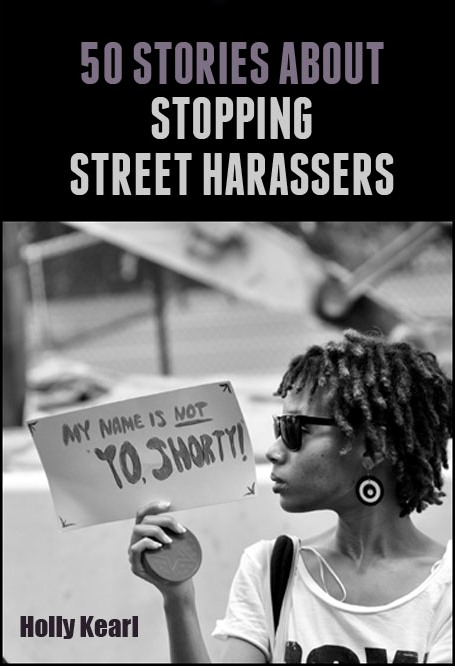
Here’s the book cover! The photograph of Dienna Howard was taken by Mark Hutchens. Cover design by moi.

WOOOO!!

Next Monday, Sept. 23, my second book about street harassment will be available on Amazon.com for a mere $10 (and 50% of the profits will go directly to SSH to fund our work).

From unwanted catcalls on the street to flashing on the subway and groping in bars: gender-based street harassment is a huge problem. Most people are unsure what to do or how to respond. I know I was, especially as a college student when I faced constant harassment each time I left my campus in northern California.

While there is no “best” way to deal with harassers, my new book 50 Stories about Stopping Street Harassers contains 50 one-page stories from people in 16 countries that offer creative, entertaining, and empowering techniques and strategies for readers to consider trying out when they feel safe. The people in the stories call out harassers, publicly shame them, demand apologies, report them, and stand up for other people being harassed.

All of the stories were either submitted to or featured right here on the SSH Blog!

The book also includes 20 photos of awesome people speaking out against this issue!

What is great about this book is how it approaches the serious topic in an entertaining and approachable way. It offers concrete examples and advice for what to do when faced with unwanted harassment in public spaces.

For journalists and bloggers out there:

I am happy to provide an excerpt of the book, do an interview, or just provide an embargoed PDF of the book manuscript if you want to write about it or mention it in a relevant article. Just contact me, hollykearl AT yahoo DOT com. Thanks!

Share

Filed Under: Resources, SSH programs

Video: Here’s the difference between street harassment and compliments

September 14, 2013 By HKearl

What’s the difference between street harassment and a compliment? Stop Street Harassment supporter Jess breaks it down in this video.

It’s especially aimed at men who genuinely don’t understand when it’s okay and when it’s not okay to talk to women they don’t know in public spaces. Please share!

Share

Filed Under: Resources, street harassment

« Previous Page
Next Page »

Share Your Story

Share your street harassment story for the blog. Donate Now

From the Blog

  • #MeToo 2024 Study Released Today
  • Join International Anti-Street Harassment Week 2022
  • Giving Tuesday – Fund the Hotline
  • Thank You – International Anti-Street Harassment Week 2021
  • Share Your Story – Safecity and Catcalls Collaboration

Buy the Book

  • Contact
  • Events
  • Join Us
  • Donate
  • Facebook
  • Instagram
  • Pinterest
  • Tumblr
  • Twitter
  • YouTube

Copyright © 2026 Stop Street Harassment · Website Design by Sarah Marie Lacy