• About Us
    • What Is Street Harassment?
    • Why Stopping Street Harassment Matters
    • Meet the Team
      • Board of Directors
      • Past Board Members
    • In The Media
  • Our Work
    • National Street Harassment Hotline
    • International Anti-Street Harassment Week
    • Blog Correspondents
      • Past SSH Correspondents
    • Safe Public Spaces Mentoring Program
    • Publications
    • National Studies
    • Campaigns against Companies
    • Washington, D.C. Activism
  • Our Books
  • Donate
  • Store

Stop Street Harassment

Making Public Spaces Safe and Welcoming

  • Facebook
  • Instagram
  • Pinterest
  • Tumblr
  • Twitter
  • YouTube
  • Home
  • Blog
    • Harassment Stories
    • Blog Correspondents
    • Street Respect Stories
  • Help & Advice
    • National Street Harassment Hotline
    • Dealing With Harassers
      • Assertive Responses
      • Reporting Harassers
      • Bystander Responses
      • Creative Responses
    • What to Do Before or After Harassment
    • Street Harassment and the Law
  • Resources
    • Definitions
    • Statistics
    • Articles & Books
    • Anti-Harassment Groups & Campaigns
    • Male Allies
      • Educating Boys & Men
      • How to Talk to Women
      • Bystander Tips
    • Video Clips
    • Images & Flyers
  • Take Community Action
  • Contact

New Study: Sexual harassment on vacation

June 26, 2013 By HKearl

A downside to traveling anywhere is the potential to face street harassment and unwanted sexual invitations.

To discover just how prevalent this is, a team of researchers led by the European Institute of Studies on Prevention (Irefrea) surveyed 6,502 British and German people ages 16-35 in different airports across southern Europe (Crete, Cyprus, Italy, Portugal and Spain). The people they surveyed had just visited tourist hotspots in these countries in summer 2009 and were returning home.

Via Science World Report:

“The results of the study show that 8.6% of people suffered sexual harassment during their holidays and 1.5% suffered sex against their will. ‘2.4 times as many women as heterosexual men claimed to have suffered from sexual harassment. However, gay and bisexual men showed similar levels to women and high levels of sex against their will,’ the expert notes.”

One of the researchers said. “The first preventive measure is to be aware that these problems exist, since we tend to always think positively about holidays. There are measures that depend on tourist destinations, which are often promoted as places with a high level of sexual permissiveness and advertise cheap alcohol. The venues themselves can also avoid these situations by adopting good management in accordance with already established standards.”

Share

Filed Under: LGBTQ, News stories, Resources, street harassment

Recap of recent street harassment news – late June edition

June 26, 2013 By HKearl

Other project have kept me from blogging about the street harassment-related news that’s come through in the past week or so, so here’s a short recap  —

* How to approach women: On the website, “Yo, I’m just saying” men can learn when it’s okay to physically stop a woman on the street (e.g. they’re lost and need directions or someone needs medical attention) and when it’s not.

* Street harassment and male entitlement: She Does the City wrote, “Walking the Streets: Space, Masculinity and Street Harassment“: “Many males roam the streets at any time of day or night feeling a sense of entitlement to that space and the bodies within it. If a woman were to act in this same way, she’d be “setting herself up for harassment,” because her body, as female, is not entitled to such space or such ownership – and to make it appear as entitled (or appear at all) is to expect backlash. The same goes for “readably” queer folks, who would meet a similar fate of harassment and perhaps even assault. Queer folks are highly invisibilized in public space, save for certain areas of the city where they have both created their own community and have been siphoned off by a culture of heteronormativity.”

* Street harassment as hate speech: Michael, a male ally in Toronto wrote the article, “Sexual harassment on the street: Taking misogynist hate speech seriously.” A key point he makes is that street harassment/sexist speech IS hate speech. “More than ever it is time for men to stand up and say that these narratives are wrong and that they show a total disregard for women’s dignity. That this ongoing vocal misogyny is unacceptable. That this disgraceful and daily objectification of women is what it is…an insult to and violation of the basic rights of women. Public, vocal, sexual degradation of women and girls is a form of hate speech. And it needs to be opposed as such.”

* Stopping harassment in Egypt:  USA Today reports on the high rates of street harassment in Eygpt (a new study found 99% of women have faced it) and on the groups working to change that reality. “It’s all about culture and misconceptions,” said Dina Samir, communications manager at HarassMap, who says harassment has worsened over the last decade. “If the culture changes it would put pressure on the government to enforce laws.” “We believe we can play a big role in changing perceptions,” she said. Men are also getting involved because “it’s not just a women’s issue,” said Ayman Nagy, who founded the Anti-Harassment Movement. “It’s a humanity issue.” Nagy and a group of 73 full-time volunteers hold workshops in universities and even in the streets among other places to talk about issues that include sexual abuse. “We need to solve the problem from its roots,” Nagy said. “We’re going to work on the harasser himself, because we think he is a sick person and needs help, and that we can help him.” Other groups such as Operation Anti-Sexual Harassment seek to end mob harassment and assault, and Tahrir Bodyguard has a team of volunteers in bright green vests who intervene when they see sexual violence taking place during protests.”

* Fighting sexual abuse in India: In Lucknow, India, The Telegraph reports, a 25-year-old woman teaches more than 100 teenage girls in mixed martial arts. They are dubbed the “Red Brigade” and aim to humiliate and beat men who abuse women. Most of the recruits are survivors of sexual assault, sexual harassment, and attempted rapes who have “joined her the group in frustration at the failure of Indian political leaders and the police to curb sexual violence.”

*Teaching respect: Radical Step Mom writes about street harassment and other forms of sexual abuse and concludes: “Let’s talk to all our kids, in whatever way we are able (even if that means asking your partner to talk to their kids), about respect for each other’s bodies, boundaries, and peace of mind. Rather than being crippled by our experiences, let’s use them to inform our influence on the kids growing up under our roofs. With love and persistence on our parts, maybe our boys and girls will choose to shape a world in which this idea isn’t radical at all, because it’s standard.”

* Even “mild” street harassment is unacceptable:  Veronica writes about her tolerance for “mild” street harassment after experiencing worse and why that isn’t okay for SCUM, a literary magazine. “At what point had men screaming obscenities at me become so routine that being shouted out twice was a “pretty good” night? When had I developed this arbitrary threshold for abuse from strangers that could change a walk home from pleasant or pretty good to pretty goddamn shit?

*Leave her alone!  The blog PFPT put together a street harassment quiz for men. Hint: most answers are “leave her alone” or “she wants you to leave her alone.”

* Illustrated responses to street harassment: Brittany published great (illustrated) responses to street harassment for the Portland Mercury. She writes, “What men need is a wake-up call: You’re the problem. If not you personally, then your best friend, a coworker, or that dude in your fantasy football league is. You’re making us feel unsafe every day, in a thousand different ways. To help you better identify your harassing behavior, we’ve illustrated the most common types of misogynists—along with the comebacks from us you might not get, given the trap-door spideriness of your attacks, but which you certainly deserve.”

* Men experience street harassment too: Jay wrote about his street harassment experiences for the Portland Mercury too, ending with: “It would be easy to get into a tit for tat argument over quantity but that’s not the point and big doy. Women are at the receiving end more than men and the power dynamic is different. My point is it’s never pleasant to be singled out and have your body be thrown on the table to dissect and discuss. I’m proud of how I look and feel confident when I walk down the street. But men/women, it’s never an invitation to get your creep on. There are rules. There is etiquette. Stop being weird jerks. Try some charm. And don’t try to reach into my pants. Again.”

* Increase in street harassment in Lebanon: The Daily Star reports on the increase in street harassment/sexual violence complaints and what is being done: “Both verbal and physical harassment are punishable under the law, NGOs say that the legal system is ill-equipped to successfully prosecute offenders, one of several reasons why many victims do not report their experiences of harassment to the police. Aware that incidents were frequently going unreported, feminist collective Nasawiya last year launched a hotline for victims of assault and harassment to share their experiences and receive advice and support.”

* Dealing with street harassment: Feminist leader and author Jessica Valenti’s first #AskJessica video for The Nation focuses on how to respond to street harassers.

Share

Filed Under: News stories, street harassment

Cartoon character “Johnny Bravo” learns about street harassment

June 21, 2013 By HKearl

In 1997, Cartoon Network premiered the cartoon “Johnny Bravo,” in which an over-the-top stereotype of a macho guy pursues women who usually outsmart him and/or ditch him. I admit, from time to time I watched it with my sister. It was entertaining to see women always get the better of Johnny and to see his woman-chasing ways portrayed as silly.

Jeff Perera at White Ribbon just sent me this clip from an episode in which a fortune-teller turns Johnny into a woman so he can learn what it’s “really like to be woman.” As a woman, Johnny/Jenny faces constant street harassment and he does not like it! After a few men harass her, Johnny/Jenny beats them up, and then we see other women beat up their harassers. Of course, I’m no proponent of violence, but it was kind of satisfying to see all of the cartoon women stand up to their harassers and to see a kids cartoon portray street harassment as annoying and not okay (as opposed to being a compliment). A lot of adults could learn a thing or two from it!

Share

Filed Under: Resources, street harassment

Health Magazine: Street harassment is not a compliment

June 20, 2013 By HKearl

Dear Health Magazine,

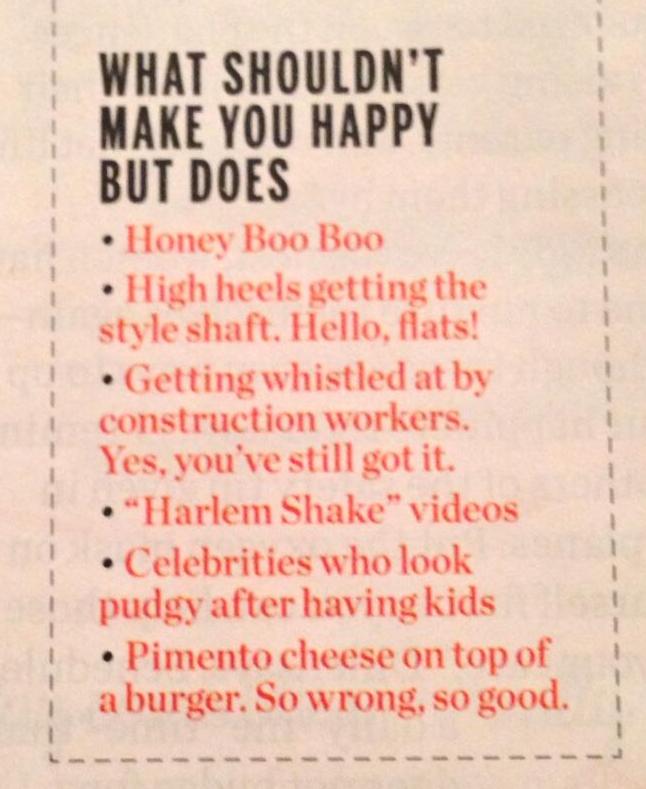
The June 2013 issue of your magazine included a blurb titled, “What Shouldn’t Make You Happy But Does,” and one of the items is, “Getting whistled at by construction workers. Yes, you’ve still got it.”

Whistling is just one of the many forms of street harassment that 80 to 100 percent of women worldwide experience regularly, often starting around puberty. Street harassment also includes unwanted sexual comments, following, flashing, and groping in public spaces.

We are disturbed that a magazine whose very title is “health” would suggest that street harassment is okay and a compliment. It’s not. Instead, it is detrimental to women’s health and it impedes gender equality.

1. It reinforces the belief that a woman’s worth is pleasing men.

A 2007 report by the American Psychology Association Task Force on the Sexualization of Girls found that girls are socialized by the media, parents, and peers to believe that their worth is their sexuality and ability to please men. Street harassment reinforces this belief. The report listed scores of negative effects from the sexualization, including on girls’ and young women’s physical and mental health.

2. It contributes to self-objectification, which has many negative health outcomes.

A study in the Journal of Social Justice Research found that street harassment was related to self-objectification. Multiple studies have linked self-objectification with an increase in rates of depression, anxiety and eating disorders as well as lower academic achievement.

3. It makes women feel less comfortable in public spaces.

Women never know which person whistling at them may then yell obscenities at them, or follow them, or attack them. Most women have an underlying  feeling of dread and fear when a man they do not know approaches them or sexually objectifies them in a public space. Street harassment and the fear of sexual assault typically make women feel less comfortable being in public spaces compared with men, especially when they are alone.

4. It causes women to change their lives.

Most women who experience street harassment, especially if they experience it often, change their lives in various ways to try to avoid it in the future. They may change their routes or routines or quit hobbies. Notably, of the 811 women who took a survey for a book on street harassment, 19 percent had moved neighborhoods and 9 percent had changed jobs because of harassers along the commute. Also, related to health, 24 percent said they paid to exercise in a gym instead of outdoors on at least a monthly basis and 10 percent had gained weight or kept on weight at least once as a strategy to try to avoid street harassment.

Additionally, street harassment – including whistling – impedes gender equality because it reinforces the belief that women should be pretty, not smart, compliant, not assertive, and that they should stay home instead of being in public places. Surely these are not messages you wish to support.

Instead of suggesting that street harassment is a compliment and okay, we hope Health magazine will publish an article in the future about the negative health outcomes of street harassment, why it is important for people to take action to stop street harassment, and what they can do.

Sincerely,

Holly Kearl, founder of Stop Street Harassment and author of Stop Street Harassment: Making Public Places Safe and Welcoming for Women.

Co-Signers:

Collective Action for Safe Spaces

Defend Yourself

The Best Defense Program

Everyday Feminism

Everyday Victim Blaming

Feminist Peace Network

Hollaback! Baltimore

Hollaback! Brussels

Hollaback! Denver

Hollaback! Des Moines

Hollaback! Hamilton

Hollaback! Ottawa

Hollaback! Winnipeg

MasculinityU

National Council of Women’s Organizations

One Angry Girl Designs: “International Fashion Diva”

One Less Victim

She’s Somebody’s Daughter

UniteWomen

White Ribbon Campaign

Women, Action, and the Media (WAM!) Vancouver

Women’s Views on News

YWUA

Sara Alcid

Kate Appleby

Brooke Applegate

Eleanor Ball

Claire Biggs

Elizabeth Bolton, SSH board member

Katherine Broendel

Holly Brown

Nikki Cassidy

Kori Cioca

Sean Crosbie

Mandy Damon

Shaun Day

Samantha DeHoyos

Wendy Felton

Janet Good

Angela Hattery

Kristen Holcomb

Kerri Faith Kellerman, Activist, Scientist, Poet

Alan Kearl

Serena Kelly

Heidi Lentini

Matt Lentini

Salvatore Lentini

Rachel M

Amanda Mabry

Melissa Markotsis

Ebony Marshman

Rickelle Mason

Julie Mastrine

Jasmine Mathineer

Stephanie McAleer

Bonnie McCammond, Sexual Assault Response and Prevention Advocate; survivor

Erin McKelle

Patrick Ryne McNeil, anti-street harassment activist, writer

Ece Okar

Kelly Ormsby

Tressa L. Paquette

Nabin Kumar Pati

Salem Pearce

Georgette Pierre

Emily Resnick

Linda Sarsour ‏

Katie Schmalzel

Jenn Scott

Kimberley Anne Shults

Victoria Shuttleworth

Ursula Utsaha Singh

Tammy Stauffer

Larissa Dalton Stephanoff

Amber Stewart

Julia Strange

Lauren Taylor

Adrienne Tremain

Nikki Ummel

Patricia Valoy

Pavlina Valovitz

Jennifer Wallis

Beckie Weinheimer

Anna Whaley

Emily Williams

Abe Louise Young

_________________________________________________________

I submitted a Letter to the Editor and I sent a copy of the above in letter form to people at the magazine.

Take Action:

You can write your own letter to them too and also, here is a suggested tweet: Dear @goodhealth, #streetharassment is not a compliment, as implied in June issue, but detrimental 2 women’s health! http://tinyurl.com/pqmpml3

NOTE: I was originally told the blurb was found in Women’s Health Magazine, but on June 25, I learned it’s in the June 2013 issue of Health Magazine. Apologies to Women’s Health for this error.

H/T to @CuratorOfCuriosities

Share

Filed Under: offensive ads, street harassment

Let’s focus on the perpetrators

June 19, 2013 By HKearl

A lot of people have sent me links to this story:

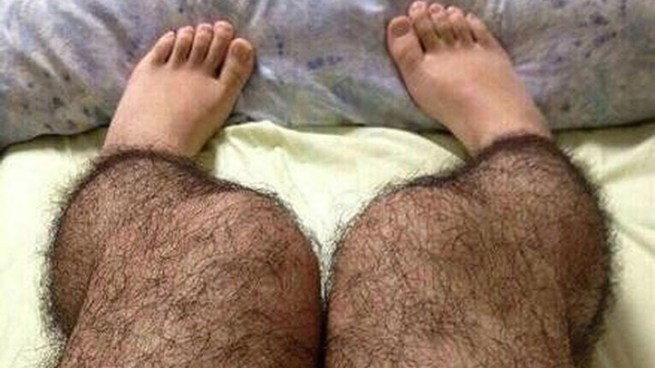
“Hairy stockings sold in China are apparently the latest craze used to ward off sexual predators, according to a user on Sina Weibo — China’s Twitter equivalent — who posted a photo of the accessory that has gone viral.”

I do not think that fake hairy legs will ward of sexual predators… sexual violence is about an abuse of power, not untamed sexual desire. Plus, hairy legs are not ugly or disgusting; they are natural.

Also, I don’t think it would stop all street harassment. If a woman wore these, people would probably yell things about how ugly she is or that she’s a “dyke” or lesbian since street harassers often harass people who meet traditional, heteronormative beauty norms as well as those who do not, they just use different words.

I agree with Homa Khaleeli, who wrote about this and other “anti-rape” products for the Guardian, when she said, “There’s no shortage of wacky anti-rape products for women, but what we need is a shift in focus from victim to perpetrator.”

Share

Filed Under: News stories

« Previous Page
Next Page »

Share Your Story

Share your street harassment story for the blog. Donate Now

From the Blog

  • #MeToo 2024 Study Released Today
  • Join International Anti-Street Harassment Week 2022
  • Giving Tuesday – Fund the Hotline
  • Thank You – International Anti-Street Harassment Week 2021
  • Share Your Story – Safecity and Catcalls Collaboration

Buy the Book

  • Contact
  • Events
  • Join Us
  • Donate
  • Facebook
  • Instagram
  • Pinterest
  • Tumblr
  • Twitter
  • YouTube

Copyright © 2026 Stop Street Harassment · Website Design by Sarah Marie Lacy