• About Us
    • What Is Street Harassment?
    • Why Stopping Street Harassment Matters
    • Meet the Team
      • Board of Directors
      • Past Board Members
    • In The Media
  • Our Work
    • National Street Harassment Hotline
    • International Anti-Street Harassment Week
    • Blog Correspondents
      • Past SSH Correspondents
    • Safe Public Spaces Mentoring Program
    • Publications
    • National Studies
    • Campaigns against Companies
    • Washington, D.C. Activism
  • Our Books
  • Donate
  • Store

Stop Street Harassment

Making Public Spaces Safe and Welcoming

  • Facebook
  • Instagram
  • Pinterest
  • Tumblr
  • Twitter
  • YouTube
  • Home
  • Blog
    • Harassment Stories
    • Blog Correspondents
    • Street Respect Stories
  • Help & Advice
    • National Street Harassment Hotline
    • Dealing With Harassers
      • Assertive Responses
      • Reporting Harassers
      • Bystander Responses
      • Creative Responses
    • What to Do Before or After Harassment
    • Street Harassment and the Law
  • Resources
    • Definitions
    • Statistics
    • Articles & Books
    • Anti-Harassment Groups & Campaigns
    • Male Allies
      • Educating Boys & Men
      • How to Talk to Women
      • Bystander Tips
    • Video Clips
    • Images & Flyers
  • Take Community Action
  • Contact

A man says he should kill himself right after I reject him

June 28, 2018 By HKearl

Image via Fun in Fairfax

“How old is your baby?”

A much older man with grey hair and big glasses mouthed this to me, after waving to get my attention from across the outdoor patio of a coffee shop in Virginia. I didn’t think this was out of the ordinary as other people have asked me the age of my baby, so I smiled and said two months.

When the friend I met at the coffee shop left, I lingered on the teal cushioned bench, enjoying the unusually mild June day and the soft breeze running through the leaves of the tree behind me, as my baby snuggled against me.

When I heard the man say, “Yoo-hoo” over to me again and then give me a “thumbs up” and mouth I was doing a good job with my baby, I gave him a big smile and asked if he wanted to say hi to my baby. This man said yes, and I walked over. I introduced my baby and the man commented on how he had been watching me and he thought I was a really good mom. What new mom doesn’t want to hear that? He patted my arm that was holding my baby as he talked a few times until I stepped away. I thought he was just accidentally doing that when he meant to pat the back of my baby. In hindsight, I see how either action is inappropriate. Neither the baby nor I are public space, available for a man we don’t know to touch.

I intended to leave as soon as we’d said hi, but then the man told me about his loneliness and how grateful he was that I came over and that most people are too busy to do so. He told me he comes to the coffee shop often to “make friends” and sometimes it works and sometimes it doesn’t. But he reiterated how lonely he was. I suggested he look up the local community center’s senior events or volunteer with a local organization with whom I volunteer, but he dismissed those suggestions.

Then the conversation took a turn I didn’t expect.

He said he was having a hard time finding a woman to date and invited me to come over to his house. He gave me directions to his house and told me about how big his house is. I declined his invitation with a smile on my face – as women learn to do to try to not escalate a situation. But like so many men who don’t listen to or accept a “no,” he was not initially deterred. He said, “Look, just come over and look around and if you like it, you can stay and if you don’t, you can go.”

My face felt hot and red and I felt uncomfortable as I politely declined again.

And then he told me he was so lonely he should just end things. No one cared if he was alive. I said something like, “It sounds like you’re having a down day and I’m sorry for that. I hope you can find ways to feel meaning in your life.”

He dismissed my words and repeated a few times that he should just end his life. I again reiterated that I was sorry he felt that way and I hoped he wouldn’t.

And that’s when I said I needed to go and walked back to my table, loaded up my baby in the stroller and left.

I felt shaken; no one had threatened to commit suicide to me before. I wondered if I should have said or done more. New statistics released this month by the Centers for Disease Control and Prevention show that suicide rates have been rising in nearly every state, and the recent high profile suicides of Kate Spade and Anthony Bourdain made me take his words seriously.

When I texted my domestic partner a few minutes later about what had happened, he had a different take and he was furious at the man. He visits Reditt regularly and told me he’s seen threads about men who threaten to commit suicide as a manipulation strategy when women reject them. I realized this was exactly what just happened to me. My partner guessed that the man had probably done this before and was using it as a tactic to try to manipulate me into feeling sorry for him (which I had) and going to his house (no way). He voiced concern about the man following me and trying to harm me. I assured him that the man hadn’t followed me, but I felt even more shaken, because what if that had happened?

I felt so stupid for going over to him when I could have just ignored him or left after his second, “Yoohoo.” New motherhood had made me feel generous and kind, off my guard, and ready to embrace my community. I felt stupid for trusting that he had good intentions.

And I felt mad. Suicide is not something we should talk about lightly or joke about. It’s not something one should use to manipulate another person. And yet, apparently there are men who do just that!

And I felt upset and discouraged. I want to be able to believe for once that when a man says hi, he really does just want to say hi, human being to human being. No strings attached or ulterior motive. But too many times across my life, a man’s hi has turned into unwanted attention, persistent inquiries into my personal life, requests for a date, following me and more. And here that had happened again, even when I was with my baby and by a man old enough to be my grandfather.

Sadly, now I will be warier of men who talk to us in public, especially as it’s not just me who’d be affected anymore, I have a baby to protect, too.

Share

Filed Under: Stories, street harassment

Latest News on Street Harassment Laws

June 6, 2018 By HKearl

Last week, thanks to the efforts of our partners Collective Action for Safe Spaces, Washington, D.C. became the first city in the country to pass a dedicated anti-street harassment law. This effort began in 2015 and SSH board member Layla Moughari and I were among the dozens of people to testify about street harassment at a round-table organized by the DC City Council.

Via ThinkProgress:

“The Council of the District of Columbia passed the Street Harassment Prevention Act as part of the budget on Wednesday, which would create a definition of street harassment, collect data on harassment, train government employees to recognize and intervene in harassment, and create education campaigns, among other measures.”

This law creates the first legal definition of street harassment in the nation and it is one that builds on the definition the SSH board wrote a few years ago.

It includes “unwanted, disrespectful, or threatening comments, gestures, or other actions forced on a stranger in a public place without their consent, directed at someone because actual or perceived gender, sexual orientation, identity or expression, race, ethnicity, religion, national origin, or any other characteristic identified in the Human Rights Act of 1977.”

This isn’t the only timely thing happening:

  1. A national law against street harassment is under debate in the French Senate (after passing in the National Assembly in May).
  2. In April, a city in Chile became the first in the country to pass an anti-street harassment ordinance.
  3. Some parliament members in the UK are advocating for street harassment to be made a hate crime nationally, as it already is classified in Nottinghamshire.
Share

Filed Under: News stories, Resources, street harassment Tagged With: laws, news, Resources

Volunteers Needed During Maternity Leave

May 30, 2018 By HKearl

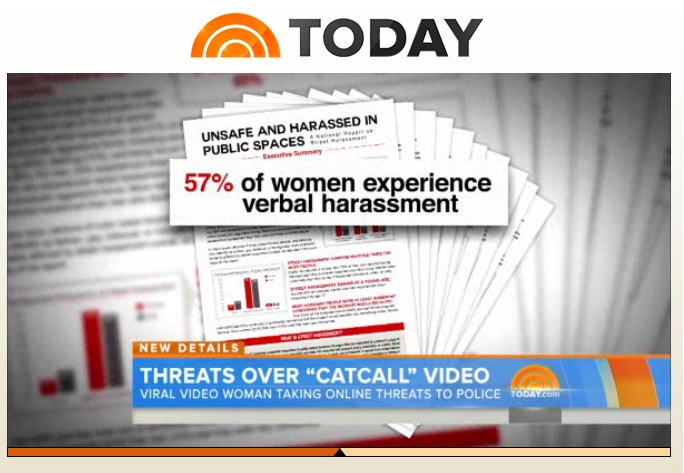
My first child was recently born and has some medical issues that will be requiring more of my time. As a result, I am looking for a few volunteers who can help with SSH’s social media pages and posting story submission on the blog. Ideally it’d be great to have a few volunteers who can manage a specific day of the week (e.g. Mondays) for the next few weeks, about 30-60 minutes per day, and who can work with minimal supervision from me after the initial on-boarding. Please reach out to me at StopStreetHarassment@Gmail.com if you’re interested and please share a little bit about yourself and your experiences with social media / WordPress, as well as your availability and geographic location. – Holly
Share

Filed Under: volunteer

SSH’s 10 Year Anniversary (Part 2)

May 29, 2018 By HKearl

Since it was founded 10 years ago, SSH has had a big impact locally in the Washington, DC-area, nationally in the U.S. and internationally! We are proud to have helped create a societal shift where street harassment is taken seriously by many, and there are global entities like the United Nations, national and city-level legislatures, researchers, academics, journalists, NGO advocacy groups, civil society organizations and community groups that address it.

One way to measure SSH’s impact is to look at the number of news articles citing SSH’s research and work – and that number is more than 350. This includes articles at BBC, Guardian, USA Today, the Today Show, CNN, Wall Street Journal, PBS News Hour, New York Times, Washington Post, Los Angeles Times, Huffington Post, Marie Clare Magazine, Glamour Magazine, Shape Magazine, Health Magazine, Runner’s World Magazine, Ms. Magazine and New Moon Girls Magazine.
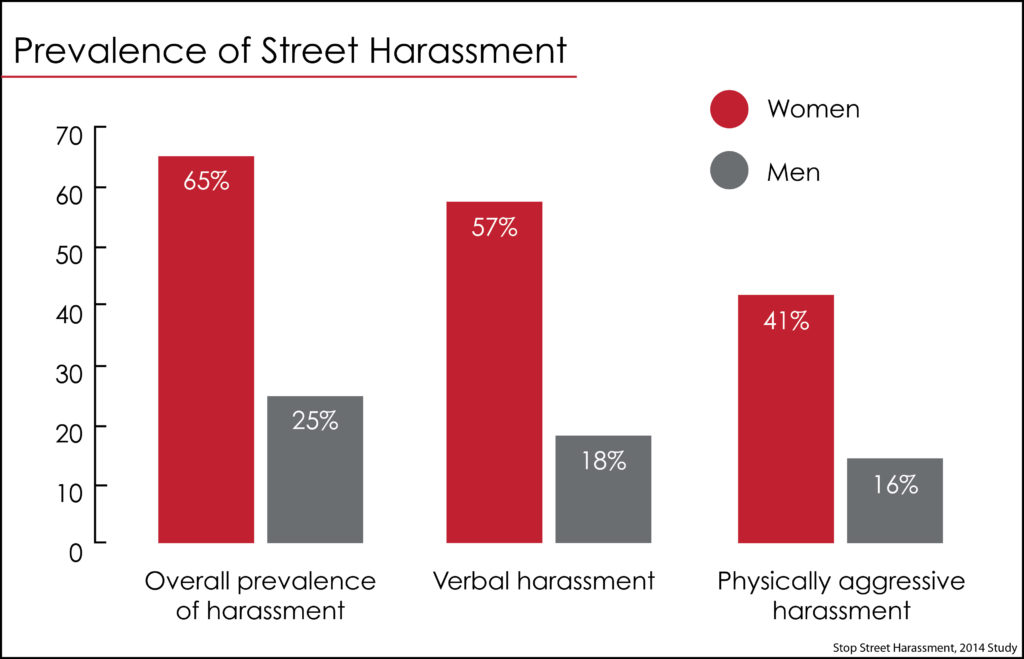
SSH’s 11 Biggest Achievements

In reflecting over the past 10 years, I decided to make a list of what I see as our biggest achievements. I aimed for 10 and came up with 11 that had to be on the list! 😊 Thank you so much to everyone who helped make them possible!

1. Running one of the go-to websites in the world for information about street harassment. It has been visited by at least 1.5 million people (the figure since we started tracking it seven years ago… this includes more than one million people in the past four years). Thousands of people from around the world have shared their street harassment stories on the website to bring attention to the problem, and there have been 13 cohorts of Blog Correspondents who wrote about street harassment issues and activism in their communities around the globe.

2. Commissioning and publishing in 2014 the first large-scale, nationally representative survey on street harassment that includes respondents of all genders. Our national study not only includes the findings from the 2,000-person survey but also the summaries of focus groups with various under-represented voices and ideas for how to stop street harassment based on interviews with various academic and community-based experts. The study has been used by countless entities and cited by every major U.S. news outlet.

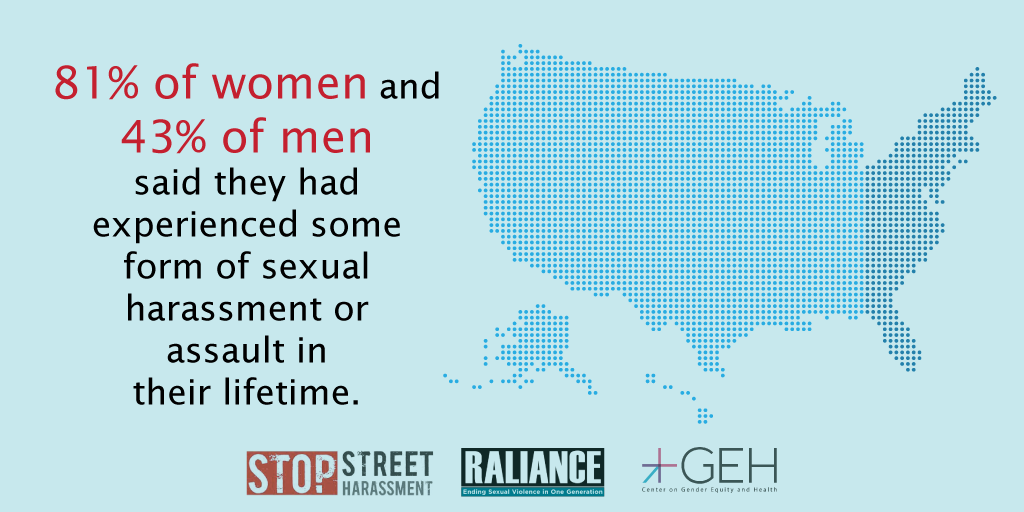
3. Commissioning and publishing in 2018 another nationally representative survey on all forms of sexual harassment and assault across all locations. The purpose was to bring forward the data behind the #MeToo stories and show that public spaces is where people experience sexual harassment the most. The New York Times requested the right to do an exclusive story on the findings the day it was released, and many other outlets covered it after that. The Centers for Disease Control and Prevention and UN Women have requested presentations on the findings in the coming months.

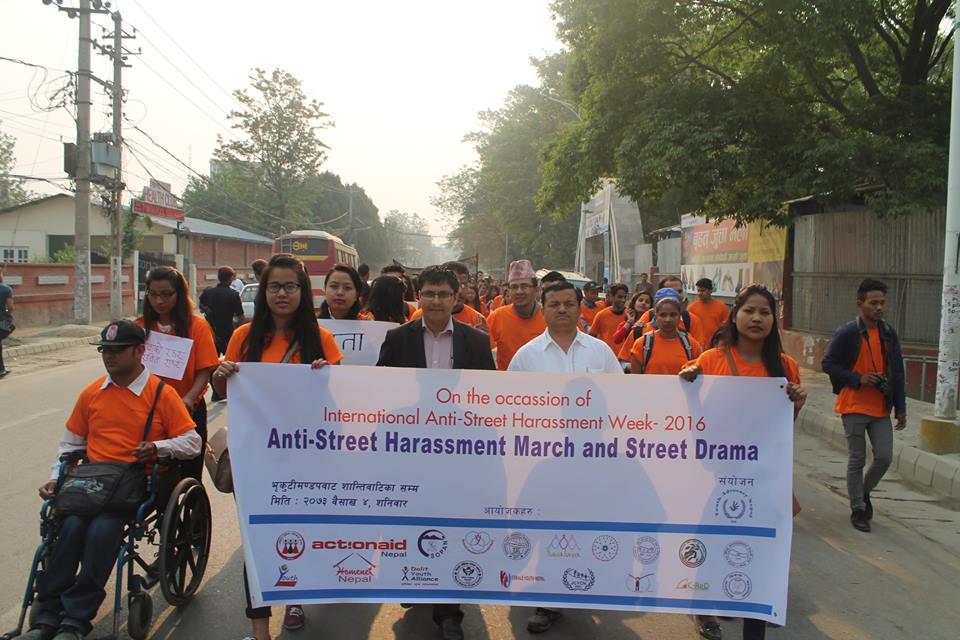
4. Starting International Anti-Street Harassment Week to provide space for groups and people all over the world to speak out against street harassment in their communities at the same time, and then overseeing eight of these weeks. Groups in up to 40 countries routinely participate, engaging tens of thousands of people in total each year.

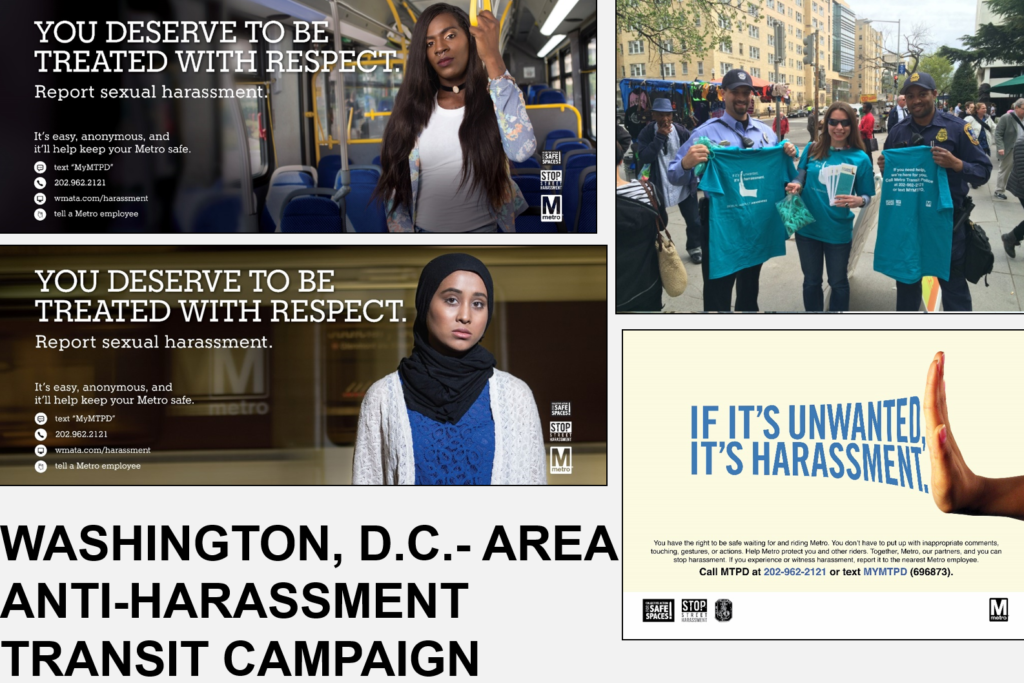
5. Collaborating with Collective Action for Safe Spaces and the Washington Metropolitan Area Transit Authority on a widescale and comprehensive anti-sexual harassment transit campaign since 2011. It’s entailed: training frontline staff, three waves of print PSAs and one wave of audio PSAs, two representative surveys of riders, and annual outreach/flyering days at various Metro stations. Millions of riders have been exposed to the campaign.

6. Founding the first-ever National Street Harassment Hotline in 2016, which is run in collaboration with the Rape, Abuse & Incest National Network and offers 24/7 free support by phone or secure IM chat, in English and Spanish. It serves an average of 30 people per month.

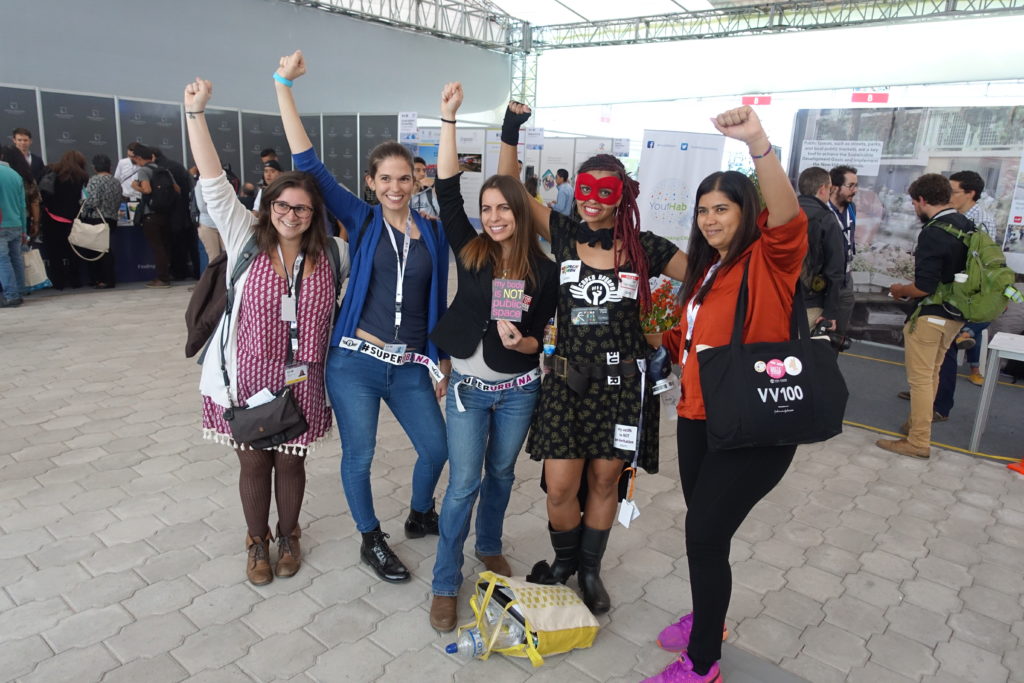
Anti-street harassment activists from Brazil, India, Italy and USA at HABITAT III in Ecuador


7. Speaking at and participating in 150+ important conferences, rallies, and events, including:

  • UN convenings on sexual violence in India (x2), Turkey, Ecuador and Mexico as well as multiple UN Commission on the Status of Women events in New York City;
  • An International Women’s Day March with UN Women in New York City;
  • Several Slutwalk rallies in Washington, DC;
  • National Sexual Assault Conference, National Women’s Studies Association Conference, International Coalition Against Street Harassment Conference, and NOW’s annual conference.
  • City Council Hearings on street harassment in New York City, Philadelphia and Washington, D.C.
  • Workshops and lectures at more than 40 university/college campuses, including NYU, Stanford, University of California at Berkeley, University of California at Irvine, University of Illinois Urbana-Champaign, University of Iowa, University of Nebraska, University of Nebraska, University of Wisconsin-Green Bay, Portland State University, Georgetown University, George Washington University, George Mason University, Santa Clara University and more.
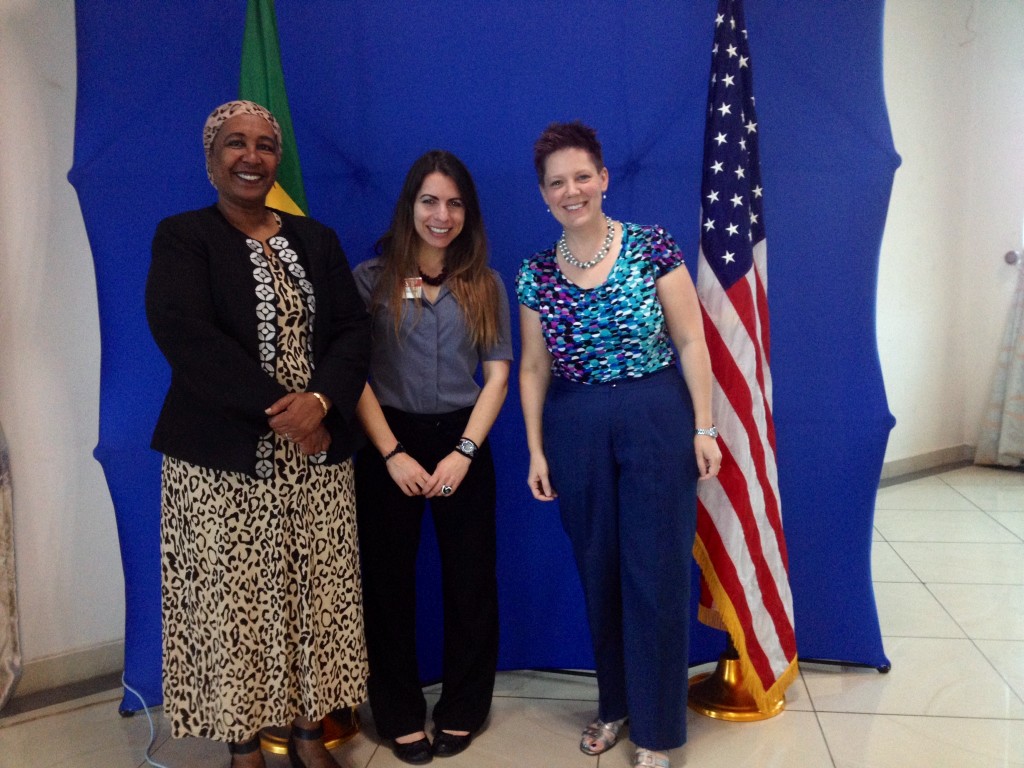
US Department of State trip to Ethiopia

8. Advising entities like Google, Lyft, Runner’s World, U.S. Department of State, New York City Council and lawmakers in the U.S. and internationally on their efforts to address street harassment and related issues. Notably, New Jersey passed a law against upskirt photos thanks to initial consultation with SSH early in the legislative process.

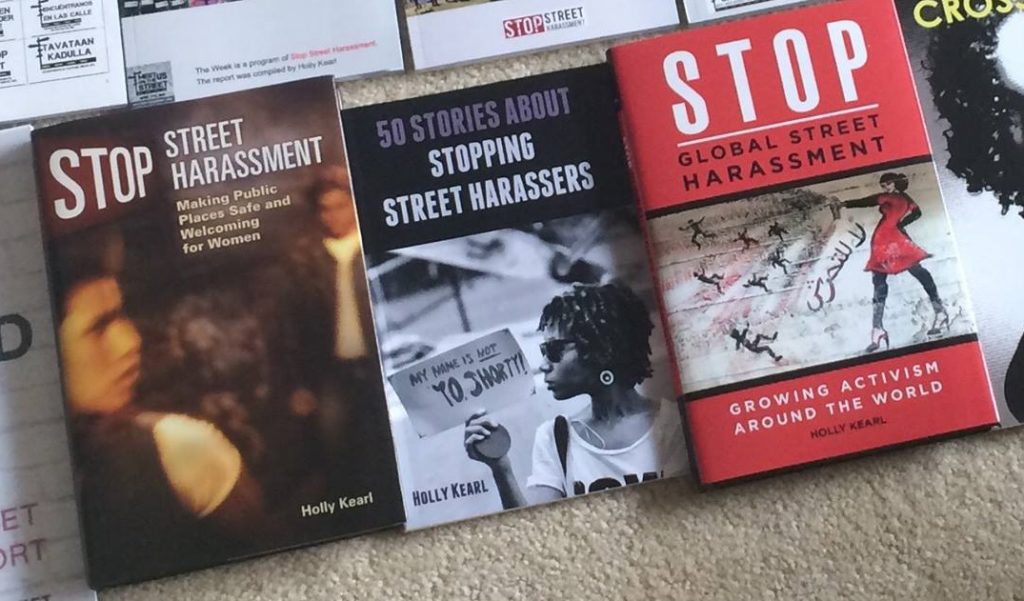
9. Producing four publications that are regularly read, cited and have had an impact, including:

  • Two academic books: Stop Street Harassment: Making Public Places Safe and Welcoming for Women (available in paperback for $13.50), and Stop Global Street Harassment: Growing Activism Around the World (available in hardcover for $37 and $35 for ebook).
  • A collection of empowering responses to harassment in 50 Stories about Stopping Street Harassers. (Available in paperback for $10, Kindle for $6.99).
  • A state-by-state legal guide called Know Your Rights: Street Harassment and the Law (Download the free toolkit (PDF) or access the companion web feature).


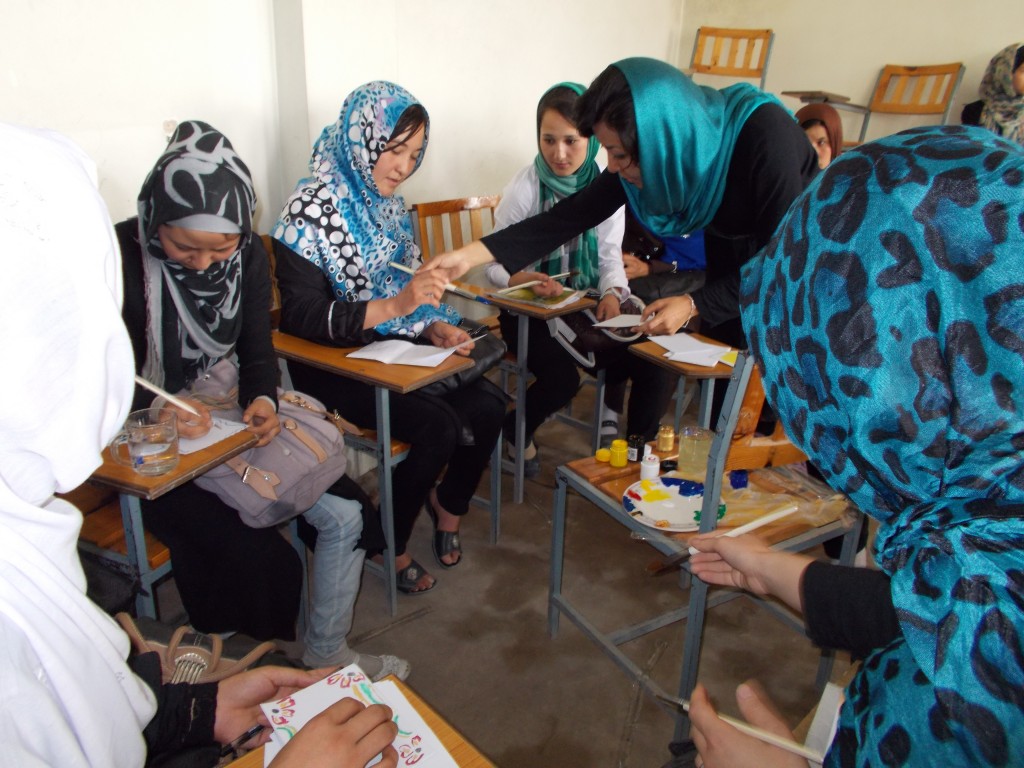
10. Mentoring 14 groups around the world on their anti-street harassment projects through the Safe Public Spaces Mentoring Program. It started as a PILOT in 2013 when we worked with the leaders of projects in Afghanistan, Cameroon and Chicago, USA. In 2014, we worked with six teams in India, Kenya, Nepal, Nicaragua, Serbia, and the USA. In 2015, we worked with four teams in France, India, Romania, and the USA.

11. Leading or collaborating on campaigns against companies that trivialize street harassment. The campaigns entail pressuring companies to drop harmful ads and change offensive language. One example is a campaign against a construction company in New Jersey that had a billboard suggesting street harassment is a compliment – a petition led to the company to immediately remove it.

What will our next 10 years bring?

Share

Filed Under: History, nonprofit, SH History, SSH programs, street harassment Tagged With: 10 year anniversary, 10 years, achievements

SSH’s 10 Year Anniversary (Part 1)

May 29, 2018 By HKearl

This month marks the 10-year anniversary of Stop Street Harassment! I am so grateful to the thousands of people who have shared their stories on the blog; participated in International Anti-Street Harassment Week; served as Blog Correspondents, social media volunteers, interns and board members; donated to fund our programs; attended SSH talks; read our articles and publications; signed our petitions; and more. With the help of our community, we have achieved a lot in 10 years, particularly considering we are a small organization run by volunteers who all have other jobs.

To commemorate this big 10-year milestone, here is a history of how we came to be, followed by a list of 11 of our biggest achievements!

History of Stop Street Harassment

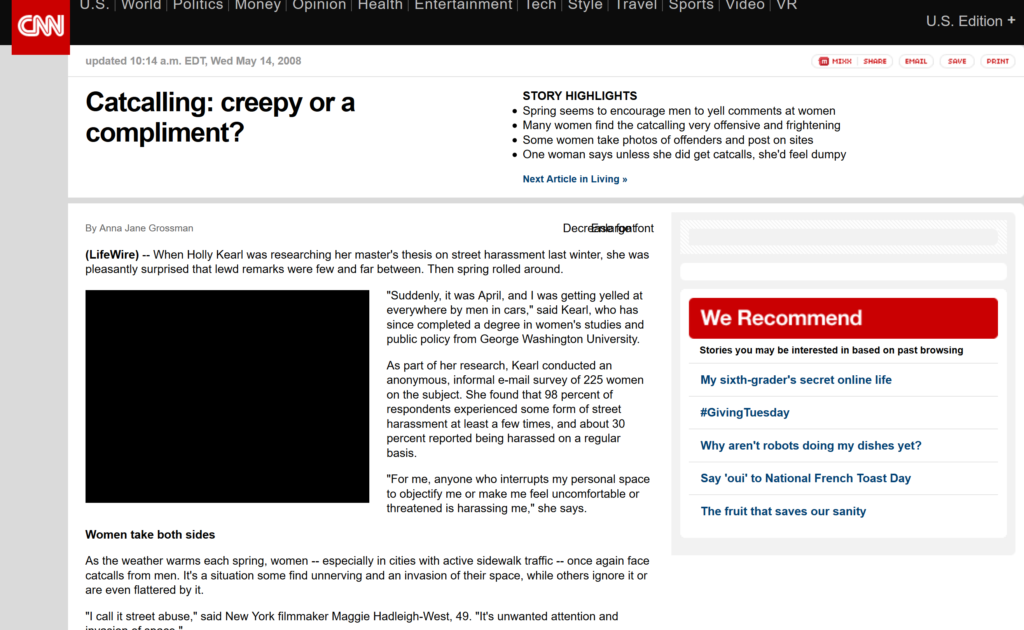
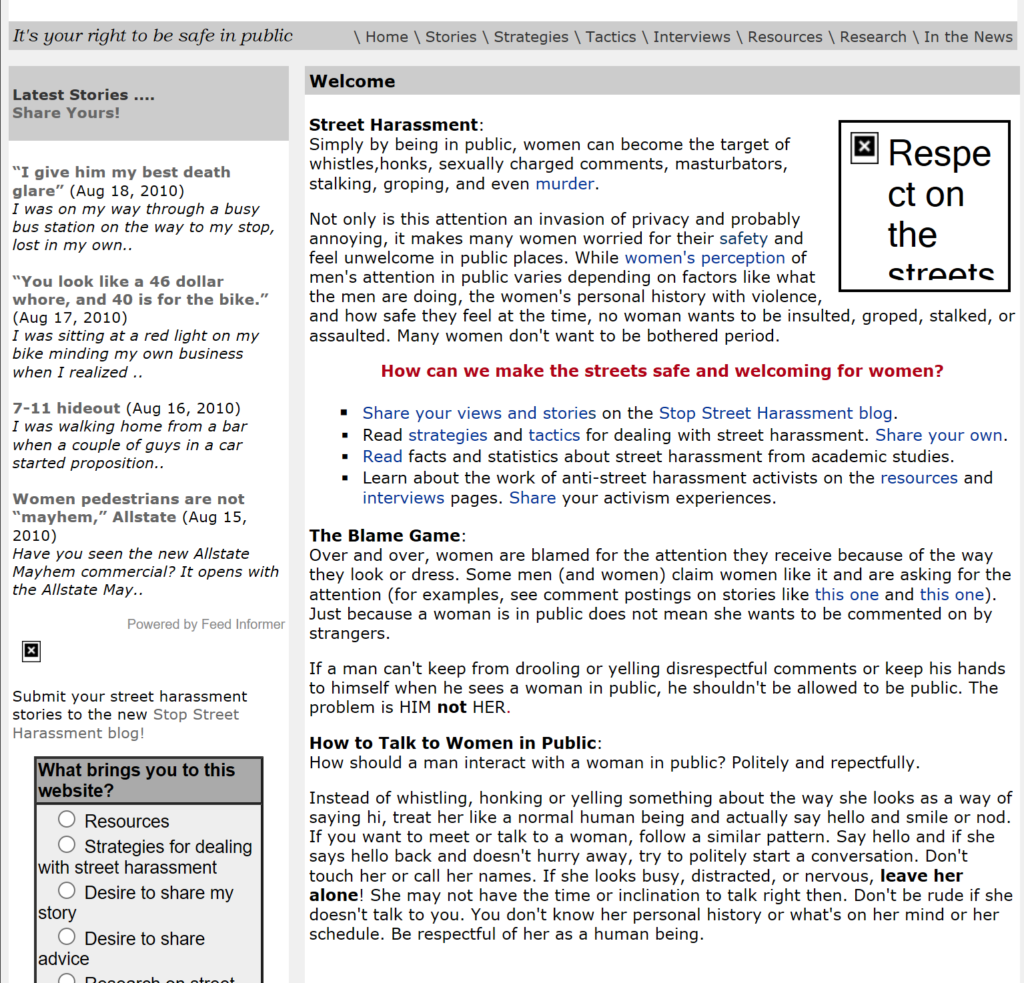
During the fall of 2006 and spring/summer of 2007, I researched and wrote my master’s thesis on gender-based street harassment while attending George Washington University in Washington, DC. I focused on how, in lieu of social recognition of the problem, women were using websites like the Street Harassment Project and Hollaback! chapter sites to share personal stories and strategies for dealing with street harassment. I conducted a small survey as part of my research. After I turned in my thesis, I put the survey results online – and reporters started finding it. At the time, there was so little accessible research on this topic that my thesis research was newsworthy.

The most influential article that cited my thesis was one on CNN.com in May 2008. At that time, it was commonplace for people to view street harassment as a compliment, a minor annoyance, no big deal or the fault of the person being harassed. The title of the CNN article reflects this reality: “Catcalling: creepy or a compliment?” Really, though, the title should have read something like, “Catcalling: A form of street harassment that must end.”

The article inspired dozens of blog posts and articles, hundreds of comments to the CNN article and many emails that I personally received that showed: 1) how common street harassment is and 2) how many misconceptions there are about the problem.

I was working full-time and I had no intention of becoming an anti-street harassment activist, but the response to the article demonstrated a clear need for public education on the topic. This need became more urgent once I went back to the websites I had analyzed for my thesis and found that the two websites I liked the best were either gone or inactive. Plus, at the time, unless you lived in one of the few cities with Hollaback! chapter sites, you didn’t have a place to publicly share your street harassment story. My domestic partner suggested I start my own website where I could share the resources I had collected through my thesis research. I also could provide space for story-sharing from people located anywhere in the world. I decided to do it.

In May 2008, Stop Street Harassment was born.

SSH began as a website that listed resources about street harassment and there was a companion blog where people could share their stories (I combined the website and blog during a 2011 website redesign). After a few months, I also began to write blog posts tracking relevant news and initiatives globally. I regularly searched online for new initiatives and conducted interviews with the people running them (after a few years, there were so many of these efforts that I could no longer keep up with them!).
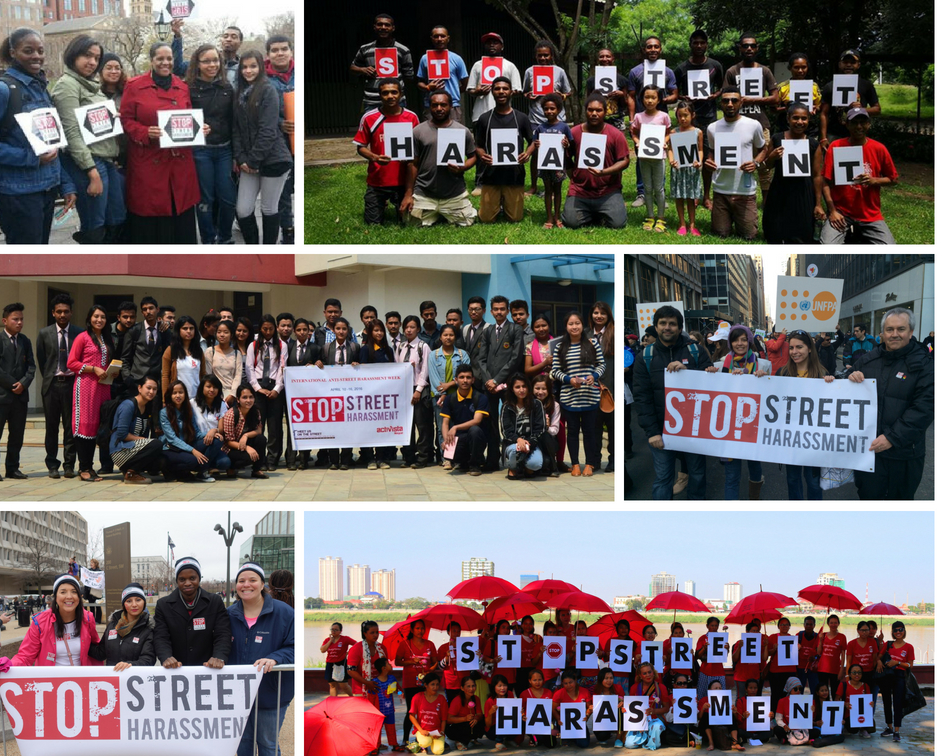
In the years since, SSH’s work has expanded to include various public education components, community mobilization programs and direct services. Our projects usually have come about because I’ve seen a gap that needs to be filled and decide to fill it, be that by commissioning a nationally representative survey to collect data PROVING street harassment is a problem, founding a national hotline to provide emotional support for people facing street harassment, or organizing space for groups all over the world to join forces on an annual basis to speak out against street harassment together. SSH also does a lot of idea-sharing of what’s working in various parts of the world and makes introductions between activists when relevant.

One of my big goals in the early years of SSH was to document the problem, which we’ve done. Another was to help change the societal acceptance of street harassment as being inevitable, a compliment or the fault of the harassed person (e.g. see the CNN article title!). We’ve made a lot of progress there, too. While there are some people who still spew views that minimize and dismiss the harms of street harassment, there are fewer of them. Further, it is much less common for journalists, government officials and others who have a public voice to frame it this way. For instance, in 2011, the Washington Metropolitan Area Transit Authority publicly said regarding sexual harassment on the transit system: “One person’s harassment is another person’s flirting.” Now they are one of the transit systems doing the most in the world to address and prevent sexual harassment.

There is still a lot of work left to do, but I feel pleased with what has changed in 10 years.

Thank you to everyone who has supported SSH and has helped create a societal shift where street harassment is taken more seriously and addressed. Hopefully one day harassing strangers in public spaces will be completely socially unacceptable and then people of all genders and backgrounds can safely enjoy and utilize public spaces.

While much of our work is done pro bono, we are grateful to our donors who have made initiatives like our national studies and the hotline possible. You too can make a tax-deductible donation to keep our work going.

Read about 11 of our biggest achievements since May 2008!


Share

Filed Under: History, SH History, SSH programs, street harassment Tagged With: 10 year anniversary, 10 years

« Previous Page
Next Page »

Share Your Story

Share your street harassment story for the blog. Donate Now

From the Blog

  • #MeToo 2024 Study Released Today
  • Join International Anti-Street Harassment Week 2022
  • Giving Tuesday – Fund the Hotline
  • Thank You – International Anti-Street Harassment Week 2021
  • Share Your Story – Safecity and Catcalls Collaboration

Buy the Book

  • Contact
  • Events
  • Join Us
  • Donate
  • Facebook
  • Instagram
  • Pinterest
  • Tumblr
  • Twitter
  • YouTube

Copyright © 2026 Stop Street Harassment · Website Design by Sarah Marie Lacy