April is Sexual Assault Awareness Month (SAAM) and this year the campaign focuses on preventing child sexual abuse through talking about healthy sexuality. When we hear child sexual abuse, we may only think about the abuse very young children experience, but teenagers are still children and far too many of them experience sexual abuse in the form of harassment in school and on the streets.
When I visited a high school class near my home in Virginia to lead a discussion about sexual harassment, I was upset that girl after girl had a story to share: sexual remarks shouted at them from cars; men following them home; the man who made “humping” motions against a girl on a public bus; the “creepy men” following them in stores; the men masturbating in front of them at public swimming pools; the man who told a girl on her bike to “get in the car.”
As part of my research for a 2010 book on gender-based street harassment (sexual harassment in public spaces), I surveyed more than 800 women. Nearly one in four recalled being harassed in places before they were 12 years old and nearly 90% said it had happened to them by age 19.
When the American Association of University Women conducted a national survey about sexual harassment in schools, 35% of students reported they had experienced sexual harassment by 6th grade and more than 80% had by 12th grade. Very few students ever reported the incidents.
Sexual violence touches more than just the lives of youth, however. In the United States, nearly 1 in 5 women surveyed said they had been raped or had experienced an attempted rape at some point. So to mark SAAM, here are 10 ways you can prevent sexual violence and help survivors of all ages.
 1. Believe/help survivors. Believe survivors when they confide in you. Visit the website of the Rape, Abuse & Incest National Network to find information to help you help the survivor. And to find information to help yourself.
2. Find help. If you are a survivor who isn’t sure where to turn to or how to get help, I highly recommend visiting the RAINN website. I volunteered with them for 2.5 years and applaud their work. You can find information about a phone or online hotline and information about recovery.
* Are you male? Visit the website 1 in 6 for resources specifically for you.
* Are you in the military? RAINN has a helpline called Safe Helpline specifically for survivors in the military.
 3. #TweetAboutIt. The National Sexual Violence Resource Center provides a variety of tools each year for Sexual Assault Awareness Month. Each year they host a Tweet about It Tuesday discussion on Twitter at 2 p.m. EDT throughout April. They use the hashtag #TweetAboutIt. They also offer posters, Facebook cover images and other tools for download.
During International Anti-Street Harassment Week, there will be five days of Tweet Chats on several topics, see the full schedule.
4. Participate in International Day Against Victim-Blaming. Held on April 3, this is an online day of action to speak out against victim-blaming and to support survivors. As the organizers, Slutwalk Toronto, state, “Survivors deserve our support not our scrutiny.” Use the hashtag #EndVictimBlaming and share this image on social media.
5. Talk about Healthy Sexuality: The National Sexual Violence Resource Center (NSVRC), the organizers of Sexual Assault Awareness Month, offers parents, educators, and community members many important tools and talking points on the topic of healthy sexuality.
 6. Address Sexual Harassment in Schools: The last chapter of AAUW research report on sexual harassment in schools includes promising practices and tools for parents, educators, and community members, including the Shifting Boundaries middle school curriculum, Men of Strength Clubs for middle and high schools, and the book Hey Shorty! A Guide to Combating Sexual Harassment and Violence in Schools and on the Streets.
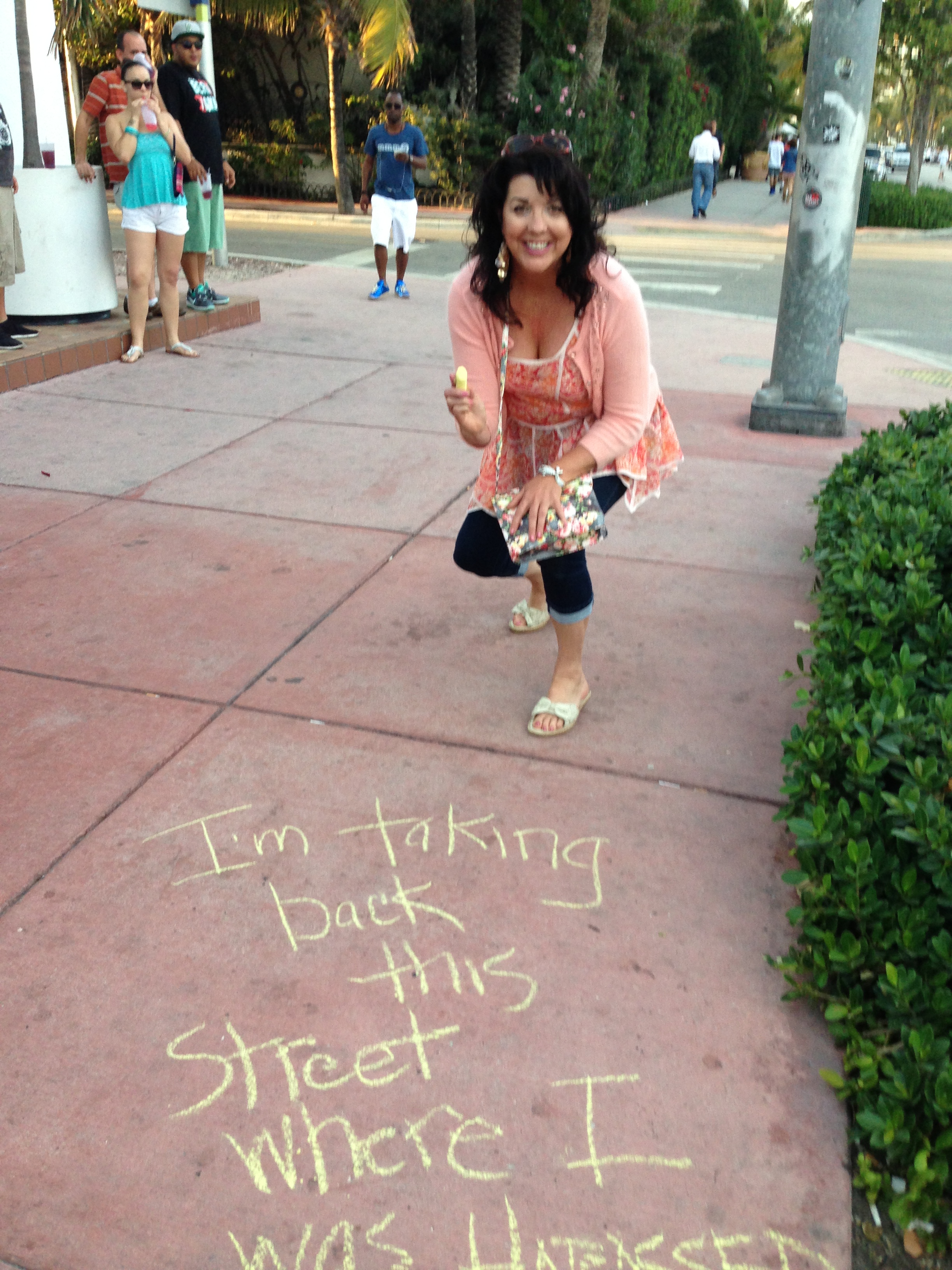
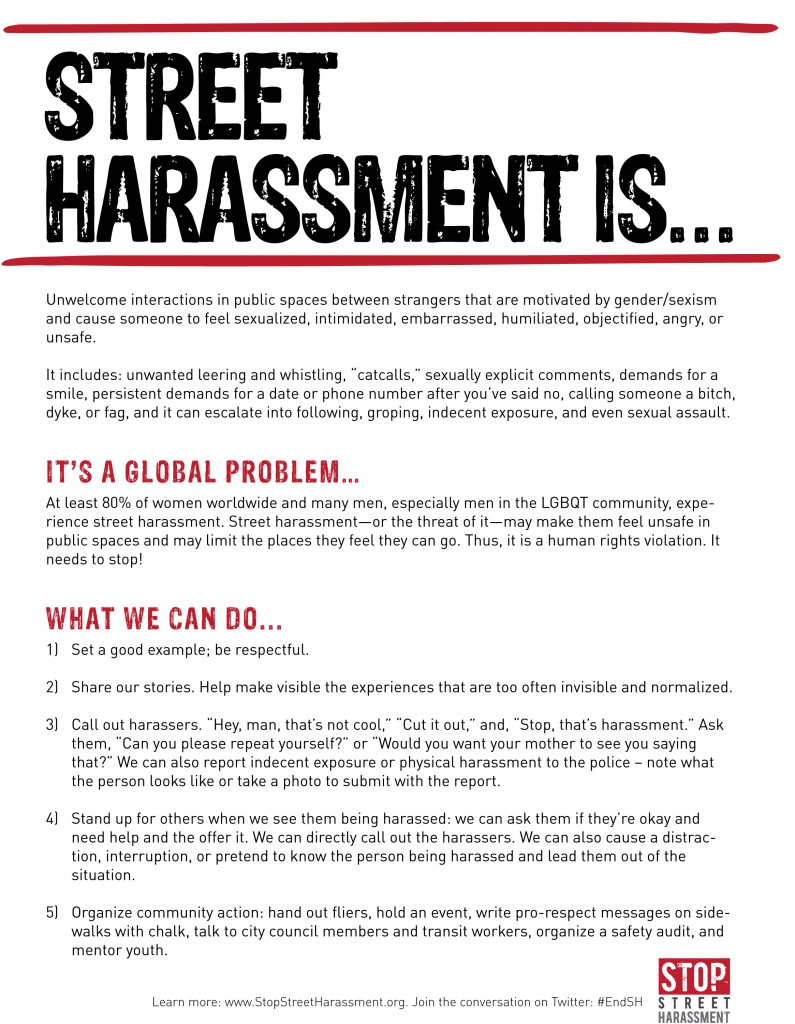
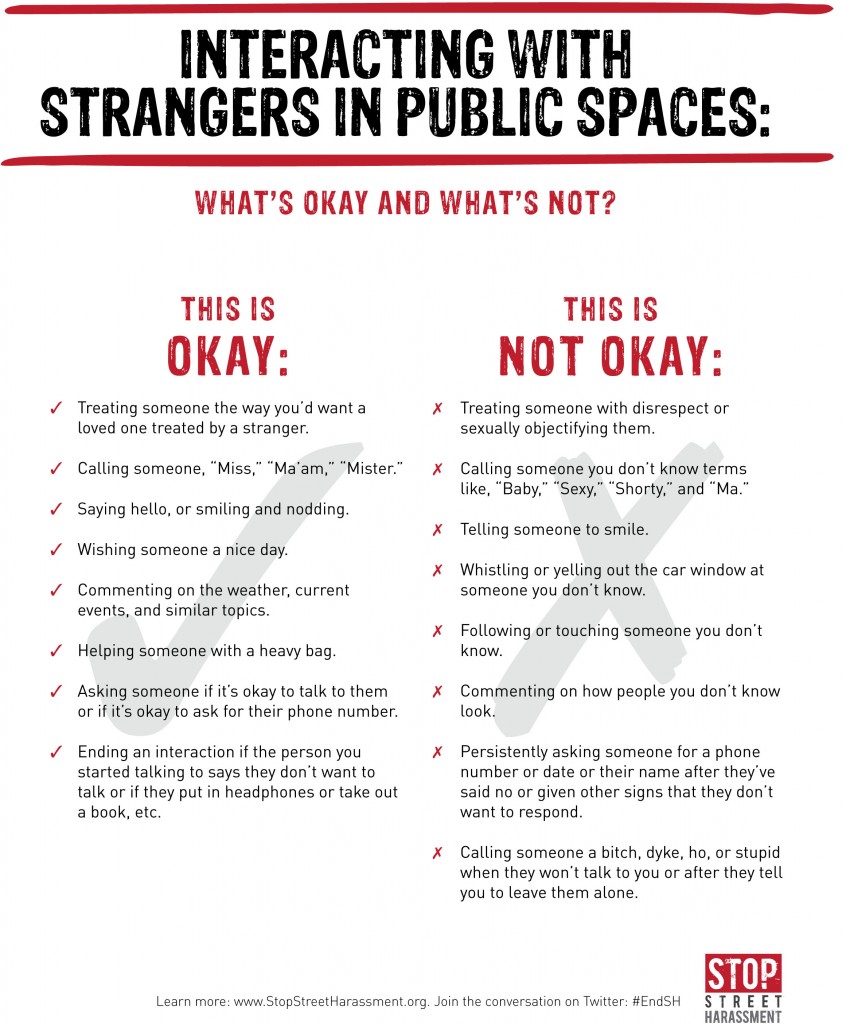
7. Address Sexual Harassment on the Streets: There are numerous ways to address street harassment, starting by telling our stories to document the problem. We can speak up and help out when someone else is being harassed. We can talk to young men about the issue and how to have respect on the street. We can organize community action.
8. Participate in International Anti-Street Harassment Week: Street harassment is on the same spectrum of gender violence as sexual assault and it can occasionally escalate to sexual assault and feel re-triggering to sexual assault survivors. Join tens of thousands of people in speaking out from April 7-13. Find ideas and events.
 9. Wear Jeans. Make a social statement by wearing jeans on April 24 as part of Denim Day in LA & USA. The day is a visible way to protest against misconceptions that surround sexual assault. Order their Denim Day Action Kit and raise awareness at your workplace, neighborhood, or community. Encourage each person who participates to donate one dollar to Denim Day to fund prevention programming.
10. Use the Arts or March. Take part or organize arts-based initiatives or a march to raise awareness about sexual assault. Examples of initiatives include:
* The Clothesline Project, an initiative to bear witness to violence against women. Women affected by violence decorate a shirt and hang the shirt on a clothesline to be viewed by others as testimony to the problem of men’s violence against women.
* V-Day event offers several performance and film screening options for groups to implement in their community in February, March, and April. The purpose of these events is to raise awareness about violence against women and girls as well as raise money for local beneficiaries that are working to end violence. There is no theater or producing experience necessary. Visit the V-Day website to learn how to organize a V-Day event.
* Story of a Rape Survivor (SOARS) is an award winning multimedia performance you can bring to your community that entertains as well as educates the audience about sexual assault prevention. Featuring the music of Nina Simone, Maxwell, and Sade, SOARS tells one woman’s story about how she reclaimed her body, sexuality, and self-esteem after being sexually assaulted in college. SOARS is a cutting-edge theatrical experience that stars a diverse cast of women, combining photographs, dance, spoken-word poetry and music as a way to educate about healing from sexual violence.
* By wearing a white ribbon, White Ribbon Campaign members make a personal pledge to “never commit, condone or remain silent about violence against women and girls.” You can order materials to help challenge the community to speak out on the issue, learn about sexual violence, and raise public awareness.
* Organize or participate in a Take Back the Night March in your community or on campus and make a statement that women have the right to be in public and to go about their lives without the risk of sexual violence. Order a kit with resources for the event.