• About Us
    • What Is Street Harassment?
    • Why Stopping Street Harassment Matters
    • Meet the Team
      • Board of Directors
      • Past Board Members
    • In The Media
  • Our Work
    • National Street Harassment Hotline
    • International Anti-Street Harassment Week
    • Blog Correspondents
      • Past SSH Correspondents
    • Safe Public Spaces Mentoring Program
    • Publications
    • National Studies
    • Campaigns against Companies
    • Washington, D.C. Activism
  • Our Books
  • Donate
  • Store

Stop Street Harassment

Making Public Spaces Safe and Welcoming

  • Facebook
  • Instagram
  • Pinterest
  • Tumblr
  • Twitter
  • YouTube
  • Home
  • Blog
    • Harassment Stories
    • Blog Correspondents
    • Street Respect Stories
  • Help & Advice
    • National Street Harassment Hotline
    • Dealing With Harassers
      • Assertive Responses
      • Reporting Harassers
      • Bystander Responses
      • Creative Responses
    • What to Do Before or After Harassment
    • Street Harassment and the Law
  • Resources
    • Definitions
    • Statistics
    • Articles & Books
    • Anti-Harassment Groups & Campaigns
    • Male Allies
      • Educating Boys & Men
      • How to Talk to Women
      • Bystander Tips
    • Video Clips
    • Images & Flyers
  • Take Community Action
  • Contact

Street harassment article on CNN.com!

October 6, 2012 By HKearl

The launching point for Stop Street Harassment was when CNN.com featured my thesis about street harassment in a 2008 article called, “Catcalls: Creepy or a Compliment?”

I’m pleased to say that four years later, they have another homepage feature about street harassment and this time the issue is taken more seriously. It opens:

“Head down, look straight ahead. Earbuds in, volume off. Walk quickly, but with purpose. Don’t make eye contact unless you need to. Look behind you every few blocks, make sure you’re not being followed. Don’t be obvious.

It’s not nighttime. You’re not in a known drug zone, or the sketchy part of town.

This is simply how many women steel themselves when walking down a city street in broad daylight, or even when boarding crowded public transportation. Why? Because many women, regardless of age, weight, or appearance, say they’ve heard something along the lines of “Hey baby, you want some of this?” or “I like what I see” or “nice ass.”

All of those statements are sexual harassment. And while some men might consider them compliments, to many women, they are a threat.”

A lot has changed in four years thanks to people around the world who are relentlessly and bravely speaking out.

Since 2008 there are now are several anti-street harassment organizations. We’ve had a city council hearing on street harassment in New York City. The United Nations launched a Safe Cities Programme in five countries. Hollaback launched their iphone app.  Websites tracking street harassment popped up in dozens of countries. More than 100 groups from over 20 countries spoke out collectively in March during Meet Us on the Street: Street Harassment Awareness Week. My book came out in 2010 and since then, I’ve given 75 talks on the topic. And on and on.

In today’s CNN.com article, research is cited from a new study by Hollaback and Cornell University about street harassment in New York City. This is important data.

But we also need national data documenting the problem. Please donate today to help Stop Street Harassment undertake this important initiative. Let’s continue to move the dialogue forward with not only our stories, but also with national statistics.

Share

Filed Under: street harassment

Street Art: Interview with Tatyana Fazlalizadeh

October 5, 2012 By HKearl

You’ve seen, loved and shared her artwork about street harassment, now hear from the artist herself.

Tatyana Fazlalizadeh is an oil painter / illustrator whose work focuses on portraiture and social/political themes. Currently based in NYC, she exhibits her paintings in galleries nationally, while working as a freelance illustrator and muralist.

Stop Street Harassment (SSH): What inspired your art project about street harassment?

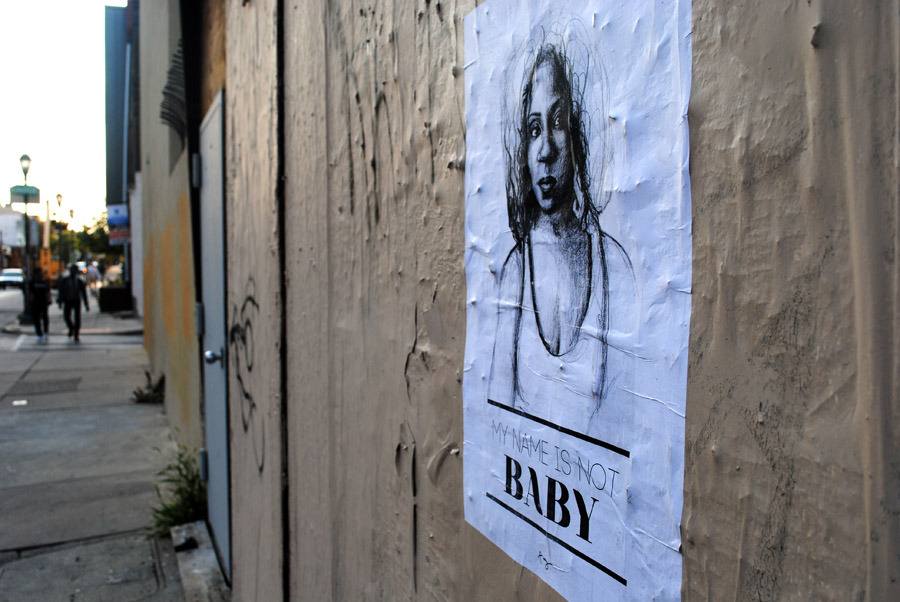
Tatyana Fazlalizadeh (TF): The project was inspired by my daily experiences with street harassment. Being harassed on the street is exasperating. I’ve wanted to do some art work on the issue for a while now, but I couldn’t figure out how to properly communicate what I wanted to say in my primary artistic medium – oil paint on canvas. Over the past year or so I’ve started working in public art as a muralist. Thinking about  creating art in a public space led me to this idea of wheat pasting posters. Because what better medium to create art about street harassment than street art.

SSH: Some of the prints are up on walls around Philadelphia, right? How many did you put up and how did you select where to post them?

TF: Philly, yes. As well as other places that I’m often in, mostly Brooklyn and other parts of NYC. This project is still very new and I plan to continue it and expand it, that includes venturing to different cities. I’ve placed them in areas that receive foot traffic, areas that I’ve personally been harassed, and spots that work well for wheat paste.

SSH: What reactions have you received from people who’ve seen them in person and from people who saw them on your Tumblr page?

TF: I’ve received a lot of positive reactions from women who relate to the captions on the posters. I’ve been having a lot of conversations, and a few debates, about street harassment as a result of this.  I wasn’t sure what to expect because the state of this medium is very temporary; it’s likely to put up a piece and for it to be gone a few days later. So to have the pieces captured and widely shared online was surprising but, I’m also very happy about that.

My intention with putting up these pieces was to artistically speak up for myself and other women who are harassed on the street. In the moment, you don’t always speak up for yourself. You ignore them, walk faster. So with this work, I wanted to say what I actually think when being hounded by men (though, they aren’t my exact thoughts because those usually include a lot of expletives). After having conversations with friends and women that I know, I decided to also include their words and thoughts as captions. So, the work is for women but also, and maybe even more so, for men. I haven’t received many reactions from men, and I’m trying to figure out a way to find their reactions and thoughts, if there are any.

SSH: Do you plan to create more artwork to bring attention to the issue of street harassment?

TF: I do. I’m plan to revisit this topic in my painting. I’m also looking to create some mural projects around this theme.

SSH: Please feel free to share anything else you want people to know about your project.

TF: I’m glad that the work is resonating with women. The process so far has been fun, and the art and issue of street harassment is something I’m passionate about. It’s great to put my art in the streets and make these public statements that women aren’t outside for the pleasure of men.

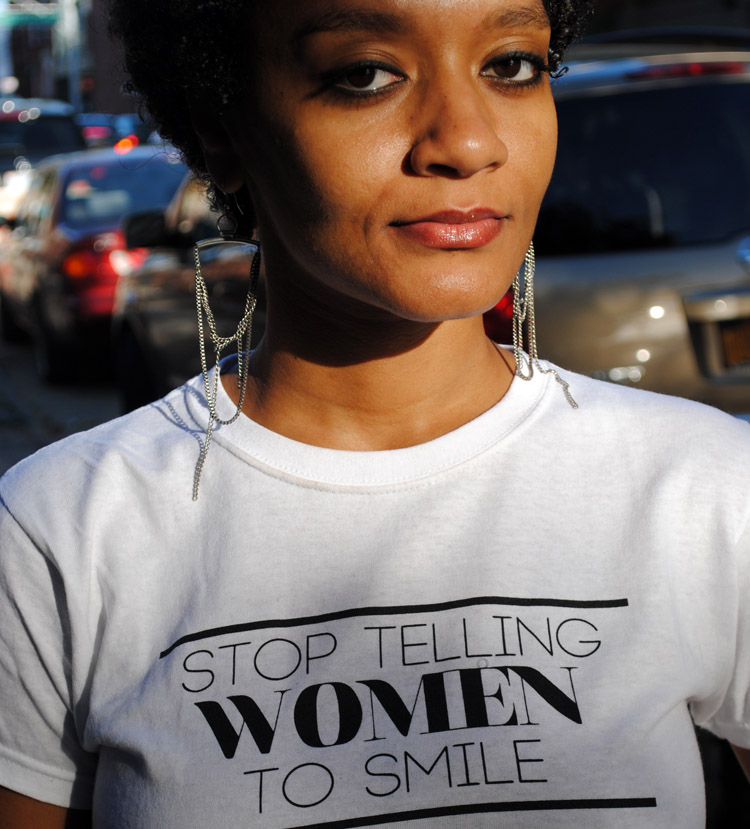
If you love the shirt Tatyana is wearing, you can order one too!

Share

Filed Under: Activist Interviews, Stories, street harassment Tagged With: art, murals, Tatyana Fazlalizadeh

Egyptian Presidential Palace Protest

October 5, 2012 By HKearl

Image via @clear_red

About 100 people protested outside the presidential palace in Egypt yesterday to demand a stronger sexual harassment law.

Share

Filed Under: News stories, Stories, street harassment

Sexual assaulter on the prowl in Springfield, VA

October 3, 2012 By HKearl

A local news station in the Washington, DC, area just reported that as many as five women may have been groped by the same sexual assaulter recently in Springfield, VA, a suburb of Washington, DC:

“The woman who may be the fifth victim said a man grabbed her from behind , grabbing her breasts right in front of her teenage daughter. She says he wasn’t out to rob her, because he did not steal her purse.

Police say the fourth attack happened on Tuesday at about 7:15 p.m. around the intersection of Exmore St. and Hibbling Ave.

Each time, the man grabs victims from behind and fondles their breasts.”

This is from a Washington Examiner article a few days ago:

“A man wearing a plain, red baseball cap is suspected in three different fondling cases in September in Springfield.

In the most recent, on Thursday, a 17-year-old girl was walking on the sidewalk around 9 a.m. on the 5900 block of Erving Street when she was grabbed behind and fondled.

On Sept. 18, a 16-year-old girl was walking on a path in the 6700 block of Metropolitan Center Drive around 2:45 p.m. when she was grabbed.

And a 26-year-old woman was walking near Old Keene Mill Road and Springfield Boulevard around 8:30 a.m. when she heard a whistle. When she reached the 7200 block of Monticello Boulevard, a man grabbed her from behind and fondled her.

All three victims described the suspect as either Asian or Hispanic and wearing a red baseball cap. One suspect said he had a thin, black goatee; another said he had a black, close-cut beard. One suspect said he was about 5 feet 8 inches tall, another said 5 feet 6 inches.

Anyone with information should call Crime Solvers at 1-866-411-8477.”

Despicable. Also, I wish the news would correctly identify what’s happening as sexual assault instead of only referring to it as “fondling.”

I hope they catch him soon.

Share

Filed Under: News stories

Street Harassment in 1945

October 3, 2012 By HKearl

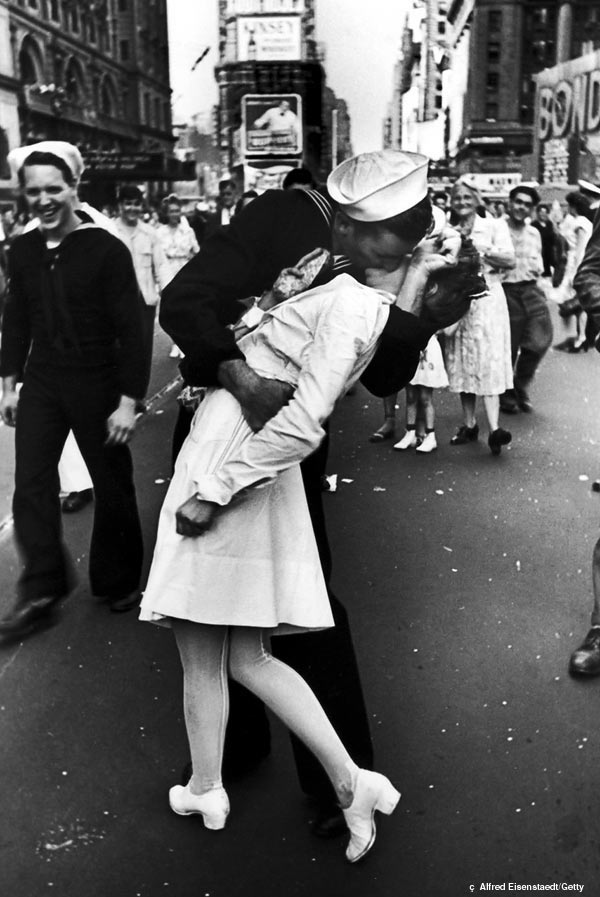
What do you think the photo to the right, taken in 1945 in New York’s Times Square, depicts?

An only-in-the-movies romantic gesture? A passionate kiss between two lovers who’ve been kept apart by war?

What about street harassment?

Unfortunately, despite its iconic status and the way it has come to symbolize  World War II ending and and the baby boom beginning, it turns out that’s exactly what it depicts: unwanted sexual conduct between strangers in a public space.

Crates and Ribbons reports:

“For a long time, the identity of the pair remained a mystery. It certainly looks passionate and romantic enough, with many speculating that they were a couple – a sailor and a nurse, celebrating and sharing their joy. This year, however, historians have finally confirmed that the woman is Greta Zimmer Friedman, a dental nurse at the time, and George Mendonsa, a sailor.

Have a look at some articles about it. Do you get the feeling that something is not quite right?

Huffington Post | Daily Mail | CBS News

A few facts have come to light. Far from being a kiss between a loving couple, we learn that George and Greta were perfect strangers. We learn that George was drunk, and that Greta had no idea of his presence, until she was in his arms, with his lips on hers.

The articles even give us Greta’s own words:

“It wasn’t my choice to be kissed. The guy just came over and grabbed!”

“I did not see him approaching, and before I knew it, I was in this vice grip.”

“You don’t forget this guy grabbing you.”

“That man was very strong. I wasn’t kissing him. He was kissing me.”

It seems pretty clear, then, that what George had committed was sexual assault. Yet, in an amazing feat of willful blindness, none of the articles comment on this, even as they reproduce Greta’s words for us. Without a single acknowledgement of the problematic nature of the photo that her comments reveal, they continue to talk about the picture in a whimsical, reverent manner, “still mesmerized by his timeless kiss.” George’s actions are romanticized and glorified; it is almost as if Greta had never spoken.”

I’m not surprised her story is being dismissed. The truth would make this famous story depict something unpleasant rather than the “feel-good” story we think we know when we look at it.

From the nursery rhyme “Georgie Porgie Pudding in Pie/Kissed the Girls and Made them Cry,” to the boys who chased us in elementary school trying to kiss us against our will, to the Looney Tunes cartoon character Pepé Le Pew who spends every episode trying to kiss a female cat against her will (interestingly, Pepé was introduces in 1945), unwanted kissing is seen as cute or funny, not as sexual harassment and certainly not as sexual assault.

But it is. As someone who has been kissed against her will, I can attest: it’s uncomfortable, it’s gross, and it’s unnerving.

The first time my partner kissed me on our first date in college, he asked. That’s how it should be. Every intimate act should have consent, including kissing.

So, I will speak the uncomfortable truth and call out this iconic photo. Strangers have no right and no place to kiss strangers, even if they’re overjoyed at being back from war.

He should have asked her for permission and respected her autonomy, her body, and her feelings.

Share

Filed Under: street harassment

« Previous Page
Next Page »

Share Your Story

Share your street harassment story for the blog. Donate Now

From the Blog

  • #MeToo 2024 Study Released Today
  • Join International Anti-Street Harassment Week 2022
  • Giving Tuesday – Fund the Hotline
  • Thank You – International Anti-Street Harassment Week 2021
  • Share Your Story – Safecity and Catcalls Collaboration

Buy the Book

  • Contact
  • Events
  • Join Us
  • Donate
  • Facebook
  • Instagram
  • Pinterest
  • Tumblr
  • Twitter
  • YouTube

Copyright © 2026 Stop Street Harassment · Website Design by Sarah Marie Lacy