• About Us
    • What Is Street Harassment?
    • Why Stopping Street Harassment Matters
    • Meet the Team
      • Board of Directors
      • Past Board Members
    • In The Media
  • Our Work
    • National Street Harassment Hotline
    • International Anti-Street Harassment Week
    • Blog Correspondents
      • Past SSH Correspondents
    • Safe Public Spaces Mentoring Program
    • Publications
    • National Studies
    • Campaigns against Companies
    • Washington, D.C. Activism
  • Our Books
  • Donate
  • Store

Stop Street Harassment

Making Public Spaces Safe and Welcoming

  • Facebook
  • Instagram
  • Pinterest
  • Tumblr
  • Twitter
  • YouTube
  • Home
  • Blog
    • Harassment Stories
    • Blog Correspondents
    • Street Respect Stories
  • Help & Advice
    • National Street Harassment Hotline
    • Dealing With Harassers
      • Assertive Responses
      • Reporting Harassers
      • Bystander Responses
      • Creative Responses
    • What to Do Before or After Harassment
    • Street Harassment and the Law
  • Resources
    • Definitions
    • Statistics
    • Articles & Books
    • Anti-Harassment Groups & Campaigns
    • Male Allies
      • Educating Boys & Men
      • How to Talk to Women
      • Bystander Tips
    • Video Clips
    • Images & Flyers
  • Take Community Action
  • Contact

Women’s rights activists receive Nobel Peace Prize

October 7, 2011 By HKearl

Congratulations to Liberian President Ellen Johnson Sirleaf, women’s rights activist Leymah Gbowee from Liberia, and democracy activist Tawakkul Karman of Yemen for being awarded the Nobel Peace Prize today!

I’m thrilled to see their important work recognized through this prestigious award and I’m also glad to see the Nobel Committee recognize women right’s activism as peace-keeping work.

Via the New York Times:

“We cannot achieve democracy and lasting peace in the world unless women obtain the same opportunities as men to influence developments at all levels of society,” said the citation read by Thorbjorn Jagland, a former Norwegian prime minister who heads the Oslo-based Nobel committee that chooses the winner of the $1.5 million prize.

Absolutely! And sadly, today, the rates of gender-based violence including rape, sexual harassment and street harassment keep too many women from having those opportunities. Gender-based violence and harassment can make it unsafe for women to go in public places to pursue such opportunities, keep them out of certain professions or positions of leadership, and even make affected women too emotionally worn down and wary to be the amazing leaders they otherwise could be.

The work anti-violence groups do to promote women’s equality and to prevent gender-based violence is key, then, to peace and to an equitable society.

With all of the amazing work that women do around peace-keeping and peace-building, can you believe only 12 other women have ever won this prestigious award? Even though this is the 110th year it is being awarded? The last time it was awarded to a woman was seven years ago.

One of my heroes Irena Sendler, a Polish social worker, saved more than 2,000 Jewish children during the Holocaust, was nominated for the Peace Prize in 2007. Al Gore won that year instead because of his work to address Global Warming. I was disappointed that Sendler was not selected, especially after allegations about Gore sexually harassing a woman surfaced last year (his wife filed for divorce that same month).

I hope this year’s award will set a new trend for recognizing the many ways women promote peace in their homes, in their communities, in their countries, and across the globe, and honoring their importance.

Share

Filed Under: News stories Tagged With: al gore, Irena Sendler, Leymah Gbowee, Liberian President Ellen Johnson Sirleaf, nobel peace prize, sexual harassment, Tawakkul Karman

Talking Street Harassment with a Congresswoman and an NPR host

October 6, 2011 By HKearl

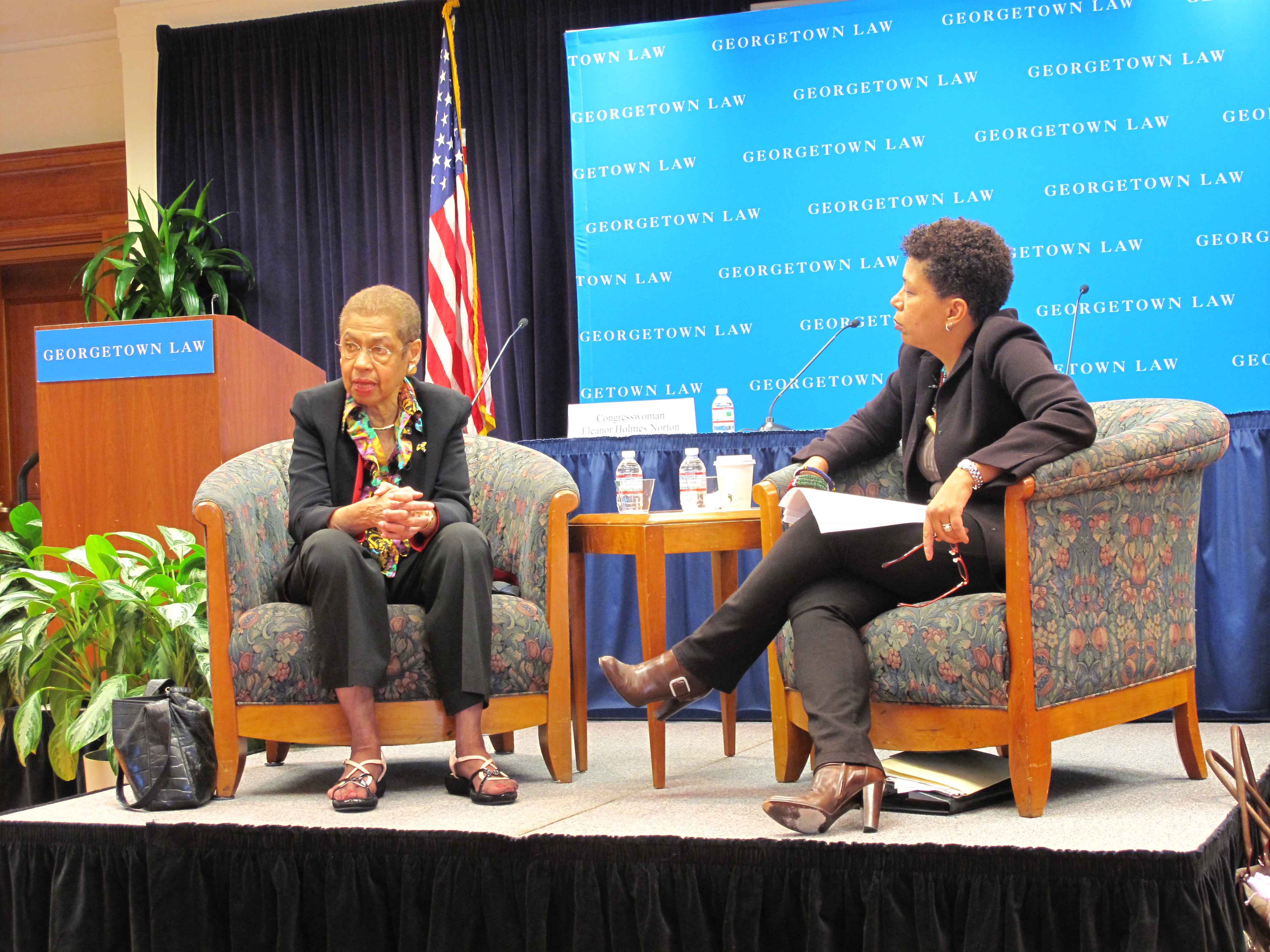
Eleanor Holmes Norton and Michel Martin

Today I talked about street harassment with Delegate Eleanor Holmes Norton (DC) and NPR’s Michel Martin, host of the afternoon show Tell Me More.

How did I get to have a conversation about street harassment with such amazing women?

Well, I had the privilege of attending a conference at Georgetown Law Center that commemorates the 20 years since Professor Anita Hill testified to the Senate Judiciary Committee about how Clarence Thomas sexually harassed her when she worked for him. Her testimony was part of his confirmation hearings for the U.S. Supreme Court. The Senators treated her abominably, and Thomas was appointed as a Justice.

Working women across the nation identified with what Hill said and seeing her talk about something so personal and taboo on live television opened up the floodgates.

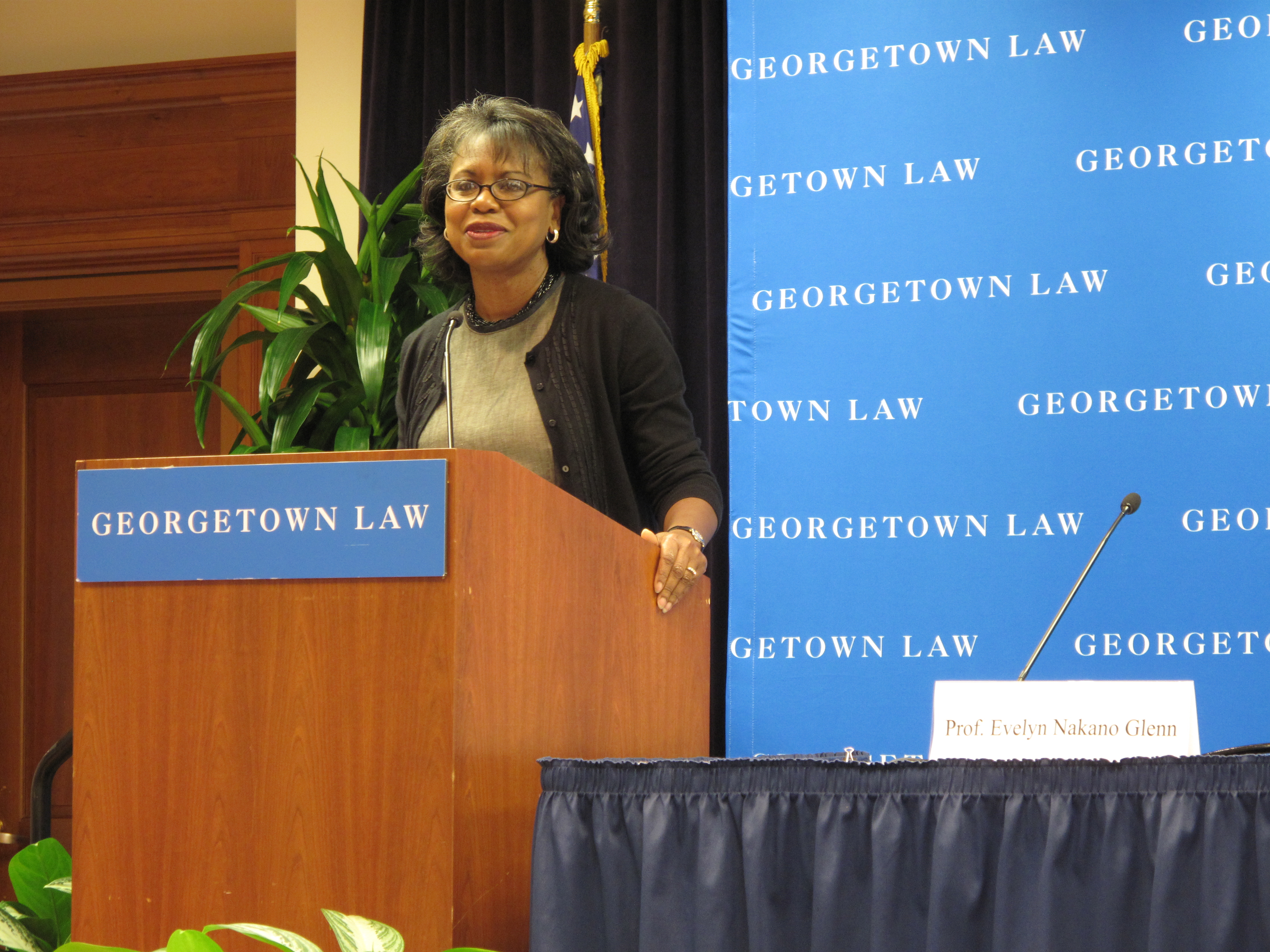
Anita Hill

Women started sharing their sexual harassment stories too. Hill’s testimony ultimately changed how we think about sexual harassment and it was a pivotal moment in our nation’s history. Plus, the way the men in the Senate treated Hill led women to vote women candidates into political office in numbers that have never been matched.

Today at the conference, law professors, media experts, and feminist activists talked about where we are today with regards to workplace sexual harassment and the impact the hearings has had on race and gender in our society. Hill was the closing speaker and it was an honor to hear from her.

But this post focuses on my conversation with Delegate Norton and Ms. Martin.

In the mid-afternoon, Martin sat down with Norton and asked her questions about what the hearing was like from her perspective as a new Congresswoman and as the former head of the Equal Employment Opportunities Commission (EEOC) who helped draft the original workplace sexual harassment policies. Martin was a white house correspondent at the time of the hearing and she shared a bit about her perspective. Both women provided fascinating insight into a national event I did not know was occurring at the time (I was eight years old) but one that paved the way for my anti-street harassment activism and the work I do at AAUW on sexual harassment in schools and the workplace.

After their illuminating conversation, there was time for questions from the audience. Without formulating my thoughts, I jumped up, amazed to have an opportunity to ask them their thoughts on applying lessons learned from workplace sexual harassment to current efforts around street harassment. I was not my most articulate and flubbed a bit, but I got into a grove during some of my responses back to them.

Norton spoke first. It quickly became clear she didn’t understand what I meant by “sexual harassment that happens in public places” and so I had to explain street harassment to this long-time feminist and leader in the sexual harassment movement. It reminded me just how normalized street harassment is and/or how rarely it must happen to someone of Norton’s privileged position if she did not know much about it despite working on sexual harassment issues, often in a leadership position, since the mid-1970s.

Martin, on the other hand, knew exactly what I was talking about and helped me explain it to Norton. In fact, Martin helped everyone in the room understand the issue vividly by sharing a story. She said when she was a white house correspondent she regularly plotted her route through Lafayette Park based on how many potential harassers she saw. She’d forgotten about having to do that, she said, but today her memory of that experience seemed to help her understand why ending street harassment matters.

While I didn’t mean for Norton to solely talk about how to use laws to address street harassment, once she knew what I was talking about, that is where her mind went because of her legal background. She said verbal comments are protected by The First Amendment (freedom of speech) and it would be difficult to prosecute strangers. A few legal scholars have written compelling articles about the law and street harassment and The First Amendment barrier can be overcome. Fighting words, hate crimes, intention to inflict emotional distress: none of these are protected by The First Amendment and a lot of street harassment could be considered one or all of those. (I wasn’t fast enough on my feet to respond with this information but Martin noted the fighting words exception and compared men calling a woman “bitch” to using racial slurs.)

Further, why is it yelling, “Fire” in a building unprotected by the First Amendment (and illegal), but a middle-age man is allowed to walk behind a college-age young woman and say, “This is what I like right here, these are the kinds of girls I want to f*ck right here. This ones’ gonna get it” and then threaten to rape her and pull down her shirt before two bystanders intervened? That’s protected by the First Amendment? By the way, even with two witnesses, the police said nothing “serious” had happened and the poor student had to continue on to class and take an exam.

That is not right.

Additionally, Independence and Columbia, Missouri, passed a city ordinance against harassing pedestrians and bicyclists from cars and Los Angeles passed one against motorists harassing pedestrians. It can be done if we want it to be done. (Again, I didn’t think fast enough to respond with this information.)

I don’t think a law would be the most effective way to stop street harassment and I know there are a lot of valid concerns with using laws to regulate street harassment and racial-profiling-happy police to enforce them. But I also think a carefully worded law could help change social attitudes and it may give some people cause to pause before harassing.

When I mentioned groping in my definition of street harassment, Norton said that was already illegal and women should report gropers. Then she stated how lots of groping occurs in “Arab countries” where women face so much oppression. I was taken aback. Yes, groping is a big problem in countries like Egypt and Yemen but, as I discuss in my book and as stories submitted to my blog regularly show, it also is in countries like Japan, Italy, and, PS, the USA! Street harassment is a global problem.

She concluded by saying she doesn’t think there can be a law to regulate street harassment, but she thinks consciousness-raising is the key and that things like SlutWalks are best because they tell men that “the behaviors are forbidden.”

While I appreciate SlutWalks (and spoke at SlutWalk DC) and love consciousness-raising tactics, they can’t be the only solution! So many street harassers are grown men who harass teenage girls. They know their behavior is wrong and that it is, in Norton’s words, “forbidden.” They are not held accountable; there are no consequences, so they continue to harass. SlutWalks alone will not change that.

I didn’t want to take up more time because others had questions but WOW was there a lot I would have liked to say.

Fortunately, Martin really did seem to understand what I was talking about and she said she’d be interested in having me on her show. I’m mailing her a copy of my book tomorrow and I hope she will decide to have me (and possibly some other local DC street harassment activists) on her show.

And if am on her show, I hope Norton will listen so she can learn more about street harassment. More importantly, I hope one day Norton can have time to speak to youth in her community who face street harassment daily so she can understand its prevalence and impact. If she understood, I think she’d be a big ally. After all, she’s been a leader on the issue of sexual harassment for nearly 40 years.

With the growing number of commemorations of the Hill-Thomas hearings (I’ll attend another conference about workplace sexual harassment with Hill as the keynote at Hunter College on October 15), I hope anti-street harassment activists can find similar opportunities to draw attention to street harassment and hopefully inspire major feminist leaders to learn more and address it, too.

Share

Filed Under: street harassment Tagged With: anita hill, eleanor holmes norton, michel martin, sexual harassment, street harassment, tell me more

Pakistan: Two films about street harassment

October 6, 2011 By HKearl

What does street harassment look like in Pakistan? Does wearing a burqa reduce street harassment?

Find out the answers in the two short films created by Naveen Naqvi, Executive Director of Gawaahi. In the text of the films “Stop Staring!” and “Stop Street Harassment,” she writes:

“Street Harassment is a global phenomenon that is largely overlooked, and even considered acceptable despite there being laws against it in many places including Pakistan. Street harassment includes making sexually explicit comments, ogling, whistling, following and groping.

In the making of these videos, we found that many Pakistani women, especially from the lower-middle classes began wearing burqas because they found the additional garment enabling in many ways. However, they find that the problem of street harassment has worsened, and even in burqas, they are harassed as they wait for buses, rickshas, taxis, or walk down the street. We found that this intimidation was experienced by women across class, age, religion and ethnicity.”

View the films (you can choose the “closed captions” option to read English subtitles) and stay tuned for an interview with Naqvi about her work to make public places safer for women in Pakistan!


Share

Filed Under: Activist Interviews, Resources, street harassment Tagged With: Gawaahi, Naveen Naqvi, sexual harassment, street harassment

Snapshot of street harassment stories, news and tweets: October 2, 2011

October 2, 2011 By HKearl

Read stories, news articles, blog posts, and tweets about street harassment from the past week and find relevant announcements and upcoming street harassment events.

** Sign up to receive a monthly e-newsletter from Stop Street Harassment ***

Street Harassment Stories:

Share your story! You can read new street harassment stories on the Web from the past week at:

Stop Street Harassment Blog

HarassMap in Egypt

Resist Harassment Lebanon Blog

Hollaback

Holla Back DC!

Hollaback Israel

Hollaback NYC

Hollaback Philly

Hollaback Queretaro

Hollaback SoCal

Hollaback West Yorkshire

Activism Shoutouts:

* Freeze the Tease campaign organizers in Mumbai, India

* Gawaahi in Pakistan

* Male allies Sean, Tim, and Jesse in USA

* “Adventures of Salwa” in Beirut, Lebanon

* Safe Slope in Brooklyn, New York, USA

In the News, on the Blogs:

Via Rookie

* The 42, “Men of DC: Stop Harassing Women“

* Rookie, “First Encounters With the Male Gaze“

* The Riot, “TW: Street harassment“

* NOW Lebanon, “Why don’t women fight back?“

* Get Off My Soapbox, “My Street Harassment Journal“

* Radio Netherlands Worldwide, “Mumbai students hit back at eve-teasers“

* Yentha, “Essential Alternative: Rebel with a Cause“

* Baltimore City Paper, “The Best…and the Worst“

* There is No Fear in Love, “Coercion for a Good Cause? Consent in Everyday Life, Canvassing“

* The Times of India, “Flash mob tease for Bangalore“

* Girls who eat their feelings, “One Stone“

* The Times of India, “Cell to curb eve-teasing“

* Broad Recognition, “Street Walking: Sexual Harassment in Jaipur, India“

* Youth Activ8, “Steps to curb eve teasing“

* The Gossip blog, “Anti-Street Harassment Activism starts TOMORROW!!“

* Decording Dress, “Street Harassment (?) and Me || Why I Wore It“

* MSNBC, “NYPD’s warning about skirts irks Brooklyn women“

Announcements:

New:

* Congratulations to HarassMap in Egypt for winning the World Summit Youth Award from the United Nations for their anti-street harassment work!

* Last Monday, Stop Street Harassment launched a new weekly “Street Respect” series highlighting the type of stories we want to see instead of street harassment stories!

Reminders:

* Call for men to share views/stories about street harassment

* Sign Mend the Gap’s petition to address subway harassment in Delhi, India

* Are you in Egypt? Use HarassMap to report your street harassers

* Have an iPhone? Download the Hollaback iPhone app that lets you report street harassers

15 Tweets from the Week:

1. KimFoxWOSU Today was a milestone: walked through the Khan el Khalili by myself and didn’t get sexually harassed! A-maze-ing! #Cairo #Egypt #EndSH #wwpw

2. WomSocBangor wolf whistled, fat or slut shamed, told to “give us a smile, love”, “get your tits out” or “show us your legs” it’s still #streetharassment!

3. HollaBackBmore Had a good meeting with the mgmt of Canton Safeway – they are not ok with #streetharassment in their store! Don’t leer at their customers!

4. hollabackWY Driving in hot weather, saw many topless males. Didn’t feel urge to shout sexualised/derogatory comment once. Funny that #streetharassment

5. SPARKsummit 22 percent of girls have experienced street harassment by age 12, and 87 percent by age 19. What can we do to end this? bit.ly/mWw06L

6. BookElfLeeds I shitting HATE #streetharassment. I hardly get it but that’s not the point. If one of us is harassed we are ALL harassed. #solidarity innit

7. SpookSquad Try had his whole family with him. RT @hkearl RT @EngyG: A man can harass you, even if his 5 yrs old daughter is with him! #endSH #Egypt

8. thewholeplate catcall of the day: “i love you, jewish girl!” i am sick and trying to buy kombucha. go away.

9. RenPassion #LawsMenShouldFollow Not all women are going to want your attention. No, it’s not a compliment when you catcall us.

10. emilyhughes Guy passes me on the sidewalk, leans in close, whispers, “Nice walk.” Officially the creepiest catcall I’ve gotten in 6 years here. #ew

11. lillyheart It is 645 in the morning! I am buying breakfast! Can the #streetharassment at least wait until the sun is up?!? I’m mean without coffee!

12. MohammedY Fellow Egyptian men, as you walk through the streets, spare a thought for your fellow women who often can’t do that due to harassers #EndSH

13. thetrudz #somewhereInTheHood there’s a woman enduring street harassment while men pretend it’s acceptable & women tell her be glad for “attention.”

14. ElizabethOwens Langelan, Kearl say activism on #streetharassment can be a portal for other feminist activism & social change, here and abroad. #AAUW

15. gwssprof Have more to say about the #femd2011 issue of street harassment/Slutwalk? Post a comment on my open thread! rm34.us/719

Share

Filed Under: Activist Interviews, male perspective, News stories, Stories, street harassment, weekly round up

Freeze the Tease!

October 1, 2011 By HKearl

India is a-buzz with anti-eve teasing (street harassment) activities, especially on college campuses. One of the most recent initiatives is called “Freeze the Tease.”

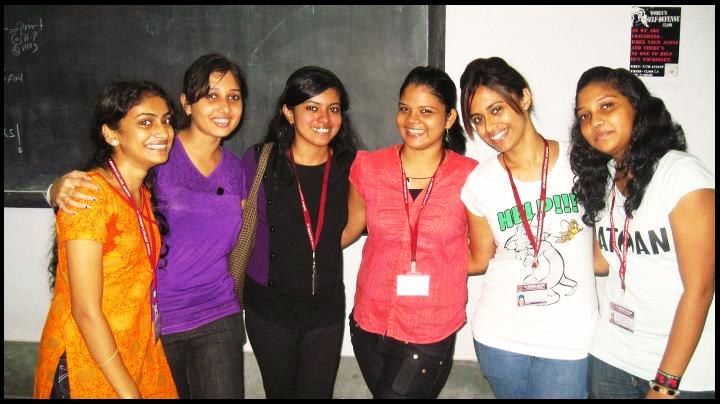
Six students at St. Andrews College in Mumbai, India, run the campaign—Perma Dsouza, Andrea Fernades, Digi George, Anishka Alvares, Rochelle Barrie and Valeska Reveredo—and they kindly agreed to talk about their work through an e-mail interview.

L to R: Andrea Fernades, Perma Dsouza, Digi George, Rochelle Barrie, Valeska Reveredo, Anishka Alvares

1. Stop Street Harassment (SSH): What is Freeze the Tease?

Freeze the Tease (FTT): It’s an anti-eve teasing initiative. The term “eve-teasing” sounds playful, but it is not teasing it’s harassment and today it has become a daily torment for most of the women. Our campaign asks, “Why be harassed by these lechers .. its time to react and FREEZE THE TEASE!”

2. SSH: What inspired the creation of Freeze the Tease?

FTT: It all started merely as an assignment as part of our curriculum as we are students of mass media, but as time passed we realised that this is a very prevalent problem girls have to undergo in their day- to-day life and a small effort by us can help create awareness.

3. SSH: What kind of activities and work does the project involve? Can you describe the “signature campaign”?

FTT: We started by creating a Facebook page as it was the best medium to  create awareness amongst the masses. Also we started sending SMS texts of tips on how to tackle eve-teasing  with a mere subscription fee of RS.3. In order to build awareness within our campus itself we began with a signature campaign where we motivated and encouraged girls to fight back for their rights  through which students would come and sign on the scroll as a pledge to freeze the tease and not stay silent anymore. They were also given bands with the slogan, “I PLEDGE TO FREEZE THE TEASE” to wear as an indication of their support towards the social cause.

4. SSH: What is the goal of Freeze the Tease? Where do you hope to see Freeze the Tease in a year?

FTT: Our ultimate goal is to put a stop to eve-teasing however, it not as easy as it sounds therefore we hope that with this campaign we can create maximum awareness so that people fight back against this evil in our society. Our aim is also to encourage girls not to be silent and instead freeze the eve-teaser rather than get frozen during such situations. We hope that Freeze the Tease initiative can fulfill these goals. Presently being only in Mumbai, India, we’ d also like if the campaign is started in other parts of the country and around the world.

5. SSH: What has been the reception of the project at St. Andrew’s College and in the community around the college?

FTT: Our college has been supporting us from the very start. Also the community willingly accepts our campaign and shows immense support.

6. SSH: What advice would you give to a different college who may want to do a project around eve teasing issues?

FTT: Encourage and engage as many girls as possible to protect themselves and take a initiative against eve-teasing.

7. SSH: Anything else you’d like to say?

FTT: We are presently organizing some outdoor activities and events to engage women and encourage them to freeze the tease.

Since conducting the interview, Freeze the Tease undertook one of their planned outdoor activities.

Via CoolAge:

“On September 22, 2011 they distributed “Freeze the Tease” bands across the prominent hotspots in Bandra to spread the word among the general public about this social cause and to make girls aware that being a silent victim to such atrocious behavior is not a solution. This outdoor activity proved to be successful as people showed interest in attaining more information about the campaign and their online activity. They went to other public places too as an attempt to bring about widespread recognition and change the mindset of the entire society.”

Great work! You can view photos of their awareness and pledge campaigns on the Facebook page and contact them (FreezetheTease AT Gmail DOT com)  if you’re interested in bringing Freeze the Tease to your campus or community!

Share

Filed Under: Activist Interviews, street harassment Tagged With: eve teasing, Freeze the Tease, mumbai, street harassment

« Previous Page
Next Page »

Share Your Story

Share your street harassment story for the blog. Donate Now

From the Blog

  • #MeToo 2024 Study Released Today
  • Join International Anti-Street Harassment Week 2022
  • Giving Tuesday – Fund the Hotline
  • Thank You – International Anti-Street Harassment Week 2021
  • Share Your Story – Safecity and Catcalls Collaboration

Buy the Book

  • Contact
  • Events
  • Join Us
  • Donate
  • Facebook
  • Instagram
  • Pinterest
  • Tumblr
  • Twitter
  • YouTube

Copyright © 2026 Stop Street Harassment · Website Design by Sarah Marie Lacy