• About Us
    • What Is Street Harassment?
    • Why Stopping Street Harassment Matters
    • Meet the Team
      • Board of Directors
      • Past Board Members
    • In The Media
  • Our Work
    • National Street Harassment Hotline
    • International Anti-Street Harassment Week
    • Blog Correspondents
      • Past SSH Correspondents
    • Safe Public Spaces Mentoring Program
    • Publications
    • National Studies
    • Campaigns against Companies
    • Washington, D.C. Activism
  • Our Books
  • Donate
  • Store

Stop Street Harassment

Making Public Spaces Safe and Welcoming

  • Facebook
  • Instagram
  • Pinterest
  • Tumblr
  • Twitter
  • YouTube
  • Home
  • Blog
    • Harassment Stories
    • Blog Correspondents
    • Street Respect Stories
  • Help & Advice
    • National Street Harassment Hotline
    • Dealing With Harassers
      • Assertive Responses
      • Reporting Harassers
      • Bystander Responses
      • Creative Responses
    • What to Do Before or After Harassment
    • Street Harassment and the Law
  • Resources
    • Definitions
    • Statistics
    • Articles & Books
    • Anti-Harassment Groups & Campaigns
    • Male Allies
      • Educating Boys & Men
      • How to Talk to Women
      • Bystander Tips
    • Video Clips
    • Images & Flyers
  • Take Community Action
  • Contact

New Research, Campaign & Photo Project

July 23, 2017 By HKearl

Research conducted by experts at the University of Melbourne in Australia demonstrates how common sexual harassment is in the lives of women and documents the possible impact this can have on how women think about themselves. The full results were published in the British Journal of Social Psychology.

Two key findings are:

1. Women reported being the target of a sexually objectifying event once every two days.

2. Both being personally targeted or witnessing others being objectified was associated with a “substantial increase” in “self-objectification”, proving that instances of sexual harassment can have a negative impact on the way women think about themselves.

____________________

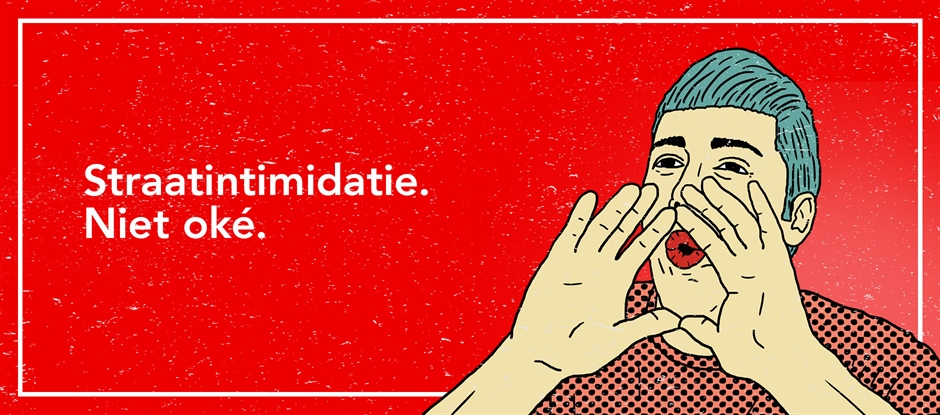
In the Netherlands, Stop Straatintimidatie launched a new campaign against street harassment. Campaign founder Gaya Branderhorst shared, “The message to the public is clear: everyone should be able to walk the streets without harassment,” and “street harassment will be fined in Amsterdam and Rotterdam from 2018 onwards, and other cities are planning to follow soon.” Great!
____________________

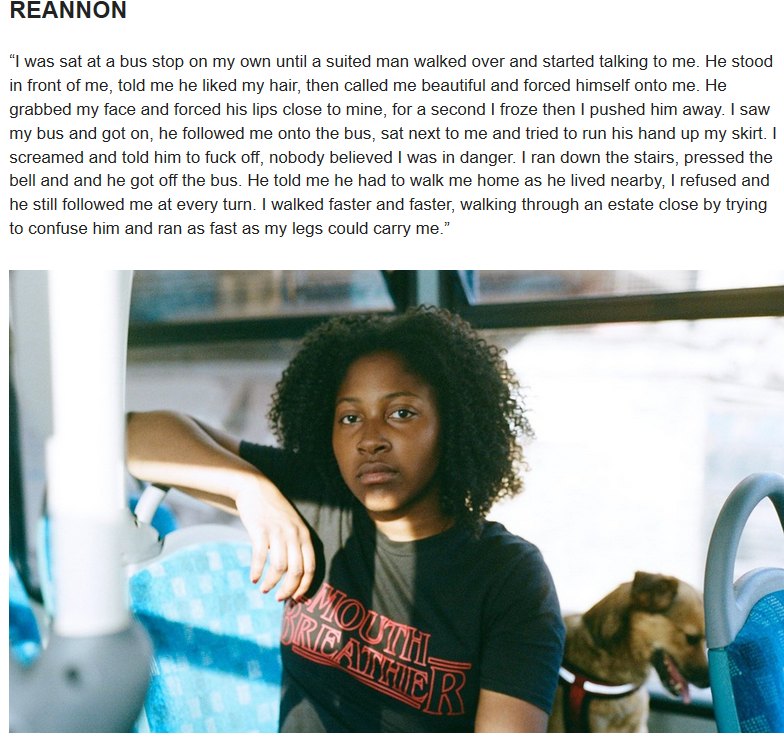
In the UK, photojournalist Eliza Hatch created a new photo series called Cheer Up Luv to raise awareness about street harassment. An article for the Guardian states, “Hatch found her female friends had all experienced harassment regularly, while her male friends were shocked by how frequently it occurred. Her photographs often feature women in environments in which they have been harassed, alongside their accounts. ‘I really wanted to capture the woman in her surroundings,’ says Hatch. ‘Instead of it being somewhere where she felt vulnerable, I wanted to make it a stage for her to speak out from. And I wanted you to actually look into her eyes as you’re hearing her story.'”

See more at: instagram.com/cheerupluv
 

Share

Filed Under: Activist Interviews, Resources, Stories, street harassment Tagged With: Amsterdam, art, Australia, campaign, netherlands, photography, research, UK

SSH Condemns Deeply Troubling Remarks by Education Department Official

July 20, 2017 By HKearl

The acting head of the Office for Civil Rights (OCR) at the U.S. Department of Education, Candice Jackson, made headlines last week for her dangerous remarks about college sexual assault. Jackson was quoted in The New York Times as saying, “Rather, the accusations — 90 percent of them — fall into the category of, ‘We were both drunk, we broke up, and six months later I found myself under a Title IX investigation because she just decided that our last sleeping together was not quite right.'”

Those words are appalling, and Stop Street Harassment strongly condemns them.

As a national nonprofit organization working to end gender-based street harassment worldwide, we’re keenly aware that the public sexual harassment that we’ve documented for years doesn’t happen in a vacuum: It is part of a broader rape culture that minimizes and perpetuates sexual violence, including on college campuses.

At its core, street harassment is about exerting power over someone else, disrespecting them, and in most cases sexually objectifying a person without consent. It is on the same spectrum of behavior as sexual assault and rape. Indeed, our societal acceptance of street harassment – often regarded as the price women and LGBTQ people pay for being women and/or LGBTQ – reflects a culture that normalizes disrespect, accepts unsolicited comments about another person’s body, and tells perpetrators that their actions, however unconscionable, are okay.

Despite what people like Jackson claim, sexual harassment and violence aren’t okay, made-up, or the victim’s fault – not when we’re talking about street harassment, and certainly not when we’re talking about college sexual assault. We demand better from our nation’s public officials and will continue to speak out when they make such damaging statements.

Signed,

The Stop Street Harassment Board of Directors

(Thanks to our board member Patrick McNeil for drafting this!)

Share

Filed Under: News stories, street harassment

End of June News Round-Up

July 1, 2017 By HKearl

Here are highlights of other news from around the world this month:

“My body doesn’t belong to you“

“9 types of street harassment you’ve probably experienced if you’re a woman”

“12 moms share gross stories of getting catcalled while with their kids”

Global: What it’s like to cycle as a woman in various parts of the world.

A new study in the MENA region reveals WHY men street harasser! (Many report doing it “for fun!”)

A Canadian man who secretly took hundreds of photos of women’s body parts was caught and charged.

A surgeon in Colombia helps women who have experienced acid attacks at the hands of street harassers or loved ones.

A new study of boys in Mumbai (India) shows they think “good girls” don’t experience street harassment.

In India, a female brigade helps women catch their harassers.

Street harassers in Indonesia.

A new cartoon character in Japan demonstrates how to report sexual harassment.

Street harassment became a crime in Rotterdam, the Netherlands.

A Turkish man assaulted a woman for wearing shorts during Ramadan, but he was set free after saying she “provoked” him.

A high percentage of women patrons of bars in Missoula, Montana (USA) experience harassment.

After a mid-run attack, this woman is using her story and voice to help others. (USA)


Share

Filed Under: News stories, street harassment

National Speech & Debate Tournament Piece on Street Harassment

June 30, 2017 By HKearl

Congratulations to Emma Warnecke who won 3rd place in the National Speech & Debate Tournament for a piece on street harassment, specifically harassment on public transit! She won 5th place nationally last year for another piece on street harassment and in it, she incorporated excerpts from my street harassment books! Cool.

Way to bring national attention to this important topic, Emma!

Share

Filed Under: Stories, street harassment

End of May News Round-Ups

June 1, 2017 By HKearl

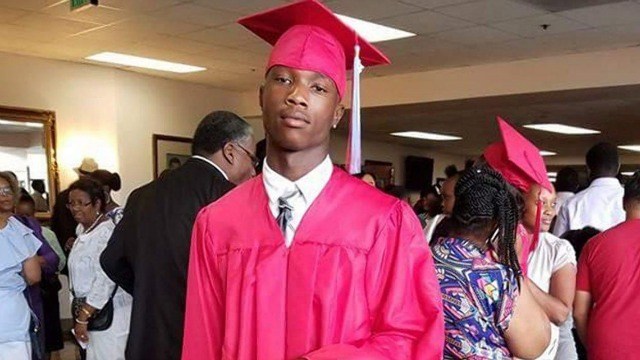
LeDajrick Cox. Image via The Grio

It’s with a heavy heart that I open this edition of the monthly news round-up with tragic news:

  • In Dallas, Texas, LeDajrick Cox, who just graduated from high school, and two male friends and a female friend were out celebrating. In a 7-11 parking lot, three men in another car started street harassing their female friend, and Cox intervened to defend her. Eventually, Cox and his friends left but the three men followed them and shot into the car. Cox and the two other young men were all injured and Cox died from his injuries. A young life is needlessly over. I applaud him for doing the right thing and am so saddened he is dead.
  • In Portland, Oregon, a white supremacist began harassing two young women on a train, using anti-Muslim slurs. One woman was wearing hijab. When three men intervened to help the young women, the man attacked, killing two of them and injuring one. Again this is just unbelievably horrific and sad. There have been many news stories about the tragedy and praise given to the three men. I glad they intervened but feel so saddened that for two of them, it cost them their lives. That never should have happened.
  • In College Park, Maryland, a white supremacist seemingly randomly stabbed and killed a recent African American college graduate near the University of Maryland campus.
  • In Manchester, UK, a suicide bomber attacked an Ariana Grande concert that was mainly attended by teenage and tween-age girls. More than 20 people died and even more were injured.

Everyone should be safe in public spaces, and clearly we have a long, long ways to go until that will occur. I hope these stories don’t deter people from speaking out and helping people facing harassment and I hope that those who have committed these crimes face consequences and that perhaps those consequences will deter others from doing the same.

Here are highlights of other news from around the world this month:

The first mandatory legal mediation in the first ever street sexual harassment case in the country took place in Buenos Aires, Argentina.

A woman in Adelaide, Australia, wrote about being scared to walk the streets of her own town after dark.

A study found that 23% of female commuters in Dhaka, Bangladesh, faces sexual harassment on the buses.

Men in Egypt are working with other men to discuss their role and actions as bystanders, perpetrators and victims of violence, including street harassment.

Outraged women in an eastern Parisian district of France staged demonstrations and launched an online petition over a “male den” where women are subject to harassment and sexist remarks.

A woman in Hong Kong spoke out against people who victim-blame women facing street harassment.

In India, the Alwar police formed an all-women team to crack down on people harassing women and girls on city streets.

School girls in India went on a hunger strike to protest the men who harassed them on their way to and from school and the lack of action by local officials to stop them.

In an informal survey conducted in Myanmar, more than 80% of women had faced street harassment.

Three women’s groups urged Panamanian President Juan Carlos Varela Monday to sign a bill meant to prohibit and punish sexual harassment, stalking, sexism and racism in all areas.

The penalty for taking non-consensual upskirt photos increased in Thailand.

In the UK, a bar posted a sign to deter male customers from harassing the female bartender.

A new report from Harvard Graduate School of Education found that 87% of women in the U.S. have faced sexual harassment. Among 18 to 25 year olds, most said they had faced sexual harassment, including 41% saying a stranger had touched them without permission.

Prior to the Lightning in a Bottle music festival in Los Angeles (USA), there was a class offered for fans and staff about sexual harassment at festivals, “Creating Safer-Braver Spaces: Consent Culture & Social Care”.

Most U.S. cities were designed around men and it’s time for that to change.

In the U.S., Feminista Jones began responding to strange men who “complimented” her by agreeing… and then the men get mad. She said in an interview:

“For a man to be comfortable sending an unsolicited comment about your body via text or Tinder or Bumble or whatever, or to feel comfortable yelling some shit at you on the sidewalk, he has to feel — at least in some small way — like you exist for him. If you take those compliments in stride instead of blushing and cooing and being the Good Modest Woman he hopes your mother raised you to be, you’re proving you don’t exist for him at all. Your “great body” belongs to you, and of course that’s gonna piss this exact type of dude off.”

Share

Filed Under: News stories, race, Resources, street harassment

« Previous Page
Next Page »

Share Your Story

Share your street harassment story for the blog. Donate Now

From the Blog

  • #MeToo 2024 Study Released Today
  • Join International Anti-Street Harassment Week 2022
  • Giving Tuesday – Fund the Hotline
  • Thank You – International Anti-Street Harassment Week 2021
  • Share Your Story – Safecity and Catcalls Collaboration

Buy the Book

  • Contact
  • Events
  • Join Us
  • Donate
  • Facebook
  • Instagram
  • Pinterest
  • Tumblr
  • Twitter
  • YouTube

Copyright © 2026 Stop Street Harassment · Website Design by Sarah Marie Lacy