• About Us
    • What Is Street Harassment?
    • Why Stopping Street Harassment Matters
    • Meet the Team
      • Board of Directors
      • Past Board Members
    • In The Media
  • Our Work
    • National Street Harassment Hotline
    • International Anti-Street Harassment Week
    • Blog Correspondents
      • Past SSH Correspondents
    • Safe Public Spaces Mentoring Program
    • Publications
    • National Studies
    • Campaigns against Companies
    • Washington, D.C. Activism
  • Our Books
  • Donate
  • Store

Stop Street Harassment

Making Public Spaces Safe and Welcoming

  • Facebook
  • Instagram
  • Pinterest
  • Tumblr
  • Twitter
  • YouTube
  • Home
  • Blog
    • Harassment Stories
    • Blog Correspondents
    • Street Respect Stories
  • Help & Advice
    • National Street Harassment Hotline
    • Dealing With Harassers
      • Assertive Responses
      • Reporting Harassers
      • Bystander Responses
      • Creative Responses
    • What to Do Before or After Harassment
    • Street Harassment and the Law
  • Resources
    • Definitions
    • Statistics
    • Articles & Books
    • Anti-Harassment Groups & Campaigns
    • Male Allies
      • Educating Boys & Men
      • How to Talk to Women
      • Bystander Tips
    • Video Clips
    • Images & Flyers
  • Take Community Action
  • Contact

End of March News Round-Up

March 31, 2017 By HKearl

Here are the street harassment-related news stories that caught my eye this month:

Women in Barbados, Trinidad and Tobago, Dominica, Guyana, Jamaica, and The Bahamas marched to protest sexual violence. #LifeinLeggings

Women wrote about street harassment in Australia, Italy, Pakistan, and the USA.

Women in India shared their street harassment stories using the hashtag #NotMyShame.

Female students at the University of Delhi (India) were locked in the dorm due to fears of sexual harassment at the Holi festival.

Tambourine Army is a new organization fighting gender-based violence in Jamaica.

Malawi police arrested 17 men for “inhumane and humiliating treatment” of a mentally ill woman in the street.

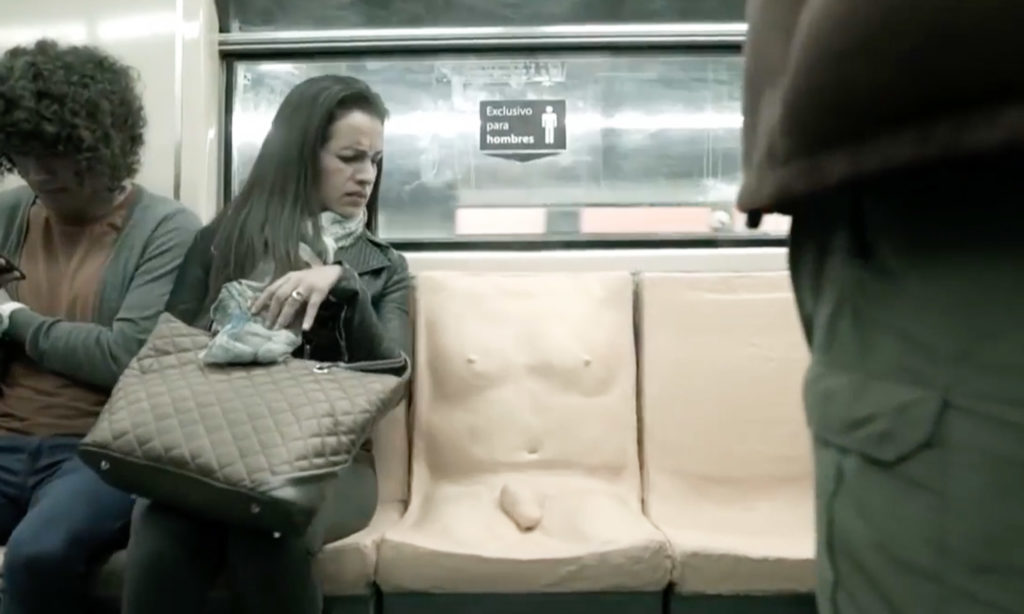
Mexico City has a “sexist” seat on the subway to raise awareness about sexual harassment.

Teenage girls in Wellington, New Zealand, protested street harassment and other forms of sexual violence outside Parliament.

A construction site in Peru posted a sign saying they are against street harassment.

CNN Philippines covered street harassment and related forms of sexual violence.

A survey conducted by United Nations Population Fund found that 90% of women and girls in Sri Lanka have faced sexual harassment on public transport.

TFL and Met Police in the UK launched a ‘Report It to Stop It’ campaign to raise awareness about how to report sexual harassment on the London transit systems.

A man in Florida called out a street harasser – that man then punched him and sent him to the hospital. The harasser/assailant was arrested.

Legislation introduced in New York City would require police officers to undergo sensitivity training on dealing with sexual assault and street harassment.

Share

Filed Under: News stories, street harassment

The “Sexist” Seat on Mexico City’s Subway

March 30, 2017 By HKearl

Via The Pool:

“A new campaign hoping to tackle sexual harassment in Mexico has introduced a ‘sexist’ seat on the metro exclusively for men – complete with chest and penis. The seat was created to make men feel as uncomfortable as women on public transport and, judging by the accompanying video, it worked. Men are seen to consciously avoid sitting on the seat, or sitting on it without realising, only for them to quickly jump up and move. In front of the seat is a message to men, reading, ‘It’s uncomfortable to sit here, but it doesn’t compare with the sexual violence that women suffer in their everyday lives.’ The anti-harassment message has since gone viral, with the hashtag #NoEsDeHombres.”

I was in Mexico City a few weeks ago for the UN Women Safe Cities Global Leaders’ Forum and we heard from many Mexico City leaders, including the mayor, about their efforts to make public places safer for women. What struck me was that nearly every effort they discussed, such as women-only transit options and the distribution of thousands of whistles, put the onus on women to try to stay safe. What I appreciate about the “sexist” seat is that the message is directed at men. While no, the seat by itself is not enough to change the cultural norms that allow sexual harassment to occur, I think it is an example of a unique and attention-grabbing way to start discussions with men about sexual harassment in public spaces and why men must help stop it.

That said, would-be harassers are not the only ones who ride the subway and consideration should be made for survivors of sexual assault and others who could be upset by it.

UPDATE: I did an interview for BBC News on this initiative.

Share

Filed Under: News stories, Resources Tagged With: engaging men, mexico city, public transit, subway

Statement of Support for Jordyn Haime

March 30, 2017 By HKearl

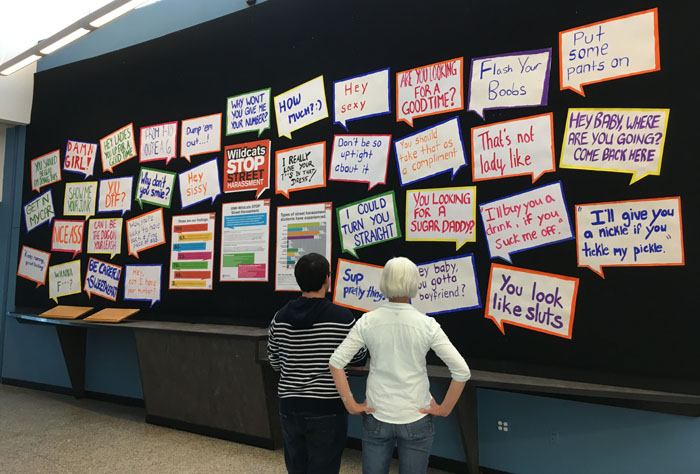
Image via The New Hampshire Digital

Jordyn Haime, a University of New Hampshire (UNH) undergraduate student, conducted a local street harassment survey among her peers and shared quotes and stats from it in a display on campus (with support from the campus sexual assault dept.) and it was going to be up for International Anti-Street Harassment Week. But campus administrators had it taken down within hours because the language was “offensive” (e.g. what street harassers said). You can read more here and read Jordyn’s great op-ed.

When I reached out to offer help, one thing suggested was for SSH to write a statement in support of Jordyn. Last night, the SSH board of directors drafted this statement.

STATEMENT OF SUPPORT FOR JORDYN HAIME

Stop Street Harassment (SSH) applauds Jordyn Haime, a University of New Hampshire (UNH) undergraduate student, for her recent campaign about gender-based street harassment.

Her campaign began with documenting the street harassment experiences of her classmates and peers through conducting a survey. The results of this survey were powerful in revealing that the rate of street harassment locally was similar to that nationally.

Ms. Haime’s next step, taken with support from the campus Sexual Harassment and Rape Prevention Program, was to share quotes from the survey — quotes detailing the real life experiences UNH students endured — in a display on campus alongside statistics, facts and resources. This is commendable. Sharing stories, engaging in public education and raising awareness efforts are crucial steps to take toward creating community-driven and localized solutions for safe public spaces.

If people were offended by reading the street harassment stories, imagine what the person who was targeted felt when she or he experienced it first-hand. How can we work to stop these comments from being spoken if we try to hide that they are said at all? Instead of censoring campaigns to raise awareness about street harassment — an issue that, as Ms. Haime says, she and others normally regard as something that “just happened to them” — the administration should celebrate one of its student’s efforts to bring attention to such an important issue.

Street harassment is offensive. It is deplorable. It is uncomfortable. It can cause real emotional harm and even pose health risks when it’s extreme and/or repeated. It is a human rights violation and a form of gender-based violence. But this does not mean we should ignore it or that it is too controversial to discuss.

SSH supports Ms. Haime and anyone else who works to bring attention to the issue of street harassment, especially when those efforts are done in such a thoughtful, measured, and well-researched manner.

Signed,

SSH Board of Directors
March 30, 2017

Share

Filed Under: SSH programs, street harassment Tagged With: campaign, censorship, college student

These are Our Streets, Too!

March 29, 2017 By HKearl

We’re just four days out from International Anti-Street Harassment Week! Groups in 36 countries have signed up to take part. There are plenty of ways individuals can join, too. Here are a few ideas. These are our streets, too, let’s demand SAFE public spaces!

Transcript:

The right to be in public spaces safely, without fearing harassment, is one that people all over the world are routinely denied, and that is not okay. I hope you can join us from April 2 to 8 for International Anti-Street Harassment Week as people and groups all over the world take a stand against street harassment and speak in favor of safe public spaces. You can join workshops, rallies, sidewalk chalk writing parties, flyering and tweet chats. You can learn more by visiting www.meetusonthestreet.org or www.stopstreetharassment.org. Thank you.

Share

Filed Under: anti-street harassment week, SSH programs, street harassment

Groups in 36 Countries Will Take Action Next Week

March 27, 2017 By HKearl

FOR IMMEDIATE RELEASE
03/27/17

Contact:
Holly Kearl
, hkearl@stopstreetharassment.org

Groups in 36 Countries Will Take Action to Stop Street Harassment, April 2-8
They will Raise Awareness Through Rallies, Flyering, and Tweet Chats

RESTON, VA — In its seventh year, Meet Us on the Street: International Anti-Street Harassment Week will be observed in more than 35 countries. Tens of thousands of people in countries like Afghanistan, Chile, Egypt, Germany, Nicaragua, the Netherlands, the Philippines, and Romania will participate in actions that challenge the prevalent social problem of gender-based street harassment, something that studies in more than 35 countries suggest most women and many LGBTQ individuals face.

Events will range from online to offline actions, including a Global Tweetathon on April 4 (use #EndSH). The week falls within Sexual Assault Awareness Month in the United States.

The organization Free Women Writers will release a video that features three stories of street harassment told by their members. “Every time we have an event or a conversation with women in Afghanistan, we hear about how prevalent street harassment is. From school girls to moms, everyone tells us how it makes them feel unsafe and discourages them from going outside the house. This is why we keep working on this issue throughout the year, but especially on International Anti-Street Harassment Week,” said Noorjahan Akbar, the organization’s founder.

Many actions are planned in Argentina, including a campaign to address rape culture in bars, pubs and night clubs and the release of short videos where transwomen share their street harassment stories. “Acción Respeto is joining the Week because it’s time women take the streets back. The fight against street harassment is a gender violence battle that we, women, will win,” said Juliana Cobos, a coordinator of the campaign.

Recently in Amsterdam, Stop Straatintimidatie helped a local fine on street harassment pass and is partnering with the local government on an event to bring attention to it. They also will award a “Woman-friendly” plaque to a local bar owner to applaud her zero tolerance of sexual harassment. Founder Gaya Branderhorst said, “Stop Straatintimidatie is joining the Week from the Netherlands because we know we need to keep fighting to have street harassment be looked at by everyone as what it is: despicable.”

“Safecity believes in safe public spaces for all, especially women and girls. We have participated in Anti Street Harassment Week since 2014 and this year we are pleased to host events and discussions on sexual violence in public spaces in the Indian cities of Mumbai, Delhi, Amritsar and Pune,” said co-founder and CEO ElsaMarie D’Silva.

UN Women’s Safe Cities Metro Manila division in the Philippines will hold small group discussions with tricycle drivers associations (tuktuks) and they will distribute Safe Cities vests for the drivers. “There is undeniable momentum to advance women’s safety issues in public spaces, and we want to keep backing it up. There have been united calls for action in Metro Manila from women who want to walk the streets #freefromfear, and we have heard them, and the city governments are starting to hear them — women and girls want #SafeCities, that’s why UN Women is proud to join Anti-Street Harassment Week and support this advocacy,” said Katherine Belen, UN Women Safe Cities Project Officer.

Stop Telling Women to Smile is a primary co-sponsor of the week and people and groups anyway can request and post the famous “Stop telling women to smile” posters in their community on April 7. Founder Tatyana Fazlalizadeh explained, “People from all over can participate in a night of action, knowing that people in different parts of the world are doing the same thing.”

“Everyone should have the right to be in public spaces safely, but that is a right that millions of people are routinely denied due to street harassment,” said Holly Kearl, the founder of the nonprofit organization Stop Street Harassment. “We want to see this change and by speaking out in a coordinated way, we can strengthen our efforts both globally and locally to create safe public spaces for all.”

Any individual can help speak out against street harassment during the week simply by sharing stories on and offline. Visit www.MeetUsontheStreet.org for more information about the week and how to join.

###

Stop Street Harassment is a nonprofit organization dedicated to documenting and ending gender-based street harassment worldwide through public education and community mobilization. SSH organizes International Anti-Street Harassment Week and runs a national street harassment hotline in the USA in collaboration with the Rape, Abuse & Incest National Network and Defend Yourself.

Share

Filed Under: anti-street harassment week

« Previous Page
Next Page »

Share Your Story

Share your street harassment story for the blog. Donate Now

From the Blog

  • #MeToo 2024 Study Released Today
  • Join International Anti-Street Harassment Week 2022
  • Giving Tuesday – Fund the Hotline
  • Thank You – International Anti-Street Harassment Week 2021
  • Share Your Story – Safecity and Catcalls Collaboration

Buy the Book

  • Contact
  • Events
  • Join Us
  • Donate
  • Facebook
  • Instagram
  • Pinterest
  • Tumblr
  • Twitter
  • YouTube

Copyright © 2026 Stop Street Harassment · Website Design by Sarah Marie Lacy