• About Us
    • What Is Street Harassment?
    • Why Stopping Street Harassment Matters
    • Meet the Team
      • Board of Directors
      • Past Board Members
    • In The Media
  • Our Work
    • National Street Harassment Hotline
    • International Anti-Street Harassment Week
    • Blog Correspondents
      • Past SSH Correspondents
    • Safe Public Spaces Mentoring Program
    • Publications
    • National Studies
    • Campaigns against Companies
    • Washington, D.C. Activism
  • Our Books
  • Donate
  • Store

Stop Street Harassment

Making Public Spaces Safe and Welcoming

  • Facebook
  • Instagram
  • Pinterest
  • Tumblr
  • Twitter
  • YouTube
  • Home
  • Blog
    • Harassment Stories
    • Blog Correspondents
    • Street Respect Stories
  • Help & Advice
    • National Street Harassment Hotline
    • Dealing With Harassers
      • Assertive Responses
      • Reporting Harassers
      • Bystander Responses
      • Creative Responses
    • What to Do Before or After Harassment
    • Street Harassment and the Law
  • Resources
    • Definitions
    • Statistics
    • Articles & Books
    • Anti-Harassment Groups & Campaigns
    • Male Allies
      • Educating Boys & Men
      • How to Talk to Women
      • Bystander Tips
    • Video Clips
    • Images & Flyers
  • Take Community Action
  • Contact

Street Harassment is Illegal in Buenos Aires

December 8, 2016 By HKearl

Another city passed a law against street harassment in Latin America!

Via Broadly:

“In a unanimous vote, the city of Buenos Aires has enacted a law making public sexual harassment illegal in hopes of diminishing gender-based violence….

The law takes both a punitive and educational approach. It creates an easy way for women to report street harassment as a crime and requires police to take the situation seriously, which has not always been the case in Argentina. Proven cat-callers could be slammed with small fines or court-mandated public service. The legislation also creates educational campaigns within the health, education, and transportation ministries that would teach Argentines that any comment or interaction in the street still requires a woman’s consent. These programs will also emphasize how to spot street harassment and intervene on a victim’s behalf.”

Stay tuned, for UN Women I am working on a guide about street harassment and laws around the world, and I will share a full list in the coming weeks.

Share

Filed Under: News stories, public harassment, street harassment Tagged With: Argentina, bueons aires, city ordinance, illegal, latin america, laws

New U.S. Transgender Survey

December 8, 2016 By HKearl

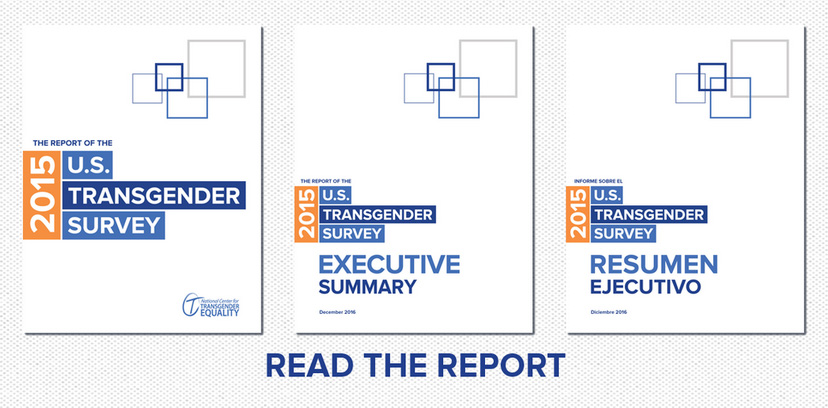
transgenderreportThe U.S. Transgender Survey was released today by the National Center for Transgender Equality. Among the findings are alarming ones relating to discrimination and harassment in public spaces:

Public accommodations and bathrooms

“Accessing basic goods and services is also a major hurdle for transgender people:

  • 31 percent of trans people experienced mistreatment in the past year at a place of public accommodation (stores, hotels, etc.), including being denied equal service (14 percent), verbal harassment (24 percent), or physical attack (2 percent).
  • 20 percent avoided at least one type of public accommodation because they feared mistreatment.
  • 9 percent of respondents were denied access to a restroom in the past year.
  • Restrooms were often unsafe, with 12 percent experiencing verbal harassment, 1 percent experience physical attacks, and 1 percent experience sexual assault when accessing a restroom.
  • 59 percent avoiding a public restroom in the last year out of fear of confrontations, with 32 percent actually limiting what they ate or drank to avoid the restroom.
  • 8 percent reported a urinary tract infection, kidney infection, or other kidney-related problem in the past year as a result of avoiding the restrooms.”

And…

  • “46 percent of trans people experienced verbal harassment in the past year.
  • 9 percent of trans people experienced a physical attack in the past year.”

H/T our board member Patrick

Share

Filed Under: LGBTQ, Resources, street harassment Tagged With: research, transgender

Female Bicycle Messengers Talk about Street Harassment

December 3, 2016 By HKearl

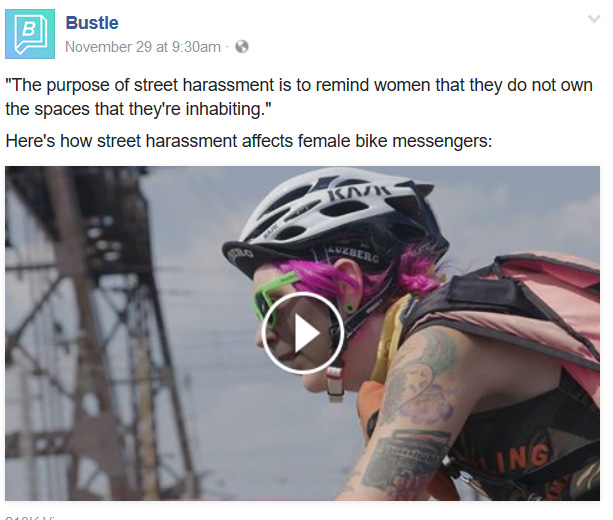
bustlebikemessengerThe new episode of Bustle’s documentary series NSFWomen (Not Safe For Women) focuses on how street harassment affects female bike messengers. Bustle’s Senior Publicist, Corporate Communications, Caitlin Eadie, shared this:

“Only 24% of all bicycle trips in the U.S. are made by women. 65% of women have reported being targeted by street harassment and 23% of women have experienced ‘sexual touching’ as a form of street harassment. To explore this issue, Bustle met with several female cyclists in Philadelphia who struggle with the fears and risks that go along with doing the job they love. One woman details a cycling incident when a male car passenger leaned out the window and grabbed her. Another discusses losing out on money because she fears for her safety when taking trips further away or past dark.

As the video’s intro states, ‘The purpose of street harassment is to remind women that they do not own the spaces that they’re inhabiting.’ A horrifying reality made even worse when Bustle reached out to 12 major U.S. city police departments and seven confirmed that they do not keep specific records of violence against female cyclists. The other five did not respond for comment.

NSFWomen tackles critical issues surrounding gender inequality, addressing the more nuanced, and sometimes undiscussed, struggles that women face on a daily basis.”

Check out the third episode of NSFWomen (Not Safe for Women).


Share

Filed Under: News stories, Stories, street harassment Tagged With: bicycles, bike messengers

City in Colombia Bans Street Harassment, Survey in Nepal & More

December 2, 2016 By HKearl

Here are four notable news stories from the past day:

DECREE:

In Timbío, Colombia, a non-binding decree was made on November 25, 2016, to ban public-sector workers and contractors from making “lewd, coarse catcalling that offends ladies.” Those in violation will face verbal reprimand, sensitivity training, or counseling.

Along with the decree was the launch of a city-wide campaign against street harassment, including ads at harassment hotspots, like public transit and stadiums.

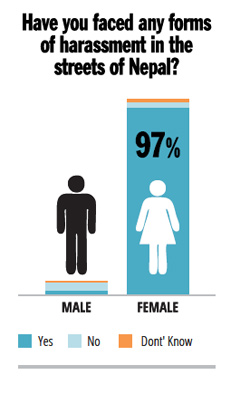
iwalkfreelysurveynepalnov2016The decree is supported by la Casa de Mujer, a local women’s organization.

Learn more here.

SURVEY:

More than 1000 people took the #IWalkFreely survey in Nepal and 98 percent of all women said they had been harassed. Besides the streets, 71 percent of respondents also reported harassment in public transportation, 63 percent said they were subjected to physical harassment of some form, and 20 percent reported sexual harassment. Nearly half the participants who said they had faced harassment were between 20-29 years old, and 41 percent were between 13 and 19.

DOCUMENTING:

Here are two efforts to show what street harassment is like globally.

Via BBC News:

“As part of the BBC’s 100 Women season we would like you to join in and help us build up a picture of street harassment around the world.

We would like you or any of your female friends or family who experience harassment between Friday 2 December and Sunday 4 December to share your story with us.

We only need a brief description of the incident and the city where it happened. Tweet it using the hashtag #mappingharassment or if you prefer, email bbc100.women@bbc.co.uk

Do not put yourself at risk or try to take any pictures of the incident. Also do not give us further elements that could lead to your full identification, like your name, or address. Only post a brief description, the city and the hashtag.”

Via Vice News:

“As a woman walking around the city alone at night, there’s not much you can do if some creep decides to follow you around and harass you. But many women try to find a way to deal with feeling unsafe – to project an aura that will stop the harassment from happening. A brisk and confident step, eyes on the pavement and a hand in the pocket of your coat, clutching your phone.

To see how women from different countries in Europe deal with street harassment, VICE offices across the continent asked women from 13 cities if and where they feel unsafe alone at night, and how they deal with that feeling.” Read more.


Share

Filed Under: News stories, Resources, street harassment Tagged With: BBC, colombia, europe, latin america, law, Nepal, survey

Blank Noise Invites You to “Walk Alone” on Dec. 2

December 1, 2016 By HKearl

From our friends at Blank Noise in India:

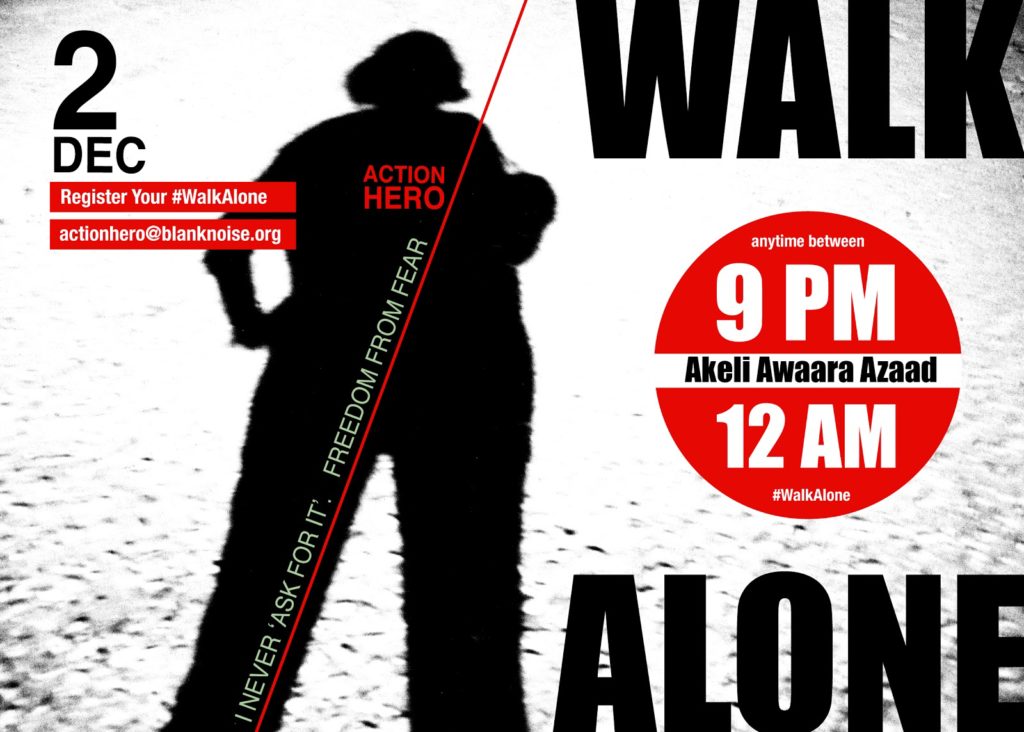
walk.jpg

  • Have you walked, not having to think twice about the width of your smile,the length of your blouse,  skirt, tee neck, sleeve.

  • Have you clenched your fist so hard ,worn a frown, sharpened elbows out ?

  • Does your daily list of every place, person, garment you ‘avoid’/ deny reveal a larger something- that you decide where to go, how to go, what time to go, what clothes to go in, with whom to go based on your safety?

  • Have you too been warned, just like me, about places, our bodies, our clothes, our cities, our streets?

    An environment that constantly reminds women and girls to be careful , is also messaging out “ you experienced violence because you were not being careful enough”. Warnings lead to blame, blame leads to silence and shame. Our environments need to be made safe and inclusive, rather than have women carry the weight of warnings and fear. #INeverAskForIt #WalkAlone Towards Freedom From Fear.

walkalone-dec-22016blanknoise100 Action Heroes #WalkAlone
Friday, 2nd December
anytime between
9 pm – midnight

Women occupy streets at night.
Alone. Wandering. Walking.
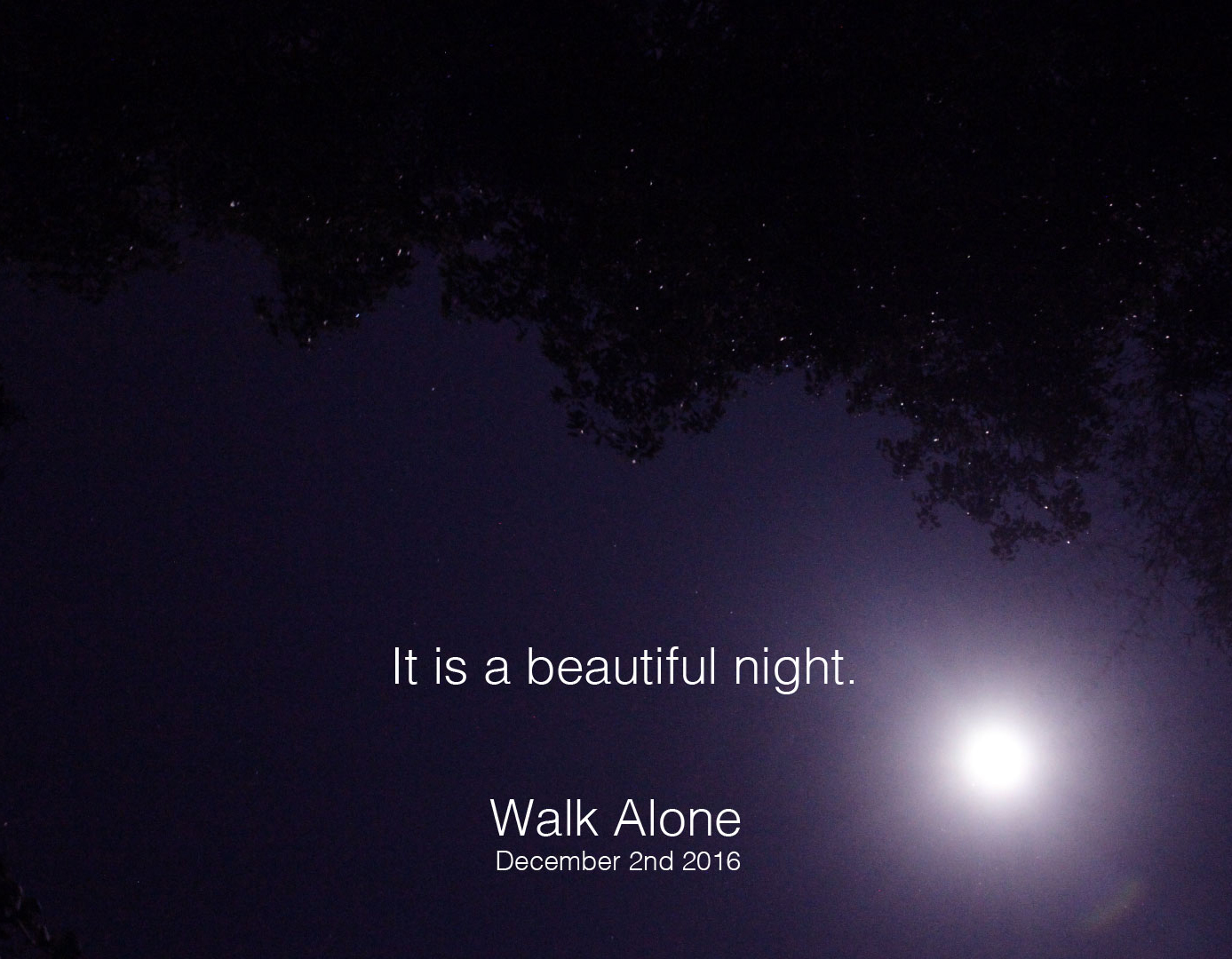
Stop To Gaze At The Stars
Smell the night blooming flowers
We are many
We are visible

Action Heroes co create safe spaces
We Walk Alone, Together;
Towards Freedom From Fear

Here’s how: identify site ( is it unfamiliar / unknown / desired?)
/ register / walk alone/ document / share

* Register

* Read event FAQs

Action Heroes and allies have registered from cities across India and beyond. A complete list will be out on the 2nd December morning.

Walk Alone was initiated in 2015 and has been built by Action Heroes and organisational allies from across cities/ towns/ countries including Ranchi, Mumbai, Delhi, Kolkata, Bangalore, Philadelphia, Braunschweig, Toronto, Karachi, Melbourne, Koppa, Kohima, Shillong.

Share

Filed Under: Resources, street harassment Tagged With: Blank Noise, India, walk alone

« Previous Page
Next Page »

Share Your Story

Share your street harassment story for the blog. Donate Now

From the Blog

  • #MeToo 2024 Study Released Today
  • Join International Anti-Street Harassment Week 2022
  • Giving Tuesday – Fund the Hotline
  • Thank You – International Anti-Street Harassment Week 2021
  • Share Your Story – Safecity and Catcalls Collaboration

Buy the Book

  • Contact
  • Events
  • Join Us
  • Donate
  • Facebook
  • Instagram
  • Pinterest
  • Tumblr
  • Twitter
  • YouTube

Copyright © 2026 Stop Street Harassment · Website Design by Sarah Marie Lacy