• About Us
    • What Is Street Harassment?
    • Why Stopping Street Harassment Matters
    • Meet the Team
      • Board of Directors
      • Past Board Members
    • In The Media
  • Our Work
    • National Street Harassment Hotline
    • International Anti-Street Harassment Week
    • Blog Correspondents
      • Past SSH Correspondents
    • Safe Public Spaces Mentoring Program
    • Publications
    • National Studies
    • Campaigns against Companies
    • Washington, D.C. Activism
  • Our Books
  • Donate
  • Store

Stop Street Harassment

Making Public Spaces Safe and Welcoming

  • Facebook
  • Instagram
  • Pinterest
  • Tumblr
  • Twitter
  • YouTube
  • Home
  • Blog
    • Harassment Stories
    • Blog Correspondents
    • Street Respect Stories
  • Help & Advice
    • National Street Harassment Hotline
    • Dealing With Harassers
      • Assertive Responses
      • Reporting Harassers
      • Bystander Responses
      • Creative Responses
    • What to Do Before or After Harassment
    • Street Harassment and the Law
  • Resources
    • Definitions
    • Statistics
    • Articles & Books
    • Anti-Harassment Groups & Campaigns
    • Male Allies
      • Educating Boys & Men
      • How to Talk to Women
      • Bystander Tips
    • Video Clips
    • Images & Flyers
  • Take Community Action
  • Contact

10 Things For Which I’m Grateful – 2016

November 24, 2016 By HKearl

gratitude2016On this day of giving thanks, I give thanks for everyone who is part of the Stop Street Harassment community. This includes:

  1. The nearly 275,000 people who visited our website so far this year.
  2. The nearly 39,000 people on our Facebook page, 13,100 people who follow us on Twitter, and the 1,350 people who follow us on Instagram.
  3. Our board members.
  4. The dozens of volunteer Blog Corespondents.
  5. The tens of thousands of people who took part in International Anti-Street Harassment Week in April.
  6. The scores of people who donated to fund the National Street Harassment Hotline.
  7. The nearly 50 RAINN staff who answer the calls on the National Street Harassment Hotline.
  8. Our partner organizations, like Collective Action for Safe Spaces and WMATA (with whom we launched the 3rd wave of anti-harassment transit ads this month in the Washington, D.C. area).
  9. The 100 outlets that covered our work so far this year, including New York Times, Washington Post, USA Today, UpWorthy, Runner’s World, HLN TV, WGN radio, and Teen Vogue.
  10. The people who invited us to speak, including: University of Nebraska–Lincoln (NE), Mount Union University (OH), Minnesota State University of Moorhead (MN), National Conference for College Women Student Leaders (MD), International Summit to End Sexual Violence (NY), Global Girls Media forum (DC), and HABITAT 3 conference (Quito, Ecuador).

You are incredible, thank you for helping make the world a safer place!

Share

Filed Under: SSH programs Tagged With: gratitude, thanksgiving

TDOR 2016

November 20, 2016 By HKearl

Today is Transgender Day of Remembrance.

Via HRC:

“Now in its 18th year, TDOR is a time for the transgender community and allies to mourn those who have been victims of anti-trans violence, and to recommit to ensuring that their lives – and deaths – are not forgotten. TDOR allows us to call attention to the continued violence and injustice transgender people face every day.

In 2015, HRC reported the murders of at least 21 transgender people in the United States, more than any previous year on record. A disproportionate number of these victims were transgender women of color. That alarming trend has continued in 2016. HRC and the Trans People of Color Coalition (TPOCC) just released A Matter of Life and Death: Fatal Violence Against Transgender People in America 2016, a new, heartbreaking report documenting the often deadly violence faced by the transgender community and exploring the factors that fuel these tragic attacks.

“TDOR is about mourning those who have been taken from us through violence, transphobia and hatred, and it is a way of recognizing the loss that those lives represent to our community,” said Nicole Cozier, HRC Director of Diversity & Inclusion.

picture1

“TDOR empowers HRC’s steering committees, members and other activists on the ground to support members of the transgender community in their regions. It’s about mobilizing our communities to reach out and say, ‘We’re here and we stand with you.’” Cozier said.

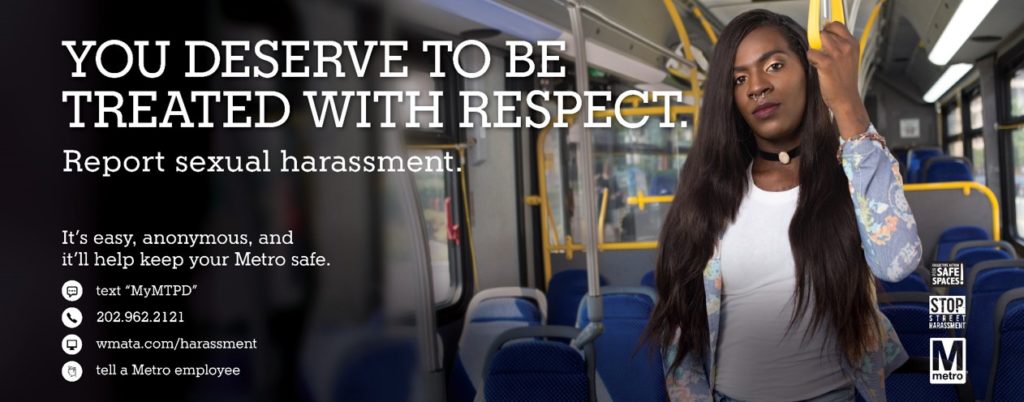
It’s for this reason, I’m so pleased that the latest anti-harassment transit campaign we worked on in the Washington, D.C. area includes a transwoman of color in one of the ads. Trans people, including Trans people of color deserve respect, dignity, love and — to not fear for their lives!!!!

Share

Filed Under: LGBTQ, race Tagged With: person of color, transgender

Two Efforts to Document and Map Hateful Acts, Post-Election

November 18, 2016 By HKearl

Here is an update on places where you can report discriminatory harassment in the USA, since we know there has been an uptick since the Presidential election.

FIRST:

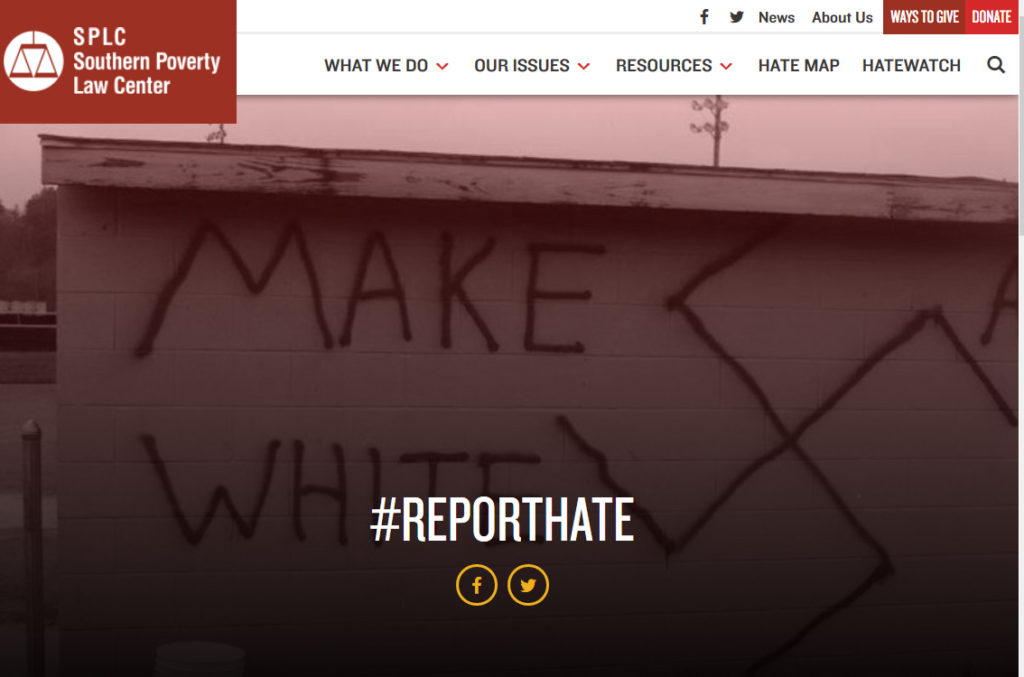
reporthatesplc

The Southern Poverty Law Center (SPLC) is collecting reports of hateful and harassing acts.

On November 18, they wrote:

“This is the second update from the Southern Poverty Law Center’s effort to collect reports of hateful incidents of harassment around the country. This report covers the full week (Wednesday Nov. 9 to Wednesday Nov. 16) since the presidential election.

The SPLC collected reports from news articles, social media, and direct submissions from the #ReportHate intake page. The SPLC made efforts to verify each report but many included in the count remain anecdotal.

While the total number of incidents has risen, the trend line points to a steady drop-off. Around 65 percent of the incidents collected occurred in the first three days following the election.


SECOND:

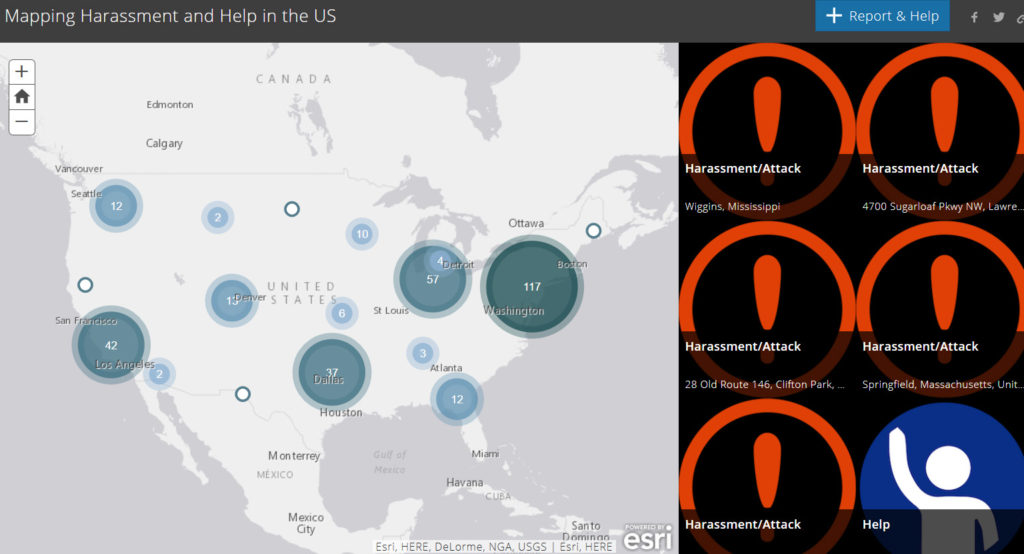
harassmentandhelp

“In the wake of the 2016 US elections reports of harassment and hate crimes directed at minority groups of all kinds have been widespread. The purpose of this multi-team effort is to collect and map reports of harassment and hate crimes against [discriminated against] communities. We also seek to collect and map reports of [discriminated against] communities being helped.

Important: This is not an emergency response system. If you are the victim (or an eyewitness) of harassment/attacks, please call 911.

This project is a collaboration between CrisisMappers, Harvard University, MIT and UCLA.
Contact: contact@harassmap.us”

Share

Filed Under: disabilities, LGBTQ, News stories, public harassment, race, Resources, Stories, street harassment

Even Olympic Runners Face Street Harassment

November 14, 2016 By HKearl

motto-timeAn October 2016 Runner’s World survey shows that street harassment is a problem for many, many women (and a few men). I wrote about this problem in a new article for TIME Magazine’s MOTTO section – read it here.

As part of my research for the article, I interviewed U.S. Olympian (x2) Kara Goucher and Runner’s World editor Meghan Kita, who oversaw the survey. I could only include a small portion of their interviews in the article, but because I thought they had many important things to say, they gave me permission to print more of their interviews here.

KARA GOUCHER:

Photo by Stewart Dawson, via Flickr
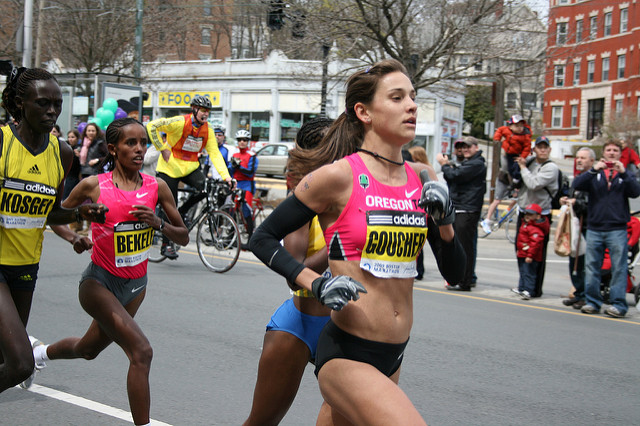
Kara Goucher in the 2009 Boston Marathon. Photo by Stewart Dawson, via CC on Flickr

First up is Kara Goucher, who in addition to running in two Olympics, has achievements that include: winning a NCAA Cross Country championship in 2000, winning the bronze medal in the 10,000m at the IAAF World Championships in 2007, and having the fastest-ever marathon debut for a woman in the world with 2:25:53 in New York City in 2008.

I falsely assumed that she must have a crew of people running with her and therefore, perhaps rarely or never experienced street harassment. I was wrong. Just like every other female runner I know, she’s faced harassment. Safety concerns impact her training regiment.

HOLLY: How old were you when you first began running?

KARA: I ran my first race at age 6, but started organized running at age 12.

HOLLY: Have you faced sexual harassment and/or had safety concerns during your running career?

KARA: Cat calls and whistles are common place. There have been times in my life where I actually felt threatened. I think that most women can relate to this.

HOLLY: What’s one specific example of sexual harassment you’ve experienced while running? How did it make you feel? What did you do when it happened?

KARA: The first time I felt truly scared was in 2000. Adam and I had qualified for the finals in the 5000 meters at the Olympic Trials that were held in Sacramento.  We, along with our coach, had headed to Lake Tahoe to get away for a few days before the final. We arrived in Lake Tahoe as the sun was setting. We set off for our runs and Adam quickly ran away from me. A few minutes later a truck came along side me with two men inside. They started whistling and calling out to me. I turned down a road and started running as fast as I could. They drove off. But a few blocks later they turned onto the road I was on and started yelling out to me, harassing things. I was terrified. I sprinted back to our hotel and didn’t finish my run. That night I had nightmares about it. I have been followed running since, but that first time really stands out as the time I realized I was very vulnerable when I was out running alone.

HOLLY: Has sexual harassment and/or safety concerns affected your running career in any way? If so, how?

KARA: Absolutely. I am nervous when I run before sun up or after sun down. I try to follow paths that are lit or are naturally busier with other runners. I used to run on a beautiful single track trail in Portland, OR, until my coach informed me that his wife was chased by a man running there. I was too frightened to go back on my own. I realized just how easy it would be for someone to attack me. I try to not let it control my life, but it does affect choices I make in training.

HOLLY: Is there anything else you want to say on the topic?

KARA: Running makes me feel strong and capable so I don’t like the way the vulnerability can take that from me. Running is the greatest joy in my life aside from my personal relationships. I’m not going to let anyone take that from me.


MEGHAN KITA:

Meghan Kita, image via her Twitter account

Meghan Kita, a marathoner, has worked as an editor at Runner’s World for five years. After three women runners in three different states were murdered, a blog post about it on the Runners World website became the site’s most popular post to date. Meghan followed it up with a post, “The Problem is Not Women Running Alone,” which also generated a lot of discussion. From there, she spearheaded a survey about runner safety and street harassment, the first of its kind. Here is my interview with her:

HOLLY: When did you first begin running?

MEGHAN: In 2002, 14 years ago. I was in high school and joined the track team to get in shape for soccer. I liked it so much that I ran cross country in the fall instead.

HOLLY: What has been your experience with street harassment while running?

MEGHAN: It doesn’t happen that often and I marked “sometimes” in the survey. Maybe I’ll hear a honk per month. Partially this is because I run early in the morning. If it happens, it usually is when I’m running at lunch near work. It happens often enough that it’s irritating. And occasionally it has been more serve. I was followed twice one year. I was followed by someone in a car both times. I’m not totally clear they were following me but they were acting weird and I couldn’t figure out any other reason for their behavior. Both times I just got out of there. I’ve faced enough creepy behavior to be on high alert.

HOLLY: Has street harassment or general safety concerns affected your running career?

MEGHAN: Yes. I bought pepper spray after the 1st incident of following. I don’t carry it all the time, but I’ll carry it if I’m running early in the morning in parks when not that many people are around. Parks make me nervous as there’s not a quick way to get out. The second time I was followed, I didn’t have it as I didn’t think I was in danger. It just goes to show that harassment can happen anywhere and at any time and when you’re expecting it, it may not happen and vice versa. It’s unpredictable.

HOLLY: What are your thoughts on how street harassment and safety concerns cause most women to have different running experiences from men?

MEGHAN: Harassment feeds into pre-existing safety concerns. Every woman has been raised to think something bad can happen just because you’re a woman and may be an easier target, sexual violence is more of a likelihood for you. You’re already on high alert for that and street harassment reinforces that you’re vulnerable etc. Harassment keeps safety in the forefront of women’s mind even though it usually doesn’t lead to anything beyond annoyance.

It keeps us on high alert in a way that I don’t think men’s experience. There are several running routes men have recommended and I’ll spend the entire time thinking, there are woods on left and river on the right and the best way to get off the trail is 3 miles ahead, how is this fun? What if someone pops out and I would have to out run them? This thinking hinders my enjoyment of remote areas that men seem to enjoy running. I wish it wasn’t that way but it is self-preservation. You hear terrible stories, see men reacting badly and why wouldn’t you have your guard up?

Many thanks to Kara and Meghan for sharing their stories. Thank you also to Meghan for spearheading the survey. Thank you to Runner’s World for taking the issue seriously. And thank you to our ally and friend Michelle Hamilton for writing an article about street harassment and the survey in the December issue of Runner’s World. It will be on newsstands soon!

You can also listen to a Runner’s World Podcast episode about this issue + share your stories with #HarassedMidRun.

Share

Filed Under: Activist Interviews, street harassment Tagged With: kara goucher, meghan kita, runners world, running

New Transit Ads are Up in Washington, DC

November 13, 2016 By HKearl

It’s nearly been five years since a group of us testified before the DC City Council to pressure the Washington Metropolitan Area Transit Authority (WMATA) to do something about sexual harassment — and they did.

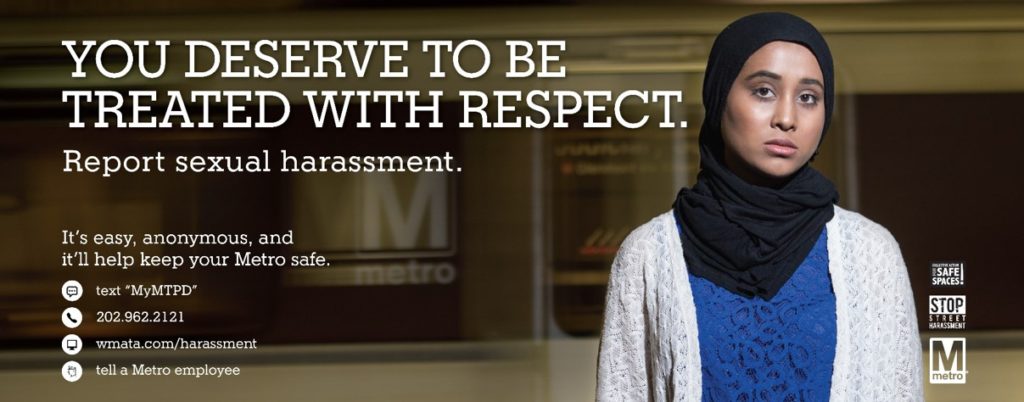
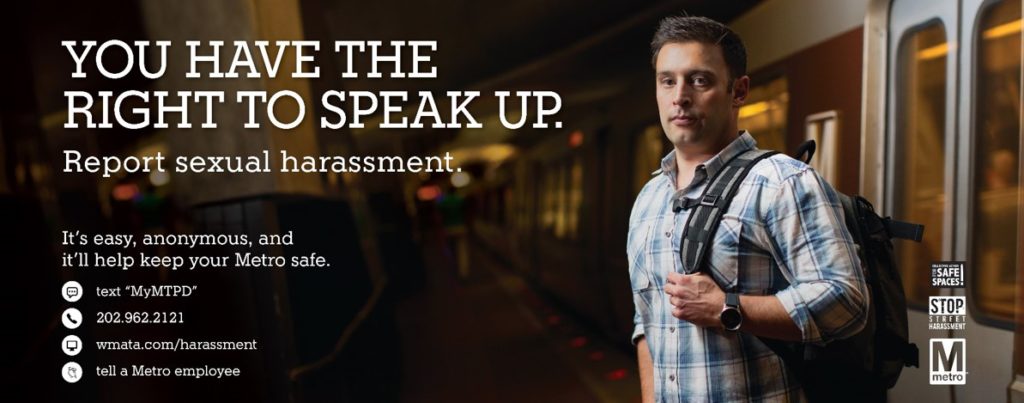
A year ago when we met to talk about next steps, one of their commitments was to a third wave of anti-harassment PSAs. They were supposed to be done in April but after many many delays, they are now up across the system. Huge kudos to Jessica Raven at our collaborating org Collective Action for Safe Spaces for adamantly saying the ads should include focusing on some of the demographics we know are facing a lot of harassment, like trans women of color and Muslim women. Then, when WMATA said there was a lack of stock photos of these two demographics, Jessica suggested she could provide photos of people she knew (with their permission). That inspired WMATA to hold their own photo-shoot and the resulting photos are beautiful.

picture1

picture2

As of Nov. 10, WMATA told us,

“Riders should see ads at the following stations:

Anacostia, Archives, Ballston, Benning Road, Bethesda, Branch Avenue, College Park, Columbia Heights, East Falls Church, Eastern Market, Eisenhower Ave., Farragut North, Farragut West, Federal Center SW, Federal Triangle, Forest Glen, Fort Totten, Franconia-Springfield, Friendship Heights, Gallery Place, Glenmont, Greenbelt, Huntington, Judiciary Square, King Street, L’Enfant Plaza, Landover, McPherson Square, Metro Center, Mt. Vernon-UDC, National Airport, Navy Yard, New Carrollton, Pentagon City, Prince George’s Plaza, Rhode Island Avenue, Smithsonian, Stadium Armory, Takoma Park, U Street-Cardoza, Union Station, Van Dorn, Vienna, West Falls Church, West Hyattsville, Wheaton, Woodley Park.

Additionally, the ads will be in rotation on the 10 touchscreen digital panels at:  Capital South, Gallery Place, Federal Triangle, Foggy Bottom, Pentagon, Farragut North, Farragut West, and Metro Center.”

This year we also worked with WMATA on the first-ever transit-wide survey on sexual harassment (results) and an outreach day at several Metro stations during International Anti-Street Harassment Week. They also began doing sexual harassment training for their bus operators.

WMATA harassment transit ad

Share

Filed Under: public harassment, race, Resources, SSH programs Tagged With: transit, Washington DC, WMATA ads

« Previous Page
Next Page »

Share Your Story

Share your street harassment story for the blog. Donate Now

From the Blog

  • #MeToo 2024 Study Released Today
  • Join International Anti-Street Harassment Week 2022
  • Giving Tuesday – Fund the Hotline
  • Thank You – International Anti-Street Harassment Week 2021
  • Share Your Story – Safecity and Catcalls Collaboration

Buy the Book

  • Contact
  • Events
  • Join Us
  • Donate
  • Facebook
  • Instagram
  • Pinterest
  • Tumblr
  • Twitter
  • YouTube

Copyright © 2026 Stop Street Harassment · Website Design by Sarah Marie Lacy