• About Us
    • What Is Street Harassment?
    • Why Stopping Street Harassment Matters
    • Meet the Team
      • Board of Directors
      • Past Board Members
    • In The Media
  • Our Work
    • National Street Harassment Hotline
    • International Anti-Street Harassment Week
    • Blog Correspondents
      • Past SSH Correspondents
    • Safe Public Spaces Mentoring Program
    • Publications
    • National Studies
    • Campaigns against Companies
    • Washington, D.C. Activism
  • Our Books
  • Donate
  • Store

Stop Street Harassment

Making Public Spaces Safe and Welcoming

  • Facebook
  • Instagram
  • Pinterest
  • Tumblr
  • Twitter
  • YouTube
  • Home
  • Blog
    • Harassment Stories
    • Blog Correspondents
    • Street Respect Stories
  • Help & Advice
    • National Street Harassment Hotline
    • Dealing With Harassers
      • Assertive Responses
      • Reporting Harassers
      • Bystander Responses
      • Creative Responses
    • What to Do Before or After Harassment
    • Street Harassment and the Law
  • Resources
    • Definitions
    • Statistics
    • Articles & Books
    • Anti-Harassment Groups & Campaigns
    • Male Allies
      • Educating Boys & Men
      • How to Talk to Women
      • Bystander Tips
    • Video Clips
    • Images & Flyers
  • Take Community Action
  • Contact

“In Deutschland läuft Street Harrasement teilweise sehr subtil ab”

November 12, 2016 By HKearl

Was mich beim Durchlesen des Buches als Vorschau bei Amazon, wieder mal schockierte ist, dass man als Frau tatsächlich oft den Job wechseln muss, und bei der Wohnungssuche genau hinschauen muss, ob die Wohnung auch tatsächlich frei von harrasierenden Nachbarn ist – bäm!

Die ganzen Geschichten, die ich in Deutschland bei #aufschrei, Stopp Street Harrasement und anderen Foren gelesen hatte, bei denen finde ich mich überall wieder. Nur das mit der Wohnung und der beruflichen Arbeit, das habe ich bisher noch nicht gewusst.

Wie alle Frauen dachte ich, das ist mein eigenes individuelles Problem.

Das Schlimme bei der ganzen Street Harrasement-Sache ist, dass man als Frau individuell exponiert wird ! Dass heißt, dass es immer so dargestellt wird, dass einem nur selber passiert – anderen nicht! Und der Grund dafür ist, dass man das durch seine dümmliche, lächerliche, komische oder ungeschickte Gesamtpersönlichkeit alles selbst produziert resp. provoziert hat – also infolge selbst daran schuld ist.

Anstatt Hilfe, Schutz und Trost, bekommt man hier in Deutschland Beschimpfungen ab. Das allein reicht aber nicht – nein es werden darauf auch noch Schuldgefühle gepackt !!! Jede einzelne Frau ist für diese Katastrophe selbst und ganz alleine verantwortlich. Es ist nahezu unerträglich.

Mehr oder minder deutlich bekommt man das immer wohldosiert von seinen Mitmenschen vermittelt, falls man sich denen überhaupt noch anvertraut. In Deutschland läuft Street Harrasement teilweise sehr subtil ab. Also – beispielsweise merkt man beim Gehen auf der Straße oder beim Warten auf die Bahn, oder sogar beim Autofahren, dass sich plötzlich so eine schwere, perverse, hochaggressive und belastende Kraft im Rücken befindet – oft auch schon körpernah. Bis man sich dessen aber bewusst ist, ist man schon erschreckt und dreht sich refexartig um. Dann schaut man in die bösartig und ironisch grinsende Fratze eines Mannes – der einem direkt in die Augen schaut! Ein richtig stechender Blick, der schmerzhaft ist! Es ist klar, was dieser Mann sich in diesem Moment vorstellt! Aber damit nicht genug – er tut auch noch so, als ob der Versuch der ungewollten Kontaktaufnahme von mir ausginge!

Das Alter und das Aussehen des Mannes ist gleichgültig, das geht durch alle Schichten und Altersgruppen. Und er lässt nicht locker – die ganze Fahrt geht das so – minutenlang – ich werde angestarrt und fixiert, gefühlte Stunden. Ich vermeide jeglichen Blickkontakt und versuche tiefenentspannt zu sein und zu bleiben. Das ist im Alltag schwer, denn man hat, wie jeder andere Mensch auch, ein Leben mit all seinen Problemen, Verpflichtungen und Belastungen. Und auch Tage an denen man gute Laune hat. Es erregt Aufmerksamkeit – das ist mir zudem auch noch sehr unangenehm und peinlich! Alle schauen geifernd zu! Wenn die Bahn nicht voll ist, gehe ich weg, setze mich woanders hin. Und wenn ich Zeit habe, steige ich aus und nehme den nächsten Zug. Sind andere Leute dabei – dann kann ich in der Regel aller Fälle davon ausgehen, dass ich nicht mit Unterstützung und Hilfe rechnen kann – NEIN ! Und NEIN – schlimmer noch ! Die anwesenden Männer, (auch Frauen!), halten gegen mich zusammen, sie versuchen mich zu kompromittieren, versuchen mich bloßzustellen. Mit der Absicht und der Hoffnung, dass ich die Fassung verliere, dass es zum Eklat kommt, bei dem ich die negative Hauptrolle habe. Ich bin die eigentlich Böse.

Ich werde zu viert oder zu fünft auf diese perverse passiv-aggressive Art attackiert und belästigt, man(n) starrt und fixiert mich an, mit der Absicht mich möglichst beschimpfen zu können. Werde ich infolge wütend oder sage etwas dagegen, dann hat er sein Ziel erreicht und ich werde beschimpft. Ich werde als dumme Ziege hingestellt. Beliebter Ausspruch dabei ist, mit einer völlig unverständlichen Haltung, sarkastischem Grinsen und einer gehörigen Portion Ironie in der Stimme:”was hat sie denn nur – wasn mit der los ?! HaHaHa !”.

Optional: What’s one way you think we can make public places safer for everyone?

It must be done a puplik acknowledgement everyday and for everyone. All these thing sagte happened undercover.

– Tamina

Location: Germany: Street, at work, Train, waiting for paying in the markets

Need support? Call the toll-free National Street Harassment hotline: 855-897-5910

Share your street harassment story for the blog.
See the book 50 Stories about Stopping Street Harassers for idea
s.

Share

Filed Under: Stories, street harassment

We Will Continue Working to Make Public Places Safer for All

November 10, 2016 By HKearl

As an organization that works to make public places safer for everyone, we are dismayed at the rhetoric that the president-elect uses when talking about women. We are upset when he suggests that there are people in our country who should be indiscriminately deported, or who should be prevented from entering our country simply because of their religion. We disagree with the language the president-elect uses and policy plans he suggests which divide us and belittle us.

We are outraged that a sexual abuser will be president.

We fear that the disrespect and hate shown by him to large demographics of the population — including immigrants, persons of color, persons with disabilities, LGBQTIA-identified folks, and all women — will be seen by some as tacit approval to harass and assault those demographics with even greater aggression and audacity.

This makes modeling respectful behavior and speaking out against those who harass, discriminate and abuse others more crucial than ever, as is finding and receiving support if it happens to you.

1. Use our national street harassment hotline (run in partnership with RAINN and Defend Yourself) to find 24/7 support in Spanish and English, online and via secure IM chat.

a. Find ideas for dealing with harassers in the book 50 Stories About Stopping Street Harassers.

b. Make a tax-deductible donation so we can serve even more people on the hotline.

2. Share your story of harassment on our blog to raise awareness. On the blog, you can also share stories about how you did something when you witnessed harassment — inspire others to do something, too.

3. Plan to take action during International Anti-Street Harassment Week and help bring local and international attention to the issues. April 2-8, 2017, www.meetusonthestreet.org.

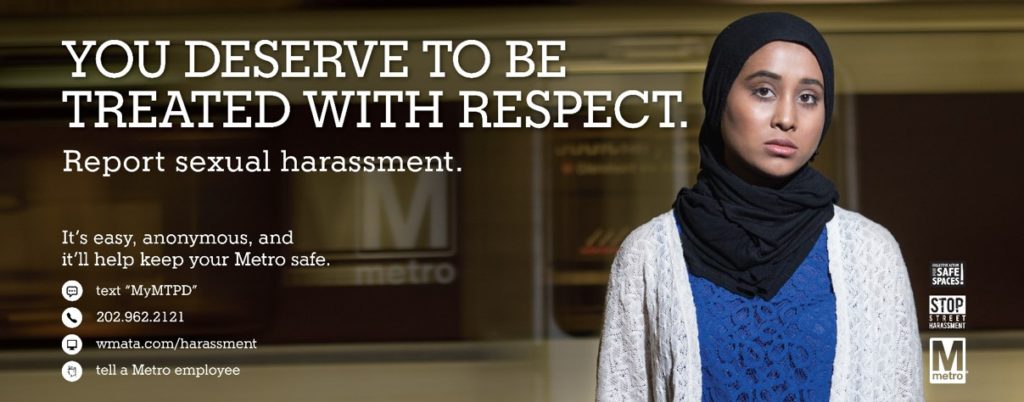
4. If you’re in the Washington, D.C. area and witness or experience harassment on the transit system, you can report it.

WMATA anti-harassment transit campaign

Rest assured, we will continue working to make public spaces more welcoming for all. Join us. Together, we must ensure that justice, equality and love prevail.

The Stop Street Harassment Board of Directors

Share

Filed Under: SSH programs, street harassment Tagged With: election statement, trump

45% of American Women Have Experienced Unwanted Sexual Touching

November 7, 2016 By HKearl

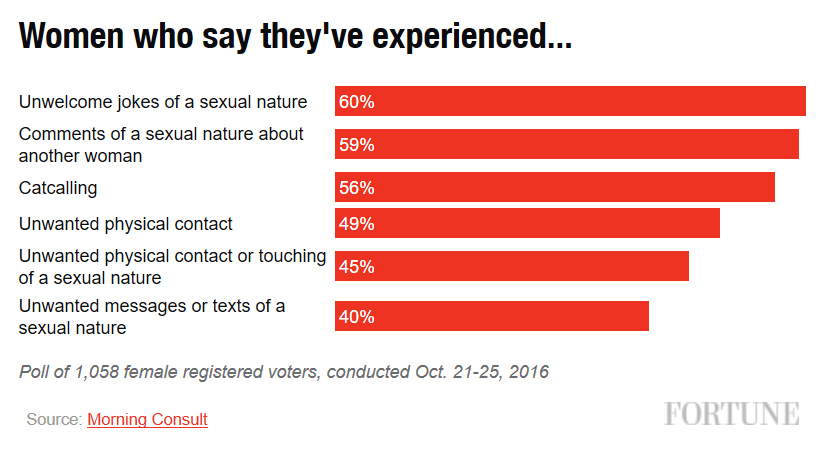
nov2016-fortunepollonsexualmisconduct

A new phone poll of more than 1,000 randomly selected registered female voters in the USA finds that sexual abuse is common. Among the findings, 56% had experienced “catcalling” and 45% had experienced unwanted sexual touching.

Read more at Fortune.com.

Share

Filed Under: Resources, street harassment Tagged With: statistics, study, usa

New Transit Ads in Boston Focus on Persons with Disabilities

November 4, 2016 By HKearl

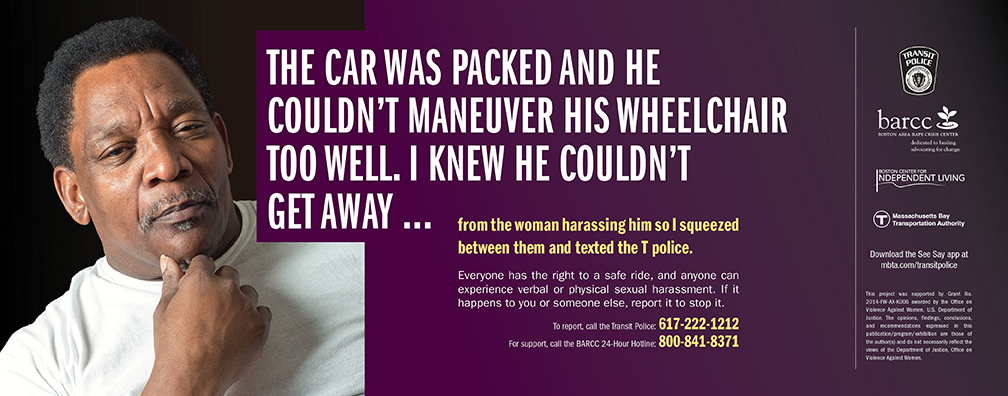
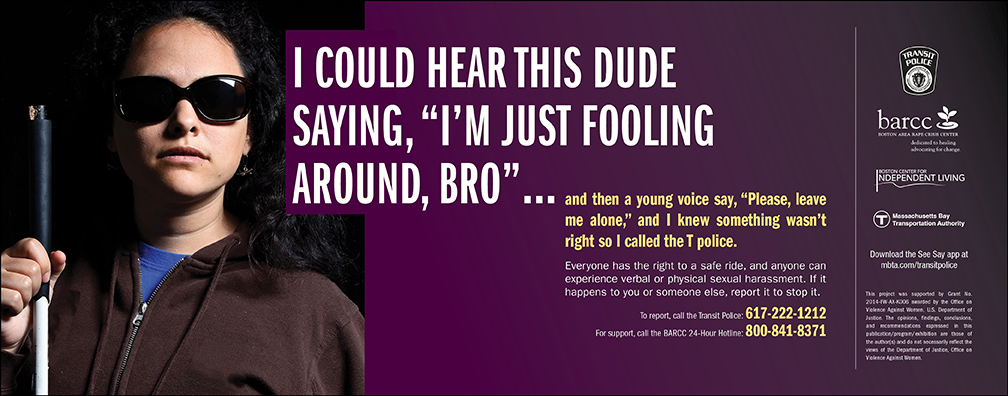
bostontransitadnov2016Massachusetts Bay Transportation Authority (MBTA) has launched a new wave of ads! 800 posters will be on public transit until February.
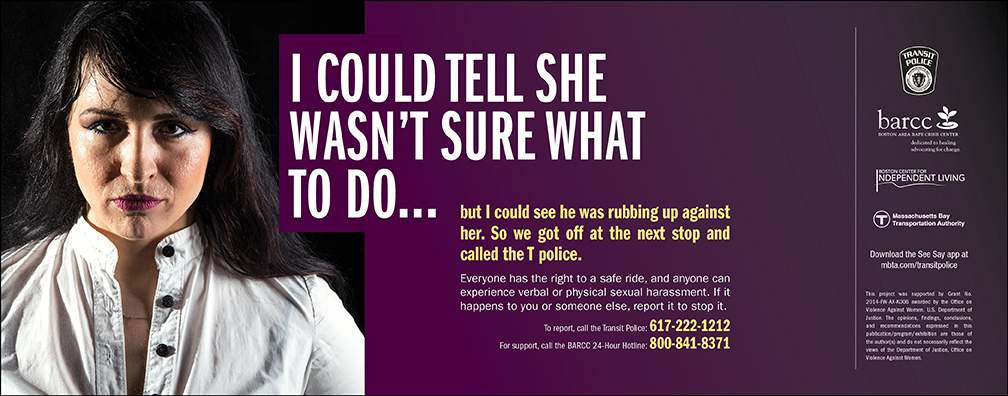
Via Boston Globe:

“The campaign is explicitly inclusive of people with disabilities, both as people who may experience sexual harassment and as people who can intervene to prevent sexual violence,” Yen-Ewert said. “National and state studies show that people with disabilities experience sexual violence at two times the rate compared to people without disabilities.”

Karen Schneiderman, the senior advocacy specialist at the Boston Center for Independent Living, said the campaign “raises awareness about the issue of sexual violence against people with disabilities and the importance of having services that are accessible to all. I also appreciate that this campaign highlights people with disabilities in the role of assisting others, not just as people who are victimized.”

Learn more at MBTA.com.

bostontransitadnov2016-2

Way to go, Boston! I also appreciate how they say they can be people who intervene, as well people who experience sexual harassment, recognizing they can have agency and take action.

MBTA has a nearly nine year history of anti-harassment ads. The first wave of ads went up in 2008, the next in 2009 and then the next in 2013. I’m glad to see them continue tackling this issue. Kudos also goes to the Boston Area Rape Crisis Center for their partnership on the ads over the years.

bostontransitadnov2016_4

Share

Filed Under: disabilities, public harassment, Resources Tagged With: Boston, MBTA, transit campaign

Super Women Talk about Street Harassment

November 1, 2016 By HKearl

On my final day at HABITAT III in Ecuador, I got to chat about street harassment with activist friends from Safecity (India) and No Molestie Di Strada (Italy) for a video clip for Climax Brasil! Check out the quick tips we give for possible creative responses you can have to street harassment (if you feel safe and have the time).

Via Climax Brasil

“[PORTUGUÊS] A #SuperUrbana encontrou Super Mulheres de outros países e bateu um papo sobre a relação das mulheres e meninas com os espaços públicos e como derrotar esse inimigo comum não só das mulheres, mas de tod@s nós: o machismo. #Habitat3 #Cities4all #Planet5050

[ESPAÑOL] #SuperUrbana encontró Súper Mujeres de otros países y tuvo una charla sobre la relación de las mujeres y niñas con los espacios públicos y como derrotar a este enemigo común no solo de las mujeres sino de tod@s nosostr@s: el machismo. #Habitat3 #Cities4all #Planet5050

[ENGLISH] #SuperUrbana met Super Women from other countries to have a chat about the relationship between women and girls and public spaces and how to defeat this common enemy; an enemy not just of women but of all of us: sexism. #Habitat3 #Cities4all #Planet5050″


Share

Filed Under: street harassment

« Previous Page
Next Page »

Share Your Story

Share your street harassment story for the blog. Donate Now

From the Blog

  • #MeToo 2024 Study Released Today
  • Join International Anti-Street Harassment Week 2022
  • Giving Tuesday – Fund the Hotline
  • Thank You – International Anti-Street Harassment Week 2021
  • Share Your Story – Safecity and Catcalls Collaboration

Buy the Book

  • Contact
  • Events
  • Join Us
  • Donate
  • Facebook
  • Instagram
  • Pinterest
  • Tumblr
  • Twitter
  • YouTube

Copyright © 2026 Stop Street Harassment · Website Design by Sarah Marie Lacy