• About Us
    • What Is Street Harassment?
    • Why Stopping Street Harassment Matters
    • Meet the Team
      • Board of Directors
      • Past Board Members
    • In The Media
  • Our Work
    • National Street Harassment Hotline
    • International Anti-Street Harassment Week
    • Blog Correspondents
      • Past SSH Correspondents
    • Safe Public Spaces Mentoring Program
    • Publications
    • National Studies
    • Campaigns against Companies
    • Washington, D.C. Activism
  • Our Books
  • Donate
  • Store

Stop Street Harassment

Making Public Spaces Safe and Welcoming

  • Facebook
  • Instagram
  • Pinterest
  • Tumblr
  • Twitter
  • YouTube
  • Home
  • Blog
    • Harassment Stories
    • Blog Correspondents
    • Street Respect Stories
  • Help & Advice
    • National Street Harassment Hotline
    • Dealing With Harassers
      • Assertive Responses
      • Reporting Harassers
      • Bystander Responses
      • Creative Responses
    • What to Do Before or After Harassment
    • Street Harassment and the Law
  • Resources
    • Definitions
    • Statistics
    • Articles & Books
    • Anti-Harassment Groups & Campaigns
    • Male Allies
      • Educating Boys & Men
      • How to Talk to Women
      • Bystander Tips
    • Video Clips
    • Images & Flyers
  • Take Community Action
  • Contact

Late October 2016 News Round-Up

October 31, 2016 By HKearl

Here are some of the global news highlights from the past few weeks:
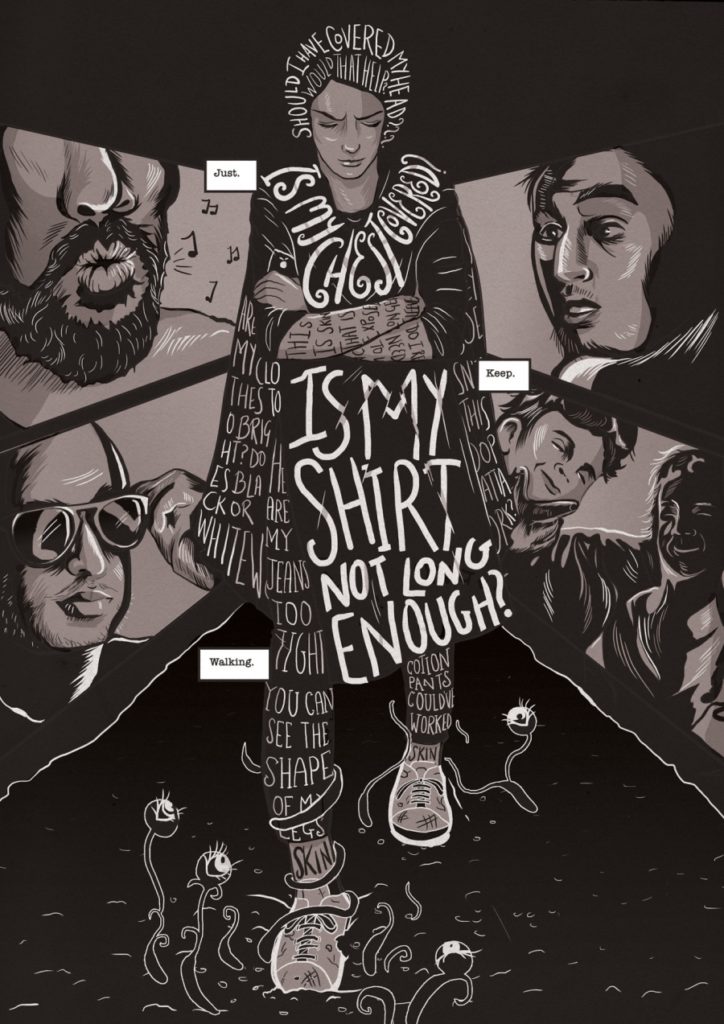
Illustration by Shehzil Malik

Tens of thousands of women marched in Argentina to protest violence against women.

“Respectful relationship” curriculum will be mandatory in all Victoria, Australia, schools next year and students will learn about social inequality, gender-based violence, and male privilege.

A video of a woman walking for two hours in San Jose, Costa Rica, garnered a lot of discussion about street harassment.

A French TV commentator kissed a young woman’s breasts without consent on live TV, sparking a national conversation about sexual abuse.

Thanks to SHE teams launched two years ago in Hyderabad, India, street harassment is down by 20%.

Half of all women in Ireland have faced some form of sexual harassment in their life.

An increase in non-consensual up-skirt recordings in tourist areas in Kyoto, Japan, has prompted more police patrolling.

Women in Morocco are standing up to street harassers.

Illustrator Shehzil Malik in Pakistan created a series of images she called #WomenInPublicSpaces.

A viral video of street harassment in Trinidad prompted the Office of the Prime Minister (Gender and Child Affairs) to state that such behavior is illegal.

Thousands of women in Turkey dressed in their best and rode bicycles to claim their right to the streets.
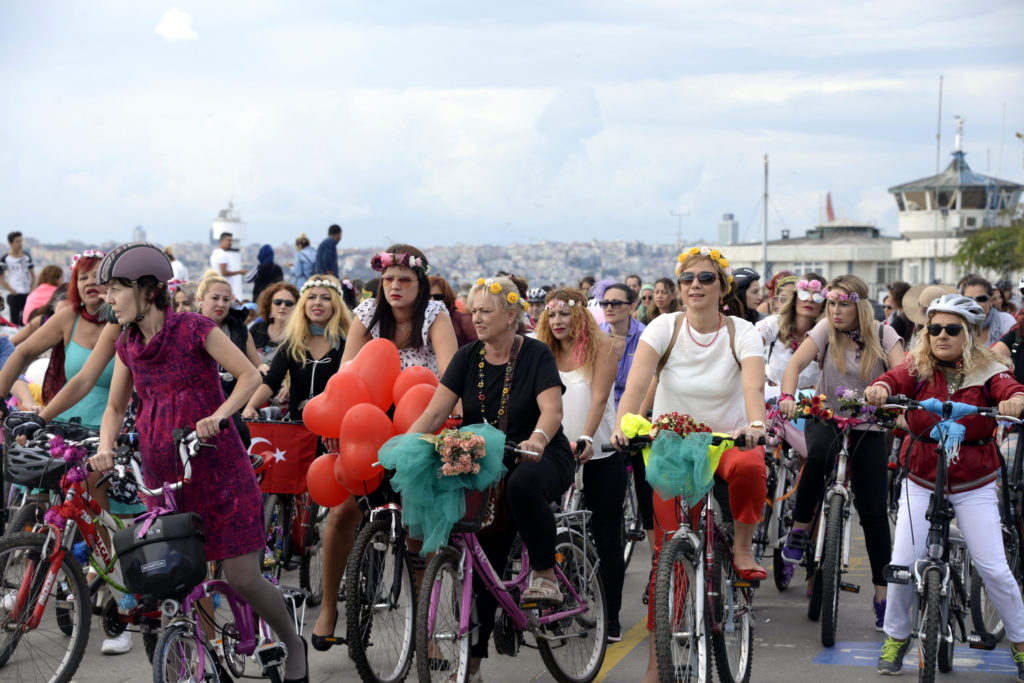

fancywomenonbiketurkey2016
Turkey. Via NYT Live

Share

Filed Under: News stories, street harassment

Ireland: My Body, My Choice: From Reproductive Rights to Sexual Harassment

October 29, 2016 By HKearl

Grace Gageby, Dublin, Ireland, SSH Blog Correspondent

In 1983, the 8th Amendment, a ban on abortion that gave the “right to life of the unborn with due regard to the equal life of the mother” was voted into the Irish constitution. The youngest person who voted in the referendum then is now 51.

Between the implementation of the 8th Amendment and the present day, a pro-choice movement has been struggling to secure a woman’s right to control her own body in Ireland. This September saw the 5th annual March for Choice, in which (despite bus strikes and abysmal weather) 25,000 people took to the streets of Dublin to call on the conservative political establishment to trust women to make their own choices.

Women and men of all ages marched through the city with signs declaring ‘My body, my choice’, ‘Get your rosaries off my ovaries”, ‘Woman, not vessel’, ‘Not the Church, not the State, women must decide their fate’, and, in reference to Ireland’s victory in the Marriage Equality campaign, ‘Choice: you gave it to the gays, now give it to the girls.’ Speeches at the end of the march drew attention to how Ireland’s abortion ban affects the most vulnerable women in society, for example, asylum seekers.

A tribute was paid to the 12 women a day who are forced to travel to England for abortions, in this moving rendition of the traditional song, ‘Trasna na Donnta’ (Irish for ‘Across the Waves’).

The past few months have seen a big focus on repealing the amendment. Sweaters with merely the word ‘repeal’ printed on them sold out in one day in a pop-up shop in Dublin city centre. All proceeds were given to the Abortion Rights Campaign, and across the country, men and women of all ages literally wore their beliefs on their chests.

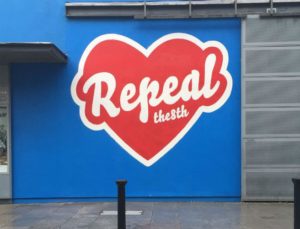
repealthisStreet artist, Maser, graffitied a large red and white heart bearing the words “Repeal the 8th” on the wall of Dublin’s Project Art’s centre. The mural was painted over after Dublin City Council received complaints, which sparked mass outrage and indignation over this threat to freedom of speech. At a protest, I spoke to countless men and women who wanted to make the message abundantly clear: the issue of reproductive rights in Ireland cannot be covered up with a bit of blue paint.

People in Ireland are no longer accepting the quintessential Irish problem of shoving matters under the carpet, and exiling women to England to receive medical treatment their own country refuses to provide. Since being painted over, the mural has become iconic, popping up all over the city on bags, shirts, badges, in shop windows, and even on donuts made by the fabulous Aungier Danger! In its suppression, the painting over of the mural spawned insurgence and sparked a conversation that cannot be muted by a backward establishment determined to dominate women’s sexual and personal decisions.

Unfortunately, Ireland’s history of silencing women’s oppression goes back further than the 8th amendment. In fact, the 8th was built on the legacy of the Magdalene Laundries, institutions run by the Catholic Church to house ‘fallen women’. The Magdalene Laundries were motivated by not only a desire for free labour, but, according to Frances Finnegan (author of Do Penance or Perish: A Study of Magdalene Asylums in Ireland), a need to “maintain moral and social order within the bounds of a patriarchal structure.” An estimated 30,000 women were confined in these laundries in the 19th and 20th century. Historically, there has been a culture of secrecy surrounding the laundries, and the abuse women faced within them. While Taoiseach Enda Kenny (Prime Minister of the Republic of Ireland) issued a formal apology in 2013, the religious institutions such as the Sisters of Mercy refused demands from the Irish government, UN Committee on Rights of the Child and the UN Committee Against Torture to contribute to the compensation fund for victims of the laundries.

With this history of oppression and silence, it is hardly surprising the archaic 8th amendment is currently in place in Ireland. It stems from centuries of Church and State control over women’s bodies.

Despite this, a youthful, vibrant pro-choice movement in Ireland is flourishing, having taken inspiration from the Yes Equality Campaign that legalised gay marriage in 2015.  This victory was not only a joyous occasion for Ireland, but also for politicized sections of LGBT people, women and the working class who are currently at the forefront in the struggle for reproductive rights in Ireland.  The sheer momentum behind the pro-choice movement in Ireland has created a massive drive for challenging sexism in all its facets.

If we want to achieve true gender equality in Ireland, we cannot and will not have a law policing women’s bodies in our constitution. If women are not equal in the eyes of the law, how can we expect the same thing in the hearts and minds of our citizens? Women’s bodies are not commodities: not vessels for children, not possessions of the State and not objects for the male gaze. We need to reject a culture of silencing oppression and of not listening to women’s stories, whether they be stories of assault, harassment, or being criminalized for having a say in their own reproductive rights. The current appetite for social change and challenging sexism in all it’s forms has created a platform from which women can be heard, and given Ireland’s history, it’s about time.

Grace is a student. She writes regularly for her school newsletter and yearbook, and has been published in Inis Magazine. Grace is currently involved with the socialist feminist group ROSA (for Reproductive rights, against Oppression, Sexism & Austerity), and their campaign for abortion rights in Ireland.

Share

Filed Under: correspondents Tagged With: repeal, reproductive rights, women's rights

Runner’s World Focuses on Street Harassment

October 27, 2016 By HKearl

I ran my first 5k when I was 8 years old and I began running long distances in middle school. In total, I have 25 years of running under my belt. I use running for stress relief, fitness, to enjoy nature, and to train for races. It’s also a great way to do sightseeing in a new place because you can see more than you can walking but you don’t go zipping by too fast like you might in a car. Sadly, street harassment has marred many of my runs. At least hundreds of men have verbally harassed me, a few have done worse. In my 20s, I realized this is not unusual for women runners. It’s just one more way that we lack safe and equal access to public spaces.

I am so grateful that Runner’s World tackled street harassment and runners by conducting a survey of 4,670 runners and writing a feature article for their December issue. In an unprecedented move, they released the survey results and article online last night. SSH supporter and journalist Michelle Hamilton is the author of the article.

Here is an excerpt, do read the full piece!

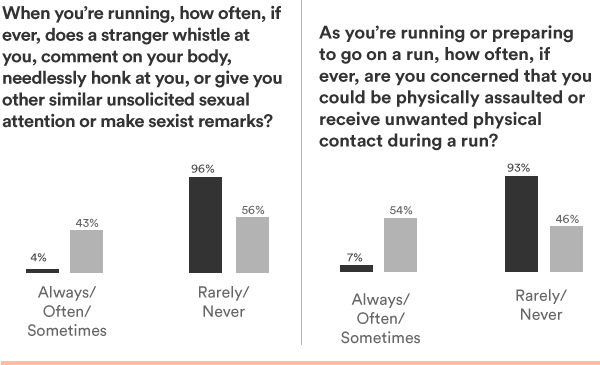
Two of the questions -- black is men, grey is women
Two of the survey questions — black is men’s response, grey is women’s response

“43 percent of women at least sometimes experience harassment on the run, according to a recent RW survey, compared with just 4 percent of men. In the vast majority of cases, it’s not life-threatening. But it is pervasive, and it’s upsetting, and it’s most likely happening to you or someone you know.

A man will look a woman up and down as she runs past. A driver will shout a come-on, laughing with his friends as they speed away. A person on a bike or in a car will follow a woman, and she might dart down a side street to escape. Even if nothing like this happens most days, knowing that it (or something worse) could happen causes stress. As the recent national dialogue surrounding Donald Trump’s sexist comments and alleged assaults brought to light, almost all women—runners or not—have endured unwanted sexual attention. And no matter how swift a woman’s pace, it’s impossible to outrun harassment….

There’s no immediate, easy solution, because sexual harassment is a complex societal problem. But open and honest conversations about the issue—ones that include men as well as women—are a step in the right direction. “Too often, street harassment is normalized and minimized,” Kearl says. “Listening to people’s stories with empathy is important because these actions signal that street harassment is a serious issue.” Kimmel encourages men to speak up when they witness sexist treatment. “If I say nothing, even though I don’t like the behavior,” he says, “other men assume I support it.” Even if female runners can’t be entirely spared of harassment, disrupting the status quo is a place to start.”

Share

Filed Under: News stories, Resources, street harassment Tagged With: runner, runners world, survey

South Africa: The Safe Ride Campaign

October 23, 2016 By HKearl

Nyasha Joyce Mukuwane, Johannesburg, South Africa, SSH Blog Correspondent

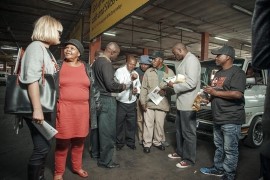
taxi3
Pictures courtesy of Sonke Gender Justice

taxiAbusive male passengers and taxi drivers can make riding public transport in Johannesburg a harrowing experience for a woman. More often than not, a woman faces harassment or sexual abuse aboard a taxi. Taxi drivers and the queue marshals have a notorious reputation for this and there have been many recorded and unrecorded incidents of verbal abuse, harassment, physical violence, sexual assault and rape of girls and women whilst using taxis. One lady spoke to me about how some men thought it funny to poke her breast and how paralysed with fear she felt as she could not stand up and leave the taxi. The other passengers simply looked on and ignored that she was being harassed.
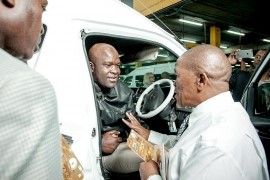

Fortunately, there is a new campaign to change this.

taxi4taxi2Sonke Gender Justice is a NGO working  across Africa to strengthen government, civil society and citizen capacity to promote gender equality, prevent domestic and sexual violence, and reduce the spread and impact of HIV and AIDS. On the 17th of  August 2016, they partnered with the South African National Taxi Council (SANTACO), with support from the Danish Embassy, to launch the Safe Ride campaign. The goal of the campaign is to prevent and respond to the abuse of women and girls at the hands of taxi personnel, including drivers and queue marshals.

The Johannesburg launch of the campaign was the beginning of a year-long programme that will traverse the country to educate the taxi community about how they can help prevent and stop harassment and sexual violence against women and children. Over the next year, supported by funding from the Danish Embassy, the Safe Ride campaign will host events with taxi drivers, queue marshals and commuters in all nine provinces. They are also planning a few three day intensive training sessions for drivers and their assistants on gender-based violence, how to report such incidents and where survivors can go to for help.

This is one of the most innovative campaigns in Johannesburg to challenge patriarchal beliefs, change the way that taxi drivers deal with street harassment, and promote active citizenry against street harassment.

Nyasha is the public awareness coordinator at the Nisaa Institute for Women’s Development in Johannesburg, South Africa, where the main goal is counselling and sheltering survivors of domestic abuse. She has edited two books by survivors that are available to download for free from the website www.nisaa.org.za.

Share

Filed Under: correspondents, Resources, street harassment Tagged With: campaign, taxi, transport

“Abuse of anyone by another is wrong & cannot be tolerated”

October 21, 2016 By HKearl

As a young man about to enter the Marine Corps at the height of the Vietnam War living in Hawaii, I met a guy who was already in the Corps. He invited me to his home to talk about life in the Marine Corps. During our talk he physically assaulted me by saying that a certain physical exam was required, then he began by injecting a device up my ass with some device. I’ve NEVER told anyone of this before and I’ve been married, divorced and had numerous relationships with other women. I’m a straight 66 year old male who has felt shame, embarrassment & many other emotions as a result of this. Thank you for providing a platform where one can express what occurs to so many others.

Optional: What’s one way you think we can make public places safer for everyone?

By continuing to share that abuse of anyone by another is wrong & cannot be tolerated.

– Dan

Location: Kailua, Hawaii

Need support? Call the toll-free National Street Harassment hotline: 855-897-5910

Share your street harassment story for the blog.
See the book 50 Stories about Stopping Street Harassers for idea
s.

Share

Filed Under: male perspective, Stories, street harassment

« Previous Page
Next Page »

Share Your Story

Share your street harassment story for the blog. Donate Now

From the Blog

  • #MeToo 2024 Study Released Today
  • Join International Anti-Street Harassment Week 2022
  • Giving Tuesday – Fund the Hotline
  • Thank You – International Anti-Street Harassment Week 2021
  • Share Your Story – Safecity and Catcalls Collaboration

Buy the Book

  • Contact
  • Events
  • Join Us
  • Donate
  • Facebook
  • Instagram
  • Pinterest
  • Tumblr
  • Twitter
  • YouTube

Copyright © 2026 Stop Street Harassment · Website Design by Sarah Marie Lacy