• About Us
    • What Is Street Harassment?
    • Why Stopping Street Harassment Matters
    • Meet the Team
      • Board of Directors
      • Past Board Members
    • In The Media
  • Our Work
    • National Street Harassment Hotline
    • International Anti-Street Harassment Week
    • Blog Correspondents
      • Past SSH Correspondents
    • Safe Public Spaces Mentoring Program
    • Publications
    • National Studies
    • Campaigns against Companies
    • Washington, D.C. Activism
  • Our Books
  • Donate
  • Store

Stop Street Harassment

Making Public Spaces Safe and Welcoming

  • Facebook
  • Instagram
  • Pinterest
  • Tumblr
  • Twitter
  • YouTube
  • Home
  • Blog
    • Harassment Stories
    • Blog Correspondents
    • Street Respect Stories
  • Help & Advice
    • National Street Harassment Hotline
    • Dealing With Harassers
      • Assertive Responses
      • Reporting Harassers
      • Bystander Responses
      • Creative Responses
    • What to Do Before or After Harassment
    • Street Harassment and the Law
  • Resources
    • Definitions
    • Statistics
    • Articles & Books
    • Anti-Harassment Groups & Campaigns
    • Male Allies
      • Educating Boys & Men
      • How to Talk to Women
      • Bystander Tips
    • Video Clips
    • Images & Flyers
  • Take Community Action
  • Contact

Day 4: International Anti-Street Harassment Week

April 13, 2016 By HKearl

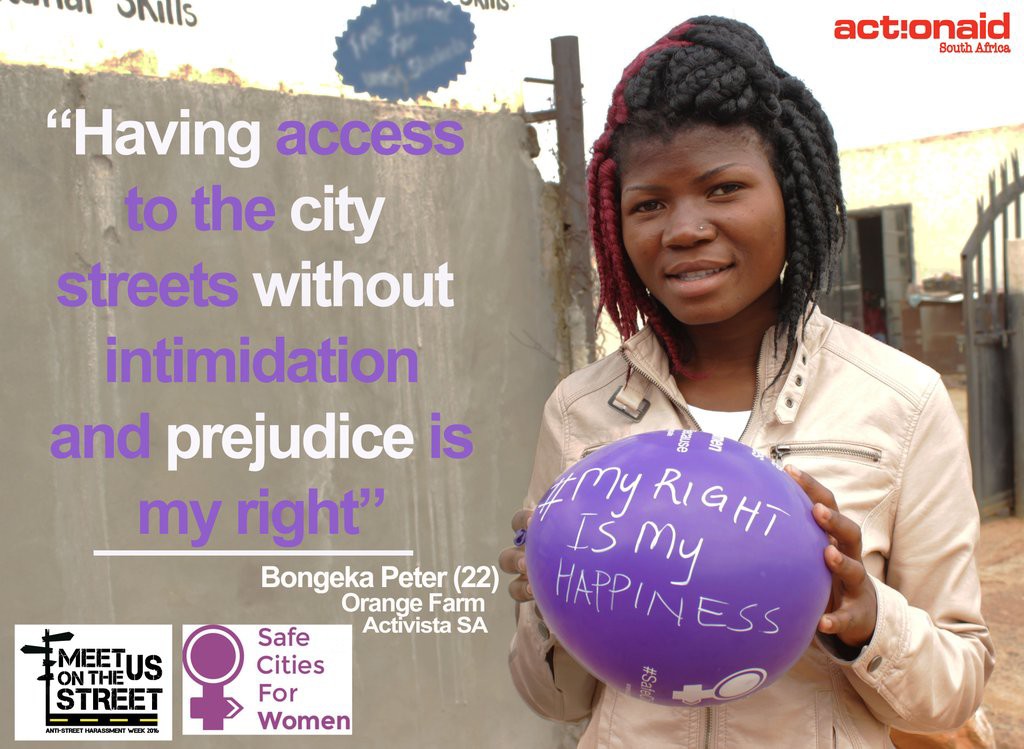
4.13.16 ActionAidSouthAfricaHello Day 4!

Here are photos from the week

Here are the media hits

Here’s the Storify from the tweetathon yesterday.

Here is the Storify from our Tweet Chat Today!
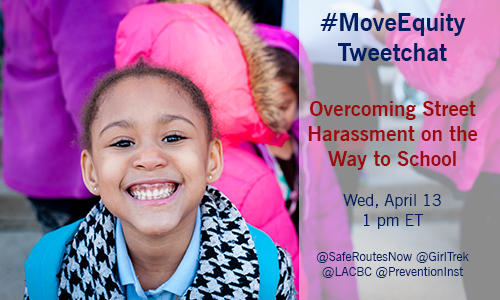
ASH tweetchat promo image

Here’s a sampling of the events and actions today:

  • Australia: Member of Parliament Fiona Patten MLC gave a statement in Victoria, focused on LGBTI street harassment.

“Ongoing and systemic harassment and discrimination led to higher rates of psychological distress amongst LGBTI Australians compared with the population at large. I do not think anyone should be harassed on the street — whether they are male, female, trans or whatever sexuality they identify as having. I call on the minister to help reduce gender and sexuality-based street harassment by working collaboratively with the LGBTI community to develop public campaigns that recognise the value of LGBTI people in our community.”

  • Egypt: HarassMap held a day of activities (awareness sessions, stand up comedy etc.) at Menofeya University in Menofeya governorate
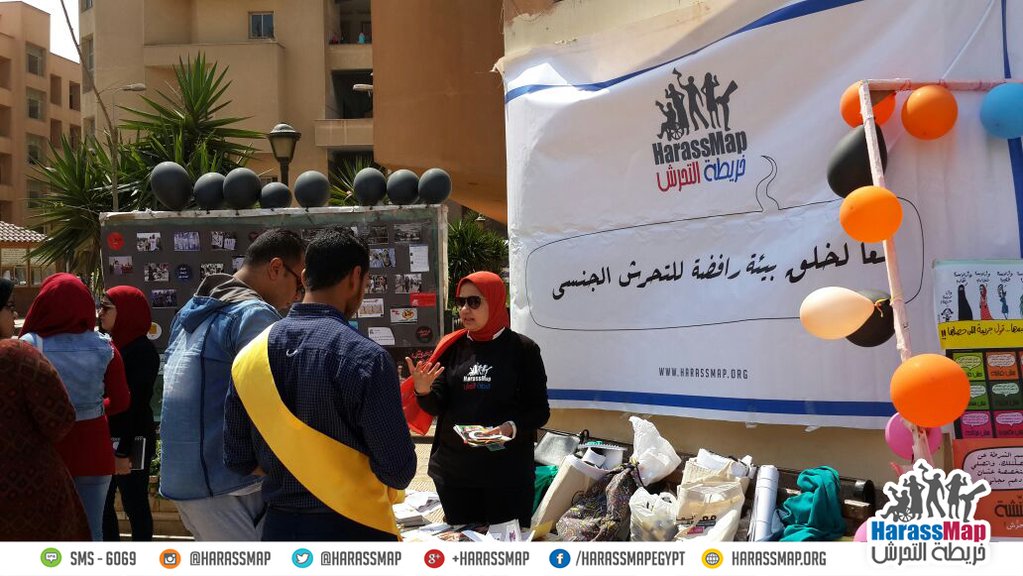
4.13.16 HarassMap in Egypt

  • India: Safecity organized a Safety Sprawl in two communities in Mumbai
  • Nepal: Activista Nepal held a street drama
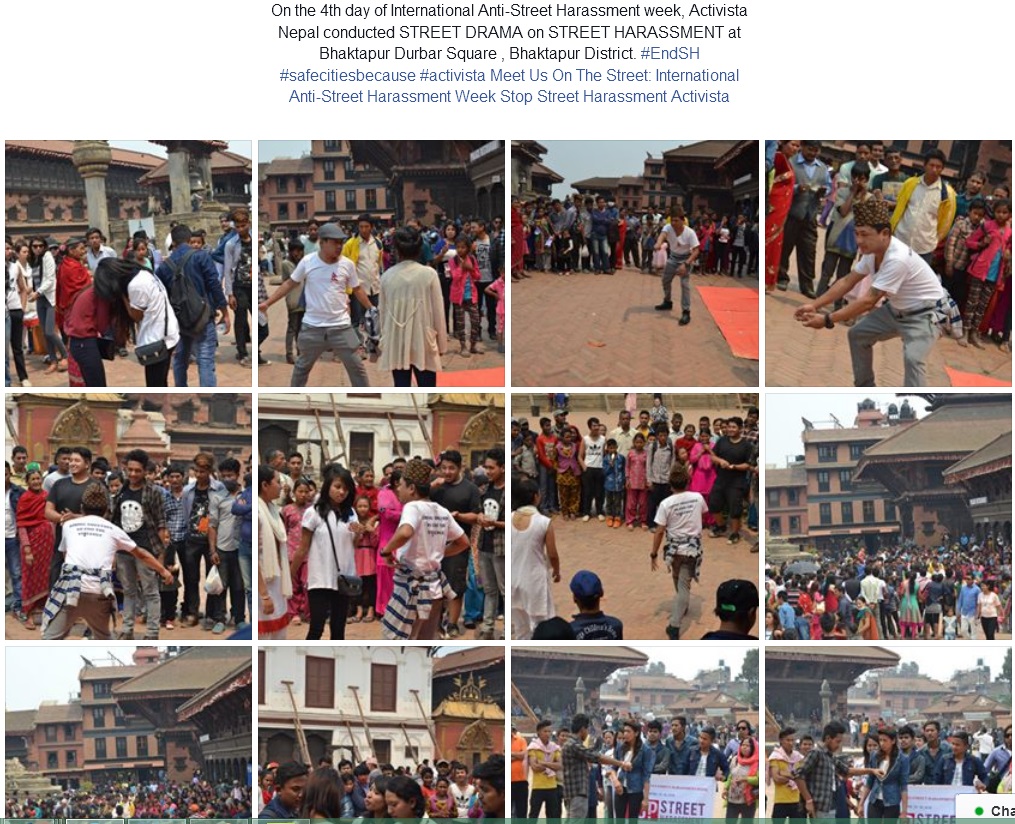
4.13.16 Nepal Street Drama

  • UK: UNmuted Productions released the film “I Smile Politely, film about street harassment (spoken word poetry),” starring April Hughes and written & directed by Ness Lyons. The Director of Photography & Editor is Luke Bartlett. “This a specially edited version of the original 12-minute ‘I Smile Politely’, which was performed at Women of the World Festival 2016, Southbank Centre. A lot of people asked if the piece was on YouTube… so we made this :)”

  • Pennsylvania: Susquehanna University’s Women’s Studies department is hosting their annual chalking on campus.
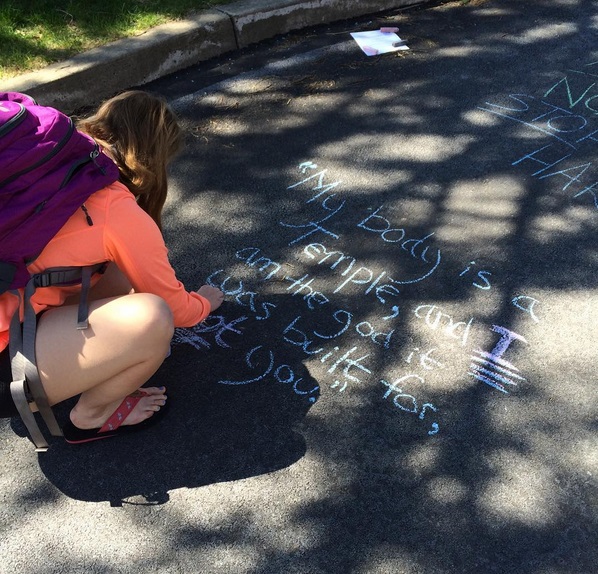
4.13.16 Susquehanna University chalking PA

  • Pennsylvania: Explorers Against Sexual Violence at La Salle University in Philadelphia also held a sidewalk chalking
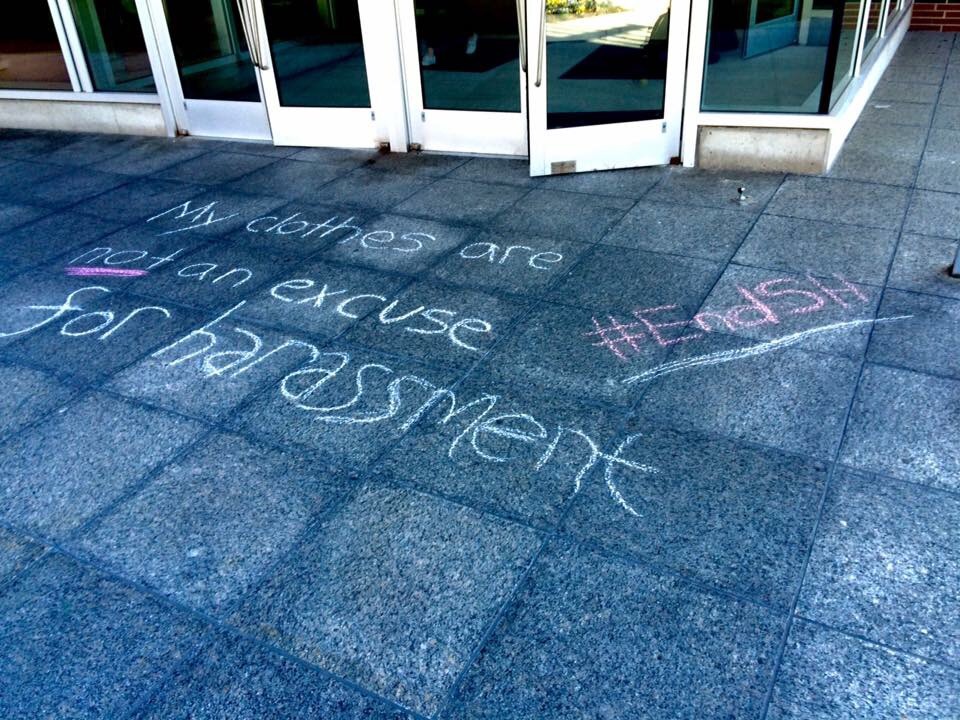
4.13.16 La Salle EASV chalking 5

  • Washington, D.C.: End Rape on Campus co-founders Annie Clark and Andrea Pino have edited a volume of stories by rape survivors — We Believe You — and will host an event for its release. Senator Kirsten Gillibrand (NY) will join them. [Politics & Prose, 6th & I Street, NW, 7 p.m.]
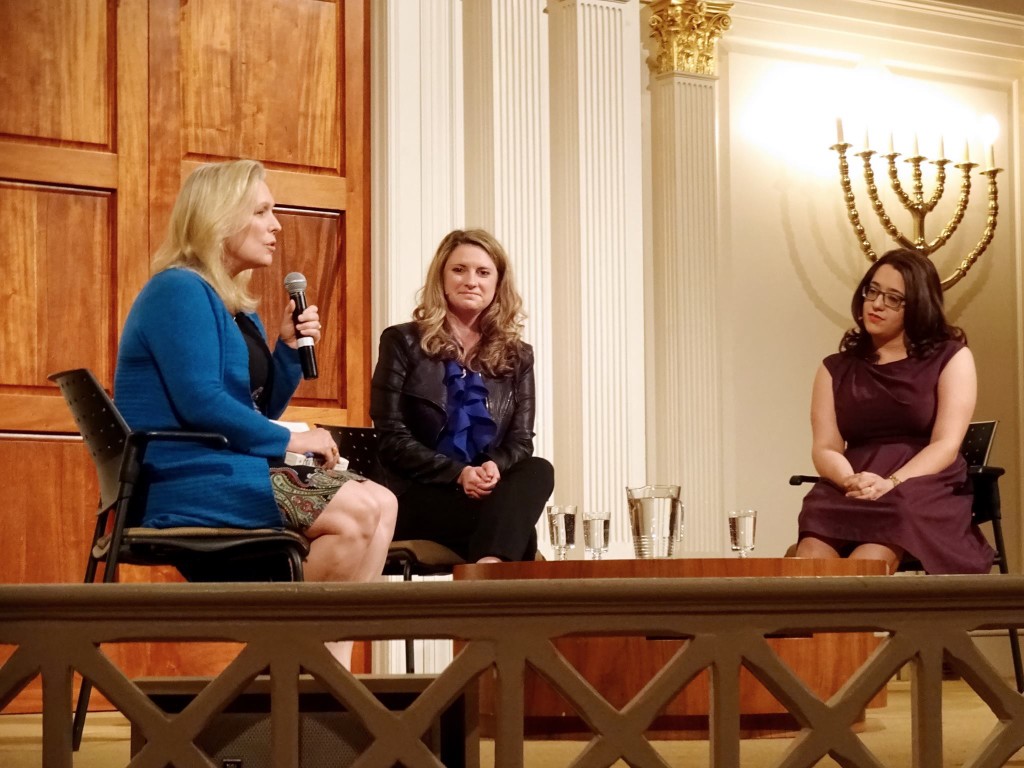
4.13.16 DC we believe you event

A new film was released in India:
Share

Filed Under: anti-street harassment week

Chariots for Hire, No Groping Buttons and Other Ways to Make Transit Safer

April 13, 2016 By HKearl

The ride-sharing service Chariots for Women will be launching nationwide on April 19 as an alternative to Uber and Lyft. In this model, all drivers and customers will be women to “ensure safety, comfort, and pleasure.”

Since stories about sexual violence of women at the hands of male Uber and Lyft drivers and taxi drivers are not uncommon, it’s understandable that there is a market for such a service. Indeed, I’ve supported a similar but free service called RightRides in both New York City and Washington, D.C. On select nights, women and LGBQTI-identified people can receive a safe, affordable late-night-ride home.

In San Francisco, a similar service called Homobiles offers rides that are free, with a donation suggested, to members of the LGBTIQQ community, who similarly may feel unsafe or discriminated against by drivers or be unable to pay for expensive taxi fares.

I understand why these services exist and many countries offer some form of women-only public transportation. But I do not believe that these kinds of women-only or LGBTIQQ-only services should be the ultimate goal. They are problematic for many reasons. Namely, they do not address the root causes of harassment and sexual assault, and they place the onus on these communities to keep themselves safe.

But there are no quick-fixes and easy answers for making public transportation (or any public spaces) safer, and I applaud those who are at least trying. And lately, there have been many groups that are trying. These are four examples, just from the past few weeks:


JAPAN:

In Japan, men groping women and girls on public transportation is a problem, but it’s challenging for them, especially girls, to speak out in the moment when it happens.

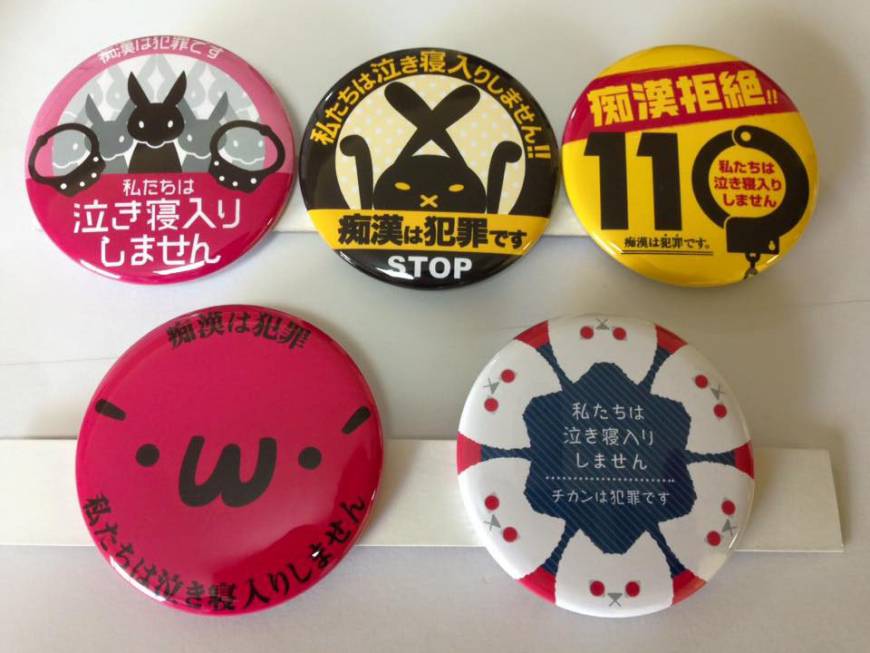
A female high school student in Tokyo who was regularly groped by men on her ride home from school (and reported it, but that did not stop it) and her mother designed a button that said “Groping is a crime” and “I won’t let the matter drop” which she attached to her school bag. The buttons seem to be a deterrent, and no man has groped her since she put them on her bag.

Her success inspired others. Recently, thanks to a fundraising campaign (“Stop Chikan Badge Project”), the Chikan Yokushi Katsudo Center expanded on her idea and mass produced buttons. The designs on the buttons were also selected through crowdsourcing – there were 441 submissions and five designs selected. Recently, volunteers from the organization distributed 500 of the buttons at the JR Shibuya Station, with plans to distribute them at other stations. Not only did girls and young women take badges, but adults took them too to distribute to their daughters.

Japan Times March 2016 groping

MEXICO:

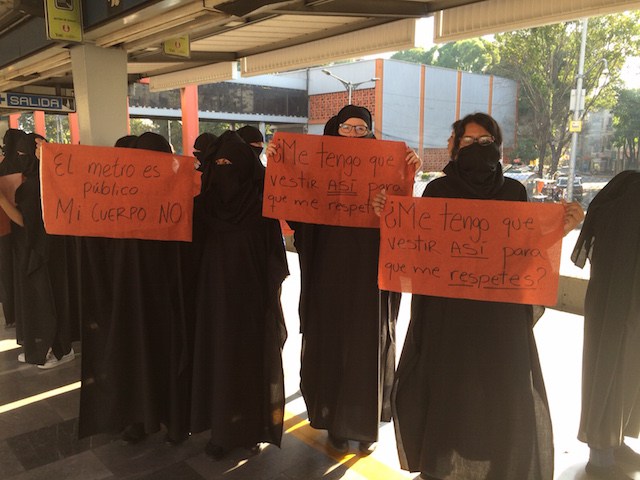
In early April, twenty women wearing dark clothing across their body and faces held a flash mob protest against sexual harassment on the transit system in Mexico City. They were organized by the group Information Group on Reproductive Choice after one of the women’s colleagues was attacked. A 2014 study found that more than 60 percent of women in Mexico City and faced sexual abuse while riding public transit.

The women demonstrated at various stations and on the subway itself. Both metro authority staff and passengers were respectful and many women passengers stopped to thank them for raising awareness through their demonstration.

metro_mujeres11 - march 2015 mexico city campaign

UK:

Transport London conducted a survey in 2013 of their riders and found that around one in seven women had experienced unwanted sexual behavior on public transit. In response, they launched Project Guardian in conjunction with the British Transport, Metropolitan and City of London police forces and local advocacy groups, to raise awareness and train employees. But even still, few people reported harassment when they experienced it.

One year ago, they released the Report It to Stop It campaign. The video captures the way harassment can escalate and a voice asks at various points, “Would you report it?”

This month, one year later, Siwan Hayward, TfL’s deputy director of enforcement and on-street operations said there’s “not enough data yet to say it’s a trend” but “we are beginning to see what we hope is actually the prevalence of sexual offences falling.”

Notably, the video has been viewed nearly five million times and 36 percent more people are coming forward to report harassment, resulting in a 40 percent increase in arrests. As Ellie Violet Bramley wrote for the Guardian, “the real win is the cultural shift this signals – women won’t accept this behaviour as routine any more, and neither will the authorities.”

USA:

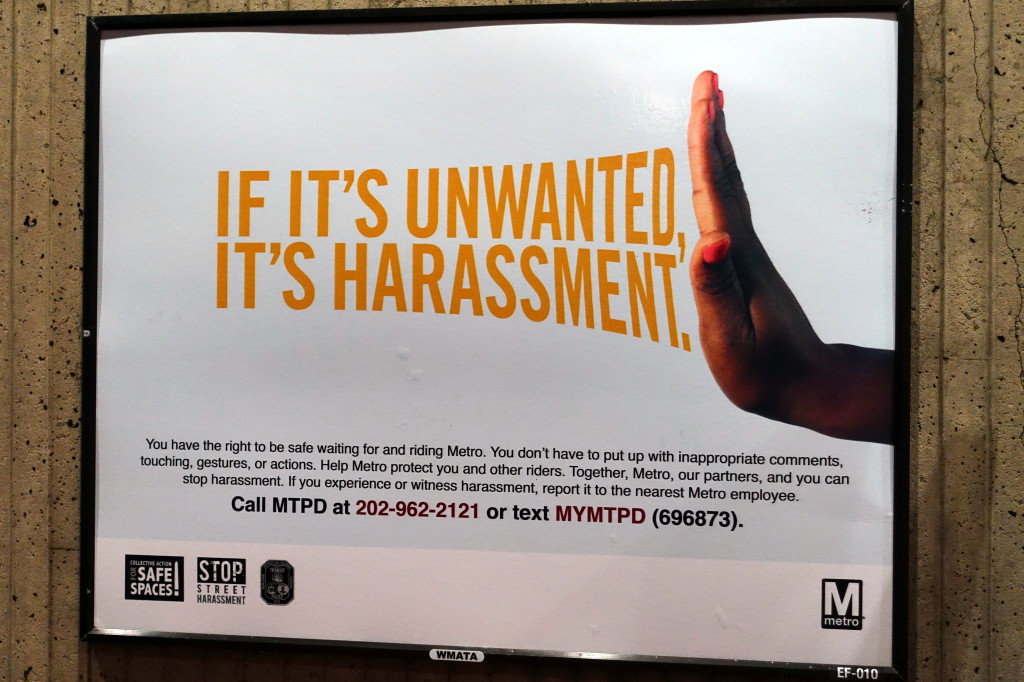
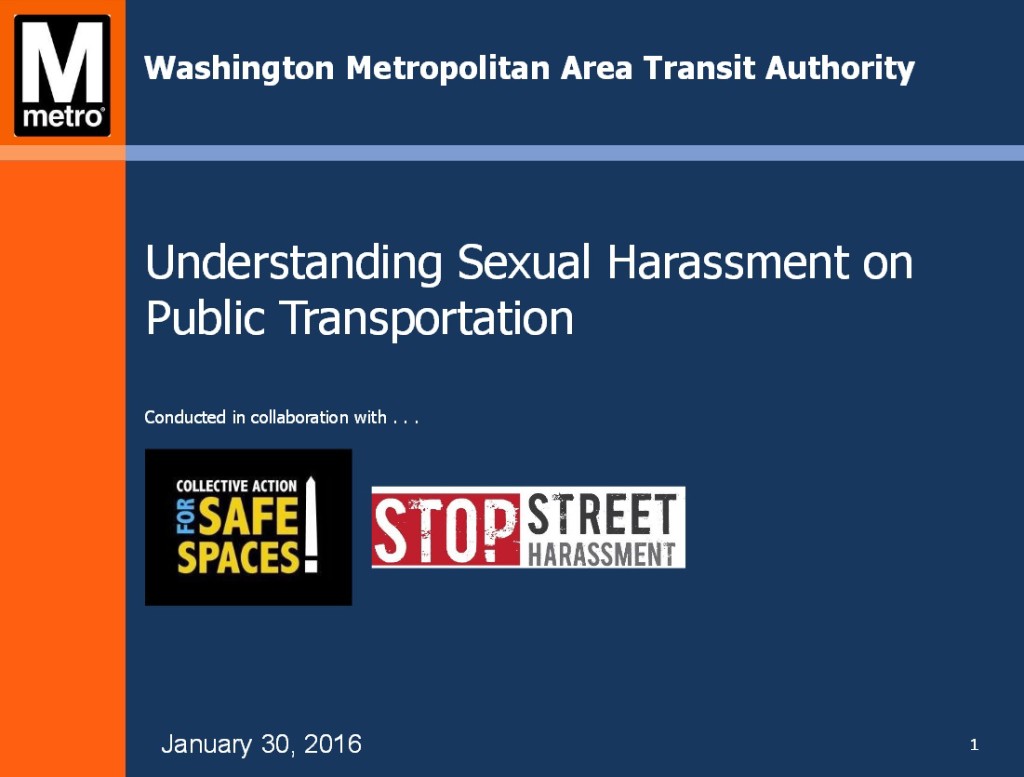
Washington Metropolitan Area Transit Authority (WMATA) has been working in collaboration with Collective Action for Safe Spaces and Stop Street Harassment on an anti-harassment campaign that has included station-wide awareness posters, an online reporting form, the training of employees, and outreach days at Metro stations. All of these efforts set the tone that sexual harassment is unacceptable and is taken seriously.

Over International Anti-Street Harassment Week, the three organizations released the results of the first-ever survey on the system. This is the biggest study of its kind for any transit system in the United States.

In the 1,000 person-regionally representative survey conducted in January 2016 by Shugoll Research, 21 percent of riders had experienced some form of sexual harassment, with verbal harassment being the most common form. Women were three times more likely than men to experience sexual harassment.

In positive news, 41 percent of the riders were familiar with the latest anti-harassment campaign and those who were familiar with it were twice as likely to report their experiences of harassment. Based on the findings, WMATA, CASS and SSH are currently working on a new awareness campaign that will be released in a few weeks.

11.28.15 WMATA Ad! Falls Church, VA 4


Find ideas for how YOU can help make public spaces safer.

Share

Filed Under: LGBTQ, News stories, public harassment, street harassment Tagged With: groping, japan, mexico, taxi, UK, usa, women-only

New Survey: Harassment on Transit in Washington, DC

April 12, 2016 By HKearl

WMATAsurveyToday for International Anti-Street Harassment Week, Washington Metropolitan Area Transit Authority (WMATA), Collective Action for Safe Spaces (CASS) and Stop Street Harassment released the results of the first-ever survey on the Metro system. This is the biggest study of its kind for any transit system in the United States.

In the 1,000 person-regionally representative survey conducted in January 2016 by Shugoll Research, 21 percent of riders in the Washington, DC area had experienced some form of sexual harassment, with verbal harassment being the most common form. Women were three times more likely than men to experience sexual harassment.

In positive news, 41 percent of the riders were familiar with the latest anti-harassment campaign and those who were familiar with it were twice as likely to report their experiences of harassment. Based on the findings, WMATA, CASS and SSH are currently working on a new awareness campaign that will be released in a few weeks.

IMG_6562Today, during evening rush hour, we’ll be handing out materials about harassment and how to report it at five Metro stations.

Metro Center
4:00 – 6:00 p.m.

Tenleytown-AU
4:00 – 6:00 p.m.

Shaw–Howard U
4:00 – 6:00 p.m.

Takoma
4:00 – 6:00 p.m.

Clarendon 
4:00 – 6:00 p.m.

WMATA, CASS and SSH have collaborated for four years on an anti-harassment campaign that has included station-wide awareness posters, an online reporting form, the training of employees, and outreach days at Metro stations. All of these efforts set the tone that sexual harassment is unacceptable and is taken seriously.

Share

Filed Under: anti-street harassment week, SSH programs, street harassment Tagged With: metro, public transportation, survey, transit, WMATA

Announcement: Street Harassment Hotline Coming in July!

April 12, 2016 By HKearl

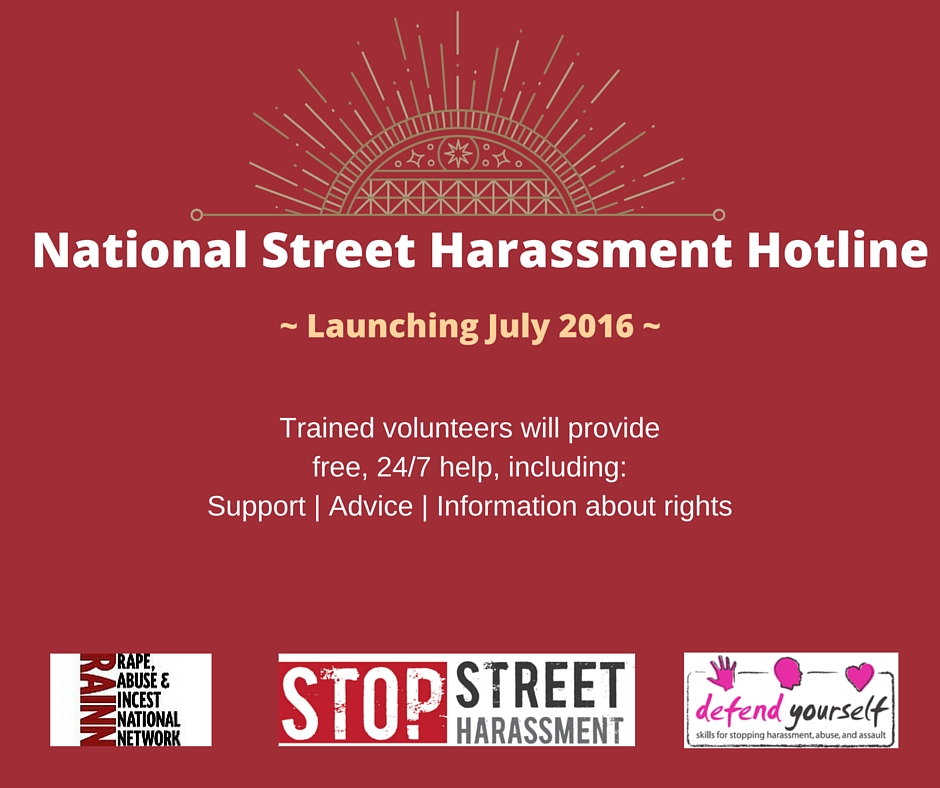
Stop Street Harassment (SSH) and Defend Yourself are partnering with the Rape, Abuse & Incest National Network (RAINN) to launch a gender-based street harassment national hotline in July 2016.

National Street Harassment HotlineRAINN operates the National Sexual Assault Hotline, which provides confidential support those impacted by sexual violence in both Spanish and English. The hotline is available via online chat and by phone 24/7. SSH and Defend Yourself will train RAINN staff who will be answering the National Street Harassment Hotline, to be equipped to help those calling about street harassment.

“We are thrilled about this new partnership and the ability to provide a safe space for those impacted by street harassment to receive help and appropriate resources,” said RAINN’s vice president for victim services, Jennifer Marsh.

Gender-based street harassment affects at least 65% of women and 25% of men in the USA, and it starts at a young age. It can range from catcalls and unwanted sexualized and homophobic comments to illegal acts like following, flashing, groping and sexual assault.

A growing body of research shows that street harassment negatively impacts women emotionally. It can be traumatic for them, especially for survivors of sexual abuse. “Mild” street harassment can escalate into physical harassment without warning and many women and some men have an underlying fear that verbal harassment will become physical. In January 2016, there were two cases – in Texas and Pennsylvania – of street harassment escalating into murder. In late March 2016, a mother in California was shot in the stomach by street harassers whom she confronted for harassing her teenage daughter.

“Street harassment is probably the No. 1 problem that brings women and teen girls to our classes,” says Lauren R. Taylor, director of Defend Yourself. “They desperately need alternatives to ignoring it. With this hotline, we can empower people by sharing skills – and increasing options – for dealing with harassment in public spaces.”

_______________________________________________________

We have the funds to set up the hotline, but the more money we raise, the more callers we can fund per month to sustain the hotline ($11 = 15 minutes of call time, $22 = 30 minutes).

– $275/month funds 5 hours of call time

– $1,100/month funds 25 hours of call time

Help us reach our $6,600 goal so we can fund at the $1,100 rate for the first six months.

_______________________________________________________

Meet some of the people who will be answering the hotline!

Share

Filed Under: SSH programs Tagged With: defend yourself, hotline, RAINN

Review & Book Giveaway: Sex Object, by Jessica Valenti

April 12, 2016 By HKearl

“Deeply moving, honest, and unflinching, Sex Object secures Jessica Valenti’s place as one of the foremost writers and thinkers of her generation. Her personal story highlights universal truths about being a woman, and makes the case for why feminism today is an unstoppable force.” – Cecile Richards, President, Planned Parenthood Federation of America

SEX OBJECT BOOK GIVEAWAY1In honor of International Anti-Street Harassment Week, we have partnered with Dey Street Books for a giveaway of @JessicaValenti’s new memoir. I’ll do a random drawing for two copies of the book per day, from April 12-16.

To enter the drawing:

  • Post about street harassment on social media using #EndSH and #SexObject and tagging @DeyStreet and @StopStHarassmnt

OR

  • Share your street harassment story, poem, article etc via tinyurl.com/ShareSHStory.

If your name is drawn, I’ll be in touch to get a mailing address from you in a few days. Note, Sex Object is on sale June 7th, so Dey Street will fulfill shipping at that time.

____________________________________________________________

I’ve been following the work of author and Feministing.com co-founder Jessica Valenti for a while. I’ve read a few of her books and I read her Guardian columns. I follow her on social media, including her new podcasts for the Guardian.

I’ve been a regular Feministing.com visitor for nearly a decade. In fact, I think Feministing was where I first learned the term street harassment via a feature about websites like Hollaback and the Street Harassment Project in 2006, and that led to me writing my master’s thesis on street harassment at GWU in 2007. I had one of the first accounts when Feministing started their community section and I’ve had the honor of guest blogging and being interviewed on the site.

I feel a lot of gratitude toward Valenti for the ways (likely unknown to her) that she has shaped my life and work.

While I’ve never met Valenti, from reading so much of her writing and seeing photos of her pup Monty and glimpses of her daughter Layla, I felt like I knew her a bit. But how much do you really know a person from their online persona?

After reading an advance copy of her forthcoming memoir Sex Object, it was clear that even when someone like her shares a lot, it’s still not everything (nor, of course, is everything in her book, either).

As the title suggests, a main theme throughout her book is how people treat her based on her body and the ways in which her body has informed some of her decisions and life paths. She writes about dealing with relentless street harassment, assault, slut-shaming in person and online, abortions, drug use, and the dangerous, life-threatening delivery of her daughter months before her due date.

To set the stage, in the opening of her book, she writes about the violence her mother and grandmother experienced by men in their lives and how “female suffering is linear” in her family. “Rape and abuse are passed down like the world’s worst birthright, largely skipping the men and marking the women with scars, night terrors, and fantastic senses of humor.”

This resonated with me as there has been a line of sexual violence, rape, incest, domestic violence, and street harassment on my maternal side of the family. I also have heard snippets about street harassment, including stalking, from my paternal grandmother and my dad’s sister. Sometimes I feel like I’m carrying the weight of not only the harassment I routinely face, but also the violations my female relatives and family members have each survived.

Valenti writes, “Worse than the violations themselves was the creeping understanding of what it meant to be female – that it’s not a matter of if something bad happens, but when and how bad.”

When every woman around you has faced violations, this rings completely true.

Sex Object titties quoteShe discusses her street harassment experiences, including the many men who flashed her and masturbated at her – and even on her – when she was a teenager.

She writes, “Living in a place that has given up on the expectation of your safety means walking around in a permanently dissociative state. You watch these things happen to you, you walk through them on the subway and on the streets, you see them on the television, you hear them in music; and it’s just the air you breathe, so you narrate the horror to yourself because to engage with it would be self-destructive.”

I agree. For so many of us, street harassment is an undercurrent of our life, and one that we don’t always want to acknowledge or dwell on because it’s so depressing. It’s hard to understand or realize how much street harassment – let alone all the other ways our bodies may be violated – impacts us, our psyche and our achievements and peace of mind. I am grateful to her for bringing this reality forward to clearly.

Valenti is always a compelling story-teller and she doesn’t disappoint in this book. I read it in a weekend, curious about her life, saddened to learn what she’s been through, and inspired by her resilience to keep on going, to do the work that she does that has helped shape so many women like me.

I recommend it to anyone who is a fan of her work and also to any who has gone through the tough experiences she has, as there is some comfort to be had in knowing you’re not alone.

Just as Valenti’s first book Full Frontal Feminism helped so many women identify as feminist, I hope her memoir can help women who’ve faced similar forms of abuse against their bodies know that it should not have to be “normal” or inevitable, and that together, we are strong and we can speak out and change the culture. In the same way that Valenti is working to create a better world for her daughter, so too can we all work together to ensure that life is better for the next generation.

Share

Filed Under: anti-street harassment week Tagged With: dey books, feministing, jessica valenti, memoir, sex object, street harassment

« Previous Page
Next Page »

Share Your Story

Share your street harassment story for the blog. Donate Now

From the Blog

  • #MeToo 2024 Study Released Today
  • Join International Anti-Street Harassment Week 2022
  • Giving Tuesday – Fund the Hotline
  • Thank You – International Anti-Street Harassment Week 2021
  • Share Your Story – Safecity and Catcalls Collaboration

Buy the Book

  • Contact
  • Events
  • Join Us
  • Donate
  • Facebook
  • Instagram
  • Pinterest
  • Tumblr
  • Twitter
  • YouTube

Copyright © 2026 Stop Street Harassment · Website Design by Sarah Marie Lacy