• About Us
    • What Is Street Harassment?
    • Why Stopping Street Harassment Matters
    • Meet the Team
      • Board of Directors
      • Past Board Members
    • In The Media
  • Our Work
    • National Street Harassment Hotline
    • International Anti-Street Harassment Week
    • Blog Correspondents
      • Past SSH Correspondents
    • Safe Public Spaces Mentoring Program
    • Publications
    • National Studies
    • Campaigns against Companies
    • Washington, D.C. Activism
  • Our Books
  • Donate
  • Store

Stop Street Harassment

Making Public Spaces Safe and Welcoming

  • Facebook
  • Instagram
  • Pinterest
  • Tumblr
  • Twitter
  • YouTube
  • Home
  • Blog
    • Harassment Stories
    • Blog Correspondents
    • Street Respect Stories
  • Help & Advice
    • National Street Harassment Hotline
    • Dealing With Harassers
      • Assertive Responses
      • Reporting Harassers
      • Bystander Responses
      • Creative Responses
    • What to Do Before or After Harassment
    • Street Harassment and the Law
  • Resources
    • Definitions
    • Statistics
    • Articles & Books
    • Anti-Harassment Groups & Campaigns
    • Male Allies
      • Educating Boys & Men
      • How to Talk to Women
      • Bystander Tips
    • Video Clips
    • Images & Flyers
  • Take Community Action
  • Contact

“To make sure I wasn’t being followed”

August 5, 2018 By Contributor

The first incident that truly left me shaken and uncomfortable happened when I was walking down a path in the middle of the day. A man significantly older than me stopped his bike and said, “Excuse me.”

I took the time out of my day to say hello because I assumed he wanted to ask for directions but he proceeded to ask me to come closer because he wanted to “chat” to me and “talk” to me. Immediately I said no and walked away whilst looking over my shoulder to make sure I wasn’t being followed by him or worse.

To some ignorant people this may seem to be an overreaction to someone asking for a chat but he did not want an innocent conversation and the fact that this man believed he had the right to ask a young girl to do something I was uncomfortable with is inappropriate and wrong.

– Anonymous

Location: UK

Need support? Call the toll-free National Street Harassment hotline: 855-897-5910

Share your street harassment story for the blog.
See the book 
50 Stories about Stopping Street Harassers for ideas.

Share

Filed Under: Stories, street harassment

“It’s intimidating and just makes me really angry.”

August 4, 2018 By Contributor

When I walked to work, I would take long detours to avoid road or building works, as this usually meant braving a barrage of cat calls (‘complimentary’ and insulting). Once a bunch of builders all blew raspberries as I walked past, although one of their colleagues working away from them had forewarned me to avoid them. This doesn’t happen so much now, which might be because I’m older (result!) or because site managers are more aware that this behaviour is being seen as unacceptable. It’s intimidating and just makes me really angry.

Optional: What’s one way you think we can make public places safer for everyone?

Just continue with the campaign to make it seem less acceptable and allow offenders to be named and shamed if they are caught on film.

– Anonymous

Location: Nottingham, UK

Need support? Call the toll-free National Street Harassment hotline: 855-897-5910

Share your street harassment story for the blog.
See the book 
50 Stories about Stopping Street Harassers for ideas.
Share

Filed Under: Stories, street harassment

“It really felt vicious and hateful”

August 4, 2018 By Contributor

I was going on a run this morning and a truck pulled up as I was running. These guys in the truck yelled at me in a horrible, MEAN, and NASTY tone, “Whitey white girl, white”.

It really felt vicious and hateful.

I was minding my own business and I was trying to get a run. I just moved to this small town last week, and I will only be here for a few months. I have been nice to everyone here and I somehow thought that since this is a small town, that people would be nice.

Two different cars have harassed me twice, out of nowhere in one week, since I moved here. I hope this isn’t a regular thing here. There is even a Texas Monthly article about it this month, how small towns including this one, which is named Lockhart, are friendly and great places to live. The other time was a few days ago in a different location. I was looking at a placard of an old school that used to be the town school….curious about history.

Some men pulled up out of nowhere and screamed, “GET OUT OF HERE, WE DON’T WANT YOU HERE!!!!!”

It was shocking, out of nowhere, and felt horrible. Seriously, there was no one around and I was just reading a placard.

Then these guys pull up like a nightmare and are pissed off that they think I’m invading their town? Why do they think they have a RIGHT to act like this?

Next time, if there is a next time, I’m taking a picture of their car and license plate, maybe even a video of them doing that and I’m calling the police.

People seriously need to carry pepper spray. It is not lethal, and it is a deterrent. Also, take pictures and record the person and call the police on them. They shouldn’t be allowed to do this.

— Jane Robins

Location: Lockhart, Texas

Need support? Call the toll-free National Street Harassment hotline: 855-897-5910

Share your street harassment story for the blog.
See the book 
50 Stories about Stopping Street Harassers for ideas.

Share

Filed Under: Stories, street harassment Tagged With: addressing street harassers, texas

“I called the comany and made a report”

July 17, 2018 By Contributor

Street harassment happens to me on the daily. Being underage and harassed by old men makes me feel so uncomfortable. Today , a delivery guy for a big company said very inappropriate things, so I called the company and made a report.  While, no it didn’t help me feel better, I figure it may stop him from making other girls feel uncomfortable and unsafe in the future.

– Anonymous

Location: New York City, NY

Need support? Call the toll-free National Street Harassment hotline: 855-897-5910

Share your street harassment story for the blog.
See the book 
50 Stories about Stopping Street Harassers for ideas.

Share

Filed Under: Stories, street harassment

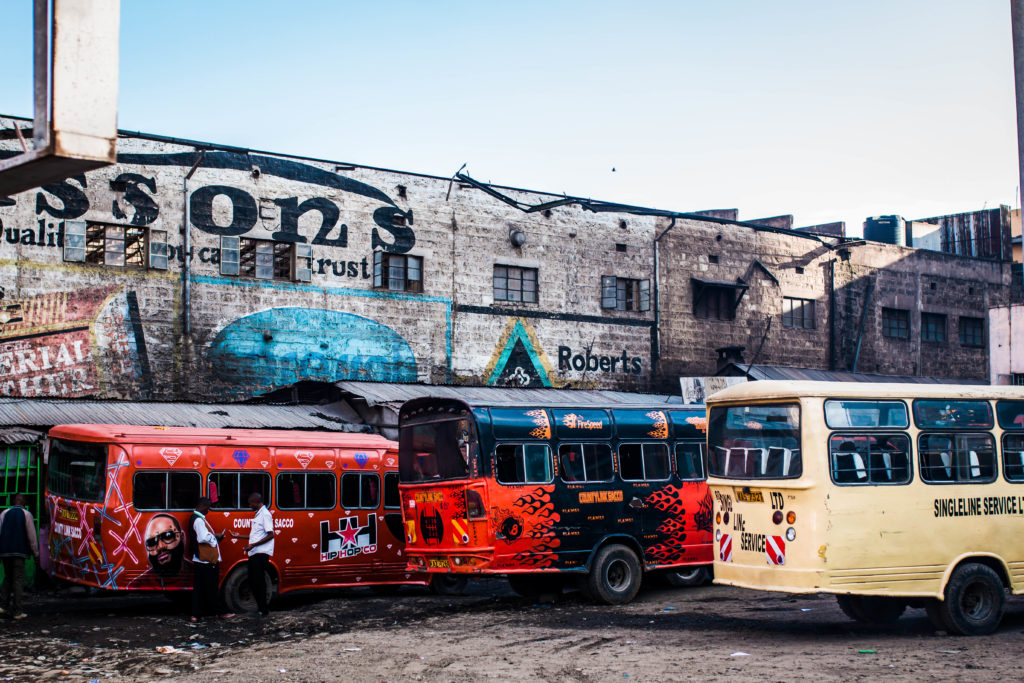
Kenya: Report on Violence Against Women and Girls on Public Transport

June 15, 2018 By Contributor

This is a guest blog post about a new baseline study on sexual harassment on public transit and related spaces in Nairobi County.

By Flone Initiative

NATURE OF VAWG

Violence against women and girls (VAWG) in public transport and its associated spaces has and continues to be a global problem. According to the Flone Initiative‘s  “Baseline Study on Violence against Women and Girls in Public Road Transport and Connected Spaces in Nairobi County, Kenya,” on average 73 percent of the survey respondents had heard/witnessed while 27 percent had not heard/witnessed any case. This means that such cases are common and do indeed occur in the public transport sector in the selected routes in Nairobi County.  The cases are taken with a high level of seriousness and thus would be expeditiously addressed if reported.

The most common forms of street harassment include the use of abusive language by the matatu crews and inappropriate physical contact that includes unnecessary touching of female passengers in an effort to coerce them to board the PSV and staring/winking. Cases of stripping/undressing and inappropriate gestures were the least cited. This could be due to the fact that they are extreme, though not uncommon. Other actions reported include men blocking the vehicle entrance or exit from women and comments with sexual connotations used with inappropriate gestures.

According to the findings, the major perpetrators of VAWG usually are public transport crew (drivers, conductors or touts) at 82 percent, followed by female passengers at 18 percent.  According to the study, male passengers are not perpetrators of VAWG. This implies that the matatu crews rank highest as perpetrators mostly due to the fact that they frequently interact with passengers. Other perpetrators include touts, drunk passengers and unauthorized persons in the bus stations. With regards to touts, it is worth noting that they act independently within the sector, most of them lack professionalism and are not regulated or bound by any code of conduct.  Therefore, it may be difficult to hold them to account with regard to VAWG cases they may be involved in.

The majority of women and girls said they hear or witness cases of sexual harassment once a month, while for others it is more than 5 times. Only a few said they do not hear nor witness such cases.  This shows that cases of sexual harassment are quite common in the public transport sector in Nairobi County.

PREVALENCE OF VAWG

Though there are certain spaces associated with violence and harassment, it is important to note that women and girls are harassed in both public and private spheres. It is also worth acknowledging that violence against women and girls denies them the capacity to explore and interact freely. Women and girls are more susceptible to harassment and violence due to the existing cultural norms and stereotypes.

According to the survey majority (64 percent) of harassment incidences occur at the bus stop/station, while 18 percent take place inside the vehicle. Only 9 percent were identified as occurring at the vehicle entrance. Others incidences were found to occur in spaces such as private hire cars/taxis. This is due to the fact that various unauthorized persons including touts hang around the bus stages and related spaces.

Alarmingly, some commuters (25 percent) attribute women’s clothing as a major contributing factor of VAWG.  Twenty-one percent attribute VAWG to the fact that police don’t take such cases seriously. It is worth noting that 18 percent believe that the failure by victims to report such cases is a major contributing factor.  Commuters also believe that the lack of reporting mechanisms in the PSV SACCOs and overcrowding in public transport vehicles does contribute to VAWG at 14 percent and 13 percent respectively. The lack of security personnel accounted for 5 percent while poorly lit and isolated bus stops were also identified as major contributors of harassment at 3 percent.

Violence and harassment is not only limited to women and girls utilizing public transport; women driving private cars also face verbal harassment. This includes hearing insults and harassment by matatu drivers during peak hours. Although harassment is common in some selected routes within the city of Nairobi, it is worth noting that, there were some SACCO’s that taken initiative to offer customer service training to their staff. This has been found to reduce confrontations between commuters and the operators.

RESPONSES TO VAWG

According to the survey, the most frequent response of commuters to harassment was to take no action (36 percent). Thirty percent reported incidents to the PSV SACCO officials and 26 percent confronted the perpetrator. Only 8 percent said they would report the case to the police, showing a distrust of police. However, it is comforting to note that a good number have faith in the fact that the PSV SACCO would address the matter and thus they are willing to report to the PSV SACCO officials.

Despite the SACCO managers being granted the mandate of maintaining order in their selected route, very few or none are doing a good job. According to the survey, the PSV SACCO managers would act or choose not to act depending on the magnitude of the harassment incident. The majority would refrain from any process that would involve them appearing before legal and justice systems.

The majority of the managers (37 percent) would sack the staff involved, 18 percent would have the case reported to the police and another 18 percent would take other forms of actions such as disciplinary action against the staff including suspension after investigation of the case. It is worth noting that only 9 percent said they would take no action, thus showing that they would be willing to address the issues brought to them. However, sacking the staff without investigations would not be an appropriate way of dealing with the issue since there is a probability of the sacked crew securing employment with another SACCO and hence continue perpetrating the vice.

While most of the managers stated they would take some form of action to address VAWG issues reported to them, only 27 percent said that the case was investigated and action taken. The majority (37 percent) said the case was only recorded and no further action was taken. Eighteen percent stated that the case would be trivialized and 9 percent claimed they would be blamed for the case. While it is disconcerting to note that no actions would be taken after the recording of the cases, it is comforting that at least a record of the reported cases is kept and can be followed up.

According to the survey, reporting an incident to the police is the most common action taken against perpetrators (32 percent).  A significant proportion (24 percent) would prefer not to get involved while 12 percent state that other forms of actions would be taken, such as suspending the staff involved after investigations and educating the perpetrator on professionalism.

Although some SACCO managers do report to the police, there are no perpetrators who have been arrested nor prosecuted. This explains why the managers choose to administer the punishment by themselves.

RECOMMENDATIONS

Operators

  • Observe professionalism with customers. Specifically, avoid using abusive language and inappropriate physical contact.
  • Understand that customers may have diverse needs, preferences, personalities and backgrounds that must be respected. Ensure courtesy at all times, especially as you help female clients.
  • Male operators should ensure a harmonious working relationship with their female colleagues as well as a conducive working environment free of harassment and discrimination.

Commuters

  • Know your rights as a commuter.
  • Report to the SACCO officials, security personnel or the police any cases of harassment that you witness or experience while commuting.
  • Obey and strictly adhere to all traffic rules to avoid confrontation with the law and other road users.

The Police Department

  • Expeditiously pursue and address cases of VAWG that are reported to ensure that perpetrators are brought to book and pay for their crimes.
  • Provide reporting mechanisms where commuters can express their grievances or report cases of VAWG.  This can be achieved by providing toll free lines on the vehicles or spaces managed by your PSV SACCO.

PSV SACCOs

  • Provide reporting mechanisms where commuters can express their grievances or report cases of VAWG.  This can be achieved by providing toll free lines on the vehicles or spaces managed by your PSV SACCO.
  • Route managers must ensure that only authorized persons operate the vehicles and deal with unauthorized persons in the bus stations where most harassment occurs.
  • Expeditiously follow up cases of VAWG that are reported and ensure that they fully investigated and addressed.
  • Advocate for the identification and regulation of touts by NTSA to ensure that they observe professional conduct in their jobs.
  • Ensure a conducive working environment free of harassment and discrimination.
  • Give incentives to the most disciplined crew.

Matatu Owners Association

  • Employ qualified drivers and operators, preferably those certified with customer care training.
  • Monitor the activities of the self-employed staff and ensure they are fit to handle customers.

CONCLUSION

VAWG remains an issue of concern both in public and private sphere.  Street harassment is common but not limited to the public transport vehicles and the related spaces. Women who operate private vehicles also face harassment occasionally. Though the stakeholders are aware of its existence, the majority of them play the silent bystanders role.  They choose not to report nor witnesses because they think the blame shall be laid to them. For the survivors who report the harassment, the police and the SACCO officials conduct little or no investigation. It is comforting that there are some SACCOs that have adopted a friendly customer care system.

Flone Initiative, is a women led organization registered as a trust based in Kiambu, Kenya, working towards ending violence against women and girls in public spaces by influencing behavioral change and promoting tolerance and acceptance by strengthening capacities at grassroots level.

Share

Filed Under: public harassment, Resources Tagged With: flone initiative, kenya, nairobi, public transport, research, survey

« Previous Page
Next Page »

Share Your Story

Share your street harassment story for the blog. Donate Now

From the Blog

  • #MeToo 2024 Study Released Today
  • Join International Anti-Street Harassment Week 2022
  • Giving Tuesday – Fund the Hotline
  • Thank You – International Anti-Street Harassment Week 2021
  • Share Your Story – Safecity and Catcalls Collaboration

Buy the Book

  • Contact
  • Events
  • Join Us
  • Donate
  • Facebook
  • Instagram
  • Pinterest
  • Tumblr
  • Twitter
  • YouTube

Copyright © 2026 Stop Street Harassment · Website Design by Sarah Marie Lacy