• About Us
    • What Is Street Harassment?
    • Why Stopping Street Harassment Matters
    • Meet the Team
      • Board of Directors
      • Past Board Members
    • In The Media
  • Our Work
    • National Street Harassment Hotline
    • International Anti-Street Harassment Week
    • Blog Correspondents
      • Past SSH Correspondents
    • Safe Public Spaces Mentoring Program
    • Publications
    • National Studies
    • Campaigns against Companies
    • Washington, D.C. Activism
  • Our Books
  • Donate
  • Store

Stop Street Harassment

Making Public Spaces Safe and Welcoming

  • Facebook
  • Instagram
  • Pinterest
  • Tumblr
  • Twitter
  • YouTube
  • Home
  • Blog
    • Harassment Stories
    • Blog Correspondents
    • Street Respect Stories
  • Help & Advice
    • National Street Harassment Hotline
    • Dealing With Harassers
      • Assertive Responses
      • Reporting Harassers
      • Bystander Responses
      • Creative Responses
    • What to Do Before or After Harassment
    • Street Harassment and the Law
  • Resources
    • Definitions
    • Statistics
    • Articles & Books
    • Anti-Harassment Groups & Campaigns
    • Male Allies
      • Educating Boys & Men
      • How to Talk to Women
      • Bystander Tips
    • Video Clips
    • Images & Flyers
  • Take Community Action
  • Contact

“He slowed right down and drove alongside me”

April 10, 2017 By Contributor

I was 7 months pregnant. I was walking home one evening. A man, who runs local estate agency, Besley Hill, was driving towards me on an otherwise empty street. He slowed right down and drove alongside me, leaning out of his car window, leering at me. I felt scared.

Optional: What’s one way you think we can make public places safer for everyone?

Make men think about their actions.

– Anonymous

Location: Chelsea Road, Bristol

Need support? Call the toll-free National Street Harassment hotline: 855-897-5910

Share your street harassment story for the blog.
See the book 50 Stories about Stopping Street Harassers for idea
s.

Share

Filed Under: Stories, street harassment

“Let me sniff your saddle”

April 9, 2017 By Contributor

I was cycling along the road and a man leaned out of a car and shouted, “LET ME SNIFF YOUR SADDLE.”

Optional: What’s one way you think we can make public places safer for everyone?

Make misogyny a hate crime. Raise awareness.

– KH

Location: Bristol, UK

Need support? Call the toll-free National Street Harassment hotline: 855-897-5910

Share your street harassment story for the blog.
See the book 50 Stories about Stopping Street Harassers for idea
s.

Share

Filed Under: Stories, street harassment

Building Solidarity in a Fragmented Country

April 7, 2017 By Contributor

Guest Post for International Anti-Street Harassment Week

By Sofia DiPasquale

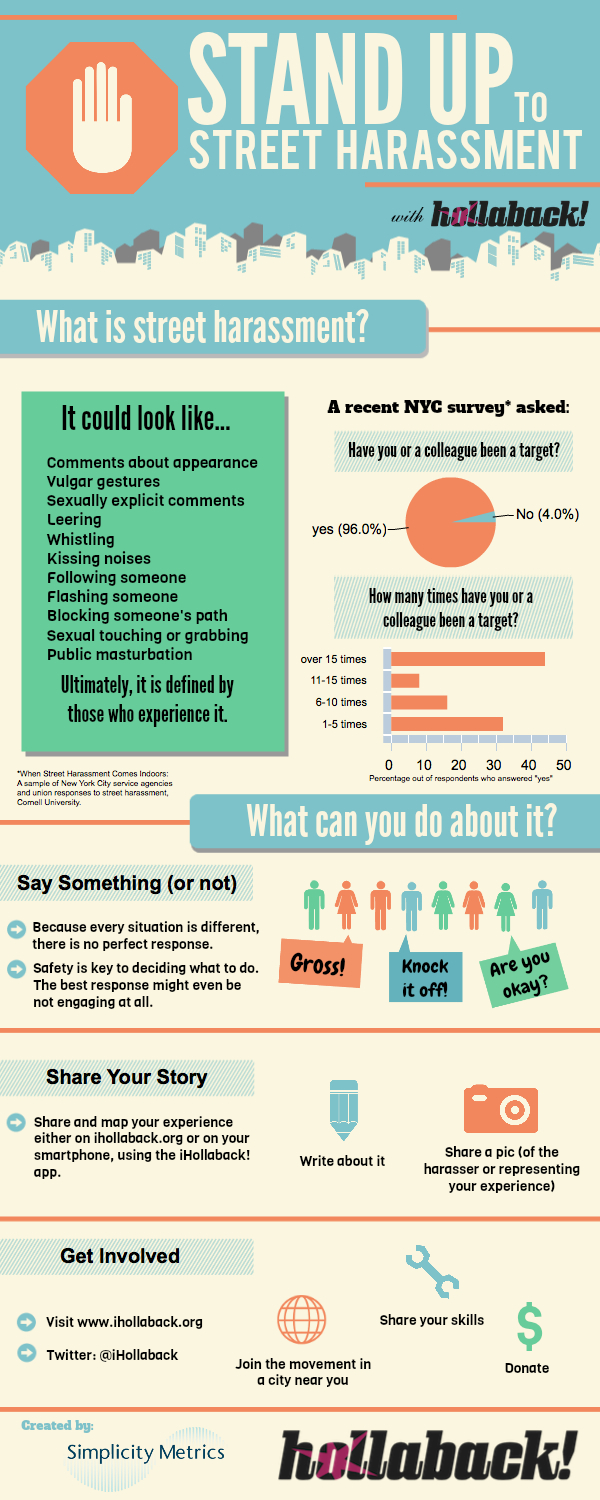
Hollaback! is a global network of grassroots activists working to end all forms of harassment. We believe that everyone has the right to exist in public space without fear, and that bystander intervention and story-sharing are key to creating a harassment-free world. We’re hosting regular bystander intervention trainings to give people the tools and knowledge to act up and fight back against harassment when they see it happen. You can share stories of harassment or bystander intervention on our website.

Since the 2016 presidential election in the U.S., we’ve seen a spike in the amount of stories we’ve been receiving – particularly racist, anti-Muslim, and anti-immigrant harassment. Harassment disproportionately affects marginalized communities, especially people who face intersecting oppression. We recognize that not everyone feels safe intervening in every harassment situation, especially when you belong to the community that is being targeted. Our bystander intervention training outlines five options of ways to intervene, ranging from directly confronting the harasser to documenting the situation, so you always have a choice when you’re deciding the best way to respond.

Overwhelmingly, people sharing stories of harassment say that they wish someone had stepped in during the harassment or checked in with them after to let them know that someone has their back. We’re trying to get as many people trained up on bystander intervention as possible so we can begin to create communities where people affirm and protect each other in public space, and no one has to feel uncomfortable or unsafe. You can find out more bystander intervention resources here.

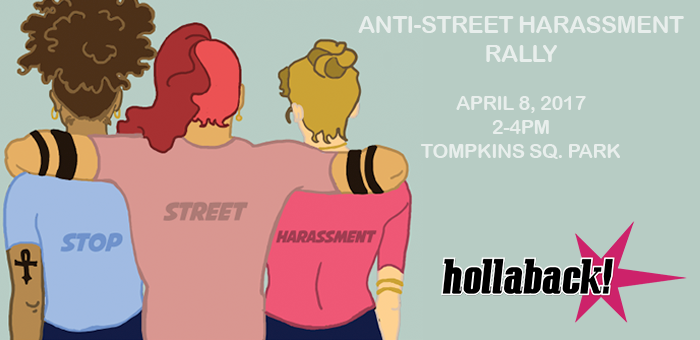
Sofia DiPasquale is a communications intern at Hollaback! If you’re in New York City, join their Anti-Street Harassment Week rally from 2-4 p.m. at Tompkins Square Park.

Share

Filed Under: anti-street harassment week, hollaback, Resources Tagged With: bystander training

What’s in a Name?

April 7, 2017 By Contributor

Guest Post for International Anti-Street Harassment Week

By Blythe Tyrone

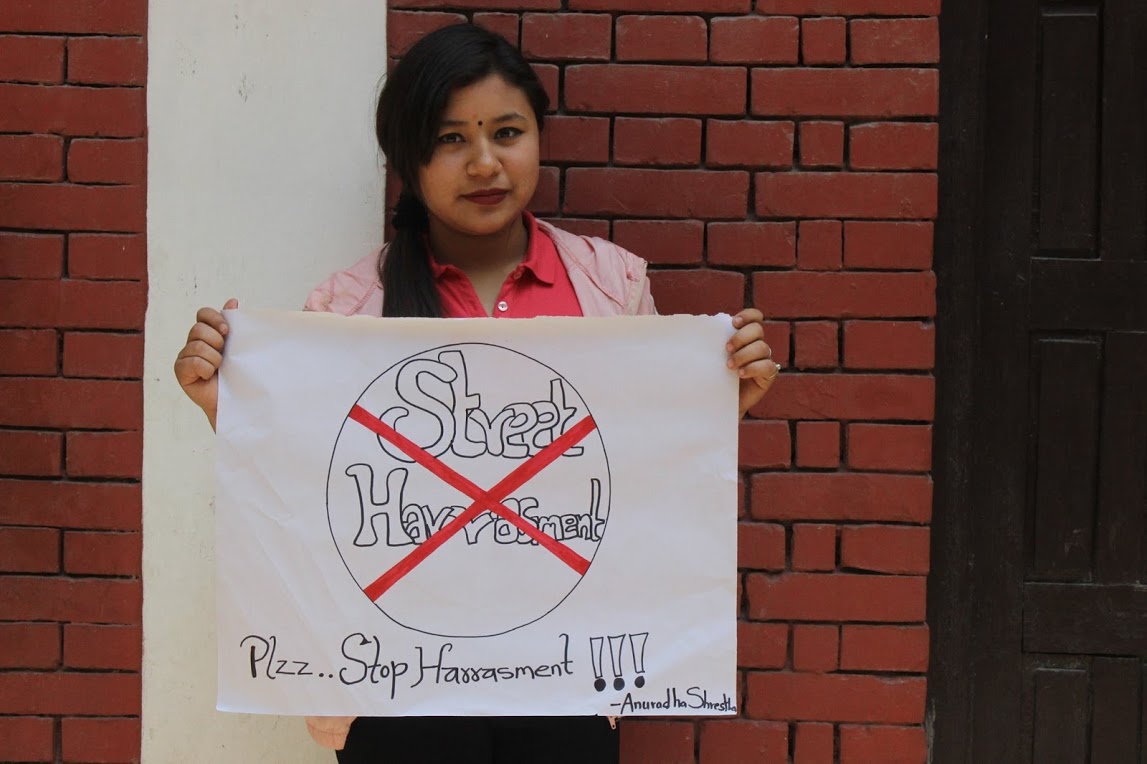
Youth Advocacy Nepal, April 2017

Ask any woman if she’s experienced street harassment, and she’s likely to respond emphatically in the affirmative. She’ll probably have a few anecdotes to share (she might even laugh while doing so), recounting what was said and done by whom, maybe regretting the way she handled the situation but recognizing the potential danger of an alternative response. As result of the harassment, she might share that she now avoids that one street at certain times of the day, or perhaps makes a point to listen to music while walking down a city street to discourage unwanted comments, or simply to drown them out.

To a passerby, street harassment may just seem like harmless words, but these uninvited interactions have real effects on women’s daily lives. I intentionally don’t jog on the sidewalk of high-traffic streets, for instance, because the occasional honk or holler is jarring and distracting from what should otherwise be a stress-relieving activity. It’s minor, but it’s a real change I have made in my life because of street harassment.

Because street harassment is so common, it seemed like an area that would be ripe for academic research, but when I started digging into the literature, I was surprised at how little I could find, especially compared to similar topics like sexual harassment. I thought street harassment was such an obvious problem and was surprised that no one seemed to care about it. I could find peer-reviewed research on what pick-up lines worked better at a bar, but little about something so common it’s been the subject of a viral video, comedy sketches, webcomics, think pieces, a Tumblr project, disturbing headlines, and initiatives.

The problem, I soon learned, was a simple matter of definition. What’s in a name? Well, quite a lot, apparently. Eventually I discovered that I was far from the only one interested in researching street harassment, but I was one of the few actually using that term. Street harassment research is scattered across disciplines under a variety of names such as stranger harassment (Fairchild & Rudman, 2008), public harassment (Gardner, 1995), catcalling (Wesellmann & Kelly, 2010), girl watching (Quinn, 2002), sexual terrorism (Nielson, 2002), street remarks (Kissling, 1991), and street hassling (West, 1987). So, earlier, when you asked that woman if she’s experienced street harassment? She could actually have described any one of these experiences.

Research is an important tradition that helps us understand problems and leads us to solutions. If we are not using the same words when identifying our problems, how can we expect to share what we have learned about them so that others may take our experience into consideration for their own work or build on it?

For my graduate thesis at NC State University, I have made a point to explore the many names street harassment research might be disguised under in past research. However, as more and more people – especially beyond the hallowed halls of academia – start using the term street harassment, not only might it spur researchers to start using the same name, but it may help spread awareness to the general public as well. To recognize and call out street harassment when we see it, we need to all be on the same page as to what we’re calling it to begin with. This isn’t to say that there are not many different layers that shape street harassment (it is certainly enmeshed in issues of race, power, gender, sexuality, etc.), but if we have a common place to start, we will be more unified and effective in the overall effort to stop street harassment.

Blythe Tyrone is a graduate student at NC State University studying street harassment for her thesis research. Follow her on Twitter @blythe_tyrone.

Share

Filed Under: anti-street harassment week Tagged With: academic research, Blythe Tyrone, NC State University, north carolina, research, street harassment, thesis

Street Harassment and Violence are NOT about Clothes

April 6, 2017 By Contributor

Guest Post for International Anti-Street Harassment Week

By Mary Mwangi

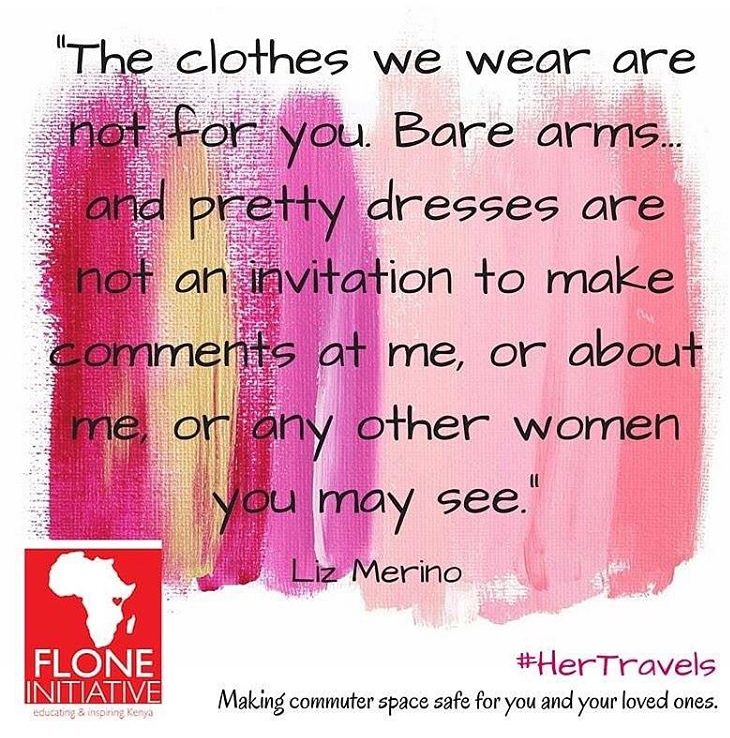
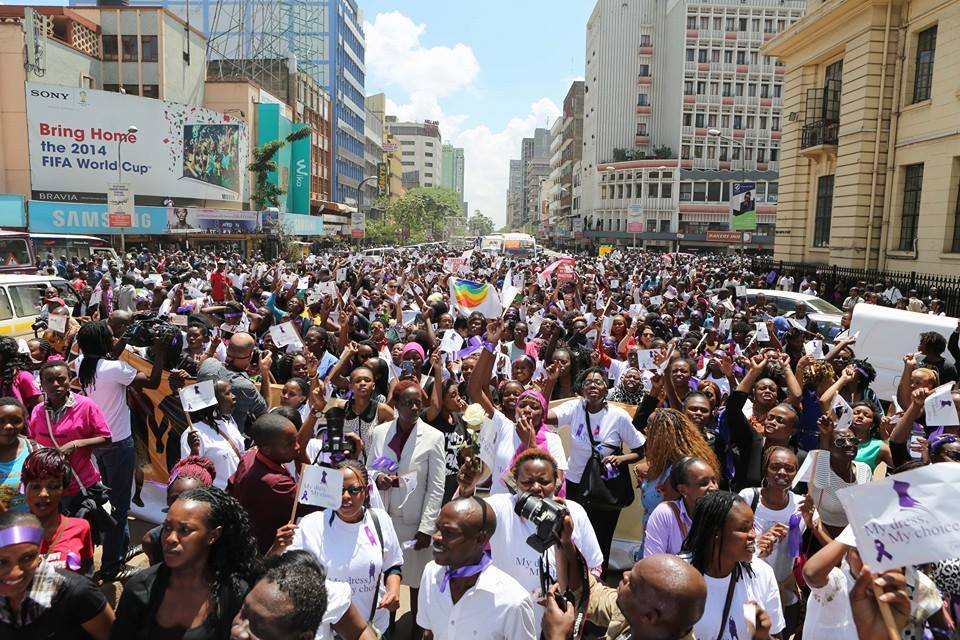
A few weeks ago, I was conducting interviews on sexual harassment in public spaces and it was frightening to note that almost all of the interviewees believe that it is a woman’s way of dressing that influences street harassment and violence.

Women have been harassed while wearing skirts, hijabs, dresses and trousers, however. This goes to show that street harassment and violence is NOT about dressing. It is important for us to call a spade a spade and not lay blame on dressing, but instead we should strongly condemn those who perpetrate such violence on our streets.

Today, some may think that since we have not heard the news of stripping of women and girls in public spaces that the vice is dead. Sadly, this is not the case as many women continue to face harassment every single day but due to fear of victimization by the perpetrators opt to be silent.

I sturdily feel that the root cause of all form of violence and prejudice between men and women stems from a patriarchal mind-set. Some individuals have expressed concerns that the media and westernization fosters a society that devalues women. But again, don’t you think this is misplaced blame? The media only represents women as the society sees them.

My Dress rally in Kenya in 2014. Photo courtesy of Brian Emmanuel Inganga

Unless we realize that patriarchal attitudes and beliefs cause a lot of harm than good, then a culture of fear will continue. We all need to take up the bull by the horns and work together to fight the vice of street harassment and violence. It is important to note that it isn’t only men who perpetuate patriarchy, women do it too. It is high time that we all worked as a team, as family and as a community since we now know better.

It is high time that we all encouraged sensitization and behavior change initiatives that allow and emphasize discussion on sexual harassment, patriarchy and the need to respect all genders. At Flone Initiative, we believe above being men and women, we are human beings. Yes, we are different, but respecting and celebrating our uniqueness is a goal we are working on. All we need to do is learn to respect each other. It is only then that our women and girls will walk along the streets without fear of being harassed, violated, raped or assaulted but with the assurance of safety, security and freedom.

Join our social media campaign as we advocate for safer streets.
#EndStreetHarassmentWeek | #EndSH | #MyDressMyChoice

Mary Mwangi is the program manager at Flone Initiative in Kenya.

Share

Filed Under: anti-street harassment week, Stories, street harassment

« Previous Page
Next Page »

Share Your Story

Share your street harassment story for the blog. Donate Now

From the Blog

  • #MeToo 2024 Study Released Today
  • Join International Anti-Street Harassment Week 2022
  • Giving Tuesday – Fund the Hotline
  • Thank You – International Anti-Street Harassment Week 2021
  • Share Your Story – Safecity and Catcalls Collaboration

Buy the Book

  • Contact
  • Events
  • Join Us
  • Donate
  • Facebook
  • Instagram
  • Pinterest
  • Tumblr
  • Twitter
  • YouTube

Copyright © 2026 Stop Street Harassment · Website Design by Sarah Marie Lacy