• About Us
    • What Is Street Harassment?
    • Why Stopping Street Harassment Matters
    • Meet the Team
      • Board of Directors
      • Past Board Members
    • In The Media
  • Our Work
    • National Street Harassment Hotline
    • International Anti-Street Harassment Week
    • Blog Correspondents
      • Past SSH Correspondents
    • Safe Public Spaces Mentoring Program
    • Publications
    • National Studies
    • Campaigns against Companies
    • Washington, D.C. Activism
  • Our Books
  • Donate
  • Store

Stop Street Harassment

Making Public Spaces Safe and Welcoming

  • Facebook
  • Instagram
  • Pinterest
  • Tumblr
  • Twitter
  • YouTube
  • Home
  • Blog
    • Harassment Stories
    • Blog Correspondents
    • Street Respect Stories
  • Help & Advice
    • National Street Harassment Hotline
    • Dealing With Harassers
      • Assertive Responses
      • Reporting Harassers
      • Bystander Responses
      • Creative Responses
    • What to Do Before or After Harassment
    • Street Harassment and the Law
  • Resources
    • Definitions
    • Statistics
    • Articles & Books
    • Anti-Harassment Groups & Campaigns
    • Male Allies
      • Educating Boys & Men
      • How to Talk to Women
      • Bystander Tips
    • Video Clips
    • Images & Flyers
  • Take Community Action
  • Contact

“Wow, you can’t even say hi back?”

October 27, 2015 By Contributor

I was walking home from my high school softball game when I stopped at a busy intersection a block away from my house. I was waiting to cross the street when I made eye contact with a man in the parked car to my right. His head was out the window and he looked at me and said, “Hello there.”

I ignored him and kept looking forward. Then he said, “Wow, you can’t even say hi back?” As I started to cross the street I tried to laugh it off uncomfortably and said, “No sorry.”

The words that he said next will never leave my head. He responded by saying, “Yeah? Well why don’t you wipe that dirty ass smirk off your face.” Are you kidding me? Who does this man think he is, hitting on a girl who is at least 15 years younger than him and expecting a postive response? It gets me so angry.

My mother always told me never to say anything back because I never know what kind of person he is and whether or not he will hurt me. It’s so frustrating listening to these rude and disgusting things that these men say when they don’t hear what they want and not being able to say anything.

Optional: What’s one way you think we can make public places safer for everyone?

I would like to see posters all around NYC with slogans such as: I will not smile for you.

– A.D.

Location: Queens, NY

Share your street harassment story for the blog.
See the book 50 Stories about Stopping Street Harassers for more idea
.

Share

Filed Under: Stories, street harassment

France: Comic Strips are Changing the Conversation

October 25, 2015 By Contributor

Our four Safe Public Spaces Mentees are half-way through their projects. This week we are featuring their blog posts about how the projects are going so far. This post is from our team in France. Their projects are supported by SSH donors. If you would like to donate to support the 2016 mentees, we would greatly appreciate it!

At the "Livestation DIY" bar in Lyon
At the “Livestation DIY” bar in Lyon

Street harassment wasn’t a word we used to hear in France a few years ago. To draw a really rough sketch, women often talked about “oafishes” between themselves, mostly making it funny stories. Men never got to sense the extent of the issue.

Then Sofie Peeters shot a shocking film in the streets of Brussels, “Femmes de la Rue” (“Women of the Street”, 2012), showing how she was constantly, repeatedly and heavily harassed in the street, whether it was stares, whistles, names or insults. The media started to talk about it, and it’s like women realized they weren’t alone and had the right to speak up.

It had to be extreme to make us realize that it was truly something happening to a lot of – if not every – women, in a vast variety of situations, context and ways. We also connected the dots and got to fully see that it was happening to many people presenting a difference to society’s “normality”, such as LGBQ-identified people, trans*, fat people, persons with mental disabilities, and the list could go on and on and on.

“Stop Harcèlement de Rue” (“Stop Street Harassment”) started in Paris in March 2014, and then spread across France. The local section of Lyon emerged 6 months later, and we started with no means to raise awareness among people. One of the best tools to use against street harassment has been the Internet and the mainstream culture it carries. For example, Thomas Mathieu has his Tumblr “Projet Crocodiles” (“Crocodile Project”), where he uses real situations that women send to him, often about street harassment, and transforms them into comic strips with men represented as crocodiles of the urban jungle. It became very popular. Other cartoonists started to talk about the subject, like Diglee in her blog. It was like we – the civil society, artists, people – had taken the “red pill” (cf. Matrix) and it was just impossible not to see it and impossible to go back.

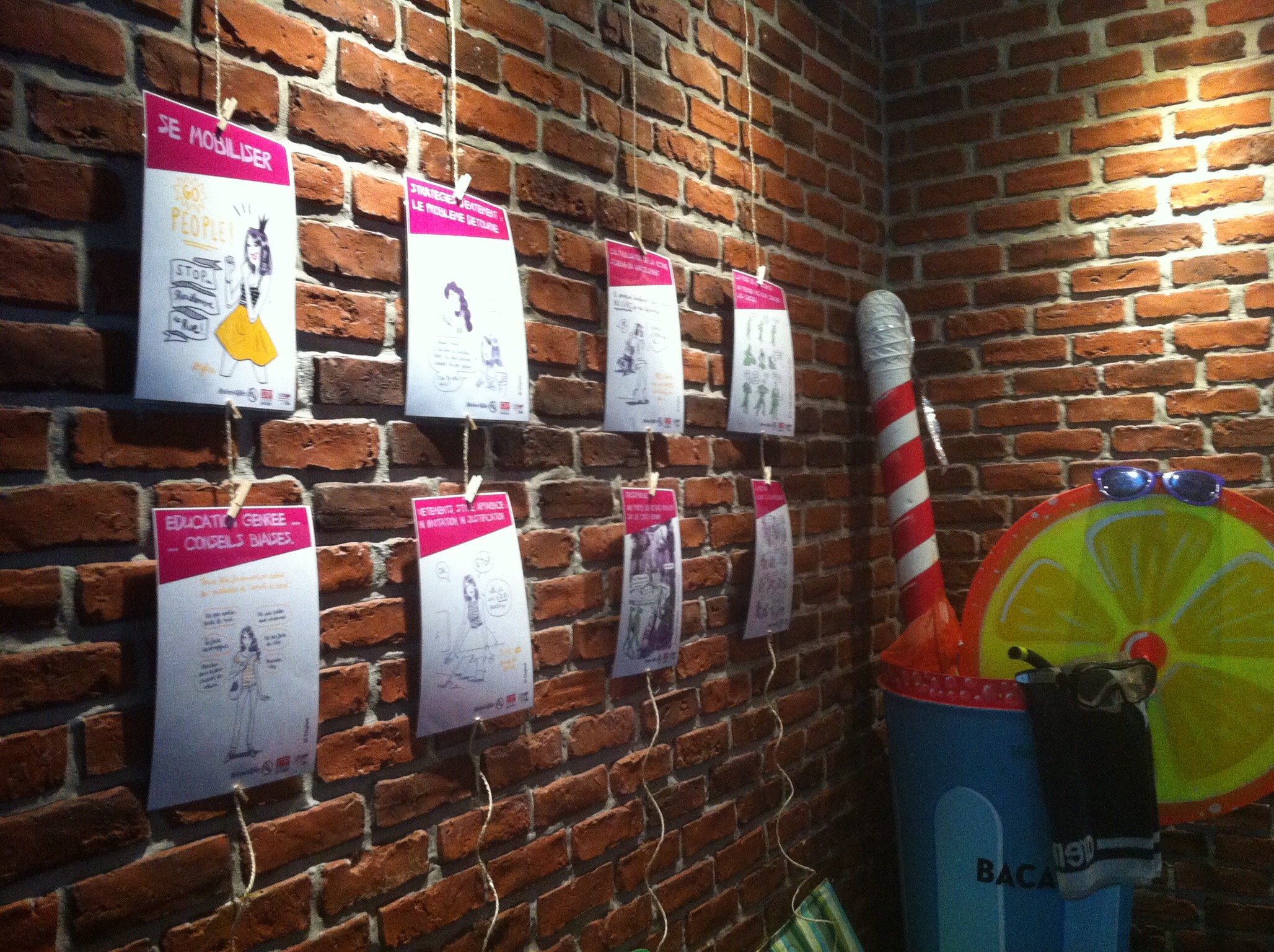
We decided that we had to take these drawings to the streets and to the schools, to make people think about the issue through them, especially young people, and to hopefully deeply change the way many people are treated in our common public spaces. So we asked Thomas Mathieu and Diglee for their permission. They were very happy to give us the use of their work. We turned to our Facebook and Twitter followers, our friends and family, and ultimately many people have supported us as we’ve collected the money needed to print the drawings in high quality, large and rigid format, and create a proper exhibition to be shown everywhere.

Stop Street Harassment’s Safe Public Spaces Mentoring Program came at the right time for us, and we got selected, to our great joy. The funding has helped us with the printing costs, too. We’re now midway through our project, and so much already happened, including media coverage of our campaign:

* We tested a first version of the exhibition in a bar on the 3rd of September, and we got a lot of positive feedback, plus some institutions got in contact with us to have it shown at their locations.

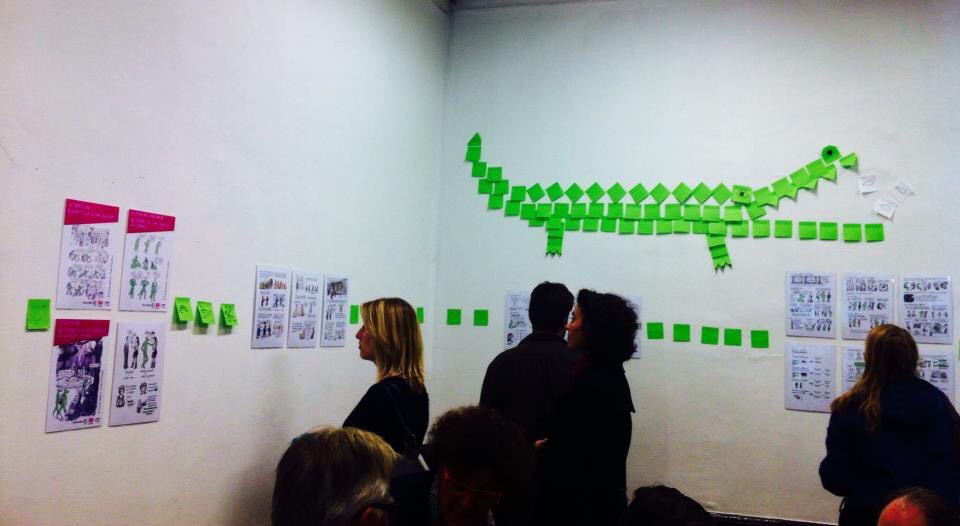
At the "Clochards Célestes" theater At the “Clochards Célestes” theater

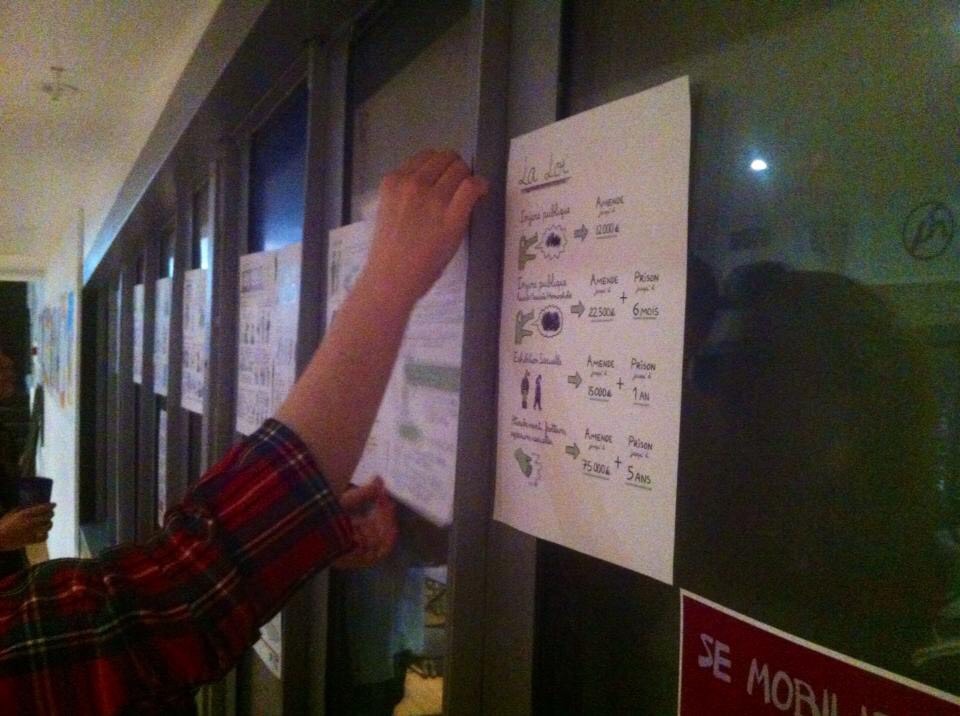
* We presented the exhibition on an “equality boat” lent by the region Rhône-Alpes during two evenings, the 1st and 2nd of October, in the presence of the cartoonists and as an introduction to debates. People participated a lot and the exchanges were great.

On the Région Rhône-Alpes' "equality boat" navigating on the Rhône. Oct. 2015
On the Région Rhône-Alpes’ “equality boat” navigating on the Rhône

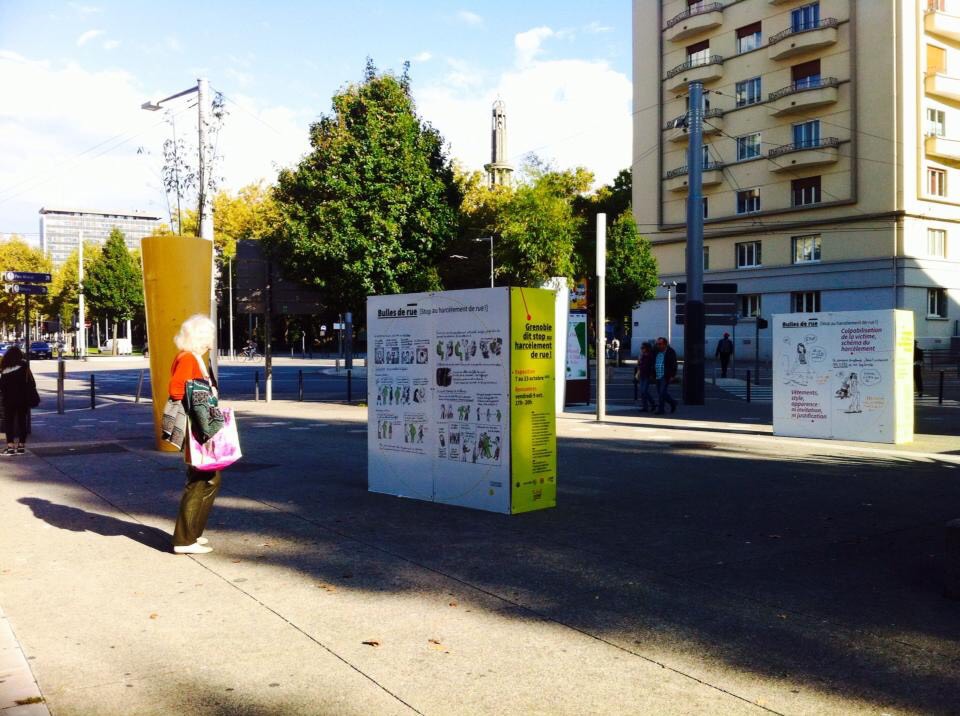
* We worked with the town of Grenoble to present the exhibition during a week in the streets, in a really huge size, from the 7th to 13th of October. A lot of people saw it and stopped by, and we got a lot of good comments, both from the town officers and the public.

On Valentin Huïy's place in Grenoble. Oct. 2015On Valentin Huïy’s place in Grenoble. Oct. 2015

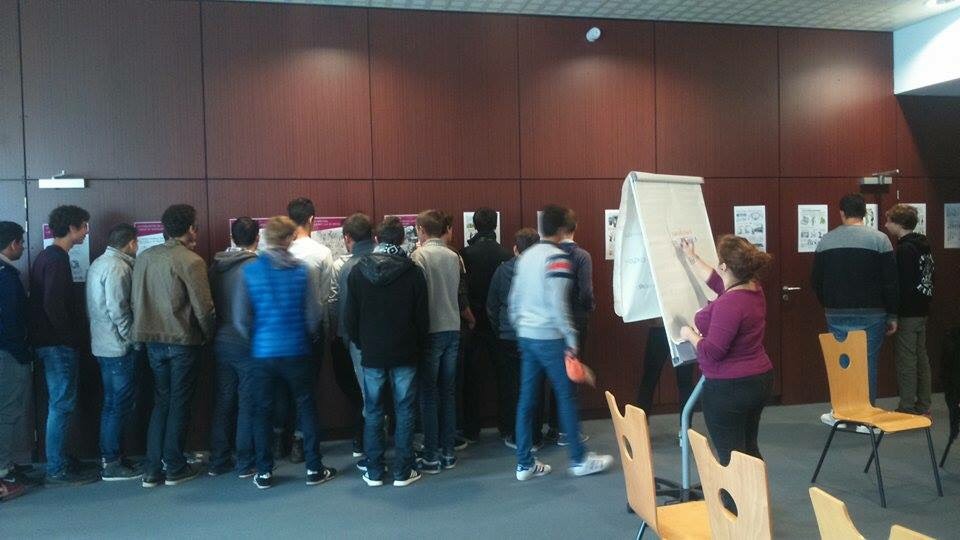
* We took our exhibition to a high school for our very first school intervention. It was there for a week, from the 12th to 16th or October. The students were very interested and so was the teaching team. It was a success.

Neuville-sur-Saône high-school, exhibition and workshop. Oct. 2015Neuville-sur-Saône high-school, exhibition and workshop

We’re now looking forward to adding drawings and texts to our first version, to send the final one to the printer! It’s a long job, but we’ve already been rewarded for it, so it is just a matter of time. 2016 will see a beautiful new tool to fight street harassment, first in Lyon and Rhône-Alpes, and then through France entirely.

Anne Favier is the co-founder of Stop Harcèlement de Rue in Lyon, France.

Share

Filed Under: SSH programs, street harassment Tagged With: france, Lyon, safe public spaces mentoring program

Romania: “Small Steps for Change”

October 21, 2015 By Contributor

Our four Safe Public Spaces Mentees are half-way through their projects. This week we are featuring their blog posts about how the projects are going so far. This first post is from our team in Romania. Their projects are supported by SSH donors. If you would like to donate to support the 2016 mentees, we would greatly appreciate it!

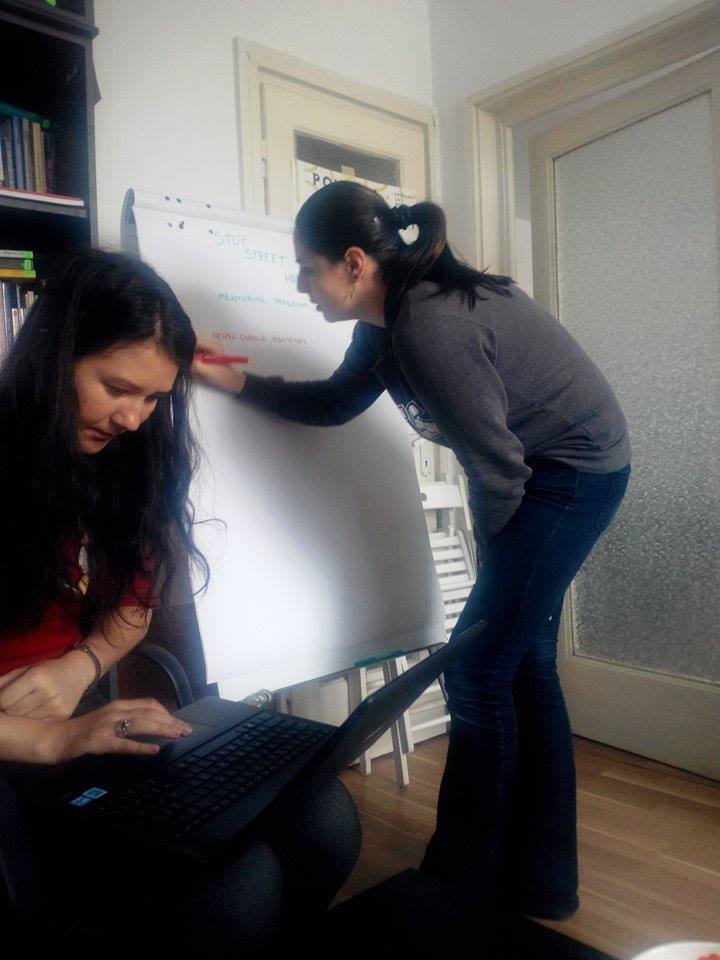
The Romanian team at one of their planning meetings. Oct. 2015

Hy. My name is Aila and I am studying my BA in Political Science. Three years ago, I decided to come to the Romanian capital to study at one of the best universities in the field. I chose to stay at the university’s hostel because, as many students think nowadays, all the fun you can have during student years is in hostels.

Well, unfortunately for me and for many other girls, it wasn’t quite like that. I ended up being harassed almost daily by some boys and girls who were studying at the college located near the hostel. After one year I began scheduling my programme after the high school’s programme. In order to avoid the “unwanted attention,” I had to go out of the hostel at specific hours when they had classes, especially during winter when I risked a violent snowball/half-iced fight. Moreover, I always tried not to walk alone or to come home when it was dark outside.

At the beginning, I tried to ignore it sometimes when I heard, “Hey, kitty/gorgeous/baby” as well as the aggressive words connected to my Asian eyes. Then I began to feel so fed up that I started to respond. But it was worse. I was only one and they were always in groups. I had no chance and no help. Sometimes, there were guards but they enjoyed the situation or laughed or only said something mild just to make sure their job is safe.

Today, I can proudly say that I am in a NGO called FILIA that supports gender equality. Today I know that what I went through is called sexual harrasement and it’s a crime. Today I can make something about it.

Thanks to my colleagues from FILIA but also to the Stop Street Harassment team, we are currently developing a mentoring project in that same high school where students harassed me. We want to deliver workshops concerning the topic of street/sexual harassment. It is absolutely necessary for these kids to know about this phenomenon because we consider that they are young and can still change their behaviour.

My group has met a couple of times during the past weeks and we set the framework of the activities. Change can be done. I am not a victim anymore, I am a person who can bring change and can help the other girls who are still living in that hostel.

Aila is a member of the Romanian NGO FILIA. 

Share

Filed Under: SSH programs, street harassment

India: Whistle for Whistle

October 19, 2015 By Contributor

Our four Safe Public Spaces Mentees are half-way through their projects. This week we are featuring their blog posts about how the projects are going so far. This first post is from our team in India. Their projects are supported by SSH donors. If you would like to donate to support the 2016 mentees, we would greatly appreciate it!

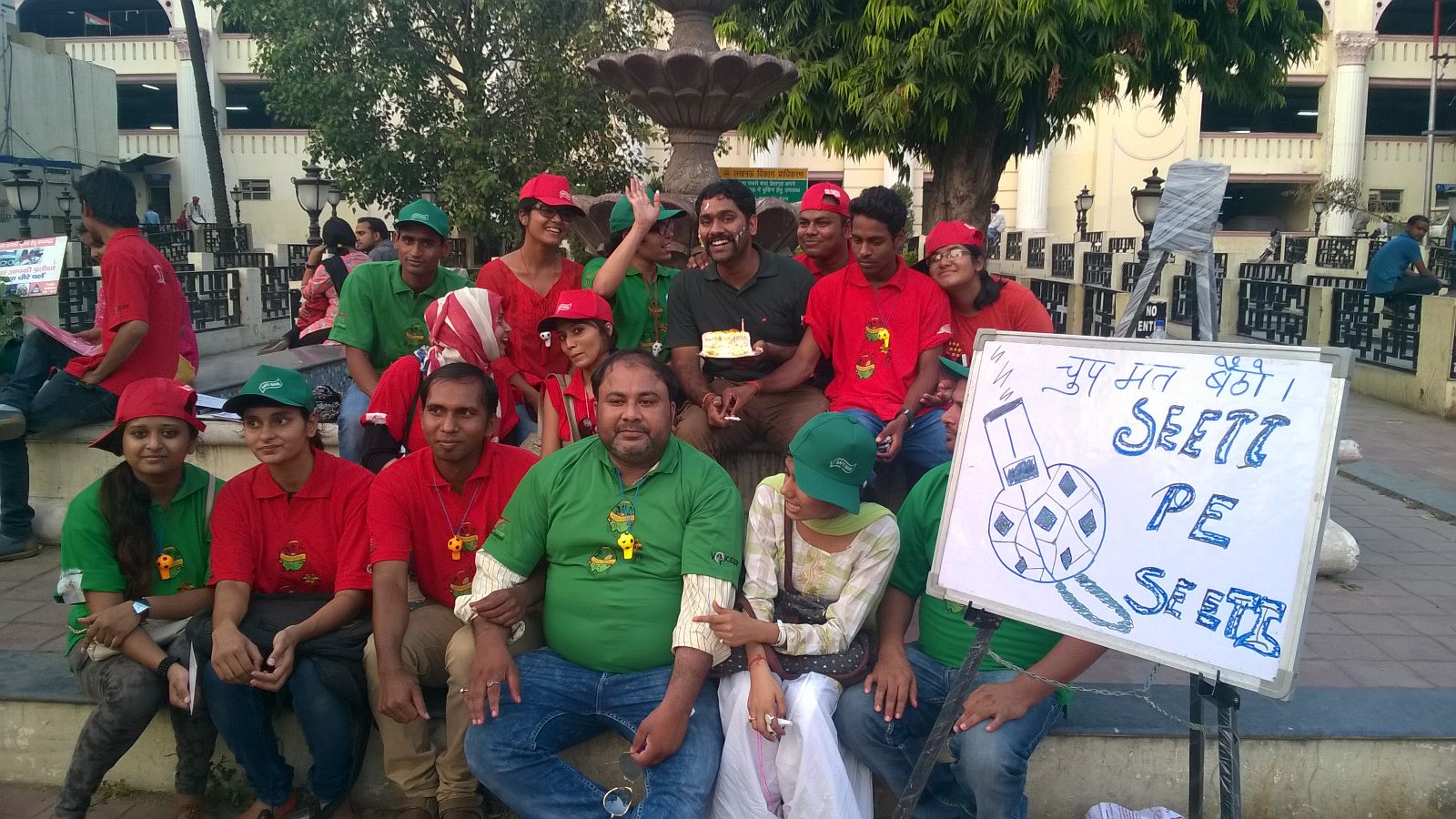
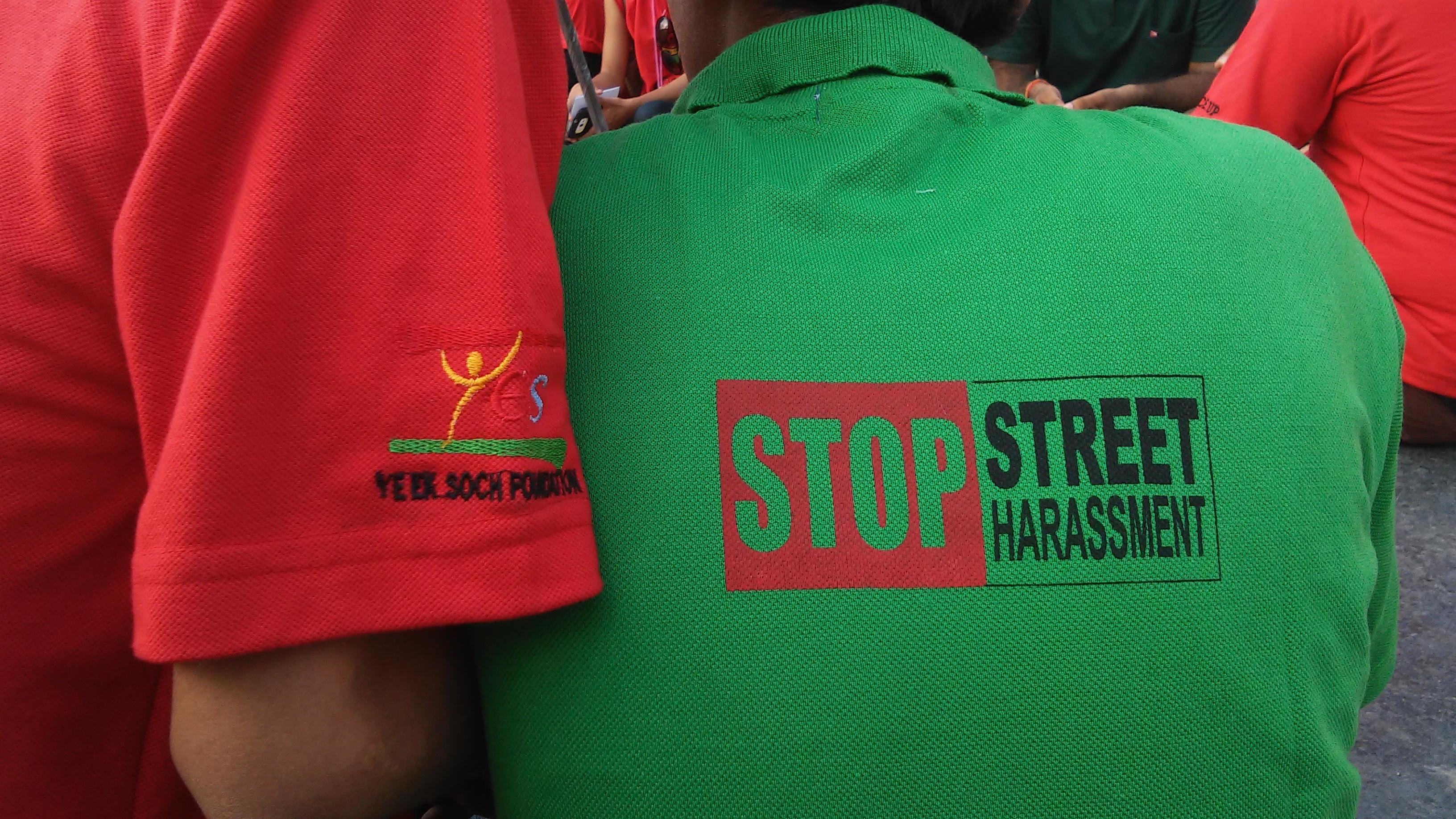
Safe Safar Team, Oct. 2015

Street harassment and eve-teasing are common phenomenon in India, especially in public transport and public places. Girls and women usually ignore this ever increasing scourge which is destroying the social fabric of our society. It becomes a source of continuous mental harassment for them and as they face it regularly, then they suffer from low self esteem. In short, they lose their own existence after some time. For example, they keep themselves confined to their homes and rarely move about.

Since, 2010, Safe-Safar has been working to stop street harassment. We have been working to ensure the safety of women on public transport in Lucknow. Through our latest initiative, we are raising awareness about the issue on the streets, pavements, bus stands, railway stations, schools and colleges etc to aware about ‘eve teasing”.

In essence, the Siti Pe Siti or “Whistle for Whistle” is an initiative started by the Yeh Ek Soch Foundation under the Safe-Safar program and is supported by Stop Street Harassment. “Sitis” are a common form of street harassment. When boys whistle at girls, it is termed teasing and society doesn’t view it to be bad. However, if the girls do it to boys, then it is considered bad.

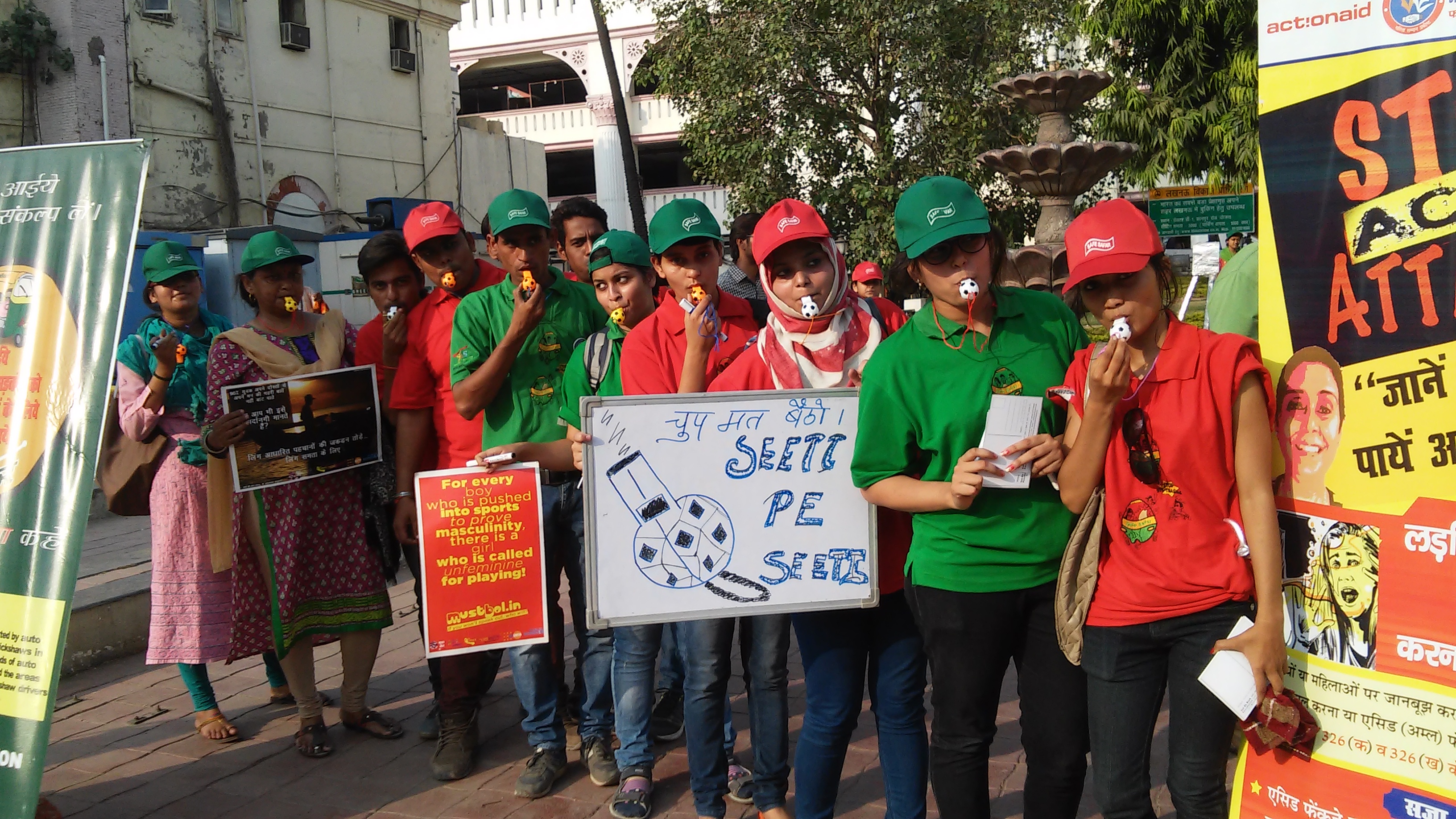
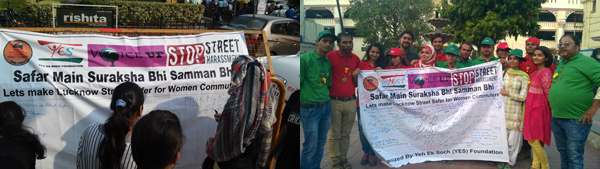
whistle for whistle campaign in India

To address this normalized phenomenon, we have come up with “siti pe siti” concept, “whistle for whistle,” where we empower girls and women with a “siti” or “whistle” and the girls can whistle back at boys who whistle at them as a way to draw attention to what they did instead of pretending to ignore the boys and staying silent. This will give the girls a sense of confidence, especially for those who didn’t know what to do when boys whistled at them.

20151014_163438Our goal is to equip the girls with an arm (siti) for giving a timely response to this ever increasing phenomenon happening in colleges, universities and public places, be it railway station, bus stands, etc.

In short, the thing which was proving to be wrong for girls, has in fact become her strength.

Teams of 10 people are raising public awareness at different places through “dialogues” and “nukkad nataks”. The whole campaign will take place across three months. We held the first events this month. On 10th October, 60 youth joined a discussion about street sexual harassment where they discussed the types of harassment and how they stop it in public places. On 14th October, we did a public “seti pe seti” “whistle for whistle” event where we raised public awareness and had people sign pledges to stop street harassment. We are gearing up to hold street plays and more awareness-raising sessions in public places. We plan to hold two activities on a monthly basis. We will also hold a “Safety-Audit” of Metro routes in different areas of Lucknow.

signatures

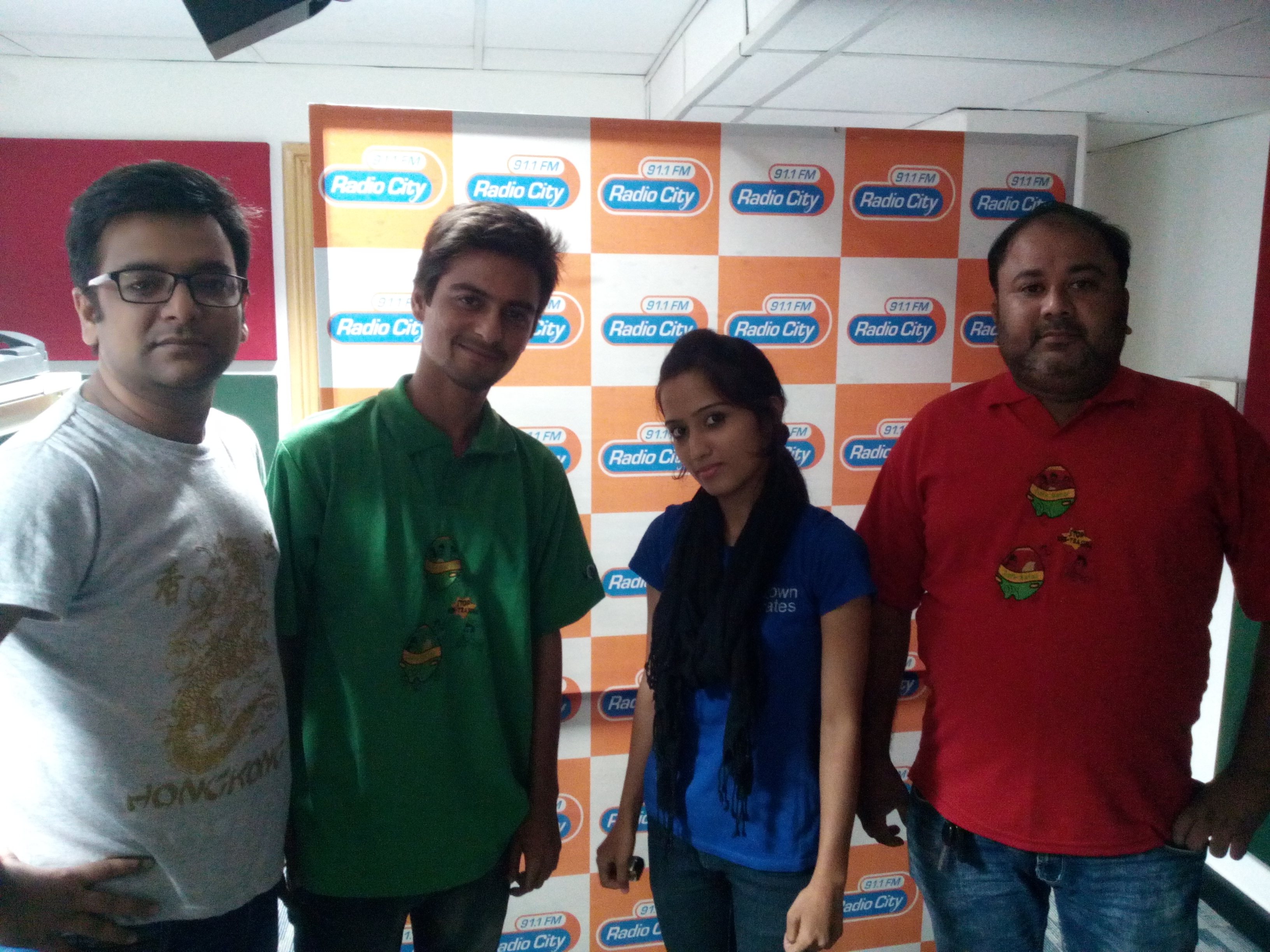
Radio show!
Radio studio!

We will close this campaign with a public dialogue.

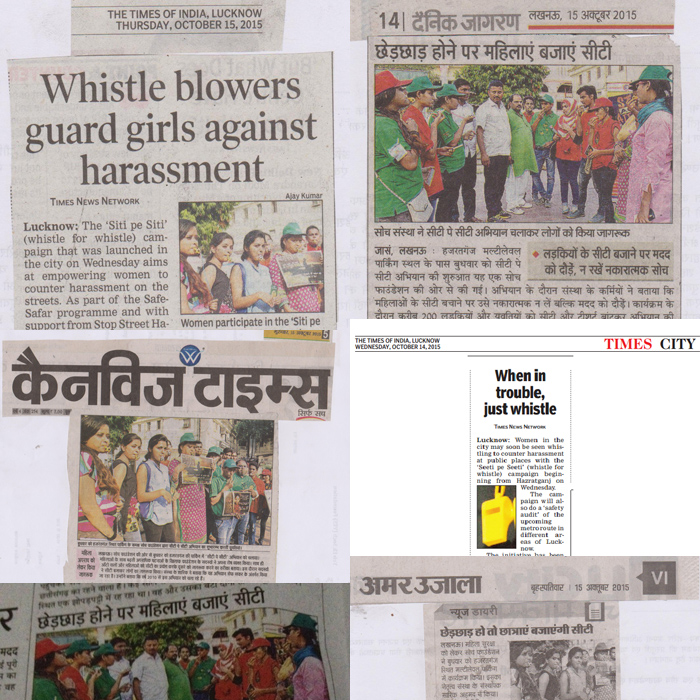
Our campaign has received a lot of coverage in local newspapers and we were on interviewed on radio city 91.1, a national radio station.

newsclippings

Mohammad Zeeshan is based in Lucknow, Uttar Pradesh, India and founded and oversees the Safe-Safar program. 

Share

Filed Under: SSH programs, street harassment

“I’m feeling like a reflection of a human being”

October 18, 2015 By Contributor

I’m not sure why I care. As a woman, I’ve grown accustomed to various forms of unwanted attention, scratch that, harassment. I tend to shrug it off, ignore it or make a joke out of it.

Tonight, he yelled something about my appearance and said I needed a dick in me. I hadn’t even made eye contact. I was minding my own business waiting to cross the street. It isn’t the first time and it won’t be the last time. Since middle school I’ve heard sexually directed comments. It’s always f- this, f-that, I would or wouldn’t f-you. Ah, gee thanks. Does it matter what I do or don’t want?

I’ve endured stares. Been grabbed, groped. Had lewd comments and gestures directed at me. I’ve witnessed public masturbators. Men driving in cars have honked at me or pulled over asking how much? And before that question comes up, it happens no matter what you wear! I know prostitution exists but this isn’t some example of mistaken identity when you’re wearing a parka. I’ve reacted. I’ve not bothered to.

Today, I pretended I didn’t notice. I hate to admit I noticed. I can intellectualize why it happens. I can understand the concepts of aggression, power and a culture that devalues women. I can also believe I’m a human and deserving of better or, can I? After tonight, I’m feeling like a reflection of a human being. As if I should be grateful that at least I wasn’t grabbed. Worse could have happened. I’m not sure how I can care. I’m not sure why I care.

– Anonymous

Location: Canada

Share your street harassment story for the blog.
See the book 50 Stories about Stopping Street Harassers for more idea
.

Share

Filed Under: Stories, street harassment

« Previous Page
Next Page »

Share Your Story

Share your street harassment story for the blog. Donate Now

From the Blog

  • #MeToo 2024 Study Released Today
  • Join International Anti-Street Harassment Week 2022
  • Giving Tuesday – Fund the Hotline
  • Thank You – International Anti-Street Harassment Week 2021
  • Share Your Story – Safecity and Catcalls Collaboration

Buy the Book

  • Contact
  • Events
  • Join Us
  • Donate
  • Facebook
  • Instagram
  • Pinterest
  • Tumblr
  • Twitter
  • YouTube

Copyright © 2026 Stop Street Harassment · Website Design by Sarah Marie Lacy