• About Us
    • What Is Street Harassment?
    • Why Stopping Street Harassment Matters
    • Meet the Team
      • Board of Directors
      • Past Board Members
    • In The Media
  • Our Work
    • National Street Harassment Hotline
    • International Anti-Street Harassment Week
    • Blog Correspondents
      • Past SSH Correspondents
    • Safe Public Spaces Mentoring Program
    • Publications
    • National Studies
    • Campaigns against Companies
    • Washington, D.C. Activism
  • Our Books
  • Donate
  • Store

Stop Street Harassment

Making Public Spaces Safe and Welcoming

  • Facebook
  • Instagram
  • Pinterest
  • Tumblr
  • Twitter
  • YouTube
  • Home
  • Blog
    • Harassment Stories
    • Blog Correspondents
    • Street Respect Stories
  • Help & Advice
    • National Street Harassment Hotline
    • Dealing With Harassers
      • Assertive Responses
      • Reporting Harassers
      • Bystander Responses
      • Creative Responses
    • What to Do Before or After Harassment
    • Street Harassment and the Law
  • Resources
    • Definitions
    • Statistics
    • Articles & Books
    • Anti-Harassment Groups & Campaigns
    • Male Allies
      • Educating Boys & Men
      • How to Talk to Women
      • Bystander Tips
    • Video Clips
    • Images & Flyers
  • Take Community Action
  • Contact

UK: Art and Objectification

July 20, 2015 By Correspondent

Ruth Mair, UK, SSH Blog Correspondent
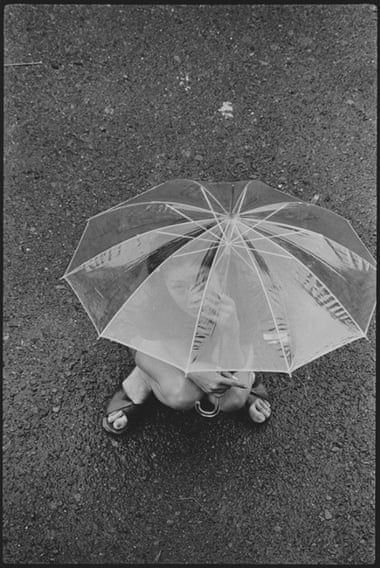
Yoko Fukase, image via The Guardian

I have caught people photographing me without my permission and I usually try to mess up their photo in some silly small way, like pulling a face or rolling my eyes. I have also caught people drawing me on the bus, and I have heard of others having similar experience. Sometimes those creating their art based on strangers are repeat offenders (“Oh that dude on that bus with the sketchbook, yeah I’ve seen him before”), and somehow, they are almost always men. I do not know whether this is because men are the ones confident enough to pull such tricks, or defend themselves if caught at it. Perhaps it’s because there is a surplus of male artists out there without willing and consenting subjects for their art. Or maybe the women doing the equivalent thing are better at not getting caught.

In this context, I have been thinking a lot about women in art. Both as subjects of art, and also as artists. But the problem about women who have art made about them, is that they are subjects of it, subjected to it. Guerilla Girls have made some great pieces concerning this issue; it was via Guerilla Girls that I learned about the difference in number of women portrayed in art in major American art galleries, versus the number of pieces of art by women that were displayed in those galleries. And that was before even getting into question of the vast chasm between the money earned by female artists and that earned by male artists.

These are things we’ve come to expect one we acknowledge the existence of the patriarchy, and once you start digging, there is a lot of discussion concerning this. However what I am writing about here is the position of the woman as a subject, and fact that this can be done secretly, without consent, in passing, in the street, raised a lot of questions for me. It was a Guardian article that led me to this topic, and it’s been stewing in my head for several days, with a lot of related feelings and thoughts about consent and the feeling of being watched, or being a performer.

Subject of art, or complicit in its creation. Masahisa Fukase created a collection of photographs in 1974 that focused entirely on his wife Yoko. She is in every photo, complicit, consenting, even performing for him, the creator of the photo of which she is a subject. This project was 13 years in the making, and throughout that time, Fukase focused intensely on his wife and the creation of images of her. It might seem an obvious outcome to say that they got divorced. Yoko was quoted in the article as having said that her life with Fukase was “suffocating dullness interspersed by violent and near suicidal flashes of excitement”. This surprised me, but then I’m not married to an artist so it’s likely that I was interpreting her position as muse and subject in a different way to someone who has actually experienced that kind of life would have done.

All I could think was how suffocating it would be, how intrusive and exhausting, to have been observed in all that detail, through the eye of a lens for 13 years. And although Yoko was clearly an active participant in this project, I found that the photos begged the question of where the personal ended and the performance began.

Further, the question of consent, and the potential for violation through the medium (and even using the excuse) of art, is something I find deeply troubling. Like the story of Yoko Fukase which still troubles me. There are so many questions I would love to ask her about those 13 years; whether she knew which photos were to be used in the collection, whether she had any say in this, and what happened when she did not feel like having her photograph taken.

Aside from my small moments of messing up photos strangers have tried to take of me, I’ve never confronted anyone doing things like that. Like many other forms of street harassment, confronting those perpetrating it is full of difficulties and second guessing; were they really photographing me? Will they think I’m arrogant for assuming it’s me? Am I arrogant for assuming that? Shouldn’t I be complimented that someone wants to use my face or silhouette or passing blurred figure for their work?

But the in the same way that street harassment is a violation, so is this.

Ruth is a human rights MA student finishing her MA dissertation on the legal and normative rights of terror suspects in the UK (spoiler alert: rights are being violated). She also plays bass in a band called Kinshot, sews as often as she can, and spends time getting annoyed at the cat sleeping on top of her computer.

Share

Filed Under: correspondents, News stories, street harassment

UK: The Back Off Campaign – Ensuring Safety and Choice for Women

July 15, 2015 By Correspondent

Emma Rachel Deane, UK, SSH Blog Correspondent

Over the last 5 years the UK has seen a surge in anti-abortion campaigning targeted at women. Although abortion is not fully decriminalised in the UK, it is estimated that around 200,000 pregnancies are terminated in Britain each year. Two groups in particular, 40 days for Life and Abort67, have increased anti-abortion protest activity outside clinics. Many of the activists wear cameras strapped to their chests and carry banners and placards showing dismembered fetuses in an attempt to shame women for the decisions they are making for their own bodies. In addition to this, women have reported being followed and questioned by protesters while the daily harassment of staff members has made their working lives so uncomfortable that some have withdrawn their services.

I spoke to Abigail Fitzgibbon, the Head of Advocacy and Campaigns at British Pregnancy Advisory Service (BPAS), Britain’s leading provider of abortion services in the UK about this.

She said, “We have tried to work with the police wherever we have clinics to use existing legislation such as public order and harassment laws, but nothing has worked. The Home Office keeps saying that there is legislation in place and it should be used but we know it doesn’t work for this particular problem. Sometimes the police don’t even come to the clinics and if they do there’s very little action they can take to help.”

It is certainly true that the majority of seasoned anti-abortion activists who protest women’s choice are well aware of current public order legislation and are able to navigate around it to remain on the right side of the law. Unfortunately, the law allows protesters to remain standing just outside abortion clinics displaying graphic images and espousing unsolicited advice to women on what could be the most vulnerable day of their lives. It is time to recognise that the legislation we have in place to prevent harassment can no longer deal with this specific problem effectively.

Fitzgibbon went on to say, “It was with a heavy heart that we launched the Back Off Campaign. We didn’t ever think harassment outside clinics would get bad enough in the UK to warrant it. ”

Created by BPAS and supported by various high profile organisations such as Mumsnet and The Royal College of Gynecologists and Obstetricians, the Back Off Campaign proposes the introduction of “buffer zones” around clinics in which protest activity cannot occur under the law. The introduction of such zones would put UK legislation in line with countries such as France, Canada and America and would allow women to get through the doors of a clinic without being approached by anti-choice activists or presented with shame-mongering images. The zones would also allow activists their right to protest at a respectful distance from the clinic while enabling women to access a lawful medical procedure in confidence.

The introduction of such safe spaces outside abortion clinics in the UK is a total necessity if organisations like BPAS are to contend with the tactics of anti-choice activists. Fitzgibbon told me, “The threat the activists pose isn’t just that they harass women and staff outside clinics, but that they are actually trying to close clinics down or prevent them from opening in the first place. We came very close to that happening to a BPAS clinic in Blackfriars. Unfortunately another clinic, not a BPAS one, did eventually have to shut down due to the unmanageable protests. There’s a handful of anti-abortion protesters who will go to these lengths, but you only need a handful to create absolute havoc.”

Under current legislation a BPAS patient could complain that she felt harassed and intimidated in public but if she is to see any kind of justice after reporting her ordeal she would then have to testify in court against her harasser or harassers. As Fitzgibbon says, “It seems a massive price to ask someone to pay. It pushes the problem back onto women again and almost punishes them for wanting to stand up for themselves.”

In 2014 Dawn Purvis, director of an abortion provider in Northern Ireland, secured a harassment conviction against Bernadette Smyth, leader of ‘Precious Life’, an organisation notorious for it’s anti-choice ‘street activism’. The conviction took almost a year to come about, during which time Dawn was subjected to questions in court surrounding her honesty and “fortitude”. Smyth has since won her appeal and the conviction was thrown out of court last month.

It’s no secret that a great deal of the UK’s pro-life movement stems from certain wings of particular churches. Abort67, for example, is linked to the Jubilee Community Church in Worthing, which BPAS has attempted to work with on repeated occasions in order to create a solution to the problem of inappropriate protesting by its members. Fitzgibbon has found the organisation to be less than helpful. “”When we appealed to them to help they told us that they supported the protesters. Its one thing to be anti-abortion and lobby parliament or appeal to congregations to write to MPs, it’s quite another to condone the harassment of women who believe different things. Whatever your feelings are on abortion, we should all be able to agree that the intimidation of women is not acceptable.”

It is certainly arguable that the line between the right to protest and a woman’s right to access medical care can be drawn in exactly that way. As Fitzgibbon put it, “The Back Off Campaign isn’t about trying to make a political point, its about what these protests are doing to individual women. The idea that this is about two sides of a debate is ridiculous. If someone wants to debate BPAS, or me, or somebody who is a campaigner then they’re more than welcome to, but taking that fight to individual patients is unacceptable.”

It can’t be ignored that this kind of protest activity around bodily autonomy is very specific to women and Fitzgibbon was clear in her view about this aspect of the argument. “For me, it’s just blatant misogyny and sexism which stems from two ideas. Firstly, that a woman is not bright enough to understand what’s happening when she has an abortion and secondly, something more sinister, which involves sexual ethics and the ability to control women.”

When anti-abortion street activists tell us that they are ‘just here to help’ it is certainly very interesting to imagine how they arrived at the conclusion that women needed their help in the first place. It is difficult to picture a world in which a man would face the same level of unsolicited advice for choosing to undergo a vasectomy. No one would accept the premise that he couldn’t possibly understand what the procedure involves and that he would need to be shown graphic images of testicles mid-operation to comprehend it.

When asked about her fears if the Back Off Campaign is unsuccessful Fitzgibbon replied, “We don’t want to frighten anyone, there’s no need to panic, but we all need to be mindful about what has happened in America in the past. The last thing we want to do is make women scared, but this is getting worse and nobody is paying attention to us.”

When men make up over 70% of British parliament it is hardly a challenge to work out why women’s interests are so often put on the back burner. I have no doubt that a parliament representative of the society it governs would go a long way in ensuring that the needs of its people were being met. Political representation and the decriminalisation of abortion are two of ‘fourth fave’ feminism’s biggest challenges. While these two problems combine to perpetuate a culture in which the harassment of women outside medical centres is accepted it is up to us to take action and support initiatives like the Back Off Campaign.

Find out more about BPAS here and write to your local MP here.

Emma Rachel Deane is a London-based retail manager for a fast growing women’s lifestyle brand and an outspoken advocate for women’s social justice issues. She can be found blogging on Raging Hag or tweeting @emmaracheldeane.

Share

Filed Under: correspondents

USA: “It is an incredibly brave act to speak up”

July 1, 2015 By Correspondent

Michelle Marie Ryder, USA, SSH Blog Correspondent

Like the French poet and playwright, Jean Genet, I have “never been able to find out which way the wind’s blowing by wetting my finger and holding it up” in the air. I can, however, sense a man staring at me from a mile away, his gaze penetrating me like a heat-seeking missile. I can see eyes that see me but don’t know I see them. It’s a kind of extra-sensory perception, both a blessing and a curse, helping me to localize specific threats.

Public spaces should be safe. As safe for women and members of any marginalized group – like visibly trans or queer people – as they are for men. One would think a trip to the market or a coffee break could occur without the risk of humiliation or exposure to violence.

One would think it would be absurd for my good friend to pull over on the side of the road and relieve herself in the bushes to avoid stopping at a gas station. But it’s not and she did and I completely understood why, laughing into the phone, “The gas station, where real men go to buy their groceries and harass women!”

In the 21st century we live in a complex, rapidly changing, technologically advanced world. But still not a safe one. A woman is beaten every nine seconds in the US and sexually assaulted every two minutes. Intimate partner homicide kills three women daily. And male strangers on the street (including those tasked with the duty to “serve and protect”) have the power to call into question our basic safety and humanity. Disturbingly, our culture furnishes us with a long list of instances where the evasion or rejection of a harasser’s advances was met with violence. The Economist reported last year:

“Most women don’t stand up to verbal harassment in the street for fear of exacerbating the situation. This is no idle concern: last month a 27-year-old woman in Detroit was shot and killed after refusing to give a stranger her phone number. More recently, in Queens, a man slashed a woman’s throat with a blade when she rejected his request for a date. Then there’s Elliott Rodger’s shooting rampage last May, famously directed at “every single blonde slut” who rejected him.”

Because it can rob us of the ability to act, street harassment reduces the harassed person to a thing that is human in name only.  The underlying logic driving street harassment – sexual objectification – equates our entire personhood to isolated regions of the body. “Nice tits!” “Dang, THAT ass!!” “Damn girl, you’s a whole chicken! Breasts… legs… thighs… MM MM MMM!”

No wonder cultural critic Susan Sontag was so on point when she argued: “Women are taught to see their bodies in parts and to evaluate each part separately. Breasts, feet, hips, waistline, neck, eyes, nose, complexion, hair, and so on—each in turn is submitted to an anxious, fretful almost despairing scrutiny.”

A society that refuses to see us as whole human beings, in body and mind, will never be a safe one or enlightened one.

But until we can get to the promised land of gender equality – where the weather is perfect, the streets safe and the pay equal! – we are left prioritizing our personal safety above all else, which often means assenting to silence in order to disengage from potential danger. In a world that already questions a woman’s natural right to assert herself, this silencing is deeply disempowering and can overwhelm our capacity for language itself.

In this context, it is an incredibly brave act to speak up. One way to make our voices heard is through the liberatory power of poetry. My own experience has shown me that a poem often starts with a lump in the throat and the determination to say the unsayable, not divine inspiration or lofty ideas.

A poem that shakes me to the core every time I hear it is Calayah Heron’s, “CornerStoreCandy.” In this poem, Heron – who first experienced street harassment at the tender age eight – details in haunting, evocative language the terror of being sexually objectified and preyed upon. Heron’s voice cracks with pain beneath a beautifully measured eloquence. Her words illuminate the deep, unnamed feelings that are routinely suppressed when we bottle up our rage, grief and disbelief.

By putting pen to paper, poets like Heron remind us that even if we can’t speak up in the moment, we can later. It’s never too late to reject the ritual humiliations of living in a world where men have been taught to feel entitled to our time, our bodies, and our lives.

Michelle is a freelance writer and community activist. She has written for Infita7.com, Bluestockings Magazine, and The New Verse News on a range of social justice issues, and shares her poetry regularly at poetrywho.blogspot.com.

Share

Filed Under: correspondents, street harassment

Spain/Ireland: On dress codes and street harassment

June 29, 2015 By Correspondent

Rebecca Smyth, Spain, SSH Blog Correspondent

Feminism and related activism require a huge amount of personal reflection and exploration. This is a reflection. My opinions are open to reconfiguration and nuancing. You are entitled to agree or disagree in part or completely. I’d be really interested to hear back from people as to what they think and feel on some of the issues raised here.

There’s been a lot in the media (well, on Buzzfeed…) lately about high school dress codes in North America and students’ challenging them.* It’s something I’ve been following with keen interest for many reasons, not the least of which being that it’s almost completely alien to my Irish school experience.

Image via Ireland’s SchoolWear House, www.schoolwearhouse.ie/

The vast majority of schools in Ireland require their students to wear a uniform. It’s just the norm for us. There’s a lot to be said for school uniforms: they’re convenient (it’s half seven in the morning and you can get dressed on auto-pilot); they can keep costs down for parents (lots of supermarkets and cheaper high street shops stock school uniform-type skirts, pants and shirts at those low, low prices we all love and not-that-deep-down know to be the product of egregious human rights violations in someplace far, far away); and they tend to eliminate, or at least, ameliorate bullying related to clothing, fashion, style and what have you.

And yet, perhaps, dear reader, you can sense my hesitation. I genuinely feel there are many positive aspects to uniforms, not least those enumerated above.

But I hated it. Hated it.

I hated that there was no avenue for personal expression. I hated that we had to wear a tie. I hated the lumpen jumper and tent-like skirt and bin-bag-like school jacket that swamped me. I hated that pants weren’t an option, as though girls automatically must wear skirts. I hated what seemed to me to be arbitrary demarcations – formerly raven-haired students could have bleach blonde hair as it was a ‘natural’ colour, but anything more outré was out. Dubarrys were fine but Doc Martens weren’t. One set of ear studs in the traditional ear-stud place were acceptable, but other piercings and larger earrings most certainly were not. Nail varnish was banned on health and safety grounds, but you’d be sent to the loos with all sorts of huffable chemicals to remove it. ‘Subtle’ make-up was permissible but ‘too much’ and to the loos with you with a stack of make-up wipes. That last one was probably the least heavily enforced.  I think it was out of deference to the fact that many people wear heavy make-up to hide their skin and the adolescent travails it can suffer.

Now, before y’all get up in arms about this, I want to put it firmly in context. This is pretty much the norm, give or take a few specifications here and there, for school dress codes in Ireland. Furthermore, I cannot commend highly enough the staff of my former school who very much have the best interests of their students at heart. Finally, and something that international readers may be intrigued by, it was an all-girls school. None of this was to do with ‘distracting’ boys – at least not within the school walls.

Nevertheless, it certainly conforms to and perpetuates many of the stereotypes that underpin dress codes in businesses worldwide and those North American schools. As Shauna Pomerantz, an associate professor at Brock University says in an interview with Buzzfeed, ‘appropriateness’ is defined in terms of class- and race-based values, namely that “[Y]ou have to look like a middle-class, heterosexual white woman.”

And this is where I really have to start challenging myself, because I am all those things, and one of my style icons is Audrey Hepburn.**  So I am very much of the less-is-more, the eyes-or-lips-but-not-both, the legs-or-boobs-but-not-both school of make-up and style. To a point. That’s what primarily works for me and my appearance and body type and gender identity. But that doesn’t mean it’s right or good or works for everybody, nor would I be arrogant enough to assume so.   And I have to call myself out on this regularly because unfortunately I have internalised the prejudices that float around us just like everybody else. If you want to wear a ton of make-up in whatever configuration you see fit, you should be allowed to. If you want to wear whatever clothes it is you want to wear, you should be able to. Unfortunately though, there is a catch.

That word.

Should.

I sure as hell don’t like it, but we are judged on our appearance and the way we present ourselves to the world. We shouldn’t be, but we are.

How do we go about challenging this? Are there limits to how far we should go?

I don’t want to reclaim the word ‘slut’. I just want it binned. But I think the Toronto-based Project Slut is really on to something big. I don’t think crop tops are the ideal choice of clothing attire for anywhere except by the pool or at the beach, but I sure as hell don’t think someone should be stared at, harassed or raped for wearing one elsewhere. I think ideally your foundation should match your skin tone, but I think it’s messed up that ‘skin colour’ usually means ‘white people’s skin colour.’

I also wonder if all this stuff is a big, steaming pile of misdirection – a symptom being mistaken for an illness.

Unless we recognise that dress codes, ‘slut shaming’, ‘beach bodies’ and all the rest are about controlling and regulating the already disenfranchised, we’re going to keep missing the point.

Street harassment has nothing to do with what you’re wearing or not wearing. I know this from personal experience and far too many stories of other people’s experiences.

Enforcing rigid dress codes and reiterating ideas of what is appropriate and inappropriate that have their basis in racist, sexist, classist and heteronormative ideas perpetuate the false connection between how we present ourselves to the world and how the world should treat us.

Other than thinking and talking and writing about this, I don’t know how best to tackle it. If anyone has any better ideas, please enlighten me!

For further reading, here are a few articles from BuzzFeed.

* One important issue I don’t touch on here, at least directly, is that of natural hair. I am white. I am Irish. I have read about and followed with great interest and anger the hostility, snide remarks and suspensions meted out to people of colour of all ages who wear their hair naturally or in locs or braids and myriad styles. I don’t feel it’s my place to say anything other than I think natural hair and natural styles are beautiful. And I don’t mean that in any exoticising, othering, oh-my-God-can-I-touch-your-hair way. I just mean it’s beautiful and the fact it’s seen as ‘unprofessional’ or ‘not in keeping with school dress codes’ is disgusting.

** Also Santigold and St. Vincent and Karen O and M.I.A. but I wouldn’t be quite confident enough to wear exact replicas of their finery nipping to the supermarket. Someday, someday…

Rebecca is currently living, working and stumbling through ballet classes in Barcelona. Originally from Kilkenny, she has a degree in European Studies and a Master’s in Gender and Women’s Studies from Trinity College Dublin, and will be doing an LLM in Human Rights Law in Edinburgh this fall.

Share

Filed Under: correspondents

The Netherlands: Female hitchhikers defying highway harassment (Part 2)

June 29, 2015 By Correspondent

Julka Szymańska, the Netherlands, SSH Blog Correspondent

This article is the second installment in a two part series, you can find the first set of portraits here.

8.28.12 badlands national park, pine ridge reservation, sd 003Sophie.

A real people’s person, 22 year old Sustainable Agriculture student Sophie is based in Germany when she is not away on one of her hitchhiking adventures. One of the core reasons for wanting to hitchhike is her love for being around many different kinds of people, another revolves around the journey from festival to festival during summer’s festival season. In the middle of nowhere you can more easily find a ride than a train- or bus station.

Harassment while thumbing is familiar for Sophie, she recalls: “During my third time hitchhiking, I was in Romania with a friend when we had just waited for two hours in the scorching hot sun. Finally a car stopped and a Romanian guy offered a ride, but we were having troubles with the language barrier. He took me aside and after some attempts at understanding each other it became clear he only wanted to take us in exchange for sex. Of course I declined, but I felt really embarrassed and unsafe. I would not have known what would have happened if my friend wasn’t there with me and I think every girl should be informed that this can happen. I was a little bit too naive. This incident was a warning for me, now I communicate more with drivers before I get into their car.”

Knowledge and experience in hitchhiking is a factor Sophie thinks a lot about these days; she wants to be prepared for all the challenges she might face. She doesn’t carry pepper spray, because using that in a closed car can literally backfire and the only knife hidden in her shoe is a utility knife with a safety switch, so she herself won’t be cut by accident. Another method to feel safe for her is reading a lot of resources by more experienced hitchhikers, like blogs, guides and documentaries.

“I’m proud when I hitchhike alone, the sense of self confidence and freedom feels great. I wear practical clothes, nothing sexy and I meet a lot of nice people on the road who go the extra mile for a young woman alone. They compliment me and respect my character for being out there on my own, I love that,” Sophie cheerfully laughs.

Diana.

Diana is a 24 year old woman of the world; originally from the United States, but currently living in Thailand. She first hitchhiked in Japan with a friend who taught her the ropes, following this nice introduction to hitchhiking she started doing it alone. After utilizing her fluency in Spanish on the road in Chile, many different countries would be next on Diana’s list.

Her experiences with harassment during hitchhiking are fortunately limited, unfortunately that can’t be said for other travels or destinations. In Australia she had to face a lot of micro-aggressions (such as being called “a spicy Latina” and men even groped her a few times. And during an emergency couch surf for a night in Paris her host expected her to have sex with him, which resulted in her locking the guest room she stayed in and leaving at sunrise to get away from the creep. Similar situations happened more than once, but always were resolved safely.

“The controversy surrounding women’s safety when hitchhiking is very frustrating”, Diana sighs, “In my opinion it perpetuates the patriarchal notion that women are weak and aren’t able to take care of themselves. Which is not the case, because I’ve been hitchhiking alone many times and I even introduced another girl who never hitchhiked before to the world of it. ”

She explains that traveling alone isn’t the problem. “It’s really suffocating for women to be told that we shouldn’t do it, people should just stop harassing and preying on women. Women aren’t asking to be prayed upon. As a feminist I’d want women to be safe, that is their right, this includes exploring the world and hitchhiking is an amazing way to do that.”

Diana lives by a proverb in Spanish that translates to something along the lines of “Go with a good vibe”. She endorses passing the ways of the hitchhiker on to new people who want to embrace this way of traveling, to both teach them by setting a good example and give them more self confidence; to ultimately simply share the vibe.

At the end of the road.

All in all I think we can conclude that no matter the risks of hitchhiking and the warnings women in particular receive about it, a lot of women aren’t repelled from raising their thumb at the highway, either alone or with a traveling companion. Many women use strategies to ensure their own safety, just like hitchhiking men do, although perhaps a little more consciously. Harassment does happen, but not as often as many people think, nor more often than in other public places, such as the street, trains or other public transport or behind the doors of a building. The responsibility of stopping highway harassment and any street harassment in general lies with the people doing the harassing. Women can only do so much to ensure their own safety and are armed with their intuition and wits to cope in a world that can be considered outright hostile to women. Despite this animosity, every single woman is brave for going on with their lives and doing what they want to do with it in the face of harassment. And that demands nothing less than utter respect.

Are you curious about hitchhiking after reading these courageous women’s stories? If so, be sure to check out some of these resources on the subject of hitching rides risk-aware and as safe and comfortable as possible.

  • Hitchwiki: The guide to hitchhiking the world.
  • A Girl And Her Thumb: A blog about hitchhiking while female.
  • Women On The Road: An inspirational website dedicated to women who travel.

Julka is a 25-year-old feminist activist and soon-to-be Cultural Science student with a generous amount of life experiences -including street harassment – and even more passion for social justice.

Share

Filed Under: correspondents

« Previous Page
Next Page »

Share Your Story

Share your street harassment story for the blog. Donate Now

From the Blog

  • #MeToo 2024 Study Released Today
  • Join International Anti-Street Harassment Week 2022
  • Giving Tuesday – Fund the Hotline
  • Thank You – International Anti-Street Harassment Week 2021
  • Share Your Story – Safecity and Catcalls Collaboration

Buy the Book

  • Contact
  • Events
  • Join Us
  • Donate
  • Facebook
  • Instagram
  • Pinterest
  • Tumblr
  • Twitter
  • YouTube

Copyright © 2026 Stop Street Harassment · Website Design by Sarah Marie Lacy