• About Us
    • What Is Street Harassment?
    • Why Stopping Street Harassment Matters
    • Meet the Team
      • Board of Directors
      • Past Board Members
    • In The Media
  • Our Work
    • National Street Harassment Hotline
    • International Anti-Street Harassment Week
    • Blog Correspondents
      • Past SSH Correspondents
    • Safe Public Spaces Mentoring Program
    • Publications
    • National Studies
    • Campaigns against Companies
    • Washington, D.C. Activism
  • Our Books
  • Donate
  • Store

Stop Street Harassment

Making Public Spaces Safe and Welcoming

  • Facebook
  • Instagram
  • Pinterest
  • Tumblr
  • Twitter
  • YouTube
  • Home
  • Blog
    • Harassment Stories
    • Blog Correspondents
    • Street Respect Stories
  • Help & Advice
    • National Street Harassment Hotline
    • Dealing With Harassers
      • Assertive Responses
      • Reporting Harassers
      • Bystander Responses
      • Creative Responses
    • What to Do Before or After Harassment
    • Street Harassment and the Law
  • Resources
    • Definitions
    • Statistics
    • Articles & Books
    • Anti-Harassment Groups & Campaigns
    • Male Allies
      • Educating Boys & Men
      • How to Talk to Women
      • Bystander Tips
    • Video Clips
    • Images & Flyers
  • Take Community Action
  • Contact

Cameroon: Public Sexual Harassment – A Comparative Investigation of Muslim and Christian Cultures

November 23, 2014 By Correspondent

Ngwentah Berlyne Ngwalem, Buea, Cameroon, SSH Blog Correspondent
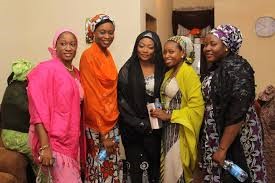
Muslim women after a party.

Many cultures have placed inconceivable restrictions on women’s choices and bodies. I remember being told firmly and reassuringly by men that I would never see a Muslim woman who is covered get sexually harassed. Of course with the knowledge and opinion I have about harassment – that it has to do with male dominant control over women — I knew their assumptions were ignorant. But it pushed me to want to understand more about why people think women in more conservative cultures like in the Cameroonian Muslim community and Muslim cultures globally still get harassed and have their bodies and dress code choices policed, which seems to be a progressive act.

Daily wear for Cameroonian Muslim Bororo and Hausa women. This is what is termed modest for Cameroonian Muslim and other Central and West African Muslim women. Very few Muslim women in Cameroon wear Hijab and Niqab. Many more women in North Africa like in the Middle East wear Hijab.

I had no idea that women who got sexually harassed while wearing a hijab could still be told that they tempted men because they were not wearing the Nijab until an Egyptian-based women and human rights defender, Angie told me this recently. I was shocked to hear of the senseless demands placed on women by society, demands that keep increasing each day.

I’ve been holding discussion sessions with many individuals hoping to understand why the subject of women’s mode of dressing is usually used as an excuse to commit crimes against them and skillfully deny them access to enjoy public freedom and safety.

A reference was made to the recent law in Saudi Arabia banning women’s “tempting eyes” as a symbol of society’s desire to someday see women disappear from the surface of the earth. What I wanted to find out was exactly what the people in my society thought of these demands placed on women bymany societies which never seems to be good enough or act as an assurance that women will be secured and free in public space.
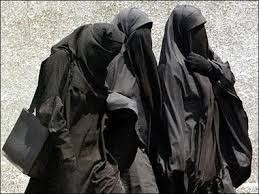
The way most men globally insinuate women should start dressing in order to not be a temptation to men.

Knowing the thoughts of our country’s peopleabout the fact that Muslim women still get sexually harassed while fully covered is also crucial in making my point that adress code policing women in Cameroon is senseless. Women are refused access into offices, churches, Universities and it is okay to catch and jail women with the excuse that they would cause men to lose focus and think only of having sex with these women.

“Muslim men have a very high libido, way higher than that of Christian men. Muslim men cannot control themselves with the kind of extremely high libido they have, that is why Muslim women need to cover their bodies completely so that they can be safe and not be sexually harassed by their men,”one young man explained to me.
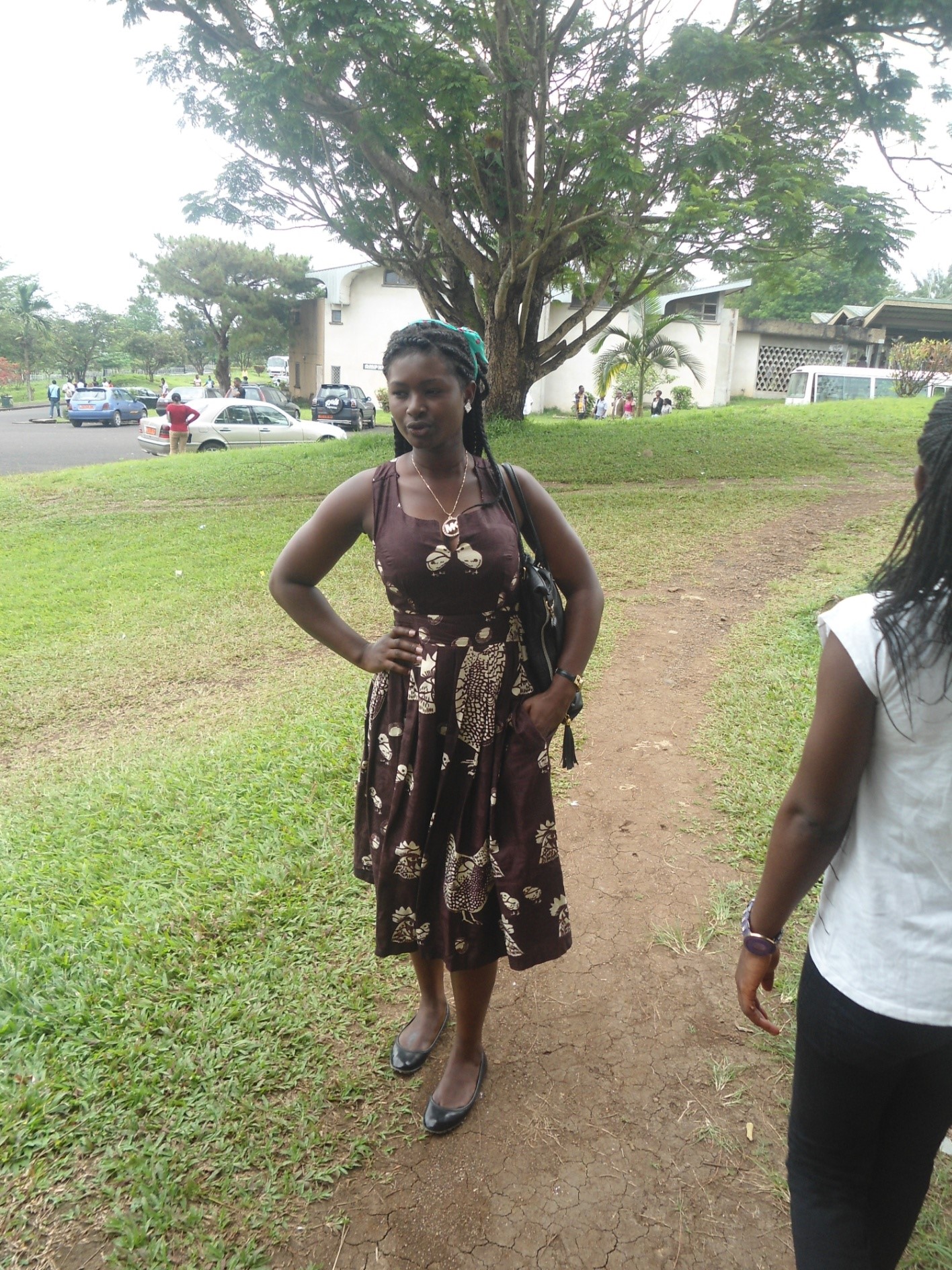
Daily wear for Cameroonian Christian women. This is a University of Buea student.

As if that was not a disturbing excuse which shows people’s lack of ability to question societal constraints placed on women for no befitting reason in many cultures- with no interest seeking to understand why these things happen mostly  to women globally and join in the fight against such norms that are put in place to ensure women know no peace, another young woman said,  “They get sexually harassed because though they cover their body, their faces are still exposed and since they are so pretty men get tempted by their beauty.”

There is a common believe in Cameroon that Muslim women generally are more attractive than any other race of women in the world. Muslim women both in and out of Cameroon are considered by many to have a certain facial structure which is usually long and small and considered to be a more attractive face type.

Another man explained to me that, a certain type of dressing in the Muslim culture signifies that a woman is single, so when she goes out men will likely sexually harass her because they are aware she is not married.

It is hard to explain how all the Christians I conversed with spoke of these Muslim men as if they know them so well. It is hard to comprehend how Cameroonians will condemn women for not dressing well as a reason they are sexually harassed.
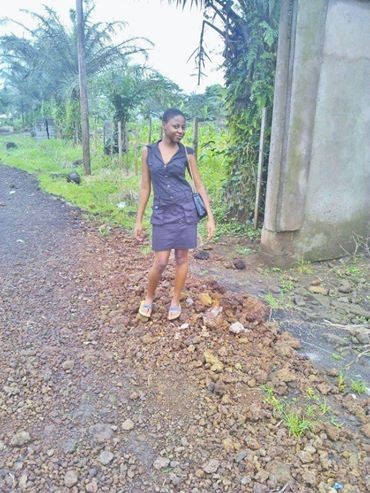
I was recently sent out of the University of Buea by a male guard for supposedly being indecently dressed. No other person had a problem with my clothes.
And set an example for Cameroonian Christian women to follow by using the modest dressing of Muslim women, then when they are enlightened that Muslim women get sexually harassed despite the fact that they are covered, they still blame these Muslim women instead, not the men for not covering themselves well enough.

I was demoralized at the fact that most peoples’ responses just seemed to be making excuses for men except for one man who thought differently about harassment in the Muslim community being a symbol of masculine dominance. As he opines, “Muslim women still get street/sexually harassed because Muslim men believe that women were created for their pleasure so they assume they have full control over them.”

I was at least relieved that there was one person amongst the groups of people I spoke to who did not blame women for being the cause of their sexual harassment in public places.

Berlyne is a Cameroonian-based women’s human rights activist, passionate and determined to put an end to social injustice of any kind. You can find her on twitter @Luvequalityrule and Facebook.

Share

Filed Under: correspondents, street harassment

Bulgaria: Running while female

November 21, 2014 By Correspondent

Diana Hinova, Sofia, Bulgaria, SSH Blog Correspondent

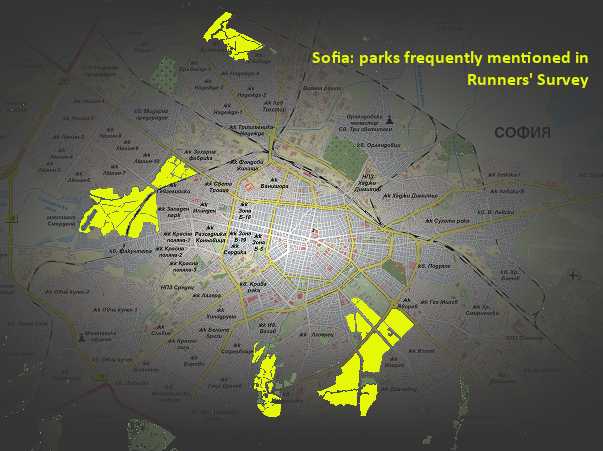
Sofia boasts several large parks: the South, West and North Parks (no joke on those names), Boris Gardens, and Hunting Park, for instance. For three weeks this autumn, the Runners’ Survey collected information from runners in Bulgaria about their perceptions of safety. The running community is growing here, thanks in part to initiatives like 5km Free Run which hosts organized runs every weekend in several Bulgarian cities. Running is a great, cheap activity that many people can rely on to keep in healthy shape – when the environment allows it. And since we seem to have the infrastructure, and the community, the Runners’ Survey aimed to investigate whether personal safety concerns prevent people from doing so.

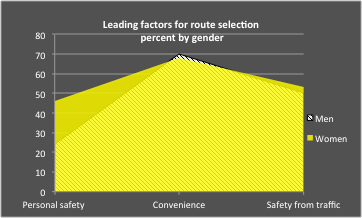
Women runners cite personal safety much more often than men (22 percentage point difference) as a leading factor for the selection of where to run. For 12% of women runners this was the sole factor determining where to run (and for 5% of men runners), and not convenience to home or office, or safety from road traffic.

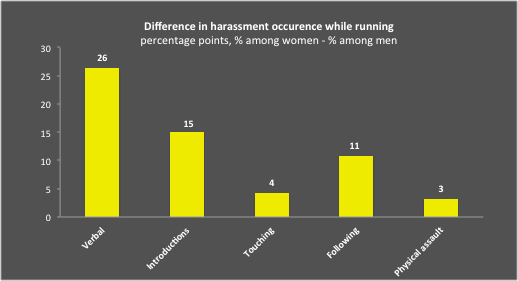
The forms of harassment described by the survey (since the general is not widely familiar in Bulgarian) included unwanted attention in the form of comments, whistling, gestures; attempts to touch; attempts by strangers to introduce themselves; a stranger following the runner; and physical assault. When asked specifically about instances of any of these forms of street harassment while running, 15% of men and 51% of women report having experienced it.

Logically, men runners use harassment avoidance strategies less frequently than women by orders of magnitude. Women runners most often rely on the selection of route and timing of their runs (31%) to avoid street harassment and other threats to their safety.  Another common strategy is running with a phone and headphones (22%), although the role of headphones in runners’ safety is interpreted differently by some respondents:

“When running in areas that seem dangerous (eg. Borisov Garden in the dark), I take my headphones off in order to react more quickly if needed.” (w)

“I don’t wear headphones and I scan the surroundings when running” (w)

“I typically run with some friends and don’t pay attention to others in the area. If alone, I would be hesitant to run in an area with no one around or in parks at nighttime, even if there is lighting.” (w)

Women runners also often change their clothing choices (18%) and to a lesser degree rely on group runs, or carry self-defense aids like pepper spray, to avoid street harassment and more serious safety threats. These themes and strategies echo the recent #RWsafety twitter chat, where (mainly US-based) runners shared their experiences, concerns, and hope for change. An additional concern specific to Bulgaria turned out to be the sizable stray dog population.

It is important to consider the effect street harassment, which disproportionately affects the choices of women runners (and potential runners), has on women’s ability to equitably use of public space for healthy activity.

The results of the Runners’ Survey will be communicated to Sofia municipal and local government, officials in the Ministry of Physical Education and Sport, and other interested parties. The full summary of the Runners’ Survey results, along with graphics, can be accessed via the One Billion Rising Sofia Facebook page in English and Bulgarian.

Diana has a Master’s in Public Policy from Georgetown University and works as a consultant to INGOs. Follow her on Twitter @dialeidoscope or letnimletni.blogspot.com.


България: Да си тичаща жена

София се гордее с няколко големи парка: Южния, Западния и Северния, Борисовата Градина, Ловния Парк. тази есен за три седмици Анкета на тичащите събра информация от ентусиастите на бягане в България за усещането им за безопасност. Общността на тичащите се разраства, благодарение отчасти на инициативи като 5km Free Run, които организират безплатни седмични бягания в четири града. Tичането е страхотен, евтин начин за много хора да поддържат добро здравословно състояние – когато средата го позволява. Изглежда имаме инфраструктура за него, и изградена общност, за това Анкета на тичащите цели да разбере дали съображения за безопасност спират някой хора да се възползват от тази възможност.

Тичащите жени много по-често (22 процентни пункта) изтъкват личната си безопасност като водещ фактор при избора къде датичат от мъжете. За 12% от тичащите жени, това е единственият фактор определящ къде да тичат (и при 5% от тичащите мъже), а не удобство до дома и работата или безопасност от автомобилен трафик.

Формите на уличен тормоз описани в анкетата (тъй като цялостното понятие не е  твърде познато в България) включват нежелано внимание изразено чрез коментари, подсвирквания, жестове; опити за докосване; нежелени опити за запознанства; следване; и физическо нападение. Запитани дали са били обект на тези проявления, 15% от мъжете и 51% от жените споделят че са срещали уличен тормоз по време на тичане.

Тичащите мъже прилагат стратегии за предпазване от нежелано внимание в пъти по-рядко от жените. Тичащите жени най-често прилагат внимание при подбор на маршрут и час за тичане (31%) за да избегнат нежеланото внимание и други опасности. Друга често срещана стратегия е тичането с телефон и слушалки (22%), въпреки че ефекта от носенето на слушалки при тичане предизвиква противоречиви мнения:

“При минаване през места, които ми се виждат опасни (напр. Борисовата градина по тъмно), свалям слушалките,  за да реагирам бързо при нужда.” (ж)

“Не нося слушалки и се оглеждам докато бягам” (ж)

“Обикновенно тичам с компания и не обръщам внимание на околните. Ако съм сама бих се притеснила да тичам на обезлюдено място или в парковте особено на тъмно, дори и мястото да е осветено.” (ж)

Тичащите жени също често внимават в избора на облекло за тичане (18%) и в по-малак степен на тичането с придружител, или носене на защитни средства като спрей, за да избягват нежелано внимание и тормоз. Тези теми са паралели на дискусията в туитър #RWsafety, където тичащи жени (предимно от САЩ) споделиха свои преживявания, притеснения, и желания за промяна. Допълнителен фактор в безопасността на тичащите в България се оказват и бездомните кучета.

Важно е да си дадем сметка за ефекта, който нежеланото внимание оказва предимно върху жените, които тичат (или биха искали да тичат). Това е въпрос на равноправие да се ползват обществените пространства за лично здраве.

Пълно обобщение на резултатите: Анкета на тичащите 2014

Share

Filed Under: correspondents, Resources, street harassment

UK: 10 Hours of walking in NYC as a woman in Hijab

November 20, 2014 By Correspondent

Siel Devos, London, England, SSH Blog Correspondent

By now, everyone has seen the video of a woman walking around New York for 10 hours and getting harassed over a hundred times.

But did you also know there has been a response in the form of a video of a woman walking through New York wearing hijab? The first 5 hours she is shown walking without hijab, experiencing harassment similar to the original video. However for the next 5 hours, when she does wear the hijab and niqab, she is miraculously not subjected to harassment at all.

The video says “you be the judge” implying that it is obvious to see that the only way to be free from harassment is covering yourself up. Once again, women are shamed and blamed – by both men and women – for bringing harassment upon themselves, merely by what they are or are not wearing. Once again people fail to acknowledge the real issue that is street harassment: the ingrained idea of entitlement and power over women and the fact that harassment is so normalized in both Western and Middle Eastern culture.

Victim blaming happens often when addressing sexual crimes and harassment, and even more in the cultural and social context of Islamic societies where women are seen as sexual creatures who are to blame for inciting men’s sexual urges. The idea of modesty and the concept of honour and shame regarding women’s bodies as a means of protecting women does nothing to solve the problem, rather it reinforces rape culture by always putting the blame on them.

The underlying meaning of this ‘modesty’ is that “good” women are those who cover up and belong to a man, “bad” women don’t cover up which implies that they are available to all men. In other words, respect for women depends mostly on their way of dressing as expected and imposed by men. Victim blaming and slut-shaming are very close related when talking about harassment. The notion of the male gaze becomes crucial here, and I very much agree with what the (anonymous) blogger behind A Sober Second Look says about this:

“What we didn’t notice was that regardless of whether we were measuring ourselves against a more or a less restrictive check-list determining “proper hijab,” we were nonetheless forever measuring ourselves in terms of an imagined male gaze, which we had internalized. We told ourselves that this had nothing to do with the male gaze, because what we were concerned with ultimately was obeying God. But coincidentally enough, the gaze that those check-lists had in mind was the male gaze. According to those check-lists, a woman has to always be aware if her clothing is “too” tight, “too” bright, “too” short, “too” fashionable, “too” eye-catching, “too” insufficiently Muslim… mainly, in the judgment of men—the generations of male scholars who had debated and determined these matters, and the male leaders of our community—and to a lesser extent, of a censorious and judgmental community generally.”

Going back to the message of the hijab video, “you be the judge” which implies that the hijab functions as a kind of invisibility cloak that magically protects against harassment and the male gaze. Problem solved then? Not really. How do you explain that 99.3% of Egyptian women experience harassment, when the majority of them wears the hijab?

The Qur’an and Hadith suggest that both women and men dress modestly in order not to incite sexual urges (an inherent natural aspect of human beings, both men and women). Maybe men who are shaming women for not wearing the hijab and saying this is required by the Qur’an haven’t read the Qur’an properly, as in the same chapter it is recommended that men lower their gaze. Other chapters in the Qur’an encourage men to respect women and treat them kindly. So why are we not addressing this blatant violation of Islamic doctrine? When are we going to focus on changing men’s behaviour and attitude instead of simply blaming women’s appearance and modesty?

Siel is a master’s student in Middle Eastern studies with a major in contemporary Islam at SOAS University in London. Find her on twitter and instagram under @mademoisielle.

Share

Filed Under: correspondents, street harassment

USA: Flash Mob Against Harassment on the CTA

November 7, 2014 By Correspondent

Sarah Colomé , IL, USA, SSH Blog Correspondent

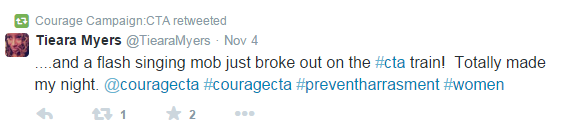
Cold air, don’t care. Chicago’s time honored tradition of social protest reared its glorious head on Wednesday, November 5th, sparking public conversation about street harassment on the Chicago Transit Authority (CTA) train system. Bridging passion, activism, and love of music, members of the Courage Campaign: CTA claimed a section of the Red Line as their own, breaking into a flash mob advocating public safety awareness.

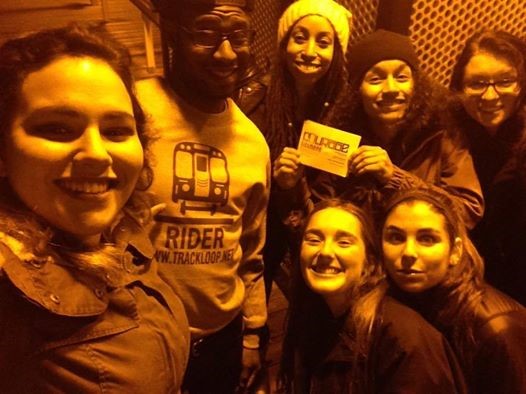
Members of the Courage Campaign: CTA take a quick selfie before the flash mob begins.

Commonly referred to as the “el” or “L” the city of Chicago houses the second largest mass transit system in the country, according to the American Public Transportation Association. With an annual ridership of 229.12 million on the train system alone, in person contact — whether consensual or not — is a frequent reality for those who depend on public transportation in the city.

Frustrated with the lived realities of so many who traverse the transit system each day, Courage Campaign: CTA founder Kara Crutcher decided to take action in order to address these stories of harassment. “I’ve experience and heard horror stories from tons of people taking the CTA,” Crutcher explains on the campaign’s Facebook page.  ”Commuters have been physically, sexually and verbally abused on the CTA, and it’s unacceptable. Everything begins with awareness.” 

Awareness was to be had, and in droves when Crutcher and other Courage Campaign participants exploded into their flash mob. Using an adaption of Aretha Franklin’s timeless song “Respect,” the group swapped in the word “courage” for “respect,” ending with the call to action: “We have the courage to stop harassment on the CTA – do you?”

Watching the video, we see the scene open with a young man incessantly hitting on a young woman before the mob broke into their courage song.

Crutcher explains, “The best part was seeing how uncomfortable everyone was initially – and no one said anything.” Noting several reactions, she noticed people seeing the exchange, shifting uncomfortably, and looking around, but many clapped in support at the end of the skit.

Partnering with a photographer, among other campaign members, the concept of a flash mob was derived on the premise that the action would “be helpful in pushing this project forward,” particularly after seeing the popularity of a similar flash mob done by the Lion King cast on a New York subway in early August. As a dancer in college, Crutcher knows the power of performance.

Produced as collaborative effort, the flash mob finished each of the performances by providing campaign flyers, hoping to entice more support and awareness about the campaign, and the issue of harassment overall. The flyers included actions items, contact information and the campaign’s logo, which serves as a sort of homage to the city of Chicago. Hoping to gain momentum from civic pride Crutcher explains, “I think that is what will make this strong – people are so loyal [to this city.]”

For more information on Courage Campaign: CTA or to contribute to their cause, visit their Facebook page, and follow them on Twitter at @CourageCTA.

Sarah is a progress-focused educator and advocate dedicated to building strategic coalitions centered on creating social change who serves as an adjunct professor in DePaul University’s Peace, Justice and Conflict Studies department. You can follow her updates on Linkedin or hear her perspectives on Twitter.

Share

Filed Under: Activist Interviews, correspondents, public harassment

Sri Lanka: The psychological effects of street harassment

November 3, 2014 By Correspondent

Menusha Gunasekara, Matale, Sri Lanka, SSH Blog Correspondent

Yesterday I was terrified with fear and uncertainty. What was disturbing my mind, my confidence and my dreams was seeing my harasser that day. It was not an unexpected event since I knew the harasser lived in the same area I live; I knew someday I would see him again. Unconsciously, I was checking the vehicle number of every red-colored three-wheeler taxi that passed me in the road. I was trying to avoid seeing him, but yesterday I failed.

Two years ago I was harassed by a taxi driver. Not just one time but three times. Although my mother got involved and met with the perpetrator, I never felt I was safe at home. For almost one year I had nightmares about worst-case scenario related to this incident. It was producing a lot of anger inside me.

Many think of street harassment as just an everyday “normal event” but the psychological trauma from a single incident can ruin your life. Nobody would think my hesitation and my reluctance to go in the village area alone comes from the negative side effects of street harassment. On top of that, my knee injury puts me in a vulnerable stage reminding me that I cannot even run for my safety. As a result, after coming home from university, I feel like I have been sentenced to house arrest. The freedom I had to stroll wherever I want seems far away in Sri Lanka.

Moving on from the personal experience to the increased number of harassment incidents in public places, including public transportation, I am aware that my experience is not just a single event alone. Although after the Wariyapola incident there was public and media dialogue about taking actions and social awareness on street harassment, that voice has disappeared. The wave of media attention has gone until the next incident, and there is no steady attention to combat the gendered mentality or to support women who faced street harassment.

A few days ago, I learned about a new initiative from the Women & Children Bureau that allows you to report sexual harassment on public transportation. They have created a SMS service to collect data and an easy way to complain about harassment through the following number: 0716550000. Let’s think positively that this initiative will be reached by the public since many women use mobile phones. At least it is a better way to report to a responsible authority than by going to a police station.

Still, the support for mental trauma has not been addressed by any authority. Places where women can have easy access to counseling and advice to deal with the negative emotions that can hinder their productivity and self-esteem should be established. As the President Rajaphaksha recently claimed that Sri Lanka is a better place for women & children to live in Asia, I just want to remind the responsible authorities, NGOs and public that that statement can be misleading if the root of the problem of harassment is not addressed.

Public awareness and actions are the impetus for creating safe environment for women and everyone.

Menusha is a recent graduate of Asian University for Women, Bangladesh and holds a B.S in Public Health. She is an advocate for Peace and Human Rights, Women Issues and Environmental Protection. She can be reached via LinkedIn.

Share

Filed Under: street harassment

« Previous Page
Next Page »

Share Your Story

Share your street harassment story for the blog. Donate Now

From the Blog

  • #MeToo 2024 Study Released Today
  • Join International Anti-Street Harassment Week 2022
  • Giving Tuesday – Fund the Hotline
  • Thank You – International Anti-Street Harassment Week 2021
  • Share Your Story – Safecity and Catcalls Collaboration

Buy the Book

  • Contact
  • Events
  • Join Us
  • Donate
  • Facebook
  • Instagram
  • Pinterest
  • Tumblr
  • Twitter
  • YouTube

Copyright © 2026 Stop Street Harassment · Website Design by Sarah Marie Lacy