• About Us
    • What Is Street Harassment?
    • Why Stopping Street Harassment Matters
    • Meet the Team
      • Board of Directors
      • Past Board Members
    • In The Media
  • Our Work
    • National Street Harassment Hotline
    • International Anti-Street Harassment Week
    • Blog Correspondents
      • Past SSH Correspondents
    • Safe Public Spaces Mentoring Program
    • Publications
    • National Studies
    • Campaigns against Companies
    • Washington, D.C. Activism
  • Our Books
  • Donate
  • Store

Stop Street Harassment

Making Public Spaces Safe and Welcoming

  • Facebook
  • Instagram
  • Pinterest
  • Tumblr
  • Twitter
  • YouTube
  • Home
  • Blog
    • Harassment Stories
    • Blog Correspondents
    • Street Respect Stories
  • Help & Advice
    • National Street Harassment Hotline
    • Dealing With Harassers
      • Assertive Responses
      • Reporting Harassers
      • Bystander Responses
      • Creative Responses
    • What to Do Before or After Harassment
    • Street Harassment and the Law
  • Resources
    • Definitions
    • Statistics
    • Articles & Books
    • Anti-Harassment Groups & Campaigns
    • Male Allies
      • Educating Boys & Men
      • How to Talk to Women
      • Bystander Tips
    • Video Clips
    • Images & Flyers
  • Take Community Action
  • Contact

USA: Championing common decency

June 18, 2013 By Correspondent

By: Talia Weisberg, SSH Correspondent

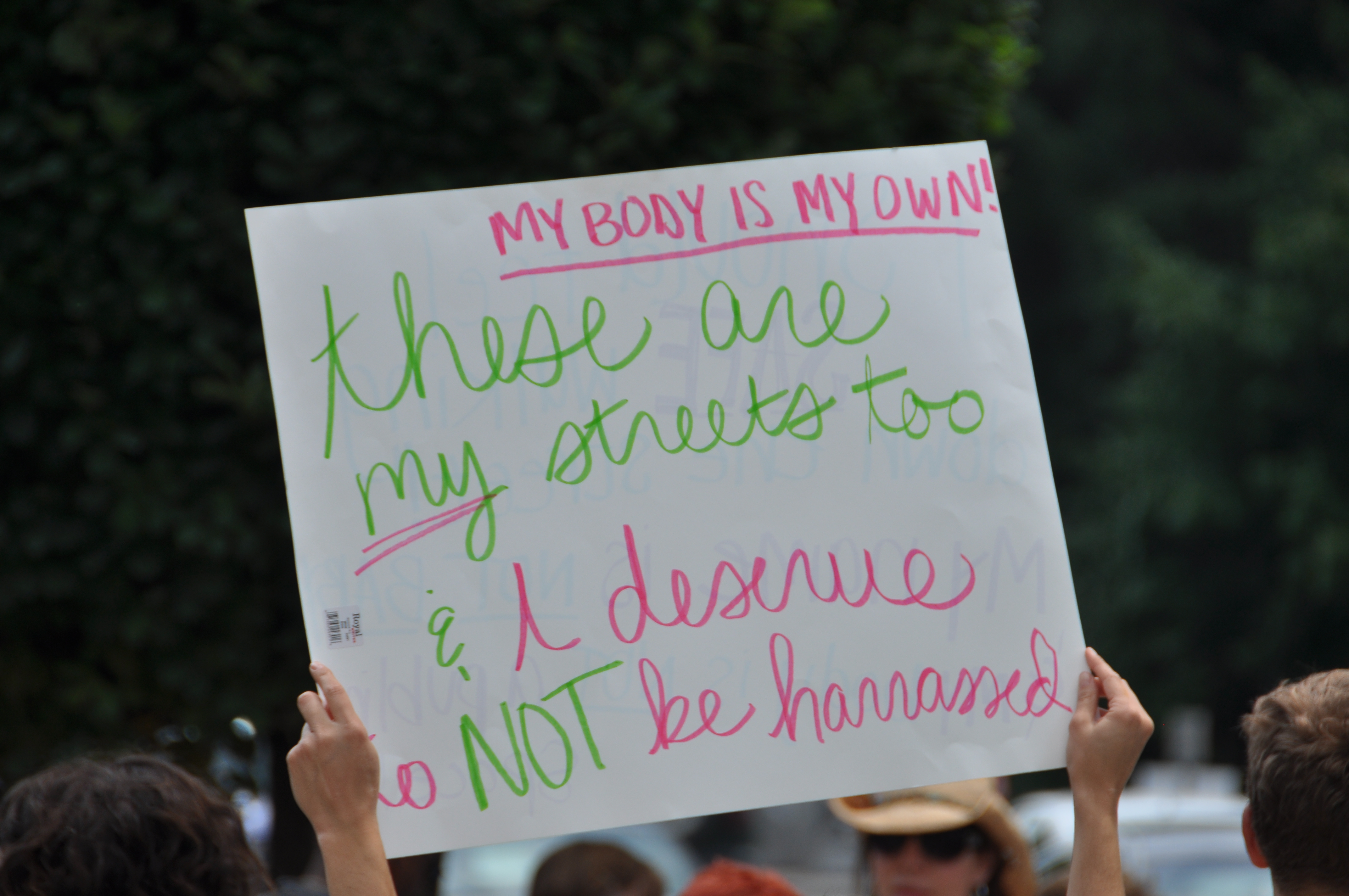
In the typical scenario of street harassment, the perpetrator is a man. As a result, in order to end the occurrence of street harassment, men must be sensitized to this issue. It is imperative that activists make men aware of the impact their words and actions have on female passersby, as well as teach men about women’s inalienable right to walk on the street without being subjected to harassment.

I recently shared this sentiment with a few girlfriends, in context of a conversation about street harassment and activists’ efforts to encourage men not to harass women. “So should chivalry be brought back from the dead? If men begin to act chivalrously to women, won’t that be the end street harassment?” one of my friends asked.

The concept intrigued me, as I had never thought about this link before. Is chivalry the opposite of street harassment? I suppose that it is, in a way. Street harassment is when men use their words and actions to make women uncomfortable and violated; chivalry is when men go out of their way to ensure for women’s safety and do everything for her benefit.

So does that mean anti-street harassment activists should champion a return to chivalry as the solution to the issue? Personally, I don’t think that this is a wise course of action. Chivalry is a relic of the olden days, when women were considered second-class citizens that needed protection by men, the stronger sex. There’s no place for chivalry in modern society, where women are considered men’s equals.

Anyway, in almost every situation in life, I believe in the validity of the golden mean. There’s no need to go to either extreme; the middle road is often the most practical and desirable path. Chivalry is on one side of the spectrum, while rampant street harassment is on the other. The most practical, middle path is all about championing common decency. Women just want men to be polite and to respect their personal space.

Although I can’t speak for all of womankind, I know that I’m not looking to be put on a pedestal and fawned over. I don’t want men to put their coats on puddles in the street for me to cross. I’m just looking to cross the street without getting catcalled.

Talia Weisberg is a Harvard-bound feminist hoping to concentrate in Studies of Women, Gender, and Sexuality. Her work has appeared in over 40 publications and she runs the blog Star of Davida blog (starofdavida.blogspot.com).

Share

Filed Under: correspondents, street harassment

Turkey: Young American Woman Walking

June 14, 2013 By Correspondent

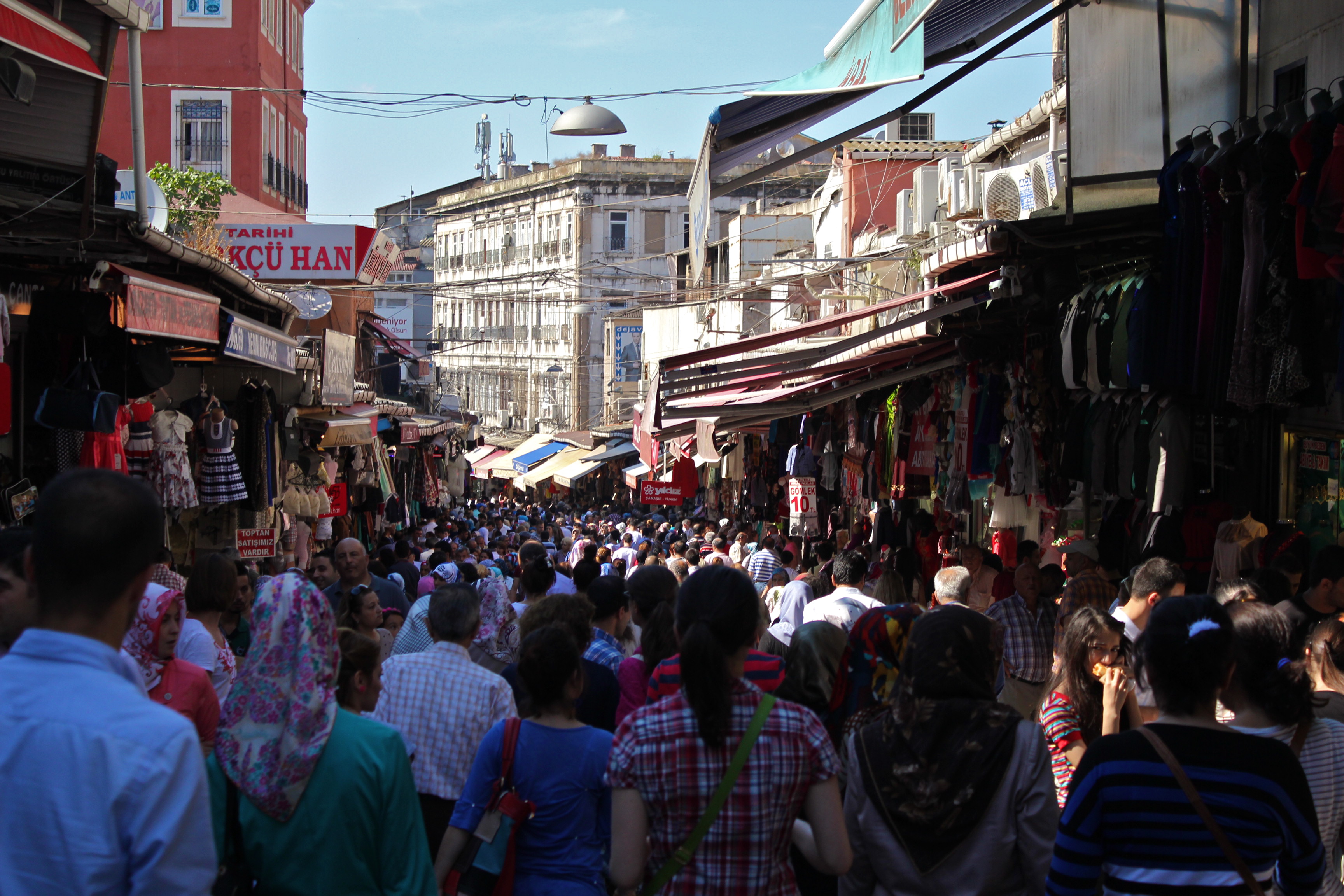
Outside the Grand Bazaar. Photo by Lauren Duhon

By Lauren Duhon, SSH Correspondent

Traveling abroad can be overwhelming. Listening to foreign languages and being unable to decipher any familiar words becomes tiresome. You seek for some sort of familiarity, but you often don’t find it, especially if you are traveling alone.

Walking around by yourself as a young woman is even scarier. This is my situation this summer in Istanbul, Turkey.

I’m living here for several weeks, and I find myself fearing the unknown as I try to navigate the streets to work and other places around the city. The people I sometimes encounter add to the fear. I have had the misfortune of being harassed often since I arrived last week. I feel like a target for harassment with “I’m an American” stamped on my forehead. I receive dubious looks from passersby everywhere I go. Men mumble things to me as they stand there inspecting my every move. I don’t need to know to Turkish to know they are saying something offensive.

I’ve sat on the bus and felt my privacy diminish as men invade my space, inching closer and closer.  I’ve noticed countless guys slow down their pace as they walk by to check me out. In one instance, I even had a guy follow me to work and get in my face trying to grab my attention. The worst was when I heard him say “Masha’Allah” under his breath in a sensual tone, which literally means “God has willed it” or praise to God. Words can’t even begin to explain how wrong that is, and the sad thing is that isn’t the first time I’ve heard that used in a derogatory way.

The unfortunate truth is that more of these instances will occur during my stay. And, being unable to speak Turkish, I’m unable to verbally defend myself. The only thing I know how to say in my defense is “çok ayıp”, which is a way of harshly saying “shame on you” to my understanding. I’m forced to keep walking and feel vulnerable. I shouldn’t feel afraid to ride the bus or walk freely in public places.  I should feel comfortable with exploring a beautiful city that not everyone gets to experience.

As a foreigner, many people have welcomed me into their daily lives and routines, but the harassment I have faced is far from the hospitality I have received.

Lauren Duhon is a student journalist from LSU in Baton Rouge, La. She’s interning at Today’s Zaman this summer.

Share

Filed Under: correspondents, street harassment

USA: Street Harassment and Street Art

June 7, 2013 By Correspondent

By: Erin McKelle, SSH Correspondent

I’ve seen a lot of beautiful, powerful street art that has been created to combat or raise awareness about street harassment. These pieces always really inspire me, because art is one of the most powerful tools we can use to reach and touch others. It’s something that connects each and one of us, because no matter where you come from, how old you are or what your circumstances are in life, everyone can appreciate and find delight in art. They say a picture is worth 1000 words and considering that art can touch you in a lot of ways words sometimes cannot, this couldn’t be truer!

Street art was a tactic utilized by many during this year’s Anti-Street Harassment Week! Hollaback! Melbourne took to the streets to do a chalk walk and fill the streets with messages and images against street harassment. Women in Cities International worked with young men and women to create t-shirts with slogans and art that spoke out against oppression. Hollaback! Sheffield held a “craftivism” session, where they created crafts, such as t-shirts and quilts that had messages or symbols revolving around stopping street harassment. The Southern Arizona Center Against Sexual Assault hosted Art Against Sexual Violence workshops to have citizens create art that centers around anti-violence activism.

In addition to street art that was facilitated during Anti-Street Harassment Week, there are many other street artists and events that take place throughout the year whose message is one against street harassment. One such artist is Tatyana Fazlalizadeh who created posters with messages such as ,“My Name is Not Baby” and “Stop Telling Women to Smile” that she has posted around Washington D.C., Philadelphia, Pennsylvania  and Brooklyn, New York. She’s been strategic in using her art to combat street harassment by hanging her posters in places where she herself has experienced street harassment.

““I’ve put them in places where I’ve personally been harassed, and where I know street harassment is prevalent–which, honestly is everywhere,” she adds. “So, I’ve placed them on mailboxes in downtown business areas, on abandoned buildings in residential areas, on spare walls in tourist areas. Anywhere I can.”

Design Action Collective, an activist group based in Oakland, California, was inspired by Tatyana’s art and on this year’s International Women’s Day created a poster campaign also speaking out against street harassment. “We felt that creating stickers and flyers people could post would help shift the power on our streets. Messages like “I didn’t ask for your opinion on my body” will not necessarily change a harasser’s attitude, but it would show those who experience harassment that we are not alone.”

The anti-street harassment activists in Hollaback! Philly have created a comic book entitled  Hollaback: Red, Yellow, Blue that feature characters who face street harassment. The comic book even highlights male allies, when one of the male characters sees the negative effects of street harassment on women and then tries to decipher how to be an active bystander when he is witness to harassment.

Clearly, art is powerful and reaches people in a way that sometimes words can’t. Street art is reaching victims and harassers in the space where street harassment is happening. This is important and this can be significant in reaching people and helping those who may not understand street harassment understand it. Clearly, the art is simple and easy to understand and makes street harassment education very accessible. Street art is a part of anti-street harassment activism that is making a difference and it’s time that the artists’ voices are heard.

Erin is an e-activist and blogger based in Ohio. You can find more of her work here and here.

Share

Filed Under: correspondents, Resources, street harassment

USA: Shorts Are Not a Welcome Mat for Harassment

June 3, 2013 By Correspondent

By Natasha Vianna, SSH Correspondent

I was just 12 years old when I first experienced street harassment. While on a 2-month trip to Rio de Janeiro, Brasil, I was walking down the street in shorts, a tank top, and flip-flops when I passed by an outdoor bar. The group of men, drinking in the hot sun, all put their beers down and started making comments about my cousins and me.

As a young girl, I knew this was wrong and it made me feel so unsafe and scared. It was as if we were walking by purely for their viewing pleasure. We were simply players on their field and the sport was walking. Like commentators, they began narrating our walk and highlighting every detail. “Look at how sexy she walks.” “Oh my God, what a nice ass.”

And as my heart raced in nervousness, my cousins seemed unbothered. When we turned the corner and could no longer hear the men, I asked her what the hell that was about. My oldest cousin (only 14) looked over and I repeated what those men said to us. She giggled and asked me if that was the first time I heard men catcall. I blushed thinking that I now made myself look immature and said yes. “Oh hunny. That’s normal! Men will say things to you and you just have to stare straight forward and pretend you don’t hear anything. Men like that anyway.”

They all laughed at me and I never talked brought it up again.

When I came back to America, I brought an album of pictures into school from my trip to Rio. As the girls and boys in my class flipped through the album, they began to ask me about the trip. I told them it was great, it was hot, and that the guys were creeps. I remember telling them about the constant comments the older guys would shout at girls and one of the girls looked at me and said, “Well what do you expect? If you’re gonna wear shorts that short, expect to be treated like a slut.”

And so it began.

I got so angry. I tried to explain that people in Brasil dress differently than people in America because it’s extremely hot all year round and having a tan is a universal want. The less clothes you wear, the cooler you feel and the better the tan you will have. Yet, here I was defending the way we dressed instead of talking about the real issue – street harassment. I was being driven into a rant about why I wear what I wear instead of getting closer to feeling sympathy from my peers.

Some girls rolled their eyes and told me that I wore short shorts in Rio for attention and that if I was upset because of the attention, than I should wear pants. It was a frustrating and a very nonsensical conversation that ended sourly.

It didn’t occur to me until a few years ago that the people really don’t understand street harassment and the effect it has on women and on young girls, as I was a very young girl in no way looking for attention from men.

Today, I know that whenever I am harassed, it can quickly escalate into something much worse than just “hey baby”. If I don’t respond in a way that my harasser respects, my face could be the next one to have to defend the stigma of rape and harassment. Why were you dressed that way? Why were you out at that time? Why were you alone?

And as I spend my time defending my choice of clothes, another young girl becomes a victim because she was too hot to wear pants.

Natasha Vianna, a fearless activist and young feminist, is a freelance writer and blogger based out of Boston, MA. Follow her on twitter!

Share

Filed Under: correspondents, street harassment

USA: How we can take back the streets?

May 14, 2013 By Correspondent

By: Erin McKelle, SSH Correspondent

We all know that street harassment is a huge problem and that we must work hard to end it. Street harassment happens to (by conservative estimates) 80% of women and because of how prevalent it is in our society and around the world, it means that the issue is that much more important and that ending it is that much more critical.

So the question is, how can we take back the streets? Not just for ourselves, but for every woman who has ever been harassed? How can we make the streets safe for everyone and create safe public spaces? It’s obviously a daunting task, so how can we go about it?

The answer lies in activism and taking an active role as bystanders. We have to be willing to not let things slide that make us uncomfortable or that are clearly sexist. It’s about going against the grain and letting harassers know that what they are doing isn’t okay.

To give a better and more thorough understanding of this, here is a list of 5 ways that you can take back the streets, whether you are the target of harassment, seeing harassment happen to someone else or are just simply wanting to make a difference.

1)    Stand Up to Harasser’s…if you feel safe, of course. The best way to do this is to use strong and assertive body language and speech. Tell the harasser directly exactly what they did that that was offensive and to stop. Keep your composure and remain cool, calm and confident. If you don’t feel safe enough to directly stand up to your harasser, report your story to Stop Street Harassment and/or Hollaback! to raise awareness and indirectly stick up for yourself. You could also report the incident to the police (although you may or may not have success with this) and take a picture or video of the harasser with your cell phone.

2)    Be an Active Bystander and help others who are experiencing harassment. If you see someone being harassed, step in and try to diffuse the harasser and also look out for the victim. Depending on the circumstance, you could use a distraction to get the harasser’s attention away from harassing (for example, asking them for directions), pull the victim aside and ask if they are okay and need help or even directly call out the harasser in front of a crowd, which will probably shock them and cause them to stop. Just be mindful of safety, the situation and use your judgment to form the best plan of action.

3)    Actively Resist and take action to create social change. Hold a march or rally to protest street harassment, create a short film or vlog on the issue or even leave information about Stop Street Harassment in public restrooms, subway cars or sidewalks. Volunteer or write an op-ed for organizations that work to end street harassment. Do something to get other people’s attention and raise awareness about the issue. Be creative and use your imagination

4)    Be an Advocate and talk to people young and old about street harassment and start conversations with friends and family. By talking about the issue openly, you are creating a safe space for others who have probably experienced the same thing and are simultaneously educating and erasing the stigma around street harassment. You could also act as a mentor to young boys and girls and talk to them about why harassment is not okay and empower young women to stand up for themselves and know that they never deserve or are inviting harassment.  Also, think about starting a town hall at your school or work to get your colleague’s talking about the issue.

5)     Use Social Media: Tweet information, facts and statistics about street harassment on your Twitter or Facebook page. It’s a very easy way to get a lot of people to engage with this issue and to make others aware of what street harassment is and how to end it. If you want to tweet your harassment story, include the hashtag #streetharassment or #hollaback and it will be added to the @Catcalled @ihollaback and/or the @StopStHarassment Twitter thread.

Remember, no action is too big or too small and any and everything you do to take back the streets brings us one step closer to ending street harassment for good.

Erin is an e-activist and blogger based in Ohio. You can find more of her work here and here.

Share

Filed Under: correspondents, Resources, Stories

« Previous Page
Next Page »

Share Your Story

Share your street harassment story for the blog. Donate Now

From the Blog

  • #MeToo 2024 Study Released Today
  • Join International Anti-Street Harassment Week 2022
  • Giving Tuesday – Fund the Hotline
  • Thank You – International Anti-Street Harassment Week 2021
  • Share Your Story – Safecity and Catcalls Collaboration

Buy the Book

  • Contact
  • Events
  • Join Us
  • Donate
  • Facebook
  • Instagram
  • Pinterest
  • Tumblr
  • Twitter
  • YouTube

Copyright © 2026 Stop Street Harassment · Website Design by Sarah Marie Lacy