• About Us
    • What Is Street Harassment?
    • Why Stopping Street Harassment Matters
    • Meet the Team
      • Board of Directors
      • Past Board Members
    • In The Media
  • Our Work
    • National Street Harassment Hotline
    • International Anti-Street Harassment Week
    • Blog Correspondents
      • Past SSH Correspondents
    • Safe Public Spaces Mentoring Program
    • Publications
    • National Studies
    • Campaigns against Companies
    • Washington, D.C. Activism
  • Our Books
  • Donate
  • Store

Stop Street Harassment

Making Public Spaces Safe and Welcoming

  • Facebook
  • Instagram
  • Pinterest
  • Tumblr
  • Twitter
  • YouTube
  • Home
  • Blog
    • Harassment Stories
    • Blog Correspondents
    • Street Respect Stories
  • Help & Advice
    • National Street Harassment Hotline
    • Dealing With Harassers
      • Assertive Responses
      • Reporting Harassers
      • Bystander Responses
      • Creative Responses
    • What to Do Before or After Harassment
    • Street Harassment and the Law
  • Resources
    • Definitions
    • Statistics
    • Articles & Books
    • Anti-Harassment Groups & Campaigns
    • Male Allies
      • Educating Boys & Men
      • How to Talk to Women
      • Bystander Tips
    • Video Clips
    • Images & Flyers
  • Take Community Action
  • Contact

“Machismo, it’s normal here”

July 2, 2015 By Contributor

Today I took a taxi in order to got to my house. The driver was saying weird things, trying to talk with me, but I just answered like nothing was happening. Then I paid him and when I was leaving the taxi he slapped my butt. I tried to hit him but he ran away.

I feel so bad because I couldn’t do anything. The security man where I live took some notes about the taxi so he gave them to me.. But I still can feel pain in my butt. I have been crying. I told my parents and they supported me but I feel so bad, I feel abused and the worst thing is that in my country this is a common problem. Machismo it’s normal here..

– VV

Location: Nicaragua

Share your street harassment story for the blog.
See the book 50 Stories about Stopping Street Harassers for more idea

Share

Filed Under: Stories, street harassment

“What the hell is that?”

July 2, 2015 By Contributor

As a person who is trans feminine I am no stranger to street harassment. More often than not, a lot of harassment comes in the form of dirty looks, whispers, finger pointing, giggles, rude comments, invasive questions about my gender and genitalia, and the daily occurrence of just generally people eying up every part of my body.

At least the direct verbal assaults haven’t been too bad. In the past year I have only been yelled at on 3 occasions by somebody in a passing vehicle. The first time was in a Walmart parking lot as two young men yelled a homophobic slur at me. The second incident occurred on my way to giving a presentation on sexual and gender diversity at the public library, when a few teenagers in a passing vehicle yelled “what the hell is that?” then called me a variety of names (such as “freak”) as they drove off. Most recently, just today (a couple of hours prior to me writing this), I was walking down main street when a gentleman peeked his head out his truck window and told me to “eat **** and die” (as far as I could make it out over other sounds).

It’s awful. It makes me feel vulnerable, scared, hyper vigilant of my surroundings, extremely anxious, depressed, violated, and just generally disrespected.

I really wish people would stand up for me and speak out when these things happened. Instead, people just stand by, watching, staring, sometimes even laughing and/or smiling along with everyone else (which makes it all the more hurtful). Every morning I have to talk myself into even leaving the house.

Do you have any suggestions for dealing with harassers and/or ending street harassment in general?

I wouldn’t even know where to begin. Like with bullying behaviors, I believe the motivations behind street harassment are influenced by such major, ingrained social issues and belief systems that we really need to be discussing the root causes to enact change. Sexism, homophobia, transphobia, racism, ableism, etc. Those are the core issues behind harassment, bullying, intimidation, and imbalanced power dynamics; and they need to be a part of dialogue on the behavioral problems.

– Anonymous

Location: Moose Jaw, Saskatchewan

Share your street harassment story for the blog.
See the book 50 Stories about Stopping Street Harassers for more idea
Share

Filed Under: Stories, street harassment

“I experience an immense amount of street harassment”

July 1, 2015 By Contributor

Every single day of my life I experience intense street harassment. It makes me question why, when I am with a group of just as feminine friends, most of the comments or entitlements to a body are targeted at me. Is it something about me that screams ‘harass me?’ I live every single day wondering, ‘when am I going to get raped?’ Not if. When am I going to get raped. I have had disgusting encounters with men, saying and doing repulsive things to express to me that they want me or are entitled to my body.

Beyond this, I am also a queer woman. I am a very feminine presenting queer woman, and that anomaly brings even more attention my way. Wherever I turn and wherever I go, I experience an immense amount of street harassment. Here is a glimpse:

One night my girlfriend and I were walking through NYC. As we were walking, a man grabbed my hand and stopped us. He wouldn’t let my hand go, and then he proceeded to make a motion with his other hand up and down my body, turn to my girlfriend and say, “Nice work.”

Last week, I was at a social justice forum. I was waiting in the hall for a meeting to finish. A man came up to me and started talking to me, soon enough he was telling me how he can’t stop staring at my body and how incredible my body is. He proceeded to comment on my looks. I removed myself from the situation. He then came up to me later, again, and continued to stare at my body and comment on how ‘fine’ and incredible it is and how he can’t stop thinking about it.

A few days ago I was at a street parade. A man spotted me from somewhat far away and came towards me. He grabbed my hand and said I had to be his girlfriend cause I am so damn fine. I asked him to let go of my hand, and instead he decided it was okay to lay a disgusting, wet kiss on my hand. I immediately walked away. Every time I saw him after, he continued to say nasty things to me.

I’ll leave you with this story, because it is one of the few in which I have gotten an answer to my question: why do you think it is okay to do this to me? Once someone came up behind me and started slowly kissing my neck. I turned around and pushed him off of me and said what the f*ck are you doing? He told me not to be such a bitch. I asked him, “Why do you think it is okay to do this to me?” And he said, “Because you are a f*cking woman.”

I don’t even know what to do anymore.

– Anonymous

Location: Everywhere

Share your street harassment story for the blog.
See the book 50 Stories about Stopping Street Harassers for more idea

Share

Filed Under: Stories, street harassment

USA: “It is an incredibly brave act to speak up”

July 1, 2015 By Correspondent

Michelle Marie Ryder, USA, SSH Blog Correspondent

Like the French poet and playwright, Jean Genet, I have “never been able to find out which way the wind’s blowing by wetting my finger and holding it up” in the air. I can, however, sense a man staring at me from a mile away, his gaze penetrating me like a heat-seeking missile. I can see eyes that see me but don’t know I see them. It’s a kind of extra-sensory perception, both a blessing and a curse, helping me to localize specific threats.

Public spaces should be safe. As safe for women and members of any marginalized group – like visibly trans or queer people – as they are for men. One would think a trip to the market or a coffee break could occur without the risk of humiliation or exposure to violence.

One would think it would be absurd for my good friend to pull over on the side of the road and relieve herself in the bushes to avoid stopping at a gas station. But it’s not and she did and I completely understood why, laughing into the phone, “The gas station, where real men go to buy their groceries and harass women!”

In the 21st century we live in a complex, rapidly changing, technologically advanced world. But still not a safe one. A woman is beaten every nine seconds in the US and sexually assaulted every two minutes. Intimate partner homicide kills three women daily. And male strangers on the street (including those tasked with the duty to “serve and protect”) have the power to call into question our basic safety and humanity. Disturbingly, our culture furnishes us with a long list of instances where the evasion or rejection of a harasser’s advances was met with violence. The Economist reported last year:

“Most women don’t stand up to verbal harassment in the street for fear of exacerbating the situation. This is no idle concern: last month a 27-year-old woman in Detroit was shot and killed after refusing to give a stranger her phone number. More recently, in Queens, a man slashed a woman’s throat with a blade when she rejected his request for a date. Then there’s Elliott Rodger’s shooting rampage last May, famously directed at “every single blonde slut” who rejected him.”

Because it can rob us of the ability to act, street harassment reduces the harassed person to a thing that is human in name only.  The underlying logic driving street harassment – sexual objectification – equates our entire personhood to isolated regions of the body. “Nice tits!” “Dang, THAT ass!!” “Damn girl, you’s a whole chicken! Breasts… legs… thighs… MM MM MMM!”

No wonder cultural critic Susan Sontag was so on point when she argued: “Women are taught to see their bodies in parts and to evaluate each part separately. Breasts, feet, hips, waistline, neck, eyes, nose, complexion, hair, and so on—each in turn is submitted to an anxious, fretful almost despairing scrutiny.”

A society that refuses to see us as whole human beings, in body and mind, will never be a safe one or enlightened one.

But until we can get to the promised land of gender equality – where the weather is perfect, the streets safe and the pay equal! – we are left prioritizing our personal safety above all else, which often means assenting to silence in order to disengage from potential danger. In a world that already questions a woman’s natural right to assert herself, this silencing is deeply disempowering and can overwhelm our capacity for language itself.

In this context, it is an incredibly brave act to speak up. One way to make our voices heard is through the liberatory power of poetry. My own experience has shown me that a poem often starts with a lump in the throat and the determination to say the unsayable, not divine inspiration or lofty ideas.

A poem that shakes me to the core every time I hear it is Calayah Heron’s, “CornerStoreCandy.” In this poem, Heron – who first experienced street harassment at the tender age eight – details in haunting, evocative language the terror of being sexually objectified and preyed upon. Heron’s voice cracks with pain beneath a beautifully measured eloquence. Her words illuminate the deep, unnamed feelings that are routinely suppressed when we bottle up our rage, grief and disbelief.

By putting pen to paper, poets like Heron remind us that even if we can’t speak up in the moment, we can later. It’s never too late to reject the ritual humiliations of living in a world where men have been taught to feel entitled to our time, our bodies, and our lives.

Michelle is a freelance writer and community activist. She has written for Infita7.com, Bluestockings Magazine, and The New Verse News on a range of social justice issues, and shares her poetry regularly at poetrywho.blogspot.com.

Share

Filed Under: correspondents, street harassment

Apply to be a 2015 Safe Public Spaces Mentoring Team or Sponsor a Team!

June 29, 2015 By HKearl

APPLICATIONS NOW AVAILABLE FOR OUR 2015 SAFE PUBLIC SPACES MENTORING PROGRAM! DUE JULY 15, 2015

What is it? Our mentoring program empowers people to consider what efforts might decrease street harassment in their community, and then propose and carry out a project. Across four months, selected activists receive advice, network connections, input, and up to $350 for expenses from SSH.

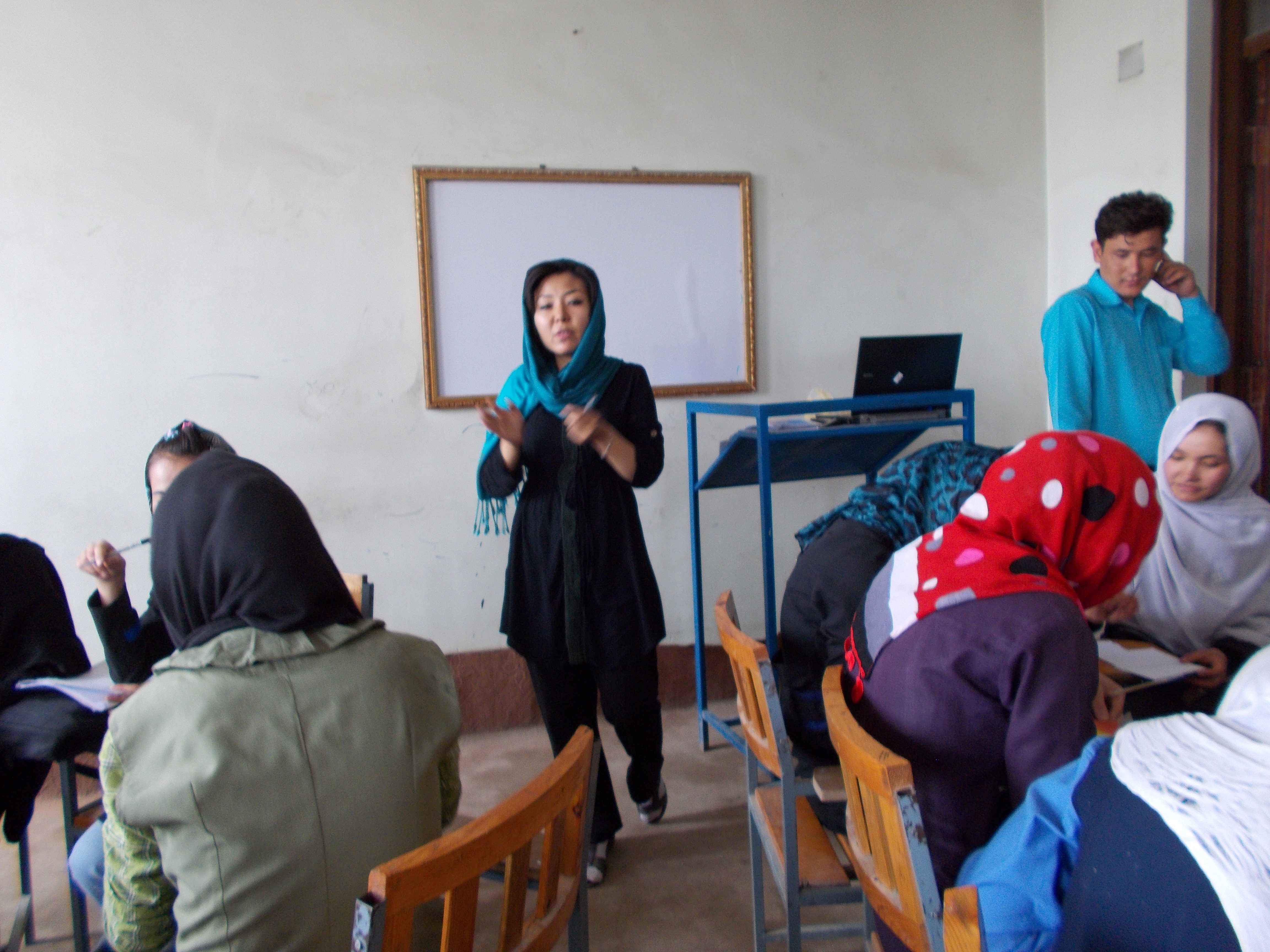
In 2013 and 2014, we worked with a total of nine teams in eight countries (Afghanistan, Cameroon, India, Kenya, Nepal, Nicaragua, Serbia and USA).

Afghanistan
Afghanistan

As three examples:

* In Afghanistan, college students held workshops on street harassment for hundreds of high school students. For all of the students, it was their first time having the space to talk about the issue, share their feelings, and brainstorm change.

* In Serbia, activists surveyed more than 600 college-age youth. Publishing their findings had two immediate impacts. 1) The college psychologists decided to take action around the issue. 2) Members of the Board Commission for Gender Equality of the City of Nis decided to conduct another survey.

* In the USA, the BikeWalkKC group in Kansas City, Missouri, worked with a number of groups to see the passage of an anti-harassment ordinance in their city.

The projects will begin on August 15 and run through December 15.

SPONSOR A TEAM!

Street harassment can cause people to feel unsafe in public spaces and also can make them feel powerless and unsure what they can do. Your sponsorship of $10+ can help give someone their power back and let them take action to address and work to end street harassment.

The amount of money we raise will determine how many teams we can fund this year. 100% of your money goes to the selected teams. Help make a difference today!

Share

Filed Under: SSH programs, street harassment

« Previous Page
Next Page »

Share Your Story

Share your street harassment story for the blog. Donate Now

From the Blog

  • #MeToo 2024 Study Released Today
  • Join International Anti-Street Harassment Week 2022
  • Giving Tuesday – Fund the Hotline
  • Thank You – International Anti-Street Harassment Week 2021
  • Share Your Story – Safecity and Catcalls Collaboration

Buy the Book

Search

Archives

  • September 2024
  • March 2022
  • November 2021
  • April 2021
  • March 2021
  • January 2021
  • April 2020
  • March 2020
  • February 2020
  • December 2019
  • November 2019
  • September 2019
  • August 2019
  • July 2019
  • June 2019
  • May 2019
  • April 2019
  • March 2019
  • February 2019
  • January 2019
  • December 2018
  • November 2018
  • October 2018
  • September 2018
  • August 2018
  • July 2018
  • June 2018
  • May 2018
  • April 2018
  • March 2018
  • February 2018
  • January 2018
  • December 2017
  • November 2017
  • October 2017
  • September 2017
  • August 2017
  • July 2017
  • June 2017
  • May 2017
  • April 2017
  • March 2017
  • February 2017
  • January 2017
  • December 2016
  • November 2016
  • October 2016
  • September 2016
  • August 2016
  • July 2016
  • June 2016
  • May 2016
  • April 2016
  • March 2016
  • February 2016
  • January 2016
  • December 2015
  • November 2015
  • October 2015
  • September 2015
  • August 2015
  • July 2015
  • June 2015
  • May 2015
  • April 2015
  • March 2015
  • February 2015
  • January 2015
  • December 2014
  • November 2014
  • October 2014
  • September 2014
  • August 2014
  • July 2014
  • June 2014
  • May 2014
  • April 2014
  • March 2014
  • February 2014
  • January 2014
  • December 2013
  • November 2013
  • October 2013
  • September 2013
  • August 2013
  • July 2013
  • June 2013
  • May 2013
  • April 2013
  • March 2013
  • February 2013
  • January 2013
  • December 2012
  • November 2012
  • October 2012
  • September 2012
  • August 2012
  • July 2012
  • June 2012
  • May 2012
  • April 2012
  • March 2012
  • February 2012
  • January 2012
  • December 2011
  • November 2011
  • October 2011
  • September 2011
  • August 2011
  • July 2011
  • June 2011
  • May 2011
  • April 2011
  • March 2011
  • February 2011
  • January 2011
  • December 2010
  • November 2010
  • October 2010
  • September 2010
  • August 2010
  • July 2010
  • June 2010
  • May 2010
  • April 2010
  • March 2010
  • February 2010
  • January 2010
  • December 2009
  • November 2009
  • October 2009
  • September 2009
  • August 2009
  • July 2009
  • June 2009
  • May 2009
  • April 2009
  • March 2009
  • February 2009
  • January 2009
  • December 2008
  • November 2008
  • October 2008
  • September 2008
  • August 2008
  • July 2008
  • June 2008
  • May 2008

Comment Policy

SSH will not publish any comment that is offensive or hateful and does not add to a thoughtful discussion of street harassment. Racism, homophobia, transphobia, disabalism, classism, and sexism will not be tolerated. Disclaimer: SSH may use any stories submitted to the blog in future scholarly publications on street harassment.
  • Contact
  • Events
  • Join Us
  • Donate
  • Facebook
  • Instagram
  • Pinterest
  • Tumblr
  • Twitter
  • YouTube

Copyright © 2026 Stop Street Harassment · Website Design by Sarah Marie Lacy