• About Us
    • What Is Street Harassment?
    • Why Stopping Street Harassment Matters
    • Meet the Team
      • Board of Directors
      • Past Board Members
    • In The Media
  • Our Work
    • National Street Harassment Hotline
    • International Anti-Street Harassment Week
    • Blog Correspondents
      • Past SSH Correspondents
    • Safe Public Spaces Mentoring Program
    • Publications
    • National Studies
    • Campaigns against Companies
    • Washington, D.C. Activism
  • Our Books
  • Donate
  • Store

Stop Street Harassment

Making Public Spaces Safe and Welcoming

  • Facebook
  • Instagram
  • Pinterest
  • Tumblr
  • Twitter
  • YouTube
  • Home
  • Blog
    • Harassment Stories
    • Blog Correspondents
    • Street Respect Stories
  • Help & Advice
    • National Street Harassment Hotline
    • Dealing With Harassers
      • Assertive Responses
      • Reporting Harassers
      • Bystander Responses
      • Creative Responses
    • What to Do Before or After Harassment
    • Street Harassment and the Law
  • Resources
    • Definitions
    • Statistics
    • Articles & Books
    • Anti-Harassment Groups & Campaigns
    • Male Allies
      • Educating Boys & Men
      • How to Talk to Women
      • Bystander Tips
    • Video Clips
    • Images & Flyers
  • Take Community Action
  • Contact

Charleston Shooting, Race, and Sexual Violence

June 18, 2015 By HKearl

Yesterday, a white supremacist terrorist went to a Black church in Charleston and murdered nine people, six women and three men (read about them. My thoughts go out to their loved ones). This level of premeditated violence and hate is hard to comprehend, particularly at a place that is supposed to be peaceful and safe.

Survivors report he said, “I have to do it. You rape our women and you’re taking over our country. And you have to go.”

I keep thinking about that. And how wrong he is. Black women are as valuable as white women and women of any other race. There is no “our” and “their.” White men are more likely to rape white women overall than are Black men. Black people are certainly not “taking over” the country. I know I shouldn’t try to find logic in the thought process of someone like him, but, I can’t help but also ask, why kill mostly women if that is his line of reasoning? And at a church?

His words bring up longstanding problems in our society: the perceived value of white women’s bodies over Black women’s and white men justifying their violence against Black people over (usually just lip-service instead of actual) concern for white women.

Dr. Estelle Freedman’s book Redefining Rape: Sexual Violence in the Era of Suffrage and Segregation as well as Dr. Danielle McGuire’s book At the Dark End of the Street: Black Women, Rape, and Resistance–A New History of the Civil Rights Movement from Rosa Parks to the Rise of Black Power are good resources for learning about this in the late 1800s and 1900s in the USA. They show how our country, our legal system is built on the oppression of all women and men of color.

We can see that in how laws and the justice system today protect white men (especially wealthy and heterosexual) at the expense of everyone else. That has to change.

I also want to share what Courtney E. Martin, a writer and thinker whom I greatly admire, shared today on her Facebook page:

“I’m thinking about how, yes, the shooter is probably mentally ill, but how our racist society is, too, and how we can’t pretend he is an anomaly. He is the son of white people, the son of America, the son of our education system and our culture and our history. We made him. White Americans, especially, made him. So how can we stop making him? How can we take responsibility for the history and the present? And what is my role in that unmaking and that claiming of responsibility?“

As a white person too, I think about that. What can I do to challenge racism and to make it so that public spaces, churches, schools, and workplaces are safe and equitable for all? I implore any white people reading this to think about it too (if you aren’t already). We have to help make the change.




Share

Filed Under: News stories, race

Nicaragua Street Harassment Report Release

June 18, 2015 By HKearl

Nicaragua Team Report Release
Click on the image to access the full report.

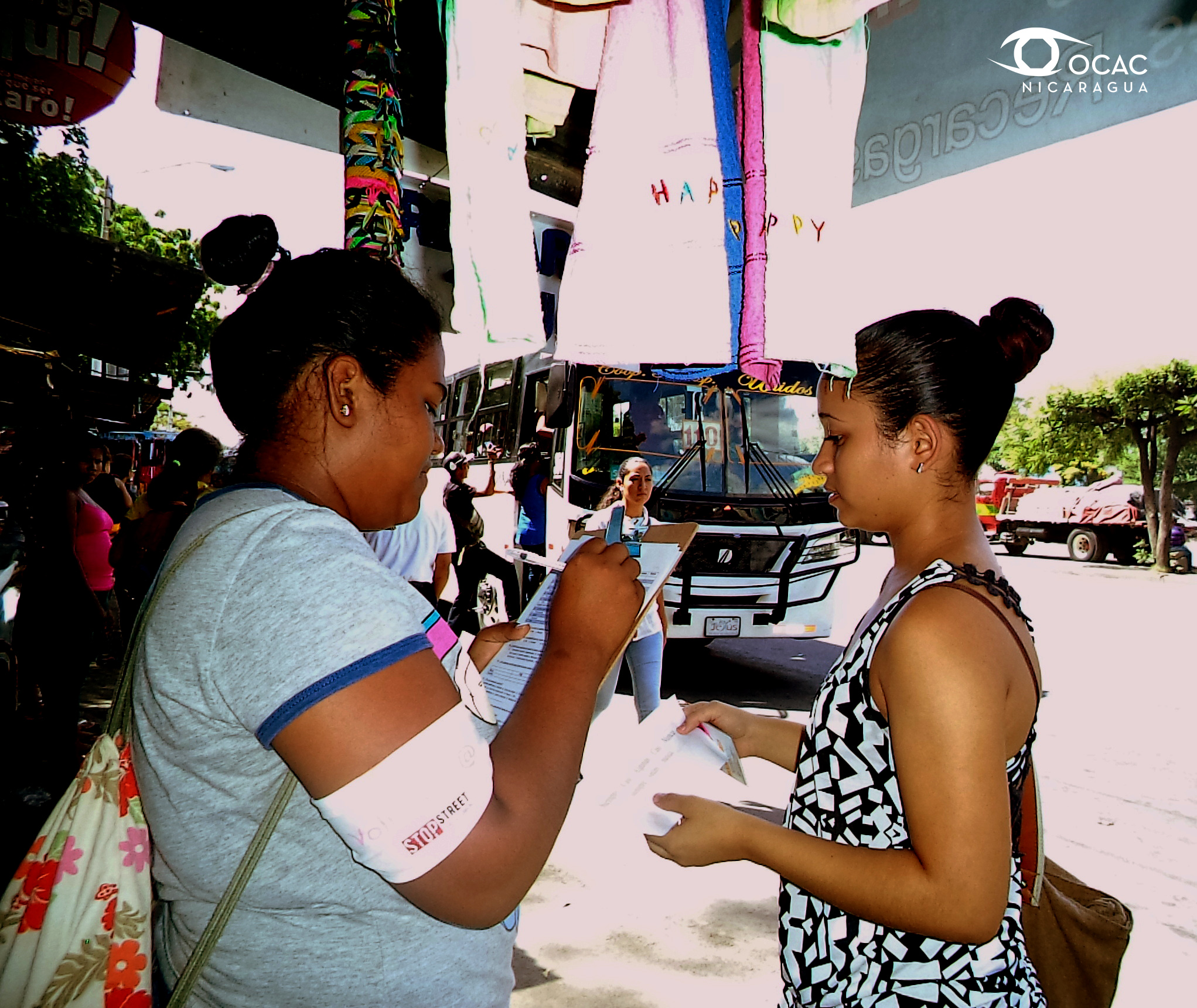
Our 2014 Safe Public Spaces Mentoring Team Observatorio Contra el Acoso Callejero, Nicaragua, surveyed 900 women about street harassment in the city of Managua in the last months of 2014. More than fifteen volunteers interviewed women ages 14-55 at bus stops across the city.

ocacencuesta15

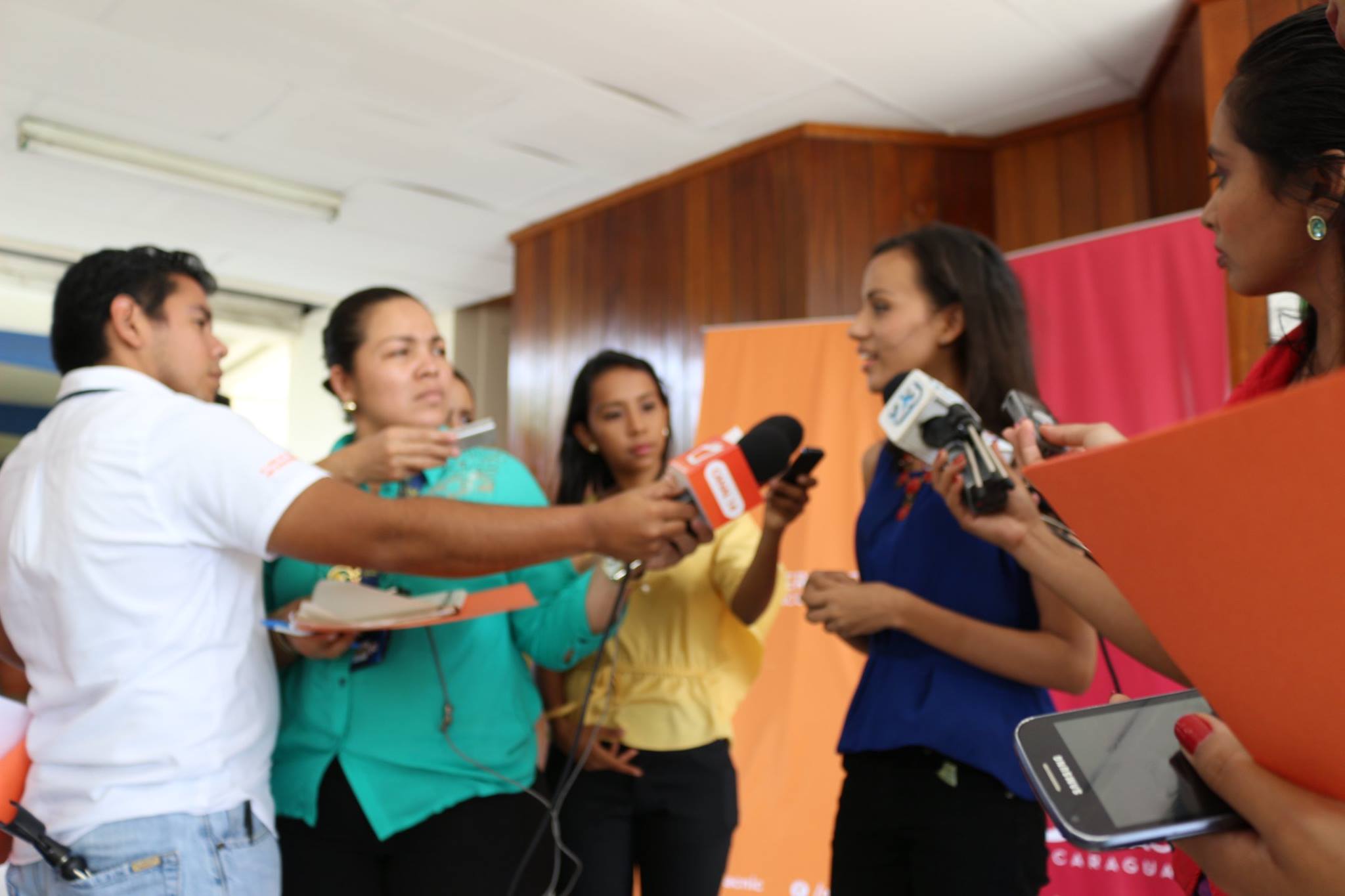
You can read about their preliminary results here. Today they are officially releasing the full report at a big event, with a press conference.

Congratulations to them and many thanks for their dedication to bringing attention to this issue in their country!

UPDATED: Here are photos and some of the media coverage!

6.18.15 Nicaragua Team REport Press Event 26.18.15 Nicaragua Team REport Press Event 36.18.15 Nicaragua Team REport Press Event 4

Share

Filed Under: SSH programs, street harassment

Andrea Farrington, Murdered for Reporting Sexual Harassment

June 15, 2015 By HKearl

Andrea Farrington, image via Liberals Unite

Over the weekend, I was so saddened and outraged to read that Alexander Kozak, a security guard at a mall in Iowa, point blank shot a 20-year-old young woman named Andrea Farrington because she (and other women) had reported him for sexual harassment. He finally lost his job over it, and in retaliation, he murdered her.

Liberals Unite has this on this site today, which is so true:

“The other aspect, which seems to be somewhat overlooked by articles in mainstream and social media, is that this young woman, barely out of her teens, was murdered horribly and in cold blood for reporting sexual harassment.

She reported this man again and again before he was finally let go, and then he killed her.

So the message that’s being sent out to women of all ages experiencing sexual harassment is: Don’t ruffle the feathers. Don’t report harassment. If you do, good luck getting anyone to take action. Good luck not being accused of ‘asking for it.’

If your complaint causes the job termination of someone, take cover, because that person might seek revenge and kill you.

So just quit your job quietly, and go work somewhere else. Leave the harasser, who will keep his job, to continue harassing others – that is, unless he gets arrested for tracking you down and killing you–after all, you did reject him.”

There was a vigil to honor her yesterday. Our thoughts go out to her family and friends. What a senseless and horrific loss.

You can help her family via: http://www.gofundme.com/wx2rxg

Share

Filed Under: News stories

France/Brazil: “I Still Feel the Same Terror”

June 15, 2015 By Correspondent

Luiza Pougy Magalhaes, France/Brazil, SSH Blog Correspondent

The very first time I witnessed street harassment, I was very young. I was so young that I didn’t really understand what a passing taxi driver meant when he called my mom a “yummy mommy”, when he looked right at her and said, “Oh mother may I.”

He was stuck in traffic right by my house; his collar opened all the way down to his chest, his arms out of the open window of his taxi. We walked by, completely unaware of his existence. Upon hearing his words, my mom stiffened, her back straightened, she held my hand tighter, and pulled me closer. I remember how I could feel her discomfort, and how I felt uncomfortable myself. I couldn’t understand why he had chosen to direct those words at her. I remember I wanted to protect her. I hated that man and I wished no one would ever speak to my mother like this again.

Today, I can still feel the terror I felt when he stared as we walked away. Now I know that she must have shared that terror. Probably more so than that; she must have felt violated and disgusted, shameful even – ashamed to be spoken like this in front of her daughter.

While I recall every detail of this particular scene, I doubt my mother remembers it at all. When street harassment becomes a daily struggle, we tend to block it out, rather than have it engraved on our memories. Nonetheless, I have a few stories worth sharing.

A couple of years ago, while wandering the streets of Brazil, I got lost. Knowing Brazilian men, I was very careful when asking for directions. I approached a couple of women, but had no luck. I saw a man; middle-aged, a clean-shaved face, impeccable posture, well-fitted suit, and glasses. Surely a well-educated man like himself would do no harm. I walked towards him with a shy smile. Before I could even say anything, he started calling me things; made comments about my legs, said he would pay money for me. Shocked and terrified, I left; mouth wide-open.

That day I learned that street harassers are not exclusive to certain demographics.

A few years after, I walked by a man with a toddler. The little boy lovingly leaned against the man’s chest. Just as they left my eye-sight I heard a whistle and a malicious comment. I turned around. The man was grinning and nodding, his boy looking at me, wide-eyed. Usually, street harassment makes me angry. Then, I just felt sad. Sad thinking about how this boy would be raised, what misogynistic values would be passed on to him.

Sad to realize that there was still a long way to fix society.

Living in France, street harassment also occurs regularly – once, at a supermarket I go to with frequency. The cashier’s line was long and I got distracted on my phone. The sound of a quiet giggle in my ear woke me from my trance. I turned around. There was a guy behind me, doing obscene, sexual gestures. I pushed him off, screamed at him and his friends – his audience. What really shocked me was that none of the cashiers, security, or general staff – who knew me well, I must say – did anything about it. They just looked at me; frowned faces at the foreigner girl who was making a scene.

That day I realized that people don’t think street harassment is a big deal, that street harassment is not taken seriously.

Months later, walking by my university, also in France, I crossed paths with a student; his gaze fixed on me. He licked his lips, hissed, and growled when we locked eye-contact. I called him a creeper and continued my way. He freaked out; started yelling that I “better watch out and have some f***ing respect, bitch.” In disbelief, ashamed, and also terrified, I picked up the pace and pretended like I wasn’t the one he was yelling at.

That day I realized that harassers see their victims with such tremendous inferiority that just the thought that they could stand up for their selves, pushes them over the edge.

You would think that years in the receiving end would have made street harassment any easier to deal with. However, I still feel the same terror that little girl felt when her mom was catcalled by that taxi driver. I feel my back straighten and stiffen just like hers did. I feel uncomfortable, violated, and ashamed, just like she must have felt. After all this time, I still don’t understand why the taxi driver stared, why the man commented, the father whistled, the boy hissed, the guy gestured. And to be honest, I don’t think I ever will.

Luiza is a 20-year-old from Brazil who considers herself a citizen of the world. As a teenager she moved to Singapore and now she studies International Business in France.

Share

Filed Under: correspondents, Stories, street harassment

UK: Wouldn’t It Be Nice…

June 15, 2015 By Correspondent

Ruth Mair, UK, SSH Blog Correspondent

I sometimes find myself wondering what kind of a person I would be, or how my view of the world would change, if I wasn’t always on my guard with strangers. I don’t mean this in a Hollywood rom-com dramatic sense of “I can’t let anyone in”, which is an entirely separate problem for some of us.

I mean it in the sense of how I actively avoid making eye contact with men that I don’t know in the street in case they interpret it as me giving them the “come-on.” I mean it in the sense that if I see a cute dog I smile at the dog, not the owner, in case they think the same thing (or in case they think that I am coming on to them, no buddy, I just want to pet your dog). I also mean it in the sense that if a stranger strikes up a conversation with me, in ANY situation, I am almost instantly put on my guard. Particularly if they are of the opposite sex.

I’m not talking about situations when I clearly do not want to be spoken to (there are some helpful diagrams on the internet about when to speak to strangers especially men speaking to ladies, addressing the culture of interrupting girls reading books or working in coffee shops to try and casually chat), I’m talking about EVERYTHING.

When it was the beginning of the second year of my master’s program, I had to give myself internal pep-talks about actively making an effort to converse with new people at uni, particularly if they spoke to me, because I have to try so hard to fight the assumption that strangers talking to me = bad, danger, harassment and any other number of alarm bells.

For me, this is inherently connected to the experiences I have had of street harassment, ranging from being under 16 and still in my school uniform and having adult men ask for my number on the bus (simultaneously having trapped me in to my seat), to me taking an earphone out whilst running because I thought someone was asking for directions (d’oh, silly naive me!) and receiving unsolicited sexual advances. These experiences have certainly changed my approach to the world, and I would be surprised if there were not others that feel the same.

See, I wonder, if there were no street harassment, would we be so guarded?

I fantasise about being perfectly happy to stop to give someone directions, tell them the time, even smile at them because it’s a sunny day and their dog looks really happy, without having to do the threat assessment of which you are probably familiar: deciding if you could out run them, deciding if they are stronger than you, and thinking about what pithy remark to spit out if they say something inappropriate.

In that world we might make friends more easily, without assuming that if a stranger on the street is talking to you they have an agenda or pose a threat, and without having these calculations leech away at your confidence in situations where you ARE actively socialising, and aiming to meet new people. I wonder if, in the same vein, I would look forward to summer more without having to worry about dressing in a way that won’t draw attention or if my life would be different if I didn’t have to psych myself up to go out of the house wearing lipstick.

Everyone has these different calculations to make, and although they are relatively minor for me as a cis-gender, white female, such calculations are still symptoms of the bigger problem, which is that on the streets, interaction with everyone else is dominated by a culture of unsolicited commentary which can come from any direction, and can range in threat-level.

I long for a world where such threat assessment before we walk out the door are largely unnecessary. However, whilst musing about this thought, I was reminded of an episode of the Simpsons’ Tree-House of Horror, where Lisa wishes for world peace, everyone throws away their nukes, and then aliens invade and they can’t defend themselves. And I do wonder, if were we not on our guards constantly, and did not have to contend with street harassment in all its various forms, there wouldn’t be another threat to calculate for, and defend ourselves from.

It is generally agreed that street harassment is but one symptom of patriarchal society so I am inclined to believe that if it were to be removed, something else would pop up in its place. But, as a result yet again of my own experiences of harassment, am I being cynical? Or is this just my own internalisation of harassers the world over, calling people like me feminazis?

It is this second guessing of oneself that remains, in my opinion, one of the most poisonous parts of street harassment and one of the reasons why even the most confident among us are left with a bad taste in their mouths when they are harassed.

The next step, and one which I have not yet been able to come up with a solution to although I think that many of us have been trying, is how to solve this problem.

Ruth is a human rights MA student finishing her MA dissertation on the legal and normative rights of terror suspects in the UK (spoiler alert: rights are being violated). She also plays bass in a band called Kinshot, sews as often as she can, and spends time getting annoyed at the cat sleeping on top of her computer.

Share

Filed Under: correspondents, street harassment

« Previous Page
Next Page »

Share Your Story

Share your street harassment story for the blog. Donate Now

From the Blog

  • #MeToo 2024 Study Released Today
  • Join International Anti-Street Harassment Week 2022
  • Giving Tuesday – Fund the Hotline
  • Thank You – International Anti-Street Harassment Week 2021
  • Share Your Story – Safecity and Catcalls Collaboration

Buy the Book

Search

Archives

  • September 2024
  • March 2022
  • November 2021
  • April 2021
  • March 2021
  • January 2021
  • April 2020
  • March 2020
  • February 2020
  • December 2019
  • November 2019
  • September 2019
  • August 2019
  • July 2019
  • June 2019
  • May 2019
  • April 2019
  • March 2019
  • February 2019
  • January 2019
  • December 2018
  • November 2018
  • October 2018
  • September 2018
  • August 2018
  • July 2018
  • June 2018
  • May 2018
  • April 2018
  • March 2018
  • February 2018
  • January 2018
  • December 2017
  • November 2017
  • October 2017
  • September 2017
  • August 2017
  • July 2017
  • June 2017
  • May 2017
  • April 2017
  • March 2017
  • February 2017
  • January 2017
  • December 2016
  • November 2016
  • October 2016
  • September 2016
  • August 2016
  • July 2016
  • June 2016
  • May 2016
  • April 2016
  • March 2016
  • February 2016
  • January 2016
  • December 2015
  • November 2015
  • October 2015
  • September 2015
  • August 2015
  • July 2015
  • June 2015
  • May 2015
  • April 2015
  • March 2015
  • February 2015
  • January 2015
  • December 2014
  • November 2014
  • October 2014
  • September 2014
  • August 2014
  • July 2014
  • June 2014
  • May 2014
  • April 2014
  • March 2014
  • February 2014
  • January 2014
  • December 2013
  • November 2013
  • October 2013
  • September 2013
  • August 2013
  • July 2013
  • June 2013
  • May 2013
  • April 2013
  • March 2013
  • February 2013
  • January 2013
  • December 2012
  • November 2012
  • October 2012
  • September 2012
  • August 2012
  • July 2012
  • June 2012
  • May 2012
  • April 2012
  • March 2012
  • February 2012
  • January 2012
  • December 2011
  • November 2011
  • October 2011
  • September 2011
  • August 2011
  • July 2011
  • June 2011
  • May 2011
  • April 2011
  • March 2011
  • February 2011
  • January 2011
  • December 2010
  • November 2010
  • October 2010
  • September 2010
  • August 2010
  • July 2010
  • June 2010
  • May 2010
  • April 2010
  • March 2010
  • February 2010
  • January 2010
  • December 2009
  • November 2009
  • October 2009
  • September 2009
  • August 2009
  • July 2009
  • June 2009
  • May 2009
  • April 2009
  • March 2009
  • February 2009
  • January 2009
  • December 2008
  • November 2008
  • October 2008
  • September 2008
  • August 2008
  • July 2008
  • June 2008
  • May 2008

Comment Policy

SSH will not publish any comment that is offensive or hateful and does not add to a thoughtful discussion of street harassment. Racism, homophobia, transphobia, disabalism, classism, and sexism will not be tolerated. Disclaimer: SSH may use any stories submitted to the blog in future scholarly publications on street harassment.
  • Contact
  • Events
  • Join Us
  • Donate
  • Facebook
  • Instagram
  • Pinterest
  • Tumblr
  • Twitter
  • YouTube

Copyright © 2026 Stop Street Harassment · Website Design by Sarah Marie Lacy