• About Us
    • What Is Street Harassment?
    • Why Stopping Street Harassment Matters
    • Meet the Team
      • Board of Directors
      • Past Board Members
    • In The Media
  • Our Work
    • National Street Harassment Hotline
    • International Anti-Street Harassment Week
    • Blog Correspondents
      • Past SSH Correspondents
    • Safe Public Spaces Mentoring Program
    • Publications
    • National Studies
    • Campaigns against Companies
    • Washington, D.C. Activism
  • Our Books
  • Donate
  • Store

Stop Street Harassment

Making Public Spaces Safe and Welcoming

  • Facebook
  • Instagram
  • Pinterest
  • Tumblr
  • Twitter
  • YouTube
  • Home
  • Blog
    • Harassment Stories
    • Blog Correspondents
    • Street Respect Stories
  • Help & Advice
    • National Street Harassment Hotline
    • Dealing With Harassers
      • Assertive Responses
      • Reporting Harassers
      • Bystander Responses
      • Creative Responses
    • What to Do Before or After Harassment
    • Street Harassment and the Law
  • Resources
    • Definitions
    • Statistics
    • Articles & Books
    • Anti-Harassment Groups & Campaigns
    • Male Allies
      • Educating Boys & Men
      • How to Talk to Women
      • Bystander Tips
    • Video Clips
    • Images & Flyers
  • Take Community Action
  • Contact

#EndSHWeek Wrap-Up: Day 4

April 15, 2015 By HKearl

No catcalling sign in Philadelphia

There were numerous events today, from Colombia to France, from Germany to the USA. See the updated photo album for some of the photos. Here is our media coverage (43 media hits) so far.

Highlight:

A big highlight was that Fiona Patten, a member of Parliament in Victoria, Australia, raised the issue of street harassment in Parliament. She was inspired to do so after the tragic murder of a woman in a park after which the Police said: “I suggest to people, particularly females, [that] they shouldn’t be alone in parks.”

Virtual Events:

Everyday Feminism held a tweet chat about community solutions to street harassment.

Articles:

* There were numerous articles about the no catcalling street signs created by Feminist Apparel and Pussy Division for NYC and Philadelphia

* “Don’t ignore the street harassment stories of young girls” by a 17-year-old in California, Chloe Parker

* “How to deal with street harassment on campus?” by our online media manager Britnae

* “Dignified Men” by Hadisa Osmani, cross-posted from Dukhtarane Rabia (Daughters of Rabia): A blog on social justice in Afghanistan

* There was media coverage of Rape Crisis South London’s campaign ‘This Doesn’t Mean Yes’: Anti-rape activists campaign against blaming victims. 200 people participated in the photo shoot on April 11.

 Video:

“These teens in Fort Walton Beach, Fla. are not happy about the street harassment in the community – nor are they proud about their participation in these behaviors.” Read the accompanying Women’s eNews article.

Share

Filed Under: anti-street harassment week, street harassment

Australian Member of Parliament Speaks about Street Harassment

April 15, 2015 By HKearl

Fiona Patten, a member of Parliament in Victoria, Australia, raised the issue of street harassment in Parliament for International Anti-Street Harassment Week. She was inspired to do so after the tragic murder of a woman in a park after which the Police said: “I suggest to people, particularly females, [that] they shouldn’t be alone in parks.”

We are so pleased that she did this. Many thanks to her staff member Nevena Spirovska for her work on it, too.

Share

Filed Under: anti-street harassment week, street harassment

Afghanistan: Dignified Men

April 15, 2015 By Contributor

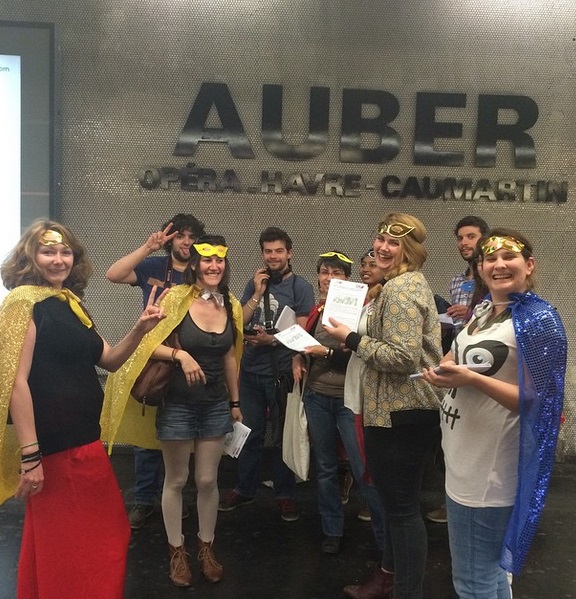
They say women should remain silent to remain dignified. Is there anything that could take a man’s dignity and respect away?

Guest Blog Post for International Anti-Street Harassment Week 2015

A few days ago, I watched a man, who was about 20 years old, pinch a 10-year old girl’s bottom in public. When I defended her, the man looked at me and said, “Shut up, bitch.”

One fight got loud and passersby noticed, but what was surprising was that they were looking at me and the young girl with hatred and disbelief. As usual, in their eyes, it was the women who were at fault, not the perpetrator of this ugly act. Every day, through their words and actions, people tell women to be ashamed of themselves while their violators walk away with pride. Women must keep silent to remain dignified. To be respected, we must be silent. Is there anything that could take a man’s dignity and respect way?

When we read news, we all speak against the sexual assault of young girls, but is there a big difference between the violation of girls’ and women’s bodies in their homes versus when it is done in public on a daily basis? What makes one worthy of our condemnation and another our protection? Isn’t it that we tell women who have been raped to be silent as we do with women who are harassed? The harassment of women in public spaces is a manifestation of rape culture and a serious issue. It is true that street harassment is much more common, but this is no reason to think it is “natural” and “justified.” To end street harassment, we need to support women who are harassed- not silence them or shame them.

Our streets are not safe for women and this is a problem. It prevents girls from going to school, women from going to stores, and all from being independent human beings. Street harassment prevents women from working and becoming economically self-reliant. But most importantly, it makes women’s bodies public property- not their own. If something is deemed public, it will be abused and raped. We must fight this mindset. We must fight street harassment so that women are the owners of their own bodies and the sole decision makers for them. We must realize that existing in public does not make women’s bodies’ public property. Just like men, women can exist in public spaces while owning their bodies. We must recognize that women own their bodies and no one has the right to touch their bodies or talk about it without their permission.

By Hadisa Osmani, Dukhtarane Rabia (Daughters of Rabia): A blog on social justice in Afghanistan

Poster text: They say women should remain silent to remain dignified. Is there anything that could take a man’s dignity and respect away?

Share

Filed Under: anti-street harassment week Tagged With: #EndSHWeek, Afghanistan, Daughters of Rabia, Dukhtarane Rabia

How To Deal With Street Harassment On Campus?

April 15, 2015 By BPurdy

I’ve been experiencing street harassment since the age of twelve, but when I started college it suddenly became something that happened to me several times a week – even though my college was nearly 75% female. I was harassed both on-campus and in neighboring residential areas. I was harassed walking to and from class, the library, friends apartments, downtown on a Friday night…while it became a “normal” thing that I learned to more or less deal with, it never stopped making me feel uncomfortable.

One incident stands out in particular. It was a warm night, still early in the fall semester of my senior year. It was 10pm on a Monday night, and I was walking back from an on-campus club meeting to my off-campus apartment.

“Hey! Hey you!”

I ignored the calls, assuming they weren’t for me. Though there were few people around, I was on a well-lit main path on campus where I had always felt safe.

“Girl with the ponytail!”

Ok, that was definitely meant for me. Someone was yelling at me. Someone I didn’t know. I started to walk a little faster.

“Hey! Girls shouldn’t be walking out here alone. Where are you going? Let me walk you to your apartment. Where you live? I could walk you right up to your door, you know.”

He was following me. I was walking straight back to my empty apartment, and this stranger was following me. My thoughts started racing, and I pulled out my cell phone.

“Why you grabbing your phone?” my harasser yelled, now angry. “Who you calling? Girl, this is a private party!”

My heart immediately started pounding, my vision went blurry with fear. I made a split-second decision to run into the nearest academic building, where I hide in furthest stall of the women’s bathroom, feet up on the toilet seat, praying he wouldn’t follow me in.

I called my boyfriend. Luckily he was nearby and able to run over and get me. I went back to his apartment rather than mine, and once my hands and voice stopped shaking I decided to call campus police.

“I’m fine now,” I told the dispatcher when she picked up, giving the best description of the event that I could. “But I wanted to let you know that a strange man just tried to follow me back from my apartment, and I’m worried he might do the same thing to someone else tonight.”

“Well, you should have called while it was happening,” she replied curtly. “There’s nothing we can do now.”

I thanked her, for some reason, and numbly hung up, feeling a dull anger inside of me. Call while it was happening? I tried. It had only made the situation worse.

While the police dispatcher’s reply made sense, logically, it also displayed a basic misunderstanding of how to deal with victims of sexual harassment. I had been followed and threatened. I had been forced to hide in a bathroom out of fear. And when, out of concern for my fellow classmates, I reported it to the police, I was basically scolded for not acting sooner. I felt like I had done something wrong, rather than having been wronged. And for the rest of the year I refused to walk back from nighttime club meetings without my boyfriend accompanying me.

Colleges, we need a little help here. What do we, as students, do when we are threatened on campus? When our activities and movements are restricted due to gender-based harassment? When we begin to fear walking on our own campuses? When we are made to feel ashamed for having been harassed in the first place?

College is a time when we learn to embrace our own mobility and freedom. Harassment and the threat of sexual assault more than puts a damper on that, but there doesn’t seem to be much we can do. So colleges, I’m imploring you: help us learn what to report and how to report. Show us you’ll listen, and show us you’ll care. Remember back to the time when you were first learning to be free, yet constantly being told by society to be scared, and choose compassion rather than curtness. Teach us to be safe; but more importantly, teach us all not to put others in danger.

Britnae Purdy, Anti-Street Harassment Week Online Manager

Share

Filed Under: anti-street harassment week, Stories Tagged With: #EndSHWeek, college, EndSH, police, reporting, SAAM, stalking, universities

Don’t Ignore the Harassment Stories of Young Girls

April 15, 2015 By Contributor

Guest Blog Post for International Anti-Street Harassment Week 2015

When I was 12, I faced my first street harasser. This is never easy for anyone to go through, let alone a young girl. Women and even girls 10 and younger can, have, and likely will face street harassment. But harassment has always been dealt with as a “term of endearment,” or just a fact of life when it really isn’t. According to Stop Street Harassment, 99% of women have been or will be harassed, and harassment can be anything from leering to physical touching. Is this really something we want 12 year old girls to face regularly?

This is an epidemic that we blindly pass off. Some of these girls are so young, they haven’t even entered middle school. I know all of this personally through the hashtag I started on Instagram, #WhatMySHSaid, where people from all over the world tell my followers and me the horrible experiences they’ve had with street harassers. The average age is twelve and the average reaction is disbelief, but with the topic comes horrible responses as well. I have heard people defending these pedophiles who creep on these girls, or say that street harassment is because of what the girl was wearing.

We live in a culture of blaming the victims, and by saying a twelve-year-old is asking to be followed as she walks home from school is a testament to this. We as a society can and should change this culture that we promote and live in. It should not be up to the victims to change their lives and patterns to make harassers comfortable. This is not a problem that should be ignored. Women and girls should not have to be confined in their homes just so they avoid getting harassed because that is not fair, and that is what’s being promoted by blaming the victims of street harassment.

If you’re being harassed, please let someone you trust know about it. Report it on websites and apps such as Hollaback!, and please be careful. Know that there is no right or wrong way to deal with harassment. Some women yell at the person who harassed them, some ignore them entirely. It’s truly up to you and whatever makes you feel comfortable.

The epidemic of street harassment is moving quickly towards underage girls and we should not be ignoring their stories and what is happening to them. As someone who is now seventeen, I can tell you personally that I have been harassed ever since I was twelve, even if I was wearing a hoodie and jeans, and even when I was in my own driveway. Harassment is so very real, and more and more girls and women are dealing with it everyday. Now is not the time to ignore it, but now is the time to fight it.

Chloe Parker, from @rebel.grrrl

Share

Filed Under: anti-street harassment week, Stories, street harassment Tagged With: @rebel.grrrl, #EndSHWeek, #WhatMySHSaid, adolescents, EndSH, hollaback, sexualization

« Previous Page
Next Page »

Share Your Story

Share your street harassment story for the blog. Donate Now

From the Blog

  • #MeToo 2024 Study Released Today
  • Join International Anti-Street Harassment Week 2022
  • Giving Tuesday – Fund the Hotline
  • Thank You – International Anti-Street Harassment Week 2021
  • Share Your Story – Safecity and Catcalls Collaboration

Buy the Book

Search

Archives

  • September 2024
  • March 2022
  • November 2021
  • April 2021
  • March 2021
  • January 2021
  • April 2020
  • March 2020
  • February 2020
  • December 2019
  • November 2019
  • September 2019
  • August 2019
  • July 2019
  • June 2019
  • May 2019
  • April 2019
  • March 2019
  • February 2019
  • January 2019
  • December 2018
  • November 2018
  • October 2018
  • September 2018
  • August 2018
  • July 2018
  • June 2018
  • May 2018
  • April 2018
  • March 2018
  • February 2018
  • January 2018
  • December 2017
  • November 2017
  • October 2017
  • September 2017
  • August 2017
  • July 2017
  • June 2017
  • May 2017
  • April 2017
  • March 2017
  • February 2017
  • January 2017
  • December 2016
  • November 2016
  • October 2016
  • September 2016
  • August 2016
  • July 2016
  • June 2016
  • May 2016
  • April 2016
  • March 2016
  • February 2016
  • January 2016
  • December 2015
  • November 2015
  • October 2015
  • September 2015
  • August 2015
  • July 2015
  • June 2015
  • May 2015
  • April 2015
  • March 2015
  • February 2015
  • January 2015
  • December 2014
  • November 2014
  • October 2014
  • September 2014
  • August 2014
  • July 2014
  • June 2014
  • May 2014
  • April 2014
  • March 2014
  • February 2014
  • January 2014
  • December 2013
  • November 2013
  • October 2013
  • September 2013
  • August 2013
  • July 2013
  • June 2013
  • May 2013
  • April 2013
  • March 2013
  • February 2013
  • January 2013
  • December 2012
  • November 2012
  • October 2012
  • September 2012
  • August 2012
  • July 2012
  • June 2012
  • May 2012
  • April 2012
  • March 2012
  • February 2012
  • January 2012
  • December 2011
  • November 2011
  • October 2011
  • September 2011
  • August 2011
  • July 2011
  • June 2011
  • May 2011
  • April 2011
  • March 2011
  • February 2011
  • January 2011
  • December 2010
  • November 2010
  • October 2010
  • September 2010
  • August 2010
  • July 2010
  • June 2010
  • May 2010
  • April 2010
  • March 2010
  • February 2010
  • January 2010
  • December 2009
  • November 2009
  • October 2009
  • September 2009
  • August 2009
  • July 2009
  • June 2009
  • May 2009
  • April 2009
  • March 2009
  • February 2009
  • January 2009
  • December 2008
  • November 2008
  • October 2008
  • September 2008
  • August 2008
  • July 2008
  • June 2008
  • May 2008

Comment Policy

SSH will not publish any comment that is offensive or hateful and does not add to a thoughtful discussion of street harassment. Racism, homophobia, transphobia, disabalism, classism, and sexism will not be tolerated. Disclaimer: SSH may use any stories submitted to the blog in future scholarly publications on street harassment.
  • Contact
  • Events
  • Join Us
  • Donate
  • Facebook
  • Instagram
  • Pinterest
  • Tumblr
  • Twitter
  • YouTube

Copyright © 2026 Stop Street Harassment · Website Design by Sarah Marie Lacy