• About Us
    • What Is Street Harassment?
    • Why Stopping Street Harassment Matters
    • Meet the Team
      • Board of Directors
      • Past Board Members
    • In The Media
  • Our Work
    • National Street Harassment Hotline
    • International Anti-Street Harassment Week
    • Blog Correspondents
      • Past SSH Correspondents
    • Safe Public Spaces Mentoring Program
    • Publications
    • National Studies
    • Campaigns against Companies
    • Washington, D.C. Activism
  • Our Books
  • Donate
  • Store

Stop Street Harassment

Making Public Spaces Safe and Welcoming

  • Facebook
  • Instagram
  • Pinterest
  • Tumblr
  • Twitter
  • YouTube
  • Home
  • Blog
    • Harassment Stories
    • Blog Correspondents
    • Street Respect Stories
  • Help & Advice
    • National Street Harassment Hotline
    • Dealing With Harassers
      • Assertive Responses
      • Reporting Harassers
      • Bystander Responses
      • Creative Responses
    • What to Do Before or After Harassment
    • Street Harassment and the Law
  • Resources
    • Definitions
    • Statistics
    • Articles & Books
    • Anti-Harassment Groups & Campaigns
    • Male Allies
      • Educating Boys & Men
      • How to Talk to Women
      • Bystander Tips
    • Video Clips
    • Images & Flyers
  • Take Community Action
  • Contact

USA: Why #Ferguson matters

October 27, 2014 By Correspondent

Angie Evans, Washington, DC, SSH Blog Correspondent

Walking across the street to pay the parking meter, a man pulled to curb. I kept my “resting bitch face” on but he still rolled down his window to invite me for a ride. He made sure to comment on my pretty face. I wish this was a rare occurrence; but it isn’t. I wish I could say I was wearing something low cut or short; but I wasn’t. I wish I looked too good that day; but I didn’t. I always wonder what I could do differently when these things happen and realize the answer is nothing.

As a woman, you experience a daily barrage of commentary on all things. You can expect the opinion of strangers whether you smile out of politeness or frown as a defense mechanism. As I walked to a coffee conversation about #FergusonOctober and away from my harasser, the parallels between the microaggressions I experience as a white woman on the street and the institutional racism African Americans have grappled with for centuries that spurred the murder of Michael Brown were obvious. Racism and sexism leave us vulnerable and often disempowered in a society that normalizes both problems

One outcome of institutionalized racism is police harassment. There is no denying that black youth are portrayed negatively in the media. For every positive story about an African American thought leader, writer, or everyday joe, there are half a dozen stories reinforcing racial stereotypes about criminal activity or academic failure. And although you wouldn’t know it from watching the news, the majority of all violent crime in the US is committed by white people – not young black men.

Police are fed the same media we are though, so it’s not surprising that an 18-year-old black kid and a white cop would feel tension around one another. And it’s also not shocking that the media engaged in victim-blaming when the #Ferguson story came out. They wanted to find some way to justify this young man’s death…but lets be real, even if the kid had robbed a store, there was no justification for killing him. No law makes that moral.

A group of women in skirts doesn’t provide the grounds for catcalling anymore than black kids hanging out on the sidewalk warrants police harassment and violence.

As more African American families have been sharing their own stories of racially-motivated harassment in recent months, people like me are realizing that what happened in Ferguson wasn’t a one time event. Thanks to more video recordings, we can even see some of these stories. Like when a video was released earlier this month showing a police officer breaking the window of a black family’s car in order to pull the man in the passenger seat from it. Why did the officer stop the car? Because the driver wasn’t wearing her seat belt. Unfortunately the situation escalated quickly. With stories about young black men being killed by police officers are pouring forward left and right, the family was scared and even called the police station from inside the vehicle.

Perhaps the cop who broke through the window isn’t a bad guy. Perhaps the passenger isn’t an angel. But the real problem isn’t the players in this story, the problems are that police disproportionately target persons of color and many African Americans justifiably fear white police officers.

You can’t have a true democracy if one group lives in fear of another and yet, that is our society.

This kind of police violence is a symptom of racism and also poor training, recruitment, and a lack of accountability. If you want to learn more about what can be done to end police harassment, read the suggestions in SSH Blog Correspondent Sarah’s post from earlier this month, for example, offering community-wide trainings on how to report police abuse in your area.

Angie is a community organizer and social worker. Last year she quit her job to travel around the world with her husband. They have just returned and are continuing to write about travel and adventure at http://whereisseangie.com

Share

Filed Under: correspondents, News stories, public harassment, race

India: “SHE” teams to stop harassers

October 26, 2014 By HKearl

Via The Hindu:

“Cracking the whip on men sexually harassing women in public places by passing lewd comments or making indecent gestures, the city police on Friday formed ‘SHE’ teams to catch such persons.

‘Hundred of these teams, each comprising policewomen and policemen carrying secret video cameras, will look out for men harassing women at bus-stops, colleges, and junctions,’ said Hyderabad Police Commissioner M. Mahender Reddy at a press conference.

‘Clad in plainclothes, members of ‘SHE’ teams will mix with the general public and lay in wait searching for men stalking or pestering women. They will videotape them and then two members will catch the person while the other will stand by in support in case of emergency,’ the Commissioner said.”

Share

Filed Under: News stories, public harassment

Iran: 2000 People Speak out Against Acid Attacks on Womem

October 25, 2014 By HKearl

There are many reasons why people engage in street harassment. One reason is to reinforce existing power dynamics (such as sexism, homophobia, racism) and social norms. For example, someone who feels more powerful than another person may feel entitled to comment on and evaluate that person’s appearance or actions (“nice ass” “ugly cow” “should you really be eating that?” “you should let your hair grow out” “you have too much make-up on”). It might mean trying to make someone feel unsafe in the space you are so that they will leave and the space can “belong” to you.

In Iran recently there are men who have taken this to extreme. They are splashing women with acid (to hurt and disfigure them) if they don’t like what the women are doing or how they look (not wearing a veil).

Via Feministing:

“Over the past few weeks, at least eight women have been attacked in Isfahan, Iran, by men on motorcycles who splashed them with acid. In response, more than 2,000 Iranians in the city came out to protest yesterday, denouncing Islamic extremism and calling on the authorities to end the attacks. 

The attacks came amidst debate over a new law that, according to the New York Times, is ”aimed at protecting citizens who feel compelled to correct those who, in their view, do not adhere to Iran’s strict social laws”–essentially empowering extremist vigilantes to act as the “morality police” on their fellow citizens. Like, perhaps, by blinding and disfurging women wearing “un-Islamic” dress. Indeed, protestors say that the women attacked were targeted because they were “improperly veiled.” Iranian authorities have forcefully denied that–no doubt less than eager to have the attacks linked to the country’s mandatory veiling policy.

Iran’s president has spoken out against the new law, saying, “May such a day never come that some lead our society down the path to insecurity, sow discord and cause divisions, all under the flag of Islam.” The protestors yesterday were even more clear: “Freedom and security are the rights of Iranian women.”

Bravo to everyone who is speaking out. No one should fear having acid thrown at them for simply going about their day and occupying public space.

Share

Filed Under: News stories, public harassment

#OrangeDay Chalking for Safe Public Spaces

October 25, 2014 By HKearl

Message from board member Erin

On the 25th of every month, the UNiTE Campaign hosts #OrangeDay to raise awareness about gender issues. Today, 25 October, focuses on “Safe and Empowering Public Spaces with and for Women and Girls.”

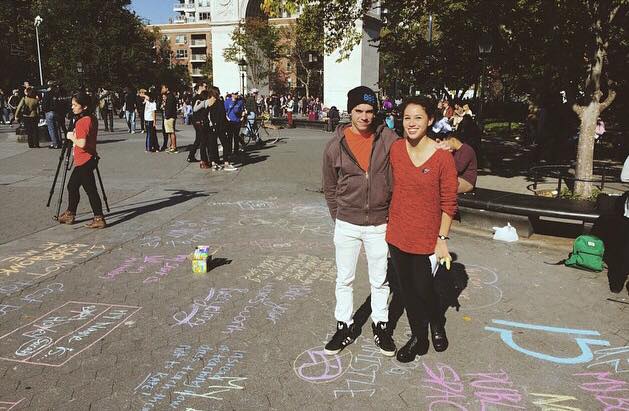
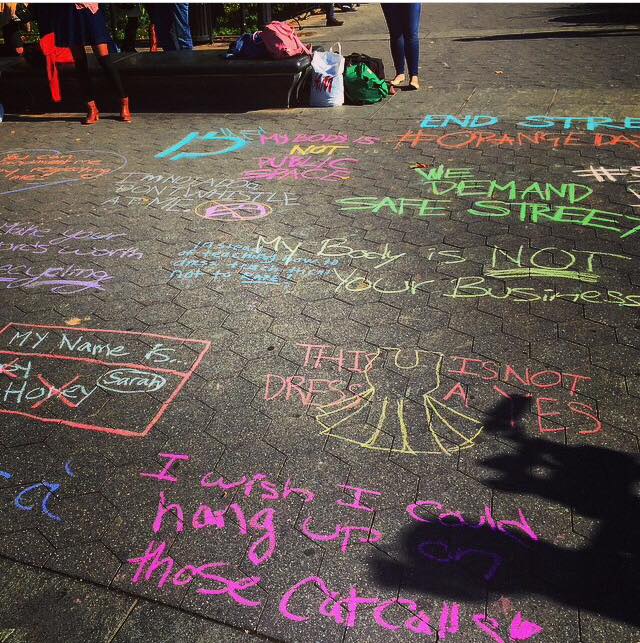
Stop Street Harassment held a chalk walk and flyering in New York City this afternoon for it, led by our co-social media manager Khiara. Thanks to her and to everyone who participated!


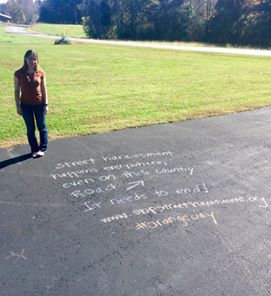
I’m visiting relatives on a farm in southern VA and wrote my own chalk message next to a road where I’ve been harassed while running during past visits.

I am so grateful the UN is bringing attention to this issue today to show it’s a serious global problem. And we at SSH are committed to speaking out about this problem today and every day.


Share

Filed Under: street harassment

“No, we are NOT flattered.”

October 25, 2014 By Contributor

Today, I was walking home from my campus when I had to pass the usual street that leads to my house. There has been a construction site on that street for around three months, and I have been catcalled several times by the workers on that site. This time one when I passed, one of them said “Hey” and looked at me with the most disgusting lecherous look ever. I decided I have had enough so I confronted them and asked, “Why did you call me??”

He looked confused, and then he said “No”. Then I asked louder “Why did you call me???”

He looked at his friend and then said “No” again. After that I walked away feeling happy and relieved because I just confronted my bully.

Optional: What’s one way you think we can make public places safer for everyone?

Raising awareness by doing campaigns to let men know that: No, we are NOT flattered.

– FD

Location: Near a construction site

Share your street harassment story for the blog.
See the book 50 Stories about Stopping Street Harassers for more idea

Share

Filed Under: Stories, street harassment

« Previous Page
Next Page »

Share Your Story

Share your street harassment story for the blog. Donate Now

From the Blog

  • #MeToo 2024 Study Released Today
  • Join International Anti-Street Harassment Week 2022
  • Giving Tuesday – Fund the Hotline
  • Thank You – International Anti-Street Harassment Week 2021
  • Share Your Story – Safecity and Catcalls Collaboration

Buy the Book

Search

Archives

  • September 2024
  • March 2022
  • November 2021
  • April 2021
  • March 2021
  • January 2021
  • April 2020
  • March 2020
  • February 2020
  • December 2019
  • November 2019
  • September 2019
  • August 2019
  • July 2019
  • June 2019
  • May 2019
  • April 2019
  • March 2019
  • February 2019
  • January 2019
  • December 2018
  • November 2018
  • October 2018
  • September 2018
  • August 2018
  • July 2018
  • June 2018
  • May 2018
  • April 2018
  • March 2018
  • February 2018
  • January 2018
  • December 2017
  • November 2017
  • October 2017
  • September 2017
  • August 2017
  • July 2017
  • June 2017
  • May 2017
  • April 2017
  • March 2017
  • February 2017
  • January 2017
  • December 2016
  • November 2016
  • October 2016
  • September 2016
  • August 2016
  • July 2016
  • June 2016
  • May 2016
  • April 2016
  • March 2016
  • February 2016
  • January 2016
  • December 2015
  • November 2015
  • October 2015
  • September 2015
  • August 2015
  • July 2015
  • June 2015
  • May 2015
  • April 2015
  • March 2015
  • February 2015
  • January 2015
  • December 2014
  • November 2014
  • October 2014
  • September 2014
  • August 2014
  • July 2014
  • June 2014
  • May 2014
  • April 2014
  • March 2014
  • February 2014
  • January 2014
  • December 2013
  • November 2013
  • October 2013
  • September 2013
  • August 2013
  • July 2013
  • June 2013
  • May 2013
  • April 2013
  • March 2013
  • February 2013
  • January 2013
  • December 2012
  • November 2012
  • October 2012
  • September 2012
  • August 2012
  • July 2012
  • June 2012
  • May 2012
  • April 2012
  • March 2012
  • February 2012
  • January 2012
  • December 2011
  • November 2011
  • October 2011
  • September 2011
  • August 2011
  • July 2011
  • June 2011
  • May 2011
  • April 2011
  • March 2011
  • February 2011
  • January 2011
  • December 2010
  • November 2010
  • October 2010
  • September 2010
  • August 2010
  • July 2010
  • June 2010
  • May 2010
  • April 2010
  • March 2010
  • February 2010
  • January 2010
  • December 2009
  • November 2009
  • October 2009
  • September 2009
  • August 2009
  • July 2009
  • June 2009
  • May 2009
  • April 2009
  • March 2009
  • February 2009
  • January 2009
  • December 2008
  • November 2008
  • October 2008
  • September 2008
  • August 2008
  • July 2008
  • June 2008
  • May 2008

Comment Policy

SSH will not publish any comment that is offensive or hateful and does not add to a thoughtful discussion of street harassment. Racism, homophobia, transphobia, disabalism, classism, and sexism will not be tolerated. Disclaimer: SSH may use any stories submitted to the blog in future scholarly publications on street harassment.
  • Contact
  • Events
  • Join Us
  • Donate
  • Facebook
  • Instagram
  • Pinterest
  • Tumblr
  • Twitter
  • YouTube

Copyright © 2026 Stop Street Harassment · Website Design by Sarah Marie Lacy