• About Us
    • What Is Street Harassment?
    • Why Stopping Street Harassment Matters
    • Meet the Team
      • Board of Directors
      • Past Board Members
    • In The Media
  • Our Work
    • National Street Harassment Hotline
    • International Anti-Street Harassment Week
    • Blog Correspondents
      • Past SSH Correspondents
    • Safe Public Spaces Mentoring Program
    • Publications
    • National Studies
    • Campaigns against Companies
    • Washington, D.C. Activism
  • Our Books
  • Donate
  • Store

Stop Street Harassment

Making Public Spaces Safe and Welcoming

  • Facebook
  • Instagram
  • Pinterest
  • Tumblr
  • Twitter
  • YouTube
  • Home
  • Blog
    • Harassment Stories
    • Blog Correspondents
    • Street Respect Stories
  • Help & Advice
    • National Street Harassment Hotline
    • Dealing With Harassers
      • Assertive Responses
      • Reporting Harassers
      • Bystander Responses
      • Creative Responses
    • What to Do Before or After Harassment
    • Street Harassment and the Law
  • Resources
    • Definitions
    • Statistics
    • Articles & Books
    • Anti-Harassment Groups & Campaigns
    • Male Allies
      • Educating Boys & Men
      • How to Talk to Women
      • Bystander Tips
    • Video Clips
    • Images & Flyers
  • Take Community Action
  • Contact

Youth Film: “I’m Not Your Girl”

February 6, 2014 By HKearl

This film was made as part of the Girl Tech program in New Mexico. It was recently screened at the Media Literacy Project’s 20th anniversary party in Albuquerque.

See video

From the Media Literacy Project website:

“Set in Albuquerque, New Mexico, this short video gives us a brief glimpse into the life of a young woman and the street harassment she encounters one day while riding the bus. This film raises awareness on both street harassment and how one is more likely to encounter street harassment due to a reliance on public transportation. Directors: Mercedes Turner and Marina Oya.

Mercedes Turner is a graduate student of New Mexico Highlands University School with a degree from the School of Social Work and is currently pursuing her master’s degree in social work as well. Mercedes has worked with youth as a programs department intern with Mothers Against Drunk Driving and as an intern with the YWCA of New Mexico. She enjoys volunteering in the community, watching movies, and spending time with family and friends. She wants to continue working with nonprofit organizations who work with young people to help them pursue their dreams.

Marina Oyá is currently a junior at the Public Academy for Performing Art and will graduate in 2015. She loves filmmaking, dance, visual art, and working with kids. In the summer of 2013 she volunteered at Eugene Field Elementary School in Albuquerque working with students in their summer school program. She plans to study marine biology in college.”

Share

Filed Under: Activist Interviews, Resources, Stories, street harassment

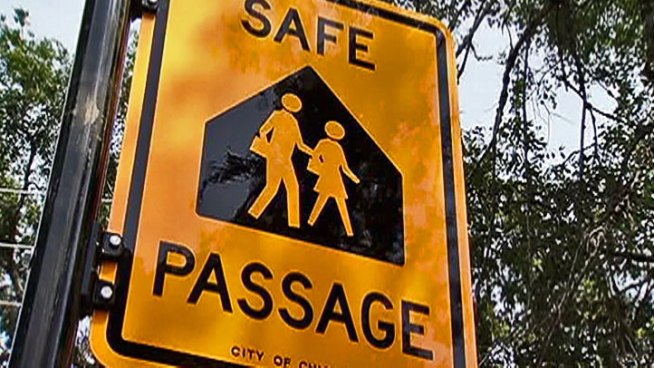
USA: Does a “Safe Passage” Exist When it Comes to Street Harassment?

February 5, 2014 By Correspondent

Sandria Washington, Chicago, IL, SSH Blog Correspondent

Via NBC Chicago

One week before Christmas, a 15-year-old Chicago girl was beaten and sexually assaulted while walking to school. Her body was found in the backyard of a northwest side resident, where she lay bleeding in the snow for nearly two hours.

The attack happened in the early morning around 6 a.m. when it was still dark as night and before any Safe Passage guards were on duty.

With the story making national headlines and sparking more fear in parents locally, the city’s Safe Passage program came under scrutiny. Could having more eyes and ears on the streets truly protect our children from violence?

I wonder.

The program was created in response to the horrific 2009 beating (and subsequent death) of 16-year-old Fenger High School student Derrion Albert. Trained Safe Passage workers stand guard along designated routes throughout the city during peak hours before and after school in an effort to provide additional safety to students commuting in high-risk areas.

Beatings, drive-by shootings, gang violence and sexual assault are just a few of the possible gauntlets children are required to maneuver through on their way to schools that are meant to be safe havens. Yet, I wonder if street harassment is equally seen as a threat along Safe Passage routes.

Although the full circumstances surrounding the assault of the 15-year-old student still remain unknown, it’s possible the attack could have started as harassment. The stories of street harassment escalating into assault and sometimes death don’t always go viral, but they are no less real. In a September 2013 Huffington Post article, writer Soraya Chemaly recounts the story of a 14-year-old Florida girl who was attacked and run over after refusing sex from a stranger driving by.

As a young girl, even before entering high school, I regularly walked alone and took public transportation to get to school. My mother, like many parents, was unable to escort me and I’m sure her heart was up in the air each day until I returned home.

I have countless stories of being harassed by male peers and male adults while walking or waiting at bus stops. Crossing guards were sometimes nearby, but their focus was of course monitoring traffic and getting children safely across the street. A car circling the block or someone getting too verbally aggressive simply blended into the background noise.

Even with adults standing watch in the full hustle and bustle of the school day, street harassment can be another obstacle in the fight to get to and from school. In general, street harassment is likely to go unchecked by bystanders, as in the case of the Florida girl, because they may not know how or if to intervene.

Unfortunately, more eyes and ears on the street may not do much when it comes to street harassment. It’s a form of violence that’s hiding in plain sight.

Sandria Washington is a writer, health/wellness ambassador and community activist. Read her ChicagoNow blog and follow her on Twitter @SandriaWrites.

Share

Filed Under: correspondents, Stories, street harassment

“I was molested by three different men”

February 5, 2014 By Contributor

I am a young woman in her late teens. I was in the middle of a massive crowd at a Harvard dance, when I was molested by three different men. Two of them were friends with each other, and the first one passed me off to the second one when he was done with me. The crowd was so thick that I couldn’t get out of it for twenty minutes. I have frequent flashbacks to the incident, and I am meeting weekly with a counselor to recover.

– Anonymous

Location: Harvard University, MA

Share your street harassment story for the blog.
Check out the new book 50 Stories about Stopping Street Harassers!

Share

Filed Under: Stories, street harassment

USA: Street Harassment and the Murder of Andy Lopez

February 4, 2014 By Correspondent

Jeanette R, California, USA, SSH Blog Correspondent

Andy Lopez via CBC SF

Street harassment is most commonly discussed as the sexual harassment of women in public spaces by men. However, that is only one way to begin to think about this issue. It is important to bear in mind that street harassment is often complicated by things like race, sexual orientation, gender, ability status and class, among other things. This post focuses on the experience of men of color and street harassment through racial profiling.

The case of Andy Lopez is a recent example of the experience of men of color with street harassment. Lopez, 13, of Santa Rosa, California, was walking to a friend’s house holding an airsoft gun that closely resembled an AK-47. He was shot eight times by a police officer after allegedly failing to drop the toy gun, and the injuries were fatal.

While some may argue that Lopez should not have been walking around with a toy gun, or that he should have dropped it when law enforcement asked, I think it is important to consider a few things. First, many children and teens in the US have at some point played with toy guns. That in and of itself is not exactly uncommon, and not something a child should be killed over. Second, I think it is very important to think about how Lopez may have felt as he was approached by the police. Being approached by an officer or followed by a police car is not exactly a pleasant experience. As a woman, I will probably never experience heightened surveillance from police that lots of men and boys of color have become accustomed to. But many of us have had the experience of driving near a police car, or even being pulled over while driving. It can be a nerve-wracking experience, for no one wants to be in trouble with the law. I can imagine that at only thirteen being approached by the police can be very confusing and frightening.

I remember my first experience with street harassment. I was only eleven, and I remember feeling so scared, confused, and shaken. I had no idea what to make of that, it was something that my young mind could not fully understand at that point. I only knew how it made me feel, and those feelings were not something I completely understood either.  Perhaps the tragic events on the day that Lopez was killed were his first encounters with police. Maybe he failed to drop the toy weapon because he too felt afraid and confused. Maybe he froze out of panic. Maybe he could not understand exactly what was happening.

Lopez was shot at eight times, with seven of those shots hitting him, an excessive use of force, especially against a thirteen-year-old child. The officer who fired the shots claims he mistook the toy gun for a real one (according to KTVU, there are allegations that Sonoma County knew the officer suffered from vision problems and had a history of using excessive force), but if he did consider Lopez a threat, would it not have made more sense to perhaps tazer him or subdue him in some other non-fatal way? Which leads to the next question: could Lopez have been racially profiled?

It is no secret that African-American, Latino-American, Native American, Muslim and/or Arab-American) men (and in some cases women too), are sometimes subjects of racial profiling from law enforcement, airport officials, and sometimes even by everyday folks. This then leads to the public harassment and heightened surveillance of these groups from authorities and the public. Perhaps the officer who shot Lopez immediately assumed he was planning to commit a crime, to endanger the safety of the public, instead of perhaps considering that he may just be a kid looking to do what kids do all the time: have a good time with friends. Now I am not saying that the officer is a blatant, out and proud bigot who specifically targeted a Latino kid. Prejudice can take many forms, from very overt to very subtle, so subtle that many are often unaware of their own internalized biases.

For women of color, the experience with street harassment is different from that of men of color and white women. We have not only sexualized street harassment to unfortunately deal with, but racism as well, and sometimes these converge. If a person is queer, transgender, gender nonconforming, disabled, poor, or a combination of these things, there are other sets of –isms to deal with. Sometimes these –isms come to light simultaneously when we are harassed in the street or public places. In part II of this post later this month, I will discuss how street harassment can vary depending on our intersectional positionality.

Jeanette R. is a recent university graduate with a lifelong passion for social justice and change. She is particularly interested in issues of gender, human rights, race, equality, and immigration. She has had a lifelong love affair with writing as not only a creative medium, but also as a powerful tool for socially transformative change and advocacy.

Share

Filed Under: correspondents, News stories, street harassment

USA: Male Privilege of Not Knowing

February 3, 2014 By Correspondent

Joe Samalin, New York City, NY, USA, SSH Blog Correspondent

During a sexual violence prevention training with 40 enlisted air force men (‘airmen’), one young white man stood up and said that he had never thought about this issue before, until early one morning during a deployment overseas a few years ago. As he awoke and poked his head out of his tent he happened to see a friend, a female airman (females are ‘airmen’ too), walking by at a fast clip, her head down. He wished her good morning, but she ignored him. He called out louder, and a third time, with no response. He then ran out of his tent and caught up to her, asking why she hadn’t responded.

She seemed startled and he asked her if everything was ok. She told him that she was on her way to the chow hall for breakfast, and she hated the walk. It was a long one from her tent, and she got through it by keeping her head down and muscling through as best she could. He was 110% stumped about what she meant. Rather than explain, she told him to walk with her, and he agreed.

As he described that walk to the chow hall you could see he was viscerally reliving the experience. He said he didn’t know what to expect, what the issue was. And yet as they walked, he became aware of a strange sensation. At first he couldn’t put his finger on it but it grew, and eventually he knew exactly what it was. It was the feeling of being watched. As they walked, every single tent they passed opened. Men’s eyes were on them. Throughout the entire walk.

“Well, not on us,” he explained to us. “On her”.

Although the men were not looking at him, he said he physically felt their gaze and it was overwhelming. The men didn’t say anything during the walk. Didn’t catcall, didn’t threaten. But he said they didn’t need to. By the time they got to the chow hall he was physically shaken. He had never known that this was her experience every single day going to breakfast.

It was that walk to breakfast that led him to eventually become an Air Force Victim Advocate for survivors of sexual assault on his base.

To this day the memory that airman shared remains one of the most powerful examples of a man coming to the realization of how we as men are expected, trained, taught, raised, socialized, bullied, threatened and beaten into not seeing the epidemic levels of violence against women and girls all around us, let alone doing anything about it. It illustrated how powerful a look can be, how the public harassment of girls and women does not even have to be verbal to cause harm. How blind we as men allow ourselves and each other to get away with being.

And yet even though we are socialized and taught as such, it is still our choice as men to engage in the harassment of women and girls. Or to not. It is our choice and our privilege as men to ignore that street harassment exists, and its effect on the women and girls in our lives and countless others we will never meet (and who deserve every bit of respect and safety as do our mothers, partners, daughters, and sisters.)

In March 2012, right before International Anti-Street Harassment Week, I was working with a friend, my partner Bix, and others on a video modeling how men can challenge street harassment. As we filmed “Shit Men Say To Men Who Say Shit To Women On The Street” I had my own moment of truth. My partner was harassed during the shooting of the video – and none of the men involved, myself included, even noticed. This is the inherent injustice: my male privilege allows me to choose to ignore the reality of street harassment and other forms of gender-based violence, simply because I can.

Helping men reach their own moment of recognition of the true scope, scale, and impact of street harassment is one of the most important first steps to engaging men to challenge it when they see it and to change the culture that allows it. And I hope to explore different strategies and tools for doing just that in my next post!

Joe Samalin has been addressing gender-based violence for over 15 years, including as the Training and Technical Assistance Coordinator for Men Can Stop Rape. He is currently the Outreach and Training Manager for the Disaster Distress Helpline and is examining among other things gender-based violence in the aftermath of disasters. Follow him on Twitter, @joesamalin.

Share

Filed Under: correspondents, male perspective, street harassment

« Previous Page
Next Page »

Share Your Story

Share your street harassment story for the blog. Donate Now

From the Blog

  • #MeToo 2024 Study Released Today
  • Join International Anti-Street Harassment Week 2022
  • Giving Tuesday – Fund the Hotline
  • Thank You – International Anti-Street Harassment Week 2021
  • Share Your Story – Safecity and Catcalls Collaboration

Buy the Book

Search

Archives

  • September 2024
  • March 2022
  • November 2021
  • April 2021
  • March 2021
  • January 2021
  • April 2020
  • March 2020
  • February 2020
  • December 2019
  • November 2019
  • September 2019
  • August 2019
  • July 2019
  • June 2019
  • May 2019
  • April 2019
  • March 2019
  • February 2019
  • January 2019
  • December 2018
  • November 2018
  • October 2018
  • September 2018
  • August 2018
  • July 2018
  • June 2018
  • May 2018
  • April 2018
  • March 2018
  • February 2018
  • January 2018
  • December 2017
  • November 2017
  • October 2017
  • September 2017
  • August 2017
  • July 2017
  • June 2017
  • May 2017
  • April 2017
  • March 2017
  • February 2017
  • January 2017
  • December 2016
  • November 2016
  • October 2016
  • September 2016
  • August 2016
  • July 2016
  • June 2016
  • May 2016
  • April 2016
  • March 2016
  • February 2016
  • January 2016
  • December 2015
  • November 2015
  • October 2015
  • September 2015
  • August 2015
  • July 2015
  • June 2015
  • May 2015
  • April 2015
  • March 2015
  • February 2015
  • January 2015
  • December 2014
  • November 2014
  • October 2014
  • September 2014
  • August 2014
  • July 2014
  • June 2014
  • May 2014
  • April 2014
  • March 2014
  • February 2014
  • January 2014
  • December 2013
  • November 2013
  • October 2013
  • September 2013
  • August 2013
  • July 2013
  • June 2013
  • May 2013
  • April 2013
  • March 2013
  • February 2013
  • January 2013
  • December 2012
  • November 2012
  • October 2012
  • September 2012
  • August 2012
  • July 2012
  • June 2012
  • May 2012
  • April 2012
  • March 2012
  • February 2012
  • January 2012
  • December 2011
  • November 2011
  • October 2011
  • September 2011
  • August 2011
  • July 2011
  • June 2011
  • May 2011
  • April 2011
  • March 2011
  • February 2011
  • January 2011
  • December 2010
  • November 2010
  • October 2010
  • September 2010
  • August 2010
  • July 2010
  • June 2010
  • May 2010
  • April 2010
  • March 2010
  • February 2010
  • January 2010
  • December 2009
  • November 2009
  • October 2009
  • September 2009
  • August 2009
  • July 2009
  • June 2009
  • May 2009
  • April 2009
  • March 2009
  • February 2009
  • January 2009
  • December 2008
  • November 2008
  • October 2008
  • September 2008
  • August 2008
  • July 2008
  • June 2008
  • May 2008

Comment Policy

SSH will not publish any comment that is offensive or hateful and does not add to a thoughtful discussion of street harassment. Racism, homophobia, transphobia, disabalism, classism, and sexism will not be tolerated. Disclaimer: SSH may use any stories submitted to the blog in future scholarly publications on street harassment.
  • Contact
  • Events
  • Join Us
  • Donate
  • Facebook
  • Instagram
  • Pinterest
  • Tumblr
  • Twitter
  • YouTube

Copyright © 2026 Stop Street Harassment · Website Design by Sarah Marie Lacy