• About Us
    • What Is Street Harassment?
    • Why Stopping Street Harassment Matters
    • Meet the Team
      • Board of Directors
      • Past Board Members
    • In The Media
  • Our Work
    • National Street Harassment Hotline
    • International Anti-Street Harassment Week
    • Blog Correspondents
      • Past SSH Correspondents
    • Safe Public Spaces Mentoring Program
    • Publications
    • National Studies
    • Campaigns against Companies
    • Washington, D.C. Activism
  • Our Books
  • Donate
  • Store

Stop Street Harassment

Making Public Spaces Safe and Welcoming

  • Facebook
  • Instagram
  • Pinterest
  • Tumblr
  • Twitter
  • YouTube
  • Home
  • Blog
    • Harassment Stories
    • Blog Correspondents
    • Street Respect Stories
  • Help & Advice
    • National Street Harassment Hotline
    • Dealing With Harassers
      • Assertive Responses
      • Reporting Harassers
      • Bystander Responses
      • Creative Responses
    • What to Do Before or After Harassment
    • Street Harassment and the Law
  • Resources
    • Definitions
    • Statistics
    • Articles & Books
    • Anti-Harassment Groups & Campaigns
    • Male Allies
      • Educating Boys & Men
      • How to Talk to Women
      • Bystander Tips
    • Video Clips
    • Images & Flyers
  • Take Community Action
  • Contact

USA: Three Stalking Survivors Share Their Stories

March 21, 2018 By Correspondent

Patrick Hogan, Chicago, IL, USA, SSH Blog Correspondent
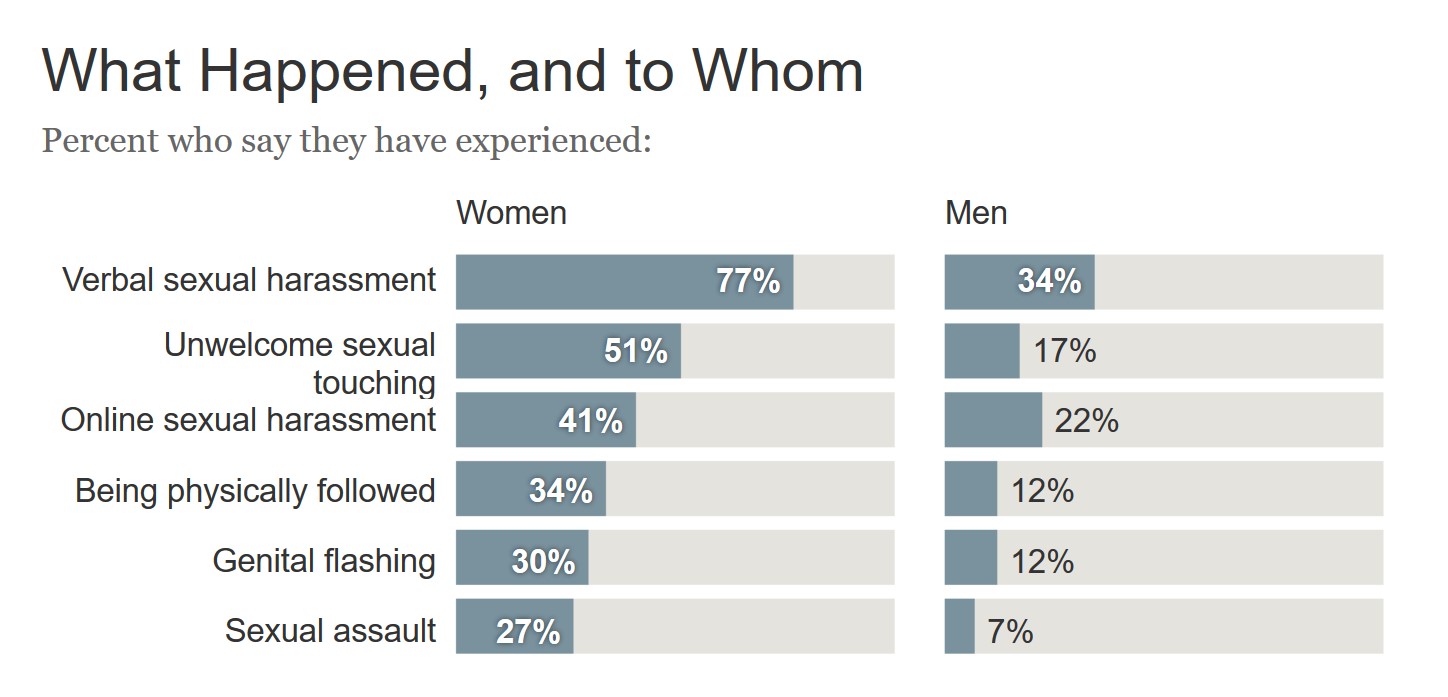
Stalking is perhaps one of the most frightening forms of street harassment. It’s an experience that 1 in 5 women have experienced in public spaces by a stranger and 1 in 3 women have experienced, period (by known persons or strangers).

The University of Michigan’s Sexual Assault Prevention and Awareness Center describes six types of stalkers based on stalker’s motivations: “rejected stalker”, “resentful stalker”, “predatory stalker”, “intimacy seeker”, “Incompetent suitor”, and “erotomania and morbidly infatuated.” The University’s Center also notes that “Even though there are general categories of stalkers, that does not mean that every stalker will fit neatly into a category. Stalkers can have any characteristics and come from any type of background.”

Whether a stalker is an ex-romantic partner, delusional and infatuated with a victim, or a stranger intending violence, the dangers of being stalked need not be reiterated.

For this piece, three women shared their experiences as stalking survivors in the hopes that their experiences may help inspire action.

Woman #1 was riding a public train home after spending the day downtown Chicago visiting family when a man moved from one side of the train car to sit next to her. She thought this behavior was weird, but did not think much of it. The man proceeded to talk to her, at first friendly, starting with a greeting and a discussion of the weather. What had started as a pleasant discussion rapidly deteriorated as the man began making sexual comments about her body. She was clearly uncomfortable, and got up to leave the train at the next stop. The man got up to leave with her. They both left the train and the man continued the barrage of inappropriate comments. She swiftly walked down the platform away from the man, past other people, as he followed her. Finally, she slipped a canister of pepper spray out of her purse, turned, and aimed the pepper spray canister directly between the man’s eyes. His eyes got wider as he realized what was looking at, and turned to run away.

Woman #2 was leaving a business lunch, walking down a busy side walk to return to her car parked a block away. A man walked up to her and began inquiring into her relationship status. She told him she was uncomfortable with his questioning. His response: “You bitch! F**k you!” She jogged away as he shouted and followed her. She ran into a coffee shop and he did not follow her in.

Woman #3 was walking home from her gym when three men began to follow her no more than 100 meters behind. When she noticed them tailing her, she turned around to confront them, asking, “What? What do you want?” The men laughed and one shouted back: “You, whore!” The men kept following her while other pedestrians moved to the adjacent sidewalk so as not to walk past the men. She called 911, and notified the men with another shout, “I’m calling the cops!” She ducked into a nearby store, and then men did not follow her in.

All three instances demonstrated startling and tragic commonalities: the women, who were each alone, were stalked in broad day light and in crowded public areas, but they did not receive any assistance from anyone else. People could have helped them, but no one did. Perhaps people were scared, perhaps they did not know how to intervene, perhaps they do not want to do the right thing. Whatever the reason, it was not a good enough reason for staying silent.

These women stood up for themselves but the men lashed out or escalated their behavior. The onus cannot be on persons who are facing harassment and stalking alone to stop incidents. These women offer their stories as a lesson to us all—to you, the reader. Be an active bystander; do not allow people to fear for their lives if you can do something to help them. If one person stands by to help a victim, others may join in.

Complacency and apathy cannot be accepted when someone else’s safety is endangered by a stalker. Hopefully, in the #MeToo era, similar testimonies will end with victims being helped and the harassers sent away. But that can only happen if people–individuals, you and I–stand up as advocates, choosing to get involved rather than shying away when harassment happens in front of us.

Patrick is an undergraduate student majoring in anthropology and minoring in Islamic World Studies at Loyola University Chicago, preparing to continue onto law and graduate school. He is particularly interested in legal anthropology and the ways victims are viewed by legal systems.

Share

Filed Under: correspondents Tagged With: followed, stalking

Brazil: Marching for women’s rights and against neoliberal agenda

March 15, 2018 By Correspondent

Yasmin Curzi, Rio de Janeiro, Brazil, SSH Blog Correspondent

Credit: Carol Burgos

For months, feminist Facebook pages announced and spread the word: A women’s strike was going to happen in Rio on Thursday, March 8, 2018.

The page “8M – RJ”, one of the most vital representatives of the strike, says in a manifesto on their Facebook page that they “belong to national and international feminist movements” and are also from “labor’s unions, parties, collectives and other social movements.”

They are also from Black women, lesbian and trans* movements. The heritage of the Russian Revolution is also highlighted. “We are the vanguard in revolutionary processes in Brazil and worldwide. And the March 8th of 1917 remarks it when, in a context of crisis and with country’s brutality, women factory workers organized a strike which was the very first cause of Russian Revolution.”

It was expected nearly 30 thousand women would attend the rallies and march in the city center.

I woke up on March 8 to the news that women from Landless Movement had occupied a Globo[1] graphic park in Rio in defense of democracy[2]. It gave me hope that even the torrential rain that day wasn’t going to stop women from their combative and fiery demonstration. This article is about what I saw there.

As soon as I arrived, because of the rain, I spotted the tent for the women’s sector of Labor’s Party. They were distributing material to inform the people of the risks of the “evil’s pack” from President Michel Temer’s administration. A sound car was parked in the square in front of Candelaria’s Church, and women with legislative mandates were speaking against Temer’s administration. In their speeches they were opposing the federal intervention in public security in Rio de Janeiro[3], against the conservative mayor of Rio de Janeiro Crivella and gender-based violence, and speaking in favor of women’s reproductive rights, legal abortion and political representation.
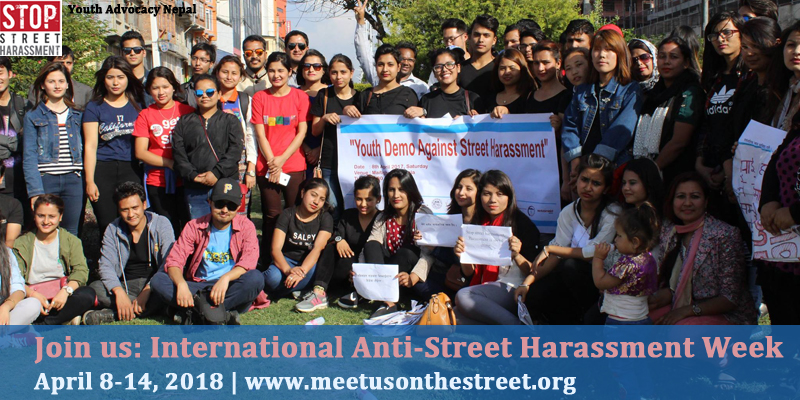
At 6 p.m., the march began. It was time for “Slam das Mina”[4] to make a splendorous presentation in the sound car. Women’s World March Brazil had a drum music group who were chanting and shouting lyrics like, “Women against war, women against the capital! / Women for the end of racism and neoliberal capitalism! / Women want the land, women want to be equal! / Women want international socialism and feminism.”[5]

We marched until 8 p.m. and we finished with a big circle of women holding hands and chanting in solidarity with Latin America and each other. We spoke against feminicide and male privileged citizenship and in favor of a real democracy – one truly produced by the people.

Former president Dilma Vana Rousseff’s impeachment opened a wound in Brazil’s already fragile democracy – for it has always been with its economy under the control of international market’s actors. Neoliberal measures of Temer’s administration, in relation to labor laws, social security, art, culture and public security, do not seem to come from the popular will. All of the public policies against poverty of the Labor’s Party governments have suffered somehow with the austerity actions. Likewise, institutions created by Labor Party toward the combat of racism and gender inequality were affected, e.g. Special Secretariat of Policies for Women[6] lost its statute of Ministry to become a part of Justice Ministry, in a dismantling process.

For the political scientist Flavia Biroli[7], “parliamentary coup of 2016 put an end to the channels of dialogue between government and feminist movements”. In this way, the advances conquered by social movements struggles since the end of military dictatorship have been under constant menace. Neoliberal capitalism, holding hands with conservatism, push its agenda against gender equality with fake news and spreading fear to canalize people insecurities in relation to social changes — i.e. transformations in sexuality and in family models — in order to turn society against left parties and social movements. To explain better, this economic agenda isn’t in public debate, but hidden inside a moral agenda.

Biroli also points to Patricia Collins’ work about citizenship, saying that the sub inclusion of all women and all Black people signifies the super inclusion of white men – which are a numeric minority in Brazilian society. The struggle against power and wealth concentration should be the fundamental concern of feminist movements in order to redefine the concept of democracy.

The usual concept of democracy, centered in representative institutions, neglect discussions of relevant subjects which have huge impacts on minorities everyday lives. We can say that the “institutions of public life”, in reality, were built by the interests and discussions of the power elite. And if the distance of Brazilian parliament from the actual people is extensive, and we are living in a context where social movements can no longer act with and alongside the State, it’s terribly necessary to engender an other type of democracy that could be able to really articulate the popular will. True channels of civil society to achieve the representative institutions, such as mechanisms to enable the pressure from civil society over parliamentarians, and also for people to decide the destination of public resources.

Fundamentally, from my experience as a militant, feminist movements have been the ultimate source of hope against apathy. They have the potential to combat the hegemony of neoliberal and conservative sectors, for they incarnate the project of an inclusive democracy. And, even with the constant backlashes, young girls and women are more and more conscious that they have to fight for their rights – that they aren’t fully conquered, for liberal democracy is controlled by men and our rights are always seen as a bargaining chip in legislative trading desks. We have a lot to achieve and the organization is just beginning.

[1]         The country’s largest TV and radio broadcasting company that supported the military dictatorship, indirectly supported Dilma’s impeachment and helps in Lula’s persecution, and has an explicit neoliberal agenda against left sectors, despite being a government grantee and despite the fact that the guarantee of the right to communication should be a State duty.

[2]         See: http://www.redebrasilatual.com.br/cidadania/2018/03/mulheres-ocupam-parque-grafico-da-globo-no-rio

[3]         A populist way of Temer’s to conquer some kind of legitimacy was by putting the National Army in the command of public security in Rio de Janeiro. Also, now there are two militaries occupying chairs as ministries. See: http://www.rioonwatch.org/?p=42012

[4]         A slam poetry group of pheripheral women that make poetry with their everyday experiences and about the impacts of State and male violence in their individual trajectories.

[5]         In the original “Mulheres contra a guerra, mulheres contra o capital! Mulheres contra o racismo e o capitalismo neoliberal! Mulheres querem a terra, mulheres querem ser igual/ Mulheres querem feminismo e socialismo internacional.”

[6]         See Lourdes Bandeira, “Que vont devenir les actions du Secrétariat de Politique pour Femmes (SPM) au Brésil?” Available at: <https://www.cairn.info/revue-cahiers-du-genre-2016-3-page-243.htm>

[7]         See Flavia Biroli “Gênero e desigualdades: os limites da democracia no Brasil” 1ª Ed. São Paulo: Boitempo, 2018.

Yasmin is a Research Assistant at the Center for Research on Law and Economics at FGV-Rio. She has a Master’s Degree in Social Sciences from PUC-Rio where she wrote her thesis on street harassment and feminists’ struggles for recognition. 

Share

Filed Under: correspondents Tagged With: International Women's Day, rio, women's strike

2018 Anti-Street Harassment Week is Four Weeks Away!

March 12, 2018 By HKearl

From April 8-14, Stop Street Harassment is organizing the eighth annual International Anti-Street Harassment Week.

Will you be joining us again this year? Please let us know so we can include you on future e-mails and list you as a co-sponsor on the website.

As a reminder, the Week is a chance for us to join together in solidarity and amplify each other’s voices so that the world listens, as well as to raise awareness in our local communities.

Women deserve to be safe everywhere.

IMPORTANT INFORMATION:

    1. Tell Us What You’re Doing!
      We want to know what you’re doing! Please either complete this form, or e-mail me, Holly, with info at StopStreetHarassment@Gmail.com. Thank you for your help.
    2. Ideas for Action
      Do you still need ideas for what you can do? Here are several. Also gain ideas from the 2017 wrap-up report or 2016 wrap-up report.

      We especially hope to see offline discussions involving diverse community members of all genders and backgrounds. It will take EVERYONE to truly create safer communities.

      But at minimum, any individual can participate through simple acts like telling their street harassment story, writing chalk messages, and sharing information online.

    3. Tools
      We have a selection of shareable images and downloadable fliers on our website and will be adding even more in the next two weeks. If you have ideas or want to offer translation help, please email StopStreetHarassment@Gmail.com.
    4. Write a Blog Post
      If you’d like to write a blog post for Stop Street Harassment (or have an entry cross-posted from your blog) that would be great! It can be for the week itself, or you can advertise what you’ll be doing for the week and why. Just reach out to Holly, StopStreetHarassment@Gmail.com, with a short pitch about what the blog would cover and the preferred date or time range you’d like it published.
    5. Tweet Chats
      April 10 will be our global tweetathon. Tweet about street harassment using #Endsh throughout the day (from whatever time zone you’re in, using whatever language/s you want). We are in the midst of scheduling the daily tweet chats — If you are planning to host one but haven’t been in touch yet, please reach out and I will add it to the official list.

Feel free to reach out anytime with questions, suggestions, or information!

Thank you for agreeing to Meet Us on the Street as we work to create safe public spaces for everyone!

Share

Filed Under: anti-street harassment week, street harassment

“He wanted to take my undergarments and eat them”

March 10, 2018 By Contributor

I was biking home from work and while stopped at a busy stoplight, a man on the street began yelling at me. He started by saying I looked like a very nice little girl who probably got good grades. When I did not respond, he continued to walk closer to me, and became increasingly aggressive and vulgar. He began talking about all the sexual/violent things he wanted to do to me, and that he wanted to take my undergarments and eat them. He got nearly within an arms reach of me before the light changed. I felt scared, violated, and disgusted at his actions. I felt disappointed that the people sitting safely in their cars around me looked away when I looked at them for support – men and women.

– AS

Location: Columbus, OH

Need support? Call the toll-free National Street Harassment hotline: 855-897-5910

Share your street harassment story for the blog.
See the book 
50 Stories about Stopping Street Harassers for ideas.

Share

Filed Under: Stories, street harassment

“Catcalling is not flattering”

March 9, 2018 By Contributor

There is a construction crew next to my apartment, which is close to my school. I bike to and from school and my place, and twice while riding to school, I have been catcalled by the workers. The first time they called out, “Hey, bonita! (Hey, beautiful)!”

I ignored it. The second time just happened, and as I rode past them, one of them wolf whistled at me. I’m scared because they can probably see where I live because my apartment is within their eyesight. I’m scared that if I respond, or even if I don’t respond at all, one of them is going to get mad enough to follow me home.

Optional: What’s one way you think we can make public places safer for everyone?

For construction crews, I would like to know how to contact their manager so I can tell him or her that the crew is being paid to work, not to harass people who pass them – especially women who are young enough to be their daughters. Catcalling is not flattering, it doesn’t make men look “macho,” it just makes them creepy.

– MB

Location: Dallas, Texas – Snider Plaza

Need support? Call the toll-free National Street Harassment hotline: 855-897-5910

Share your street harassment story for the blog.
See the book 
50 Stories about Stopping Street Harassers for ideas.

Share

Filed Under: Stories, street harassment

« Previous Page
Next Page »

Share Your Story

Share your street harassment story for the blog. Donate Now

From the Blog

  • #MeToo 2024 Study Released Today
  • Join International Anti-Street Harassment Week 2022
  • Giving Tuesday – Fund the Hotline
  • Thank You – International Anti-Street Harassment Week 2021
  • Share Your Story – Safecity and Catcalls Collaboration

Buy the Book

Search

Archives

  • September 2024
  • March 2022
  • November 2021
  • April 2021
  • March 2021
  • January 2021
  • April 2020
  • March 2020
  • February 2020
  • December 2019
  • November 2019
  • September 2019
  • August 2019
  • July 2019
  • June 2019
  • May 2019
  • April 2019
  • March 2019
  • February 2019
  • January 2019
  • December 2018
  • November 2018
  • October 2018
  • September 2018
  • August 2018
  • July 2018
  • June 2018
  • May 2018
  • April 2018
  • March 2018
  • February 2018
  • January 2018
  • December 2017
  • November 2017
  • October 2017
  • September 2017
  • August 2017
  • July 2017
  • June 2017
  • May 2017
  • April 2017
  • March 2017
  • February 2017
  • January 2017
  • December 2016
  • November 2016
  • October 2016
  • September 2016
  • August 2016
  • July 2016
  • June 2016
  • May 2016
  • April 2016
  • March 2016
  • February 2016
  • January 2016
  • December 2015
  • November 2015
  • October 2015
  • September 2015
  • August 2015
  • July 2015
  • June 2015
  • May 2015
  • April 2015
  • March 2015
  • February 2015
  • January 2015
  • December 2014
  • November 2014
  • October 2014
  • September 2014
  • August 2014
  • July 2014
  • June 2014
  • May 2014
  • April 2014
  • March 2014
  • February 2014
  • January 2014
  • December 2013
  • November 2013
  • October 2013
  • September 2013
  • August 2013
  • July 2013
  • June 2013
  • May 2013
  • April 2013
  • March 2013
  • February 2013
  • January 2013
  • December 2012
  • November 2012
  • October 2012
  • September 2012
  • August 2012
  • July 2012
  • June 2012
  • May 2012
  • April 2012
  • March 2012
  • February 2012
  • January 2012
  • December 2011
  • November 2011
  • October 2011
  • September 2011
  • August 2011
  • July 2011
  • June 2011
  • May 2011
  • April 2011
  • March 2011
  • February 2011
  • January 2011
  • December 2010
  • November 2010
  • October 2010
  • September 2010
  • August 2010
  • July 2010
  • June 2010
  • May 2010
  • April 2010
  • March 2010
  • February 2010
  • January 2010
  • December 2009
  • November 2009
  • October 2009
  • September 2009
  • August 2009
  • July 2009
  • June 2009
  • May 2009
  • April 2009
  • March 2009
  • February 2009
  • January 2009
  • December 2008
  • November 2008
  • October 2008
  • September 2008
  • August 2008
  • July 2008
  • June 2008
  • May 2008

Comment Policy

SSH will not publish any comment that is offensive or hateful and does not add to a thoughtful discussion of street harassment. Racism, homophobia, transphobia, disabalism, classism, and sexism will not be tolerated. Disclaimer: SSH may use any stories submitted to the blog in future scholarly publications on street harassment.
  • Contact
  • Events
  • Join Us
  • Donate
  • Facebook
  • Instagram
  • Pinterest
  • Tumblr
  • Twitter
  • YouTube

Copyright © 2026 Stop Street Harassment · Website Design by Sarah Marie Lacy