• About Us
    • What Is Street Harassment?
    • Why Stopping Street Harassment Matters
    • Meet the Team
      • Board of Directors
      • Past Board Members
    • In The Media
  • Our Work
    • National Street Harassment Hotline
    • International Anti-Street Harassment Week
    • Blog Correspondents
      • Past SSH Correspondents
    • Safe Public Spaces Mentoring Program
    • Publications
    • National Studies
    • Campaigns against Companies
    • Washington, D.C. Activism
  • Our Books
  • Donate
  • Store

Stop Street Harassment

Making Public Spaces Safe and Welcoming

  • Facebook
  • Instagram
  • Pinterest
  • Tumblr
  • Twitter
  • YouTube
  • Home
  • Blog
    • Harassment Stories
    • Blog Correspondents
    • Street Respect Stories
  • Help & Advice
    • National Street Harassment Hotline
    • Dealing With Harassers
      • Assertive Responses
      • Reporting Harassers
      • Bystander Responses
      • Creative Responses
    • What to Do Before or After Harassment
    • Street Harassment and the Law
  • Resources
    • Definitions
    • Statistics
    • Articles & Books
    • Anti-Harassment Groups & Campaigns
    • Male Allies
      • Educating Boys & Men
      • How to Talk to Women
      • Bystander Tips
    • Video Clips
    • Images & Flyers
  • Take Community Action
  • Contact

“Drawing as much attention as I can”

November 30, 2013 By Contributor

I wasn’t going to post originally but I guess reading other stories got me pretty angry.

I’ve had it a few times – to the shopkeeper casually calling me “sexy” whenever I go in for a redbull or whatever on the way to a lecture, to the builder “pssssshting” me when I walked past, again, on the way to University.

Those are nothing compared to past experiences which I’ll relate now.

There are three, maybe four experiences which really scared me, and still do when I remember them.

I was once waiting for a bus outside my school, at the bus stop in broad daylight (about 4pm) when a guy probably in his late teens – early 20’s, pulled up, rolled the window down and told me to get in his car.

I was obviously stunned, refused, and backed away slightly. He kept on TELLING me to get inside, and after a few minutes, called me a slut and drove away.

About a year or so later, I was waiting for a bus to work, in a different area of the city.

A car pulled up across the road, and a male in his late 30’s got out, crossed the road, and came over to try and engage in conversation.
When ignoring him didn’t work, I told him very clearly that I didn’t wish to speak to him, and he walked away and got back in his car.

In another incident, I had a male pull up, and ask for directions. When they were given, he made out that I should just get in the car and show him, and he’d give me a lift. Do I look that stupid?

Those were all a few years ago, last week, I was actually followed home – and it was terrifying.

I thought I was being paranoid at first as I crossed a road and the guy continued walking – until I came out of a store and he was lurking.
He then followed me for ten minutes, all the while saying, “hey”, “hey girl,” “miss”, and various things.

As I went inside and was unlocking my door (university accommodation, we have a guard inside thankfully), he looked back and smiled, and it infuriated me so much that I ended up hissing “freak” at him.

It’s not so much the catcalls in the street, or even the gropes in nightclubs (in which I’ve poured my drink over few men’s heads) but the more sinister experiences like the ones I’ve had.

It’s absolutely terrifying, and you feel powerless, and like a piece of meat.

After reading past stories from people, I’m not taking it anymore. I’ve been scared before and ignored it – sometimes it doesn’t work, and you get people poking you or just continually talking, but now I aim on yelling/screaming/and just generally drawing as much attention as I can, and hopefully embarrassing the idiot.

– Sarah

Location: Manchester, England

Share your street harassment story for the blog.
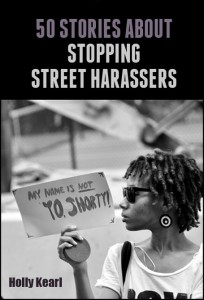
Check out the new book 50 Stories about Stopping Street Harassers!

Share

Filed Under: Stories, street harassment

“Look at the handlebar on that”

November 29, 2013 By Contributor

I was in McDonalds on Tottenham Court Rd. I was queuing to order food and there were two construction workers in the queue next to me . One of them looked at me and loudly said to his colleague, “Look at the handlebar on that. It’s disgusting. She looks like a man.”

I kept quiet and continued queuing . To be honest I was in shock. I paid for my food and went to get ketchup etc. They followed me over, laughing and repeated the same comments. They said, she must be growing it for Movember and walked off laughing I felt physically ill and so upset afterwards.

– S.C.

Location: Mc Dobalds , Tottenham Court Rd

Share your street harassment story for the blog.
Check out the new book 50 Stories about Stopping Street Harassers!
Share

Filed Under: Stories, street harassment

Holiday Shopping Part 1

November 29, 2013 By HKearl

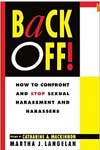
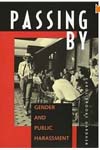
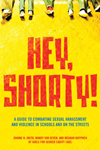
Black Friday is upon us and if you’re looking for holiday gifts that can also support a cause, check out some of these gifts and books. 50% of proceeds from the two books on the left will benefit Stop Street Harassment and 10% of all Zazzle items will, too. The Zazzle products are up to 60% off through 1 p.m. EST/10 a.m. PST today!


Also, save some money for our online auction that starts on Tuesday (100% proceeds will go to Stop Street Harassment). Items will include books, DVDs, art, desserts, and also big ticket items like two nights at a Miami hotel!

Share

Filed Under: Resources, street harassment

South Africa: The Role of Men during #16Days

November 29, 2013 By Correspondent

By: Gcobani Qambela, South Africa, SSH Correspondent

Trigger Warning

I was shocked to see a tweet by controversial South African blogger, Sentletse Diakanyo on the first day of 16 Days of Activism Against Gender Based Violence in South Africa. In the tweet, Diakanyo says that: “We must not ignore the slaughter of unborn babies during this 16 Days of Activism.” He went on to have more tirades about how “life begins at conception” and that even if women conceived children under “violent circumstances” it’s still unacceptable for women to “slaughter” ‘innocent life’. His main premise being that during 16 Days women should not look at gender-based violence but also at murder women commit to “unborn babies”. He further likens abortion to rape and says both should be “equally condemned” as they are criminal.

What triggered me as I read these tweets was not the inaccuracy of the statements made by Diakanyo, but the extent to which he successfully managed to derail the conversation from 16 Days to a conversation where many people had to move from sharing about gender-based violence to correcting this misinformation he was sharing. Yes, scientific evidence indicates that life does begin at conception, but personhood/humanness only begins after birth so women are not slaughtering babies when they terminate pregnancy. Yet, Diakanyo concludes “We will condemn criminal acts [of abortion] regardless of what feminists think.” This is despite the fact that abortion is legal in South Africa.

Many people have noted that Diakanyo gets some self-pleasure for triggering and making others angry, especially if they respond to his ignorance. This appears to make him happy and satisfied with himself. This is what has made writing this post difficult as I wondered: how do I respond to this bigotry without giving so much meaning to patriarchal garbage spewed by Diakanyo? I further thought: what is my role as a man living in a violently patriarchal society like South Africa? And lastly I wondered: what is my role during this 16 Days?

In the chapter “Is Paris Burning” bell hooks notes that many heterosexual identifying black men living in white supremacist cultures like the United States (and South Africa I would argue) always behave as if the primary “evil” of racism is the “refusal of the dominant culture to allow them full access to patriarchal power” and hence they continue to exhibit “a phallic misogynist masculinity [that is] rooted in contempt for the female.” This is the way I choose to read Diakanyo. In many of his writings, Diakanyo appears to challenges white supremacy and white capitalistic forces in South Africa and globally, and yet instances like these show us that he is not driven by an attachment to justice and overcoming global systems of oppression but a concern with having what white patriarchal men have in South Africa. This is not only in reference to economic power and material ownership, but also the full patriarchal dividend that will allow him full ownership and control of the female body.

Diakanyo’s remarks in South Africa are a part of larger societal project of patriarchal men who want to demonstrate their phallic power by waging war on the bodies of women and all that is “feminine”, which as hooks notes includes also gay men (and the larger LGBTIQA community). It is not a coincidence that Diakanyo chose the 16 Days to express his misinformed opinion on abortion, rape and the bodies of women. It is his way of derailing a conversation from discussing patriarchal male violence into one that not only blames women for exercising their constitutionally given right to bodily integrity and reproductive choice but one that places women’s bodies at the centre of the patriarchal male gaze.

So what should be the role of men during 16 Days? There are many well documented problems with the concept of 16 Days because many argue that it should be throughout the year and not just 16 days and I agree. However, this does not mean that I do not recognise its importance. I live in a country a country where a woman has more chances of being raped than learning to read, so if women get 16 Days in a year where they can tell their stories and activism without threat of violence our responsibility as men should be to listen. When we talk it should be to help elevate the voices and agency of women, and not derailing like Diakanyo.

I really think Diakanyo’s tweets are worth reporting to the South African human rights commission. In South Africa while freedom of expression is also a constitutional right too, this right is limited in that it should not be exercised in a manner that unjustifiably limits the rights of others. Diakanyo is limiting the rights of women by intentionally spreading incomplete information to limit women’s right to bodily integrity during a time when women are meant to enjoy freedom from patriarchal male body policing. It’s just unacceptable!

Gcobani is completing his Masters in Medical Anthropology through Rhodes University, Grahamstown, South Africa. His research centres around issues of risk, responsibility and vulnerability amongst Xhosa men (and women) in a rural town in South Africa living in the context of HIV/AIDS. Follow him on Twitter, @GcobaniQambela.

Share

Filed Under: correspondents, male perspective

10 Things I’m Grateful For

November 28, 2013 By HKearl

This Thanksgiving, I am grateful for so much – –

1. 8 SSH board members who give encouragement, ideas, and fundraising help

2. 20+ people who have volunteered time and talents to SSH over the year

3. 2 interns who are working hard on the upcoming Know Your Rights toolkit (release date: Dec. 10)

4. 30 blog correspondents who collectively wrote more than 100 articles this year.

5. 150 groups that took part in International Anti-Street Harassment Week in April.

6. 3 Safe Public Spaces Mentoring Site mentees who have held events in Afghanistan, Cameroon, and Chicago

7. 80+ donors to SSH

8. 100+ people who shared their street harassment story on the blog

9. 4 family members (mom, dad, sister, partner) who give never-ending support

10. 20,000 monthly blog readers!

Wishing you and yours a peaceful Thanksgiving (if you celebrate)

Share

Filed Under: street harassment

« Previous Page
Next Page »

Share Your Story

Share your street harassment story for the blog. Donate Now

From the Blog

  • #MeToo 2024 Study Released Today
  • Join International Anti-Street Harassment Week 2022
  • Giving Tuesday – Fund the Hotline
  • Thank You – International Anti-Street Harassment Week 2021
  • Share Your Story – Safecity and Catcalls Collaboration

Buy the Book

Search

Archives

  • September 2024
  • March 2022
  • November 2021
  • April 2021
  • March 2021
  • January 2021
  • April 2020
  • March 2020
  • February 2020
  • December 2019
  • November 2019
  • September 2019
  • August 2019
  • July 2019
  • June 2019
  • May 2019
  • April 2019
  • March 2019
  • February 2019
  • January 2019
  • December 2018
  • November 2018
  • October 2018
  • September 2018
  • August 2018
  • July 2018
  • June 2018
  • May 2018
  • April 2018
  • March 2018
  • February 2018
  • January 2018
  • December 2017
  • November 2017
  • October 2017
  • September 2017
  • August 2017
  • July 2017
  • June 2017
  • May 2017
  • April 2017
  • March 2017
  • February 2017
  • January 2017
  • December 2016
  • November 2016
  • October 2016
  • September 2016
  • August 2016
  • July 2016
  • June 2016
  • May 2016
  • April 2016
  • March 2016
  • February 2016
  • January 2016
  • December 2015
  • November 2015
  • October 2015
  • September 2015
  • August 2015
  • July 2015
  • June 2015
  • May 2015
  • April 2015
  • March 2015
  • February 2015
  • January 2015
  • December 2014
  • November 2014
  • October 2014
  • September 2014
  • August 2014
  • July 2014
  • June 2014
  • May 2014
  • April 2014
  • March 2014
  • February 2014
  • January 2014
  • December 2013
  • November 2013
  • October 2013
  • September 2013
  • August 2013
  • July 2013
  • June 2013
  • May 2013
  • April 2013
  • March 2013
  • February 2013
  • January 2013
  • December 2012
  • November 2012
  • October 2012
  • September 2012
  • August 2012
  • July 2012
  • June 2012
  • May 2012
  • April 2012
  • March 2012
  • February 2012
  • January 2012
  • December 2011
  • November 2011
  • October 2011
  • September 2011
  • August 2011
  • July 2011
  • June 2011
  • May 2011
  • April 2011
  • March 2011
  • February 2011
  • January 2011
  • December 2010
  • November 2010
  • October 2010
  • September 2010
  • August 2010
  • July 2010
  • June 2010
  • May 2010
  • April 2010
  • March 2010
  • February 2010
  • January 2010
  • December 2009
  • November 2009
  • October 2009
  • September 2009
  • August 2009
  • July 2009
  • June 2009
  • May 2009
  • April 2009
  • March 2009
  • February 2009
  • January 2009
  • December 2008
  • November 2008
  • October 2008
  • September 2008
  • August 2008
  • July 2008
  • June 2008
  • May 2008

Comment Policy

SSH will not publish any comment that is offensive or hateful and does not add to a thoughtful discussion of street harassment. Racism, homophobia, transphobia, disabalism, classism, and sexism will not be tolerated. Disclaimer: SSH may use any stories submitted to the blog in future scholarly publications on street harassment.
  • Contact
  • Events
  • Join Us
  • Donate
  • Facebook
  • Instagram
  • Pinterest
  • Tumblr
  • Twitter
  • YouTube

Copyright © 2026 Stop Street Harassment · Website Design by Sarah Marie Lacy