• About Us
    • What Is Street Harassment?
    • Why Stopping Street Harassment Matters
    • Meet the Team
      • Board of Directors
      • Past Board Members
    • In The Media
  • Our Work
    • National Street Harassment Hotline
    • International Anti-Street Harassment Week
    • Blog Correspondents
      • Past SSH Correspondents
    • Safe Public Spaces Mentoring Program
    • Publications
    • National Studies
    • Campaigns against Companies
    • Washington, D.C. Activism
  • Our Books
  • Donate
  • Store

Stop Street Harassment

Making Public Spaces Safe and Welcoming

  • Facebook
  • Instagram
  • Pinterest
  • Tumblr
  • Twitter
  • YouTube
  • Home
  • Blog
    • Harassment Stories
    • Blog Correspondents
    • Street Respect Stories
  • Help & Advice
    • National Street Harassment Hotline
    • Dealing With Harassers
      • Assertive Responses
      • Reporting Harassers
      • Bystander Responses
      • Creative Responses
    • What to Do Before or After Harassment
    • Street Harassment and the Law
  • Resources
    • Definitions
    • Statistics
    • Articles & Books
    • Anti-Harassment Groups & Campaigns
    • Male Allies
      • Educating Boys & Men
      • How to Talk to Women
      • Bystander Tips
    • Video Clips
    • Images & Flyers
  • Take Community Action
  • Contact

2012 #EndSH Successes Part 4: Studies, Reports, Articles

December 28, 2012 By HKearl

At the end of every year, I like to look back, document and reflect on everything that has transpired in the global movement to end street harassment and assault. Yesterday I wrote about 10 of Stop Street Harassment’s achievements. Today, I’m posting a five-part series about the highlights of ALL activism that happened this year (PDF format). WHAT A YEAR!

Post 1: New anti-street harassment campaigns, new initiatives within existing campaigns, and protests.

Post 2: Creative anti-street harassment initiatives.

Post 3: Government initiatives/collaborations

Post 4 (this one): New studies, reports, and significant news articles.

Post 5: Stories from 20 people who stood up to street harassers this year.

Studies & Reports/Thesis:

1. Canada/USA/Global: Women in Cities International partnered with UN Habitat, and Plan International – Because I am a Girl to write the report Adolescent Girls Creating Safer Cities: Harnessing the Potential of Communication for Development.

2. Canada: Women in Cities International also released the report Tackling Gender Exclusion: Experiences from the Gender Inclusive Cities Programme.

3. Croatia: Hollaback! Croatia informally surveyed 500 people (mostly women) online about street harassment in 2012. They found that 99 percent of women experienced some form of street harassment in their lifetime, and 50 percent experienced it by age 18.

4. India: About 92 percent of 5,000 women working in sectors like information technology, hospitality, civil aviation and call centers reported feeling unsafe while travelling to their homes after sunset, according to a nationwide survey by the Associated Chambers of Commerce & Industry of India’s Social Development Foundation. The women live in Delhi-NCR, Mumbai, Kolkata, Bangalore, Hyderabad, Ahmedabad, Pune and Dehra Dun.

5. India: When 1000 women in Mumbai were surveyed, 80 percent said they had been street harassed. “The maximum cases of verbal and physical harassment take place in crowded areas such as trains and railway platforms,” said Shurbhi Sharma, member of We The People Foundation, which conducted the survey recently.

6. Poland: Hollaback! Poland informally surveyed 818 people and found that 85% of female respondents had experienced street harassment in public spaces in Poland, as had 44% of men.

7. Turkey: Hollaback! Istanbul informally surveyed 141 college students about their experiences with street harassment. They found that 93 percent had been street harassed and 69 percent experience street harassment at least on a monthly basis.

8. UK: The Ending Violence Against Women Coalition released two studies about street harassment in London. One study found that 43 percent of women had been harassed during the previous year and the second one honed in on harassment that takes place on public transportation.

9. UK: Hollaback! Gwynedd, Wales, partnered with two student unions and surveyed 400 students about their experiences with street harassment.

10. UK: Jennifer Harrison wrote her graduate thesis on street harassment issues: “Gender segregation on public transport in South Asia: A critical evaluation of approaches for addressing harassment against women.”

11. USA: Ninety-five people responded to the online survey following a Bay Citizen story about unwanted sexual behavior on Muni, BART and AC Transit. Fifty-one percent of respondents said they had experienced unwanted sexual behavior on public transit. Only 6 percent reported it.

12. USA: Patrick McNeil conducted research as part of his master’s thesis at The George Washington University about the street harassment of gay and bisexual men. He surveyed 331 men around the world, and about 90 percent said they are sometimes, often, or always harassed or made to feel unwelcome in public spaces because of their perceived sexual orientation – a figure that is far too high.

13. USA: In partnership with Hollaback!, researchers from the Worker Institute at Cornell asked 110 New York City-based social service providers whether or not they receive reports of street harassment, and if so, how they respond to those reports. They found that more than 86 percent of respondents had received reports of street harassment from a client, constituent or consumer.

14. USA: Laurel Long wrote her college thesis on street harassment at Goucher College in Baltimore, Maryland.

Select Important Articles (in no particular order):

{Unwinona}, “I debated whether or not to share this story.“

LAist, “Women Share Their Stories Of Sexual Harassment (And Worse) On Public Transportation”

The Guardian, “Wolf-whistling is just the start – harassment is not harmless”

CNN, “Hey baby! Women speak out against street harassment”

Sparkwood & 21, “The Story of My Sexual Assault on Muni in San Francisco”

The Bay Citizen, “Why Transit Riders Don’t Report Unwanted Sexual Behavior“

Sparkle All Day, “The Punch Heard Round The World”

The Guardian, “How to stop sexual harassment on public transportation“

International Business & Law, “Brussels’ Offensive-Language Fines Highlight Widespread Sexual Harassment“

The Voice of Russia, “Sexual harassment in Russia“

The Jerusalem Post, “Egyptian women battle harassment on the streets“

The F Word Blog, “Spanish feminist subjected to harassment campaign”

Le Nouvel Observateur, “Harcèlement de rue : les femmes racontent le machisme“

The Atlantic, “Violent Protests in India Over Rape Case”

Global Press Institute, “Women Break Silence About Sexual Harassment on Nepali Buses“

USA Today, “Arab women cry for end to harassment“

Eliminating the Impossible, “Street Harassment 102: When You’re Blind and a Woman“

Fair Observer, “Natasha Smith: Is This Egypt?”

Week Woman, “My Hijab, My Body – A Muslim Feminist on Street Harassment in Argentina“

Heeb Magazine, “A Woman’s Guide to Hasidic Street Harassment”

Open Democracy, “Street sexual harassment: breaking the silence in Yemen”

The Daily Star Lebanon, “Public masturbation: Where sexual harassment meets disorder”

Libya Herald, “Sexual harassment of Libyan women”

Welcome to Kosovo 2.0, “Kosovo’s Streets: A woman’s perspective“

IRIN, “NEPAL: Women demand end to sexual harassment“

High on Cliches, “Wie verhalte ich mich möglichst nicht wie ein Arsch?“

Tunisia Live article about street harassment.

Time, “Ladies First: Czech Railways Rolls Out Female-Priority Compartments“

Jeddah Mind Trick (Saudi Arabia), “Walking While Covered”

Empty Nest Expat, “Breaking the Silence on Street Harassment in Istanbul“

Latin America, “Argentina: Women suffer from sexual harassment on the street, a social problem”

Clutch Magazine, “Hey There Pretty Lady: How Street Harassment Affected My Body Image and How I Overcame It”

The March 2012 issue of Cosmo magazine includes advice for dealing with gropers. Read an extended version of SSH founder Holly Kearl’s advice on the SSH blog.

Crates and Ribbons, “The Kissing Sailor, or “The Selective Blindness of Rape Culture”

Share

Filed Under: street harassment

2012 #EndSH Successes Part 3: Government Initiatives/Collaborations

December 28, 2012 By HKearl

At the end of every year, I like to look back, document and reflect on everything that has transpired in the global movement to end street harassment and assault. Yesterday I wrote about 10 of Stop Street Harassment’s achievements. Today, I’m posting a five-part series about the highlights of ALL activism that happened this year (PDF format). WHAT A YEAR!

Post 1: New anti-street harassment campaigns, new initiatives within existing campaigns, and protests.

Post 2: Creative anti-street harassment initiatives.

Post 3 (this one): Government initiatives/collaborations

Post 4: New studies, reports, and significant news articles.

Post 5: Stories from 25 people who stood up to street harassers this year.

UN meeting

1. Global: In May, municipal authorities from cities around the world met in Nairobi, Kenya, to discuss how to make cities safer and more sustainable, particularly for women and children. This was the annual meeting of the five-year Safe Cities Global Programme, launched in 2010 by UN Women. It’s taking innovative approaches to making public spaces safer in five pilot cities: Cairo in Egypt; New Delhi in India; Quito in Ecuador; Port Moresby in Papua New Guinea and Kigali in Rwanda. Studies conducted in 2011 by UN Women in these five cities showed that many women and girls experience sexual harassment or violence in public spaces on a daily basis.

2. Global: Various Hollaback! leaders met and worked with government officials to address street harassment, including Hollaback! Gwynedd, Wales, Hollaback! Edinburgh, Hollaback! Brussels, AtreveteDF (Mexico City), Hollaback! Philly, and Hollaback! New York. (Read their State of the Streets 2012 report for more information.)

3. Belgium: Over the summer, college student Sofie Peeters’ documentary about street harassment went viral, launching an international discussion about the topic and leading the government of Brussels to pass legislation addressing it.

4. Bolivia: Because of many women involved in politics in Bolivia report harassment at public events and in public spaces, Bolivia’s Legislative Assembly approved the Law against Harassment and Political Violence against Women. UN Women: “The new law provides a two to five year prison sentence for anyone who pressurizes, persecutes, harasses or threatens an elected woman or those exercising public functions. The penalty for practicing physical, psychological or sexual aggression is three to eight years in prison.”

5. Egypt: In a country where very few street harassers are punished through the court system, many people celebrated with a Cairo court sentenced a man to a two-year prison term as well as a LE2,000 ($330) fine for grabbing a young woman’s bottom while she was waiting for a cab.”

6. Europe: Twenty-five members of the Council of Europe have now signed the “Council of Europe Convention on preventing and combating violence against women and domestic violence,” which was written in April 2011. (See which countries have already signed it.)

Countries that sign the Convention agree to pass legislation or criminalize or impose sanctions against different types of gender violence, including domestic violence, honor killings, stalking, and sexual harassment. Here’s the exact language about sexual harassment, which presumably includes street harassment since it does not say the sexual harassment must occur in workplaces or schools:

“Parties shall take the necessary legislative or other measures to ensure that any form of unwanted verbal, non-verbal or physical conduct of a sexual nature with the purpose or effect of violating the dignity of a person, in particular when creating an intimidating, hostile, degrading, humiliating or offensive environment, is subject to criminal or other legal sanction.”

In order to enter into force, it needs 10 ratifications and it does not yet have them.

7. India: In Uttar Pradesh’s Meerut town, the police started posting photos of street harassers as a way to shame them and deter future harassment incidents.

The Virangana force in Guwahati. Via Rediff.com

8. India: In Madhya Pradesh, the Chief Minister announced in November that anyone found guilty of street harassment would be denied a passport and driver’s license.

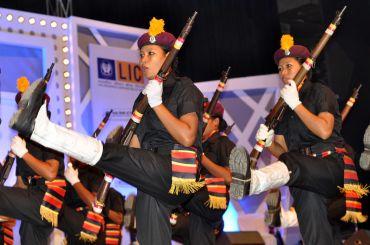
9. India: In Guwahati, the police force introduced a special all-women division in November called Virangana to focus on street harassment and assault. The 100 women were specially trained and carry swords.

10. India: In November, India’s Supreme Court acknowledged that sexual harassment is a rampant problem, especially on the streets and on public transportation, and one that negatively impacts the lives of the harassed persons. So the Supreme Court issued a country-wide standard for addressing the problem.

11. Russia: This year the feminist group RosNahal tackled street harassment. They made a video about it and engaged in lobbying and activism that has led the Russian government to take notice. “Russia’s ruling party has decided that Russia needs a separate article prosecuting sexual harassment in its administrative code while the logistics for enforcing and proving such offences are still up in the discussion. Russia’s ruling party has suggested a steep fine of up to 50,000 rub which is about 1,000£ to punish any would-be sexual harassers.”

12. Saudi Arabia: The Shura Council in Saudi Arabia finalized the draft of an anti-sexual harassment.

13. UK: The Ending Violence Against Women Coalition successfully pressured several of the candidates who ran for mayor of London in May to put street harassment on their agenda, but sadly, none of those candidates were elected.

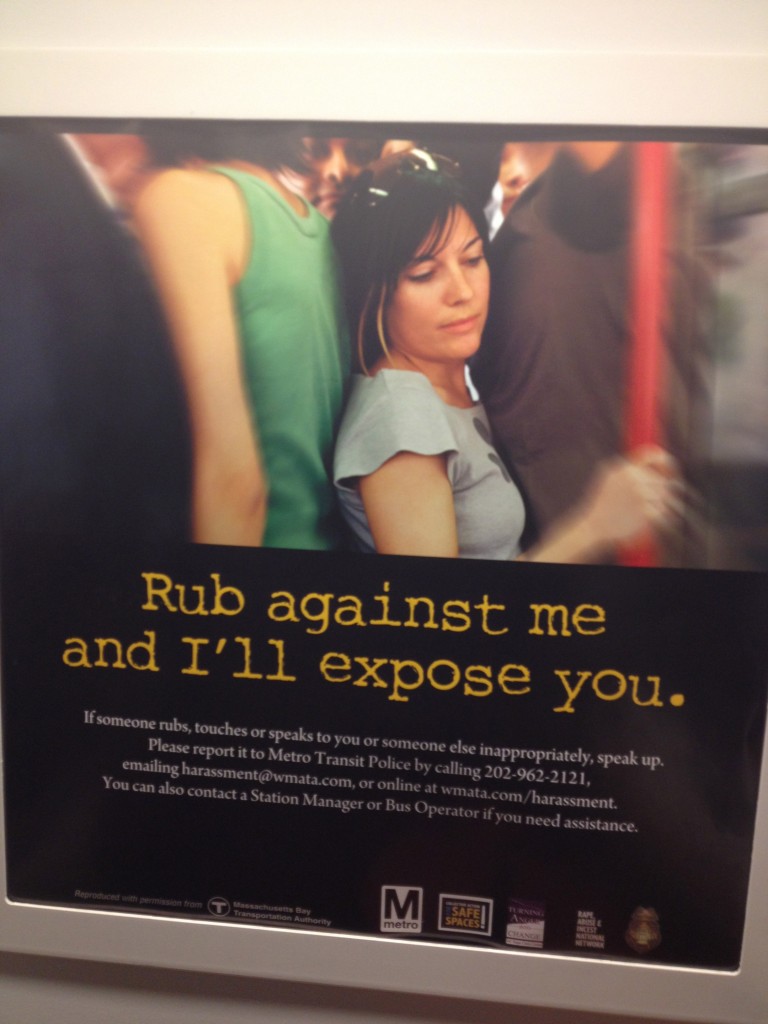
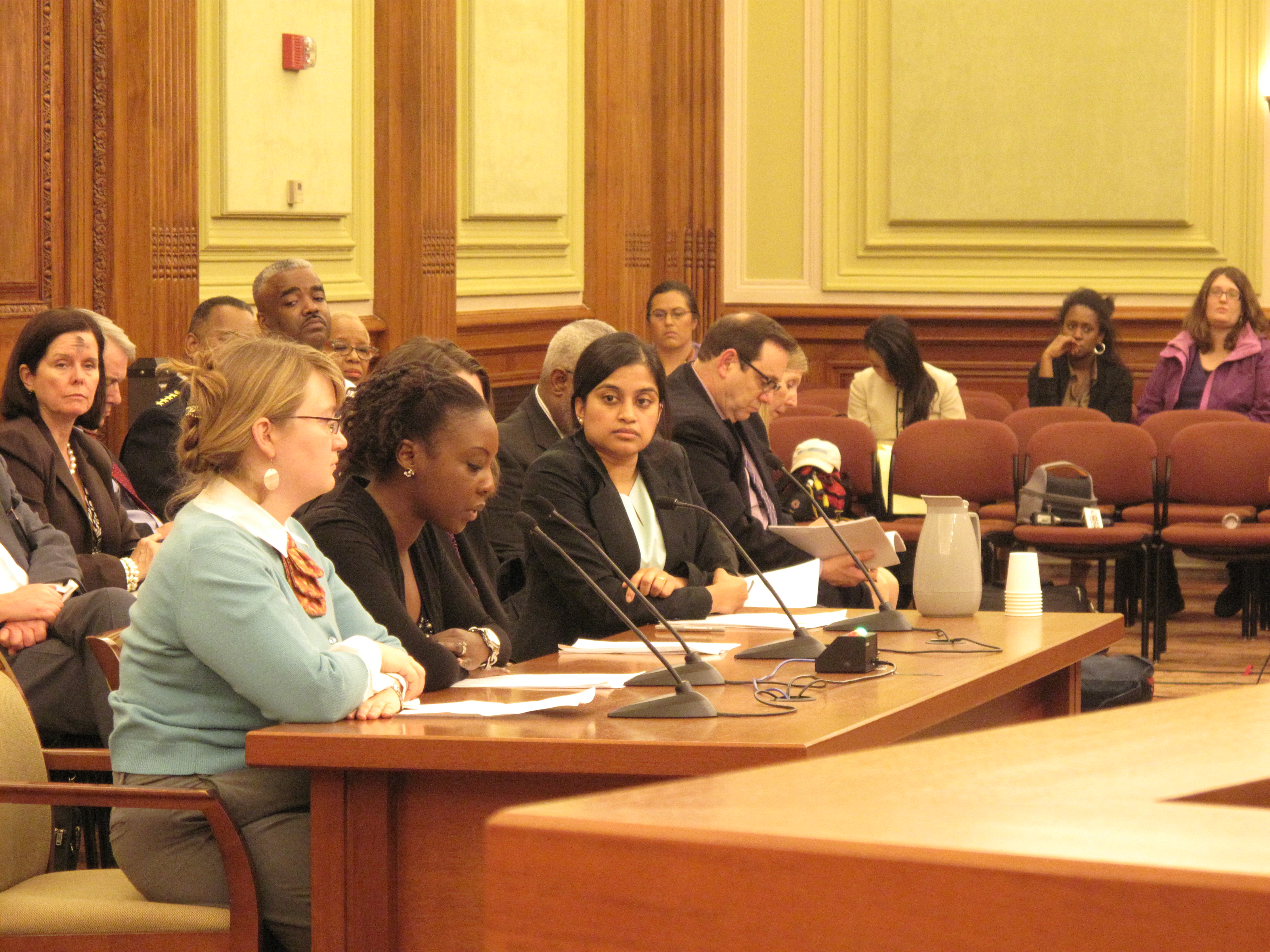
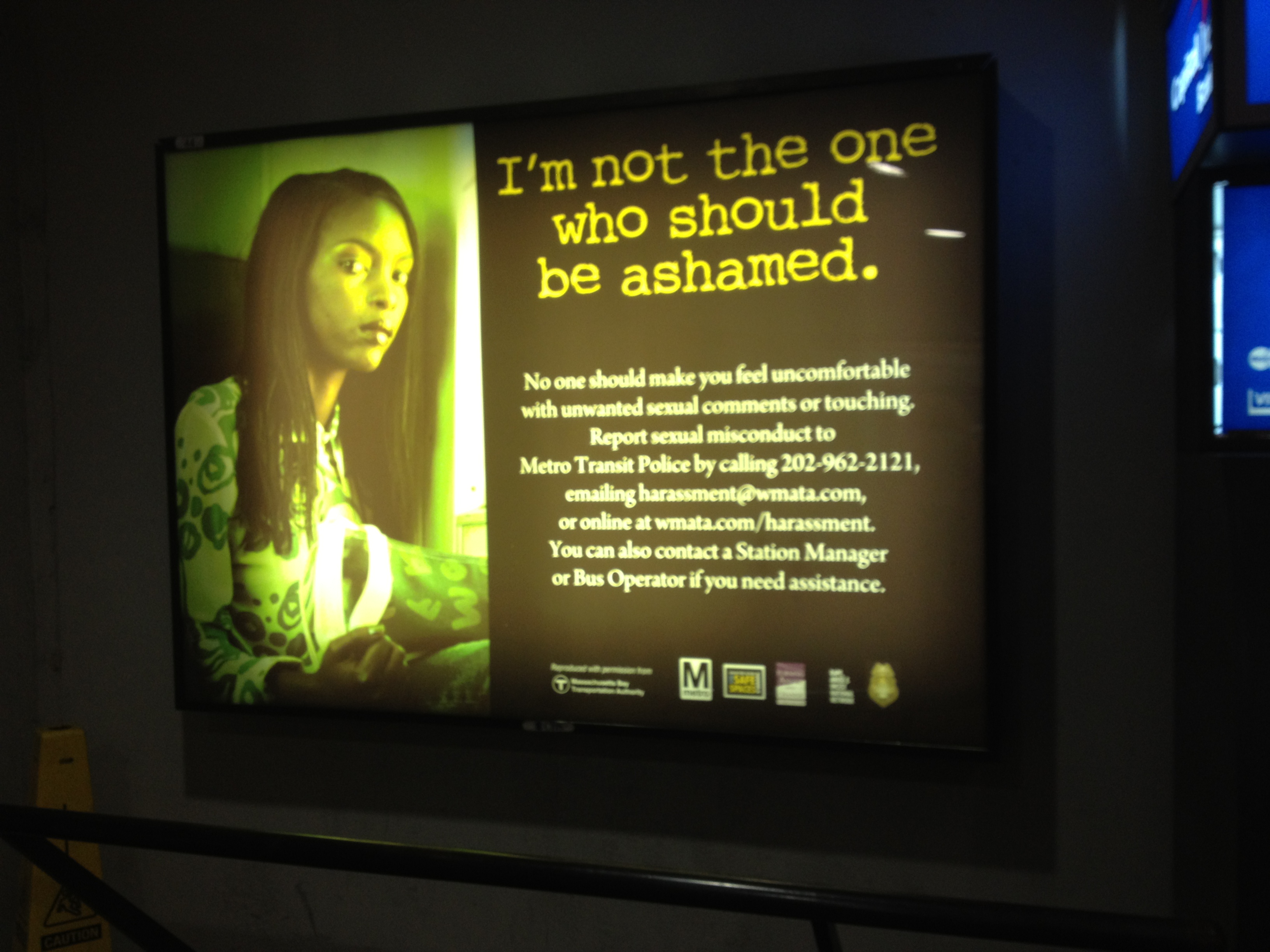
14. USA: After unsuccessfully trying to meet with the transit authority in Washington, DC, to discuss sexual harassment on their system, I joined a small group of people and testified about the problem before the Washington, DC City Council in February (the team was led by Collective Action for Safe Spaces). Ward 4 City Council Member Muriel Bowser was disturbed by the stories and statistics and told the transportation authority to do something! Two weeks later, they had formed a taskforce and got to work changing how they track and respond to harassment complaints, creating an online reporting form, and launching a poster campaign.

15. USA: At the urging of Collective Action for Safe Spaces and Stop Street Harassment, in Washington, DC, Ward 4 City Council Member Muriel Bowser introduced legislation that will make it easier to prosecute people who expose themselves in public (e.g. public masturbators and flashers). It is still pending.

16. USA: New York is considering a bill that would make harsher punishments for engaging in unwanted sexual touching in public spaces.

Share

Filed Under: street harassment

2012 #EndSH Successes Part 2: Creative Initiatives

December 28, 2012 By HKearl

At the end of every year, I like to look back, document and reflect on everything that has transpired in the global movement to end street harassment and assault. Yesterday I wrote about 10 of Stop Street Harassment’s achievements. Today, I’m posting a five-part series about the highlights of ALL activism that happened this year (PDF format). WHAT A YEAR!

Post 1: New anti-street harassment campaigns, new initiatives within existing campaigns, and protests.

Post 2 (this one): Creative anti-street harassment initiatives.

Post 3: Government initiatives/collaborations

Post 4: New studies, reports, and significant news articles.

Post 5: Stories from 25 people who stood up to street harassers this year.

1. Afghanistan: Young Women for Change released two short films about street harassment.

2. Afghanistan: Talalo, an Afghan graffiti band, fought street harassment by putting messages on street walls.

3. Azerbaijan: Jake Winn, a Peace Corps volunteer and a youth development facilitator in northern Azerbaijan helped his male students make an Anti-Street Harassment video. The title, “Ay Gardash! Kishi Ol!”, can be translated to, ‘Hey man, be a gentleman!” Peace Corps is working on distributing the video throughout the country, along with a lesson plan and discussion questions for other volunteers to use with their own students. Download the lesson plans: Street Harassment Lesson Plan (English) | Street Harassment Lesson Plan (Azerbaijani)

4a. Belgium: For Meet Us on the Street, Hollaback Brussels held a chalk walk where they visited places they’d been harassed and reclaimed those spots by telling their stories aloud and writing in chalk that they reclaim the area. They’ve held additional chalk walks since then.

4b. Belgium: Over the summer, college student Sofie Peeters’ documentary about street harassment went viral, launching an international discussion about the topic and leading the government of Brussels to pass legislation addressing it. View the full video with English subtitles:

5. Canada: METRAC released a free “Not Your Baby App” to provide responses you can use when experiencing harassment

6. China: After a subway company in Shanghai, China, blamed women for “causing” sexual harassment in June, two young women went to a subway station and wore a “black veil over their face, stepped into a crowded subway station with signs that read, ‘I want my coolness under the sun, but not the pervert in the subway,’ and ‘I can reveal myself, and you cannot bother me.’”

7. Egypt: Anum Khan created the Egyptian version of the video “What Men Say to Men Who Harass Women on the Streets” in Egypt.

8. Egypt: Youth in Egypt created a short movie about street harassment and verbal abuse.

9. Germany: Because soccer/football is so popular in Germany, the group ProChange decided to use the concept of “red cards” as a creative way to speak out against street harassment. In the spring, they distributed 2000 “Red Card” against sexism, “Pink Card” against homophobia, and “Purple Card” Courage. They also distributed special coasters in pubs, bar, from clubs in Dortmund, Germany.

10. India: In early 2012, male ally Dhruv Arora launched the website GotStared.At where people can post photos of the clothes they were wearing when harassed along with their story. What really went viral though were graphics with clever messages against victim-blaming, which, once posted on Facebook, were shared widely. In the fall, GotStared.At won the prestigious UN World Summit Youth Award in the category Power 2 Women!

11. India: Mumbai Boss asks, “What’s the best way to deal with eve-teasers? A full body wax, one tight slap and flour grinding are some of the many punishments suggested in this video survey of Mumbai women.”

12. Israel: In response to ultra-Orthodox Jewish men who called an 8-year-old a whore as she walked to school in Israel, in January, a group of 250 women from  Bet Shemesh held a Flashmob dance in the city square, protesting women’s exclusion from the public domain and the harassment of women and girls who do go in public.

13. Istanbul: When Hollaback Istanbul launched the Hollaback! Green Dot Bystander Campaign, they created a companion video with male allies letting harassed persons know they “have their back.”

14. Lebanon: The Adventures of Salwa Campaign released a video about Salwa taking on harassers at a club. She also reports the harasser to the police and then has to stop the police officer who harassed her!

15. Pakistan: In Karachi this spring, students at university SZABIST hosted a “How to respond to harassment” session, a self defense class, and they created a PSA about harassment.

16. Pakistan: Naveen Naqvi created a powerful PSA video about street harassment for gawaahi.org.

17. South Africa: Filmmaker Pascale Neuschäfer created a powerful short film about street harassment in her community last year and in January, she created a new PSA against street harassment. It was filmed during the SlutWalk in Capetown last year.

18. UK: Those Pesky Dames posted this video: “Look at the legs on that” – street harassment needs to stop

19. UK: Isobel Williams created an amazing design project to address street harassment for school. She designed a booklet about the issue that includes a card which women can carry and give to a harassing man as a decoy. The card lists a website and if they visit the site, they can view a short film offering them a chance to gain a reality check on their actions.

20. UK: Hollaback Edinburgh created a humorous, “Said No One Ever” Tumblr. Read an interview with the creator.

21. USA: Bix Gabriel and Joe Samalin are part of the NYC team that created the viral video “Shit Men Say to Men who Say Shit to Women on the Street” for International Anti-Street Harassment Week. In September, the video won the US government’s “Seeing My World through a Safer Lens Video Contest“

23. USA: One woman launched a Tumblr where she records everything men say to her on her way to the train.

24. USA: Aqueelah Grant wrote a practical book about how to deal with crimes on the street, including street harassment called HoodRules. Here’s an interview with her.

25. USA: There’s a new tumblr called Street Harassment Fashion that challenges victim-blaming. Read an interview with the founder.

26. USA: Tatyana Fazlalizadeh is an oil painter/illustrator whose work focuses on portraiture and social/political themes. She’s the artist behind popular anti-street harassment fliers found in Philadelphia, New York City, and Washington, DC. Read an interview with her.

27. USA: Earth Angel created a petition to tell Planet Fitness Gym to deal with harassers at their facility after they ignored her complaints about harassment.

28. USA: Jennifer Phan made a video about street harassment for a sociology class assignment.

29. USA: HappRat is posting her street harassment experiences on a map to show all of the places and times she’s harassed. Read an interview with her.

30. USA: In June, Queerocracy, a New York City-based grassroots organization, presented QRASH Course: Queers Resisting All Street Harassment, an afternoon-long training event for people who witness and experience street harassment in the NYC area.

31. USA: The FX show Totally Biased with W. Kamau Bell covered street harassment!

32. USA: In April, Mary wrote a summer street harassment poem.

33. USA: Collective Action for Safe Spaces & Voices of Men rode the Washington, DC, Metro and collaborated to perform a skit about harassment to bring attention to the issue. They performed it several times on several cars and received positive feedback.

34. USA: You can now view the full anti-street harassment documentary “War Zone” online.

35. USA: During the spring semester, San Jose State University’s Women’s Resource Center did a lot to address gender violence. They created a mural, they put on a production of the Vagina Monologues, created a Tunnel of Oppression (800 people walked through it) and they made several videos about street harassment.

36. USA: Council Member Julissa Ferreras and Hollaback! led an historic community safety audit on Saturday, May 5th in Queens, New York.

37. USA: Denice Frohman, Poet, performs “Dear Straight People” and takes on people who harass lesbians.

38. USA: FAAN Mail and Hollaback Philly created a video where teenage girls “draw from personal experience and testimony to illuminate what gender-based street harassment sounds like.”

39. USA: High school students in Chicago created a 30-second anti-street harassment PSA through Free Spirit Media

40. USA: Hollaback Bmore talked about street harassment with the girls from St. Francis Community Center and helped them relieve their frustration with street harassers with….a water balloon fight!

41. USA:  Ines Ixierda in the Queer Women of Color Media Arts Project created a film about street harassment through the stories of Woman of Color and their strategies for self-defense and self-determination.

42. USA: CATCALLED is a collection of women’s stories about street harassment in New York City. For two weeks this August, eleven women in the city kept a log of their harassment experiences, and how the presence (or absence) of catcallers affected their actions.

43. USA: A woman in the USA has recorded more than 50 of her experiences of street harassment over the past few months.

44. USA: SlamPow! Production use humor + anti-street harassment messaging in their creative video “Meat.”

45. USA: Students made this video for their college class HONS201: “Feminism, New Media and Health.”

46. USA: Watch Chescaleigh talk catcalls.

47. Yemen: The Safe Streets campaign released a video about street harassment.

48. I am Not an Object Tumblr’s founder developed a series of 600 “catcalling cards.” They are tiny letterpress cards with a fake number that women who are being followed / aggressively harassed by catcallers can give away so the perp will leave them alone. Once the perpetrator calls the number, he will hear a recording of women telling their harassers exactly what they think of them.


Share

Filed Under: hollaback, male perspective, Resources, street harassment, year end

2012 #EndSH Successes Part 1: Campaigns & Protests

December 28, 2012 By HKearl

At the end of every year, I like to look back, document and reflect on everything that has transpired in the global movement to end street harassment and assault. Yesterday I wrote about 10 of Stop Street Harassment’s achievements. Today, I’m posting a five-part series about the highlights of ALL activism that happened this year (PDF format). WHAT A YEAR!

Post 1 (this one): New anti-street harassment campaigns, new initiatives within existing campaigns, and protests.

Post 2: Creative anti-street harassment initiatives.

Post 3: Government initiatives/collaborations

Post 4: New studies, reports, and significant news articles.

Post 5 : Stories from 25 people who stood up to street harassers this year.

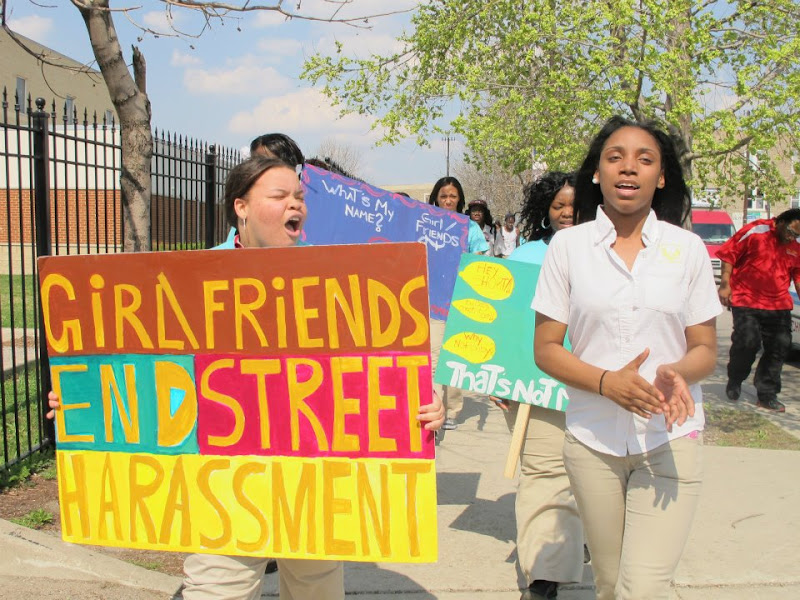
Girls from A Long Walk Home in Chicago organized a march around their high school.

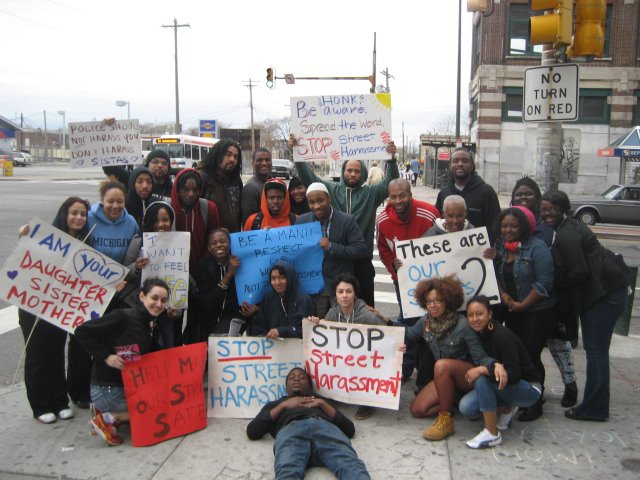
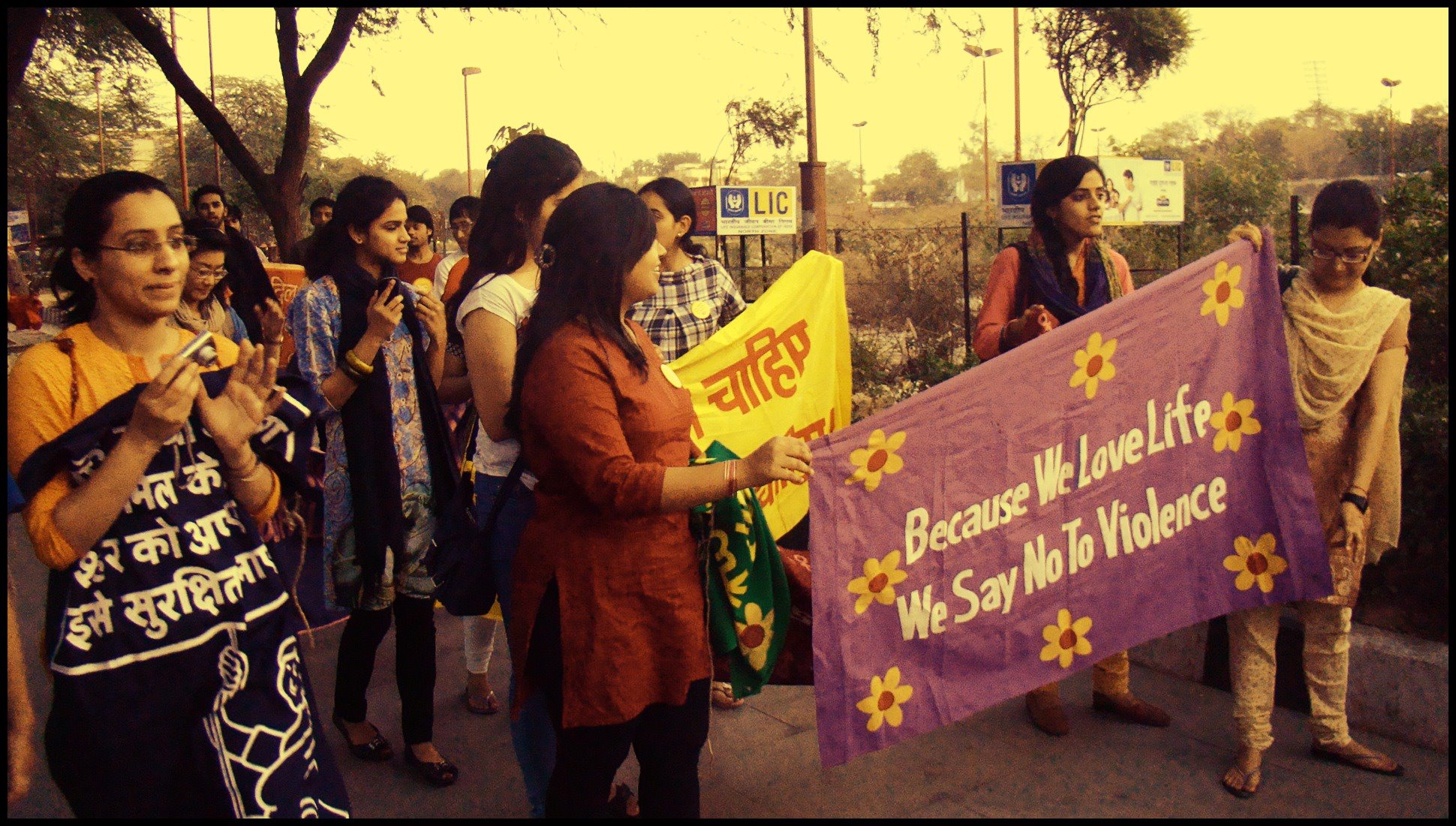
1. Global: In March, Stop Street Harassment organized more than 100 groups in more than 20 countries (on five continents) and tens of thousands of people to collectively speak out against street harassment during Meet Us on the Street: International Anti-Street Harassment Week. This is what happened, including rallies, marches, sidewalk chalk messaging, workshops, film screenings, viral videos, safety audits, report releases, street theater, passing out fliers, art exhibits, and more.

2. Global: Hollaback! now has chapters in 60 cities worldwide, and this year they launched an “I’ve Got Your Back” Bystander Campaign in partnership with Green Dot to show bystanders who to intervene, educate them about their options, and allow them to document their successes online. Green dots on the Hollaback! maps show intervention stories. (Read their State of the Streets 2012 report for more information.)

3. Australia: People Against Street Harassment launched in December. Their mission is “confronting street harassment in Sydney via stickering, leafleting, social media and other such sweet guerilla action.”

4. Australia: Cat Calls: Called Out is another new Sydney-based anti-street harassment campaign that works to bring attention to the issue and spread ideas for stopping it.

5. Belgium: In the fall, ELLE launched a Touche Pas à Ma Pote! (Don’t Touch my Girl friend) campaign with the support of local government agencies in Brussels and it includes signs plastered on trams for the next six months.

6. Canada: Women in Cities International is part-way through a multi-year project to conduct a Blueprint project on the theme of “preventing violence against women and girls and improving their security in Canadian cities.” This year, they worked with adolescent girls in the greater Montréal area and held workshops, focus group discussions and training sessions with them. Participants also conducted women’s safety audit walks and they had the opportunity to creatively illustrate their findings and recommendations.

7. Egypt: HarassMap collects street harassment stories on its online map. During 2012, they organized more than 500 HarassMap volunteers who went outside once per month to talk to shop owners, police, doormen and others with a presence in the street about street harassment and to let them know they need to not harass and to stand up if they see harassment happening.

8. Egypt: On June 13, activists in Egypt led a day of online action to speak out against street harassment and sexual violence using the hashtag #EndSH.

9. Egypt: After several mass sexual assaults of women at Tahrir Square and after a woman was murdered by a street harasser, there were numerous protests in the summer and fall (and one protest ended because men swarmed, attacking the protesters).

Photo by Yumna Al-Arashi.

10. Egypt: There were many campaigns against street harassment in Egypt ahead of the Eid holidays. In August, volunteers organized by the Imprint Movement patrolled the streets and subway stations, watching out for harassers and helped police arrest several. In October there was a “Catch a Harasser” initiative, men spray painting harassers, and special harassment reporting hotlines.

11. Egypt: Because there are so many instances of sexual harassment and sexual assault during political protests in Tahrir Square, during political protests in November and December, people volunteered their time to serve as patrollers, working to make the area safe for women. One of the groups is called Tahrir Bodyguard.

12. India: College students in Mumbai organized a Chal Hatt Tharki campaign asking women to raise their voices against sexual harassment and street harassment.

13. India: In April, thousands of women in Kannur, a district in Kerala, gathered in the city center to ask for the right to travel safely at night and in October in Chandigarh, college students and staff of Government College Sec 42 took to streets to protest street harassment and sexual violence.

14. India: In December, the Patiala-based organization Punjab Today Foundation launched a major awareness movement against what it called the “collective guilt of society” against girls and women called SMASH (Society’s Movement Against Street Harassment).

15. India: The organization Breakthrough launched a bystander campaign for the holiday Diwali in November, because everyone deserves a safe Diwali.

16. India: In July, Blank Noise curated a series of stories about people’s first recollection of experiencing street harassment called Recall. In December, they launched the #SafeCityPledge campaign.

Image from I Stand for Safe Delhi

17. India: After a 23-year-old college woman was brutally gang rape and nearly murdered by six men on a bus (and her male friend was also beaten up by them) in mid-December, tens of thousands of people in Delhi have protested and marched daily, calling for an end to street harassment, rape, and all forms of sexual violence. For a time, they clashed with police who forbad people from gathering in groups larger than five people.

18. Jordan: In July, youth in Jordan formed a human chain from Al Hussein Sports City to the Interior Ministry Circle to protest various gender-based crimes, including street harassment, the practice of forcing rape survivors to marry their rapist, and honor killings.

19. Lebanon: Hundreds of people rallied in Beirut, Lebanon, in January to protest rape and sexual harassment and the weak laws against such crimes. The rally was organized by Nasawiya, a feminist collective that also runs The Adventures of Salwa campaign against street and sexual harassment.

20. Myanmar: In February, a new anti-harassment campaign launched called “whistle for help.” As part of the campaign 150 volunteers distributed whistles and pamphlets to women at eight busy bus stops in Yangon each Tuesday morning that month and they’ve continued to do so for nine months. The pamphlets tell women to blow the whistle when they experience sexual harassment on the bus and advises them to help other women when they blow the whistle.

21. Malawi: Women’s groups organized a protest in January, demanding the right to wear pants and mini-skirts and to demanding an end to sexual violence. Their actions were prompted by a series of attacks from gangs of men who targeted women wearing pants and short skirts.

22. Nepal: In April, 500 youth participated in a Walk for Respect against street harassment/sexual harassment in Kathmandu.

23. Nepal: After a 2011 ActionAid Report showed that street harassment is a big problem in Nepal, numerous groups came together to launch the Safe City Nepal campaign. It includes a public transportation component. Already, they have conducted a safety audit (evidence collection), held forums, and are now working on policy advocacy initiatives.

24. Peru: In February, university faculty and students launched the anti-street harassment initiative el Observatorio Virtual contra el Acoso Sexual Callejero. They have 20 volunteers who conduct interview and research on the topic, share information on their website and social media, meet with government officials, engage in awareness campaigns, and speak out against groups/people who dismiss street harassment (e.g. in September a radio show talked about street harassment as compliments and they protested it, issued a statement, etc).

25. Russia: This year the feminist group RosNahal tackled street harassment. They made a video about it (it has over two million views) and engaged in lobbying and activism that has led the Russian government to take notice.

26. Sri Lanka: Sri Lanka Unites organized the “S.H.O.W You Care” project. After receiving training, hundreds of young men boarded more than 1000 buses across a week and, according to a previously formulated strategic plan, apologized to women in the buses for any harassment they encountered in the past and provided them with information on legal recourse available to them. They also told men to take responsibility and not harass.

27. South Africa: After two teenagers wearing miniskirts were harassed and groped by a group of 50-60 men at a taxi rank, around 3,000 South Africans marched through Johannesburg in protest. The ruling African National Congress Women’s League organized the march to emphasize “that women had the right wear whatever they wanted without fear of victimization.”

28. South Africa: A new campaign against street harassment in Cape Town launched this year.

29. UK: Laura Bates launched the Everyday Sexism Project in the spring, in part because of her own street harassment experiences and other ways she faces daily sexism. In September she wrote, “The project is an ever-increasing collection of thousands of stories of sexism experienced by women around the world. In just over 5 months, the project has received nearly 6500 entries, with the last 5000 flooding in in just the last month as the momentum has gathered and word has spread.”

30. USA: Halloween in Isla Vista, the college town where University of California Santa Barbara is located, is a huge party every year. Unfortunately, some people use this as an excuse to street harass and assault people. In October, two student groups teamed up to organize a campaign against street harassment.

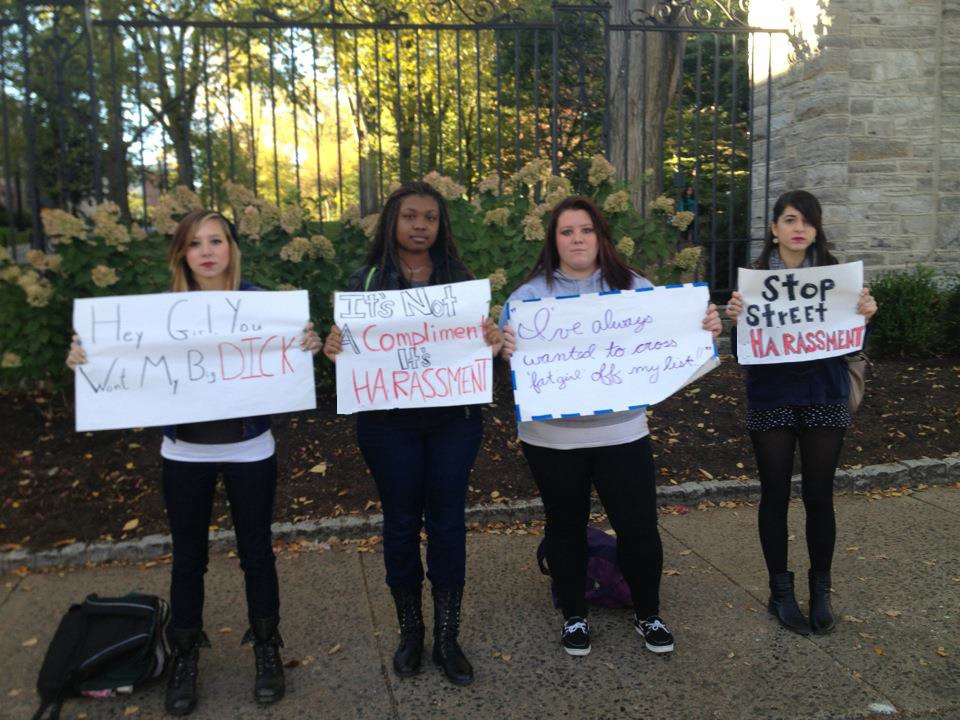
31. USA: Members of Penn State’s TRIOTA, the Women’s Studies Honor’s Society, held an anti-street harassment demonstration on a busy Friday afternoon in downtown State College in October. They held signs proclaiming their anti-harassment message, and even included specific remarks that had been yelled at them during their time at PSU.

32. USA: In March, Sarah Harper launched the Little Bird project to raise awareness about street harassment through the arts in San Francisco, California.

33. USA: Since January 1, 2012, at least 63 transgender individuals have been hatefully murdered, often by strangers in the streets, and many of the recent murders have been in Washington, DC. In September the DC Office of Human Rights launched a groundbreaking Transgender and Gender Identity Respect Campaign to improve the treatment of transgender and gender non-conforming people.

34. Yemen: This year, the Safe Streets campaign has encouraged women to report their stories to their website and highlighted the issue through social media and articles like this one, published on Open Democracy.

Share

Filed Under: anti-street harassment week, hollaback, News stories, street harassment, year end Tagged With: adventures of salwa, Blank Noise, catcalls, everyday sexism project, HarassMap, hollaback, i stand for safe delhi, rosnahal, safe streets yemen, Sri Lanka Unites, walk for respect, women in cities international

2012: Stop Street Harassment’s Top 10 Achievements

December 27, 2012 By HKearl

As 2012 comes to a close, I am proud of everything that Stop Street Harassment (SSH) achieved this year, especially because, as many SSH blog readers may know, I have a full-time job and do my street harassment activism during my lunch breaks, in the evenings, on the weekends, and over my vacation days.

Not only am I proud, I am also extremely grateful. I am grateful for the support of my partner, my parents, my day job co-workers, my friends and family, all of my activist allies, everyone who organized action for Meet Us on the  Street 2012, my new social media volunteers, and my new board members who each helped make the following 10 achievements possible.  So, a big THANK YOU to them, and a special thank you to the organization Collective Action for Safe Spaces, my co-collaborator for several projects.

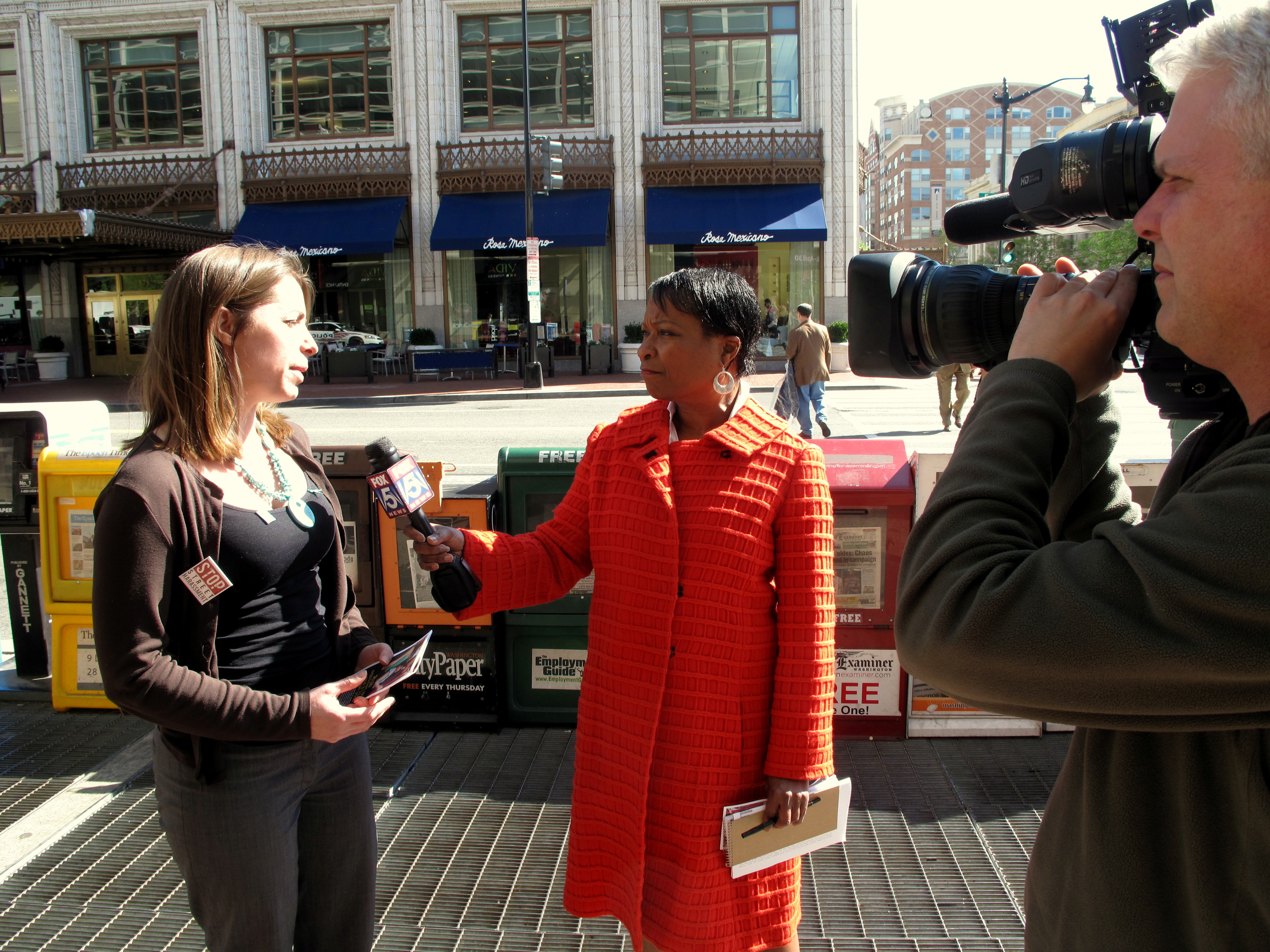
1. New Metro Campaign: After unsuccessfully trying to meet with the transit authority in Washington, DC, to discuss sexual harassment on their system, I joined a small group of people and testified about the problem before the Washington, DC City Council in February (we were organized by Collective Action for Safe Spaces). Then I wrote articles and gave media interviews about harassment on the Metro. The result? Helping successfully pressure the DC transportation authority to address sexual harassment in several ways, including by changing how they track and respond to harassment complaints, creating an online reporting form, and launching a poster campaign over the summer.

2. Anti-Street Harassment Week: Organized more than 100 groups in over 20 countries and tens of thousands of people to speak out during Meet Us on the Street: International Anti-Street Harassment Week in March. The United Nations recognized the week on their calendar! Read the wrap-up report.

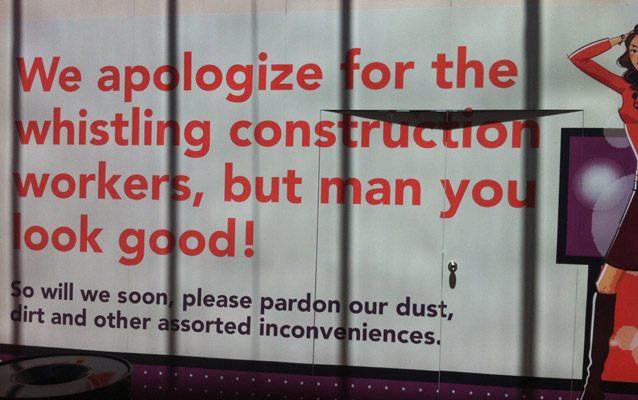
3. Petition Victory: Created and led the Change.org petition campaign that forced a New Jersey Mall to take down an offensive, pro-harassment construction sign.  It also resulted in tons of media coverage, especially after the Associated Press ran a story about the victory, bringing more public attention to the issue.

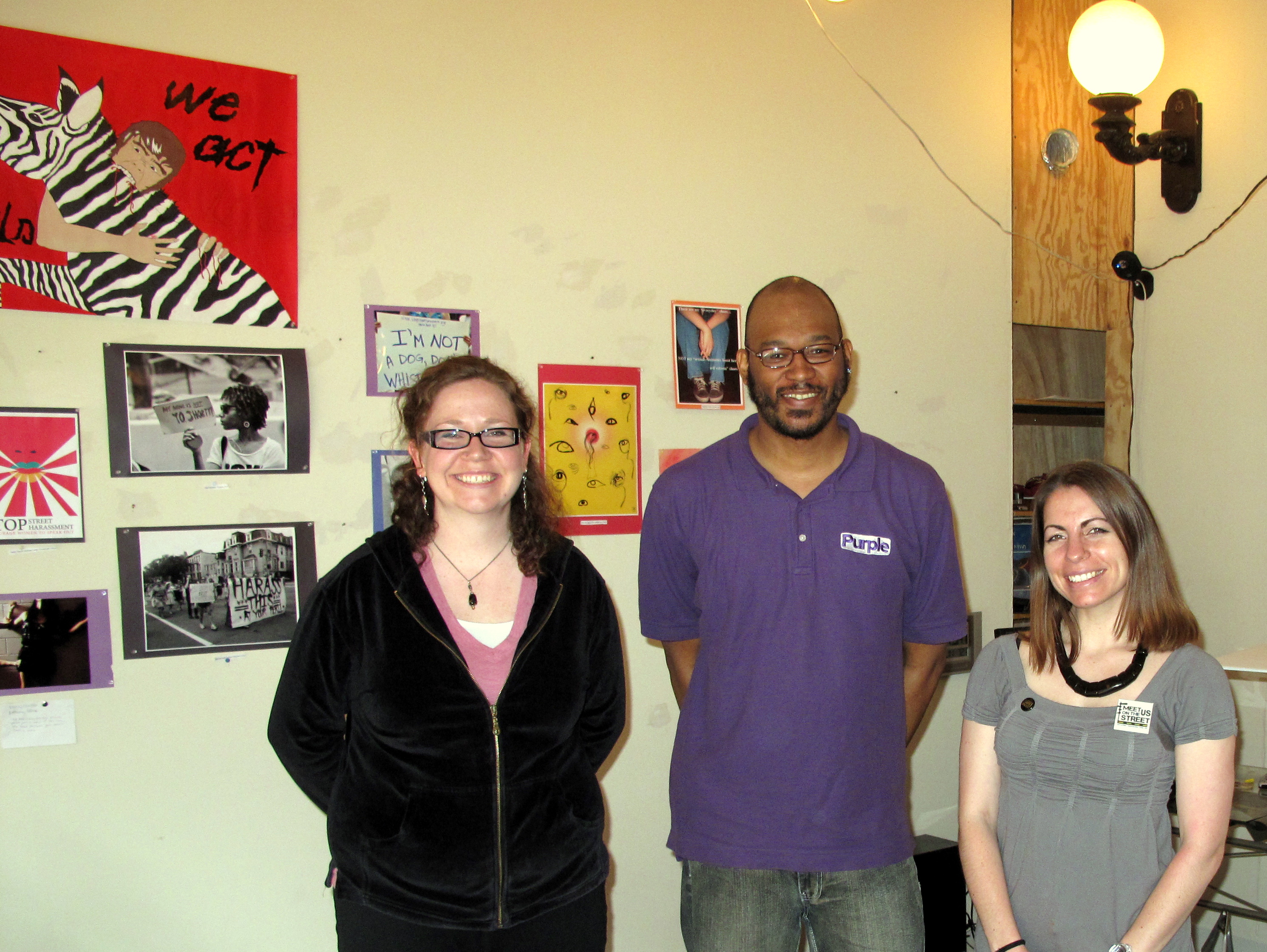
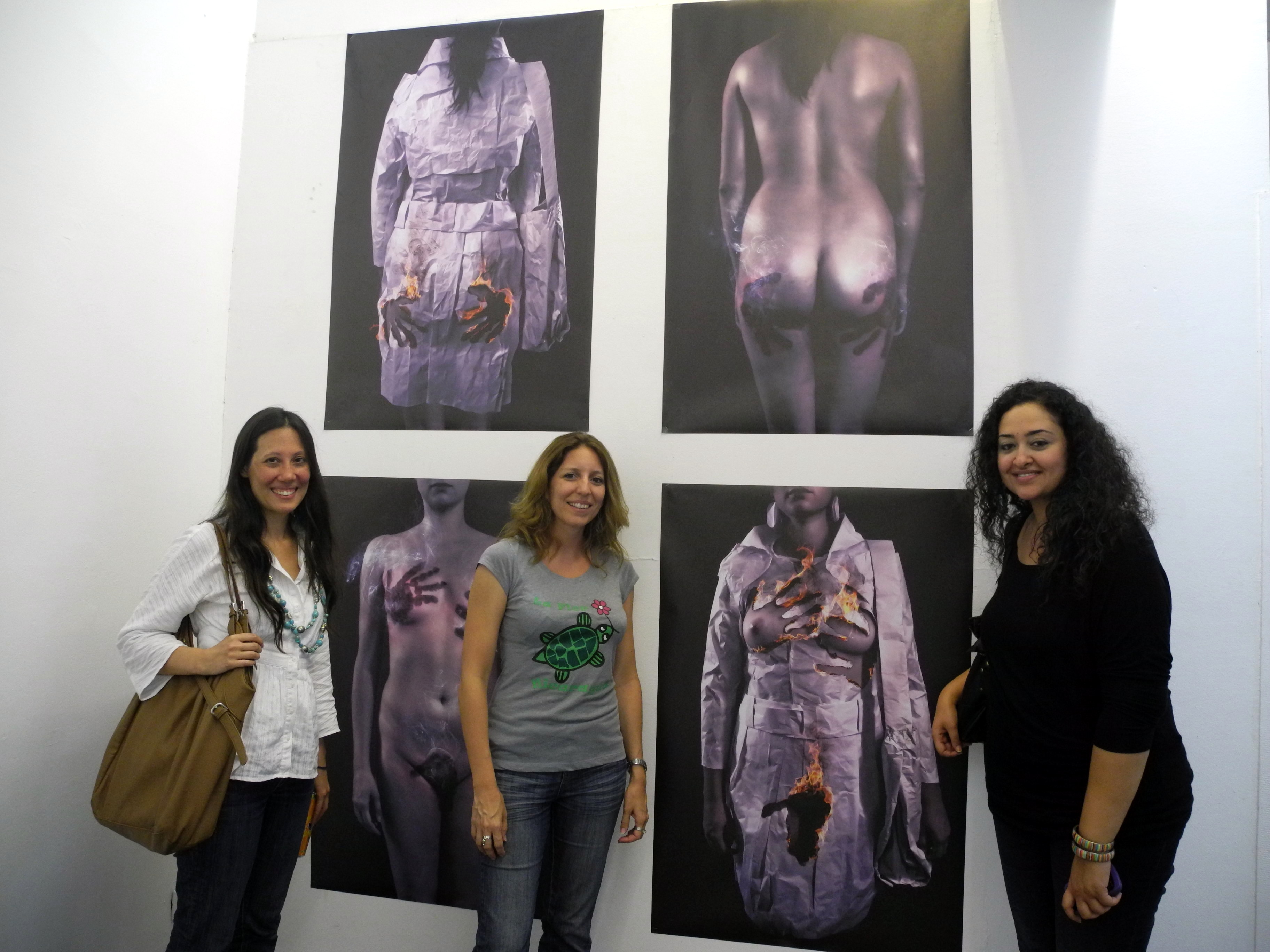
4. Organized Local Events: Organized three events about street harassment internationally and locally, including an art exhibit in March that included art from countries like Trinidad and Tobago and Yemen (co-organized with the Deaf Abused Women’s Network) as well as cities in the USA; another March event about harassment in Egypt, Iran, and the USA (co-organized with the YWCA-NCA); and an event in June about street harassment in Afghanistan and the USA (co-organized with Collective Action for Safe Spaces).


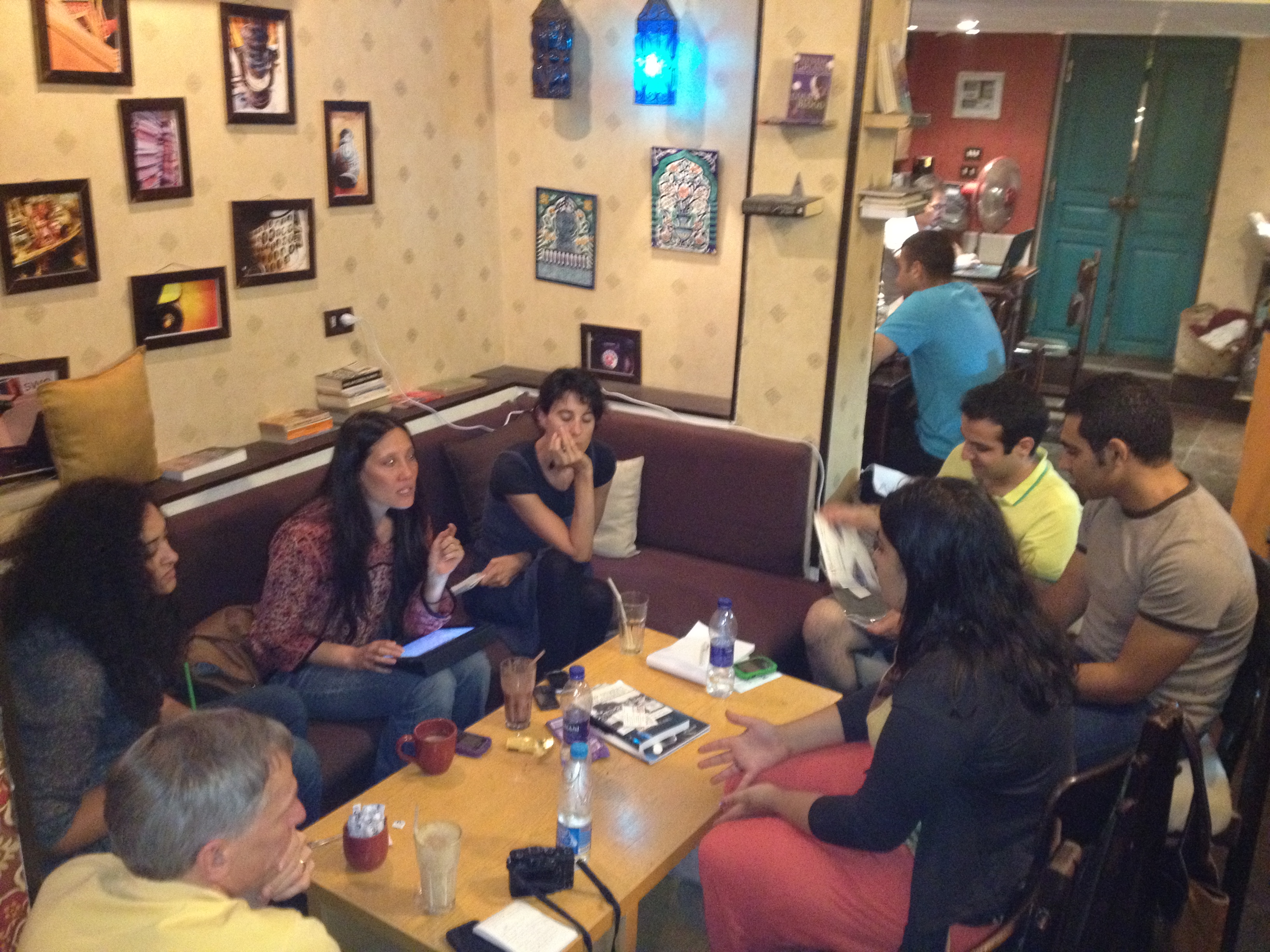
5. Egypt: Used vacation days from work and traveled to Cairo, Egypt, and attended the weekly meeting of the anti-harassment group HarassMap, perused an art exhibit about street harassment, and attended/spoke at an open mic event about sexual violence, including street harassment. I wrote about the art exhibit/open mic event for the Women’s Media Center.

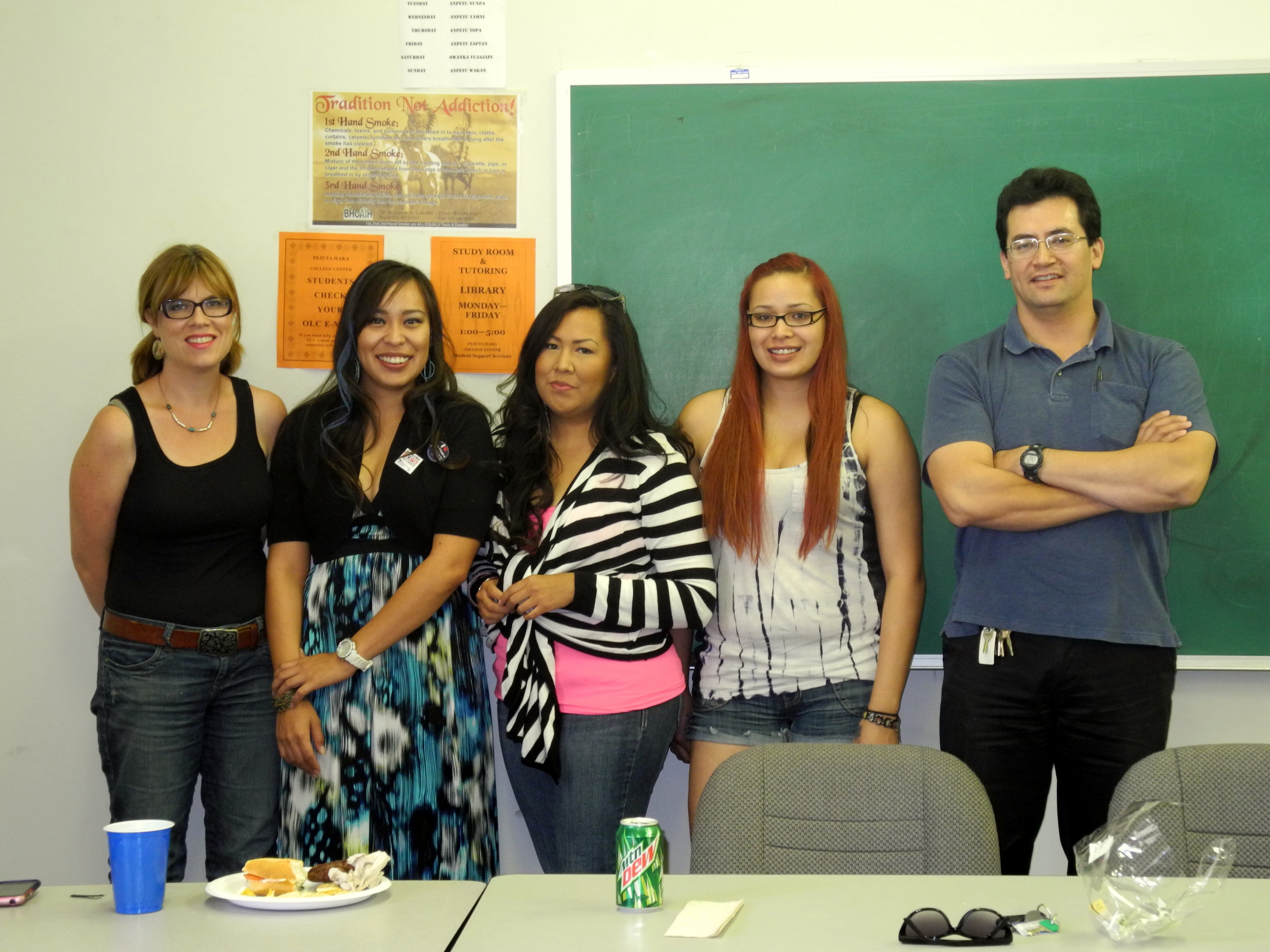
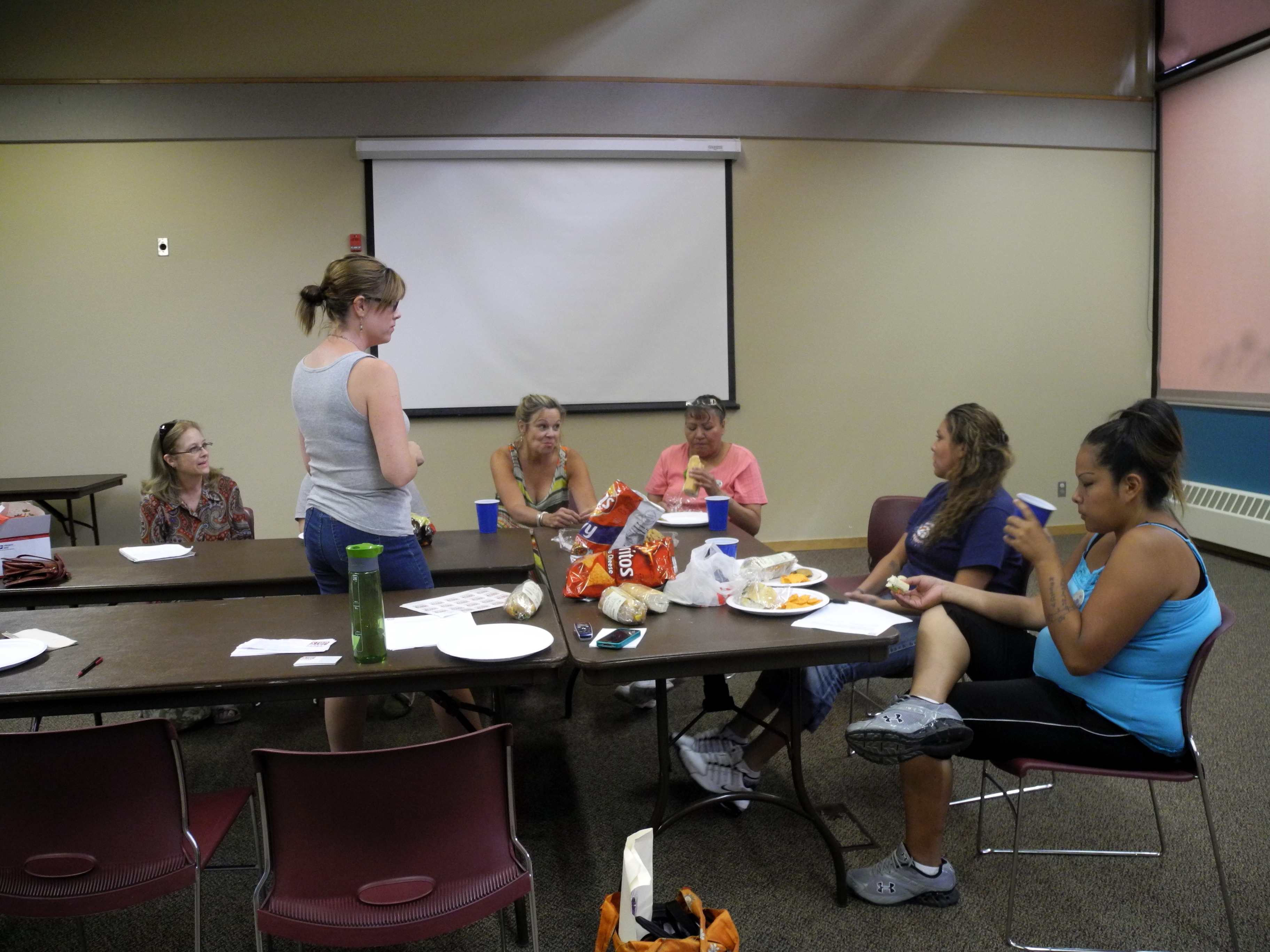
6. South Dakota: Used vacation days again and traveled to Pine Ridge Reservation and Rapid City in South  Dakota to conduct the first-ever focus groups about street harassment with Native Americans. The findings garnered media attention, including an Associated Press article and a South Dakota Public Broadcasting segment. I also wrote about the focus groups for the Women’s Media Center.

7. Talks: Gave 21 talks and presentations about street harassment on campuses, in high schools and to community groups (campuses included Stanford, UC Berkeley, Dickinson College, Jefferson Community College, George Mason University, Shenandoah University, and Portland State University), and spoke about street harassment at national conferences, including the National Organization for Women and the National Sexual Assault Conference.

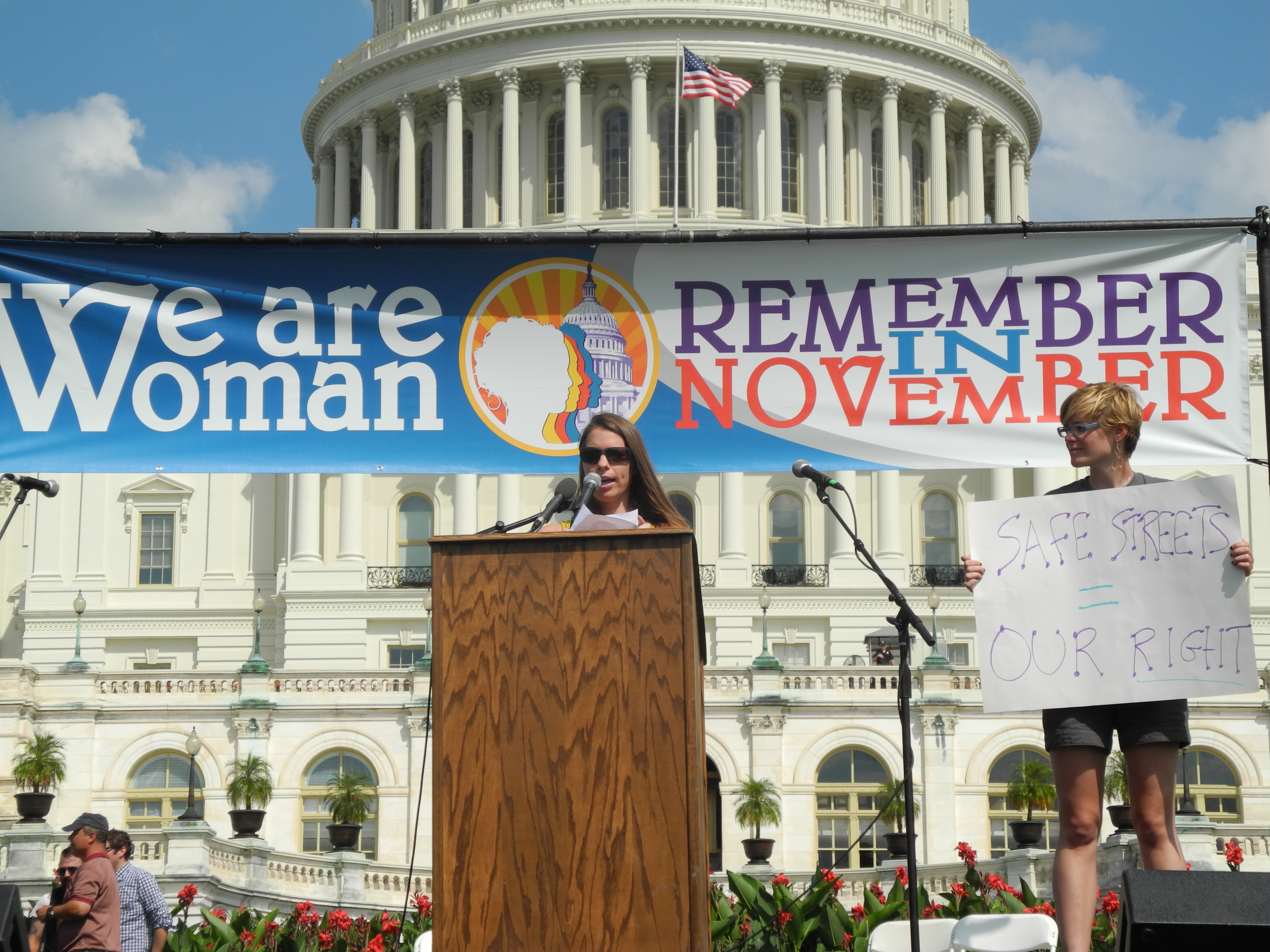
8. Rallies: Spoke at or tabled at women’s rights rallies and events, including the We Are Woman Rally and Slutwalk DC. Also was part of a team organized by Collective Action for Safe Spaces that performed a skit about sexual harassment on the Washington, DC Metro one Sunday afternoon in August.

9. Interviews: Gave nearly 50 media interviews, including for CNN.com, USA Today, New York Times, Wall Street Journal, The Jerusalem Post, ABC News, Cosmo Magazine, Ebony Magazine, Jezebel, and also gave interviews for more than a dozen college students who wrote papers and dissertations on street harassment.

10. Nonprofit, Paperback, & Volunteers: Gained 501(c)(3) nonprofit status, formed a board of directors, and recruited social media volunteers. Also, bought the paperback rights to my book Stop Street Harassment: Making Public Places Safe and Welcoming for Women and published it in paperback in April for the affordable price of $15! (Compared with $45 in hardcover.)

Everything SSH did in 2012 happened without donations or grants (and was nearly all financed by my paycheck from my day job or by my speaking honorariums), but you can help SSH achieve even more in 2013 by donating today. Donations are tax deductible and an anonymous donor will match all donations made in December. See my 2013 plans for SSH if I raise enough money.

A final note: There are four more days in 2012, come back each day to read success stories and learn about the major accomplishments and milestones that occurred worldwide to stop street harassment this year.

Share

Filed Under: street harassment

« Previous Page
Next Page »

Share Your Story

Share your street harassment story for the blog. Donate Now

From the Blog

  • #MeToo 2024 Study Released Today
  • Join International Anti-Street Harassment Week 2022
  • Giving Tuesday – Fund the Hotline
  • Thank You – International Anti-Street Harassment Week 2021
  • Share Your Story – Safecity and Catcalls Collaboration

Buy the Book

Search

Archives

  • September 2024
  • March 2022
  • November 2021
  • April 2021
  • March 2021
  • January 2021
  • April 2020
  • March 2020
  • February 2020
  • December 2019
  • November 2019
  • September 2019
  • August 2019
  • July 2019
  • June 2019
  • May 2019
  • April 2019
  • March 2019
  • February 2019
  • January 2019
  • December 2018
  • November 2018
  • October 2018
  • September 2018
  • August 2018
  • July 2018
  • June 2018
  • May 2018
  • April 2018
  • March 2018
  • February 2018
  • January 2018
  • December 2017
  • November 2017
  • October 2017
  • September 2017
  • August 2017
  • July 2017
  • June 2017
  • May 2017
  • April 2017
  • March 2017
  • February 2017
  • January 2017
  • December 2016
  • November 2016
  • October 2016
  • September 2016
  • August 2016
  • July 2016
  • June 2016
  • May 2016
  • April 2016
  • March 2016
  • February 2016
  • January 2016
  • December 2015
  • November 2015
  • October 2015
  • September 2015
  • August 2015
  • July 2015
  • June 2015
  • May 2015
  • April 2015
  • March 2015
  • February 2015
  • January 2015
  • December 2014
  • November 2014
  • October 2014
  • September 2014
  • August 2014
  • July 2014
  • June 2014
  • May 2014
  • April 2014
  • March 2014
  • February 2014
  • January 2014
  • December 2013
  • November 2013
  • October 2013
  • September 2013
  • August 2013
  • July 2013
  • June 2013
  • May 2013
  • April 2013
  • March 2013
  • February 2013
  • January 2013
  • December 2012
  • November 2012
  • October 2012
  • September 2012
  • August 2012
  • July 2012
  • June 2012
  • May 2012
  • April 2012
  • March 2012
  • February 2012
  • January 2012
  • December 2011
  • November 2011
  • October 2011
  • September 2011
  • August 2011
  • July 2011
  • June 2011
  • May 2011
  • April 2011
  • March 2011
  • February 2011
  • January 2011
  • December 2010
  • November 2010
  • October 2010
  • September 2010
  • August 2010
  • July 2010
  • June 2010
  • May 2010
  • April 2010
  • March 2010
  • February 2010
  • January 2010
  • December 2009
  • November 2009
  • October 2009
  • September 2009
  • August 2009
  • July 2009
  • June 2009
  • May 2009
  • April 2009
  • March 2009
  • February 2009
  • January 2009
  • December 2008
  • November 2008
  • October 2008
  • September 2008
  • August 2008
  • July 2008
  • June 2008
  • May 2008

Comment Policy

SSH will not publish any comment that is offensive or hateful and does not add to a thoughtful discussion of street harassment. Racism, homophobia, transphobia, disabalism, classism, and sexism will not be tolerated. Disclaimer: SSH may use any stories submitted to the blog in future scholarly publications on street harassment.
  • Contact
  • Events
  • Join Us
  • Donate
  • Facebook
  • Instagram
  • Pinterest
  • Tumblr
  • Twitter
  • YouTube

Copyright © 2026 Stop Street Harassment · Website Design by Sarah Marie Lacy