• About Us
    • What Is Street Harassment?
    • Why Stopping Street Harassment Matters
    • Meet the Team
      • Board of Directors
      • Past Board Members
    • In The Media
  • Our Work
    • National Street Harassment Hotline
    • International Anti-Street Harassment Week
    • Blog Correspondents
      • Past SSH Correspondents
    • Safe Public Spaces Mentoring Program
    • Publications
    • National Studies
    • Campaigns against Companies
    • Washington, D.C. Activism
  • Our Books
  • Donate
  • Store

Stop Street Harassment

Making Public Spaces Safe and Welcoming

  • Facebook
  • Instagram
  • Pinterest
  • Tumblr
  • Twitter
  • YouTube
  • Home
  • Blog
    • Harassment Stories
    • Blog Correspondents
    • Street Respect Stories
  • Help & Advice
    • National Street Harassment Hotline
    • Dealing With Harassers
      • Assertive Responses
      • Reporting Harassers
      • Bystander Responses
      • Creative Responses
    • What to Do Before or After Harassment
    • Street Harassment and the Law
  • Resources
    • Definitions
    • Statistics
    • Articles & Books
    • Anti-Harassment Groups & Campaigns
    • Male Allies
      • Educating Boys & Men
      • How to Talk to Women
      • Bystander Tips
    • Video Clips
    • Images & Flyers
  • Take Community Action
  • Contact

Street Harassment in Trinidad and Tobago via Women Speak

February 10, 2011 By HKearl

Simone Leid

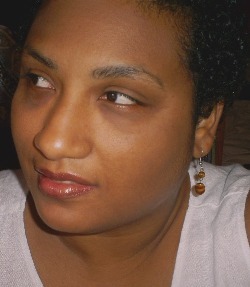
On Women Speak, founder Simone Leid, offers a new online place for women in Trinidad and Tobago to share their stories of discrimination and read related news. Unsurprisingly, street harassment has already come up a few times.

On Feb. 5, a woman shared the following story:

“It was a morning like any other in 2005, except for the fact that on my way to work and as I approached Chacon Street, Port of Spain, absorbed in my own thoughts, a man grabbed my crotch and kept walking. I froze for several seconds, shocked and scared. There weren’t many people around and the few who were there said nothing, so I believe they saw nothing. Physically weak, I took the nearest taxi in silence…” (read more)

Also on Feb. 5, Ms. Leid wrote a post: Harassment is punishable by law!

“A person who pursues a course of conduct which amounts to harassment of another and which he knows or ought reasonably to know amounts to harassment of the other is guilty of an offence and is liable on summary conviction to a fine of two thousand dollars and to imprisonment for six months.”

Good to know that street harassment is illegal there!

On Feb. 8, she featured an excerpt from an article about the commonality and “harmlessness” of street harassment in Trinidad and Tobago:

“But in my 20s I remember the sense of intimidation and fear that ran through me every time I passed a group of boys or men on the street. Would they just say ‘good morning’ or ‘good afternoon’ in that I’m-a-nice-guy way or would there be something disgusting today?”

And yesterday, she posted the video “My Bad Thing” by Chucky, writing:

“Men need to join in the fight against Street Harassment and build loving and supportive relationships with their women by standing up to other men and letting them know that disrespecting women is unacceptable.”

Yes, this is definitely true!


In watching the video
, though, I wasn’t sure, is the main guy upset about street harassment because “his” girlfriend was targeted and otherwise he wouldn’t care? I know sometimes it seems like the only way to get guys to pay attention to this issue is by saying, look it’s happening to your girlfriends, sisters, mothers, daughters, and wives. But it’s not a lot of progress if they only care about the issue when it happens to women they feel some ownership over because it threatens their manhood.

Take a look at the video and see what you think it’s about.

I’ve already learned quite a bit about street harassment in Trinidad and Tobago and I look forward to learning more on Women Speak!

Share

Filed Under: Resources, Stories, street harassment Tagged With: Simone Leid, street harassment, Trinidad and Tobago, Women Speak

Consent on the streets – tips about how to not be a harasser

February 8, 2011 By HKearl

“How can I talk to a woman in public without being a harasser?” is a question I often hear from men who attend my talks about street harassment.

The question always makes me laugh a little because the answer is so clear to me, but the question also makes me glad to see them thinking about the issue and trying to apply it to their life. I know it’s a question many men have and so I offer some basic tips on my blog and in my book.

I had an opportunity to explore this question in a video interview with Ben Privot, founder of The Consensual Project (read his recent Male Allies blog post). We chatted about consent on the streets.

I think having these conversations, especially with young men, is so important. Most men don’t want to be harassers, but a lot of the messaging they receive in the media, from their peers, and from family is that it’s okay and required of them to be aggressive, rude, and sexually objectifying with people they encounter. And if they listen to those messages, they become harassers.

So something we can all do is talk to each other about appropriate ways to interact with strangers in public. What contexts or circumstances make some interactions fun and some scary? What words or actions do? How can we be respectful people without being boring?

I really enjoyed meeting Ben and learning more about The Consensual Project. If you’re at a college campus, please check out the organization. Via Ben’s website,

“The Consensual Project partners with schools and universities to bring students a fresh understanding of consent. The innovative curriculum, workshops, and website empower young people to incorporate consent into their daily lives.”

Fantastic! Consent is so important, on the streets, in bars and clubs, on dates, in committed relationships, and in the bedroom. And reaching college students is essential – did you know that college women are more than four times as likely to face sexually assault as any other group of women (RAINN statistic)? So thanks for the important work you’re doing, Ben!

Share

Filed Under: Advice, street harassment Tagged With: ben privot, Consensual Project, consent, how to talk to women on the streets, street harassment

“It makes me feel better to know I stood up for myself”

February 8, 2011 By Contributor

I live in a ‘not so great’ neighbourhood in Queensland, Australia… or at least it has the reputation of being so. I’m originally from the UK and hadn’t been living here long, so I brushed those sentiments off as being stigma. Sadly, I was wrong. Every time I walk to the train station to catch my train to work, I am harassed. It varies in severity, but it’s always uncomfortable and always upsetting. Virtually to the point where I take every opportunity to avoid that walk.

On most occasions I have the typical ‘cat calling’, with men regularly slowing their cars to shout at me or whistle or beep their horn. I’ve had one guy follow me from the local supermarket (after seeing me in the cashier line ahead of him); it was around 8 p.m. at night and fairly dark, he pulled over on the road to approach me and ask me to get in his car so he could take me home, when I said no, he continued to follow, until I began running.

On a worse occasion, this time in the middle of the day, I was walking along the street near the busiest road and a man walked past and lifted up my skirt to expose my underwear. He ran before I could catch a look at his face, but I screamed out at him to make sure attention was drawn to him. From that incident, I’ve taken to avoiding skirts when possible… even though that sometimes means walking in the summer heat feeling uncomfortable, or having to get changed at work.

I once had a young boy aged around 15 follow me home, almost to my front door, and expose himself to me. I screamed out that he was sick and that he needed to get away from me before I called the police. He ran off. That night I couldn’t sleep because I was scared he’d come back, because he knew where I live.

The harassment upsets me and makes me feel uncomfortable in places I’m entitled to be; the shops, the streets, the trains.

I now feel empowered by my experiences and the stories I read here, and I try to retaliate to those who attempt to harass me. I’ll tell them how disgusting they are, or how pathetic they are.

Most of these people aren’t used to hearing a woman stand up to them, so when I do this they are usually speechless. I’ll tell them that they can’t make me feel uncomfortable and that I have a right to be here too…. they’re usually dumbfounded by it, and it makes me feel better to know I stood up for myself and made them feel uncomfortable, maybe they now know how it feels to be abused in public? And when other people have witnessed me defending myself, they’ve actually congratulated me, or laughed at the men who’ve tried to abuse me (and usually other women at the same time). It feels good trying to take back the streets, to feel comfortable in places I’m entitled to. I still get harassed, but I’m much braver since visiting this site.

– Claire

Location: EVERYWHERE! Eagleby, Queensland, Australia

Share your street harassment story today and help raise awareness about the problem. Find suggestions for what YOU can do about this human rights issue.

Share

Filed Under: Stories, street harassment Tagged With: street harassment

Who was the sexist & most violent of them all? Super Bowl commercial Bingo results

February 7, 2011 By HKearl

This is a follow-up to my blog post from Friday.

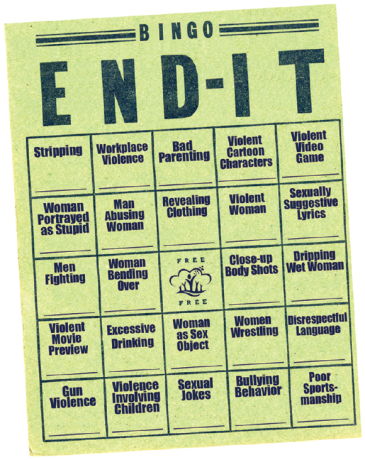
I didn’t end up watching the Super Bowl yesterday, but my partner watched it at a friend’s house and he brought along the End-It Bingo sheet (created by Riverview Center which I found on the Men’s Anti-Violence Council blog).

My partner and his friends took the Bingo card seriously. Not only did they make a mark each time a commercial fit into a category, but they noted which company’s commercial warranted the mark. They marked off almost all of the squares on the sheet and added a few more categories. “Street harassment” became a category when Pepsi Max included it in one of their commercials.

Overall, my partner felt that the companies that produced the most offensive ads were Go-Daddy (no surprise there), Sketchers, and Pepsi Max. He said he was the most surprised by the Sketchers commercial, saying, “I didn’t think they’d take footwear to that extreme.” When I read through his Bingo card today, I saw that he wrote Pepsi Max the most times in the various boxes. Thumbs down to these companies!

I wasn’t sure how my partner’s friends would react to the Bingo sheet since it would bring up serious subjects during a fun event. But they were really supportive and actively participated. My partner said the Bingo card got them all thinking critically about the commercials and noticing how companies were trying to sell products. It also made them more aware of and appreciative of the companies that didn’t have to resort to violence or sexism in their commercials (the Volkswagen commercial with the kid in the Darth Vader mask was a big hit).

What were your thoughts about the commercials? Did you use the Bingo card?

Share

Filed Under: Resources Tagged With: Darth Vader Super Bowl Commercial, Men's Anti-Violence Council, Super Bowl Commercials, Super Bowl Commerical bingo

“El Tigeraso” – Maluca’s music video addressing street harassment

February 7, 2011 By HKearl

Maluca, also known as La Maluca Mala, is a rising star in New York City. She is the daughter of Dominican immigrants who was born and raised in New York City. She says, “New York influences my music. Everyone who’s here…the style…the vernacular…inspires the kind of music that I’ve made, the lyrics that I write, the way I dress, the way I am.”

And the pervasive street harassment in New York City influenced one of her songs, “El Tigeraso,” which is set at Audobon and West 182nd Street, an intersection in Washington Heights, the heart of New York City’s Dominican community.

Via the International Museum of Women:

“The song’s lyrics were inspired by an issue many women deal with every day: cat calls and harassment on the street. [Maluca says,] ‘Dominicans call the bad boys on the corner who are up to no good – but who have mad swag – Tigeres. ‘El Tigeraso’ is the game or swag. Growing up, I would go visit my cousins or grandma uptown. Back then, you couldn’t get from one corner to the next without those ‘Tigeres’ trying to holler at you. It was kinda outta control. Especially if you walked down Broadway. So the song ‘El Tigeraso’ is poking fun at that whole situation.'”


Thoughts on the song and video?

Share

Filed Under: Resources Tagged With: catcalls, Dominicans, El Tigeraso, La Maluca Mala, street harassment

« Previous Page
Next Page »

Share Your Story

Share your street harassment story for the blog. Donate Now

From the Blog

  • #MeToo 2024 Study Released Today
  • Join International Anti-Street Harassment Week 2022
  • Giving Tuesday – Fund the Hotline
  • Thank You – International Anti-Street Harassment Week 2021
  • Share Your Story – Safecity and Catcalls Collaboration

Buy the Book

Search

Archives

  • September 2024
  • March 2022
  • November 2021
  • April 2021
  • March 2021
  • January 2021
  • April 2020
  • March 2020
  • February 2020
  • December 2019
  • November 2019
  • September 2019
  • August 2019
  • July 2019
  • June 2019
  • May 2019
  • April 2019
  • March 2019
  • February 2019
  • January 2019
  • December 2018
  • November 2018
  • October 2018
  • September 2018
  • August 2018
  • July 2018
  • June 2018
  • May 2018
  • April 2018
  • March 2018
  • February 2018
  • January 2018
  • December 2017
  • November 2017
  • October 2017
  • September 2017
  • August 2017
  • July 2017
  • June 2017
  • May 2017
  • April 2017
  • March 2017
  • February 2017
  • January 2017
  • December 2016
  • November 2016
  • October 2016
  • September 2016
  • August 2016
  • July 2016
  • June 2016
  • May 2016
  • April 2016
  • March 2016
  • February 2016
  • January 2016
  • December 2015
  • November 2015
  • October 2015
  • September 2015
  • August 2015
  • July 2015
  • June 2015
  • May 2015
  • April 2015
  • March 2015
  • February 2015
  • January 2015
  • December 2014
  • November 2014
  • October 2014
  • September 2014
  • August 2014
  • July 2014
  • June 2014
  • May 2014
  • April 2014
  • March 2014
  • February 2014
  • January 2014
  • December 2013
  • November 2013
  • October 2013
  • September 2013
  • August 2013
  • July 2013
  • June 2013
  • May 2013
  • April 2013
  • March 2013
  • February 2013
  • January 2013
  • December 2012
  • November 2012
  • October 2012
  • September 2012
  • August 2012
  • July 2012
  • June 2012
  • May 2012
  • April 2012
  • March 2012
  • February 2012
  • January 2012
  • December 2011
  • November 2011
  • October 2011
  • September 2011
  • August 2011
  • July 2011
  • June 2011
  • May 2011
  • April 2011
  • March 2011
  • February 2011
  • January 2011
  • December 2010
  • November 2010
  • October 2010
  • September 2010
  • August 2010
  • July 2010
  • June 2010
  • May 2010
  • April 2010
  • March 2010
  • February 2010
  • January 2010
  • December 2009
  • November 2009
  • October 2009
  • September 2009
  • August 2009
  • July 2009
  • June 2009
  • May 2009
  • April 2009
  • March 2009
  • February 2009
  • January 2009
  • December 2008
  • November 2008
  • October 2008
  • September 2008
  • August 2008
  • July 2008
  • June 2008
  • May 2008

Comment Policy

SSH will not publish any comment that is offensive or hateful and does not add to a thoughtful discussion of street harassment. Racism, homophobia, transphobia, disabalism, classism, and sexism will not be tolerated. Disclaimer: SSH may use any stories submitted to the blog in future scholarly publications on street harassment.
  • Contact
  • Events
  • Join Us
  • Donate
  • Facebook
  • Instagram
  • Pinterest
  • Tumblr
  • Twitter
  • YouTube

Copyright © 2026 Stop Street Harassment · Website Design by Sarah Marie Lacy