• About Us
    • What Is Street Harassment?
    • Why Stopping Street Harassment Matters
    • Meet the Team
      • Board of Directors
      • Past Board Members
    • In The Media
  • Our Work
    • National Street Harassment Hotline
    • International Anti-Street Harassment Week
    • Blog Correspondents
      • Past SSH Correspondents
    • Safe Public Spaces Mentoring Program
    • Publications
    • National Studies
    • Campaigns against Companies
    • Washington, D.C. Activism
  • Our Books
  • Donate
  • Store

Stop Street Harassment

Making Public Spaces Safe and Welcoming

  • Facebook
  • Instagram
  • Pinterest
  • Tumblr
  • Twitter
  • YouTube
  • Home
  • Blog
    • Harassment Stories
    • Blog Correspondents
    • Street Respect Stories
  • Help & Advice
    • National Street Harassment Hotline
    • Dealing With Harassers
      • Assertive Responses
      • Reporting Harassers
      • Bystander Responses
      • Creative Responses
    • What to Do Before or After Harassment
    • Street Harassment and the Law
  • Resources
    • Definitions
    • Statistics
    • Articles & Books
    • Anti-Harassment Groups & Campaigns
    • Male Allies
      • Educating Boys & Men
      • How to Talk to Women
      • Bystander Tips
    • Video Clips
    • Images & Flyers
  • Take Community Action
  • Contact

“It looks like we need a new definition of normal”

November 22, 2016 By Contributor

It did not just happen once. Every time I’m walking alone in the area, even with oversized shirt and legging, I hear them talk in the local dialect. I am of Chinese descent and don’t really look like locals appearance-wise, so they thought I wouldn’t understand them. Whistles and questions like, “Where are you going, beautiful?” I would mostly ignore. But this afternoon at the airport when I heard a guy (40ish yo) said loudly to his friends, “Damnnn, this one looks delicious,” as I was passing by, I couldn’t help but stop and asked if he was talking to me or talking about me. All of them (6-7 people) just turned away and avoided eye contact, he looked quite shocked to be confronted. So I walked away, shaking, but victorious.

Whenever you are in a public space with a lot of people and lights, don’t hesitate. Confront them. Most of them would rather run and hide than be confronted. Believe me most of them would not even have the balls to look you in the eyes and apologize. I actually wanted to scream out the question one more time if they acted stupid, but they acted ashamed, so I just went off. What I couldn’t believe is when I told my friend of the incidence, he said isn’t that normal, the catcalling?

It looks like we need a new definition of normal.

Optional: What’s one way you think we can make public places safer for everyone?

I don’t agree with women-only passageway or space or whatever. It’s not us who needs to be confined, it’s the guys who need some good lessons in respect. Put up a fine. Anyone with video proof can sue someone who catcalls. Or anyone who witnessed a street harassment and can provide visual and audio proof of it should get a reward.

– FW

Location: Bali Ngurah Rai International Airport, Indonesia

Need support? Call the toll-free National Street Harassment hotline: 855-897-5910

Share your street harassment story for the blog.
See the book 50 Stories about Stopping Street Harassers for idea
s.

Share

Filed Under: Stories, street harassment

TDOR 2016

November 20, 2016 By HKearl

Today is Transgender Day of Remembrance.

Via HRC:

“Now in its 18th year, TDOR is a time for the transgender community and allies to mourn those who have been victims of anti-trans violence, and to recommit to ensuring that their lives – and deaths – are not forgotten. TDOR allows us to call attention to the continued violence and injustice transgender people face every day.

In 2015, HRC reported the murders of at least 21 transgender people in the United States, more than any previous year on record. A disproportionate number of these victims were transgender women of color. That alarming trend has continued in 2016. HRC and the Trans People of Color Coalition (TPOCC) just released A Matter of Life and Death: Fatal Violence Against Transgender People in America 2016, a new, heartbreaking report documenting the often deadly violence faced by the transgender community and exploring the factors that fuel these tragic attacks.

“TDOR is about mourning those who have been taken from us through violence, transphobia and hatred, and it is a way of recognizing the loss that those lives represent to our community,” said Nicole Cozier, HRC Director of Diversity & Inclusion.

picture1

“TDOR empowers HRC’s steering committees, members and other activists on the ground to support members of the transgender community in their regions. It’s about mobilizing our communities to reach out and say, ‘We’re here and we stand with you.’” Cozier said.

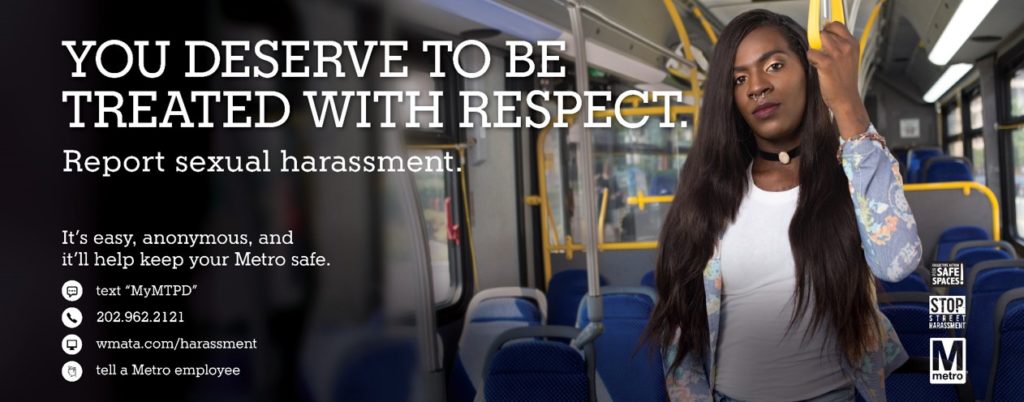
It’s for this reason, I’m so pleased that the latest anti-harassment transit campaign we worked on in the Washington, D.C. area includes a transwoman of color in one of the ads. Trans people, including Trans people of color deserve respect, dignity, love and — to not fear for their lives!!!!

Share

Filed Under: LGBTQ, race Tagged With: person of color, transgender

Canada: How to Make Cities more Inclusive and Safe for Women (Part II)

November 19, 2016 By Correspondent

A talk with Kathryn Travers from Women in Cities International about the principles of design that shape our perception of the places we live in.

Alexandra Jurecko, Montreal, Canada, SSH Blog Correspondent

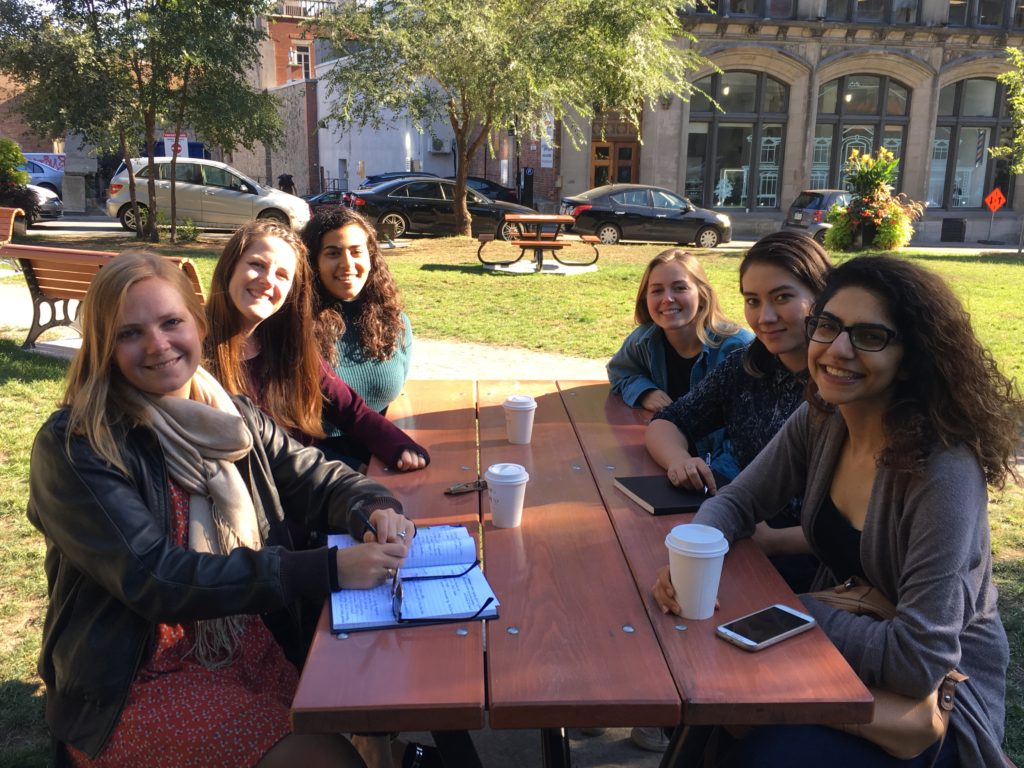
The WICI team
The WICI team

The first part of my interview with Kathryn Travers from Women in Cities International (WICI) revolved around everyday street harassment in Montreal and other urban centers and the culture that enables it. This second part sets out to explore how design influences the ways in which we perceive our surroundings and how urban development could make our cities more inclusive and safe for everyone.

Design can be a powerful factor in shaping our perception of public space. Just in thinking about my own neighbourhood in Montreal, I immediately know which places feel open and comfortable, and which routes I like to avoid at night. “There are important gender gaps that should be addressed in cities”, says Kathryn.

When it comes to implementing design principles to create safer public spaces for women, “Montreal is actually kind of a pioneering city,” Kathryn points out. Six of the seven principles of design employed by WICI to conduct women’s safety audits across the world have originated from the Femmes et Ville program conducted by the City of Montreal in the 1990s.

These principles were developed by the City of Montreal to create a standard for gender-inclusive urban planning. “One of the first applications of these principles of design were the Montreal metro station exits”, explains Kathryn. “Before, you would walk up from the metro and be in this closed brick box. You never knew what was on the other side.” By implementing the first principle of design, “See and be seen”, the city redesigned the exits to be more open, with window fronts for better visibility.

The principles furthermore include instructions on how to ensure the ability to “Hear and be heard”, to “Get away and get help”, to “Know where you are and where you are going”, to “Live in a clean and welcoming environment”, and lastly, to “Work together” through community participation and social activities. Their work on the Creating safer Communities for Marginalized Women and Everyone project (2007-2011) inspired WICI to add a seventh principle of design, the principle of “Accessibility and Inclusion”.

WICI’s approach is based on cooperation with local groups: “These groups already have an established relationship of trust with local women.” In doing so, WICI gives local groups the tools to document their experiences while allowing them to develop their own ideas and recommendations for change. “We never come with solutions. We don’t have solutions,” Kathryn stresses.

By reaching out to those who are most excluded within their own communities, WICI strives to make cities more inclusive for everyone. “If we can be more inclusive now as we are working to address these gender gaps”, Kathryn explains, “then our cities will be able to better respond to the diverse needs of women and men who live there. This is how we build more inclusive cities.”

One such project brought WICI together with women from the association of Action de femmes handicapées in Montreal. In their work together they focused on the relocation of a paratransit stop at a Montreal university. “The paratransit stop was in the loading dock in the back of the university. These women who are wheelchair-dependent had to wait in the loading zone after classes at night; it made no sense,” remembers Kathryn. Once a local group has identified a problem, WICI supports their cause by establishing channels of communications to municipal or state-level governments. “We lobbied to move the stop across the street where there was already a bus stop and a space to wait with proper lighting. It took a lot of time but we eventually got it. It was a really significant achievement.”

In focusing on gender equality and women’s participation in urban development, WICI highlights how design influences the ways in which we move through public space. Design can force us to experience exclusion, or make us feel unsafe. Or, in adhering to basic principles of design, urban planning can become a powerful tool in making our cities safer and more accessible for everyone.

Alexandra is a freelance writer and recent graduate of Heidelberg University in Germany, where she earned a BA in South Asian Studies and English Literature. Having moved across the pond to live and work in Montreal, she now focuses on refreshing her French skills while volunteering her time to various community-outreach programs. You can follow her on twitter @alexjurecko.

Share

Filed Under: Activist Interviews, correspondents, street harassment Tagged With: canada, safe city, safety audit, women in cities international

Two Efforts to Document and Map Hateful Acts, Post-Election

November 18, 2016 By HKearl

Here is an update on places where you can report discriminatory harassment in the USA, since we know there has been an uptick since the Presidential election.

FIRST:

reporthatesplc

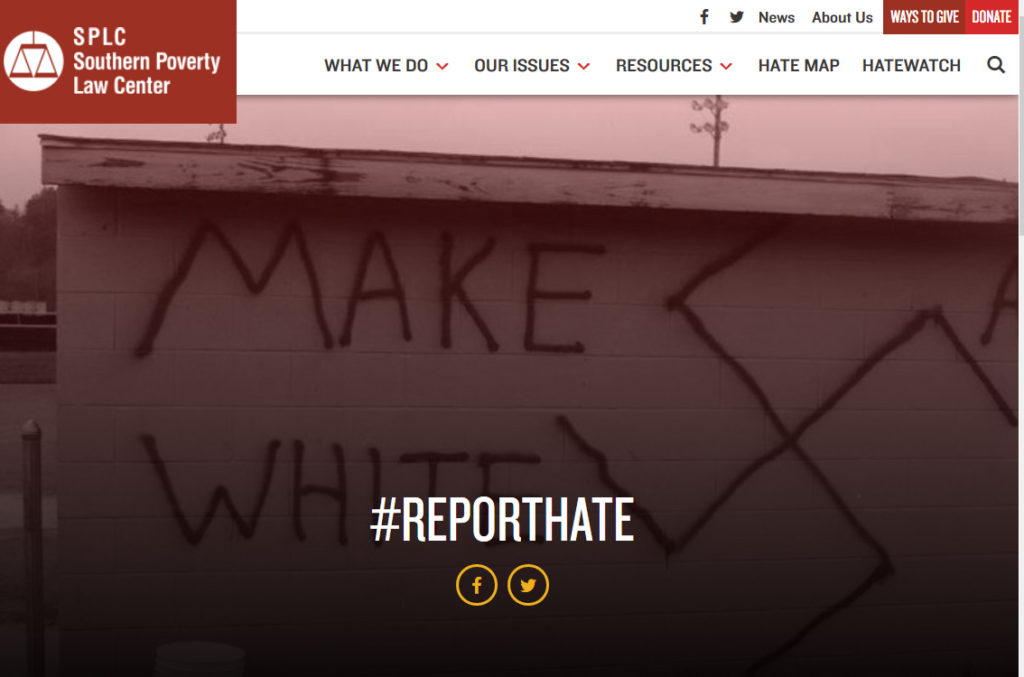
The Southern Poverty Law Center (SPLC) is collecting reports of hateful and harassing acts.

On November 18, they wrote:

“This is the second update from the Southern Poverty Law Center’s effort to collect reports of hateful incidents of harassment around the country. This report covers the full week (Wednesday Nov. 9 to Wednesday Nov. 16) since the presidential election.

The SPLC collected reports from news articles, social media, and direct submissions from the #ReportHate intake page. The SPLC made efforts to verify each report but many included in the count remain anecdotal.

While the total number of incidents has risen, the trend line points to a steady drop-off. Around 65 percent of the incidents collected occurred in the first three days following the election.


SECOND:

harassmentandhelp

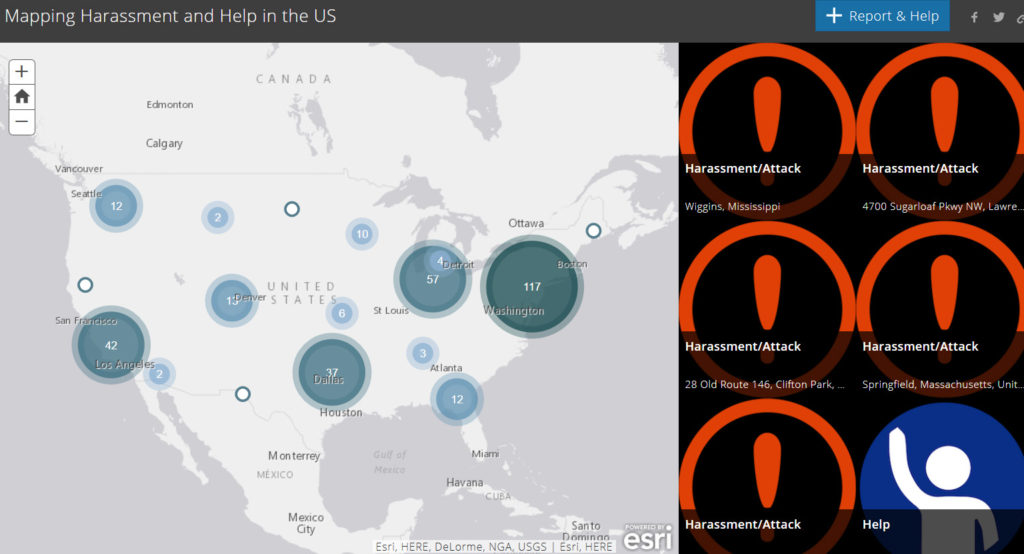
“In the wake of the 2016 US elections reports of harassment and hate crimes directed at minority groups of all kinds have been widespread. The purpose of this multi-team effort is to collect and map reports of harassment and hate crimes against [discriminated against] communities. We also seek to collect and map reports of [discriminated against] communities being helped.

Important: This is not an emergency response system. If you are the victim (or an eyewitness) of harassment/attacks, please call 911.

This project is a collaboration between CrisisMappers, Harvard University, MIT and UCLA.
Contact: contact@harassmap.us”

Share

Filed Under: disabilities, LGBTQ, News stories, public harassment, race, Resources, Stories, street harassment

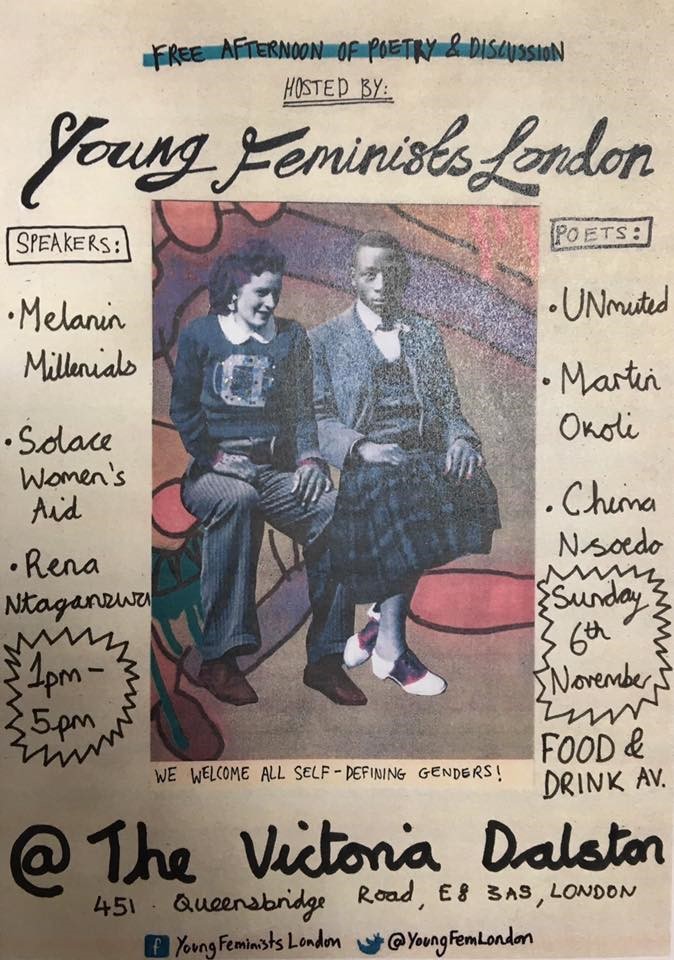
UK: UNmuted’s Vlog Part 1 – Talking Street Harassment at Young Feminists London

November 15, 2016 By Correspondent

londonNess Lyons for UNmuted Productions, UK, SSH Blog Correspondent

On Sunday 6th November, myself and new UNmuted Productions member Nicola Bland had the pleasure of performing poetry and leading an audience discussion at a fab event hosted by Young Feminists London. There were several wonderful other poets and speakers taking part and it was a real joy to talk feminism – and womanism – with such a great group of women and men.

After Nicola performed the full-length version of my spoken word poem “I Smile Politely“, (including sections that are not in UNmuted’s short film of the same name), we asked for volunteers from the audience to answer some questions on camera about the themes raised in the piece. We made these interviews, together with a few snippets of Nicola performing ‘I Smile Politely’, into a two-part vlog for Stop Street Harassment.

This is Part One, with funny, thoughtful and smart answers to the questions:

• What’s the most ridiculous catcall or unwanted chat-up line you’ve had?
• What does street harassment mean to you?
• When (if!) you’re ‘smiling politely’ in response to unwanted sexual attention, what are you actually thinking?

Watch here and please share!

umutedyfl

Ness Lyons is a playwright, filmmaker and spoken word poet. She runs UNmuted Productions, is a member of Soho Theatre Writers’ Lab and is currently developing a script with an award-winning production company. Follow her work at: nesslyons.net and on Twitter: @lyonsness

Share

Filed Under: correspondents, street harassment Tagged With: feminist, London, video, young women

« Previous Page
Next Page »

Share Your Story

Share your street harassment story for the blog. Donate Now

From the Blog

  • #MeToo 2024 Study Released Today
  • Join International Anti-Street Harassment Week 2022
  • Giving Tuesday – Fund the Hotline
  • Thank You – International Anti-Street Harassment Week 2021
  • Share Your Story – Safecity and Catcalls Collaboration

Buy the Book

Search

Archives

  • September 2024
  • March 2022
  • November 2021
  • April 2021
  • March 2021
  • January 2021
  • April 2020
  • March 2020
  • February 2020
  • December 2019
  • November 2019
  • September 2019
  • August 2019
  • July 2019
  • June 2019
  • May 2019
  • April 2019
  • March 2019
  • February 2019
  • January 2019
  • December 2018
  • November 2018
  • October 2018
  • September 2018
  • August 2018
  • July 2018
  • June 2018
  • May 2018
  • April 2018
  • March 2018
  • February 2018
  • January 2018
  • December 2017
  • November 2017
  • October 2017
  • September 2017
  • August 2017
  • July 2017
  • June 2017
  • May 2017
  • April 2017
  • March 2017
  • February 2017
  • January 2017
  • December 2016
  • November 2016
  • October 2016
  • September 2016
  • August 2016
  • July 2016
  • June 2016
  • May 2016
  • April 2016
  • March 2016
  • February 2016
  • January 2016
  • December 2015
  • November 2015
  • October 2015
  • September 2015
  • August 2015
  • July 2015
  • June 2015
  • May 2015
  • April 2015
  • March 2015
  • February 2015
  • January 2015
  • December 2014
  • November 2014
  • October 2014
  • September 2014
  • August 2014
  • July 2014
  • June 2014
  • May 2014
  • April 2014
  • March 2014
  • February 2014
  • January 2014
  • December 2013
  • November 2013
  • October 2013
  • September 2013
  • August 2013
  • July 2013
  • June 2013
  • May 2013
  • April 2013
  • March 2013
  • February 2013
  • January 2013
  • December 2012
  • November 2012
  • October 2012
  • September 2012
  • August 2012
  • July 2012
  • June 2012
  • May 2012
  • April 2012
  • March 2012
  • February 2012
  • January 2012
  • December 2011
  • November 2011
  • October 2011
  • September 2011
  • August 2011
  • July 2011
  • June 2011
  • May 2011
  • April 2011
  • March 2011
  • February 2011
  • January 2011
  • December 2010
  • November 2010
  • October 2010
  • September 2010
  • August 2010
  • July 2010
  • June 2010
  • May 2010
  • April 2010
  • March 2010
  • February 2010
  • January 2010
  • December 2009
  • November 2009
  • October 2009
  • September 2009
  • August 2009
  • July 2009
  • June 2009
  • May 2009
  • April 2009
  • March 2009
  • February 2009
  • January 2009
  • December 2008
  • November 2008
  • October 2008
  • September 2008
  • August 2008
  • July 2008
  • June 2008
  • May 2008

Comment Policy

SSH will not publish any comment that is offensive or hateful and does not add to a thoughtful discussion of street harassment. Racism, homophobia, transphobia, disabalism, classism, and sexism will not be tolerated. Disclaimer: SSH may use any stories submitted to the blog in future scholarly publications on street harassment.
  • Contact
  • Events
  • Join Us
  • Donate
  • Facebook
  • Instagram
  • Pinterest
  • Tumblr
  • Twitter
  • YouTube

Copyright © 2026 Stop Street Harassment · Website Design by Sarah Marie Lacy