• About Us
    • What Is Street Harassment?
    • Why Stopping Street Harassment Matters
    • Meet the Team
      • Board of Directors
      • Past Board Members
    • In The Media
  • Our Work
    • National Street Harassment Hotline
    • International Anti-Street Harassment Week
    • Blog Correspondents
      • Past SSH Correspondents
    • Safe Public Spaces Mentoring Program
    • Publications
    • National Studies
    • Campaigns against Companies
    • Washington, D.C. Activism
  • Our Books
  • Donate
  • Store

Stop Street Harassment

Making Public Spaces Safe and Welcoming

  • Facebook
  • Instagram
  • Pinterest
  • Tumblr
  • Twitter
  • YouTube
  • Home
  • Blog
    • Harassment Stories
    • Blog Correspondents
    • Street Respect Stories
  • Help & Advice
    • National Street Harassment Hotline
    • Dealing With Harassers
      • Assertive Responses
      • Reporting Harassers
      • Bystander Responses
      • Creative Responses
    • What to Do Before or After Harassment
    • Street Harassment and the Law
  • Resources
    • Definitions
    • Statistics
    • Articles & Books
    • Anti-Harassment Groups & Campaigns
    • Male Allies
      • Educating Boys & Men
      • How to Talk to Women
      • Bystander Tips
    • Video Clips
    • Images & Flyers
  • Take Community Action
  • Contact

Snapshot of street harassment stories, news, announcements & tweets: February 12, 2012

February 12, 2012 By HKearl

Read stories, news articles, blog posts, and tweets about street harassment from the past week.

** Sign up to receive a monthly e-newsletter from Stop Street Harassment ***

Street Harassment Stories:

Share your story! You can read street harassment stories on the Web at:

Stop Street Harassment Blog

HarassMap Egypt

Resist Harassment Lebanon

Many of the Hollaback sites

In the News, on the Blogs:
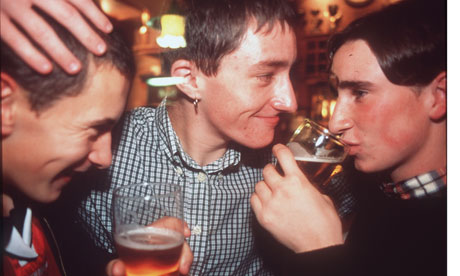
Image via The Guardian

* Common Ground, “On the revolution’s anniversary, men stand up for women’s rights in Egypt“

* Lauren Bravo is My Real Name, “In which I launch Operation Creep-be-Gone“

* Human Rights First, “Egyptian Women Face Setback at “Virginity Tests” Trial“

* Al Jazeera, “Egypt’s feminists prepare for a long battle“

* Thought Catalog, “Dear Gross Dude In The Club, Please Stop Touching Me“

* IBN Live, “Father dies after being thrashed by eve-teasers“

* The Guardian, “Uni Lad website closure highlights the trouble with male banter“

* PC Advisor, “Video: Commuter crush? Snap photo, post to new network of sites“

Activism Announcements:

New:

* Read an interview with Ghaidaa al-Absi, an anti-street harassment activist from Yemen who founded the Safe Streets Campaign.

* Read an interview with photographer Hannah Price, whose images of street harassers were displayed at the Philadelphia Museum of Art last fall.

* SSH blogged about an offensive Fiat ad that aired during the Super Bowl last weekend which made light of street harassment and objectified women. The post brought a record number of viewers to the SSH website.

* SSH founder Holly Kearl is quoted in the March 2012 issue of Cosmo magazine with advice on dealing with gropers. Read an extended version of her advice on the blog.

Reminders:

* If you live in the Washington, DC-area, you can testify about harassment on the Metro system at a hearing on Feb. 22. Details.

* What were you wearing when you got stared at or street harassed? Submit your photo

* Start planning for International Anti-Street Harassment Week, March 18-24

* Sign the Petition: “Demand Justice for Two Men Killed Trying to Stop Street Harassment“

* Read a Baltimore, Maryland, college student’s thesis on street harassment

* The Adventures of Salwa campaign has a hotline for sexual harassment cases in Lebanon: 76-676862.

* In Bangalore, India, there is a helpline for street harassment 080 – 22943225 / 22864023

10 Tweets from the Week:

1. EmptyNestExpat stunned today to learn a good friend is leaving #Istanbul because she doesn’t feel safe on the street due to street harassment.

2. sarahhuny I’m really tired of some men thinking that a woman should automatically be grateful and flattered by his attention #streetharassment

3. DaliaHosny Please report any sexual harassment incidents to 6069, if you got harassed during marches today . @harassmap #endSH #Feb11 #harassmap

4. iHollaback The Dept of State wants to come and visit us and learn more about #streetharassment! Very cool.

5. DesignerTi Catcall of the day: (me: walking and looking at my phone) Fool: u trying up call me? Me: who are u?

6. MareeGPhotos When your gonna catcall to a point where it pisses me off yes, I will make you look stupid.

7. hollabackWY Did you know Wales now has its first hollaback site to fight street harassment? Check them out here @GwynHollaback

8. MadamJMo Reading ‘Ann Veronica’ by HG Wells, written 1909. She has moved to London and experienced #streetharassment but won’t be frightened. Yep.

9.  MaiiNewaishy What’s amazing to me is the shock on a harasser’s face when the woman stands up for herself, yes we’re not silent anymore #endSH

10. ilibico #Tripoli #Libya the stop street harassment campaign “don’t tell me what to wear, tell them not to harass me” pic.twitter.com/uwxTHbGu


Share

Filed Under: Activist Interviews, hollaback, News stories, Stories, street harassment

Interview with Yemen Safe Streets Campaign Founder

February 7, 2012 By HKearl

Ghaida'a AlAbsi

Ghaidaa al-Absi is an anti-street harassment activist from Yemen and she founded the Safe Streets Campaign. She identifies as a feminist and gender activist, and her passion is helping women. One of her projects has been to empower Yemeni women in new media. She also authored a booklet about stories of women revolutionaries who participated in the Current revolution.

Via e-mail she answered several questions about street harassment in Yemen and her campaign.

Stop Street Harassment (SSH): What inspired you to start the Safe Streets campaign?

Ghaidaa al-Absi (GA): Every day I walk in the streets, and every day I face  sexual harassment. Unfortunately, it becomes daily life, and we women are forced to adapt to it either by being silent or yelling at the harassers. One day, something happened to me, and that made me found Safe Streets campaign. I am always facing harassment, but what happened in that day affected me.

After visiting my friend, I went back to my home. While I was walking in the street a man came to me from behind, and tried to touch me. I hit him with my bag, but I felt very depressed at that moment because he deserved more.

My friends and I talked about what happens to us in the street. I told myself to stop complaining, and to do something instead. So I proposed the campaign to Tacticaltech, and they funded it.

SSH: What does the campaign entail?

GA: There’s an electronic map where women have space to report what happened to them in the streets, and where happened. Through this map we aim to detect the hot spot streets, and to have some data, because this information will help us in the future for two main reasons. First, we are planning to extend the campaign and start cooperating with police officers to distribute more moral patrols in these hot spot areas. Second, this kind of information will show how this problem is serious, and then we can put a pressure on the decision makers to form a law to punish the harassers.

The campaign also hosted an exhibition of local artists work on the subject of street harassment and produced a video to bring attention to the issue.

SSH: What is your goal/s for the campaign? What do you think it can achieve?

GA: Actually we have two goals. First, we want women to speak out about what is happening to them in the streets instead of keeping this behind closed doors. Second, we want to mobilize people, decision makers, and police officers to form a law so the harasser can be punished.

SSH: How is the campaign being received by the general public?

GA: So far we are getting many interactions from people. Of course some people still deny that there is sexual harassment in the streets in Yemen and keep telling us there many important issues in Yemen we should care about instead. As you know this campaign was born during the Yemeni revolution, so all people are concerned about the political, economical issues in Yemen more than anything else. Thus, women’s rights issues are not a priority for some men and women. However, in the middle of this, there are many people interacting with the campaign. As you can see on the Facebook page there are more than 1600 likes, and the viewers of the movie of the campaign more than 3,000.

SSH: I know ATHAR Foundation undertook a street harassment survey and campaign in Yemen a few years ago, do you think it paved the way for people to be more willing to discuss street harassment?

GA: Athar foundation was the first NGO to talk about sexual harassment in the streets in Yemen. We appreciate the survey they have done, because they gave us a rate of sexual harassment, which is 90 percent of women are suffering from this serious problem. Because of their survey, we can bring people’s attention to this issue.

SSH: Do you have any advice you have for people who want to start their own campaign in their community?

GA: The first step is the hardest, and it takes a long time before you can go to the next step. Second, you might not find support or a response at the start of your campaign, especially if it is touching sensitive issues. Just Be Patient.

SSH: Anything else you would like to add?

GA: This campaign would never come to life without the help and the support of my husband Fathi Al-Dhafri. Personally I thank every one who worked for this campaign because they believed in the cause, and never waited to be paid. They are heroes and heroines.

SSH: Thank you!

Share

Filed Under: Activist Interviews, street harassment Tagged With: ghaidaa al absi, safe streets campaign, street harassment, Yemen

Interview: Photographing street harassers

February 6, 2012 By Contributor

Image from the "City of Brotherly Love" exhibit

In her photo series “City of Brotherly Love,” photographer Hannah Price responds to experiences with street harassment in Philadelphia. She described the images as “a response to my subjects looking at me, and myself as an artist looking back.”

Her series was displayed in a recent exhibit at the Philadelphia Museum of Art. Upon visiting the exhibit with street harassment activist Holly Kearl, I was instantly moved and left with questions about who this photographer is and what made her “click.” I had the pleasure of meeting with the talented Hannah Price soon after. Here’s what she had to say:

Nuala Cabral (NC): What inspired you to create a photo exhibit that brings attention to street harassment?

Hannah Price (HP): The only thing that allowed me to create this type of work, are the men who harass me on the street everyday. It was a basic response with my camera to turn the attention away from me.  Like I said before being harassed by men is a part of my everyday life and this project is a documentation of my life as a black woman in Philadelphia with a background from suburbia Colorado.

Hannah Price

NC: What are your hopes and expectations for this project?

HP: My only hope is to help people understand how uncomfortable overtly expressing oneself sexually to another person can be.  There are other ways of communicating an interest with another person.

NC: How did men react when you took their picture?

HP: Most of the men were surprised I responded because the typical response is avoidance.  After confronting and taking their photograph they respected my disinterest.

NC: How have people responded to your photo exhibit?

HP: Most responses to my project have been quite positive.  No one has yet expressed any backlash.  Most people are interested in the process and experience of photographing men in a unpleasant, semi-dangerous situation.

NC: What did you learn in the process of creating and displaying this project?

HP: I have learned that the only way we can stop sexual harassment is by getting rid of the certain sexual media that children have access to at such a young age.

NC: What are your thoughts about the movement to end street harassment?

HP: I think this movement is inevitably necessary, especially if society still respects their own human decency.

Nuala Cabral is an award-winning filmmaker, educator and activist in the Philadelphia-area.

Share

Filed Under: Activist Interviews, street harassment Tagged With: art exhibit, art museum, Hannah Price, Nuala Cabral, philadelphia, street harassment

“You feel like you’re a piece of meat” – New PSA

January 18, 2012 By HKearl

“In societies across the world, women are still openly harassed on the streets and in other public spaces. Leering, lecherous ogling. Unsolicited physical, or non-physical sexual contact. The world is watching. Join the movement and stop street harassment.” – Pascale Neuschäfer

Last year, South African filmmaker Pascale Neuschäfer created a powerful short film about street harassment in her community.You can read a Q&A with her about it.

Now she’s working on an anti-street harassment campaign. As part of it, she just launched a new PSA against street harassment. It was filmed during the SlutWalk in Capetown last year.

To get more of a feel for street harassment in Cape Town, here’s a story that was submitted to the blog past year.

Even more alarming, a few weeks ago, a mob of 50 to 60 men harassed and groped two teenage girls who were wearing short skirts.

When I mentioned this incident to Pascale, she said, “last year at that very same taxi rank, a young woman came to an even harsher fate, when she was stripped of her mini skirt (all recorded on CCTV cameras). Converse to this news stories: women in rural areas often face the same fate when they wear pants!”

Terrible. And those are just some of the many reasons why a campaign against street harassment is necessary.

Keep up the great work, Pascale! We support you.

Share

Filed Under: Activist Interviews Tagged With: Pascale Neuschäfer, slutwalk cape town, south africa, street harassment

Baltimore college student writes thesis on street harassment

January 18, 2012 By Contributor

This guest blog post is by Laurel Long, who recently wrote her college thesis on street harassment at Goucher College in Baltimore, Maryland. She wrote a different blog post about it for Hollaback Bmore last month.

I began research into street harassment because I felt I had no other choice. I have been taking public transportation by myself since I was a teenager. Almost every time I go out, I experience sexual harassment. The harassment I experience is both day and night and frankly, causes me to hesitate to travel. One of my goals with this project is to debunk myths regarding street harassment: that it is something perpetuated by men of color on white women; that it only happens to women who dress provocatively (needless to say, how a woman dresses is not an excuse for harassment); that women are making a big deal out of nothing. In the experiences of myself and the women I know, none of these conceptions hold up. While doing research for my thesis, I loved reading the few books and articles available on the subject of street harassment as well as the many blog entries. However, the comments, mainly from men, were infuriating to read. The myths discussed above and others (e.g., lower class men are the main harassers), were repeated ad nauseum by blog commenters.

For my thesis, in addition to researching the subject via scholarly and non-scholarly means, I conducted focus groups, all with women, almost all from Goucher. To my surprise, most women participating in my focus groups considered street harassment to be a problem in their lives. This may well be because it was not an average sampling of women attending Goucher; rather the ones who participated wanted to be there. However, I was not surprised to find that my participants overwhelmingly respond to harassers in non-confrontational ways; for example, they cross the street or get off the bus rather than tell the harasser to stop. It is worth noting the admiration women expressed for one of my participants who is very assertive with men. There seems to be a gap between how women want to act and the way they actually do express themselves (I include myself within this group).

One of the more interesting things I found is that the women I surveyed generally did not see the law as practical for use in combating street harassment. Reasons varied, but part of the problem with use of the law against street harassment is that there is no standard definition of street harassment; it’s subjective. This was also a common theme brought up by men on the blogs I visited. Yet, there are laws against sexual and racial harassment in schools and workplaces. My guess is the reason there are no laws against street harassment, is that it is typically not a problem those in positions of authority face, being mostly straight, white men, and by nature of being in positions of authority, people with privilege. While I don’t know if law is the most effective route to use in solving this problem, I do know that it is a societal problem. Women are not the ones responsible for creating the situation of fear on the streets, nor should we be the only ones responsible for resolving it.

Long studies sociology and women’s studies at Goucher College. She will receive her B.A. in May 2012. Her other interests include practicing Spanish, writing creative non-fiction, and reading mysteries.

Share

Filed Under: Activist Interviews, street harassment Tagged With: Goucher College, laurel long, street harassment

« Previous Page
Next Page »

Share Your Story

Share your street harassment story for the blog. Donate Now

From the Blog

  • #MeToo 2024 Study Released Today
  • Join International Anti-Street Harassment Week 2022
  • Giving Tuesday – Fund the Hotline
  • Thank You – International Anti-Street Harassment Week 2021
  • Share Your Story – Safecity and Catcalls Collaboration

Buy the Book

  • Contact
  • Events
  • Join Us
  • Donate
  • Facebook
  • Instagram
  • Pinterest
  • Tumblr
  • Twitter
  • YouTube

Copyright © 2026 Stop Street Harassment · Website Design by Sarah Marie Lacy