• About Us
    • What Is Street Harassment?
    • Why Stopping Street Harassment Matters
    • Meet the Team
      • Board of Directors
      • Past Board Members
    • In The Media
  • Our Work
    • National Street Harassment Hotline
    • International Anti-Street Harassment Week
    • Blog Correspondents
      • Past SSH Correspondents
    • Safe Public Spaces Mentoring Program
    • Publications
    • National Studies
    • Campaigns against Companies
    • Washington, D.C. Activism
  • Our Books
  • Donate
  • Store

Stop Street Harassment

Making Public Spaces Safe and Welcoming

  • Facebook
  • Instagram
  • Pinterest
  • Tumblr
  • Twitter
  • YouTube
  • Home
  • Blog
    • Harassment Stories
    • Blog Correspondents
    • Street Respect Stories
  • Help & Advice
    • National Street Harassment Hotline
    • Dealing With Harassers
      • Assertive Responses
      • Reporting Harassers
      • Bystander Responses
      • Creative Responses
    • What to Do Before or After Harassment
    • Street Harassment and the Law
  • Resources
    • Definitions
    • Statistics
    • Articles & Books
    • Anti-Harassment Groups & Campaigns
    • Male Allies
      • Educating Boys & Men
      • How to Talk to Women
      • Bystander Tips
    • Video Clips
    • Images & Flyers
  • Take Community Action
  • Contact

Canada’s Epidemic of Missing and Murdered Indigenous Women

March 31, 2014 By Contributor

By Britnae Purdy, First Peoples Worldwide, Cross-Posted with Permission

Image via Indian Country

Walking home. At night. Alone.

Every woman holds close a fear of this situation – even the bravest occasionally let a “what if” wander into the corners of their mind.

You’re walking home from work because you can’t afford a car just yet – ironically, the same reason you need to keep this job. All your friends were busy tonight, so you couldn’t bum a ride. And public transportation just doesn’t go this far out. You’ve done it before; you know the dangers, but there’s really nothing else to do. More than likely, things will be fine.

When you see headlights coming up behind you, you hold your breath.

When the car pulls up next to you, your heart stops for a moment.

When he rolls down the window, your body switches into survival mode – tensed, pulse racing, scanning the dark landscape for an out.

You steel yourself against the words he and his friends shout to you, throw at you, wondering not for the first time what your skin color, cup size, outfit really have to do with it all. There’s four of them – why do they always seem to travel in packs? You grasp your keys, knowing what a feeble defense they’d provide anyway. Mostly you pray, wondering if tonight is the night you’ll join the numbers – the upwards of 900 Indigenous women who have been murdered or gone missing in Canada in the past 30 years.

Part of Canada’s beauty lives in its vastness. Your ancestors have thrived in partnership with the land since time immemorial. But that vast nature can be frightful as well – there are many places you could take a person where they won’t easily be found.

You wonder if you’ll have time to dial up the police on your cell phone, but the authorities aren’t much trusted by your community – a long pattern of abuses and misplaced authority have eroded that relationship.

The worst thought that passes through your mind isn’t so much what will happen to you, but the idea that your family may never know. The investigation is likely to go cold – if it is even opened at all. The rates are so high in your community that they’ll likely just write you off – your entire life reduced dismissively to one word: “runaway,” or “suicide,” or “overdose.”

The car rolls along beside you as you walk, eyes forward, mind rolling over these thoughts. Then, for whatever reason, your harassers lose enthusiasm for their fame. They decide you’re not the special “Pocahontas” they’re looking for tonight, you’re actually just a “dirty, drunk, redskin bitch” like all the rest. One hollers a final “war cry” and the car revvs and speeds up, the hunters leaving you in the dark with your beating, beating heart.

You call up your sister to talk for the duration of your walk home. She’s not happy to be woken up late at night, but you need to hear her voice. She’ll understand when you explain later.

You rationalize it out until your breath returns to you and the shaking in your hands subside.  It’s normal. It’s to be expected. It will happen again, and at least this isn’t as bad as what happened to your friend or cousin. You’re lucky. You won this battle. Congratulations.

But you can’t help but wonder – what is this life you’re fighting so hard for?

What is a life when others view you less as human, more as prey?

Britnae is currently acting as the communications manager at First Peoples Worldwide, a nonprofit dedicated to supporting Indigenous communities, culture, and rights around the world. Britnae received her BA in International Affairs and Women’s and Gender Studies from the University of Mary Washington in 2013, and is now working on an MA in Global Affairs, with a specialization in Global Health, at George Mason University.

Share

Filed Under: anti-street harassment week, Stories

Day 1: #EndSHWeek 2014

March 30, 2014 By HKearl

Today was the first day of International Anti-Street Harassment Week!

Here are a few highlights:

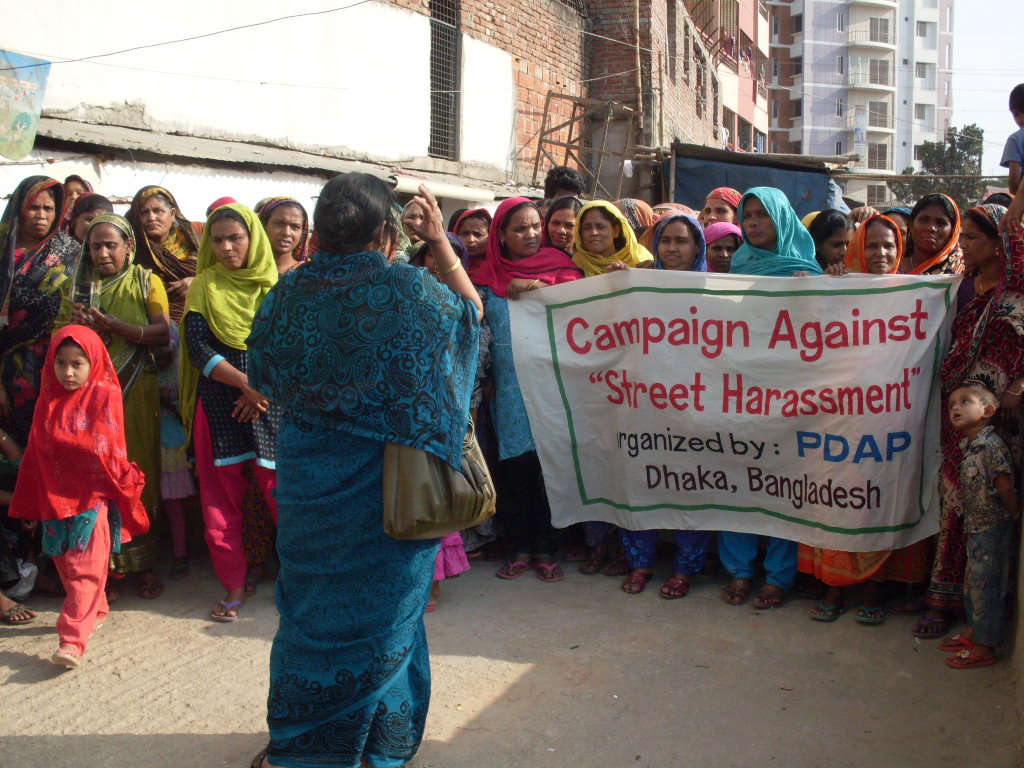
PDAP held a march against street harassment in Dhaka, Bangladesh, and around 500 people viewed it.

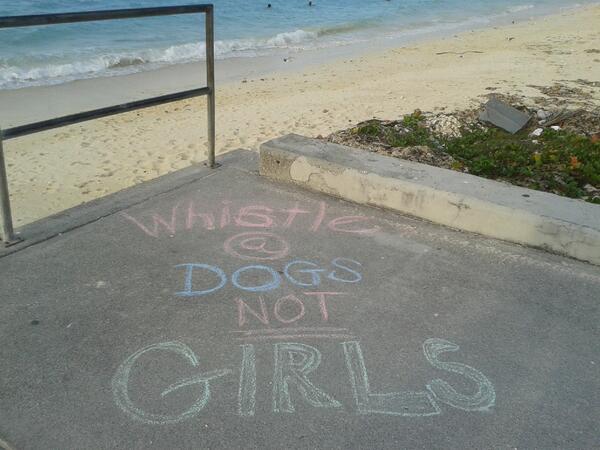
Hollaback! Bahamas held a Chalk Walk downtown Nassau & the surrounding areas.

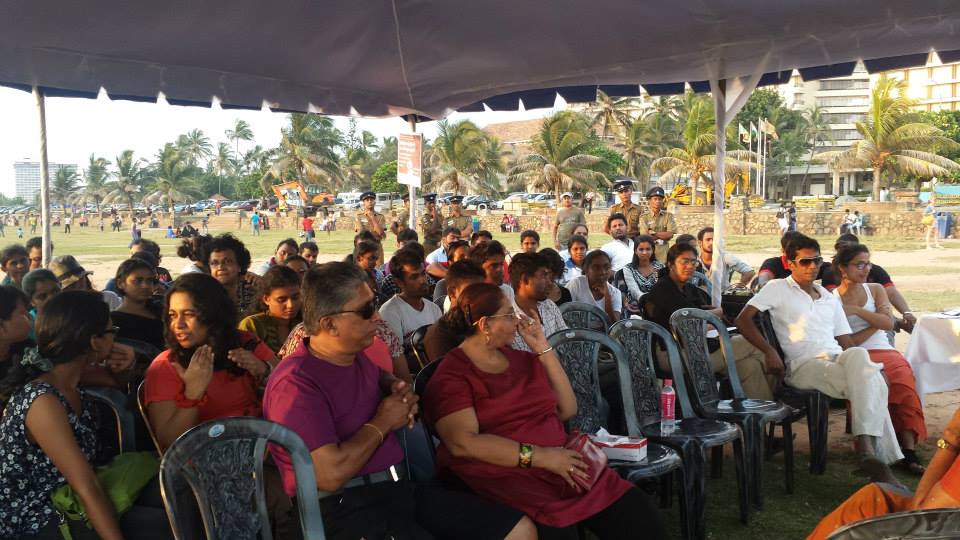
Project Respect in Sri Lanka hosted an Open Forum Discussion at Galle Face Green with experts and the general population. They said, “We thought it went quite well. Very encouraging turn out and they were vocal through out expressing their concerns and anger towards street harassment. Steady start for a longer journey.”

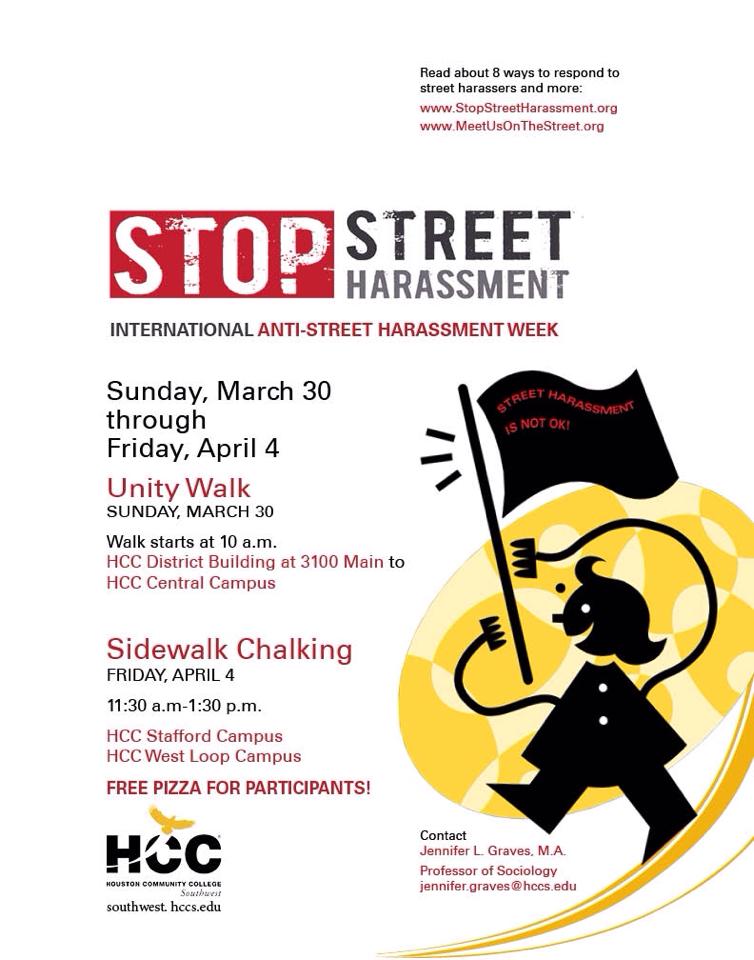
In Texas, Houston Community College held a Unity March on campus.

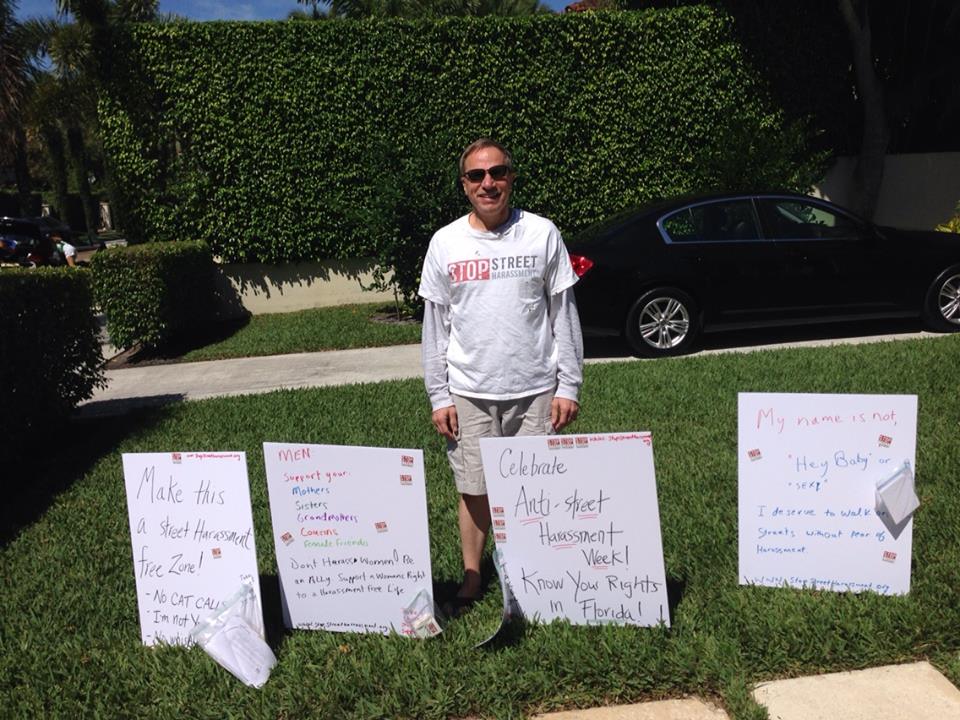
Citizens Against Street Harassment posted signs and distributed flyers about street harassment laws in Florida

Hollaback! Bmore hosted a breakout session on street harassment at the 2014 B’More Proud LGBTQIA Leadership Summit in Maryland. One guy said he’d never really heard about street harassment before & found the workshop really informative.

Hollaback! Boston organized a HOLLAoffline event – a time for coffeehouse chatter and movement building. They had a particularly good discussion with a male ally who wants to become more involved.

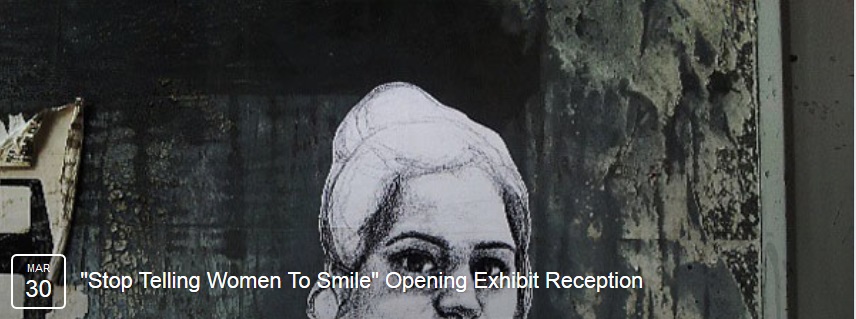
Hollaback! Houston had a “Stop Telling Women to Smile” Opening Exhibit Reception at Myth & Symbol.

And there was a LOT of awareness-raising on social media, including Pixel Project’s Google+ hangout discussion about street harassment with Hanna Lena Krüger, a ProChange Member in Germany and myself. Look for a recording on YouTube soon.

As we prepare for day 2, check out the events | get ready for a 1 p.m. ET tweet chat (#EndSH) | browse the photo album for the week!

Share

Filed Under: anti-street harassment week, street harassment

When “goo-goo eyes” were illegal

March 30, 2014 By HKearl

Street harassment is NOT a new problem.

The Washington Post tells us:

“An ordinance enacted in 1905, though since repealed:

[H]ereafter any male person in the City of Houston who shall stare at, or make what is commonly called “goo-goo eyes” at, or in any other manner look at or make remarks to or concerning, or cough or whistle at, or do any other act to attract the attention of any woman or female person upon or traveling along any of the sidewalks, streets or public ways of the City of Houston, with the intent or in a manner calculated to annoy, or to attempt to flirt with any such woman or female person, shall be deemed guilty of a misdemeanor, and, upon conviction thereof in the Corporation Court of the City of Houston, shall be fined in any sum not exceeding One Hundred Dollars….”

While that law is no longer around, these laws against #streetharassment are: http://tinyurl.com/oqaxo5r

Share

Filed Under: anti-street harassment week, Resources, street harassment

March 30 – April 5: Share Images & Flyers

March 30, 2014 By HKearl

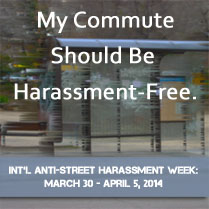
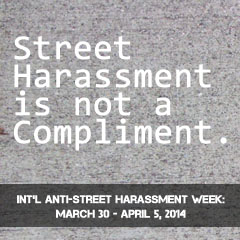
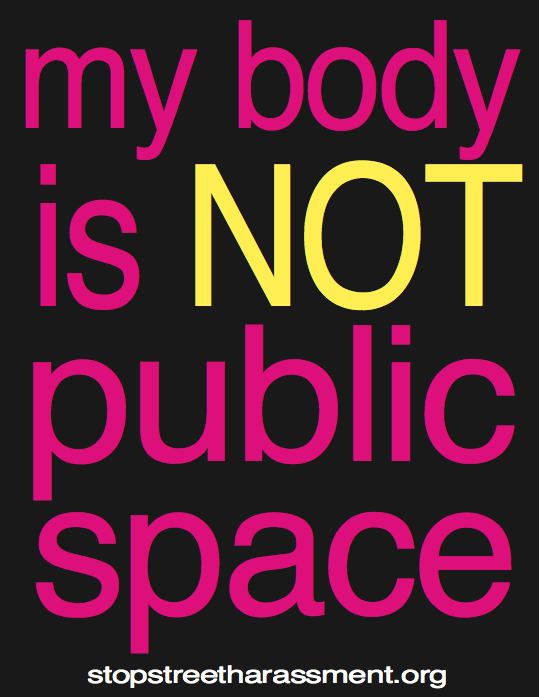
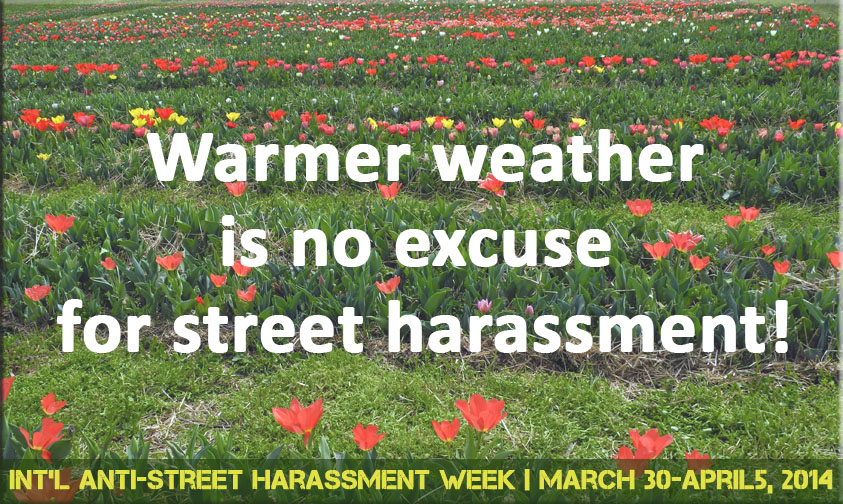
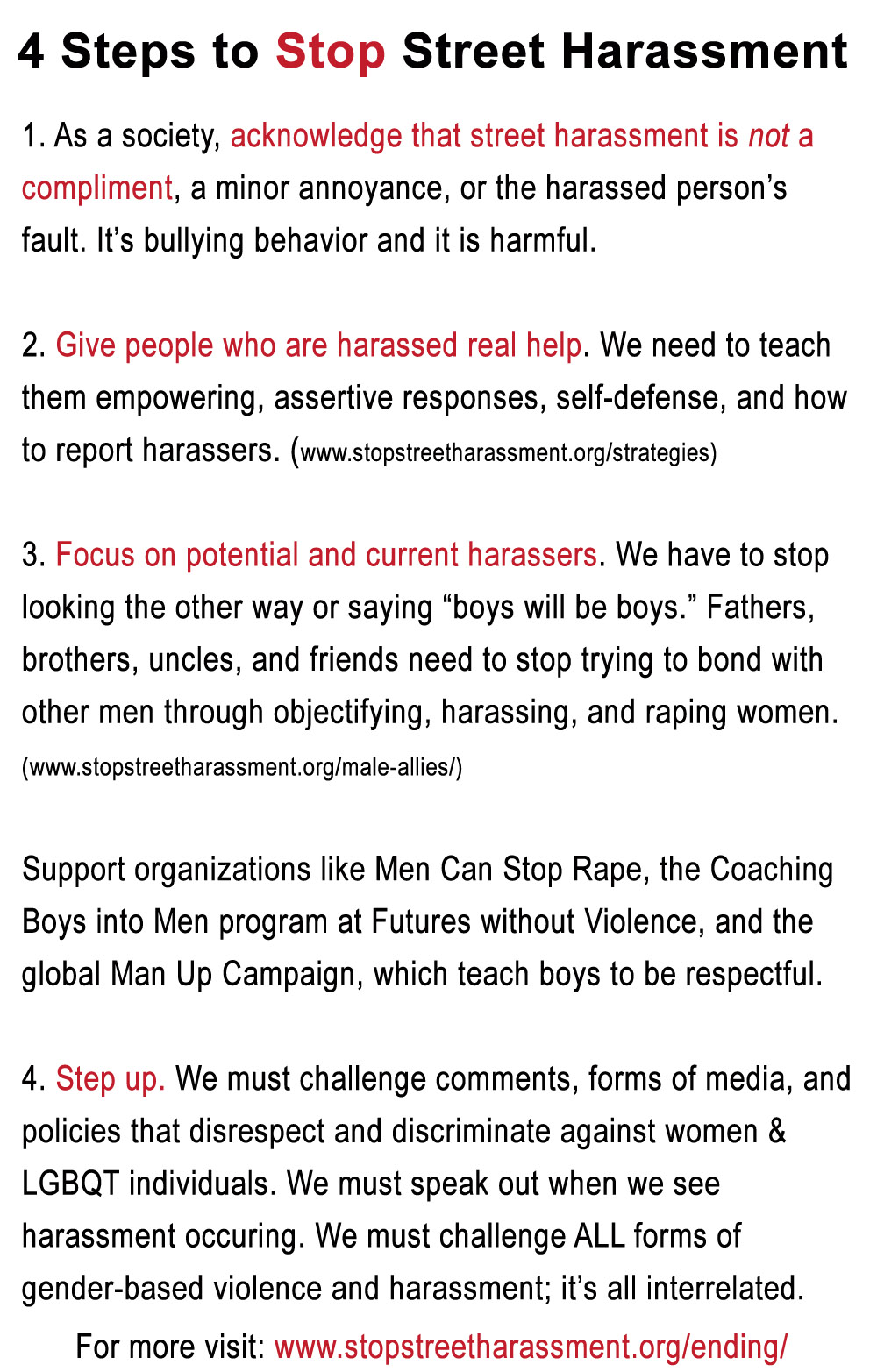
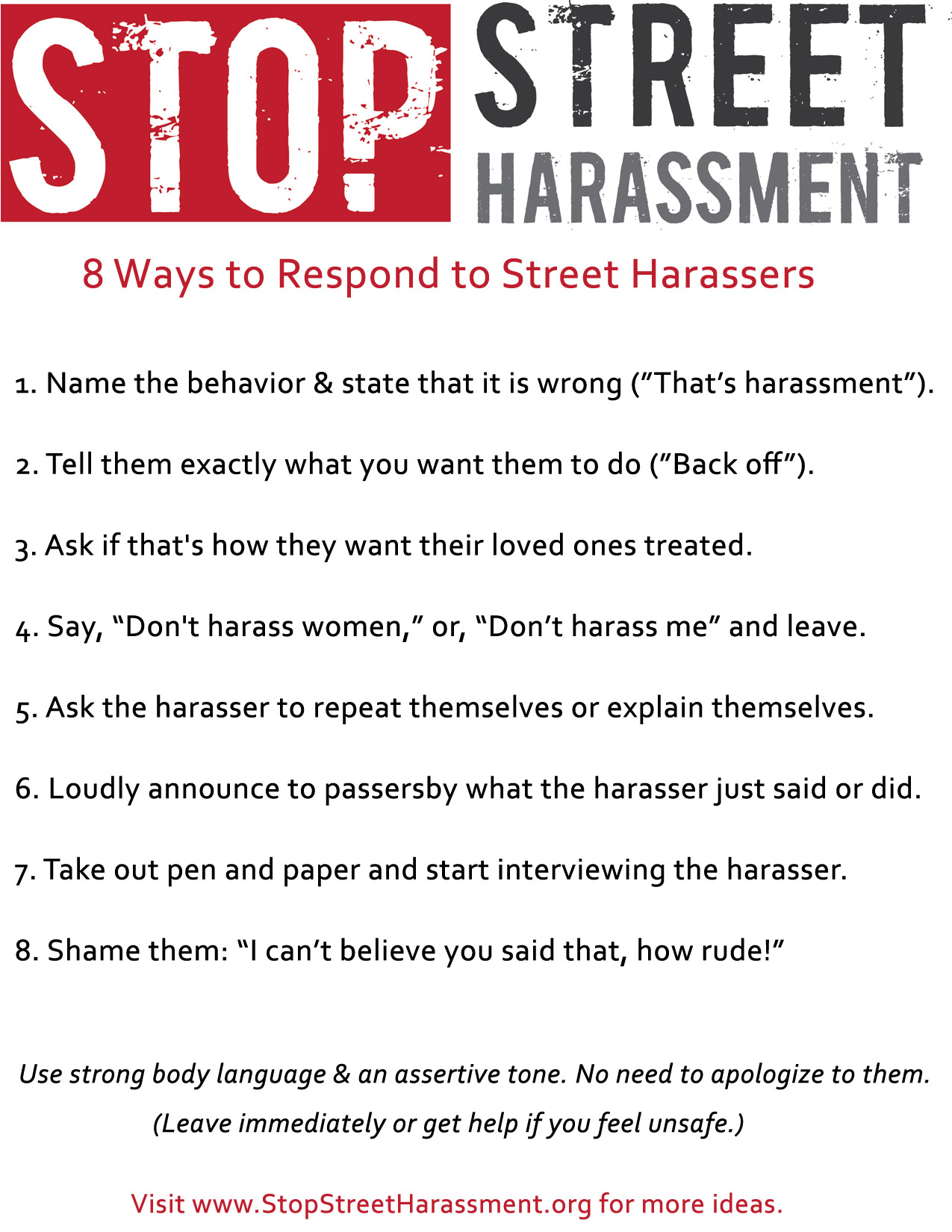
Any easy way to participate in International Anti-Street Harassment Week (March 30 – April 5) is to share images on social media and post/distribute flyers. Here are ones you can use!

Images for Social Media:

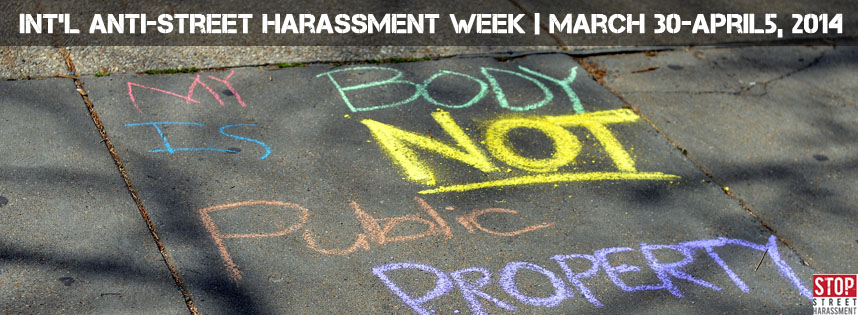
1. Use one of these images as your Facebook profile photo from March 30 – April 5, 2014. Post the images on Tumblr, Instagram, Pinterest or other social media sites. (Right click on the image to save it to your computer and then upload it.)

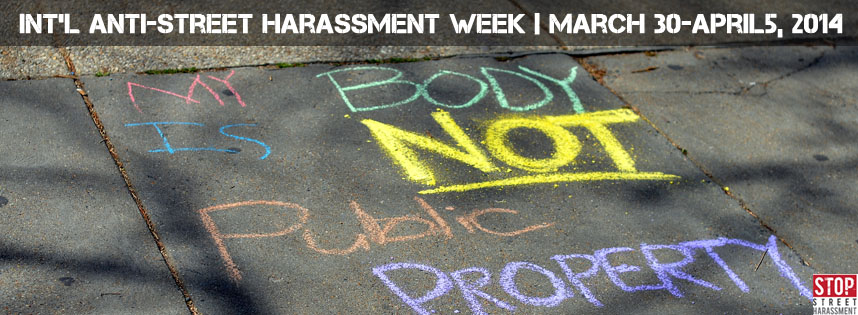
Facebook Cover Images (click to see larger image, then right click to save it & upload it):

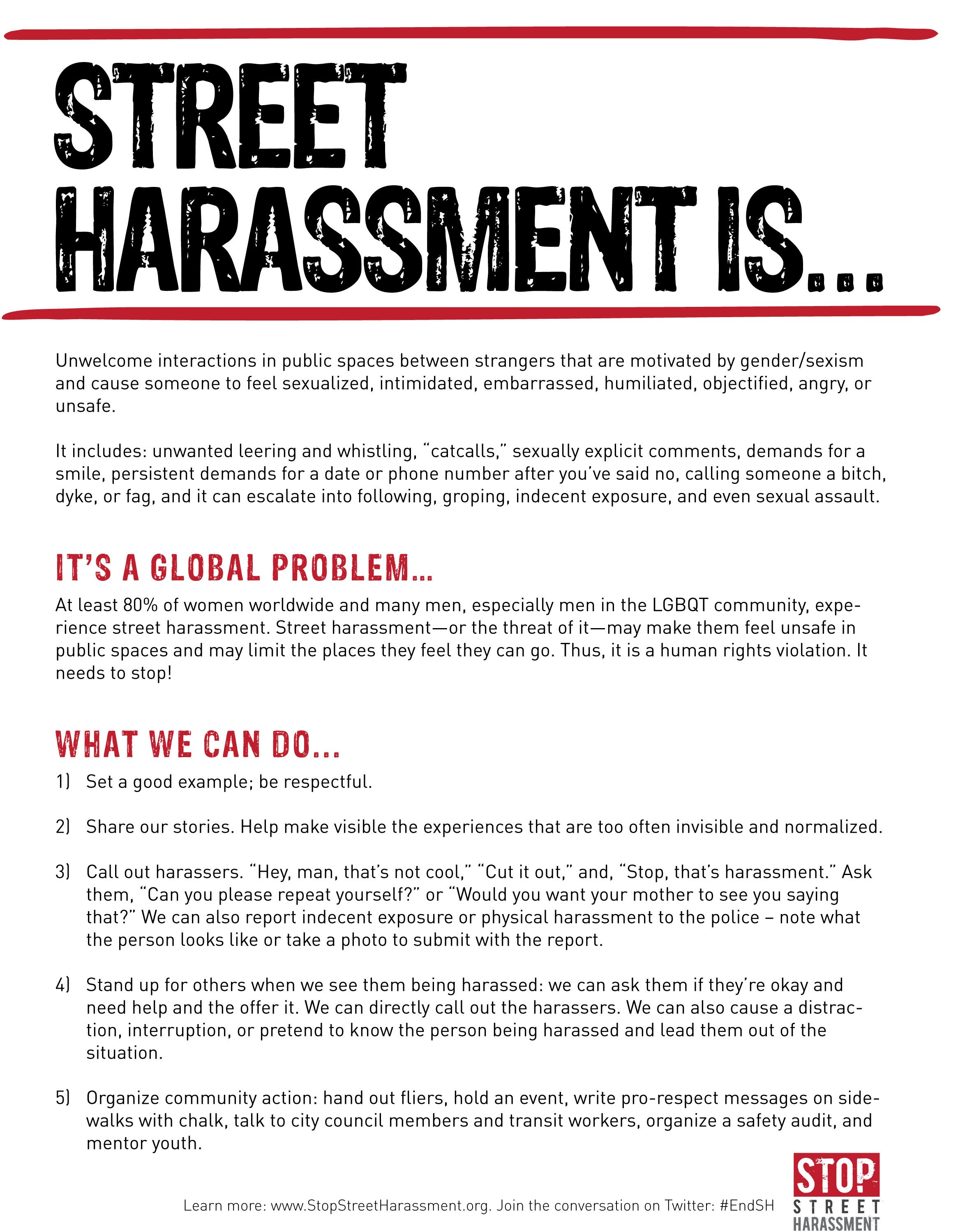
Flyers to post, hand out at events or distribute in public spaces.

Side 1: “Street Harassment is…”

Side 2: “Okay and Not Okay” ways to interact with strangers in public (PDF – English) (PDF – Nepali)


French | Hindi | Italian | Spanish | Turkish | PolishSingle Half Sheet Flier (PDF) | 2 Per Flier (PDF) French | Italian | Spanish | Turkish | Nepali| PolishSingle Quarter Sheet Flier (PDF) | 4 Per Flier(PDF)
Share

Filed Under: anti-street harassment week, Resources, street harassment

10 Things To Know for Anti-Street Harassment Week

March 30, 2014 By HKearl

Safe public spaces. Freedom from harassment. The right to go where you want, when you want, wearing what you want.

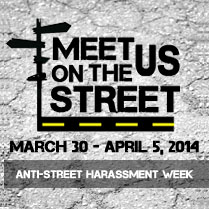
This marks the start of the fourth annual International Anti-Street Harassment Week when people and groups worldwide work together to bring local and global attention to street harassment and when we collectively call for it to end. Together our voices grow stronger.

10 Things You Need to Know:

1. There are at least 150 groups in 23 countries that are participating + there will be thousands of individuals joining us.

2. Here are our events. If your action is not listed, please send me info/link as soon as possible, hkearl @stopstreetharassment.org

3. Here are ideas for action, including how to download the Stop Telling Women to Smile poster, info about a free phone app called Safetipin and details about our six Tweet Chats.

4. The tools page has updated logos in several languages and more flyers and shareable images you can use.

(Facebook cover)

5. Do you want to guest blog or have a blog post cross-posted on Stop Street Harassment during the week? Let me know, hkearl @stopstreetharassment.org.

6. We’ve started to get media coverage. If your action is covered in the news or if you write an op-ed or blog post, please send me the link and I’ll add it to the list and the wrap-up report.

7. Here is the 2014 photo album. Please send photos, or links to photo albums, to me as soon as they’re taken/posted and I’ll update the album in real time. Let’s be virtually part of and celebrate each other’s events!

8.Here’s the report form where you can say how your action went (no matter how big or small). This information will be used for the annual wrap-up report and potentially for articles about the week.

9. The week kicks off in a few hours with this virtual event:

30 March: Pixel Project, based in Malaysia, is hosting a Google+ hangout discussion about street harassment at 8:30 a.m. EDT with Ursula Singh, Executive at YUWA (Nepal), Hanna Lena Krüger, a ProChange Member (Germany) & me. There will be plenty of time for Q&A!

YouTube: http://is.gd/ISHWPixel
Google+: http://is.gd/ISHWPixelG

10. My thanks for your hard work to prepare events and actions so that this week we can join forces and demand public places that are free from harassment!!

Share

Filed Under: anti-street harassment week, Resources, street harassment

« Previous Page
Next Page »

Share Your Story

Share your street harassment story for the blog. Donate Now

From the Blog

  • #MeToo 2024 Study Released Today
  • Join International Anti-Street Harassment Week 2022
  • Giving Tuesday – Fund the Hotline
  • Thank You – International Anti-Street Harassment Week 2021
  • Share Your Story – Safecity and Catcalls Collaboration

Buy the Book

  • Contact
  • Events
  • Join Us
  • Donate
  • Facebook
  • Instagram
  • Pinterest
  • Tumblr
  • Twitter
  • YouTube

Copyright © 2026 Stop Street Harassment · Website Design by Sarah Marie Lacy