• About Us
    • What Is Street Harassment?
    • Why Stopping Street Harassment Matters
    • Meet the Team
      • Board of Directors
      • Past Board Members
    • In The Media
  • Our Work
    • National Street Harassment Hotline
    • International Anti-Street Harassment Week
    • Blog Correspondents
      • Past SSH Correspondents
    • Safe Public Spaces Mentoring Program
    • Publications
    • National Studies
    • Campaigns against Companies
    • Washington, D.C. Activism
  • Our Books
  • Donate
  • Store

Stop Street Harassment

Making Public Spaces Safe and Welcoming

  • Facebook
  • Instagram
  • Pinterest
  • Tumblr
  • Twitter
  • YouTube
  • Home
  • Blog
    • Harassment Stories
    • Blog Correspondents
    • Street Respect Stories
  • Help & Advice
    • National Street Harassment Hotline
    • Dealing With Harassers
      • Assertive Responses
      • Reporting Harassers
      • Bystander Responses
      • Creative Responses
    • What to Do Before or After Harassment
    • Street Harassment and the Law
  • Resources
    • Definitions
    • Statistics
    • Articles & Books
    • Anti-Harassment Groups & Campaigns
    • Male Allies
      • Educating Boys & Men
      • How to Talk to Women
      • Bystander Tips
    • Video Clips
    • Images & Flyers
  • Take Community Action
  • Contact

The Netherlands: Female hitchhikers defying highway harassment (Part 2)

June 29, 2015 By Correspondent

Julka Szymańska, the Netherlands, SSH Blog Correspondent

This article is the second installment in a two part series, you can find the first set of portraits here.
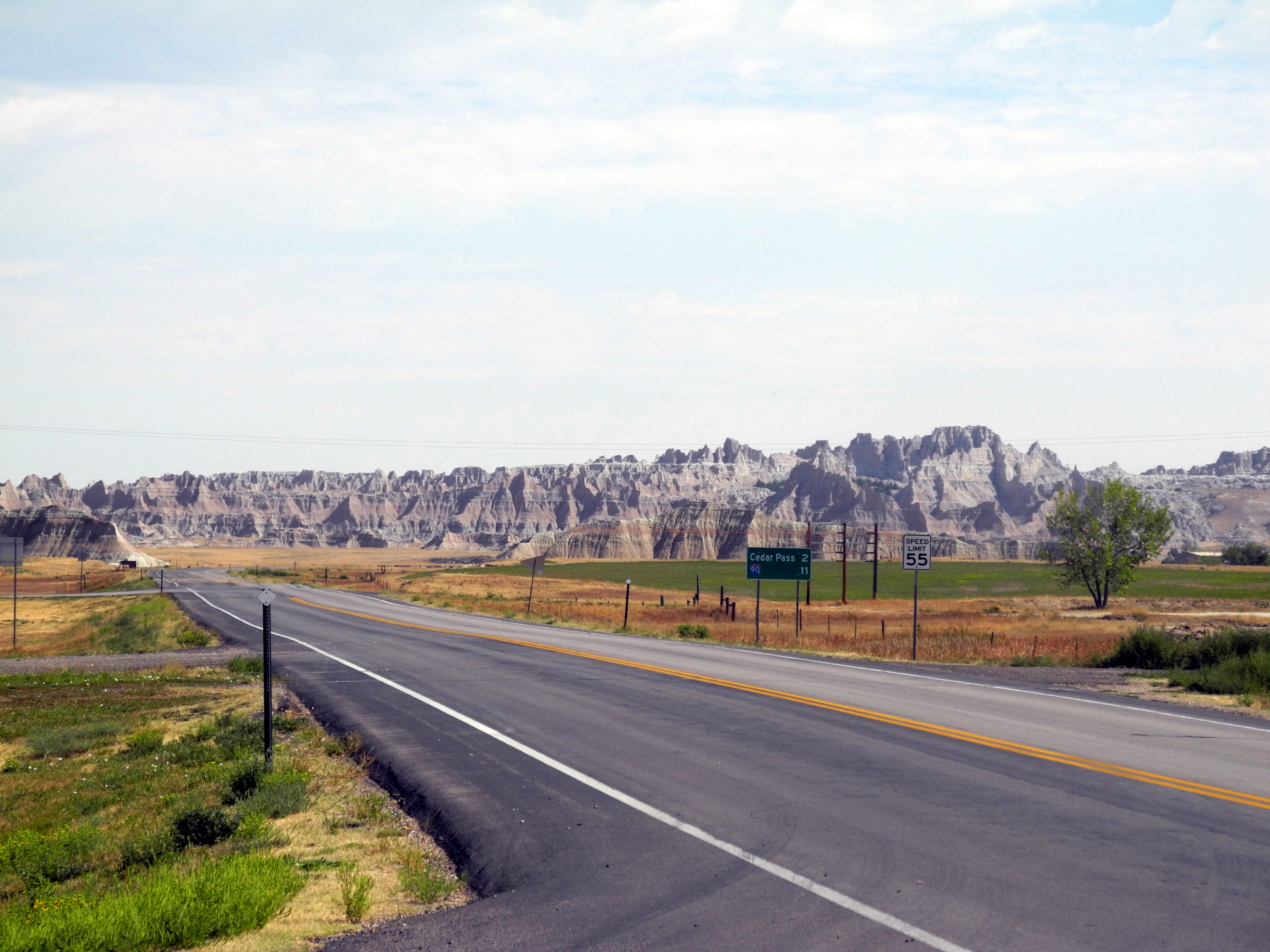
8.28.12 badlands national park, pine ridge reservation, sd 003Sophie.

A real people’s person, 22 year old Sustainable Agriculture student Sophie is based in Germany when she is not away on one of her hitchhiking adventures. One of the core reasons for wanting to hitchhike is her love for being around many different kinds of people, another revolves around the journey from festival to festival during summer’s festival season. In the middle of nowhere you can more easily find a ride than a train- or bus station.

Harassment while thumbing is familiar for Sophie, she recalls: “During my third time hitchhiking, I was in Romania with a friend when we had just waited for two hours in the scorching hot sun. Finally a car stopped and a Romanian guy offered a ride, but we were having troubles with the language barrier. He took me aside and after some attempts at understanding each other it became clear he only wanted to take us in exchange for sex. Of course I declined, but I felt really embarrassed and unsafe. I would not have known what would have happened if my friend wasn’t there with me and I think every girl should be informed that this can happen. I was a little bit too naive. This incident was a warning for me, now I communicate more with drivers before I get into their car.”

Knowledge and experience in hitchhiking is a factor Sophie thinks a lot about these days; she wants to be prepared for all the challenges she might face. She doesn’t carry pepper spray, because using that in a closed car can literally backfire and the only knife hidden in her shoe is a utility knife with a safety switch, so she herself won’t be cut by accident. Another method to feel safe for her is reading a lot of resources by more experienced hitchhikers, like blogs, guides and documentaries.

“I’m proud when I hitchhike alone, the sense of self confidence and freedom feels great. I wear practical clothes, nothing sexy and I meet a lot of nice people on the road who go the extra mile for a young woman alone. They compliment me and respect my character for being out there on my own, I love that,” Sophie cheerfully laughs.

Diana.

Diana is a 24 year old woman of the world; originally from the United States, but currently living in Thailand. She first hitchhiked in Japan with a friend who taught her the ropes, following this nice introduction to hitchhiking she started doing it alone. After utilizing her fluency in Spanish on the road in Chile, many different countries would be next on Diana’s list.

Her experiences with harassment during hitchhiking are fortunately limited, unfortunately that can’t be said for other travels or destinations. In Australia she had to face a lot of micro-aggressions (such as being called “a spicy Latina” and men even groped her a few times. And during an emergency couch surf for a night in Paris her host expected her to have sex with him, which resulted in her locking the guest room she stayed in and leaving at sunrise to get away from the creep. Similar situations happened more than once, but always were resolved safely.

“The controversy surrounding women’s safety when hitchhiking is very frustrating”, Diana sighs, “In my opinion it perpetuates the patriarchal notion that women are weak and aren’t able to take care of themselves. Which is not the case, because I’ve been hitchhiking alone many times and I even introduced another girl who never hitchhiked before to the world of it. ”

She explains that traveling alone isn’t the problem. “It’s really suffocating for women to be told that we shouldn’t do it, people should just stop harassing and preying on women. Women aren’t asking to be prayed upon. As a feminist I’d want women to be safe, that is their right, this includes exploring the world and hitchhiking is an amazing way to do that.”

Diana lives by a proverb in Spanish that translates to something along the lines of “Go with a good vibe”. She endorses passing the ways of the hitchhiker on to new people who want to embrace this way of traveling, to both teach them by setting a good example and give them more self confidence; to ultimately simply share the vibe.

At the end of the road.

All in all I think we can conclude that no matter the risks of hitchhiking and the warnings women in particular receive about it, a lot of women aren’t repelled from raising their thumb at the highway, either alone or with a traveling companion. Many women use strategies to ensure their own safety, just like hitchhiking men do, although perhaps a little more consciously. Harassment does happen, but not as often as many people think, nor more often than in other public places, such as the street, trains or other public transport or behind the doors of a building. The responsibility of stopping highway harassment and any street harassment in general lies with the people doing the harassing. Women can only do so much to ensure their own safety and are armed with their intuition and wits to cope in a world that can be considered outright hostile to women. Despite this animosity, every single woman is brave for going on with their lives and doing what they want to do with it in the face of harassment. And that demands nothing less than utter respect.

Are you curious about hitchhiking after reading these courageous women’s stories? If so, be sure to check out some of these resources on the subject of hitching rides risk-aware and as safe and comfortable as possible.

  • Hitchwiki: The guide to hitchhiking the world.
  • A Girl And Her Thumb: A blog about hitchhiking while female.
  • Women On The Road: An inspirational website dedicated to women who travel.

Julka is a 25-year-old feminist activist and soon-to-be Cultural Science student with a generous amount of life experiences -including street harassment – and even more passion for social justice.

Share

Filed Under: correspondents

UK: Holla:Rev in London

June 28, 2015 By Correspondent

Ruth Mair, UK, SSH Blog Correspondent

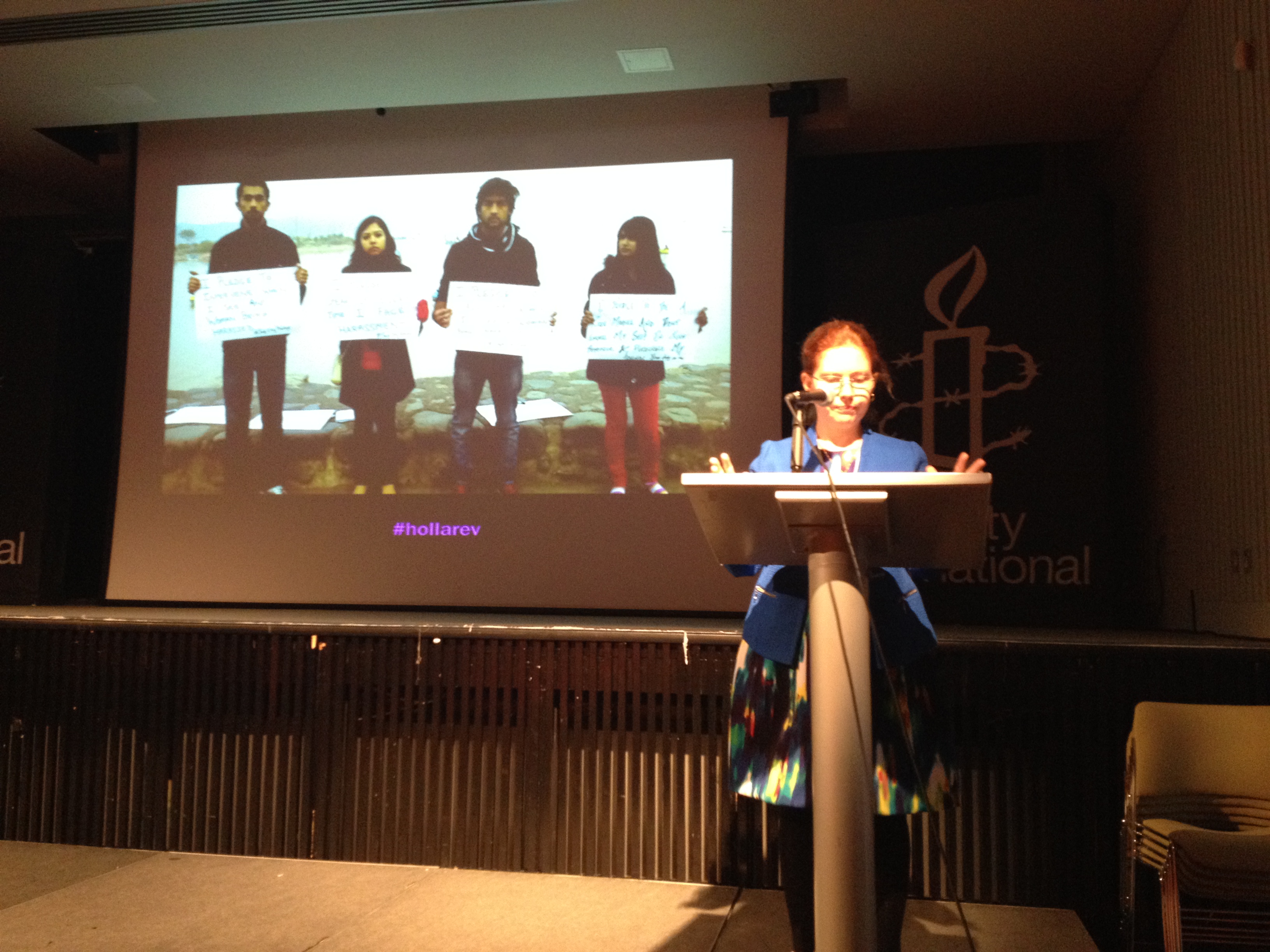
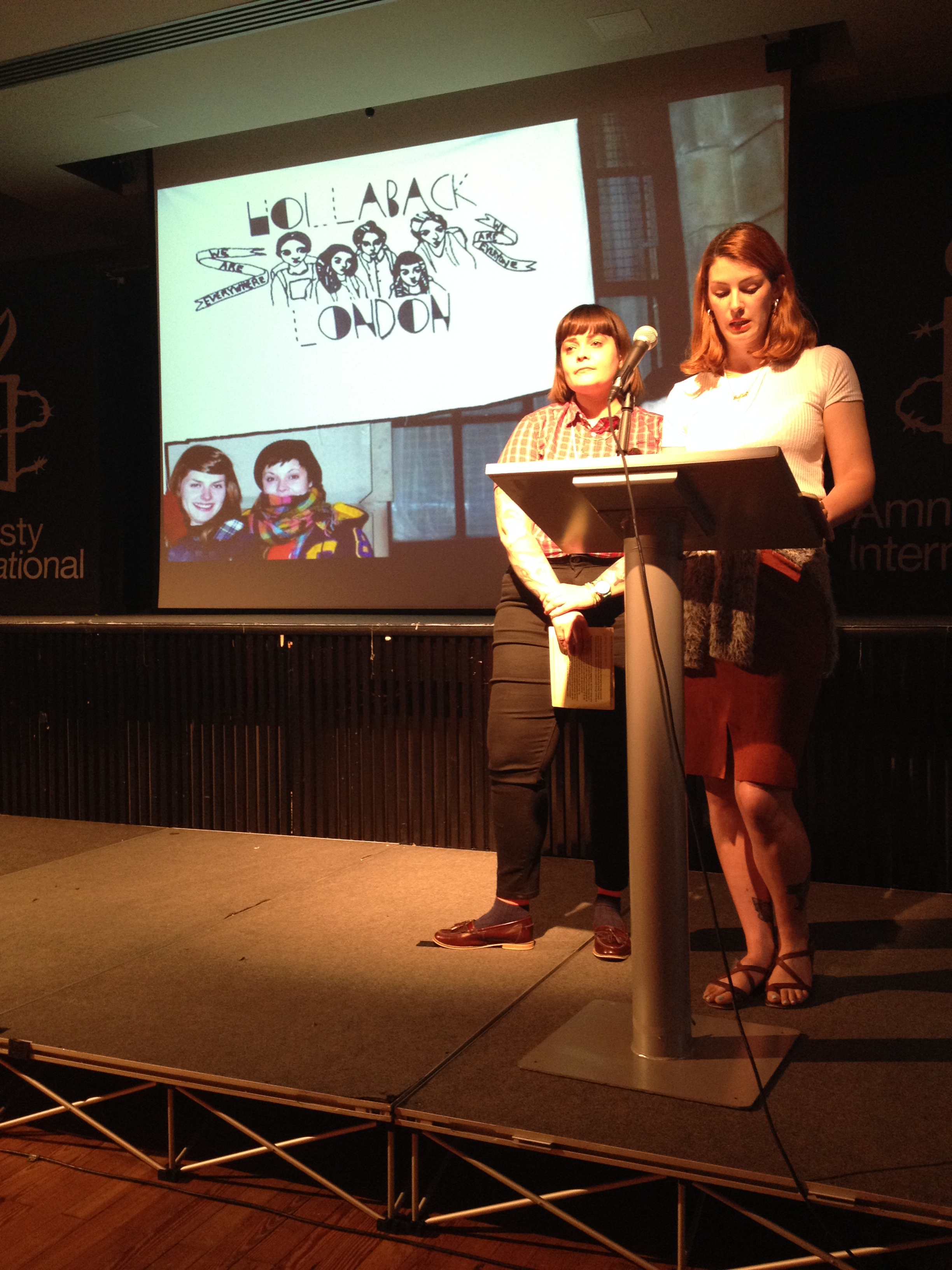
I attended Holla:Revolution in London a few days ago and it was so inspiring, uplifting, moving, exciting, and many other good words. The main thing I felt attending the event was involved. I felt that I already AM involved, just by being there and aware, interacting with others, hearing their stories, and all the astonishing ways they’ve come up with to combat harassment and address the central problem, but also involved with a more ambitious tint to it.

Beynon and Gray
Beynon and Gray

I felt that I wanted to be up there, on that (pretty small) stage, with all those inspirational humans, saying something relevant, adding my voice, and working on something new to contribute even if I don’t quite know what yet. I wanted the younger me to be there and get inspired by it, and I wanted future me to be there, feeling joy at what has been achieved and the pleasure of knowing that sometimes hard work pays off, even when as Julia Gray from Hollaback! London said, everyone is telling you it won’t work out. Sometimes, human beings are brilliant, and those in the Amnesty International building at this three hour conference were a stellar example of that.

The talks began with an introduction from Emily May, founder of Hollaback!, explaining the history behind the project and what inspired her. Many of us found our own stories being reflected in her account of what inspired (if that is the right word, when we’re talking about the frustration involved in being harassed frequently on the streets) her to begin talking to others about their experiences. We had all had those moments of realisation, the first discussions of what street harassment was, the sharing of stories, just at different times, different places, and with different people, and May’s introduction created an intimate space for all of us to interact, and start creating this revolution that we all want to take place.

Then the first speakers were Bryony Beynon and Gray who co-found Hollaback London in 2010, and since have worked incredibly hard to educate various organisations about the issue of street harassment, including most recently the creation of the Good Night Out campaign and their on-going work with British Transport Police to help make reporting incidents of harassment on public transport significantly easier for all.

Following them was Susuana Antubam, currently NUS National Women’s Officer, discussing harassment on campus, along with various campaigns relating to good consent rules and combating lad culture- both of which, she reminded us, are significant in educating about street harassment and the culture that supports its continued existence.

Briggs
Briggs

American Nicola Briggs’ confessions of a subway badass was next. She told her story of confronting the man who had sexually assaulted her on a subway train, as well as the experience of dealing with the aftermath when the videos taken by by-standers went viral.

Samayya Afzal from Bradford University’s students union then discussed the specific experience of street harassment as an identifiable (headscarf-wearing) Muslim woman, particularly the normalisation of this kind of harassment for many of her peers, who had come to simply expect such treatment when stepping outside of their own houses. She also touched on the issue of online harassment, and how much weight that can place on the shoulders of activists (and others) who have to cope with multifaceted harassment.

The last speaker before the 10 minute break was a representative from the Sex Workers Open University, along with a proviso that we must not tweet or photograph this speaker. Through the process of relating stories of harassment, the speaker emphasised the importance of addressing why people feel offended if they are called a whore, or identified as one mistakenly, as well as talking about the difference between clients and harassers, and finishing with an emphasis that sex workers need to be included in discussions of harassment, and that we need to end exclusion of sex workers by feminist groups.

The repetition of these stories of harassment may well make the event look like a great big group therapy session, but hopefully that’s only to the cynical reader. It is incredibly important still that these stories are repeated, shared, and added to even if we keep hearing the same thing. Because it’s only through taking part in that kind of cathartic exercise that we will be able to educate others, allow ourselves to recover from what we have experienced, and most importantly, remind ourselves whenever we’re starting to feel weak or tired out by it all, that such harassment is NOT OK, in those big intentional capital letters. We have the support of so many others who have experienced the same, and are sympathetic to the exhaustion that comes with the armours that we clothe ourselves in to cope.

After the break there was an immensely moving performance by (50% of) Sauna Youth, of their piece that will eventually be worked in to a bigger piece called “A Thousand Tiny Pinpricks,” but at present is on their album Distractions as (Trying to take a) Walk. It has stories of harassment in the form of spoken word repeated and layered over music, with both the views of the harassed, and those of bystanders and allies expressed.

Then Laura Bates from Everyday Sexism Project spoke about education and solidarity, the importance of standing alongside one another in order to stand against sexism and sexualised harassment, and reminding us all of the hypocrisy that sometimes occurs, where women are treated equally in some situations but as second class citizens in others.

Bisi Alimi, an LGBTI campaigner, and the first gay person to come out on national television in Nigeria, spoke next about the differences between homophobia and the street harassment experienced by LGBTI people. He touched on the occurrence of corrective rape and aggression faced by trans people, and those with non-binary appearances. Alimi was full of energy, and the talk, although only 10 minutes, was packed full of information, much of which I had not encountered previously even though I am relatively engaged with discourses and media concerning street harassment and campaign work.

Sabria Thompson from Hollaback! Bahamas showed a video explaining the projects they are undertaking, including asking average professional women to wear cameras for several days to record the harassment that they receive, in order to make others understand how frequently the average women receives such harassment and how pervasive it can be.

The final speaker was Vanessa Smith-Torres from Hollaback NOLA, who spoke about how her experience as an architect had influenced her approach to street harassment and the ways in which public spaces need to be changed to make them fully accessible to women. She gave us a preview of the designs for a large scale art project to be created in New Orleans in order to draw attention to the experiences of women and their interactions with being outside and using public spaces.

To finish the event, there was a group panel of all the speakers, taking questions from the audience and discussing various points such as the future of anti-street-harassment work, and finishing with each speaker relating to us the two main things they thought were most important when it comes to combating street harassment.

The one that stuck with me, and has been chiming in my head, every time I go out my front door, has been Briggs’; “Use your voice!”. I think this struck a chord with me, because personally I have always been of a quiet inclination, more likely to ignore someone pressing up against me on the Tube, or simply scowl and say nothing if someone catcalls me.

It served as a reminder also, that we are at our most powerful as a movement when we use our voices in all the ways we can- by communicating the issue, bringing it out in to the open, and making sure that no one can look away or sweep it, or us, under the carpet, or into the quiet corners of nightclubs, or the badly lit streets that we walk down at night, again. That is how we will make this revolution happen.

Ruth is a human rights MA student finishing her MA dissertation on the legal and normative rights of terror suspects in the UK (spoiler alert: rights are being violated). She also plays bass in a band called Kinshot, sews as often as she can, and spends time getting annoyed at the cat sleeping on top of her computer.

Share

Filed Under: correspondents

UK: #PoppySmart and the Influence of Media Representation

June 24, 2015 By Correspondent

Emma Rachel Deane, UK, SSH Blog Correspondent

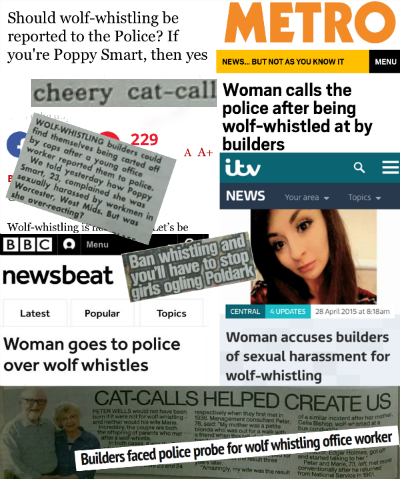
poppyFor anyone who follows events surrounding women’s public safety, her story was impossible to miss. Towards the end of April this year, Poppy Smart, a 23-year-old digital marketing coordinator in the UK, had reached her limit on the amount of harassment she could bear from the staff of a nearby construction site. After seeking help from a nearby police station to put a stop to it, a local newspaper ran a front page story identifying Smart by name and stating that wolf-whistling builders were facing an investigation after her complaints.

Within days of the article’s publication every major newspaper in the UK had reported the story, her social media accounts were flooded with messages and the hashtag “#PoppySmart” was created for twitter uses to vent their anger at Smart for her actions. I interviewed her to hear about it from her.

“It was a really difficult week, I’m still in Worcester and a lot of people here got very angry about the whole thing,” Smart said. “I’ve been told what was being said about me online, but I don’t really want to look at it… I’m still concerned about how extreme some of the reactions were. I still think about it quite a lot.”

Extreme is right. In the interest of not allowing a breathing space for misogynistic Twitter rants, I won’t display any of the #PoppySmart commentary in this post. Suffice to say, it was painfully clear that many people had judged her actions to be disproportionate to the situation and an unworthy use of police time.

Not content to just condemn her actions, many Twitter users vilified Smart on a personal level, publicly attacking every aspect of her persona, from her appearance to assumptions about her sexuality and lifestyle to basic derogatory name calling and abuse. The most noticeable, and perhaps most problematic aspect of the whole saga, is the incredibly uninformed and reactive nature of each headline-fueled “anti-Poppy” tweet. Instant judgements were made from click-baiting headlines which were designed specifically to provoke a negative reaction, causing her experiences to be dismissed and her actions casually criticised without any real insight into the situation.

In Smart’s case, the information lost from the headlines was that she had endured embarrassing and lewd comments about her body from a group of around 10 construction workers for almost a month while trying to control an anxiety disorder which had worsened following a physical attack by an intoxicated male last year. Her harassment from the construction site turned to intimidation when one of the men stepped in front of her and sneeringly blocked her path to work, an act one would struggle to find any purpose or meaning in other than a display of physical strength and ownership. Given her past ordeal and daily struggle with her own mental well-being, she had reached breaking point.

In addition to missing out vital information many media outlets also embellished Smart’s actions to an incredibly unfair degree. “To read the headlines you’d think I’d dialed 999 the first time it happened,” she told me.

Judging by the social media furor, it appears as though that’s exactly what readers did think. In fact the people dealing with her complaint were not even police, but voluntary community support officers, a far cry from the “police probe” reported by many publications. Even media outlets Smart was led to believe she could trust misrepresented her experiences.

“I read the BBC newsbeat article online and even though they actually spoke to me for the piece, they still chose to call my harassment ‘wolf-whistling’ in the headline, which really trivialised what I was going through. They didn’t mention the lewd catcalls, or the man who had invaded my personal space. When I spoke to the journalist I was under the impression that the article would get across the fact that wolf-whistling wasn’t the issue.”

Some news sources even began claiming that Smith had likened her experiences to racial discrimination. “My family was concerned it would ruin my reputation. I wouldn’t compare my harassment to any other forms of bigotry, each is a separate issue. What I said was that we don’t have national debates about whether it’s okay to yell at people in the street on the basis of their skin colour or religious dress so I don’t understand why we were having one about unsolicited comments on women’s bodies. They did it to get people riled up so they had another week’s worth of news.”

In addition to the careless representation of her experiences, The Daily Mail and The Sun ran opinion columns suggesting that women intimidated by lewd catcalls were somehow weaker than women who were accepting of it. In addition, The Sun took the already dismal situation a step further, almost praising Smart’s harassers for their actions. They claimed a recent study showed that “54% of women love being wolf-whistled” and that “objecting to wolf-whistling is a sexist double standard” because some women “publicly perv over David Beckham’s pants ads.” A story about an elderly couple, neither of whom “would have been born if it wasn’t for catcalling” was also printed under those statements.

Most news sources also pulled photos from Smart’s social media pages without permission before she had a chance to make them private. “The photos pulled were selfies, and because of that people were saying I was vain and that I must have been enjoying the attention. People were saying I was asking for it. I think it should have been a faceless story, how I look is irrelevant, I still shouldn’t be be subjected to harassment. They focused too much on me personally and set the stage for people to attack me on a national scale.”

The language used in articles and phrased for headlines is not accidental. It is carefully considered and exists purely to pull a reader into a story, causing a newspaper to be bought or a link to be clicked containing valuable advertising revenue. Once that button has been pressed it needs to deliver information to the reader as fast and sensationally as possible so that it warrants being shared on social media for another person to click and so on. It would be beyond naive, for example, to believe that news sources would be blind to the effect of choosing her selfie in a low-cut top to accompany a story about her complaints regarding lewd comments on her body.

I’m not suggesting that the people raging about Smart’s actions are helpless victims of media brainwashing, there is clearly a lot of ingrained misogyny there, but it seems undeniable that the reporting surrounding her story was designed to provoke the very worst reaction from people with no regard for her personal safety or well-being. Aside from the obvious oversimplification and embellishment of her experiences, it’s certainly worth noting the familiar shift to the masculine perspective. We see headlines such as “Builders Face Police Probe” instead of “Woman Faces Harassment.” We see countless comments arguing that Smart should have just asked her boyfriend/brother/dad to “sort it out” instead of questioning a culture in which her voice alone isn’t as powerful.

Far be it from Smart to dwell on the negatives, she is currently planning to collaborate with a technology enterprise in the hopes of developing an app to enable women to report places in which they have felt unsafe, allowing police to identify hotspots. “I’m worried that other women will see what happened to me and feel like they can’t speak out about their experiences, but I really hope that’s not the case. I would do it all over again. People have the right to seek help when they don’t feel safe. The more we report it the clearer it is that it happens so frequently. So many people contacted me to tell me it happens to them every day.”

You can follow her blog here.

Emma Rachel Deane is a London-based retail manager for a fast growing women’s lifestyle brand and an outspoken advocate for women’s social justice issues. She can be found blogging on Raging Hag or tweeting @emmaracheldeane.

Share

Filed Under: Activist Interviews, correspondents, street harassment Tagged With: Poppy Smart

USA: Street harassment and the generational divide

June 23, 2015 By Correspondent

Laura Voth, USA, SSH Blog Correspondent

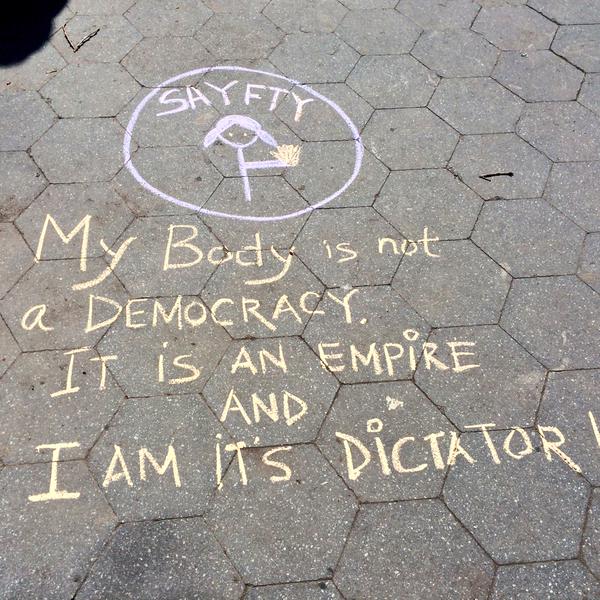
Sayfty in NYC, April 2015
By Sayfty in NYC, April 2015

On my drive to work the other day, I caught a news segment in between pop songs. The hosts were two middle-aged individuals, one a man and the other a woman. They began chatting about the 90% statistic—that 90% of women worldwide report having experienced what the hosts referred to as catcalling. They defined catcalling as “whistling” and, more vaguely, “comments.”

The male host didn’t have much to say on the subject, but I was interested to hear the woman’s take. To my surprise, she said, “I wish someone would catcall me! It’s like I’m invisible since I got older! It would be a compliment.”

When I hear older women make claims such as this—that they miss being catcalled on the street—I always wonder what harassment they experienced when they were younger. Surely they never had obscene words and gestures thrown their way, as women do now. Surely they were never followed, grabbed, groped, or photographed by strangers.

I can’t speak to any woman’s experience other than my own, but I don’t think anyone truly takes a stranger’s yell of “come suck my d*ck!” as a compliment. And perhaps that’s the root of the generational disconnect where street harassment is concerned. Maybe today’s women were raised with the belief that they are deserving of respect not in spite of their gender, but because of their humanity.

The truth is that, whether or not street harassment is frightening, it is harmful and demeaning. It sends the message that women—not only the woman involved, but others—are not welcome in whichever space and that they do not deserve to be viewed as people. It reinforces the idea that woman’s worth is based on her perceived f***ability. If someone gets that message often enough, they will start to believe it.

The idea that women over a certain age aren’t worthy of being acknowledged—acknowledged, mind, not harassed—is a continuation of that idea. Once a woman doesn’t look a certain way, she almost disappears. And despite the negativity of the attention she once received, she might in a way miss the whistles and catcalls, because at least they affirmed that she had some kind of worth.

Would you rather be invisible or devalued? Unseen or disrespected? Knowing that you don’t matter to strangers, or aware that the men who pass you by don’t even think of you as a person?

We deserve to be afforded respect and recognition for who we are as people—for our actions, our strengths and weaknesses, and our humanity—not for our looks.

If women have come from a point when they weren’t able to take a stand against street harassment to today, when blogs like this one show that we feel comfortable with speaking out, there must be a way to get to a point where women’s bodies and selves are not seen as objects reduced to whether a stranger believes they are worthy of unsolicited commentary.

We all want to be seen as who we really are—people. A comment from a stranger on the street serves as a vicious denial of our personhood, and eventually we start to believe it. A little respect goes a very long way.

Laura is an emerging adult-slash-college student studying to enter a healthcare profession. In addition to studying and writing, Laura works at her university’s women’s center where she helps design and implement programs on all things lady. 

Share

Filed Under: correspondents, street harassment

France/Brazil: “I Still Feel the Same Terror”

June 15, 2015 By Correspondent

Luiza Pougy Magalhaes, France/Brazil, SSH Blog Correspondent

The very first time I witnessed street harassment, I was very young. I was so young that I didn’t really understand what a passing taxi driver meant when he called my mom a “yummy mommy”, when he looked right at her and said, “Oh mother may I.”

He was stuck in traffic right by my house; his collar opened all the way down to his chest, his arms out of the open window of his taxi. We walked by, completely unaware of his existence. Upon hearing his words, my mom stiffened, her back straightened, she held my hand tighter, and pulled me closer. I remember how I could feel her discomfort, and how I felt uncomfortable myself. I couldn’t understand why he had chosen to direct those words at her. I remember I wanted to protect her. I hated that man and I wished no one would ever speak to my mother like this again.

Today, I can still feel the terror I felt when he stared as we walked away. Now I know that she must have shared that terror. Probably more so than that; she must have felt violated and disgusted, shameful even – ashamed to be spoken like this in front of her daughter.

While I recall every detail of this particular scene, I doubt my mother remembers it at all. When street harassment becomes a daily struggle, we tend to block it out, rather than have it engraved on our memories. Nonetheless, I have a few stories worth sharing.

A couple of years ago, while wandering the streets of Brazil, I got lost. Knowing Brazilian men, I was very careful when asking for directions. I approached a couple of women, but had no luck. I saw a man; middle-aged, a clean-shaved face, impeccable posture, well-fitted suit, and glasses. Surely a well-educated man like himself would do no harm. I walked towards him with a shy smile. Before I could even say anything, he started calling me things; made comments about my legs, said he would pay money for me. Shocked and terrified, I left; mouth wide-open.

That day I learned that street harassers are not exclusive to certain demographics.

A few years after, I walked by a man with a toddler. The little boy lovingly leaned against the man’s chest. Just as they left my eye-sight I heard a whistle and a malicious comment. I turned around. The man was grinning and nodding, his boy looking at me, wide-eyed. Usually, street harassment makes me angry. Then, I just felt sad. Sad thinking about how this boy would be raised, what misogynistic values would be passed on to him.

Sad to realize that there was still a long way to fix society.

Living in France, street harassment also occurs regularly – once, at a supermarket I go to with frequency. The cashier’s line was long and I got distracted on my phone. The sound of a quiet giggle in my ear woke me from my trance. I turned around. There was a guy behind me, doing obscene, sexual gestures. I pushed him off, screamed at him and his friends – his audience. What really shocked me was that none of the cashiers, security, or general staff – who knew me well, I must say – did anything about it. They just looked at me; frowned faces at the foreigner girl who was making a scene.

That day I realized that people don’t think street harassment is a big deal, that street harassment is not taken seriously.

Months later, walking by my university, also in France, I crossed paths with a student; his gaze fixed on me. He licked his lips, hissed, and growled when we locked eye-contact. I called him a creeper and continued my way. He freaked out; started yelling that I “better watch out and have some f***ing respect, bitch.” In disbelief, ashamed, and also terrified, I picked up the pace and pretended like I wasn’t the one he was yelling at.

That day I realized that harassers see their victims with such tremendous inferiority that just the thought that they could stand up for their selves, pushes them over the edge.

You would think that years in the receiving end would have made street harassment any easier to deal with. However, I still feel the same terror that little girl felt when her mom was catcalled by that taxi driver. I feel my back straighten and stiffen just like hers did. I feel uncomfortable, violated, and ashamed, just like she must have felt. After all this time, I still don’t understand why the taxi driver stared, why the man commented, the father whistled, the boy hissed, the guy gestured. And to be honest, I don’t think I ever will.

Luiza is a 20-year-old from Brazil who considers herself a citizen of the world. As a teenager she moved to Singapore and now she studies International Business in France.

Share

Filed Under: correspondents, Stories, street harassment

« Previous Page
Next Page »

Share Your Story

Share your street harassment story for the blog. Donate Now

From the Blog

  • #MeToo 2024 Study Released Today
  • Join International Anti-Street Harassment Week 2022
  • Giving Tuesday – Fund the Hotline
  • Thank You – International Anti-Street Harassment Week 2021
  • Share Your Story – Safecity and Catcalls Collaboration

Buy the Book

  • Contact
  • Events
  • Join Us
  • Donate
  • Facebook
  • Instagram
  • Pinterest
  • Tumblr
  • Twitter
  • YouTube

Copyright © 2026 Stop Street Harassment · Website Design by Sarah Marie Lacy