• About Us
    • What Is Street Harassment?
    • Why Stopping Street Harassment Matters
    • Meet the Team
      • Board of Directors
      • Past Board Members
    • In The Media
  • Our Work
    • National Street Harassment Hotline
    • International Anti-Street Harassment Week
    • Blog Correspondents
      • Past SSH Correspondents
    • Safe Public Spaces Mentoring Program
    • Publications
    • National Studies
    • Campaigns against Companies
    • Washington, D.C. Activism
  • Our Books
  • Donate
  • Store

Stop Street Harassment

Making Public Spaces Safe and Welcoming

  • Facebook
  • Instagram
  • Pinterest
  • Tumblr
  • Twitter
  • YouTube
  • Home
  • Blog
    • Harassment Stories
    • Blog Correspondents
    • Street Respect Stories
  • Help & Advice
    • National Street Harassment Hotline
    • Dealing With Harassers
      • Assertive Responses
      • Reporting Harassers
      • Bystander Responses
      • Creative Responses
    • What to Do Before or After Harassment
    • Street Harassment and the Law
  • Resources
    • Definitions
    • Statistics
    • Articles & Books
    • Anti-Harassment Groups & Campaigns
    • Male Allies
      • Educating Boys & Men
      • How to Talk to Women
      • Bystander Tips
    • Video Clips
    • Images & Flyers
  • Take Community Action
  • Contact

Brazil: How Feminists are Changing Street Carnival

January 22, 2018 By Correspondent

Yasmin Curzi, Rio de Janeiro, Brazil, SSH Blog Correspondent
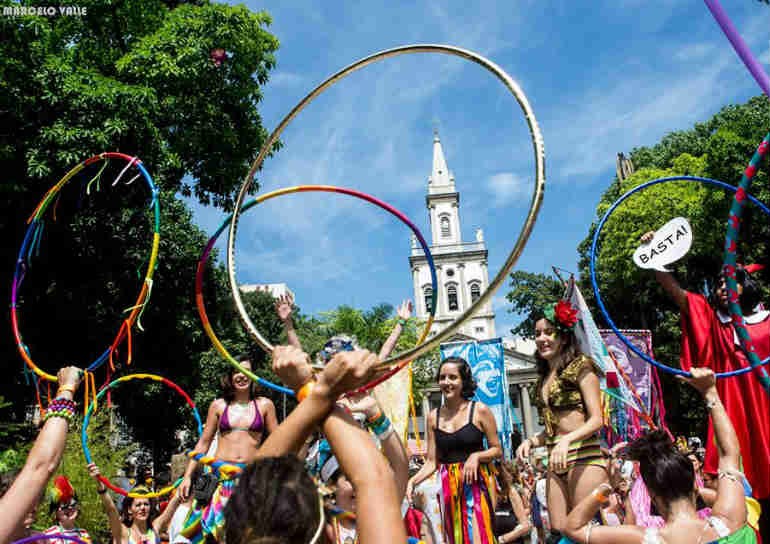
Credit: Marcelo Valle

“Street carnival” in Brazil can be defined as an open encounter for all kinds of people in public spaces, such as streets, corners and squares, across hours (or days).

Each neighborhood has its favorite blocks, blocos, and during Carnival in early February, there will be nearly 500. It’s the only moment during the whole year when people actually stand in these spaces; during the rest of the year they only serve as transitory spots.

The fact that people can remain in the city in order to celebrate life, dancing, drinking, flirting, wearing costumes (many of them with political themes) contrasts with a certain vision of a “blasé” city, that serves only to reproduce capitalism. Street Carnival, therefore, is a political manifesto by itself.

Carnival brings a general feeling of freedom – and that is a beautiful thing. But too much freedom, with our cultural issues such as misogyny, can lead to an increase in harassment and sexual violence cases. Men can turn really aggressive in their approach toward women and it’s almost impossible, as a woman, to go anywhere alone without being vulnerable to these aggressions. Thus, in order to try to stay safe, women worry about their behavior, what they should or should not wear, what amount of alcohol to ingest, and how they’ll get to and from places. Of course, these are all the things that most of us women worry about everyday in order to avoid sexual violence (a study by Think Olga showed that of almost 8,000 respondents in Brazil, 98 percent of them had faced street harassment) – but during Carnival, we pay even more attention. In contrast, men are free to do anything they want in the blocks, with their only  fear perhaps being pickpockets.

Despite these situations, Carnival in Rio is one of the most wonderful spectacles we have. The city is always colorful and there’s an inexplicable magic in the air that everyone can feel. Its energy reaches even the grumpiest person. Carnival itself is not a problem; the violence that occurs during it is the problem that we want to eradicate. But we can’t do that without a profound cultural change. Therefore, feminists are organizing campaigns, safe spaces and blocks to enable equity in Carnival.

In Rio, the journalist and activist Renata Rodrigues started a “safe space” samba street block named “Mulheres Rodadas” (Women Who Get Around). The name was in response to a viral post of a man with a sexist sign reading, “I don’t want a woman who gets around.” This feminist Carnival block “Women Who Get Around” attracted thousands of followers and supplied much more than street samba. It built a whole network of support to battered women who can learn how to play instruments. It serves as a support group. Also, they promoted an awareness-raising campaign for a harassment-free Carnival with the hashtag “#CarnavalSemAssedio” (#CarnivalWithoutHarassment).

Image via Minas de Vermelho Facebook page

Last Carnival there was also a campaign called “Minas de Vermelho” (“Girls in Red”). Women wear red lace on their arm to symbolize solidarity with other women, so if one girl or woman suffers or is afraid of suffering an aggression, she can search for women wearing these laces to find safety.

These are examples of how feminists are tackling sexism in Carnival and transforming it from being more than just a party, but a disruptive demonstration. This is one hell of a way to advocate for women’s right to the city and produce cultural changes.

Yasmin is a Research Assistant at the Center for Research on Law and Economics at FGV-Rio. She has a Master’s Degree in Social Sciences from PUC-Rio where she wrote her thesis on street harassment and feminists’ struggles for recognition. 

Share

Filed Under: correspondents Tagged With: brazil, Carnival, festival, street party

USA: A Defense of #MeToo

January 19, 2018 By Correspondent

Dovie Jenkins, Detroit, MI, USA, SSH Blog Correspondent

#MeToo has been a boon to those seeking justice for the victims of sexual harassment and assault. However, celebrities and regular people alike have recently criticized #MeToo and other anti-harassment movements. One species of criticism claims that the individuals accused of harassment are merely exercising their expressive freedoms, like freedom of speech or the “right to pester.” The basic argument works like this: “Pesterers” have a right to exercise expressive freedoms, even if some find the exercise of these freedoms offensive. Constraining the exercise of these freedoms is an injustice. The #MeToo movement and others like it constrain the exercise of these expressive freedoms. So, the #MeToo movement and others like it, are unjust.

I assert that this particular indictment of #MeToo fails: it is perfectly possible to exercise one’s rights in a way that warrants moral condemnation and sanction, and #MeToo is a reasonable response to these kinds of moral wrongs.

To understand this, consider the following hypothetical person. Jones enjoys saying whatever cruel thing pops into his mind. He tells a cashier that the cashier is a loser. He informs the bank teller that she is a fat idiot. When a Facebook acquaintance loses a parent, Jones comments “hahahhahaha.” It’s hard to deny that Jones has a right to say these things, but it’s also clear to most of us that Jones is doing something morally wrong. If the recipients of Jones’ cruelty started #JonesisaJerk to call attention to the abuse they’ve suffered at Jones’ hands, we’d think this is reasonable. Furthermore, if Jones’ cruel behavior resulted in a hostile workplace, many think that it would be appropriate to sanction Jones. Like Jones, pesterers exercise their expressive rights in ways that make others feel hurt, afraid, uncomfortable, ashamed, and undervalued. We generally think that comments that cause needless harm are morally bad. The #MeToo movement calls attention to these comments, and like #JonesisaJerk, this is a reasonable response to moral wrongs. Furthermore, like the Jones case, it’s reasonable for others to react negatively to pestering behavior.

One might worry that there are two important points of dis-analogy between Jones and the pesterers: (1) Jones intended to be cruel, whereas pesterers intend to compliment the objects of their pestering; and (2) the content of Jones’ comments is insulting, whereas the content of pestering is complimentary, even if these compliments are sometimes phrased in vulgar ways. These differences, one might argue, are morally relevant. However, both objections fail for similar reasons. (2) presumes that the content of a comment is what makes the comment morally acceptable. “Fat idiot” is an insult, and therefore is morally wrong. “Hey beautiful” is a compliment and should therefore be regarded as morally acceptable. This attitude in fact ignores many of the experiences recounted with #MeToo, but even if we assume that the content of pestering is not overtly insulting, this objection doesn’t succeed. Imagine that Smith is particularly sensitive about her appearance. Jones knows this. However, since Jones is a jerk, he sarcastically comments “hey beautiful” as she walks past. As predicted, Smith feels uncomfortable and self-conscious as a result. Though the content of Jones’ comment is superficially complimentary, the intent to cause Smith discomfort is enough to make Jones’ comment wrong.

This brings us to (1). Some claim that, unlike Jones, pesterers do aim to compliment pesterees. They argue that sometimes these efforts are misguided and miss the mark, but #MeToo and other anti-harassment initiatives ultimately penalize individuals for well-intentioned gestures. However, one of the following must be true: either pesterers know that the objects of pestering resent these “compliments” or the pesterers do not know this. If the pesterers know that these “compliments” are unwelcome and cause distress, then the pesterers don’t have benevolent motives. If the pesterers do not know how individuals respond to their comments, then they have failed to be a responsibly informed citizen (there’s considerable evidence that these comments cause distress), and this is a moral failing. In either case, (1) doesn’t cut it.

#MeToo and other grassroots anti-harassment initiatives raise a number of important questions about what should be done about harassment. However, I have shown that an appeal to the expressive rights of harassers/pesterers is not a satisfactory moral objection to anti-harassment movements. Sexual pestering is morally wrong for the same reason that bullying is wrong- it causes needless distress in its targets. The moral wrongness of pestering/harassment is compatible with the exercise of expressive freedoms. Most importantly, given that pestering is morally wrong, #MeToo and other anti-harassment initiatives rightly call attention to this abuse.

Dovie is a Graduate Teaching Assistant at Wayne State University in Detroit, Michigan, where she is currently pursuing an M.A. in Anthropology and Philosophy. Dovie’s academic interests include the evolution of moral reasoning, moral psychology, ethics, and epistemology. She is also interested in public philosophy, specifically issues relating to gender equality.

Share

Filed Under: correspondents Tagged With: metoo

Welcome Blog Correspondents – Cohort #1 of 2018!

January 15, 2018 By HKearl

Please join me in welcoming our newest Blog Correspondents! They represent four countries, four continents and will write monthly articles about street harassment issues in their communities and/or activism to address it.

Megan, Melbourne, Victoria, Australia

Megan calls Melbourne, Australia, home. She has a Bachelor’s of Social Work from Latrobe University and a Master’s in Criminology from the University of Melbourne. Megan is honoured to be a part of the first SSH cohort for 2018 and believes that the sharing of stories through such initiatives goes a long way in preventing street harassment from being part of the narrative of the “everyday” for women all over the world. She’s new to Twitter, so come say hello and share your story at @thecutlerydraw.

Yasmin Curzi, Rio de Janeiro, Brasil

Yasmin is a Research Assistant at the Center for Research on Law and Economics at FGV-Rio. She has a Master’s Degree in Social Sciences from PUC-Rio where she wrote her thesis on street harassment and feminists’ struggles for recognition. She has a B.A. in Social Sciences from FGV-Rio and is concluding a second B.A. in law. Her main academic interests are political sociology, feminist theories and global social movements.

Connie DiSanto, New Hampshire, USA

Connie is a visual communicator who has been working in the field for over 30 years. She is currently a marketing communications specialist for the Sexual Harassment & Rape Prevention Program (SHARPP) at the University of New Hampshire where she is responsible for designing and implementing multi-media campaigns and marketing materials for SHARPP events, education, messaging and outreach. She is also the “face” behind SHARPP’s social media presence and the content creator for the program’s website. Connie also assists with direct service to those impacted by sexual violence on the UNH campus. Being able to combine her creative background with her desire in advocating for an end to sexual violence is a unique opportunity that she feels lucky to be a part of. You can reach her by email here.

Patrick Hogan, Chicago, IL, USA

Patrick Hogan is an undergraduate student majoring in anthropology and minoring in Islamic World Studies at Loyola University Chicago, preparing to continue onto law and graduate school. He is particularly interested in legal anthropology and the ways victims are viewed by legal systems. He has held positions in social justice and charity programs, including Public Relations for Loyola Hunger Week and board positions with the University’s chapter of the American Red Cross. He hopes to find research-based solutions to social issues. In his free time, he enjoys mountain biking and skiing.

Dovie Jenkins, Detroit, MI, USA

Dovie is a Graduate Teaching Assistant at Wayne State University in Detroit, Michigan. She earned her B.A. in Anthropology at Wayne State, graduating summa cum laude. She is currently pursuing an M.A. in Anthropology and Philosophy. She hopes to complete a Ph.D. in Philosophy and one day secure a tenure-track position. Dovie’s academic interests include the evolution of moral reasoning, moral psychology, ethics, and epistemology. She is also interested in public philosophy, specifically issues relating to gender equality. She is also a member of Phi Beta Kappa. Dovie’s non-academic interests include endurance running, hiking, wilderness camping, kayaking, and various board-related sports.

Elizabeth Kuster, Brooklyn, NY, USA

Elizabeth is an Iowa-born and -raised writer and editor who has a B.A. in journalism from the University of Iowa, where she was a member of the undergrad Writer’s Workshop for fiction. Back in the day, she pitched and wrote the very first mainstream-media article about street harassment (for Glamour). Throughout her career, she has focused on developing content that empowers women and helps them live more vibrant, badass lives. She has held full-time editorial positions at publications such as Glamour, Seventeen and The Huffington Post and is author of the self-help/humor book Exorcising Your Ex. In her spare time, Elizabeth enjoys trolling the #FakePresident on Twitter. You can follow Elizabeth on Twitter at @bethmonster, but be advised that she’s been dropping a lot of F-bombs lately.

Isha Raj-Silverman, San Diego, CA, USA

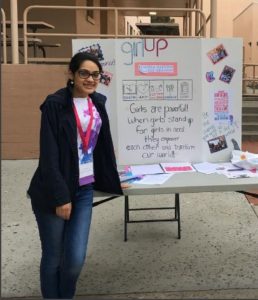
Isha Raj-Silverman is a high school senior at La Jolla High School in San Diego, California. She is a local activist on various women’s issues, but particularly sexual harassment and assault. She has organized her high school’s sexual assault awareness campaigns as president and founder of La Jolla Girl Up, and helped to organize various feminist activism and advocacy events in her community such as the International Day of the Girl Child and a youth art silent auction and concert benefiting the Center for Community Solutions, her local rape crisis center. Isha is also an active member in her high school theatre community, and spends what time she has while not in school, acting, or advocating discussing politics and reading terrible young adult literature, and then loudly discussing how very feminist or misogynistic said literature was and how it may affect or be affected by the views young women have of themselves.

Adetayo Talabi, Lagos, Nigeria

Adetayo resides in Lagos. He is a Judicial Assistant/Law Clerk to Justices of the Lagos Division of the Court of Appeals. He has a Diploma and Bachelor of Laws Degree from the University of Benin, Nigeria. Although his educational and professional backgrounds are in law, Adetayo volunteers with several Non-Government Organizations (NGOs) including Just Justice, Irede Foundation, The Soup Kitchen with focus on legal aid, domestic/gender-based violence, gender equality and human rights. You can reach him by mail here or follow him on twitter at @TalabiJ_.

Share

Filed Under: correspondents, street harassment Tagged With: correspondents

Join the 2018 Blog Correspondents Team

December 28, 2017 By HKearl

Are you looking for a way to be involved in ending street harassment in 2018? We have a great volunteer opportunity for you: apply to become a Stop Street Harassment Blog Correspondent!

The requirements are to write one article (500-800 words) per month from January to April 2018. Applicants can hail from any part of the world, represent any gender, and write their piece in their chosen language. More info. Deadline is January 7!

Share

Filed Under: correspondents, SSH programs

Brazil: ”A few small nips” and the devaluation of women’s lives

August 29, 2017 By Correspondent

Trigger warning – mentions of rape and homicide

Yasmin Curzi, Rio de Janeiro, Brazil, SSH Blog Correspondent

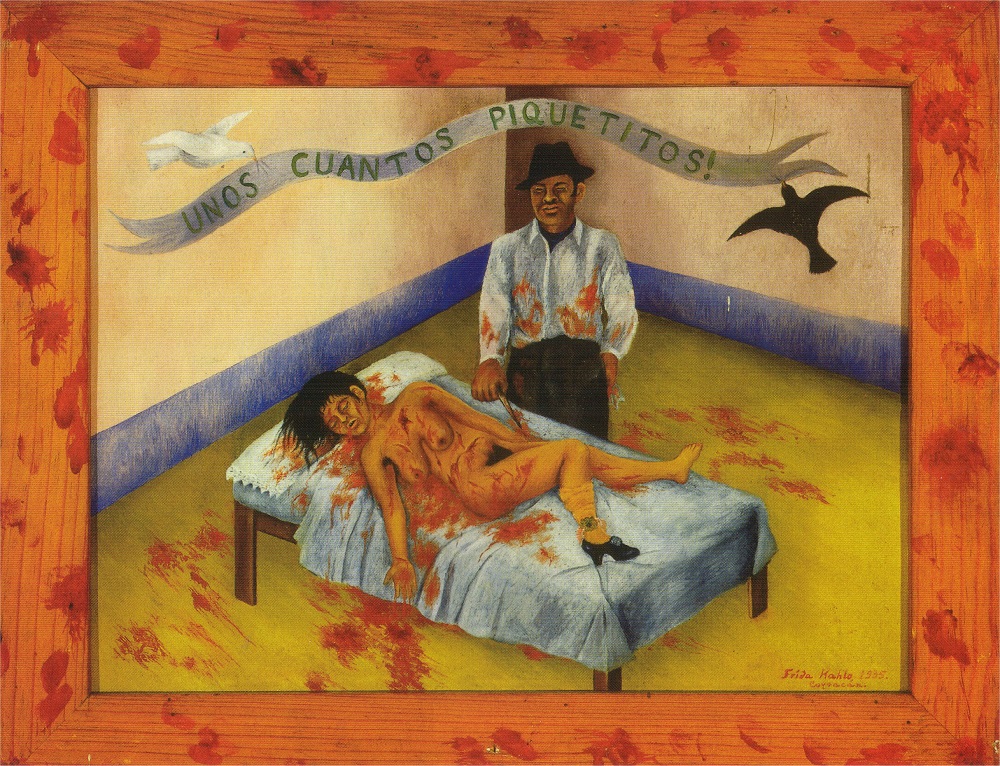
The painting is by Frida Kahlo. Sofia Mandelert aptly described in this article , “Painted in 1935, it’s inspired in a news report about a bloody homicide. A drunk man that stabbed his girlfriend twenty times on a bed and, when interrogated by the police, said that there were only “a few small nips”. The painting is crude and impactating, retracting the crime scene: the woman’s body lies naked over a bloody bed, while the man faces her in an apathetic way, with the crime weapon in his hands. The woman had her body covered with open wounds (…) To complete the aggressiveness of the scene, as a result of the bestial attack, the woman’s blood sprays all over the frame. However, not everything is death and grief in the scene. (…) Sneakily, the horrifying scenario is transformed into a caricature with the presence of bucolic elements, as the delicate silk pillowcase and the walls are painted with a happy combination of pink and blue. The joke is finished with a romantic pennant held by two doves, one white and one black, where the title of the work can be seen.”

Maré’s Favela (Rio de Janeiro/RJ): Valdina de Souza Araújo, 44 years old, street vendor. Constantly assaulted by her partner, the taxi-driver Eduardo Martim da Silva, one day she went missing. Her clothes were found covered with blood in his house.

Mickey’s Community (Niterói/RJ): Michelle Ferreira Ventura, 30 years old, maid. After being constantly harassed by her neighbored, Leonardo Bretas Vieira, Michelle stood up to him. He beat her until she lost consciousness. After four months in the hospital, she died.

São Paulo: Clara Averbuck, writer and feminist activists. She was raped by an Uber driver but did not report it to the authorities knowing how the system operates against women’s dignity and she didn’t want to be violated again by the State. In order to give voice to victims of this type of violence, she started a campaign entitled “#myharasserdriver/ #myabuserdriver”.

Recently released information from Women’s Dossier[1] shows the dimension of the dramatic scenario of violence against women in Rio de Janeiro. In the last three months of 2016, 42 attempts of murder of women were qualified as gendered crimes, signifying 27,3% of the total. A woman’s life was threatened, simply for being a women, every two days. The notifications of rape shows that 39,8% of the aggressors were somehow related with the victims (8,9% her partner or ex-partner). In addition, 55,5% of the victims were young girls, under 14 years old.

The stories of Valdina and Michelle, selected among thousands, show us that neither public spaces nor the domestic sphere are safe for women. Violence against women is the norm in this society.

It’s usual to associate the male protagonists of cruelty crimes against women as psychopaths, monsters, or mentally ill men that, by their nature, are “inherently violent”. This type of discourse intends to dissociate those who commit a violent act from the rest of the society. We can apply penalties toward them. We can exclude them from our social lives.

Except that, in fact, these men are ordinary men. They are men that live with these women who have regular lives, regular jobs and regular social relations. Thus, it’s a much more complex scenario, one that, maybe, people don’t want to face. It’s easier not to think about the changes that society really needs to make. In other words, to realize that these men are ordinary men implies that it’s not the individual behavior that is the real cause of the violence against women, but instead it’s the whole mindset that permeates our society that makes this violence possible. There are no “bad apples” needing to be removed from a barrel of pretty apples. The whole barrel is putrefied. It is a whole culture funded in the disrespect of women and a whole history of deprivation of equal value informing all of our relations.

Devaluation of women starts in the very first years of their lives: boys are more wanted than girls in some religions and societies. Then, usually parents raise their girls without the same freedoms that are given to boys and socialize them with the idea that they are fragile or incapable of doing things on their own. They are also forced to do housekeeping, while boys aren’t. Often, teachers opt to hear boys instead of girls in schools. So girls are more silenced. Media and propaganda leads them to think that they are never good enough – not pretty enough, nor smart enough. All of these are types of psychological violences which cause several traumas in women’s lives. Young girls are also the very first victims of trafficking of persons for sexual exploitation, domestic abuse and rape. Women are disrespected in the work sphere – in Brazil, black women are the main group in the informal market. Also, women are generally not recognized by their attributions in the formal market, suffering from sexual harassment, inequality of payment, demission after giving birth, etc.

Both private and public sphere are unsafe for women because they are not protected from abuse, rape, homicide and others types of violences.

My intention in this article is to show that violence against women, in all its forms, is a symptom of a mindset that constitutes the structure of our society. And this mindset is the fundamental root of that putrified barrel. All violence is connected by disrespect and by the devaluation of women that makes them a second-class group in our society.

In order to put an end to violence against women we must face this structure, change the way women are perceived at a much more profound level. This involves discussing education, intimate relations, media, democracy and public institutions. This involves the true recognition of women as human beings.

[1]  Dossiê Mulher 2017 / Instituto de Segurança Pública; Organizadores: Andréia Soares Pinto, Flávia Vastano, Orlinda Claudia R. Moraes. – Rio de Janeiro: Instituto de Segurança Pública, 2016.

Yasmin is a Research Assistant at the Center for Research on Law and Economics at FGV-Rio. She has a BA in Social Sciences from FGV-Rio and a Master Degree in Social Sciences from PUC-Rio, where she wrote her thesis on street harassment and feminists’ struggles for recognition.

Share

Filed Under: correspondents, street harassment

« Previous Page
Next Page »

Share Your Story

Share your street harassment story for the blog. Donate Now

From the Blog

  • #MeToo 2024 Study Released Today
  • Join International Anti-Street Harassment Week 2022
  • Giving Tuesday – Fund the Hotline
  • Thank You – International Anti-Street Harassment Week 2021
  • Share Your Story – Safecity and Catcalls Collaboration

Buy the Book

  • Contact
  • Events
  • Join Us
  • Donate
  • Facebook
  • Instagram
  • Pinterest
  • Tumblr
  • Twitter
  • YouTube

Copyright © 2026 Stop Street Harassment · Website Design by Sarah Marie Lacy