• About Us
    • What Is Street Harassment?
    • Why Stopping Street Harassment Matters
    • Meet the Team
      • Board of Directors
      • Past Board Members
    • In The Media
  • Our Work
    • National Street Harassment Hotline
    • International Anti-Street Harassment Week
    • Blog Correspondents
      • Past SSH Correspondents
    • Safe Public Spaces Mentoring Program
    • Publications
    • National Studies
    • Campaigns against Companies
    • Washington, D.C. Activism
  • Our Books
  • Donate
  • Store

Stop Street Harassment

Making Public Spaces Safe and Welcoming

  • Facebook
  • Instagram
  • Pinterest
  • Tumblr
  • Twitter
  • YouTube
  • Home
  • Blog
    • Harassment Stories
    • Blog Correspondents
    • Street Respect Stories
  • Help & Advice
    • National Street Harassment Hotline
    • Dealing With Harassers
      • Assertive Responses
      • Reporting Harassers
      • Bystander Responses
      • Creative Responses
    • What to Do Before or After Harassment
    • Street Harassment and the Law
  • Resources
    • Definitions
    • Statistics
    • Articles & Books
    • Anti-Harassment Groups & Campaigns
    • Male Allies
      • Educating Boys & Men
      • How to Talk to Women
      • Bystander Tips
    • Video Clips
    • Images & Flyers
  • Take Community Action
  • Contact

USA: Attention Street Harassers

March 16, 2015 By Correspondent

Emily Gillingham, Washington, DC, USA, Blog Correspondent

Are you a street harasser? Are you someone who doesn’t think street harassment is a big deal? Are you interested in the topic of street harassment and want to learn more? Did someone you were arguing with on Twitter give you the link to this blog post? Welcome!

I compiled these lists as a helpful reference if you’re wondering where the people arguing with you on the street, in the office, or on Twitter are coming from. I also designed this post as a resource that can be linked to when some stranger on the Internet demands answers to arguments and questions about street harassment, because your time is more valuable than having to run through this all the time.

By no means are these lists exhaustive; for brevity, I designed them to hit the questions and arguments that I see and hear the most.

There are a lot of interesting and comprehensive resources and blog posts about street harassment on this website and elsewhere online. If you have questions beyond this list, I’d suggest browsing through them.

What Types of Things Are Street Harassment?

Stopstreetharassment.org sums it up well: “Gender-based street harassment is unwanted comments, gestures, and actions forced on a stranger in a public place without their consent and is directed at them because of their actual or perceived sex, gender, gender expression, or sexual orientation. Street harassment includes unwanted whistling, leering, sexist, homophobic or transphobic slurs, persistent requests for someone’s name, number or destination after they’ve said no, sexual names, comments and demands, following, flashing, public masturbation, groping, sexual assault, and rape.”

Things That Strangers on the Street Do Not Owe You

* Eye contact
* A smile or other expression of your choosing
* An answer to your question or greeting
* Attention
* A polite response, or any response at all

Things That Don’t Excuse Street Harassment

* Concern that you won’t be able to find a romantic partner if you can’t street harass
* Your perception of or questions about the person’s gender, sex, gender expression, or sexual orientation
* Your desire to give a compliment
* What the person is wearing
* What time it is
* What part of town the person is walking in
* Whether you think the person is attractive or not
* Your perception of or questions about the person’s race, class, religion, disability, or nationality
* Whether or not the person is wearing a wedding ring
* Your opinion about the person you wish to harass
* What the person is doing
* Whether you think street harassment is a “big deal” or something that should make people uncomfortable or not
* Whether or not you are a “nice guy”

Why You Should Not Street Harass

* Street harassment makes lot of people uncomfortable and you don’t know who those people are.
* Many people who rebuff or ignore street harassers have been subjected to violence, even in the U.S.; the people you harass don’t know if you are someone who would do them harm or not.
* What you might think is friendly or a compliment may not be perceived that way by others.
* Street harassment forces many people to rearrange their daily routines around when and where they can feel safe.
* You should care about respecting the dignity of others.

Emily is a 3L at Michigan State University College of Law, and the president of her school’s chapter of LSRJ. Follow her on Twitter @emgillingham.

Share

Filed Under: correspondents

USA: A Letter to Street Harassers

March 12, 2015 By Correspondent

Dylan Jane Manderlink, Arkansas, USA, SSH Blog Correspondent

Dear Street Harasser (and all of the people who have ever harassed or made me feel violated and uncomfortable while I walked down the street),

You are not free to hit on me. Contrary to what you, your friends, and society might think, I am the only one who can take charge of me entirely. Your indecent comments, unwanted examination of my body, promotion of subtle violence, and unawareness of my personal space were your failed attempts to take charge of me, assert your power, and have what isn’t yours. When you defensively spat back at me after I initially ignored you, I hope you know how primitive and humiliating your actions were. When you took one too many steps closer to me, you violated my personal space and being. When your eyes tried undressing me, you disregarded my humanness, made me feel incredibly uncomfortable in a city I call home, and grossly tried asserting an alpha male status in a public space.

But you knew that. You knew what you were doing. You knew that I didn’t and don’t want to be objectified, treated like an emotionless clothing store mannequin, and have my safety and security compromised. You knew very well that when I walk down the street I’m not asking for or inviting any sort of commentary, glares, and touching.

You treat us women as if we’re a player in your perverted and debasing game of “Street Harassment”. And of course you need to be the one controlling the “game pieces” of your sadistic game. But there’s no “Pass & Go” space in this game. You, as the street harasser have eliminated that piece because that would mean that we are free to pass by you, unharmed, untouched, unbothered, and safely. But you can’t let that happen, can you? So instead, you rig the game in favor of yourself, patriarchy, and systemic violence. You rig the game and manipulate its rules to get what you want, look at who you want, and remind those who pass you that they are objects in your game, not human beings. Your male entitlement is the card you’ve created that “trumps” all. You’ve set up the game so that we lose every time. We lose if we ignore you. We lose if we shoot you an assertive and powerful look. We lose if we fight back and honestly confront you and your offensive behavior. We even lose when we try advocating for ourself and others. We lose when we try and seek justice. What kind of game have you created? As activists, community members, advocates, bloggers, women, people who care, we will not let you win in your “game” anymore.

The game you created is “Street Harassment” and it’s been perpetuated by people like yourself and our patriarchal society. It’s a form of violence against women. Street harassment is systemic and insidious and you are perpetuating it with each unwanted comment, glare, touch, and violation of personal space. The violence women experience on the street as a result of street harassment is also perpetuated by the silence and inaction of others – of pedestrians who see it and decide to ignore it, of men who don’t educate other men, of big influencers who don’t make this issue a priority. But it’s not a game to us. Ending street harassment is a priority to us. When you swooped your head down and tried burying your face in my breasts, I did not want to be a part of that game. In fact, I made my rejection, discomfort, and fury clear. And your utter disregard for my space, my being, my body, and my opinions is loudly demonstrative of your unfair, unequal, and shameful perception of women.

We don’t exist for you to look at. We don’t walk down the street so you can put your face in my breasts. We don’t exist for you to promote systemic violence, inequality, and oppression. We will continue to exist. We will continue to walk through public spaces. Do not punish me for being a woman. We avow to be treated fairly, respectfully, equally, and humanely.

Your street harassment is exactly why we still need feminism. Your complete indifference to women’s humanity is exactly why I will continue to write passionate letters like this, publicly decry street harassment and other injustices, and advocate for the empowerment of ALL people in society at every chance I get.

– Dylan

Dylan is a recent graduate of Emerson College and currently teaches 8th, 10th, and 11th grade Digital Communications and Audio/Visual Technology in an Arkansas high school. You can visit her personal blog and follow her on Twitter @DylanManderlink.

Share

Filed Under: correspondents, street harassment

Kenya: Undress Me Not

March 3, 2015 By Correspondent

Linnet Nyawira Mwangi, Kisumu, Kenya, SSH Blog Correspondent

A screenshot of the woman stripped because her miniskirt was “ indecent”

I recently watched the widely viewed street harassment video “Ten hours of walking in NYC as a woman” where a young woman wearing jeans and a crewneck t-shirt walked through Manhattan, and I couldn’t help but notice the countless times she was harassed on the streets.

This made me realise there is more to street harassment than just the mode of dressing. See, in Kenya, towards the end of last year there was a wide spread campaign dubbed #MyDressMyChoice. This was as a result of women being stripped naked on broad daylight by men who gave the excuse of indecent dressing.  Since when did a miniskirt become indecent dressing? Stripping a woman who is supposedly indecently dressed does not make her more decent but robs her of her dignity. The most appropriate action would be giving her a ‘kanga’ to cover herself.

Looking at the issue of dressing keenly, we find that even the women who were attacked were not actually indecently dressed but they were attacked because they tried to defend themselves from the comments made by the harassers. It is not uncommon that some of the comments made are bound to make you angry  but sometimes it seems that the more you argue with them and challenge them, the angrier they become and behave indecently towards you. I am happy that the government and human rights activists intervened and some perpetrators of the acts were caught and charged. The issues of stripping women in public is now unheard of and I hope this continues.

But street harassment is not just about clothing. Even women in hijab get cat called on the streets too. Street harassment occurs because many of us let it happen. We watch as the men perpetrate the act and assume that it is none of our business. Some of us even stand back to listen and giggle at the comments made by the street harassers instead of helping the victims. I would like to challenge each and every person to stand up for the women in these situations.  

For the men out there, you should know that the woman you harass is someone’s sister or mother and they could also be your sister, mother or wife. I am sure you would not like it if the same was done to them.

Linnet is a student at Maseno University in Kisumu, Kenya pursuing a bachelor’s degree in sociology with IT. Follow her on Twitter @Shantel_lyn and Facebook @lynnette Shantellah.

Share

Filed Under: correspondents, street harassment

Australia: Mental Health and Street Harassment

February 26, 2015 By Correspondent

Tara Willoughby, Canberra, Australia, SSH Blog Correspondent

Like street harassment, mental illness is a subject that does not get enough serious discussion. In 2007, the Australian Bureau of Statistics (ABS) estimated that almost half of all Australians would experience a mental illness in their lifetime, and 1 in 5 Australians will experience mental illness in any 12 month period. And yet there’s still a huge level of stigma around talking about mental illness in our community – three quarters of Australians with mental illnesses reported experiencing stigma.

Also like street harassment, mental illness often has disproportionately difficult effects on more marginalised members of our community like LGBTIQ people, Aboriginal and Torres Strait Islander people, and people from culturally and linguistically diverse backgrounds, among others. As a queer woman who has struggled with mental illness, I am quite familiar with some of the ways that street harassment fits into the larger puzzle of prejudice, violence and mental ill-health in our communities.

There are two areas of intersection between street harassment and mental health that I’d like to talk about here: the effects that street harassment can have on people dealing with mental illness, and the possibility that street harassment could contribute to people developing mental health problems in the first place (spoiler alert: it does).

Effects of Street Harassment on People with Mental Illness

We often talk about the way that street harassment makes public spaces unsafe and unwelcoming, especially for women. The way that harassment impacts on mental illness is a key way that this takes place.

In Australia, women experience higher rates of mental illness in a given 12 month period, and in particular they experience much higher rates of anxiety disorders. Street harassment can play into the narratives and fears that run around in our heads. It can keep us cooped up on our houses, debating whether to go out and do the things that would otherwise be good for us (exercising, seeing friends and maintaining social connections, being in nature) and risk having our whole day or week crushed by a stranger, or stay inside where at least we know the people who demand we smile.

Street Harassment as a Cause of Mental Illness?

Street harassment is part of the larger spectrum of violence that’s present in our society. It sits in the same group as other more acknowledged violence against women, with homophobic and transphobic violence, with racist violence. We know that violence against women is more damaging to the health of Victorian (Australian) women aged 15–44 years than any other well-known risk factors. And when we look at that health damage, the majority of it manifests as mental ill-health.

Many people have written about the impacts that street harassment has on them, and the way that it has affected their own mental health, through to the development of PTSD symptoms or other negative mental health outcomes.

The Moral Responsibility to Consider Mental Illness

The world over, it is not surprising for a street harasser to change in a second from giving so-called ‘compliments’ to declaring their targeted woman a ‘crazy b*tch’. People who look to deny our experiences also occasionally find it convenient to question our mental health – to suggest that ‘only a crazy person would find a simple hello to be harassment.’

My response to all of these suggestions and allegations and shouts is: so what?

So what if your behaviour would only hurt someone who is experiencing mental illness? So what if I’m crazy? I’m also hurt. There are a whole bunch of people in Australia who are dealing with mental illness at any one time. And it is entirely well publicised that street harassment behaviours hurt people with mental illness. So if you choose to engage in street harassment, you choose to risk exposing someone with mental illness to increased harm.

I find this discussion reminiscent of the massive arguments that are periodically had online about trigger warnings. People often say that we just don’t know what may trigger someone – should we give trigger warnings for the sound of rustling papers and the smell of peanut butter? But on the other side of the coin, there are a whole bunch of things that we write about that we know can often negatively affect people. And we know that, because the people who are affected keep telling us.

We need to listen to the voices of the people who are hurt by street harassment on a daily basis. If we don’t listen, then the hurt is on us.

Tara works with AWAVA (the Australian Women Against Violence Alliance) indulging her love of social media. You can find her on Twitter as @angelbird72 or @Tash_Because or being silly as one half of the ‘slice-of-life’ podcast Heaps Funny But.

Share

Filed Under: correspondents, street harassment

Romania: Street harassment in rural Romania

February 25, 2015 By Correspondent

Simona-Maria Chirciu, Bucharest, Romania, SSH Blog Correspondent

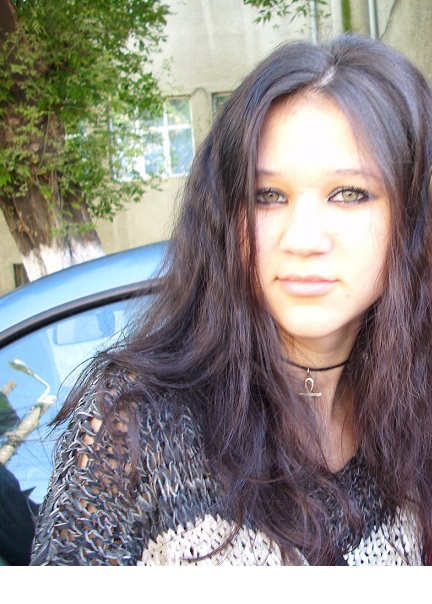
Photo by the author

I want to share with you all one of my experiences of street harassment. It was so awful and terrifying. I was in the village where I grew up and where I used to go and relax in the summer. Is a small village with a predominantly older population. There are some teenager and people in their 20’s and only about 12 children.

I was walking down the rural road on my way to my grandma’s house. It was dark, because in some Romanian villages the light goes on after 10 p.m. Four boys where following me that night but I didn’t see them and I didn’t care about that. I was in a bad mood that night and I did not respond to their catcalling me and leering at me when I was passing by.

When I got back from my grandma’s house and I was going to my uncle’s house, not so far from her house, those guys started to throw rocks at me. It was very dark, I had my hands full with apples, a big bottle of honey and my mobile phone as I was on the phone with my boyfriend. I managed to avoid being hit, but I yelled at them that I’m not scared of them. Then they started to walk behind me, so I stopped and let them pass, to let them be in front of me because  then I felt safer. But I was wrong! They laughed and tried to intimidate me. I was so nervous; a feminist and activist feeling unsafe and vulnerable in front of those guys!

Most of the time when I get catcalled I respond and I wanted to do that then too! My boy friend heard all of the discussion and tried to calm me down, demanding me to let them be and to stay quiet. But I was furious! This wasn’t the first time I was harassed in my village. I didn’t even know them so why were they acting like this toward me? I felt the urge to respond back! So I started acting fiercely, saying that I don’t fear them and that they are just some dumb harassers. One of them got nervous and started threating me, saying to shut up. I didn’t want to shut up. Why for?

He approach me and threatened me again. So I screamed out in his face that I’m not afraid. So immediately he punched me very hard in the face. Twice! I tried to fight back, but my hands were full. So he pulled my hair in a very brutal manner that I felt my cervical spine snapped. Then he put me on the ground and punched me in the face and the head. Then he and his friends left… while I was laying there, in acute pain. But I didn’t want to feel a victim so I managed to get up, to grab my telephone and other things and I faked that I was calling the Police. They heard and started running. Nobody heard my scream even though people from rural Romania are so curious and always behind the fences, looking on the street to see what’s happening and the next day to gossip about it. But when it comes to violence against women, they do not care!

After a short time, Police came and said to me: “Come on miss, stop crying, it’s not so bad, you’re overreacting!”

I had a swollen cheek and blood came out of my mouth, my hair was damaged. I was in shock! They blamed me for that incident. The officers heard all of my declarations and the guy that hit me, fled. When I confronted the Policeman he said and did nothing about it. Moreover he said the one that hit me me has mental disabilities and he can’t be punished and that he beats his mother and harasses other women too. And because I am not from that village, the Policeman said the declaration has no value if I want to press charges and I can’t come back here every month. For one week my cervical spine was all swollen and sore. I didn’t manage to move my head even an inch. Everybody in my family said to me that was my fault, a girl must never argue with a guy and why I was wandering in the village after dark? Why couldn’t I just mind my own business? Ohhh! All this discourse discouraged me so I didn’t continue with the Police complaint.

Even now, two years after the incident, sometimes my head hurts in those places where I was hit and once more I get terrified when I remember the hate in his eyes towards me. The very cherry on top was that a few weeks from that incident an unknown mobile phone number sent me messages like “I know you! How are you, you sweet girl” and then called me.. It was a familiar voice: it was that Policeman from my village, the one that took my declaration and said to me that I was overreacting! I threatened to report him and he stopped, but still I was petrified that he did this!

This experience gave me the motivation to fight harder against street harassment. Harassers don’t stop easily, so we keep on fighting!!

Simona is the Vice President of a feminist NGO – FILIA Center and a PhD student in Political Sciences, working on a thesis on street harassment in Bucharest. You can follow her on Facebook.

Share

Filed Under: correspondents, Stories, street harassment

« Previous Page
Next Page »

Share Your Story

Share your street harassment story for the blog. Donate Now

From the Blog

  • #MeToo 2024 Study Released Today
  • Join International Anti-Street Harassment Week 2022
  • Giving Tuesday – Fund the Hotline
  • Thank You – International Anti-Street Harassment Week 2021
  • Share Your Story – Safecity and Catcalls Collaboration

Buy the Book

  • Contact
  • Events
  • Join Us
  • Donate
  • Facebook
  • Instagram
  • Pinterest
  • Tumblr
  • Twitter
  • YouTube

Copyright © 2026 Stop Street Harassment · Website Design by Sarah Marie Lacy