• About Us
    • What Is Street Harassment?
    • Why Stopping Street Harassment Matters
    • Meet the Team
      • Board of Directors
      • Past Board Members
    • In The Media
  • Our Work
    • National Street Harassment Hotline
    • International Anti-Street Harassment Week
    • Blog Correspondents
      • Past SSH Correspondents
    • Safe Public Spaces Mentoring Program
    • Publications
    • National Studies
    • Campaigns against Companies
    • Washington, D.C. Activism
  • Our Books
  • Donate
  • Store

Stop Street Harassment

Making Public Spaces Safe and Welcoming

  • Facebook
  • Instagram
  • Pinterest
  • Tumblr
  • Twitter
  • YouTube
  • Home
  • Blog
    • Harassment Stories
    • Blog Correspondents
    • Street Respect Stories
  • Help & Advice
    • National Street Harassment Hotline
    • Dealing With Harassers
      • Assertive Responses
      • Reporting Harassers
      • Bystander Responses
      • Creative Responses
    • What to Do Before or After Harassment
    • Street Harassment and the Law
  • Resources
    • Definitions
    • Statistics
    • Articles & Books
    • Anti-Harassment Groups & Campaigns
    • Male Allies
      • Educating Boys & Men
      • How to Talk to Women
      • Bystander Tips
    • Video Clips
    • Images & Flyers
  • Take Community Action
  • Contact

USA: Reframing the Street Harassment Conversation with Men

June 19, 2014 By Correspondent

Kirstin Kelly, Monterey, California, USA, SSH Blog Correspondent

We cannot stop street harassment from happening unless we understand why people do it in the first place.  To this end, I interviewed three mechanics at various stages in life, two of whom my boyfriend has witnessed engaging in street harassment.  All three men were more than happy to talk about what I referred to as catcalling (I didn’t want to shut them down by labeling it harassment), but none of them admitted doing it recently.  The two my boyfriend had seen admitted to catcalling women when they were younger.

All three men said they thought catcalling was stupid, and none of them were really sure why it happened in the first place.  However, they did point out that there were at least two good reasons for it to keep happening: sometimes it is an effective way to pick up women and it makes for a good joke between friends.  These two incentives tell us a lot about what we need to do to stop street harassment.

When I asked what they thought we should do to stop street harassment, the men I spoke to said that it was nature, that it’s impossible to prevent that behavior.  I disagree.  Across all theories of normative psychology, people are only motivated to engage in a given behavior if they believe their behavior will have a favorable impact on the ultimate outcome.  In this case, the men either believe they have a chance of successfully getting their target to come home with them or at least getting a good laugh from their friends.  This is important because for several of these men, fear of rejection means that street harassment is somewhat safe because it can be played off as a joke should the target not respond favorably.  None of the men I interviewed seemed to consider how their behavior made their targets feel unless they got a favorable response.

This is critical- framing street harassment as derogatory, scary, and socially unacceptable is probably the strongest way to change the pervasiveness of the behavior because it would make the perpetrators think about their behavior in a way that may not have before.  For victims, it feels like a loss of power, and perhaps that’s why some perpetrators engage in some types of street harassment, but for those that have never thought about that impact of their actions, reframing the conversation may have a significant impact on how willing people are to accept the behavior.  The bottom line is that it needs to stop being acceptable fodder for jokes.

The men I talked to also suggested that street harassment is something men grow out of when they get into more serious and committed relationships.  There might be something to that, but all three men are in committed relationships, and while they no longer admit to engaging in catcalling, they have been witnessed doing it in the past few months.  Their refusal to admit to catcalling women since entering committed relationships is telling.  It’s demonstrative of a feeling that street harassment is not acceptable behavior, and that to me suggests social change is possible because the type of change we need is already taking root.

Kirstin is a Master’s Student in Nonproliferation and Terrorism Studies at the Monterey Institute of International Studies and a news editor at the Women’s International Perspective (The WIP). You can follower her on Twitter at @KirstinKelley1, where she regularly posts about human rights issues around the world.

Share

Filed Under: Advice, correspondents, street harassment

USA: “I got a glimpse into the future. And it is beautiful.”

June 18, 2014 By Correspondent

Jessie Koerner, Denver, Colorado, USA, SSH Blog Correspondent

16th Street, Denver | Via http://commons.wikimedia.org

Sunglasses? Check.

Shoulders back, head up? Check.

Bitchface on? Check.

Now I am ready to walk down the 16th Street Mall to go get my morning coffee, or lunch, or head home. This street is where tourists, businesspersons, locals on day trips, and all of Denver’s odd characters come together (ok, odd for us… nothing for me will ever beat the parrot chillin’ on a guy’s shoulder on the DC Metro). Lately, I’ve been feeling like we shouldn’t advertise 16th Street as somewhere tourists should go in our little city. Not least among the issues is the prevalence of – shocker! – degrading and insulting comments made to women on the street. None of them are new, none of them are clever, and none of them are appreciated.

However, this week has been fundamentally different. I have no idea if the men of Denver got the message finally, or if there was a secret Cotillion club I wasn’t invited to that everyone else attended.  This week, I’ve gotten multiple ‘good mornings,’ three with ma’ams attached, which to me is just awesome given that my spirit animal is Effie Trinket. Then there was that one incredibly enthusiastic, “Hello! How are you today?” that made me so cheerful the rest of my Thursday. Among the interactions, there was none of the usual “smile for me, baby” or “mmmm work that skirt, girl.” NONE. For one whole, entire week I got a glimpse into the future. And it is beautiful.

This is why we speak out. This is why we applaud those brave souls who stand up and address their harassers (sometimes to hilarious results). I am not optimistic for the continued respite on my daily walks down Denver’s busiest pedestrian thoroughfare. I will still be printing out my copies of Cards Against Harassment, and arming myself with sunglasses and my formidable bitchface that just dares anyone to speak to me. I mean, come on though, I’m a chatty person, and it kills me that I have to indicate that I am not friendly in order to walk down the street in peace.

Street harassment is one of the most unfortunate equalizers of humanity.Sixteenth Street is one of those places where it’s obvious that misogyny and street harassment permeate all classes and races. I have been harassed by the homeless dude on the corner, the slickly dressed young professional, and the teenager that should have been in school.  I have seen women who are skinny, old, dread-locked, supermodel gorgeous, and homely all harassed on the street. Most shoot a glare to the harasser, or hasten their step, embodying the intimidation and fear instilled in us by the thought of confronting the man, or men, making the comments. I love the social experiments that turn the tables on men – women creepin’ on them for once. The one element that can’t be replicated though is the fear.

My father and I recently got into a heated discussion about #yesallwomen and street harassment. After all of our talks on human trafficking and prostitution, my attempt to shock him into agreement from his ‘devil’s advocate’ position may have failed. It also may have come from the fact that he walks down the same street every day that I do, and inevitably has heard the comments made to the women around him. We are at the point that me reiterating the disgusting things said to me don’t even shock my father. We can either make the choice right now as a society that we will not allow half our population to be insulted, objectified, and intimidated out in public, or that we will expect half our population to just shut up and deal with it – like, as my dear dad compared it to, it was going on vacation in Florida, where you know it’s going to rain every day at 3 pm, and complaining about it.

His point? What are we going to do about it?

My plan is to hand out those Cards to my harassers, start a Hollaback! activism chapter here in Denver, write for Stop Street Harassment about what’s happening in Colorado, and incessantly talk with others about why this is a real, legitimate problem, and that it does NOT have to be like this.

That’s what the past week has proven to me, anyway.

What are you going to do?

 Jessie is a longtime human rights activist with a feminist focus. She founded the Amnesty International chapter in college, is an active participant in JustWorld International, and manages the social media accounts for the Global Women’s Network and winnovating.com, where she also blogs.  Find her on Twitter and Instagram, @pearlsandspurs.

Share

Filed Under: correspondents, Stories, street harassment

Ireland: In Conversation with Vanessa Baker of Hollaback! Dublin

June 17, 2014 By Correspondent

Dearbhla Quinn, Dublin Ireland/Brussels, Belgium, SSH Blog Correspondent

Dublin Pride 2013, Photograph by Aidan Murray

I was no stranger to street harassment when I attended the launch of the Dublin branch of Hollaback! in November 2012 and first met the people who are hard at work combating this social plight. Vanessa Baker is one of the four founders of Dublin’s branch of a globe-spanning network of activists that includes 79 cities in 26 countries, all contributing to the growing movement in opposition to what they describe as “the most prevalent form of gender based violence.” She agreed to chat with me about their campaign.

Hollaback is a movement that started in New York in 2005 when Thao Nguyen photographed a public masturbator on the subway. Ignored by police, she uploaded the photo online, prompting a city-wide discussion, not just about street harassment, but also the power of the Internet to combat it.

Eighteen months after the launch of the Dublin branch, Vanessa told me how the site allows the victims of harassment to share their stories online and receive the support of other visitors who can click the “I’ve got your back” button alongside published stories and another interesting feature, a map. “Once you’ve submitted a story I can see where it happened and so it kind of records a virtual map of street harassment in the city with dots showing where people have experienced their stories taking place,” she told me.

Vanessa told me how she had become involved. “Before I moved to Dublin in 2011, I had been living in Ottawa for four years…one of the other women who I met there was in the process of setting up Hollaback! Ottawa… So anyway that was my first exposure to Hollaback.”

Anti-Street Harassment Week 2013, Photograph by Aidan Murray

This proved to be a fortunate discovery when street harassment in Dublin left her feeling powerless. “It didn’t matter what I was wearing, or what time it was. Some guy would always try to walk home with me or be shouting something and it got really frustrating that I didn’t have any control over it…In Ottawa if you walk home after midnight you expect it, but at Dublin you find that even at 3 p.m…So I looked up to see if there was a Hollaback! Dublin and there wasn’t, so, but there was an option to start your own. I sent them an email explaining who I was and why I wanted to start it and then it turns out that Jenny Dunne had sent a similar message around the same time and so we were both interested in starting the site and that’s how we met.”

Before meeting Vanessa, through the online training course, Jenny had thought she was the only interested Dubliner. She sought out other eager volunteers through the Irish Feminist Network Facebook page and soon Eavan Magner and Aimée Doyle joined the team.

I asked Vanessa if she understood the reluctance of many women to describe themselves as feminist and if she would consider Hollaback! to be a feminist movement. “I’m 25 now and I’m comfortable with it now but at undergrad level I felt uncomfortable with that label. I do understand the reluctance to identify with that label. We try to be more inclusive through not using the words in our posts, so that people can interact with the site even if they don’t identify with that label. I do think it’s sad though…We tried to stay apolitical but I think that was a mistake, because abortion is such a hot button topic and I think that stopped us from integrating with the Dublin feminist community. Even though we’re all Pro-Choice we didn’t want Hollaback! to have an official stance and that isolated us.”

By Chrissie G Photography

So what’s next? Vanessa described the initial challenge of maintaining momentum. “When we started, we were very focused on launch day, so afterwards we had a bit of a ‘what now’ moment’. Vanessa believes that the next step is to ‘bring it more offline- story sharing is cathartic, but it’s a very self-selecting group that look at the site.”

Through events like their “Chalk walk” and workshops, Vanessa hopes that they may contribute to a dialogue, not just with the victims, but with harassers too. She is optimistic for the future and understandably proud of their achievements so far.

“I like to think that we’ve made a difference and changed a few minds. Even if we don’t end street harassment in Dublin anytime soon, at least we can provide support to those who suffer it.”

Dearbhla graduated from BESS (Business and Sociology), in Trinity College Dublin, last year. She currently lives in Brussels, Belgium, where she has a think-tank internship working in the areas of gender, equality, and employment. Follow her on Twitter @imoshedinheels and her blogs.

Share

Filed Under: Activist Interviews, correspondents, hollaback, street harassment

USA: When will street harassment finally be categorized as a crime?

June 15, 2014 By Correspondent

Brittany Oliver, Baltimore, MD, USA, SSH Blog Correspondent

Minister Omonte. (Photo Credit: Ministerio de la Mujer/Flickr)

In case you missed it, Carmen Omonte, Peru’s Minster of Women and Vulnerable Populations, announced her intention to include sexual street harassment in the penal code as a crime.

It’s been reported that sexual harassment and assault on the streets of Peru has recently sparked outrage after actress Magaly Solier was assaulted by a man who masturbated behind her at a bus station. In Peru, sexual street harassment is categorized as a civil offense, not a criminal offense.

While I am all for the idea if making sexual street harassment a crime, how many women need to be harassed before people realize it’s a serious issue? Women and girls experience street harassment every day, so why did it take an actress to be harassed for it to be considered a crime? I truly believe if we just dealt with sexual street harassment in the appropriate manner, we wouldn’t need to wait for someone famous to do something about it.

In Baltimore, I really think we could do a lot better. There’s a lot more we can be doing to protect women and girls from street harassment, and as a whole, we just aren’t doing enough. The only organization I know that’s actively doing work on a consistent basis is Hollaback! Baltimore. They have been doing a great job on educating people on what street harassment is and how people can help to stop it.

Here are a few upcoming summer events on their radar:

June 19 – Hollaback! Baltimore will host a Baltimore Bartenders Safer Spaces Meeting, in which they’ll be chatting with bartenders & bar staff from all over the city face-to-face on crisis response skills and ways to intervene while maintaining a women & LGBTQ-friendly environment.

June 24 – Hollaback! Baltimore will be tabling at the 2014 Baltimore Youth Sexual Health Conference, which is geared towards increasing knowledge & skills among youth to promote health behaviors, especially around sexual health.

June 28 – Hollaback! Baltimore will be co-hosting two “Make Your Own Quilt Square” workshops at the Monument Quilt with FORCE: Upsetting Rape Culture. They’ll be working on quilt squares to add to the public monument to support victims of rape and abuse.

While I appreciate everything Hollaback! Baltimore is doing, I still think there are other organizations that can do just as much advocacy around this issue. Just as Carmen Omonte took a stand to stop street harassment in Peru, I feel that our mayor, Stephanie Rawlings-Blake, should take a stand too. Not only should she develop a campaign to educated people on street harassment, but she should also work on making it a criminal offense.

I certainly applaud Peru for it’s efforts, but I really hope Baltimore is not waiting for a celebrity to experience street harassment to push forward in stopping it. Street harassment needs to stop now because it’s affecting people who have to deal with it daily.

Instead of clearing out the encampments of the homeless and criminalizing youth, our mayor and every other politician in the state of Maryland need to focus their energy on real challenges. And street harassment for women, girls and the LGBTQ community is most definitely one of them.

Read more on Peru’s initiatives to ending street harassment.

Brittany Oliver is a recent graduate of Towson University and works in the non-profit communications sector and supports local anti-street harassment advocacy through Hollaback! Baltimore. She blogs at brittuniverse.wordpress.com and publicly rants on Twitter, @btiara3.

Share

Filed Under: correspondents, Stories, street harassment

USA: Spokane Talks About Street Harassment

June 11, 2014 By Correspondent

Lorna M. Hartman, Spokane, WA, SSH Blog Correspondent

Spokane is the second-largest city in Washington state by population, located in a mostly rural area in eastern Washington. Despite its size, to visitors and many residents, it still has a distinctly small-town feel.

Unfortunately, small town or not, street harassment has not passed us by. Fortunately, the discussion about street harassment has not passed us by either. The conversation has at least begun in the Spokane area.

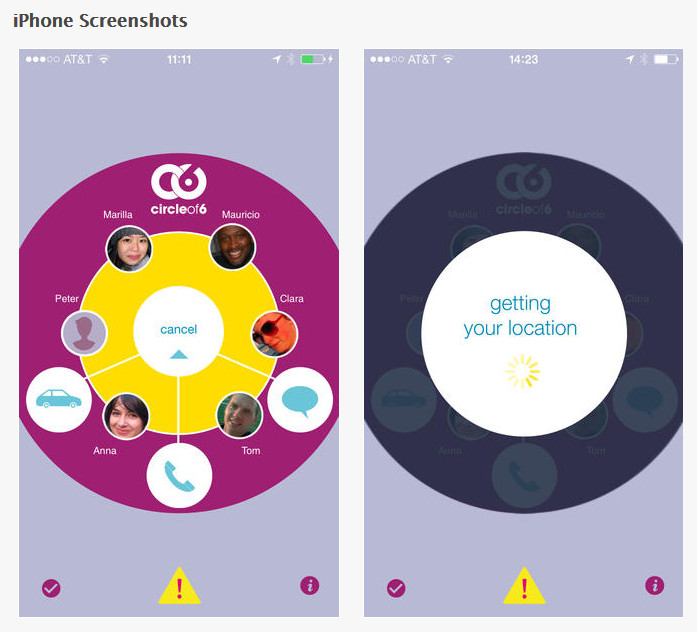
On June 3 our local newspaper, The Spokesman-Review, re-posted a USA Today article by Jaleesa Jones titled “4 Free Apps That Could Help Prevent Sexual Assault.” While the article headline specifies “sexual assault” as a general topic, all four apps listed (bSafe, Circle of 6, Hollaback! and Guardly) were intended to be used as people go about their lives in public spaces—precisely where women suffer street harassment. These apps are useful to anyone out in public who feels unsafe.

The article referenced the recent tragedy of Elliott Rodger’s shootings and the #YesAllWomen hashtag. Jones wrote, “The amount [of] interest in the hashtag points to a blatant truth: Sexual assault and street harassment are far too common.”

Inlander is a local alternative weekly newspaper that publishes news and entertainment pieces for a large geographic area around Spokane. On May 29 it ran a story called “One of the billion tales that yes, all women, can tell about sexism” written by Taylor Weech, a local writer, photographer and radio host. Weech actually began writing her piece on street harassment before Rodger committed his murders, and she finished writing it after the news had spread.

Weech wrote before the shootings, “I felt a lot of pressure from past conversations to pre-empt the commenters in proving that street harassment is not flattering, that it is one of many disturbing expressions of male entitlement to sex and women’s bodies, and that it is part of a continuum of disrespect for female autonomy that too often culminates in severe or even deadly violence…”, citing the new Tumblr site “When Women Refuse.”

After the attacks, Weech wrote, “In an unfortunate twist of fate, the proof of that statement became the most visible news story of the weekend…”

Weech tells several of her own stories of harassment–#YesAllWomen have those stories to tell—and concludes with an appeal to teach our children differently for the sake of both girls and boys. One commenter in the thread of her article wrote of how sad it is that “it takes a man writing a hate-filled manifesto and then going on a killing spree to really make a conversation about this problem hit the mainstream.”

Rodger’s murders, while I give them no credit for anything good, have resulted in a more open discussion of what it’s like to walk around female in Spokane. It hasn’t always been a welcome discussion or a wanted topic—but now it’s out there and it isn’t going back. We will all be better for continually shining a light on it.

SRTC is Spokane County’s designated metropolitan transportation planning organization. The SRTC Transportation blog featured a piece on street harassment back in 2012 called “Website Aims to Stop Street Harassment” and described StopStreetHarassment.org. (I didn’t know SRTC was so plugged in!)

The writer, an unnamed female SRTC staffer, mentions a few of her own experiences with street harassment. She says of Spokane, “Besides being irritating and in some cases scary, street harassment limits people’s mobility and access to public spaces. It is a form of gender violence and makes our downtown and other areas less inviting and therefore less vibrant.” She’s right. People don’t realize how different downtown Spokane would be, particularly in the evenings, if no one ever had to worry about being harassed or followed. It’s an extensive problem, and Spokane unfortunately isn’t unique at all in facing this problem.

Spokane does, however, have the beginnings of action and conversation around street harassment. Even further back, in mid-2011, activists organized SlutWalk Spokane. SlutWalk, you might remember, started after a Toronto police officer participating in a law school campus safety session counseled female students that if they didn’t want to be sexually victimized, “Don’t dress like a slut.” The group’s Facebook page is still active today.

While the reality is still depressing, these lights shining publicly give me hope for the future.

Lorna is raising three young, kindhearted male allies and has worked on rape and interpersonal violence since the 1990s, including serving on the local rape hotline, answering calls, and driving to emergency rooms to advocate for victims and connect them with resources they needed.

Share

Filed Under: correspondents, street harassment

« Previous Page
Next Page »

Share Your Story

Share your street harassment story for the blog. Donate Now

From the Blog

  • #MeToo 2024 Study Released Today
  • Join International Anti-Street Harassment Week 2022
  • Giving Tuesday – Fund the Hotline
  • Thank You – International Anti-Street Harassment Week 2021
  • Share Your Story – Safecity and Catcalls Collaboration

Buy the Book

  • Contact
  • Events
  • Join Us
  • Donate
  • Facebook
  • Instagram
  • Pinterest
  • Tumblr
  • Twitter
  • YouTube

Copyright © 2026 Stop Street Harassment · Website Design by Sarah Marie Lacy