• About Us
    • What Is Street Harassment?
    • Why Stopping Street Harassment Matters
    • Meet the Team
      • Board of Directors
      • Past Board Members
    • In The Media
  • Our Work
    • National Street Harassment Hotline
    • International Anti-Street Harassment Week
    • Blog Correspondents
      • Past SSH Correspondents
    • Safe Public Spaces Mentoring Program
    • Publications
    • National Studies
    • Campaigns against Companies
    • Washington, D.C. Activism
  • Our Books
  • Donate
  • Store

Stop Street Harassment

Making Public Spaces Safe and Welcoming

  • Facebook
  • Instagram
  • Pinterest
  • Tumblr
  • Twitter
  • YouTube
  • Home
  • Blog
    • Harassment Stories
    • Blog Correspondents
    • Street Respect Stories
  • Help & Advice
    • National Street Harassment Hotline
    • Dealing With Harassers
      • Assertive Responses
      • Reporting Harassers
      • Bystander Responses
      • Creative Responses
    • What to Do Before or After Harassment
    • Street Harassment and the Law
  • Resources
    • Definitions
    • Statistics
    • Articles & Books
    • Anti-Harassment Groups & Campaigns
    • Male Allies
      • Educating Boys & Men
      • How to Talk to Women
      • Bystander Tips
    • Video Clips
    • Images & Flyers
  • Take Community Action
  • Contact

USA: Male Privilege of Not Knowing

February 3, 2014 By Correspondent

Joe Samalin, New York City, NY, USA, SSH Blog Correspondent

During a sexual violence prevention training with 40 enlisted air force men (‘airmen’), one young white man stood up and said that he had never thought about this issue before, until early one morning during a deployment overseas a few years ago. As he awoke and poked his head out of his tent he happened to see a friend, a female airman (females are ‘airmen’ too), walking by at a fast clip, her head down. He wished her good morning, but she ignored him. He called out louder, and a third time, with no response. He then ran out of his tent and caught up to her, asking why she hadn’t responded.

She seemed startled and he asked her if everything was ok. She told him that she was on her way to the chow hall for breakfast, and she hated the walk. It was a long one from her tent, and she got through it by keeping her head down and muscling through as best she could. He was 110% stumped about what she meant. Rather than explain, she told him to walk with her, and he agreed.

As he described that walk to the chow hall you could see he was viscerally reliving the experience. He said he didn’t know what to expect, what the issue was. And yet as they walked, he became aware of a strange sensation. At first he couldn’t put his finger on it but it grew, and eventually he knew exactly what it was. It was the feeling of being watched. As they walked, every single tent they passed opened. Men’s eyes were on them. Throughout the entire walk.

“Well, not on us,” he explained to us. “On her”.

Although the men were not looking at him, he said he physically felt their gaze and it was overwhelming. The men didn’t say anything during the walk. Didn’t catcall, didn’t threaten. But he said they didn’t need to. By the time they got to the chow hall he was physically shaken. He had never known that this was her experience every single day going to breakfast.

It was that walk to breakfast that led him to eventually become an Air Force Victim Advocate for survivors of sexual assault on his base.

To this day the memory that airman shared remains one of the most powerful examples of a man coming to the realization of how we as men are expected, trained, taught, raised, socialized, bullied, threatened and beaten into not seeing the epidemic levels of violence against women and girls all around us, let alone doing anything about it. It illustrated how powerful a look can be, how the public harassment of girls and women does not even have to be verbal to cause harm. How blind we as men allow ourselves and each other to get away with being.

And yet even though we are socialized and taught as such, it is still our choice as men to engage in the harassment of women and girls. Or to not. It is our choice and our privilege as men to ignore that street harassment exists, and its effect on the women and girls in our lives and countless others we will never meet (and who deserve every bit of respect and safety as do our mothers, partners, daughters, and sisters.)

In March 2012, right before International Anti-Street Harassment Week, I was working with a friend, my partner Bix, and others on a video modeling how men can challenge street harassment. As we filmed “Shit Men Say To Men Who Say Shit To Women On The Street” I had my own moment of truth. My partner was harassed during the shooting of the video – and none of the men involved, myself included, even noticed. This is the inherent injustice: my male privilege allows me to choose to ignore the reality of street harassment and other forms of gender-based violence, simply because I can.

Helping men reach their own moment of recognition of the true scope, scale, and impact of street harassment is one of the most important first steps to engaging men to challenge it when they see it and to change the culture that allows it. And I hope to explore different strategies and tools for doing just that in my next post!

Joe Samalin has been addressing gender-based violence for over 15 years, including as the Training and Technical Assistance Coordinator for Men Can Stop Rape. He is currently the Outreach and Training Manager for the Disaster Distress Helpline and is examining among other things gender-based violence in the aftermath of disasters. Follow him on Twitter, @joesamalin.

Share

Filed Under: correspondents, male perspective, street harassment

USA: The Effects of Street Harassment on Political Speech

February 2, 2014 By Correspondent

Andrea Ayres-Deets, San Francisco, CA, USA, SSH Blog Correspondent

Street harassment forces us to question our safety. It compels us to reconsider our environment and surroundings. So many of us are far too familiar with the quickening of our pace, while we plan an escape route. Just in case. Your pulse races, and you grab your phone, or put a key in-between your knuckles. Just in case. Walking down the street should not have to be an act of heroics.

We often discuss street harassment at the personal level, and there is no doubt of the psychological trauma it causes. Talking about street harassment in this way is essential. The sharing of our communal experiences enables us to breakdown the culture of tolerance that has long permitted the continued existence of street harassment. We cannot forget to discuss the importance of the societal cost street harassment has.

It’s been well documented that street harassment alters the way we move about in public spaces, but what about the limitations it puts on our ability to engage in political speech? In Tahir, Egypt, we saw how extreme violence against women was used to limit their political participation in the uprising against then President Hosni Mubarak. The freedom to express ourselves through political speech is perhaps not always at the forefront of our minds, but when we are denied this right––we are being denied a right that harasses have and use freely. We need to unpack what this means for our representation and involvement in a Democratic society.

In order to demonstrate how street harassment is used to limit political participation, let’s take a look at a few examples. It’s important to note that the intention of the harasser does not matter, an individual does not have to intend to limit an individuals political participation in order to do so.

For example, if we look at the assaults that occurred during the Occupy Wall Street movement, we see women who are engaged in a political demonstration who were then assaulted. The overall effect of these assaults meant that women and others who are common targets of harassment, had to change their behavior in order to continue their participation. Those in public spaces should not have to disrupt or alter the manners in which we engage in political speech for fear of reprisal, harassment, or abuse.

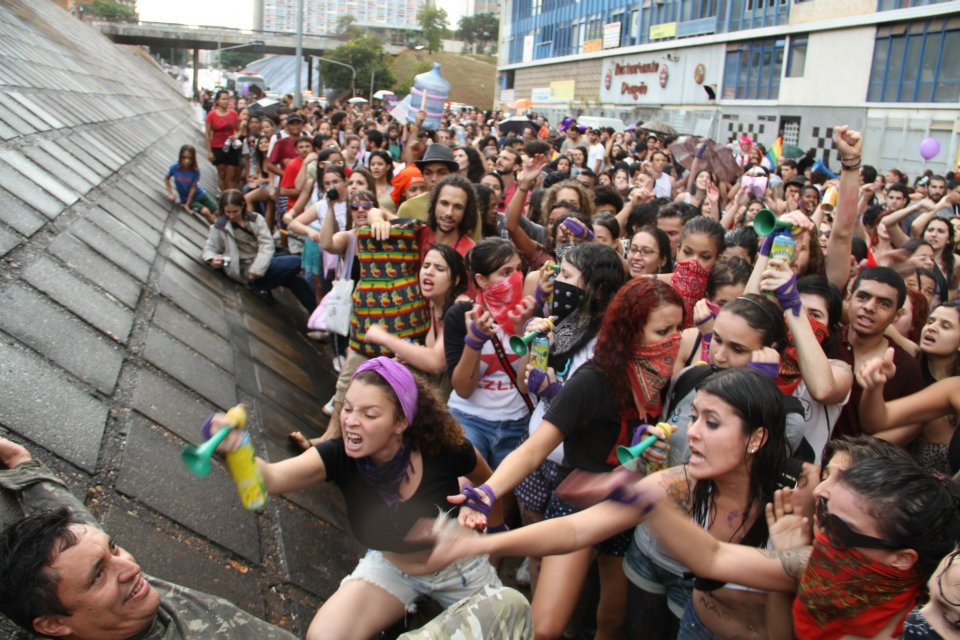
Brazil SlutWalk. Image via The News Junkie

What we see in the photo on the right is a man who exposed himself during a Slut Walk march. Regardless of what this man’s intentions were, he was engaging in a violent act while people were participating in political speech. He sought to devalue their message, their numbers, to make a mockery of their protest. It is a prime example of how street harassment is used to tell individuals that their very presence, is not wanted––is not protected. There are still other images of women who are participating in political speech, whose images and protests are altered in an effort to silence them.

For many, even the thought of participating in a demonstration represents a risk they are just unwilling to take for fear of being harassed. In this way, we do not currently possess the proper framework for understanding how many are affected. Though research does indicate that prior victims of street harassment are more likely to avoid certain areas or streets “all or more of the time.”

That is perhaps what is so troubling about street harassment: too often its effects silence us. The effects of silencing can manifest themselves both physically and mentally. Either we alter our physical being, or we avoid areas, or we stop engaging in political activity. If we do not feel welcome and safe in public spaces each day, then how we will feel welcome and safe when engaged in a political activity?

What we are really discussing here is the denial of our ability to live our lives to the fullest, to exercise our lives without policing our actions and selves out of fear. This is one of the many important reasons why street harassment must stop.

Andrea Ayres-Deets worked as a politics intern at PolicyMic and field organizer. She currently consults with startups in the SF area on content and how to better engage users. You can follow her on twitter: @missafayres or check out her website ayres-deets.com.

Share

Filed Under: correspondents, street harassment

USA: From Egypt to Baltimore — Meet Us on the Streets

January 31, 2014 By Correspondent

Brittany Oliver, Baltimore, MD, USA, SSH Blog Correspondent

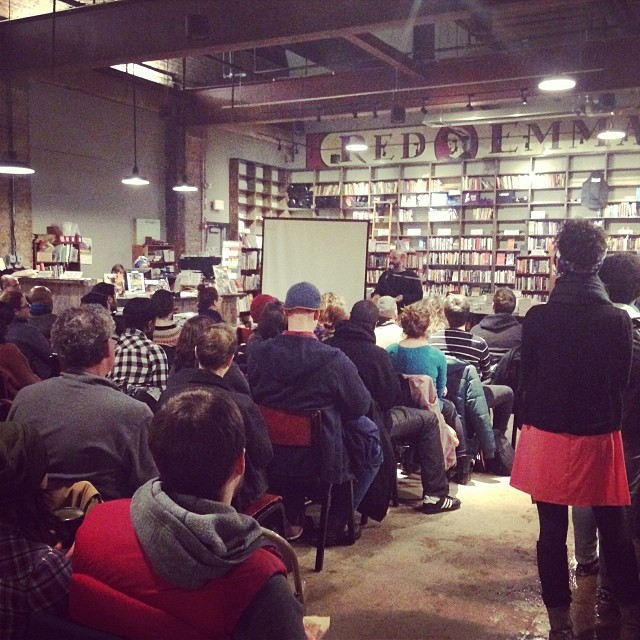
Photo from the event “The Egyptian Revolution: It’s Context, the Feminist Movement, and the 3 Years Since”

Last week, Egyptian feminist Nana Elhariry and DC-based Arab/Muslim writer Rami el-Amin shared their personal reflections at the event “The Egyptian Revolution: It’s Context, the Feminist Movement, and the 3 Years Since,” held at Red Emma’s Bookstore and Coffeehouse in Baltimore, MD.

Both women were distinctively able to recall instances of street harassment they witnessed during the movement. They mentioned that women were subjected to vulgar remarks, insults, indecent exposure, stalking and fondling despite advocating for the same issues among their male counterparts. I attended because I wanted to learn about the experiences women faced during the Egyptian Revolution and, aside from reading about it, I wanted to have a face-to-face discussion about it.  Their mentions of street harassment definitely hit home for me.

The reason why I connected with these instances so much is because I’ve experienced street harassment myself and I know others who have as well, but who are afraid to speak out about it. Because these acts are very likely to happen if you are a woman, walking along the streets of Baltimore at certain times can get very scary. And with the countless number of stories, reports and facts, you would have to wonder – what exactly is Baltimore doing about it?

According to Stop Street Harassment, studies around the world show that 80 to 100 percent of women experience street harassment. In a study of 811 women from 23 countries, almost one in four had experienced street harassment by age 12 (22%) and nearly 90% by age 19. So, there should never ever be an issue on whether or not street harassment is a current form of gender-based violence because the research and facts are there. It’s an issue that more people need to be educated on because not only is it rarely reported, but also the least legislated against.

So what IS being done? Aside from Stop Street Harassment, Hollaback! Baltimore is a local movement of activists who are making some serious moves to ending street harassment within the area. Just this week, Hollaback! Baltimore hosted a Street Harassment 101 workshop for the volunteers of Repair the World, which was intended to help them become better allies to the movement.

One of the best ways to stop street harassment is by educating as many people as we can on ways to better interact with women and LGBT individuals in our communities. As Baltimore ranks as the seventh most dangerous city in the country, I still believe there are a lot of actions we can take to make it a better place to live. We may not be able to change it all at once, but every bit of work towards making our streets safer will help make a difference for the future.

March 30th to April 5th will be the 3rd annual of International Anti-Street Harassment Week and I’m looking forward to seeing what activists in Baltimore will do in continuing the fight.

Brittany Oliver is a recent graduate of Towson University and works in the non-profit communications sector and supports local anti-street harassment advocacy through Hollaback! Baltimore. She blogs at brittuniverse.wordpress.com and publicly rants on Twitter, @btiara3.

Share

Filed Under: correspondents, Stories, street harassment

Nepal: Social Silence Toward Street Harassment

January 30, 2014 By Correspondent

Kriti Khatri, Nepal, SSH Blog Correspondent

The issue of street harassment is global irrespective of the society. Everywhere, girls are well acquainted with the street activities like eve teasing, whistling, kissing sounds, physical gestures and to worst,  verbal assault, sexual abuses, attempted rape and even murder. While the worst cases like rape and murder make big news, other activities remains not talked about.

Activities like eve teasing, whistling, catcalls or simple touching are never considered a big crime. These are daily things that happen, girls accept it as daily experience and at most they will try to change their route to avoid it. And our society takes it as a natural thing between girls and boys as if men have birth right to tease girls because they are men. The issue of street harassment is taken as a simple matter of “boys and girls things”. But is it just a matter of a boy and girl thing?

It would be, if it was limited to healthy flirting, which intimates people in a good way. But when any behavioral conducts in street becomes intolerable and uncomfortable to the bearer, it is harassment.  There are examples of such “boys and girls things” in street impacting a girl’s life forever. Such harassment puts the victims on lifelong consequences.

Most girls who are victimized of continuous street harassment lack self confidence and self esteem which hampers their social development. In fact, while a girl gets victimized of sexual abuses in street, she develops negative perception about adolescence and her sexuality. Many girls dislike their body just because they get to hear abusive comments in the street. For girls with obesity or other physical misshape, street harassment is prime reason to feel less confident and anxiety.

In most traditional society, street harassment is the reason why girls don’t carry themselves alone in the street.  Girls take any male partner either family member or friend when they need to go somewhere. Now with such habits, will girls ever get to be independent?

The impact of street harassment is known to everyone. But our society always holds its quietude in this matter. We only raise voice when some major incidents like rape occur. But had the rapist been stopped when he started catcalling girls, or punished for street harassment cases earlier, the incidents like rape might not have happen. No one foresee street harassment as the starting of such harasser becoming a rapist or a murder in future. Never have we discussed the issue of street harassment as crime.

Acknowledging how the issue of street harassment is discarded from social justice perspective, young girls in Nepal have initiated a social campaign against street harassment. The issue of street harassment is as much common to Nepalese street as it is elsewhere. Nepali streets are still consider safer in a perspective that not many women have reportedly faced severe street harassment incidents. But it is considered so because not many cases have been reported in legal documenting. The daily or so to say “naturally” taken cases like eve teasing, catcalls and sexual gesture is common in most streets of the capital city and to other metro towns of Nepal.

The organization called Astitwa foundation, founded by young girls has been addressing the issue and have pulled local authorities into the project. Astitwa foundation has approached Nepal police and Metro Police unit to take significant action against street harasser. The organization is in its early phase of the campaign in which sticker with public awareness messages against street harassment are being posted to public vehicles and public places. After Astitwa’s effort Nepal police also has shown keen interest in developing strategy to control such activities in street which hampers girls/women daily life and independency. The organization has also been able to provide justice to some severe cases of street harassment and Nepal police has take action against the doer.

Like Astitwa, many other organization are also raising their voices against street harassment globally. It can be an individual attempt or organizational, the need here is to conjointly work to stop street harassment activities. It is high time that our society and civil institution consider street harassment as an offend-able crime.

Societal silence towards street harassment is what exacerbates the situations. Whatever legal provisions are made to address the issue of street harassment, more meaningful will be the social concept and understanding of the issue being non forgivable act. Our society needs to discourage such activities by strictly acting against such inhumane act in public. Our society needs to accept street harassment as a hindrance to gender equality and women independence. We need to address it as a serious issue against women freedom and equality. For which, we need to break the silence and act upon it as a social crime.

Kriti Khatri is student of MSc chemistry. She is engaged in different social organization in Nepal and currently she is working on anti-street harassment issues with the Astitwa Foundation. Find more of her writing on her blog.

Share

Filed Under: correspondents

USA: Harassment on Two Wheels

January 28, 2014 By Correspondent

Katie Monroe, Philadelphia, PA, USA, SSH Blog Correspondent

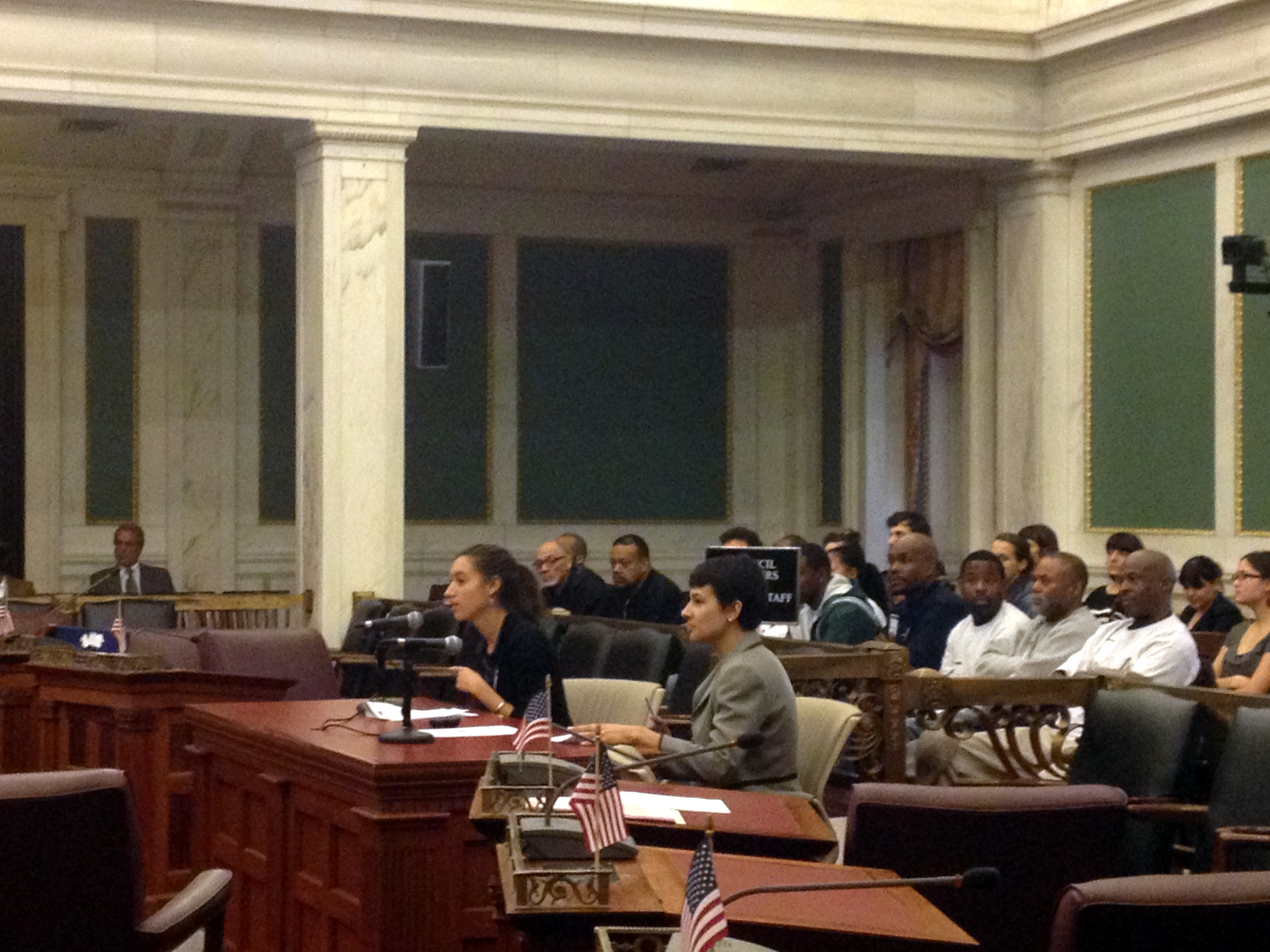
Katie Monroe testifying at the City Council Hearing

On November 7th, Hollaback! Philly organized the second-ever City Council Hearing on Street Harassment. Stop Street Harassment’s Holly Kearl attended the event and documented it thoroughly.

I was invited to testify from my position as a feminist bicycle advocate in Philly. In 2013, I founded the Bicycle Coalition of Greater Philadelphia’s Women Bike PHL program, which provides rides, workshops, and social events to help Philadelphia women get the skills and community support they need to start riding a bicycle. Last fall, I also started working for Gearing Up, a Philly nonprofit that gives women in transition from incarceration, addiction, and/or abuse the opportunity to ride a bicycle for exercise, transportation, and personal growth. If there are two topics in this world I care about, they are bicycles and gender equality. At the City Council hearing in November, my testimony (watch it here or read it here) focused on my personal experiences as a woman bicyclist in Philadelphia, and also drew from the experiences of some of the women bicyclists I’ve met through my work.

Conversations about street harassment often focus on the experiences of pedestrians. However, as more and more people start to use bicycles for transportation, especially in cities, I think it’s important to bring the experiences of bicyclists into conversations about street harassment as well. Similarly, perspectives from women — including their experiences being harassed while riding — tend not to be at the forefront of the bicycling advocacy movement. This also needs to change. (I’m working on it.)

In my testimony in November, I spoke about how riding a bicycle can feel like an escape from the gender-based street harassment that plagues me as a pedestrian. I ride my bike through neighborhoods where I wouldn’t feel safe walking. I’m moving too fast to be forced to respond to harassment — even if someone calls out to me from the sidewalk, I can often just ignore it and pedal on. Biking is door-to-door transportation that eliminates the periods of waiting at the bus stop, or walking to the subway, where street harassment is such a constant threat. Biking for transportation, to me and to many other women in Philadelphia, can be profoundly liberating.

But there’s a flipside — and I spoke about this in my testimony, too. In reality, biking isn’t actually a magical escape-button from harassment. The harassment doesn’t go away. It just changes. When I get on my bike, I might feel safer from men walking on the sidewalk — but men and women driving cars pose a whole new threat.

When I asked the Women Bike PHL Facebook forum for stories about being harassed while riding their bikes, the stories I got were mostly not gender-based. (Some were, of course — e.g. men calling out “I wish I were that bike seat”). More often, though, the stories were about harassment based on transportation mode — women were being harassed because they were riding a bike, not necessarily because they were women. Women frequently spoke about aggressive drivers honking, trying to run them off the road, and yelling at them for taking up lane space to which the motorists thought they had exclusive rights. (Guess what? They don’t. But it’s pretty hard to argue with someone commanding a two-ton piece of metal.)

These experiences certainly aren’t unique to female cyclists. Unfortunately, every biker I know has had terrifying experiences with aggressive drivers these while riding on city streets. For women, though, it can feel like a double bind: if you leave your house, there’s no escape from harassment of some kind — whether you’re on two feet or two wheels.

I find both bike-based harassment and gender-based harassment completely unacceptable, and I am actively working to fight both of them. However, while they can sometimes occur simultaneously, it’s important to maintain a distinction between them. Yes, both are fundamentally based in power imbalances, and it is tempting to draw a clean analogy between “car privilege” and “male privilege.” But as feminist bike advocate and writer Elly Blue thoughtfully explores in a recent piece, Is Bicycling A Civil Rights Issue?, they’re not the same. After all, I don’t choose to be a female-bodied person when I’m walking down the street. I do choose to get on my bicycle.

What’s the takeaway? I’m not sure yet. I am interested in whether anyone is doing more formal research on the distinctions between, and intersections among, different forms of street harassment. (My “data” is merely anecdotal, however powerful the anecdotes may be!) I certainly think that harassment of bicyclists by motorists is a form of street harassment. It makes people who are lawfully using public space feel unsafe, and efforts to fight it should be under the umbrella of the anti-street-harassment movement. At the same time, bike-based harassment is different from gender-based harassment (experienced, as we know, in all modes of transportation) in fundamental ways, and we can’t lose sight of that, either.

Katie Monroe founded the Women Bike PHL campaign at the Bicycle Coalition of Greater Philadelphia and she works at the Philly nonprofit Gearing Up, which gives some of Philadelphia’s most marginalized women – those in transition from incarceration, addiction, and/or abuse – the opportunity to ride bicycles for exercise, transportation, and personal growth. Follow her on Twitter, @cmon_roe.

Share

Filed Under: correspondents, Stories, street harassment Tagged With: bicycling, philadelphia

« Previous Page
Next Page »

Share Your Story

Share your street harassment story for the blog. Donate Now

From the Blog

  • #MeToo 2024 Study Released Today
  • Join International Anti-Street Harassment Week 2022
  • Giving Tuesday – Fund the Hotline
  • Thank You – International Anti-Street Harassment Week 2021
  • Share Your Story – Safecity and Catcalls Collaboration

Buy the Book

  • Contact
  • Events
  • Join Us
  • Donate
  • Facebook
  • Instagram
  • Pinterest
  • Tumblr
  • Twitter
  • YouTube

Copyright © 2026 Stop Street Harassment · Website Design by Sarah Marie Lacy