• About Us
    • What Is Street Harassment?
    • Why Stopping Street Harassment Matters
    • Meet the Team
      • Board of Directors
      • Past Board Members
    • In The Media
  • Our Work
    • National Street Harassment Hotline
    • International Anti-Street Harassment Week
    • Blog Correspondents
      • Past SSH Correspondents
    • Safe Public Spaces Mentoring Program
    • Publications
    • National Studies
    • Campaigns against Companies
    • Washington, D.C. Activism
  • Our Books
  • Donate
  • Store

Stop Street Harassment

Making Public Spaces Safe and Welcoming

  • Facebook
  • Instagram
  • Pinterest
  • Tumblr
  • Twitter
  • YouTube
  • Home
  • Blog
    • Harassment Stories
    • Blog Correspondents
    • Street Respect Stories
  • Help & Advice
    • National Street Harassment Hotline
    • Dealing With Harassers
      • Assertive Responses
      • Reporting Harassers
      • Bystander Responses
      • Creative Responses
    • What to Do Before or After Harassment
    • Street Harassment and the Law
  • Resources
    • Definitions
    • Statistics
    • Articles & Books
    • Anti-Harassment Groups & Campaigns
    • Male Allies
      • Educating Boys & Men
      • How to Talk to Women
      • Bystander Tips
    • Video Clips
    • Images & Flyers
  • Take Community Action
  • Contact

USA: “My ‘Brother’ Would Respect Me”

August 30, 2013 By Correspondent

By Lauren McEwen, Washington, D.C., USA, SSH Correspondent

I came here today to write about street harassment and race. How it affects me as a black woman, personally. How it distorts the way we speak about street harassment, as a whole. How I feel that my sexuality and freedom of gender expression are circumscribed by forces that I cannot control: history and bigotry and sexism.

The internal conversation that I have with myself each morning: Will this outfit draw too much attention? Can a black girl walk down the street in gym shorts without being harassed at every corner? I think all of these things and then I change into something that will leave less room for comment.

Regardless of how many anti-slut-shaming lectures I give myself, I know that my sexuality is not my own, but is tied to a history of excusing violence against black women and dehumanizing black women by portraying us as innately sexual beings with no feelings, virtue or value.

It’s a legacy that has been passed down since slavery and like many perverse tools of subjugation that were created back then, still affects our everyday.

For this reason, I get furious when I am harassed by black men on the street.

I understand that most street harassment is intra-racial, stemming from a blend of proprietary delusions and a sense of comfort while degrading women with a shared racial heritage. But, as I listened to the speakers in front of the Lincoln Memorial on the 50th anniversary of the March on Washington, as I feel these feelings of camaraderie and hope with people who share “my struggle,” it  reinforces old feelings of disappointment and anger that I feel each time I am harassed by a black man.

I expect better from them, and I cannot shake it. As potential victims of racial profiling and police harassment, I expect black men to be cognizant of what it feels like to be unable to walk down the street without fear, or worrying about the way your appearance or body language may be perceived.

That was why this tweet from @brokeymcpoverty, during the height of the #BlackPowerisforBlackMen hashtag’s popularity rang so true that I must print it here: “#BlackPowerIsForBlackMen because when i explain not wanting to be bothered on the street, im accused of misandry/conceit/rudeness.”

That entire trending topic spoke to the myriad of ways that women have been silenced by black men in the Black Power Movement. From women standing on stage with Dr. King 50 years ago in silence, to far too many black men refusing to acknowledge black women’s problems, while expecting us to stand behind them when called.

And yet, when Stop and Frisk was finally ruled unconstitutional, I cheered along with many others. I had spent months retweeting articles about the NYPD’s discriminatory program, tapping my touchscreen violently in outrage. I shed tears watching YouTube documentaries about the effect Stop and Frisk had on black and brown men, and how police officers were forced to harass these young men in order to stay in good standing at work.

But I have literally had a black man tell me that I “don’t love” myself because I am bothered by street harassment. A strong black woman isn’t easily bothered by constant threats and leers and groping from strangers, apparently.

That hashtag, no matter how firmly rooted in truth, was called “divisive” by some loud voices. I started seeing women friends of mine, tweeting how they love black men and disagree with everything that is being said. Others began to argue that the conversation “took away” from what we are trying to accomplish as a race. That we should continue to ignore sexism in the black community just like we should ignore racism in the feminist movement.

It directly parallels the guilt trip that I have had harassers try to employ when I refuse their advances. I am sometimes accused of “being afraid of brothers,” not being attracted to black men out of some fault of my own – usually, because I am a light-skinned snob. It’s frustrating because the black community became insular out of necessity, and in my mind, using that background to justify harassing black women perverts that history. Pet names like, brother, sister, queen and king were meant to build a sort of fellowship, and now that is distorted to place the blame on me when I am turned off by street harassment.

I expect more from black men because their sexuality has had limitations placed on it by racism, as well. The oversexed man of color is the boogeyman in too many articles that I have read about street harassment. I cannot tell you how many times I have come across comment section standoffs where women of all races swear up and down that they are harassed by men of color at disproportionate rates, unaware of how strongly their comments echo assumptions made about black male sexuality from the Nadir of American Race Relations.

Studies and my own personal experiences (I tend to be harassed by black men more frequently, but not exclusively.) tell me that that is not true, but perception and reality are two separate animals.

Some feminists who have studied street harassment argue that mistreating women is one of the only spoils of patriarchy in which black men can engage. That may be true. But it does not stop me from shaking my head in disappointment every time I’m accosted by a black, male harasser.

Am I being unrealistic? Maybe. But I have also been told that it’s foolish to dream of a day where gendered harassment in public is no longer the norm. And yet, here we all are.

Lauren is a recent graduate of Howard University where she majored in print journalism with a minor in photography. You can check out more of her work at laurenmcewen.weebly.com and follow her on Twitter at @angrywritergirl.

Share

Filed Under: correspondents, Stories, street harassment

Kyrgyzstan: The Problem of Street Harassment in Bishkek

August 30, 2013 By Correspondent

By: Aikanysh Jeenbaeva, in collaboration with Salidat Hamilova, Bishkek, Kyrgyzstan, SSH Correspondents

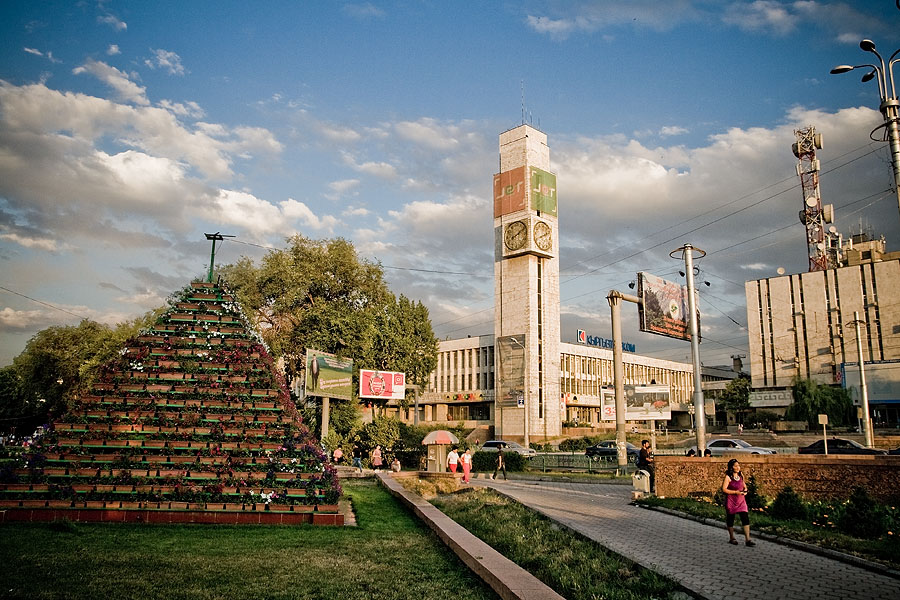
Street harassment is a tremendous problem in the city of Bishkek: girls and women experience it every single minute of each and every day. We get stared, whistled and honked at, grabbed, touched, splashed with water. We constantly hear degrading comments about our appearance, bodies, the degree of ‘hotness’ and the way we should be treated, if the harassers would catch us alone.

Instead of being properly addressed, street harassment is romanticized in popular culture and presented as flattering to women. That is why when I complain to the people around me about these encounters, they often laugh and say I should be glad that men find me attractive. “Take it as a compliment,” people say, “It as a sign of admiration”, “He just likes you”, or “How else will people meet, if no one approaches each other in public?”

Quite often they justify such behavior by saying that, well, you probably asked for it, your cut was too low, your skirt/dress too short, you wore too much make up and so on. People are willing to use any excuse to rationalize harassment and make it seem normal, while words of support of understanding are almost never offered. Even law enforcement representatives actively practice street harassment: when passing a member of our “valiant” police on the streets of Bishkek, you will almost surely hear him muttering something about your looks.

The question that I then ask people in response to their comments is: how can one feel glad about being objectified as something, the value of which is measured only in the so-called “hotness”? How can I feel happy about being treated like an object that can be stopped, judged, criticized, grabbed or pushed at any moment? Every time I face harassers on the streets and hear their whistles and insults, I cringe inside. I feel violated, angry and disgusted. And I want to come right up to the harasser and simply spit into his face.

What the majority of people still do not understand about street harassment, apart from its obvious insulting facets, is the expression of power behind it. Street harassment does not just objectify and degrade women, but also serves as a constant reminder to us of our vulnerability and evokes fear of more serious sexual attacks, i.e. rape. In this way, harassment on the streets can be seen as another way of keeping women ‘in line’, that is, away from public spaces.

And it does keep us in line, doesn’t it? In an attempt to avoid being sexually harassed on the streets, we have to constantly police ourselves. When choosing what to wear for the day, I have to think whether this outfit will attract unwanted attention or not, pick long skirts or pants, avoid wearing revealing, tight or short clothes. When going down the street, I put in the ear buds; turn the volume up to the max to block out catcalls and whistles and walk down the street, ignoring lewd smiles and stares. I avoid using certain “unsafe” streets and alleys. When seeing a large group of men approaching, I sometimes even cross to the other side of the street, or change direction and go back, all the time avoiding eye contact with them. I avoid, avoid and avoid…

So how is it possible to be content with harassment that limits my self-expression, restricts my freedom of movement and keeps me in constant fear of an attack? And why should I suffer and police myself all the time? I always feel extremely angry and frustrated about having to use these tactics, because it is not my fault, and the other party needs to change their attitude, and not me who is being harassed.

Of course, there are strategies of resistance for instance: going up to the harasser and staring him down, taking the cellphone out and threatening him with calling the police (a quite useless tactic though, given the above-mentioned behavior of police officers), shaming him and cursing loudly to attract attention of the passersby (especially in public transport).

But these strategies are limited and only work in some cases, since the overall culture and acceptance of violence, discrimination and objectification of women and girls cripples all attempts to fight harassment…

Aikanysh graduated from the University of Freiburg with a degree in European Literatures and Cultures and recently from the Diplomatic Academy of the KR with a degree in International Relations. Aikanysh is a co-founding member and coordinator of the Bishkek Feminist Collective SQ. Salidat is an undergraduate student at Kyrgyz National University and a dedicated volunteer at the Bishkek Feminist Collective SQ.

Bishkek Feminist Collective SQ was founded in 2012 by activists from various communities of Bishkek city. Follow BFC SQ on Twitter, @bish_feminists and on Facebook.

В России

Уличные домогательства в Бишкеке – проблема огромного масштаба. Девочки, девушки и женщины сталкиваются с этим каждый день, каждый час, каждую минуту. Мы постоянно ловим на себе оценивающие взгляды незнакомых людей на улицах города, нас освистывают, настойчиво сигналят вслед, отпускают в наш адрес мерзкие “шуточки”, грубо хватают, обливают водой. Мы постоянно слышим унизительные замечания о своей внешности, фигуре, степени привлекательности и о том, что с нами следует сделать, если мы окажемся наедине с пристающим(и).

Вместо того, чтобы бороться с уличными домогательствами, наше общество романтизирует и пытается представить их как лестное отношение к женщинам. Поэтому когда я жалуюсь друзьям и близким на случаи домогательства, они смеются надо мной, говоря, что я должна радоваться тому, что мужчины находят меня привлекательной. “Принимай это как комплимент, – говорят они, – Это знак восхищения” – “Ты ему просто понравилась!”,  или же – “А как еще люди смогут познакомиться, если никто не будет подходить друг к другу на улице?”

Очень часто они обосновывают такое поведение, говоря что “ну, ты, наверное, сама напросилась: твой вырез был слишком глубок, ты слишком сильно накрасилась, твоя юбка/платье были слишком коротки” и т.д. и т.п. Люди готовы использовать любое оправдание, чтобы рационализировать домогательства и представить их как что-то нормальное, в то время как слова поддержки и понимания произносятся крайне редко.

Даже сотрудники правоохранительных органов активно принимают участие в нормализации уличных домогательств: проходя мимо представителя нашей “доблестной” милиции, нередко можно услышать, как он бормочет тебе вслед  что-то о твоей внешности.

Вопрос, который я обычно задаю в ответ на эти комментарии, следующий: как можно радоваться тому, что меня воспринимают как обьект, чья ценность измеряется лишь в так называемой “сексапильности”. Как можно радоваться тому, что к тебе относятся как к предмету, который можно в любой момент остановить, схватить, толкнуть, потрогать, оценить… Каждый раз, когда я сталкиваюсь с домогательствами, слышу посвистывания, поцокивания и выкрики вроде: “Айиии, чон кыз”, “Девушка, девушка” и “Какая самочка!”, я съеживаюсь внутри, мне становится мерзко и противно. Я чувствую себя униженной, оплеванной и в то же время испытываю сильный гнев. Хочется подойти и плюнуть в лицо пристающему.

Большая часть людей до сих пор не понимают, что помимо того, что домогательства оскорбительны, они также являются выражением властных отношений в обществе. Уличные домогательства не только объективизируют и унижают женщин, но также служат нам постоянным напоминанием о нашей уязвимости и вызывают страх более серьёзных нападений на сексуальной почве, т.е. изнасилований. Таким образом, домогательства в общественных местах можно рассматривать как еще один метод контроля над женщинами, как способ держать нас в «узде» и подальше от общественных мест.

И это действительно держит нас в  «узде», не так ли?  Чтобы избежать уличных домогательств, нам приходится постоянно контролировать и ограничивать себя. При выборе одежды в начале дня, я думаю о том, привлечет ли наряд нежелательное внимание или нет; выбираю брюки и длинные юбки; стараюсь не носить обтягивающую, открытую, короткую одежду. Когда я выхожу из дома, я вставляю в уши наушники, ставлю громкость на максимум, чтобы не слышать различных  посвистываний и поцокиваний и, идя вниз по улице, пытаюсь не обращать внимание на пристальные взгляды и ухмылки окружающих. Я избегаю ходить по определенным “небезопасным” улицам и переулкам,  держусь подальше от определенных мест.  Увидев группу мужчин, двигающихся в моем направлении, я иногда даже перехожу на другую сторону улицы, либо поворачиваю назад, все время избегая зрительного контакта с потенциальными обидчиками.  В уме постоянно крутится инструкция – избегать, избегать, избегать…

Конечно, есть и тактики сопротивления, например, подойти к пристающему на улице и медленно окинуть его с ног до головы изучающе-нахальным взглядом; вынуть сотовый телефон из сумки и пригрозить звонком в милицию (довольно-таки бесполезная тактика, учитывая поведение самих милиционеров, но время от времени срабатывает); громко пристыдить и обругать его, таким образом привлекая внимание окружающих (особенно в общественном транспорте). Однако такие тактики ограничены и действуют лишь в некоторых случаях, так как повсеместная культура и приятие насилия, дискриминации и объективизации женщин часто сводит на нет все попытки бороться с домогательствами…


Share

Filed Under: correspondents, Stories

USA: Street Harassment Abroad is Part of the Experience, Not the Sum

August 29, 2013 By Correspondent

By Britnae Purdy, SSH Correspondent

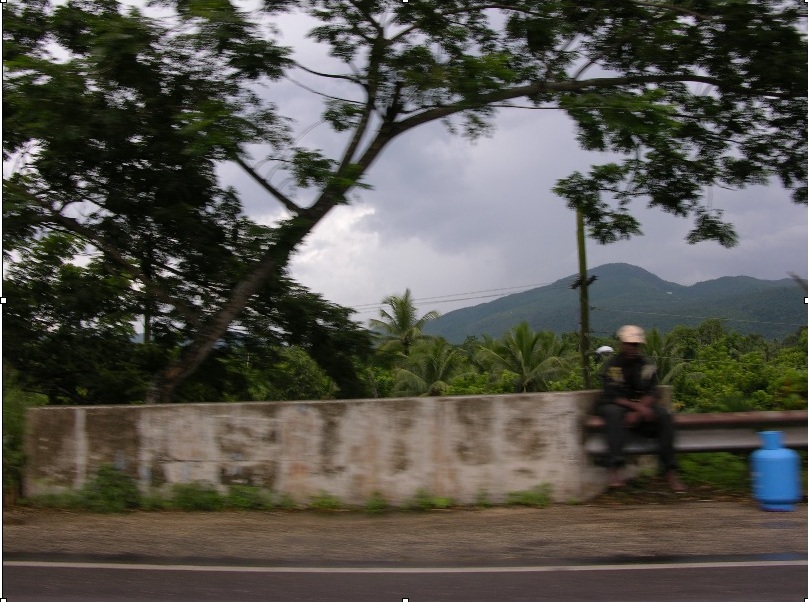
Photo from Britnae Purdy

When I first heard about Michaela Cross’s story, a young woman’s accountof how the street harassment she experienced while studying abroad in India left her with Post-Traumatic Stress-Disorder, I was intrigued. At the same time, I did not want to read it for fear of somehow either reliving or negating my own experiences with street harassment in a foreign country. Eventually I read her story, and decided that I wanted to share my own experiences with street harassment abroad and dealing with those experiences upon returning to the United States – an ordeal that I ultimately found more painful than the original harassment.

When I was eleven years old, my family moved to Kingston, Jamaica. Let me stop you right there, because if you’re not familiar with the country, I know what you may be thinking: I did not go to school under a coconut tree. Bob Marley was not the soundtrack of my life. I do not have dreadlocks.

Jamaica, much to many people’s surprise, is not the fantasy vacation-land that we see on TV commercials. Don’t get me wrong – I have seen some of the most incredible beauty of my life while living in Jamaica. Jamaica is a paradise – but the Sandals Resort-esque paradise that many Americans think of only exists for those who can afford it. I lived in the capital, Kingston, which was at the time the “murder capital” of the world. Just as vivid to me as the incredible blue ocean and the lush mountains are the rows of zinc-roofed shacks, starved dogs in the street, and the armored bus I took to school in the mornings. As an American living in Jamaica, sponsored by the embassy, I was incredibly privileged – luckily for me, my parents made a point of making sure I recognized that privilege and never took it for granted.

I experienced street harassment for the first time while living in Jamaica (I had never even heard the term before), and I experienced it consistently for the nearly four years that we lived there. Characteristics that made me one of a dozen in my previous hometown in Michigan – light skin, blond hair, blue eyes – meant I stuck out like a sore thumb in Kingston. I was hypersexualized by strangers and classmates, despite the fact that, at eleven, I had just gotten my first kiss and was still figuring out how to put on eye shadow. My sexually-based street harassment was also mixed with racial and economic tones– whereas in Michigan I was a level-headed middle-class scrawny kid, in Kingston I was often seen as the rich, white American – the spoiled foreigner. I ultimately thrived in Jamaica, but the harassment was very painful.

Still, the hardest experience was when I returned to the United States at fifteen years old. In my new town in Virginia, I once again blended entirely into the crowd – when I wasn’t harassed on the streets or in the school halls during my first couple of weeks back, I assumed that I deeply unattractive. While the harassment in Jamaica scared me, the sudden lack of sexual attention in the United States left my self-confidence floundering. I felt like I was melting into a new sense of invisibility. The anonymity was both painful and comforting, but most of all I felt lonely.

None of my new classmates could relate to my experiences living abroad – when I mentioned that I once got “riot days” off of school during elections, one girl stared at me blankly and said, “Wait, I thought you were from Jamaica? Aren’t they like, always happy there?” Another boy asked me “which island in Jamaica” I had lived on and when the last time I had seen Bob Marley was. And yes, I did get that wonderful Mean Girls rip-off line often – “If you’re from Jamaica, why are you white?” I had been a foreigner in Jamaica, and now I felt alienated in America as well. I couldn’t even talk about my day-to-day experiences in another country – talking about the sexual harassment I experienced abroad was out of the question, especially when at the young age of fifteen I was so deeply confused about what constituted negative and positive sexual attention. I buried the memories.

In fact, I didn’t talk or think about it again until I started college, which was also the next time I experienced regular street harassment. The first time I was harassed on an American street, I felt betrayed and shaken – up to that point, I had only experienced street harassment in Jamaica. I thought this practice belonged somewhere else; I wondered what I had done wrong. All those feelings from my earlier years in Jamaica came flooding back – bracing my shoulders walking down the street, a borderline irrational fear of walking alone, a prickly feeling down my spine whenever a stranger approached.

I’ve traveled extensively since living in Jamaica, but unfortunately my default setting when traveling abroad is still to expect that level of harassment. In some places I’ve been harassed, in others I haven’t – but I still find myself unable to keep from switching the rational side of my brain over to the side that is instinctively scared of strangers on the street. Michaela Cross was diagnosed with PTSD after her continued harassment – I don’t believe that applies to me, but my harassment has definitely changed my pattern of behavior and expectations when traveling abroad. It is exhausting to constantly be on alert like that, and it detracts from the pleasure of traveling. Traveling is about placing yourself outside of your comfort zone, without comparison to your daily routines – but for women, letting down our guard can also be dangerous.

I am grateful to Michaela Cross for pointing out a gap –there are very few safe spaces to discuss street harassment abroad. I believe that part of this stems from the fear of conveying racism or prejudices. Cross’s story has garnered quite a bit of attention – while some responses are well thought-out and point to varying opinions and experiences, others are disgustingly laced with bigotry, whether towards Indian men or towards Cross.

If we say that we experienced street harassment while in Country X, the mind may jump to assuming that all men from Country X are street harassers, or that sexual harassment is somehow a cultural, racial, or ethnic characteristic. That’s ridiculous. I would never attribute my street harassment in Jamaica to the entire Jamaican nationality. But like Cross, I also had difficulty learning how to speak clearly about my more negative experiences in a foreign country. If I casually mention to a friend at college that a man yelled profanities at me while I walked back from class, she would understand – our campus is generally very safe, but there is a certain road where everyone knows street harassment is common. If I try to discuss, however, the time I was harassed outside a popular restaurant in Kingston, she has no way of placing that experience into a larger concept of what Jamaica is really like. I don’t want to paint a false paradise of the cities I’ve traveled to – that locks me into a mindset that harassment isn’t a big deal, or that harassment is shameful issue that I must deal with personally and quietly. But I also don’t want to spread unnecessarily negative connotations about places that I, for the most part, loved.

Societal norms are not the same as cultural practices, and the level to which sexism and street harassment are publicly tolerated in any given society is not indicative of the “quality” of the people of that country. However, allowing experiences with street harassment abroad to fester without examining them and placing them into a larger context of gender inequality may result in a bias against that country that may border on bigotry. We need safer places to discuss harassment abroad, and perhaps more importantly we need a better language for both sharing and listening to others’ stories.

I applaud Michaela Cross for sharing her experience. Though I don’t relate to everything she said, I can respect her story for being just that – her story. I am sharing my story because it is mine and it is precious and it contains my truths. I do not expect my story to speak for others – I certainly hope Cross did not expect hers to do so. Take from it what you need, and leave what you do not. If my experiences are different from yours, that does not make either of us less valid or relevant. That is what feminist story-sharing is all about.

And for the record? I wouldn’t trade my time living in Jamaica for the world. The street harassment I faced there was a part of my experience – it by no means the sum of my experience.

Britnae is a graduate student at George Mason University, in Virginia, where she is pursuing a Master of Arts in Global Affairs with a specialization in Security and Conflict Studies. She also writes for First Peoples Worldwide and you can read more of her writing on their blog and follow her on Twitter.

Share

Filed Under: correspondents, Stories, street harassment

USA: Street Harassment in India and Beyond

August 28, 2013 By Correspondent

By: Delia Harrington, Massachusetts, USA, SSH Correspondent

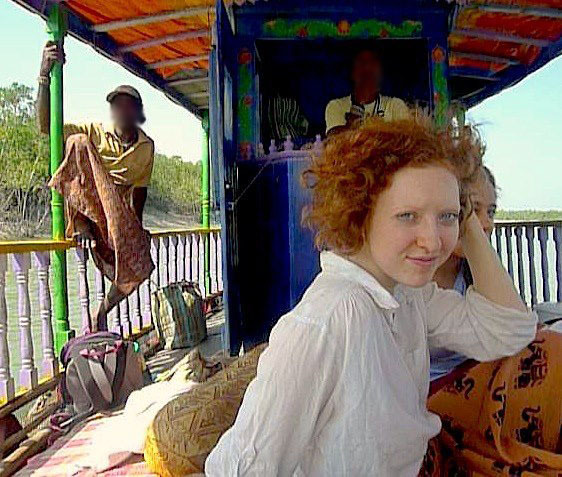
Michaela Cross in India. Photo credit: Caety Klingman.

Last week, under the username Rosechasm, University of Chicago student Michaela Cross published a CNN iReport that has shaken readers and spurred reactions across the web.  The piece, entitled “India, the Story You Never Wanted to Hear” details many terrifying examples of street harassment, staring, groping, and attempted or threatened rape that the author says happened to herself or fellow classmates during a semester abroad in India through their university.

CNN has since called for women all over the world to share their own stories of street harassment and perspectives on Cross’s original iReport as well as potential solutions or methods to mitigate street harassment and other gender-based violence.  Many women, including Stop Street Harassment’s founder Holly Kearl, have since heeded that call, and their stories are well worth a read.

Many have misread the article as a universal condemnation of Indian men and India in general.  The author expresses repeatedly that her experience in India was one of contradiction, including both those of the positive, once in a lifetime variety and those of a more traumatic nature.  While it is hard not to feel lately that some observers and media outlets are holding up India as a problematic “other”, that doesn’t mean people should stop telling their stories or reporting on the stories of others.

Another common criticism is that Cross’s article ignores the treatment Indian women receive within their own country.  That was not the focus of her article, and it seems reasonable that Cross would only write of her own experience and the experience of those she knew through her program, especially given iReport’s format.  However, since it bears repeating, here are some stories Indian women have since posted to CNN about their own treatment, good or bad.  Gender-based violence looks different for local women than it does for foreigners, but as travelers and allies in the struggle against such violence, we must remember that eventually we will leave, and many women don’t have that option.

Finally, many have highlighted the prevalence of street harassment and gender-based violence worldwide, especially within the writer’s (and my) native United states.  Again, I think this is rightfully outside the scope of Cross’s article, but the very existence of this blog and others like it demonstrates that street harassment is not limited to India or the developing world.  However, that doesn’t make Cross’s experience any less real or traumatic.

Cross’s experience shows how street harassment is unfortunately only one part of the spectrum of gender-based violence, which includes stalking, groping, sexual assault, and murder.  For a victim of this type of violence, even the more “minor” incidents can feel (and become) incredibly dangerous.   In a statement to CNN, the University of Chicago writes that all students are offered, “extensive support and advice to students before, during and after their trips abroad,” and yet Cross didn’t approach them during her program.  In her own words, she thought she was prepared to handle the stress of India:

“When I went to India, nearly a year ago, I thought I was prepared. I had been to India before; I was a South Asian Studies major; I spoke some Hindi. I knew that as a white woman I would be seen as a promiscuous being and a sexual prize. I was prepared to follow the University of Chicago’s advice to women, to dress conservatively, to not smile in the streets. And I was prepared for the curiosity my red hair, fair skin and blue eyes would arouse.  But I wasn’t prepared.”

Contrary to what many online commenters have accused, it appears Cross was as fully equipped as a person could be for the potential stresses of travel.  Not only that, she seems to have taken all the usual precautions advised to female travelers (and females in their own countries.)  If all of the University of Chicago’s years of experience sending students to India, as well as her personal knowledge from traveling to India previously weren’t enough to help keep her safe, would anything be enough?  Short of not going to India, which is not an option for many Indian women and isn’t a viable option for travelers, what more could a woman do to avoid this situation?  I think perhaps it’s time for the onus to prevent street harassment to come off of women, and be placed on perpetrators as well as our law enforcement and legislators.

I am impressed that Cross was able to share her story so publicly, and I love that so many women worldwide have taken to CNN’s iReport assignment to join her in sharing their lived experiences with street harassment.  I’m a firm believer that speaking up and supporting those among us who speak up is one way of fighting back.  Instead of devolving into an argument over where harassment is worse, I hope we remember that women in America, India, and the world over have something in common right now: we are speaking up, and we are fighting back.

Delia Harrington is a recent graduate of Northeastern University and calls Boston home. In recent years, she has found herself studying, working, and volunteering in Egypt, Cuba, France, Benin, the Dominican Republic, Turkey, Germany, and Greece.  You can read more of her writing on her blog, or follow her on Facebook and Twitter, @deliamary.

Share

Filed Under: correspondents, News stories, Stories, street harassment Tagged With: India, Michaela Cross

USA: Claim Your Space!

August 26, 2013 By Correspondent

By: Molly Redding, San Francisco, CA, USA, SSH Correspondent

“Caution: May cause Twitter abuse.” Via South London Today

By now you have probably heard of what happened to Caroline Criado-Perez a few weeks ago. If you haven’t, I’ll break it down for you:

  1. She noticed that there will not be any (non Royal) women featured on the back of British banknotes.
  2. She campaigned to make sure a woman is included.
  3. She succeeded: Jane Austen will be featured on the back of a 10-pound banknote.
  4. She is then subjected to an endless barrage of insults, rape, and death threats on Twitter. (Read my Storify for some of the highlights.)
  5. She is told to “just ignore it.”

A lot has been said written about it, for example here, here and here. I caught wind of this on my Twitter account shortly after it started, but I couldn’t find the time to write about it until now (although maybe a cooling down period was in order so I didn’t write this entire post in ALL CAPS).

What happened was disgusting, despicable, and yes, criminal (one man has been arrested for his threats). At moments I would follow the action riveted by the speed under which the tweets were coming in, only to find myself traumatized by the language and vitriol that was being used. I would distract myself and go do something different. But Caroline didn’t have that choice. And the tweets were directed at her.

You’re probably wondering by now why a blog for a street harassment site is discussing harassment on Twitter. It’s all about power over space. In trying to assert their power over public spaces, men harass women on the street. In trying to assert their power online, they harass women on places like Twitter and Facebook, and in the comments of other websites. The message is the same – you do not belong here. Your presence is not welcome here.

Women also get the same message online that they do on the street – just ignore it, you’re just encouraging them, etc. Caroline was even accused of fighting back just to get attention. To get attention? Are women not allowed to just say, “No!” anymore?

Caroline is not the first woman (or person) to be harassed online, and she certainly won’t be the last. Even when I was considering applying to blog for this website, I feared what would happen if I came out as a Feminist to the Internet. What would they say to me? Could I handle it?

But that’s what this site is about. Reclaiming space. We are fighting for space that allows us to get dressed and not think about changing our outfit to reduce the possibility of comments. We are fighting for space that allows us to express our opinion and be treated with respect and dignity, rather than drowned out by threats of sexual violence. In a public setting you might not be able to shout back or defend yourself, but just by being on the street, on the bus, and posting your thoughts on Twitter, you are sending the message that you cannot be silenced, penned in, broken down.

Caroline is still Tweeting. I applied to blog for SSH, and you are still walking down the street. We are all reclaiming our space.

Molly received a graduate degree in International Development and Gender from the London School of Economics in 2011, where her dissertation focused on websites allowing victims of harassment to post about their experiences. She has worked in the non-profit sector for over 10 years. You can follow her on Twitter, @perfeminist.

Share

Filed Under: correspondents

« Previous Page
Next Page »

Share Your Story

Share your street harassment story for the blog. Donate Now

From the Blog

  • #MeToo 2024 Study Released Today
  • Join International Anti-Street Harassment Week 2022
  • Giving Tuesday – Fund the Hotline
  • Thank You – International Anti-Street Harassment Week 2021
  • Share Your Story – Safecity and Catcalls Collaboration

Buy the Book

  • Contact
  • Events
  • Join Us
  • Donate
  • Facebook
  • Instagram
  • Pinterest
  • Tumblr
  • Twitter
  • YouTube

Copyright © 2026 Stop Street Harassment · Website Design by Sarah Marie Lacy