• About Us
    • What Is Street Harassment?
    • Why Stopping Street Harassment Matters
    • Meet the Team
      • Board of Directors
      • Past Board Members
    • In The Media
  • Our Work
    • National Street Harassment Hotline
    • International Anti-Street Harassment Week
    • Blog Correspondents
      • Past SSH Correspondents
    • Safe Public Spaces Mentoring Program
    • Publications
    • National Studies
    • Campaigns against Companies
    • Washington, D.C. Activism
  • Our Books
  • Donate
  • Store

Stop Street Harassment

Making Public Spaces Safe and Welcoming

  • Facebook
  • Instagram
  • Pinterest
  • Tumblr
  • Twitter
  • YouTube
  • Home
  • Blog
    • Harassment Stories
    • Blog Correspondents
    • Street Respect Stories
  • Help & Advice
    • National Street Harassment Hotline
    • Dealing With Harassers
      • Assertive Responses
      • Reporting Harassers
      • Bystander Responses
      • Creative Responses
    • What to Do Before or After Harassment
    • Street Harassment and the Law
  • Resources
    • Definitions
    • Statistics
    • Articles & Books
    • Anti-Harassment Groups & Campaigns
    • Male Allies
      • Educating Boys & Men
      • How to Talk to Women
      • Bystander Tips
    • Video Clips
    • Images & Flyers
  • Take Community Action
  • Contact

USA: Why We Don’t Talk About Street Harassment Abroad

July 23, 2013 By Correspondent

By: Delia Harrington, Massachusetts, USA, SSH Correspondent
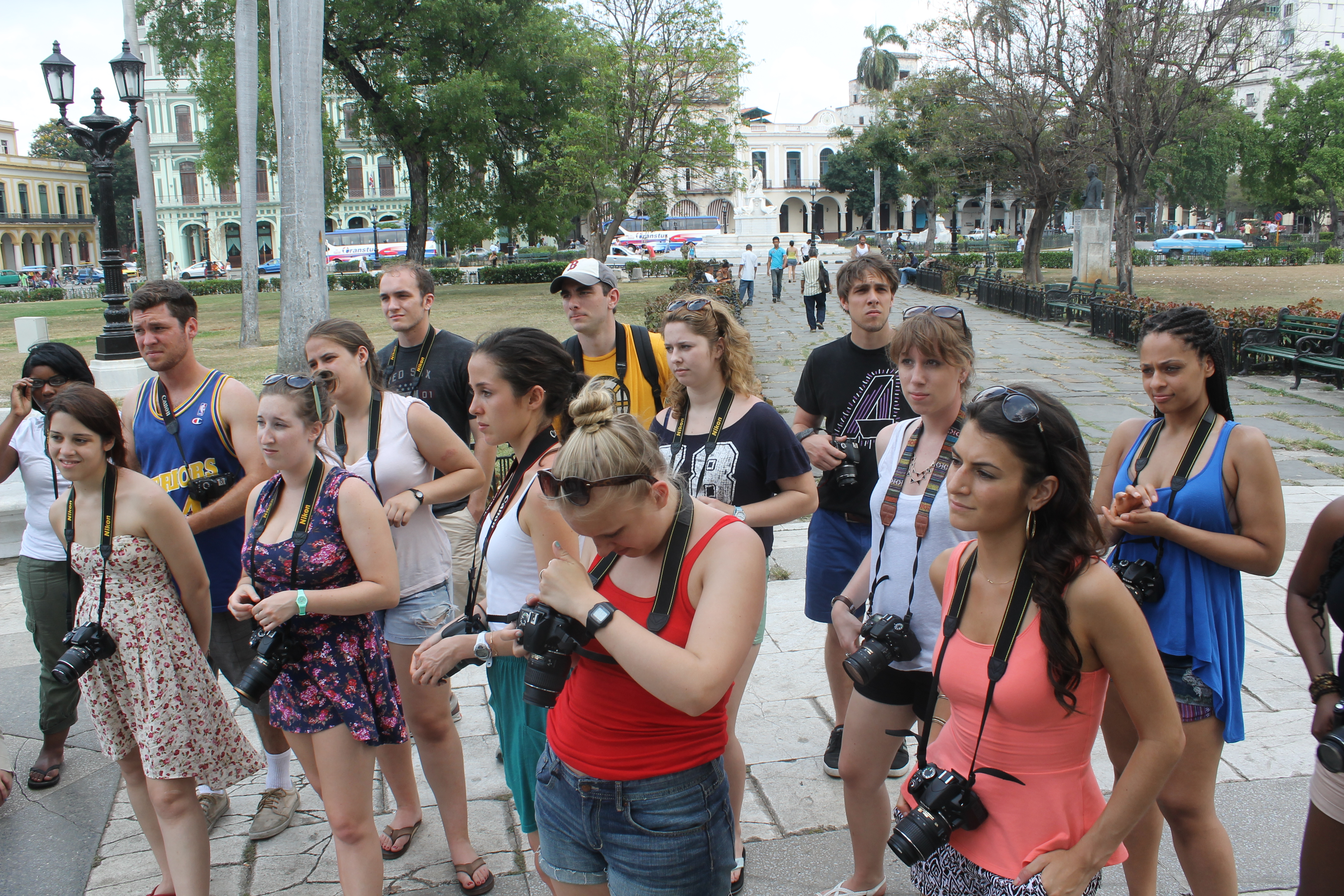
Some of my wonderful students in Havana, Cuba. Just trying to study abroad, not interested in getting harassed.

Recently I read an article on xoJane about street harassment while studying abroad.  It saddened me to hear how isolated the author felt, and how quick she was to cover her treatment  with a joke.  But I also recognized myself and my students in her.

I have been the girl who downplays street harassment abroad, even though I’m a vocal opponent of the same behavior when I am home.  So I started thinking about why we stay silent or laugh at off, and what makes street harassment different when studying or traveling abroad.

While there are some similarities, there are a few dimensions added to the reactions when a person is harassed outside of their own community.  Among these are ethnocentrism, racism, and a belief that women should not be traveling, especially not alone or somewhere dangerous.  The foreign nature of the location, culture, and perhaps language of the harasser can add a level of fear and doubt for the harassed person.  Some people who are not harassed at home will be harassed more frequently or for the first time abroad, because of how they are perceived in this new location.

We don’t speak up because we don’t want to hear from the naysayers back home.

If you’re traveling, you likely heard a bunch of horror stories about it before you left from everyone from your mom to casual acquaintances you meet at parties.  If you are female and going alone, you probably heard it more often and more stridently.  That goes double if you were going to a developing country, a Latin country, an Arab country, a Muslim country, or any place deemed otherwise “dangerous” or “culturally backwards.”

If we speak up about anything that is even remotely negative, these naysayers come back out of the woodwork.  See, it’s dangerous.  See, those people are terrible to women.  See, that’s why women shouldn’t travel alone.  See, you should have just stayed home.

We don’t speak up because we are given terrible advice.

As someone who has worked abroad, participated in five different study abroad programs, helped to lead three more study abroad programs, and worked as a study abroad administrator, I have heard it all when it comes to advising women on their safety abroad.  Some of the advice is incredibly helpful, but some of the advice is straight up apologist, victim-blaming crap.  Over the years I have heard faculty, staff, and administrators say things including:

* They should wear less revealing clothing
* That’s just the culture here so they should get used to it
* The men here just can’t help it
* That’s their problem and they need to handle it on their own
* They need to let it go–they shouldn’t react angry or cause a scene.

We don’t speak up because we aren’t taken seriously.

Perhaps worse than terrible advice is when someone laughs off your very real concerns.  I’ve seen this happen most egregiously when the bystander does not speak the language and therefore doesn’t actually have any idea what is being yelled.   It can also occur when bystanders so strongly identify with the host country that they are unable to speak critically about its shortcomings.  And finally if a bystander is never harassed themselves, they may give it little thought.  It is incredibly easy to say something is not a big deal or does not happen if it does not happen to you, and that makes it harder for someone to speak up the next time harassment happens.

I have stayed quiet for these reasons in the past. But I’m trying to speak up now, and I hope you will too. Chances are, others have experienced this type of behavior too.

In study abroad and international travel, we all think everyone else is having this perfect, fabulous time because that’s all anyone puts on Facebook.   We feel obligated to have a perfect time because of the effort and money we (and perhaps others) put into getting abroad.  Feeling like the only one who gets harassed can be isolating, shaming, or make a person believe they are overreacting.  Feeling like we can’t speak up because it will taint how people see our host country or it will seem ungrateful can make silence seem like the best option.

But remember: talking about street harassment is one of the only ways to diminish its power over us.

I don’t plan to ever stop traveling, and I cannot recommend enough that everyone study, live, work or volunteer abroad at some point if they are able to.  I won’t stop going to countries that are politically tumultuous, economically underdeveloped or culturally conservative compared to my home in the United States.  But I think it’s time that we are honest with ourselves and each other about what traveling abroad is really like for women, the good and the bad.  I believe that the only way to fully reclaim our right to explore this great big, wondrous world is to speak up and support each other, as loud and as often as we can.

Delia Harrington is a recent graduate of Northeastern University and calls Boston home. In recent years, she has found herself studying, working, and volunteering in Egypt, Cuba, France, Benin, the Dominican Republic, Turkey, Germany, and Greece.  You can read more of her writing on her blog, or follow her on Facebook and Twitter, @deliamary.

Share

Filed Under: correspondents, Stories, street harassment

USA: When Street Harassment Dictates Social Behavior

July 23, 2013 By Correspondent

 By Nikoletta Gjoni, Maryland, USA, SSH Correspondent

The many times that I’ve gotten on the metro recently I’ve thought about an article I read a few weeks ago in The New York Times, How Not to Be Alone. The author, Jonathan Safran Foer, writes about the diminishment of daily human interaction due to the ever-rising use of technology and its tendency to isolate us. What I found to be both intriguing and significant in the article was Foer writing about a recent occurrence on the streets of Brooklyn:

A girl, maybe 15 years old, was sitting on the bench opposite me, crying into her phone…I was faced with a choice: I could interject myself into her life, or I could respect the boundaries between us. Intervening might make her feel worse, or be inappropriate… an affluent neighborhood at the beginning of the day is not the same as a dangerous one as night is falling. And I was me, and not someone else. 

 The significance of what Foer writes (with absolute knowingness) is that 1) an older man approaching a young girl on the street would be perceived as shady to most bystanders, and 2) that he confuses an ‘affluent’ neighborhood for a safe one; street harassment doesn’t discriminate according to zip code. The very real concern that he would come off as an intrusive and possibly threatening man to a teenaged girl is strong enough for him to want to keep his nose in his contacts list and completely ignore the situation. Foer doesn’t tell us what he ultimately decides to do, though he admits that “there’s a lot of human computing to be done.”

Though street harassment is by no means a new problem for women, it is perhaps more widely acknowledged today than it may have been in years past. Like countless of other women all over the world, I have had my fair share of unwanted gazes, comments, and contact. The only time I’ve had backup is when I’ve been out with friends. On any other occasion of simply walking to and from work or trying to look for a street name, help is almost never readily available.

It is disheartening to think that even though people can spot and disapprove of street harassment, few will say anything against the perpetrator. So when I stumbled upon an Avon Foundation tweet regarding a bystander behavior training program for sexual harassment, it reminded me of the work being made out there by different organizations to create awareness of when someone is being verbally or physically assaulted, and to step in when one can. It’s a reminder that when one is being attacked in a public space, it should be the duty of others around that person to jump in and strike down the harassment taking place. One would hope that if enough people partake in bystander intervention, it would eventually become the normalized behavior. Sometimes all it takes is a quick acknowledgment to let the victim know that she has not slipped through the cracks in the middle of a crowd.

So what do I do to deter unwanted advances? Precisely what Foer continues to write about in his article. I pull out my phone, plug in my earbuds, and blast my music. My girlfriends and I joke about how it’s a hassle whenever we forget our phones/ipods/ipads/kindles/earbuds. We joke about how we try to avoid eye contact in a crowded metro car – just in case! – because we have all had that one experience, that one time when we were approached just to be told that we look sad/angry/bored.

I sometimes wonder if it’s the healthiest fix to the problem. I know that in the process of trying to avoid unsavory people, you may miss out on conversing with the interesting ones. Foer recognized that his intentions may have come off as creepy or impure, and while I appreciate and also sympathize with his sensitivity to the matter, I would actually encourage him and other men to step up and speak up when their incentive is to be a good Samaritan. Being prejudged as a harasser is as sad as the harassment problem itself, and it’s something I consciously try to remind myself of whenever I am out in public.

Nikoletta Gjoni graduated from UMBC in 2009 with a B.A. in English Literature. After graduation, she did almost four years of freelance work in a D.C. broadcast station, in addition to having worked as a literacy and linguistics assessor for pre-k classrooms in D.C.’s charter schools.  To get to know her better, she can be tracked on both her creative blog and Twitter, @nikigjoni.

Share

Filed Under: correspondents, Stories, street harassment

England: “Everyday Lesbophobia”

July 22, 2013 By HKearl

By: Tilly Grove, London, England, SSH Correspondent

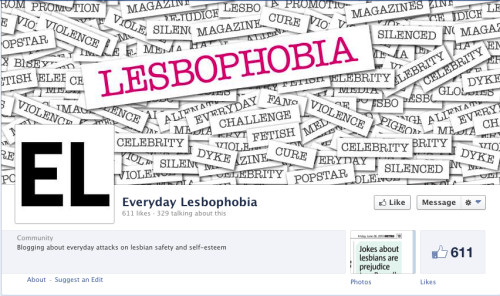
When people talk about the street harassment of women and the street harassment of the LGBT community, it is not always acknowledged that whilst sexism and homophobia are different oppressions, they meet at a significant intersection, too. This phenomena, known as lesbophobia, sees lesbian and bisexual women subjected to abuse that although certainly fueled by bigoted views regarding sexuality, has a distinctly misogynistic tone to it as well. It is a very tangible reality for many lesbian and bisexual women, as the Everyday Lesbophobia project endeavours to document.

Of course, women who are perceived to be intimate with other women still face the same hostility, threats and actual violence that the LGBT community face generally. But they also receive harassment of a different kind, which is not just underpinned by the assumption that only heterosexual relationships are natural or legitimate, but that this is the case because women exist for the pleasure of men.

Having asked on Twitter for women to share their experiences on the matter, I immediately had a woman describe how she and her partner had been accosted in the street by men declaring that a “good f**k would sort them out” – implying that lesbian relationships are not real, that there is something wrong with them, and that a man can ‘fix’ it. This incorporates the homophobic belief that same-sex relationships are inferior to heterosexual relationships into the idea that all women do and should want men, and that men are entitled to each and every one.

The men making these kinds of comments probably think that they are making a joke, in an attempt to reassert the masculine dominance undermined by a woman not being interested in them, but it has very real implications. Corrective rape is a threat for lesbian women across the world. Some men are so sure that a “good f**k” will make lesbians interested in men that they give it to them, forcibly and without consent. All it actually does is cause unnecessary harm, fear and possibly lead to death. That’s no joke.

It doesn’t help that lesbian sexuality is heavily constructed in the public perception to cater for male consumption. This is no surprise; all women are portrayed in the patriarchy as a sexual conquest of some kind. But for lesbian and bisexual women, the fetishisation of their relationships in anything from pornography to sitcoms means that in public they are treated as novelties, or masturbatory tools. Women intimate with each other in public are cheered on, jeered at, and openly leered upon, with tales of male harassers doing everything from asking if they can join in to actually masturbating.

Any woman who strikes up the courage to protest this objectification is invariably told that “they know it’s hot” and thus, apparently, cannot complain. This is entitlement to the extreme – the idea that lesbian and bisexual women must accept threatening behaviour and invasions of their privacy because men are used to viewing images of their relationships for pleasure. As if this is the natural way of things.

All the while society and its institutions present women as things for men to play with, and not human beings with their own desires and a right to respect, this will be the natural way of things. And street harassment won’t end.

Tilly is studying for a BA in War Studies at King’s College London, where she is writing her dissertation on the effect that perceptions of gender have on the roles which women adopt in conflict. You can follow her on Tumblr and Twitter, @tillyjean_.

Share

Filed Under: correspondents, LGBTQ, street harassment

USA: “Expectations of gender performance need to stop”

July 21, 2013 By Correspondent

“This is not an excuse for harassment”
Via http://fashionsco0p.blogspot.com

By: Molly Redding, San Francisco, CA, USA, SSH Correspondent

An experience I had the other day got me thinking about how much street harassment has to do with heteronormativity and the presentation of gender in public spaces.

It was Pride weekend and the streets around my apartment in San Francisco were filled with revelers coming to soak in the atmosphere of pure elation after the Defense of Marriage Act was killed and Proposition 8 – a California ballot initiative restricting marriage to one woman and one man – was overturned.

My roommate and I ventured out to get dinner, and as we were walking down the street a gentleman looked at both of us and called, “Hey, lesbi-ans!” Now, given that the Dyke parade had passed not 20 minutes earlier, his assumption wasn’t crazy, but it made me stop for a second, because it was the first time someone had assumed for me a sexuality that I didn’t claim.

For me, this happened once. For many people, this is a daily experience.

Heteronormativity (one of my favorite words, btw), is exactly what it sounds like – the assumption that everyone is heterosexual unless proven otherwise. Much of street harassment rests on this notion, since many (but certainly not all) street harassment incidences are men sexualizing women’s bodies or body parts. They assume the woman is heterosexual, and thus, available to interact with them under the guise of “courting.” That any of the harassers ever think their actions are going to actually win them a date is a whole other blog topic.

On the flip side, non-compliance with heteronormativity also begets street harassment, when the person walking down the street does not fit within the heteronormative framework. This is why there is a high incidence of street harassment aimed at the LGBQT community. Being in a public space and outside of what the harasser might consider “normal” allows them power to point out and ridicule those differences (this, of course, seems insane to many of us who at one point in our lives learned that differences are opportunities for learning, not ridiculing).

And finally, there’s the issue of performativity – the “performance” of one’s gender. A large focus of street harassment has to do with clothing – how much or how little a woman was wearing when she was harassed. Wearing too little clothing is considered a sexualization and “overperformance” of the female gender – and leaves the situation open to blaming the victim.

But “underperformance” of one’s gender can also leave a person vulnerable to harassment. Judith Butler outlines this in a video where she discusses a young boy who was killed by his classmates because of a certain “swish” in his walk (start around minute 4:30 until 6:45):

“So then we have to ask why would someone be killed for the way they walk? Why would that walk be so upsetting to those other boys that they feel they must negate this person, must expunge the trace of this person, they must stop that walk, no matter what . . . it seems to me that we are talking about an extremely deep panic or fear, an anxiety that pertains to gender norms.  If someone says you have to comply with the norms of masculinity otherwise you will die, or I kill you now because you do not comply, then we have to start to question what the relation is between complying with gender and coercion.”

Expectations of gender performance need to stop. Heternormative assumptions need to stop. Their outcome, street harassment, needs to stop.

Molly received a graduate degree in International Development and Gender from the London School of Economics in 2011, where her dissertation focused on websites allowing victims of harassment to post about their experiences. She has worked in the non-profit sector for over 10 years. You can follow her on Twitter, @perfeminist.

Share

Filed Under: correspondents, LGBTQ, street harassment

USA: Street Harassment by Older Men

July 19, 2013 By Correspondent

By Lauren McEwen, Washington, D.C., USA, SSH Correspondent

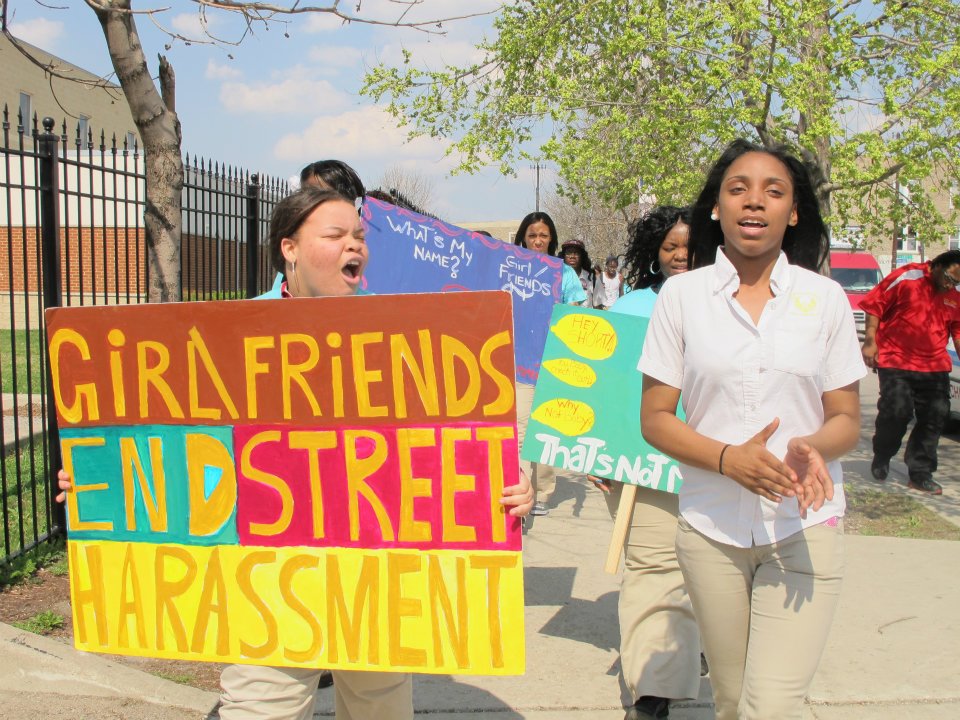
A Long Walk Home Girl\Friends in Chicago

If I always responded to street harassment with the same amount of energy I’d never arrive anywhere on time. So I have a go-to response for each “level” of street harassment: a grimace for a leer and a mild proposition (i.e. “Damn, baby. Can I walk with you?”), a raised middle finger for a honking horn, and so on.  Every once in a while, when I’m too tired to respond, I’ll just pointedly ignore the harasser. It’s not the most revolutionary tactic, but sometimes I just don’t have the energy. Or worse, it happens so quickly that I don’t have time to process what was just said or done to me, and spend hours afterward wishing I was physically capable of kicking myself.

But I can never ignore street harassment from elderly men. There’s something especially predatory and disconcerting about having a man old enough to be your grandfather ogle at your body or make sexual comments about it. Denying any street harasser’s advances could potentially lead to a verbal confrontation or put me in physical danger but when an elderly man harasses me, the playing field has morphed. I struggle to balance the need to defend myself with the engrained belief that I should always respect my elders. And I truly believe the grey-haired men who hang outside of the barbershop near my house know that I’ve been taught to respect them, and manipulate their assumed power every chance they get.

Or maybe they’ve spent so many years sexually harassing strange women without being called on it that they don’t realize that it’s wrong. Maybe they’re unaware that now that they’ve grown older, they’re behavior is no longer just “creepy,” but breeches unspoken agreements between the young and the old.

But is someone who is willing to sexually harass a stranger on the street still worthy of respect? I don’t think so. So I’ve taken to shouting back at a 70-something harasser just like I would one of my peers.

I’ve seen elderly men who make suggestive comments to women significantly younger than them get one of two reactions: either the woman will respond with an awkward smile and rush away in her discomfort, or she will act disgusted by his advances. I assume that the harassers tell themselves that the awkward smile meant she “appreciated” the “compliment.” The disgusted act means she’s ill-mannered and rude.

So I changed my approach. When I’m harassed by an elderly man, I tell them exactly how I feel. I look disappointed or angry and say, “How am I supposed to respect my elders when they don’t respect me?” It’s usually direct and pointed enough for my harasser to realize exactly what line was crossed. That I trusted him to behave a certain way because he was older than me, and that he ruined it. I don’t care if I’m an adult – I expect men my grandfather’s age to see me as a child. It may sound irrational, but if society teaches me that I should respect my elders, then shouldn’t they behave in a manner worth respecting?

Lauren is a recent graduate of Howard University where she majored in print journalism with a minor in photography. You can check out more of her work at laurenmcewen.weebly.com and follow her on Twitter at @angrywritergirl.

Share

Filed Under: correspondents, street harassment

« Previous Page
Next Page »

Share Your Story

Share your street harassment story for the blog. Donate Now

From the Blog

  • #MeToo 2024 Study Released Today
  • Join International Anti-Street Harassment Week 2022
  • Giving Tuesday – Fund the Hotline
  • Thank You – International Anti-Street Harassment Week 2021
  • Share Your Story – Safecity and Catcalls Collaboration

Buy the Book

  • Contact
  • Events
  • Join Us
  • Donate
  • Facebook
  • Instagram
  • Pinterest
  • Tumblr
  • Twitter
  • YouTube

Copyright © 2026 Stop Street Harassment · Website Design by Sarah Marie Lacy