• About Us
    • What Is Street Harassment?
    • Why Stopping Street Harassment Matters
    • Meet the Team
      • Board of Directors
      • Past Board Members
    • In The Media
  • Our Work
    • National Street Harassment Hotline
    • International Anti-Street Harassment Week
    • Blog Correspondents
      • Past SSH Correspondents
    • Safe Public Spaces Mentoring Program
    • Publications
    • National Studies
    • Campaigns against Companies
    • Washington, D.C. Activism
  • Our Books
  • Donate
  • Store

Stop Street Harassment

Making Public Spaces Safe and Welcoming

  • Facebook
  • Instagram
  • Pinterest
  • Tumblr
  • Twitter
  • YouTube
  • Home
  • Blog
    • Harassment Stories
    • Blog Correspondents
    • Street Respect Stories
  • Help & Advice
    • National Street Harassment Hotline
    • Dealing With Harassers
      • Assertive Responses
      • Reporting Harassers
      • Bystander Responses
      • Creative Responses
    • What to Do Before or After Harassment
    • Street Harassment and the Law
  • Resources
    • Definitions
    • Statistics
    • Articles & Books
    • Anti-Harassment Groups & Campaigns
    • Male Allies
      • Educating Boys & Men
      • How to Talk to Women
      • Bystander Tips
    • Video Clips
    • Images & Flyers
  • Take Community Action
  • Contact

USA: Street Harassment of Gay and Bisexual Men

June 24, 2013 By Correspondent

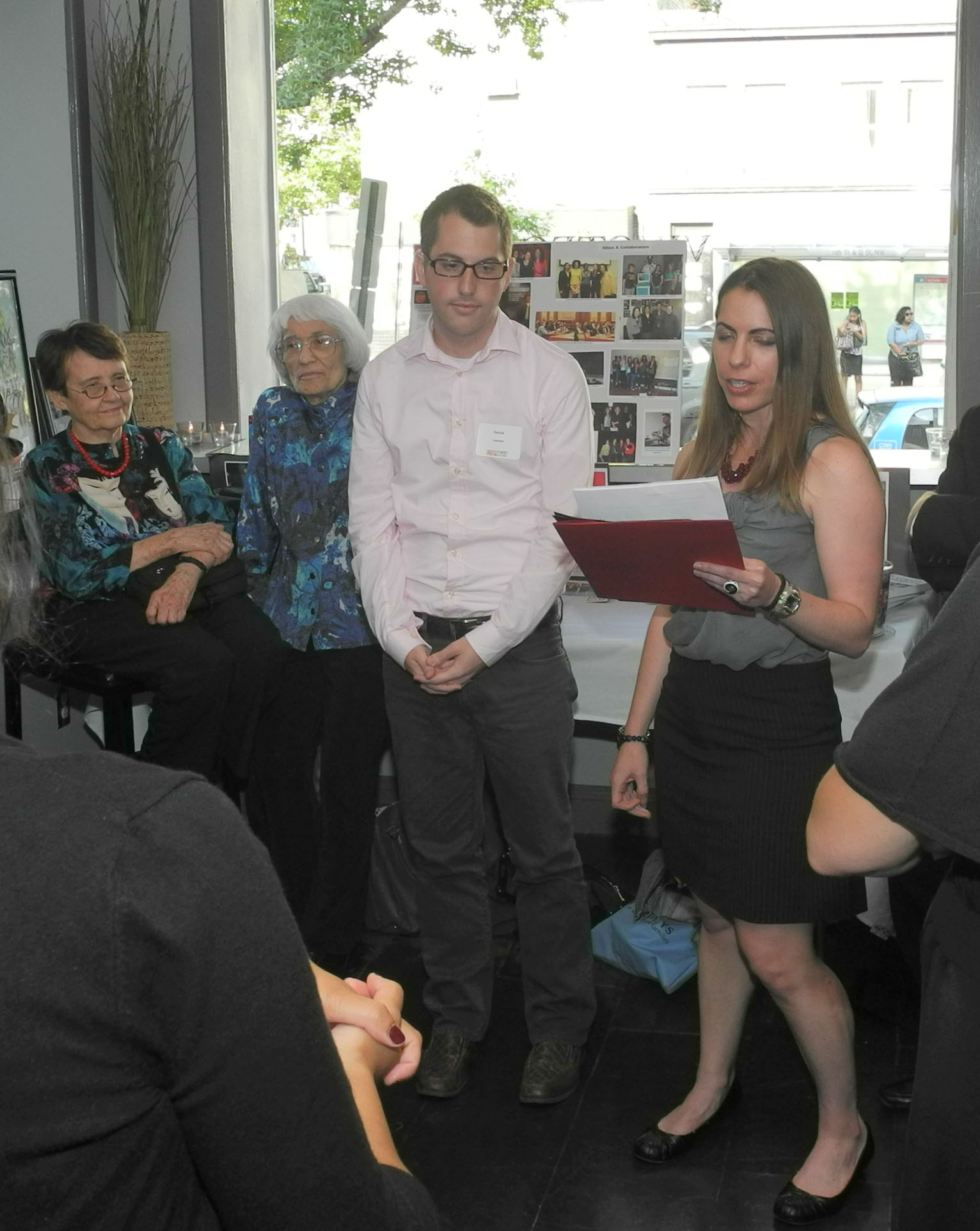
Patrick receiving his award

By Sean Crosbie, SSH Correspondent

The event commemorating the fifth anniversary of Stop Street Harassment was held at Vinoteca in D.C. and celebrated the work of many courageous individuals and organizations. Patrick Ryne McNeil was among those honored for his groundbreaking research into street harassment of gay and bisexual men. Patrick’s Master’s thesis at George Washington University here in Washington, D.C. deals specifically on how this street harassment of gay and bisexual men occurs as well as how it relates to – and differs from – women who experience street harassment. I interviewed Patrick for the Stop Street Harassment blog about his research, and his views on how this degradation of gay and bisexual men can be alleviated.

Sean: You have done research on street harassment of gay and bisexual men. What is the most interesting fact you have uncovered in your research on this topic? Did you discover data that surprised you?

Patrick: I think it’s interesting that the percentage of men who reported constantly assessing their surroundings in public was actually larger for the men who perceived their masculinity to be higher than those who perceived their masculinity to be lower. While the figures are relatively close, it is a noticeable departure from what may initially be predicted. It is conceivable that men who perceive their masculinity to be higher are actually hypervigilant of possible stigmatization and therefore are more aware of potential threats to their desired level of masculinity. Men in the lower range may view harassment as inevitable – and have experienced it more frequently – and are thus less concerned with auditing public spaces for potential harassment because they already know how likely it is. At some point for these men, ‘constantly assessing their surroundings’ loses meaning because for them it is simply living. Lower levels may be reported because, although they are assessing surroundings, they are doing so unconsciously because of the ever-present very real possibility of harassment. For men who perceive higher levels of masculinity, guarding themselves against public acts of harassment is a more conscious process and thus reported at higher levels. This, of course, is just my interpretation.

Sean: How common is street harassment towards gay and bisexual men? Does this affect how gay and bisexual men use public spaces?

Patrick: As I’ve written about before, my survey respondents reported sometimes, often, or always feeling unwelcome in public about 90 percent of the time because of their perceived sexual orientation – and this affects how they navigate public spaces. About 71 percent said they constantly assess their surroundings, 69 percent said they avoid specific neighborhoods or areas, 67 percent reported not making eye contact with others, and 59 percent said they cross streets or take alternate routes – all to escape potential stranger harassment.

Sean: How common is street harassment among gay and bisexual men towards one another? Does this affect how gay and bisexual men interact with one another?

Patrick: I don’t have a lot of specific data on this, but did find that there are certain forms of harassment that are more commonly enacted by another gay/bisexual man than enacted by men perceived to be heterosexual. For example, getting whistled at or being touched/grabbed in a sexual way are forms of harassment that my respondents more often reported coming specifically from men they identify as gay, though it’s unclear how often this occurs, if it is specific to particular geographies, what sort of age or race dynamics might be at work, etc. Learning more about this will require more focused research – it’s something I wish I had thought more about before finalizing my survey.

Sean: What do you think can be done by community groups or local governments to alleviate street harassment of gay and bisexual men?

Patrick: It’s difficult to say what community groups or local governments can do to immediately alleviate street harassment, since it will likely take a cultural shift to really get to the root of the problem. Some of the most effective work being done here in DC is the harassment-focused WMATA advertisement campaign and the indecent exposure legislation that passed in February of this year. While there is of course much work to be done, these are very visible efforts that I think are creating real change – change that will lead us, I hope, to that cultural shift. Street harassment is still an issue that receives less attention than many other forms of harassment and violence, so Stop Street Harassment’s awareness-raising efforts are still critically important, such as International Anti-Street Harassment Week and the stories shared on its blog (and on other sites). I think the more we lift up the message that street harassment is occurring at alarming rates and that it affects people very deeply, and the more we call out companies for trivializing and at times promoting street harassment, the closer we will get to achieving equal access to public spaces.

Sean: Do you mind describing one of your experiences with street harassment? What happened, and how did that make you feel?

Patrick: I’ve written on Stop Street Harassment’s blog here and here about two particular times I was harassed on the street, and there are of course many more. And while these incidents are memorable, it’s important to note that not all incidents of harassment involve lengthy exchanges or even words at all. I’ve been harassed for holding hands with another boy, both verbally and non-verbally, and I’ve been harassed countless times while alone in often non-verbal ways. A shake of the head, a stare, an expression of disapproval – these actions force me to over-evaluate and to consider all public interactions as possibly threatening in some way.

Patrick’s work dealing specifically with street harassment has been published on Huffington Post, Fem2pt0, and Feministe, in addition to the Stop Street Harassment blog. You can follow Patrick on Twitter @patrickryne.

Sean has written for Stop Street Harassment since April 2011.  He is a library/research assistant at a labor union in Washington, D.C. and holds a Bachelor’s degree in economics from American University.

Share

Filed Under: Activist Interviews, correspondents, LGBTQ, male perspective, street harassment

USA:Tzniut and Street Harassment

June 19, 2013 By Correspondent

By: Talia Weisberg, SSH Correspondent

As a female who lives in New York City, I’ve received my share of unwanted looks from guys. However, I’ve never really been the victim of anything worse than a creepy stare. Ever since I learned about the existence of the term street harassment, and especially after I started serving as a SSH Correspondent, I’ve tried to figure out why I’m an exception to the nearly 100% of women who have been harassed on the street. The only (weak) reason I could think of is because I’m an Orthodox Jew who mostly adheres to the laws of tzniut (SNEE-oot) in dress, meaning that I only wear skirts past the knee, sleeves that at least touch the elbow, and nothing low-cut or too tight.

If we accept my assumption for why I have never really been street harassed as true, one could argue that the solution to street harassment is for women dress according to tzniut. However, this solution would be unfair and ineffective for several reasons.

First of all, a woman’s mode of dress doesn’t always influence a would-be harasser. A few weeks ago, I began discussing street harassment with a group of my friends, who were unfamiliar with the term. After I described what constitutes street harassment, one of my friends – someone who also dresses according to tzniut – shared how she had been groped and stalked for several days while going to and coming home from school when she was in ninth grade. Hearing this friend’s story helped me realize that although it’s possible that how a woman is dressed may sometimes impact a man’s words or actions towards her, it isn’t the definitive cause for street harassment.

Another reason is because it’s women’s right as human beings to walk down the street, whether in a foreign country our own neighborhoods, without being harassed. We can’t blame the victim and tell women that it’s their job to protect themselves from street harassment; instead, we have to tell the perpetrators not to harass women on the street. Although I have chosen to dress in the manner of tzniut, and perhaps it has spared me from being victimized by street harassment, I strongly discourage women from dressing in a certain manner just to avoid street harassment. They’re our streets too, and we have every right to walk down them undisturbed.

Talia Weisberg is a Harvard-bound feminist hoping to concentrate in Studies of Women, Gender, and Sexuality. Her work has appeared in over 40 publications and she runs the blog Star of Davida blog (starofdavida.blogspot.com).

Share

Filed Under: correspondents, Stories, street harassment

USA: Championing common decency

June 18, 2013 By Correspondent

By: Talia Weisberg, SSH Correspondent

In the typical scenario of street harassment, the perpetrator is a man. As a result, in order to end the occurrence of street harassment, men must be sensitized to this issue. It is imperative that activists make men aware of the impact their words and actions have on female passersby, as well as teach men about women’s inalienable right to walk on the street without being subjected to harassment.

I recently shared this sentiment with a few girlfriends, in context of a conversation about street harassment and activists’ efforts to encourage men not to harass women. “So should chivalry be brought back from the dead? If men begin to act chivalrously to women, won’t that be the end street harassment?” one of my friends asked.

The concept intrigued me, as I had never thought about this link before. Is chivalry the opposite of street harassment? I suppose that it is, in a way. Street harassment is when men use their words and actions to make women uncomfortable and violated; chivalry is when men go out of their way to ensure for women’s safety and do everything for her benefit.

So does that mean anti-street harassment activists should champion a return to chivalry as the solution to the issue? Personally, I don’t think that this is a wise course of action. Chivalry is a relic of the olden days, when women were considered second-class citizens that needed protection by men, the stronger sex. There’s no place for chivalry in modern society, where women are considered men’s equals.

Anyway, in almost every situation in life, I believe in the validity of the golden mean. There’s no need to go to either extreme; the middle road is often the most practical and desirable path. Chivalry is on one side of the spectrum, while rampant street harassment is on the other. The most practical, middle path is all about championing common decency. Women just want men to be polite and to respect their personal space.

Although I can’t speak for all of womankind, I know that I’m not looking to be put on a pedestal and fawned over. I don’t want men to put their coats on puddles in the street for me to cross. I’m just looking to cross the street without getting catcalled.

Talia Weisberg is a Harvard-bound feminist hoping to concentrate in Studies of Women, Gender, and Sexuality. Her work has appeared in over 40 publications and she runs the blog Star of Davida blog (starofdavida.blogspot.com).

Share

Filed Under: correspondents, street harassment

Turkey: Young American Woman Walking

June 14, 2013 By Correspondent

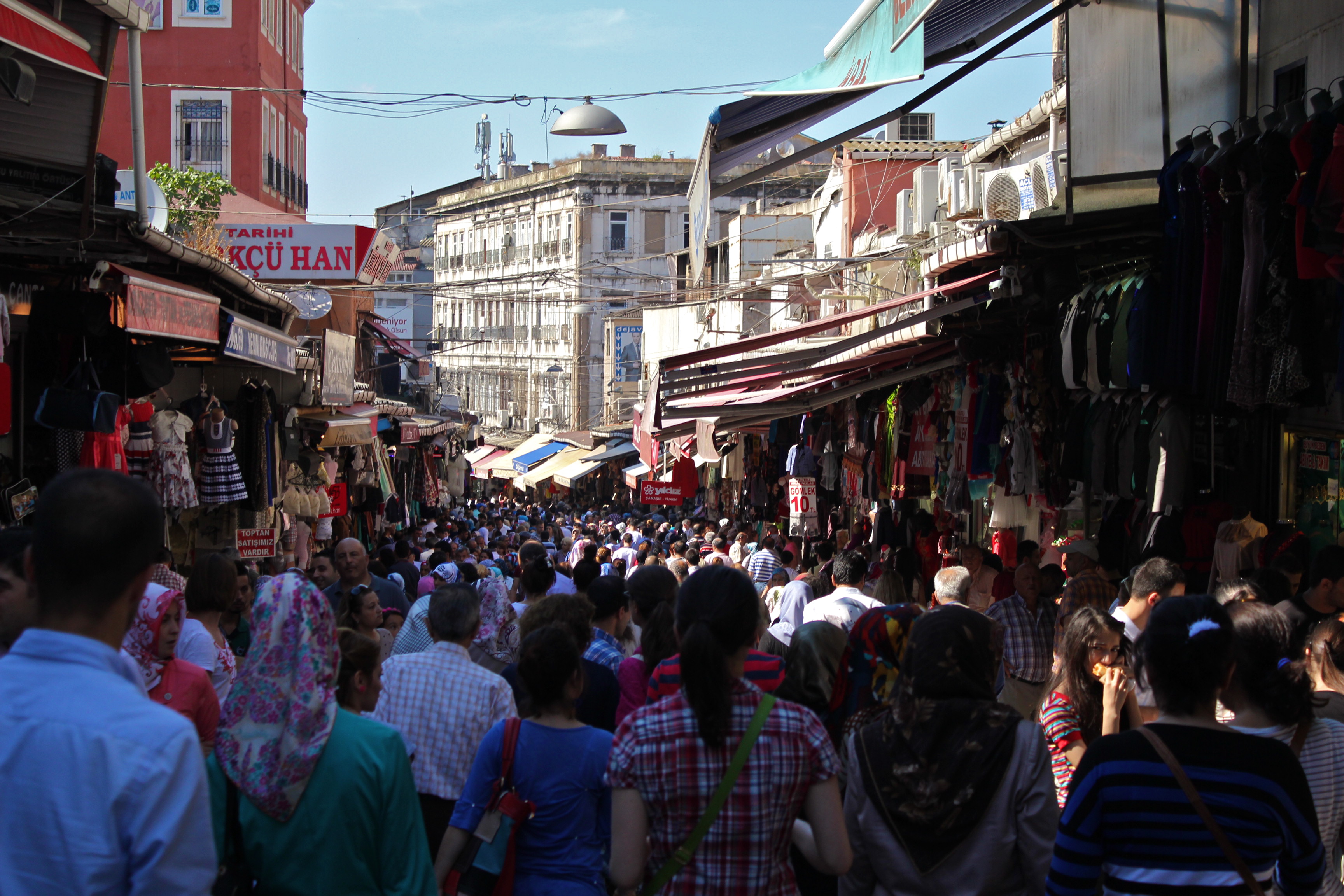
Outside the Grand Bazaar. Photo by Lauren Duhon

By Lauren Duhon, SSH Correspondent

Traveling abroad can be overwhelming. Listening to foreign languages and being unable to decipher any familiar words becomes tiresome. You seek for some sort of familiarity, but you often don’t find it, especially if you are traveling alone.

Walking around by yourself as a young woman is even scarier. This is my situation this summer in Istanbul, Turkey.

I’m living here for several weeks, and I find myself fearing the unknown as I try to navigate the streets to work and other places around the city. The people I sometimes encounter add to the fear. I have had the misfortune of being harassed often since I arrived last week. I feel like a target for harassment with “I’m an American” stamped on my forehead. I receive dubious looks from passersby everywhere I go. Men mumble things to me as they stand there inspecting my every move. I don’t need to know to Turkish to know they are saying something offensive.

I’ve sat on the bus and felt my privacy diminish as men invade my space, inching closer and closer.  I’ve noticed countless guys slow down their pace as they walk by to check me out. In one instance, I even had a guy follow me to work and get in my face trying to grab my attention. The worst was when I heard him say “Masha’Allah” under his breath in a sensual tone, which literally means “God has willed it” or praise to God. Words can’t even begin to explain how wrong that is, and the sad thing is that isn’t the first time I’ve heard that used in a derogatory way.

The unfortunate truth is that more of these instances will occur during my stay. And, being unable to speak Turkish, I’m unable to verbally defend myself. The only thing I know how to say in my defense is “çok ayıp”, which is a way of harshly saying “shame on you” to my understanding. I’m forced to keep walking and feel vulnerable. I shouldn’t feel afraid to ride the bus or walk freely in public places.  I should feel comfortable with exploring a beautiful city that not everyone gets to experience.

As a foreigner, many people have welcomed me into their daily lives and routines, but the harassment I have faced is far from the hospitality I have received.

Lauren Duhon is a student journalist from LSU in Baton Rouge, La. She’s interning at Today’s Zaman this summer.

Share

Filed Under: correspondents, street harassment

Apply for the July – December 2013 Correspondents Term

June 10, 2013 By HKearl

Street harassment is a global problem! To document street harassment – and the activism underway to address it – around the world, Stop Street Harassment is ready to select our next cohort of Blog Correspondents.

Assignment:

SSH plans to hire 10-15 correspondents from around the world to write monthly articles (between 500-800 words) about street harassment in their region for the second cohort of our correspondents program.

The term for this cohort will run from July to December 2013, and the correspondents will be expected to write six articles, total, one per month.

Correspondents will be paid $25 per article in a lump sum after the completion of the final article in December 2013.

Correspondents can write their articles in languages other than English.

Topics for the articles may include:

* Street harassment-related events and activism in your community. [Example | Example]

* Interviews with local anti-street harassment activists and community leaders. [Example]

* A discussion of a unique or unusual form of street harassment in your community or country. [Example]

* Relevant news and campaigns in your community or country. [Example]

* Your own experiences and/or the experiences of others in the area with street harassment within the context of your community or country. [Example | Example]

Applying:

By Tuesday, June 25, 2013, please e-mail me:

1) Your name.

2) The region of the world or the USA where you’re from.

3) Two blog posts or short articles you’ve written (you can send via either link or an attachment).

4) A few sentences about why you want to write for Stop Street Harassment.

If you prefer to write in a language other than English, let me know what language is most comfortable for you and you can send your writing samples in that language.

E-mail to: hkearl@ stopstreetharassment DOT org, addressed to Holly.

Correspondents will be selected by June 30, 2013. Note, they will be selected for their writing skill, interest in the SSH mission, and I will aim to have geographic diversity.

Share

Filed Under: correspondents, SSH programs

« Previous Page
Next Page »

Share Your Story

Share your street harassment story for the blog. Donate Now

From the Blog

  • #MeToo 2024 Study Released Today
  • Join International Anti-Street Harassment Week 2022
  • Giving Tuesday – Fund the Hotline
  • Thank You – International Anti-Street Harassment Week 2021
  • Share Your Story – Safecity and Catcalls Collaboration

Buy the Book

  • Contact
  • Events
  • Join Us
  • Donate
  • Facebook
  • Instagram
  • Pinterest
  • Tumblr
  • Twitter
  • YouTube

Copyright © 2026 Stop Street Harassment · Website Design by Sarah Marie Lacy