• About Us
    • What Is Street Harassment?
    • Why Stopping Street Harassment Matters
    • Meet the Team
      • Board of Directors
      • Past Board Members
    • In The Media
  • Our Work
    • National Street Harassment Hotline
    • International Anti-Street Harassment Week
    • Blog Correspondents
      • Past SSH Correspondents
    • Safe Public Spaces Mentoring Program
    • Publications
    • National Studies
    • Campaigns against Companies
    • Washington, D.C. Activism
  • Our Books
  • Donate
  • Store

Stop Street Harassment

Making Public Spaces Safe and Welcoming

  • Facebook
  • Instagram
  • Pinterest
  • Tumblr
  • Twitter
  • YouTube
  • Home
  • Blog
    • Harassment Stories
    • Blog Correspondents
    • Street Respect Stories
  • Help & Advice
    • National Street Harassment Hotline
    • Dealing With Harassers
      • Assertive Responses
      • Reporting Harassers
      • Bystander Responses
      • Creative Responses
    • What to Do Before or After Harassment
    • Street Harassment and the Law
  • Resources
    • Definitions
    • Statistics
    • Articles & Books
    • Anti-Harassment Groups & Campaigns
    • Male Allies
      • Educating Boys & Men
      • How to Talk to Women
      • Bystander Tips
    • Video Clips
    • Images & Flyers
  • Take Community Action
  • Contact

End of February 2016 News Highlights

February 27, 2016 By HKearl

Here are some of the recent news stories that caught my attention (excluding ones I’ve already blogged about):

Manchester Evening News, “Women lead Reclaim The Night march through Manchester to highlight sexual violence.”

“University of Manchester Students’ Union women’s officer, Jess Lishak, said the Reclaim march will draw attention to street harassment and sexual violence against women while creating an empowering event for women.

She said: “Reclaim is about taking to the streets without the fear of being harassed and abused.

“The number of people talking about this has definitely increased. We are putting the message out there that we are against victim blaming, sexual violence and street harassment and we will support anyone affected by it.”

The first coordinated Reclaim the Night marches started in 1977 when torch lit marches were held in Leeds, York, Bristol, Manchester, Newcastle, Brighton and London.”

GOOD, “Las Hijas de Violencia, a Female Punk Group, Battles Catcalls With Confetti“

“Las Hijas de Violencia (Daughters of Violence) is an all-female punk group in Mexico City that is fighting street harassment through performance. “When we are walking down the street and someone harasses us in any way,” says member Ana Karen in a video from AJ+, “we run after the person, grab our confetti guns, shoot once, we turn on the speakers and sing ‘Sexista Punk’”—their song about weathering catcalls. 

“What you’ve just done to me is called harassment/If you do this to me this way, I will respond,” the lyrics go.

“We must respond,” says member Ana Beatriz. “We can encourage more women to do the same.”

“We recommend that you have fun with it, so you aren’t left feeling violated from what happened,” Ana Karen adds.“


The Tribune India, “Women commuters ‘violated’ by highway goons“

“Vehicles with women passengers were reportedly stopped on the national highway near Murthal in the wee hours of Monday morning, they were dragged out into the nearby fields and raped. Though the police dismissed the incident as rumour, eyewitnesses said at least 10 women were sexually assaulted. Even worse, the victims and their families were reportedly advised by the district officials not to report the matter to anyone “for the sake of their honour”. [Unbelievably horrible!!!!]

NPR, “Teasing A Girl At A Pakistani Park Could Get You Whacked With A Stick“

“Mohammed Sayed is not one of those people who particularly relish the prospect of hitting young men on the butt with a big stick.

But he is certainly prepared to do so to defend the girls and women who frequent the neatly groomed, palm-dotted municipal park in the Pakistani city of Gujranwala where he works as a guard.

The park was designed as a place for relaxation and family recreation (it even includes some ramshackle carnival rides). But it had turned into a prowling ground for young men.

So city authorities have asked a team of guards — including Sayed, 25 — to patrol the park and stamp out “Eve-teasing” — a South Asian euphemism for the sexual harassment of women by men.”

Medium.com, “Why Women Smile at Men Who Sexually Harass Us“

“The truth is, we don’t have the luxury to ignore harassment. We engage, we’re kind, because that is what keeps us safe.

And now it’s time for everyone to engage.

If you’re tired of hearing about women being harassed, tired of us sharing our stories about it, maybe that’s because you’ve been ignoring it, and we don’t believe that you should have that luxury anymore, either.”

Guardian, “Portugal has made street harassment a crime, why hasn’t the UK?”

“Deciding that legislation may not be the most effective way forward shouldn’t mean shrugging our shoulders and accepting that the problem will inevitably continue. Ironically, one preventative measure that could be more effective than new legislation would be the discussion of such issues, and of young people’s right to bodily autonomy, in compulsory school sex-and-relationships classes – a measure the UK government recently rejected, reportedly in the face of strong objections from female members of the cabinet.

Even if new legislation is not the answer, this is an issue on which our political leaders have an opportunity to impact societal norms simply by raising awareness of laws that are already in existence and ensuring they are taken seriously.”

New York Times, “Street ‘Compliments‘”

“Occasionally, a guy in the street signals that he needs my attention. So I take off my earphones to hear what he has to say. He could be looking for directions in the big city. But usually, it’s, “Excuse me, I just have to tell you how attractive you are.” This annoys me, as if my purpose in life is to be pretty. I get that no one likes rejection. So “Go away” is not a polite response. But “Thank you” sends the wrong message. I am not thankful. These comments ruin my groove. Thoughts? – ALYSSA, SAN FRANCISCO

At first (male) blush, I thought: “God! I wish someone told me I was hot.” But I quickly came to my senses. Men and women are different, especially when it comes to other people trying to control our bodies. Case in point: These men feel entitled to stop you in the street for the sole purpose of rendering judgment on yours. And when you factor in the annoyance of taking out your earbuds, and interrupting Joni Mitchell’s “In France They Kiss on Main Street,” I came close to endorsing your “Go away” response.

Two things stopped me. Strangers in the street can be dangerous, particularly to women. And I don’t want anyone getting hurt on my watch. I would rather you keep your earbuds in and pretend you don’t notice these attempts to flag you down than get into tussles with strangers over male privilege. But if you are determined to engage, borrow the terrific sentiment of Canadian Prime Minister Justin Trudeau: “Dude, it’s 2016!”

Many readers will see no harm in a compliment, particularly from a guy who is sincere. But he is not complimenting anything Alyssa has made (her new app) or even anything she’s chosen (her super-cute bootees). He is reducing a whole person — and rarely a man — to her looks. And if a compliment makes you feel bad, how good can it be?”

New York Times, “Renewed Efforts to Stop Subway Sex Crimes“

“Opportunistic sex crimes aboard subways are not new, nor are they news to many women. Some have been grabbed or leered at by a man who is masturbating. Many others have heard a story from a friend who felt an uncomfortable touch but was unsure if she should say something.

But cellphone cameras and social media have given women tools to fight back and provided the police a way to identify some offenders. Last year, in an effort to encourage more victims to come forward, the police began training more female officers to work the cases.

The police now send out a steady stream of alerts about such crimes using photos from victims’ phones to try to identify suspects. One recent Twitter post shared a photo of a man suspected of grabbing a 27-year-old woman’s buttocks on a No. 7 train in Queens this month. Two days earlier, the police posted a photo of a man who they say exposed himself to women on two trains at Grand Central Station.

Reported sex crimes on the subways rose 19 percent last year, to 738 from 620 in 2014. Many of those crimes were forcible touching and public lewdness, the offenses most commonly charged in connection with the sort of sexual misconduct that Detective Cross and his colleagues were on the lookout for that morning on the Lexington Avenue line.

Joseph Fox, the chief of the Transit Bureau, said he believed the increase in reported sex crimes was a result of more women coming forward. He expects the number of reports will keep rising as the police continue to talk about the problem.”

YES! Magazine, “Feminist Scooter Gangs Shut Down Street Harassment“

“In 2011, alongside the Arab Spring and massive citizen protests in Tahrir Square, Egypt’s pervasive problem with violence against women was exposed to the world. Reports of horrifying mob attacks against protesting women, videos exposing the oppressive atmosphere of harassment, and numerous articles by Egyptian women revealing the extent of the problem led the Thomas Reuters Foundation to name Egypt the worst country in the Arab world for women.

For episode seven of A Woman’s Place, Kassidy Brown and Allison Rapson flew to Cairo to find out what’s being done to end gender-based violence in Egypt. From the creators of the viral video Creepers on a Bridge who used a hidden camera to document street harassment, to the volunteers at HarassMap who map out incidents of sexual harassment and assault across the country, to the organizers of Girls Go Wheels who whip past potential harassers on their scooters, Brown and Rapson discovered Egyptian women are finding creative ways to empower each other and push for change.

“The energy is hard to describe, but it’s heavy,” said Brown. “It’s the energy from the men on the street, who are just everyday citizens. It’s that the type of stares you’re receiving are so threatening.”

“Think of a time when you’ve been out walking alone, and suddenly the energy around you changes,” Rapson said, “And you can’t necessarily explain why that is, but you don’t feel safe and you want to rush home. That’s what Cairo feels like.”

Medium.com, “To Men I Love about Men who Scare Me“

“Decent male humans, this is not your fault, but it also does not have nothing to do with you. If a woman is frosty or standoffish or doesn’t laugh at your joke, consider the notion that maybe she is not an uptight, humorless bitch, but rather has had experiences that are outside your realm of understanding, and have adversely colored her perception of the world. Consider that while you’re just joking around, a woman might actually be doing some quick mental math to see if she’s going to have to hide in a fucking bathroom stall and call someone to come help her, like I did three days ago.

Please adjust your mindset and your words accordingly.”

Share

Filed Under: News stories, public harassment, street harassment Tagged With: India, mexico, Pakistan, UK

New Efforts in Lebanon and Kosovo

February 26, 2016 By HKearl

Here are two new initiatives to address street harassment!

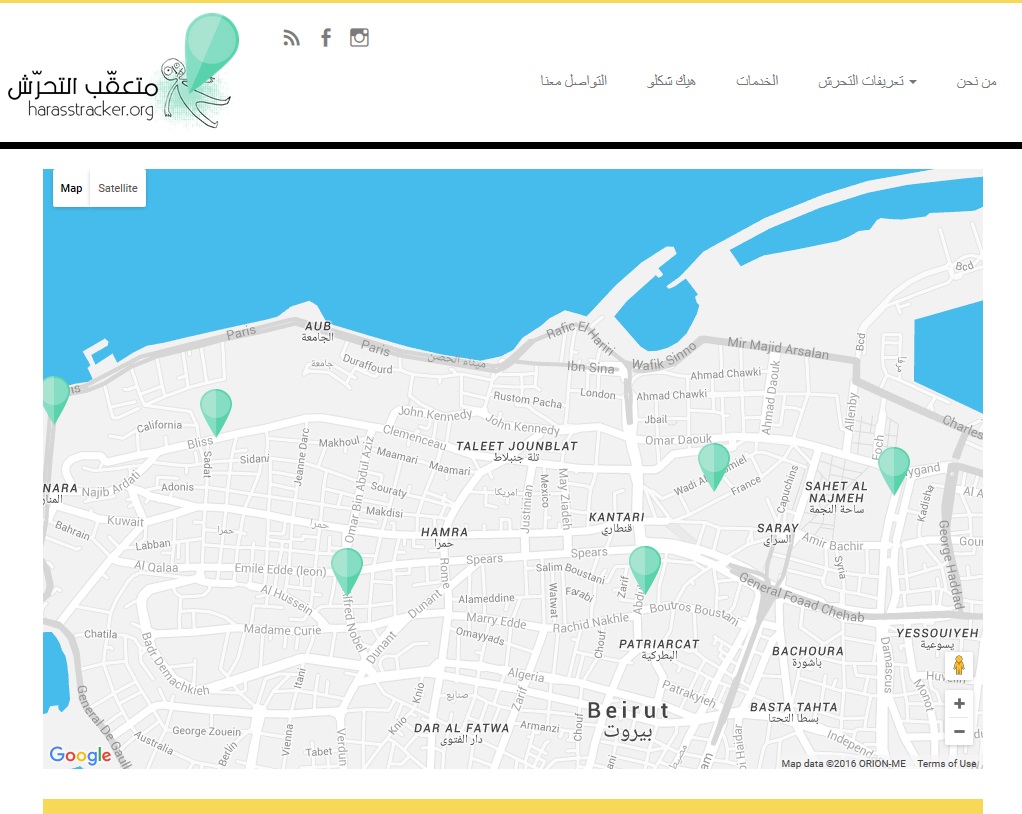
Newsweek, “Female Entrepreneurs Launch Online Sexual Harassment Tracker in Beirut“

“Three female entrepreneurs have kickstarted a sexual harassment tracker in Beirut in the hope of combating crimes against women in the Lebanese capital.

A beta version of Harass Tracker—launched on Monday—will provide a three-month trial in the city after which, if successful, it will be expanded across the entire country.

The platform is essentially an online reporting tool where people who have witnessed or experienced sexual harassment can mark the location on a map of the city and provide information regarding the type of sexual harassment that they encountered, alongside a description of the event.

The three founders of the initiative—Sandra Hassan, who is based in France, Myra El Mir and Nay El Rahi, both in Lebanon—hope to “empower victims to report” these crimes and “raise awareness as to the frequency and severity of sexual harassment in the city,” Hassan, who developed the tracker, tells Newsweek by email.

“In the longer term, we hope to use the data collected to offer recommendations on how to tackle this issue practically as well as contribute to a shift in perception with regards to sexual harassment.”

HarassTrackerLebanon

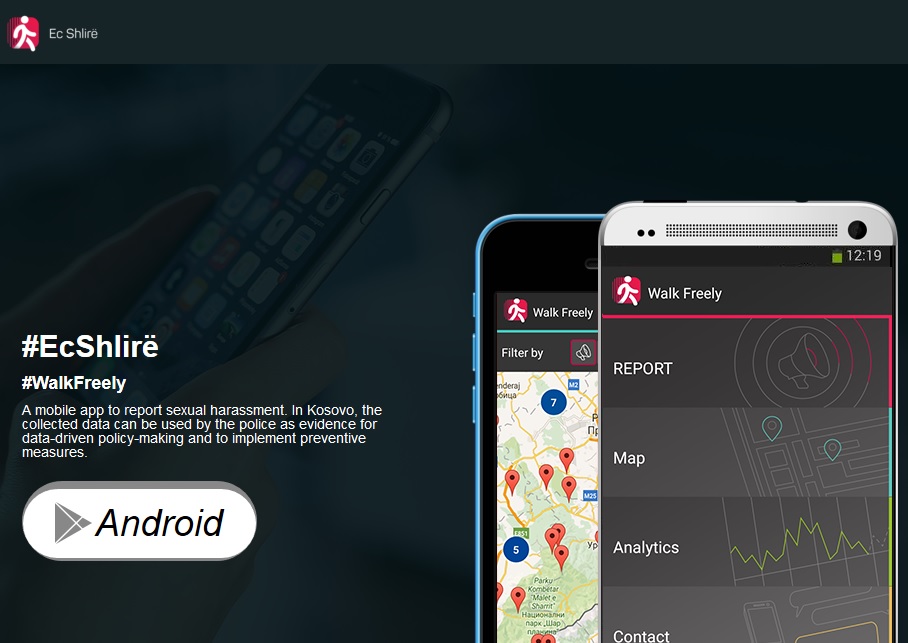
Kera News, “Young women in Kosovo are writing code to fight harassment“

“Women and girls in Kosovo almost never report these incidents, which are exceedingly common. But a new mobile app called Ec Shlirë — Walk Freely in Albanian — hopes to change that.

Ec Shlirë, which launched on Thursday, is inspired by Hollaback, an American movement to report street harassment. The Kosovar app gives users the ability to discreetly report instances of sexual harassment of all types. The reports will be visualized on an interactive map and will be sent to the authorities.

While individual perpetrators won’t be identified, the data gathered by the app will allow Kosovars to actually see the full extent of sexual harassment and will also put pressure on the authorities to respond.

“In Kosovo a lot of women who experience harassment don’t go report it directly to the police, because the police may not take one incident of harassment on the street so seriously,” says programmer Albana Dulaj. “If we have more reports, I believe they’ll take it more seriously.”

Dulaj is among 30 young women who built the app as part of a group called Girls Coding Kosova.

The development of Ec Shlirë also is helping address another problem in Kosovo: the lack of women in the tech industry.”

EcShlire - kosovo app

Share

Filed Under: News stories, public harassment, Resources, street harassment Tagged With: beirut, kosovo, lebanon, map, phone app

USA: Maya Young and Transgender Homicides

February 25, 2016 By Correspondent

Kathleen Moyer, Philadelphia, Pennsylvania, USA, SSH Blog Correspondent

Maya Young. Image via Philly.com

Maya Young, a 25-year-old transgender woman of color, was stabbed to death in the Frankford section of Philadelphia late Saturday night. According to police, she was found lying in the street with multiple stab wounds to her chest and neck before being rushed to a nearby hospital, where she died 20 minutes later.

No arrests have been made in the case yet. The city is offering a $20,000 reward for information leading to the arrest and conviction of her killer. People with tips can call 215-686-3334.

While investigators are still searching for a motive, the brutal murder of Young seems to reflect the murders of Keisha Jenkins and London Chanel – two transgender women of who were killed in Philadelphia last year. These murders are part of a pattern of increased transgender homicides across the United States. Statistics indicate that transgender homicide is becoming an epidemic, especially among women of color like Young, Jenkins, and Chanel.

In 2015, 23 transgender people were killed – the highest annual total since advocacy groups began keeping a record of transgender murder rates. Nineteen of those victims were transgender women of color. According to a 2013 report on LGBT hate violence by the National Coalition of Anti-Violence Programs, transgender women are the victims of 72% of LGBT homicides, and 89% of LGBT homicide victims are people of color.

Statistics also show that violence against transgender people is not limited to physical violence; over half of transgender individuals experience verbal street harassment. A report by SAVE Dade, an LGBT advocacy group, showed that 53% of transgender people surveyed experienced harassment and disrespect in public areas. These numbers show that transgender violence is a serious problem and it’s progressively getting worse.

We have to take a stand now more than ever. The motive in the case of Maya Young may still be unclear, but it is clear that this pattern of transgender violence is not coincidental. As the LGBT community and allies mourn the loss of Young, we need to remind society that no one’s gender is up for debate. An individual is whatever he/she identifies as and it’s no one’s place to object to that, because nobody knows how that individual thinks and feels.

No one deserves to be put through hell, verbally, mentally, or physically for simply being who they are. The transgender community deserves better; it’s our responsibility, as a society, to ensure that they receive better and to bring those who harm transgender individuals to justice. For Maya. For Keisha. For London. For every transgender person who has been victimized in the past, and those who will be victimized throughout this year.

Kathleen is a full-time graduate student studying professional and business communication. She plans initiatives to increase awareness of sexual assault, domestic violence, and other related issues through her university’s anti-sexual violence group, Explorers Against Sexual Violence.

Share

Filed Under: correspondents, News stories Tagged With: homicide, justice, killing, LGBT, maya young, philadelphia, transgender, women of color

New Street Harassment Report in Kosovo

February 24, 2016 By HKearl

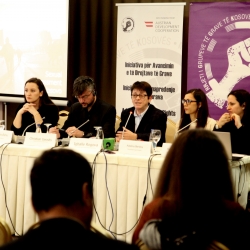
The report release event, photo via the Kosovo Women's Network site
The report release event, photo via the Kosovo Women’s Network site

The body of research about the prevalence of street harassment is growing! This week a new report was released in Kosovo.

Via NWPTV:

“The Kosovo Women’s Network recently published the country’s first national report on sexual harassment, and the research shows what Kosovar women have always known: street harassment affects women across Kosovo, regardless of geographical location, ethnicity, sexual orientation, and able-bodiedness.

Although most Kosovars know that sexual harassment is harmful, a disturbing 40 percent of both men and women think that young women actually enjoy being harassed. The majority of Kosovars still think that women’s dress and behavior causes sexual harassment, and not our country’s culture of male entitlement.

Kosovo’s feminists have tools that we didn’t have before, the first being this research, which quantifiably demonstrates that sexual harassment is real, widespread, and threatens the safety of women and girls. The second tool is an upcoming app which will allow users to report sexual harassment in real time and directly contact the police through an emergency button.”

The victim-blaming attitudes are indeed disturbing.

I went on to read the report summary, and here is information about how it was conducted and a few more statistics:

“The research involved a review of the legal framework, a survey of 1,315 Kosovo citizens in 2015 and more than 200 interviews with representatives of public institutions, civil society, and other key actors. The report concludes with recommendations for amending the legal framework and improving institutional response to sexual harassment.

  • 48.5% of Kosovars have experienced some form of sexual harassment in their lifetimes.
  • 64.1% of women report having experienced sexual harassment, 32.5% of men state that they have.
  • The most common form of sexual harassment reported by respondents is having someone make unwelcome sexual comments, jokes, or gestures to or about them, including while walking down the street.
    • One in three women (34.2%) compared to only 1.6% of men had someone honk a vehicle horn at them while walking down the street.
    • 46.4% of women and only 3.9% of men had someone whistle at them
    • 26.4% of women and 3.3% of men had someone follow them
  • Women tend to be harassed more by unknown people in the street and friends than do men. Men are more likely to be harassed by friends than women.”

Good for the Kosovo Women’s Network for thoroughly researching this topic and bringing national and global attention to the issue. It’s harder to tackle a problem without data, so this is an important step.

Raporti: Ngacmimi seksual në Kosovë
http://www.womensnetwork.org/documents/20160224112147815.pdf

Research Report: Sexual Harassment in Kosovo
http://www.womensnetwork.org/documents/20160223185243349.pdf

Izveštaj Istraživanja: Seksualno uznemiravanje na Kosovu
http://www.womensnetwork.org/documents/20160224134742609.pdf

Share

Filed Under: News stories, Resources, street harassment Tagged With: kosovo, national study, research

USA: Believing Kesha and Other Survivors

February 24, 2016 By Correspondent

Rupande Mehta, New Jersey, USA SSH Blog Correspondent

Free Kesha Rally. Image via Mic

If there was any doubt how hard it is to prove rape, assault or any other violence against women just look at Kesha. The singer filed a lawsuit against her producer, Dr. Luke, who she claims “sexually, physically, verbally, and emotionally abused Ms. Sebert to the point where Ms. Sebert nearly lost her life.”

Unfortunately despite 10 years of rigorous abuse, the court dismissed her complaint ruling she has to continue to work with her abuser and the record company (Sony) who allowed and tolerated the abuse. (Don’t kid me that they did not know).

Am I surprised? Nope. Saddened? Incredibly.

I am sad because there is yet another victim of abuse who has to live through the travesties of the legal system who has sided against her and with the guys in the fancy suits who claim to have spent a lot of money on her career and rightfully deserve their share of returns. Heartbroken that yet again a corporation is put ahead of human lives that endure incredible pain and anguish to have to continue to survive with such a dismal reality. Distraught that despite her tribulation, Kesha failed to get the approval of the justice system and has to continue working with the man who vehemently abused her.

Such injustice, though, happens every day, everywhere. Every day an abuser walks free and the victim is put through the ringer. Every day a victim sobs uncontrollably as the judge delivers a verdict that makes her worst nightmares come true. Every day another victim repeats her story millions of times and no one believes her.

Courts need evidence and when victims fail to provide any proof, they are deemed erratic. When victims change their narrative they are described unreliable or unworthy of stating the truth. But tell me, after you’ve been raped are you thinking about gathering evidence? Are you thinking about being so glib that your narrative never changes? Or are you dealing with the trauma that someone just handed down to you? Ask those who have been raped and they will tell you they never get their story straight the first time because their memory is not linear and comes back only in patches.

So what can we do?

Well for once, the justice system needs to realize the trauma resulting from rape and other assaults and consider it. In Kesha’s case, the judge saw it simply as a contract dispute and ruled in favor of Sony but the truth is more than that. Sony’s lawyers must have done an exceptional job of ruining Kesha’s reputation in the court room and making her sound like a vindictive woman out for blood. Her previous testimony denying that Dr. Luke never put a hand on her, I am sure, was wittingly used against her. For many this may raise the question whether Kesha was lying then or now. Unfortunately only Kesha knows the answer but having been through trauma and assault, I will stand by her side.

Kesha lost a big battle with the Supreme Court. Thankfully she had the means to do so and garner incredible support afterwards from the public who are demanding Sony #FreeKesha.

Celebrities like Taylor Swift are contributing money so Sony would let Kesha out of her contract. Although my heart goes out to her and her suffering, I cannot help but wonder how many don’t have what Kesha does. How many women, on a daily basis, are unable to access services or support with their story untold or not believed?

How many of us are harassed on a daily basis be at work or home or even in the streets? I often look at women passing me and wonder what, if any, trauma do they suffer from and why? Who called them unjustified names and put labels on them that forced them to have weight issues or eating disorders or anger or rage?

Why do the courts not look past this and understand that the issues of the psyche stem from the issues of harassment and if someone is experiencing them it is likely due to a deeper, more profound reason?

We live in a society where those who tell their story are not believed. Is it a surprise then that most of these cases go unreported? And how do you think cases like Kesha’s impact those abused women? The Supreme Court may have ruled for Sony but in the process it did an immense disservice to millions of women out there who were contemplating speaking up.

Rupande grew up in Mumbai, India, and now resides in the U.S. She has an MBA and is currently working towards her MPA, looking to specialize in Non Profit Management. You can find her writing on her blog at Rupande-mehta.tumblr.com or follow her on Twitter @rupandemehta.

Share

Filed Under: correspondents, News stories Tagged With: justice, Kesha, rape survivor, supreme court

« Previous Page
Next Page »

Share Your Story

Share your street harassment story for the blog. Donate Now

From the Blog

  • #MeToo 2024 Study Released Today
  • Join International Anti-Street Harassment Week 2022
  • Giving Tuesday – Fund the Hotline
  • Thank You – International Anti-Street Harassment Week 2021
  • Share Your Story – Safecity and Catcalls Collaboration

Buy the Book

  • Contact
  • Events
  • Join Us
  • Donate
  • Facebook
  • Instagram
  • Pinterest
  • Tumblr
  • Twitter
  • YouTube

Copyright © 2026 Stop Street Harassment · Website Design by Sarah Marie Lacy