• About Us
    • What Is Street Harassment?
    • Why Stopping Street Harassment Matters
    • Meet the Team
      • Board of Directors
      • Past Board Members
    • In The Media
  • Our Work
    • National Street Harassment Hotline
    • International Anti-Street Harassment Week
    • Blog Correspondents
      • Past SSH Correspondents
    • Safe Public Spaces Mentoring Program
    • Publications
    • National Studies
    • Campaigns against Companies
    • Washington, D.C. Activism
  • Our Books
  • Donate
  • Store

Stop Street Harassment

Making Public Spaces Safe and Welcoming

  • Facebook
  • Instagram
  • Pinterest
  • Tumblr
  • Twitter
  • YouTube
  • Home
  • Blog
    • Harassment Stories
    • Blog Correspondents
    • Street Respect Stories
  • Help & Advice
    • National Street Harassment Hotline
    • Dealing With Harassers
      • Assertive Responses
      • Reporting Harassers
      • Bystander Responses
      • Creative Responses
    • What to Do Before or After Harassment
    • Street Harassment and the Law
  • Resources
    • Definitions
    • Statistics
    • Articles & Books
    • Anti-Harassment Groups & Campaigns
    • Male Allies
      • Educating Boys & Men
      • How to Talk to Women
      • Bystander Tips
    • Video Clips
    • Images & Flyers
  • Take Community Action
  • Contact

2015 Annual News, Research, and Activism Roundup (Part 1)

December 30, 2015 By HKearl

For the past several years, I spend hours during the final week of the year going through all of the stories and events that took place related to street harassment. Each year, more and more has happened and that is so extremely positive and encouraging!

Here are snippets and highlights from this year, broken down by topic (e.g. government-led actions, community activism, research, news, and videos) and by country. And it’s divided into two parts (here’s Part 2).

Note that many actions took place during International Anti-Street Harassment Week in April that are not included here. During the week, groups in 41 countries and 24 U.S. states participated.
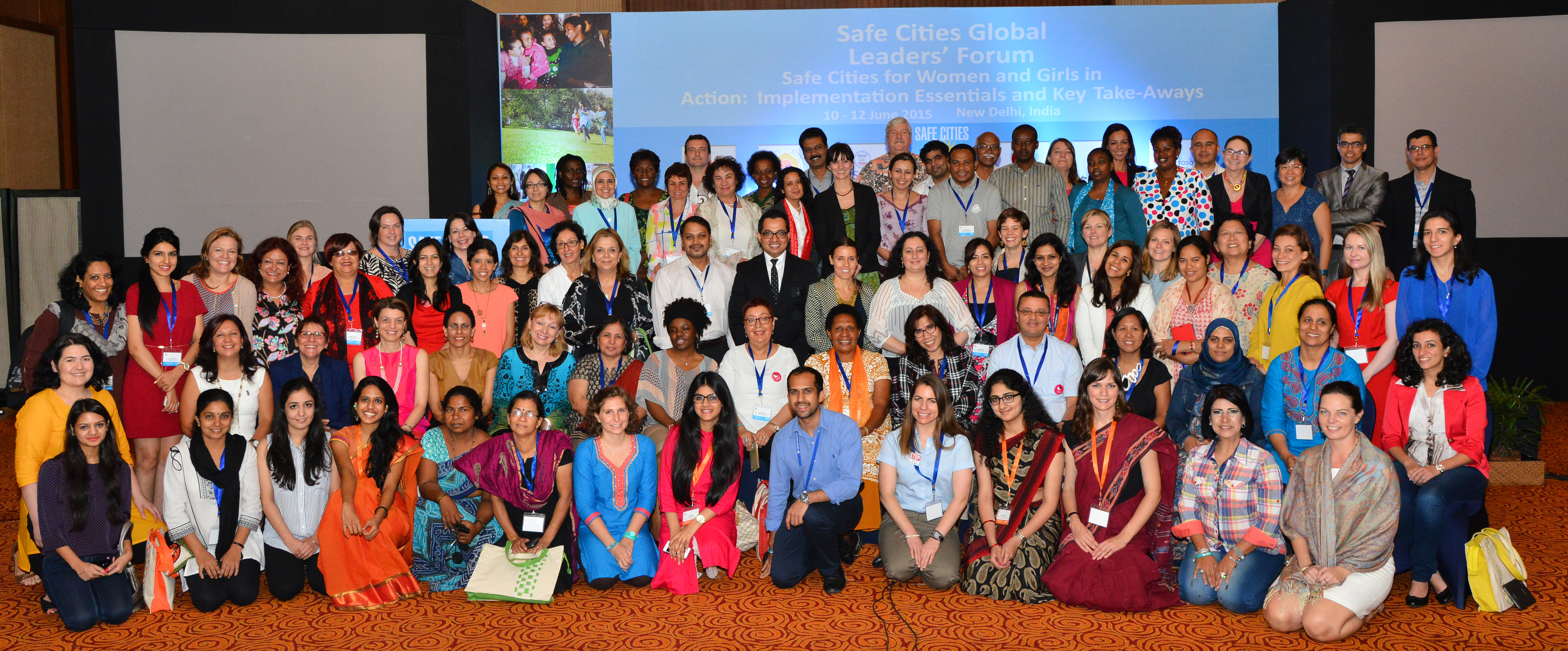
SafeCitiesForumIndia-croppedI also want to acknowledge one of the biggest events of the year… UN Women hosted a Safe Cities Global Leaders’ Forum in June, and 140 people from 24 countries gathered in Delhi, India, to share ideas about the best strategies to address sexual harassment and other forms of sexual violence in public spaces. Attendees of the conference included government officials, grassroots women, researchers, and staff from UN agencies that are implementing programs that form part of the agency’s Safe Cities Global Initiative (SCGI). Read the wrap-up report.

Government-Led Efforts:

Argentina: A bill was proposed to establish fines ranging from AR$100 pesos (approx. US$7) to AR$7,000 ($547), and aims to protect anyone who “self-identifies as a woman” from verbal or physical harassment. Furthermore, the bill proposes a “National Week against Street Harassment” be commemorated yearly from April 12 to 18.

Australia: Fiona Patten, a member of Parliament in Victoria, raised the issue of street harassment in Parliament. Later in the year, legislation introduced by MP Patten to limit protests outside abortion clinics passed.
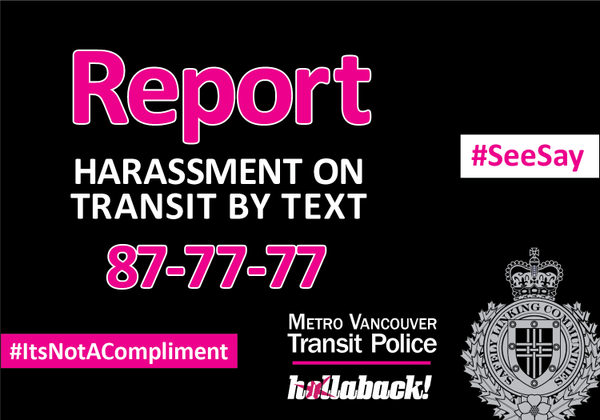
4.13.15 Vancouver Transit adsCanada: In Vancouver, the transit authority and local Hollaback! chapter launched a campaign to “encourage witnesses on buses and other transit vehicles to make the decision to become active bystanders. As interveners, witnesses can take an active role in sending the message that harassing behaviour is unacceptable and victims are not alone… Victims of harassment can vent through an app, or share their stories online with the hashtag #YouCanEndHarassment.” People also used the hashtag: #ItsNotaCompliment

Canada: The Ottawa transit authority launched a new online tool for reporting harassment.

Chile: With the sponsorship of a few politicians, Observatorio Contra el Acoso Callejero Chile presented to Congress the bill called “Law for Street Respect.”

Egypt: Police in Cairo arrested 29 men for sexual harassment during the Eid Al-Fitr holiday.
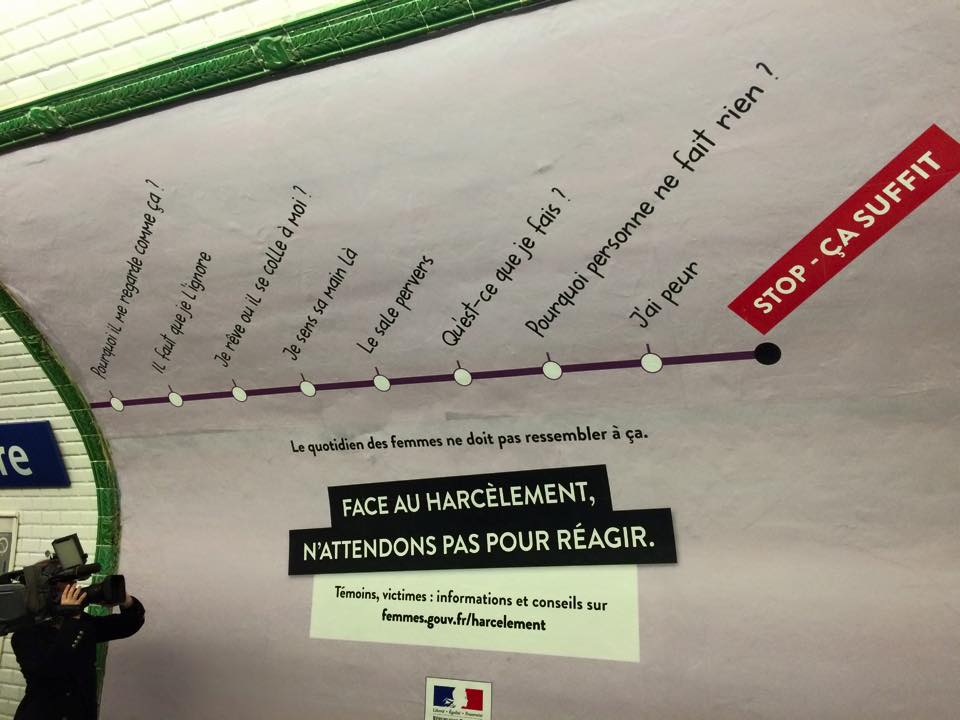
ParisAnti-HarassmentTransitCampaignDec2015France: “Stop – That’s Enough!” is the tagline used by the French government in their awareness campaign, in collaboration with rail operator SNCF and Paris transport chiefs RATP. The campaign includes posters in key places around Paris and flyering events. People can share stories using the hashtag #HarcèlementAgissons, which trended soon after the campaign launched. “The campaign also aims to remind the culprits that sexual harassment is punishable by law and groping can lead to five years in prison”

France: In Lille in northern France, the local government released a video showing some of the comments that passengers had been subjected to while out and about in Lille. The video, with English subtitles, includes one woman recount how someone asked her “Hi, can I rape you please?”…

Guyana: Witness Project, a local arts-based group, began tackling street harassment through a campaign that uses visuals and an online forum to capture attention and encourage conversation on the problem.

India: One hundred “SHE Teams” were formed. They entail police personnel in plainclothes mixing with the crowd outside colleges, popular hangouts, cinemas and in public transport to record what happens with hidden cameras. They then take any street harassers to the police station.

India: In the state of Odisha, people can report sexual harassment, violence, and domestic abuse through an ATM.

Nepal: Police gave self-defense lessons to women and girls in camps after a rise in post-earthquake sexual assaults

Panama: Ana Matilde Gómez, an independent member of Panama’s National Assembly introduced a bill that would criminalize street harassment. It would also outlaw bullying, stalking, racism and all forms of sexual harassment. It also calls for developing public policies aimed at preventing these problems.

Peru: The Peruvian government officially passed a law against street harassment, making it one of the few countries to have a national law! Costa Rica and Mexico also have ones.

UK: Jeremy Corbyn, Labour leadership candidate, revealed his platform to end street harassment, and cited SSH and Everyday Sexism in it!

UK: In London, a new campaign called “Report It To Stop It” launched to address sexual harassment and assault on public transit by encouraging passengers to report unwanted behaviors. Created by the Transport for London it includes a video for the campaign.

UK: More than 50 women marched through Liverpool city centre to ‘Reclaim the Night’ and stand up to sexual harassment.

USA: The Los Angeles transit authority launched an anti-harassment campaign called “It’s Off Limits.” It encourages passengers who see or experience sexual harassment to call the sheriff’s hotline at 888-950-7233 or report through the free LA Metro Transit Watch safety app. Later in the year, the Los Angeles Transit Authority released updated plans for addressing sexual harassment on their system.

USA: The DC City Council held the first-ever hearing on street harassment!
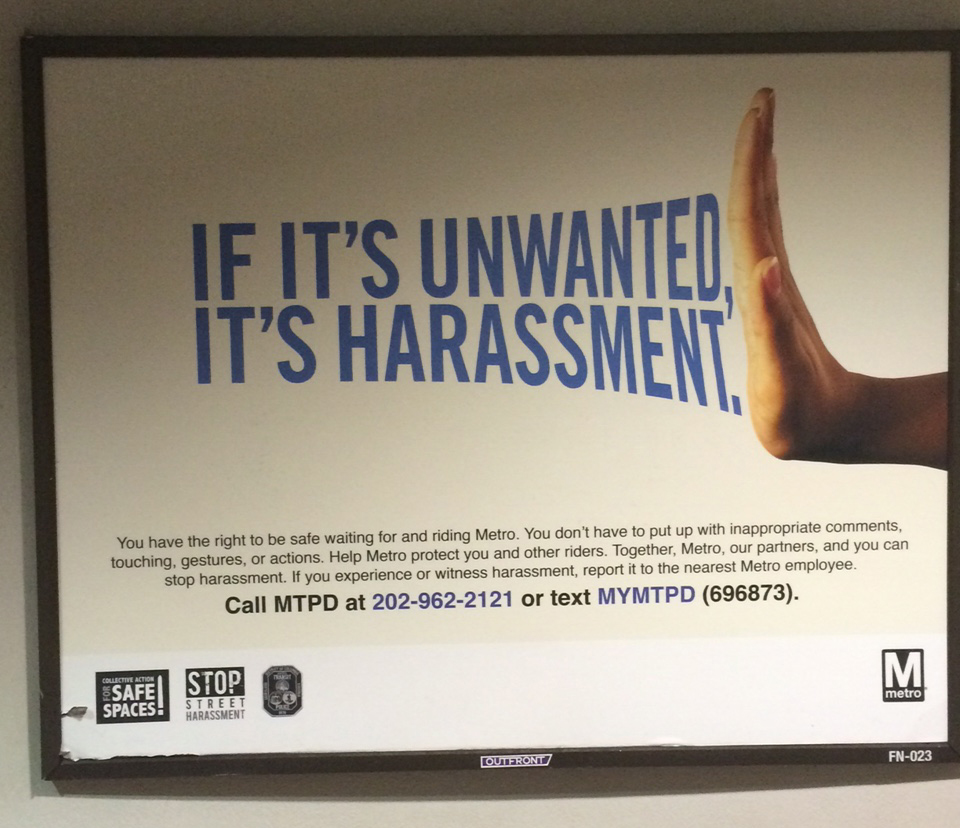
NewWMATAsign1USA: SSH and Collective Action for Safe Spaces worked with the Washington Metropolitan Area Transit Authority (WMATA) on a 2nd wave of anti-harassment ads on the Metro system. Then we did an outreach day at five metro stops and crafted a survey instrument that will be used to survey riders about sexual harassment in 2016

USA: New York lawmakers voted to “establish the crime of improper touching or other sexual contact aboard the subway or other public transportation after an increasing amount of complaints from young women…The misdemeanor also applies to public buses or trains and carries a penalty of up to one year in prison.”

USA: Legislation that would make “upskirt” photographs illegal passed through the New Jersey Assembly’s judiciary committee.

USA: Oregon lawmakers advanced a proposal aimed at closing a loophole in state privacy laws that recently let a man go unpunished after he took photographs up a teenager’s skirt.

New Campaigns and Community-Based Actions:

Global: ActionAid International hosted a #SafeCitiesBecause global day of action on May 20.

Global: The Queer Review is a place where LGBTQ+ people around the world can share their experiences in a variety of places, like restaurants, bars, hair salons, and movie theaters.

Global: Hollaback! expanded their annual Holla:Rev to go global in London.

Global: On April 14, people globally took action to demand the return of the 230 Nigerian school girls who were still missing a year after they were kidnapped from their school. #BringBackOurGirls

Latin America: The Observatory Against Street Harassment campaign that started in Chile grew to include numerous other countries, including Colombia, Bolivia, Nicaragua and Uruguay. They all participated in International Anti-Street Harassment Week in April. In June, people across Argentina, Chile & Uruguay marched in the streets in outrage over violence against women!
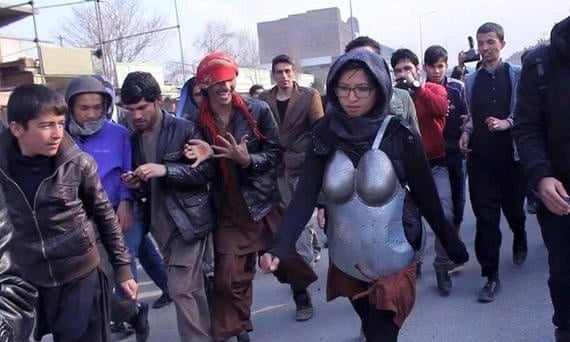
Afghanistan. Image via the Guardian.

Afghanistan: Kubra Khademi, a 25-year-old Afghan artist, wore metal armor as she walked the streets of Kabul for her artistic protest of street harassment called “Armor.” She was harassed so much she had to end the march early and go into hiding due to death threats.

Afghanistan: Men in Afghanistan took a stand for women’s rights.

Argentina: Women rallied under the hashtag ‪#‎NiUnaMenos and thousands marched in the streets to protest the increase of femicides.

Australia: The LISTEN collective has been working to address harassment at music concerts and festivals.

Australia: The Northern Territory Anti-Discrimination Commission placed advertisements in Darwin city backpacker hostels and job centres after a number of reports of females being propositioned.

Azerbaijan: Men posted photos of themselves wearing mini-skirts to protest against the murder of a Turkish woman who resisted rape.

Brazil: Women shared their “first harassed” stories after sexual comments are directed as a 12-year-old girl. Quickly, the tag ‪#‎primeiroassedio was used more than 90,000 times.

Brazil: Four young women coders designed an anti-harassment app that lets users review restaurants based on how they treat women.
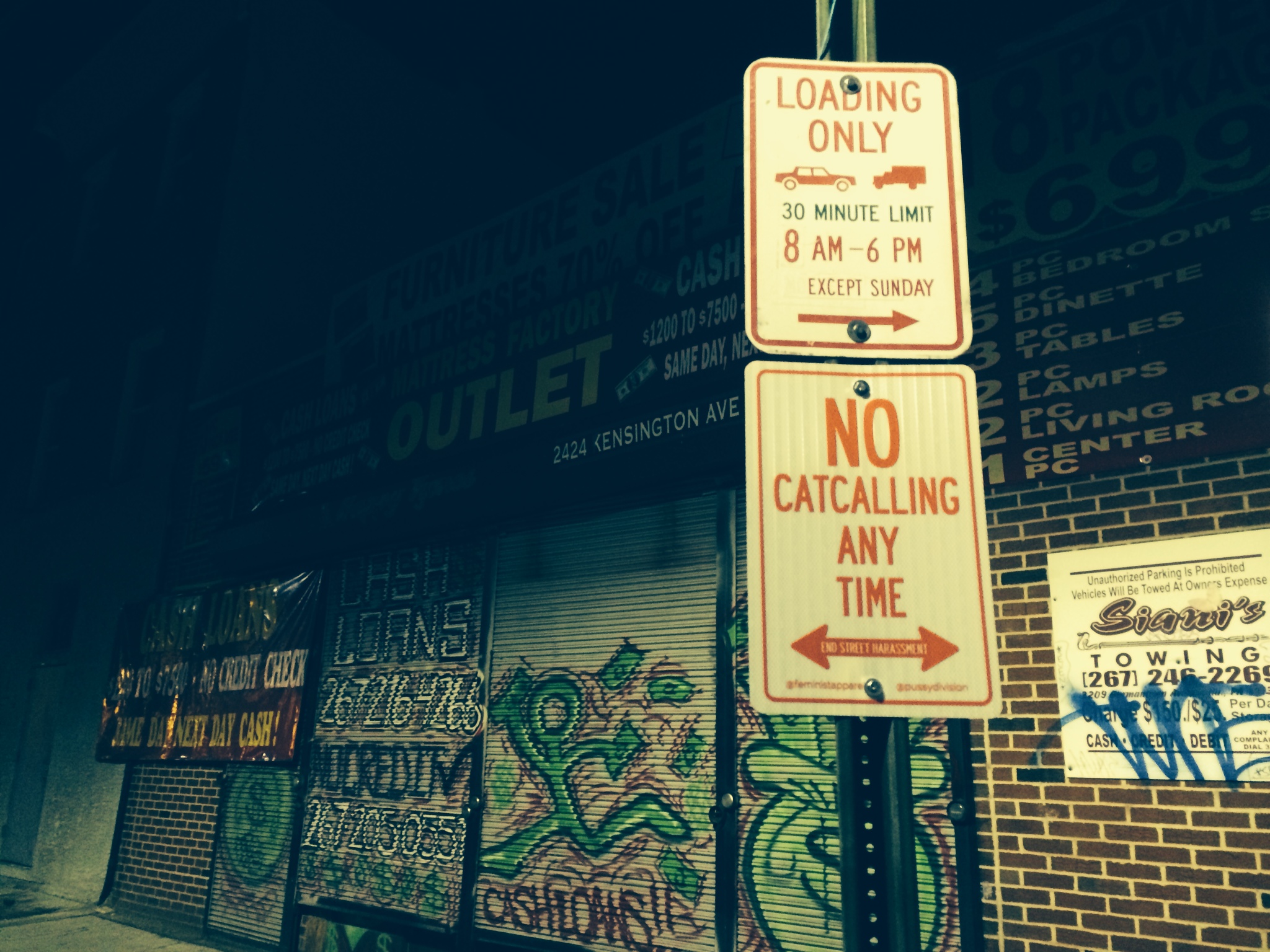
4.13.15 Feminist Apparel and Pussy Division signs NYC PhillyCanada and USA: New street signs about street harassment went up in New York City, Philadelphia and Toronto.

Canada: Women in Calgary organized twice to address street harassment. The first time was the campaign #SafeRedMile to advocate for safe public spaces around the Flames hockey stadium. The second was #SafeStampede during the “Greatest Outdoor Show on Earth,” a massive rodeo.

Canada: A reporter called out men who interrupt and harass women reporters while they are on air and that led to many discussions and other articles about this problem.

Costa Rica: Activists marched against street harassment, worked to introduce a new law, and launched a social media campaign targeting men.
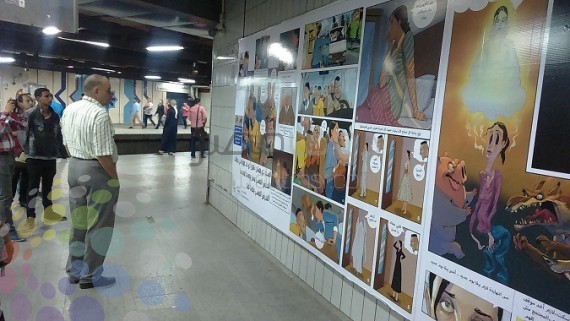
Imprint Movement's new campaign. October 2015
Imprint Movement’s new campaign. October 2015

Egypt: Imprint Movement launched a campaign comprised of comic strips in subway stations to raise awareness about harassment.

Egypt: HarassMap launched a “Harasser = Criminal” campaign in Egypt.

Egypt: Egyptian women used hashtags like #Idon’tFeelSafeOnTheStreet, #AntiHarassment and #ExposeHarasser on social networking sites to speak up about the daily sexual harassment they experience.

Egypt: “As Safe As Before” is a campaign in Alexandria, Egypt where “volunteers are split up based on gender, with the men dispersed to spot potential cases of harassment, and the women distributing information to girls and families about victims’ rights and encouraging them to report any case of assault to the police.”

Egypt: Uber and HarassMap are collaborating to train drivers how to address inappropriate behavior.

Germany: Teenager Elonë Kastrati started a global trend of posting feminine hygiene products around town, labelled “with different messages pertaining to street harassment, sexual violence and sexism.”

India: Breakthrough launched an anti-street harassment campaign called #AskingForIt.

India: College students launched the “Break the Cage” campaign to protest early curfews for female students, limiting their access to public spaces.

Iran: There were growing efforts to address acid throwing.
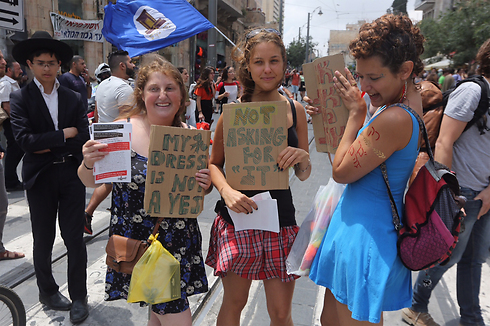
SlutWalk Jerusalem. Image via ynetnews.com

Israel: 400 people joined a SlutWalk in Jerusalem, protesting sexual violence, sexual harassment and the objectification of women.

Morocco: Women shared their street harassment stories.

Philippines: The ‪#‎FreeFromFear social media campaign launched as part of an anti-harassment program.

South Korea: Concerned residents in the Haebangchon neighborhood near Seoul formed a community awareness group People Unite against Street Harassment (PUSH) in response to an increased amount of sexual harassment in the area.

Turkey: A mini bus driver tried to rape Ozgecan Aslan, a student at Cag University in the southern province of Mersin, when she was the last passenger. He beat and killed her, cut off her hands, burned her body and tossed it into a river. News of her grisly death sparked outrage. The following weekend, thousands of people marched in black and online, the hashtag  #sendeanlat (#tellyourstory) trended as women shared their stories of harassment and abuse.

UK: Nottingham Women’s Centre organized a summit to explore ways in which attitudes can be altered and behaviour changed to make public places safer for women.

UK: Both the Safe Gigs for Women and Girls Against launched campaigns launched to address sexual harassment, groping and assault against women at music shows.

London. #ThisDoesntMeanYes

UK: Rape Crisis UK teamed up with fashion photographer PEROU on new campaign #ThisDoesntMeanYes to dispel the myths around what constitutes consent. They photographed nearly 200 women and officially launched the campaign at www.thisdoesntmeanyes.com on April 15.

USA: Run Philly launched an “Incident Report” page that allows runners to log in incidents of harassment, physical assault, muggings and more that happen while they are running.

USA: A woman in Texas has been working to make street harassment illegal in her city through an online petition and meetings with the Austin city council.

USA: Lyft connects people who need a ride with trained community drivers. Along with CASS and Hollaback!, SSH collaborated with Lyft on creating sexual harassment training videos for their drivers.

USA: Community organizing group Brooklyn Movement Center launched its first “Anti-Street Harassment Bike Patrol” in Bed-Stuy and Crown Heights “aimed at calling out people who hassle women on the street. Once a week, volunteers biked in groups of four to intervene in situations sparked by unsolicited remarks”

USA: Wearing her #whorepants: How one runner turned getting harassed on a run into a movement.

USA: “Pop to Stop” posters provide people with a silent protest/response to harassment.

USA: Teenage girls in Brooklyn created a mural depicting street harassers as zombies!

USA: Teen’s Instagram campaign #WhatMySHSaid sheds light on the horrible things harassers say.

USA: RunHers, Runner’s World, journalist Jen A. Miller and SSH co-hosted a tweet chat on street harassment and running.
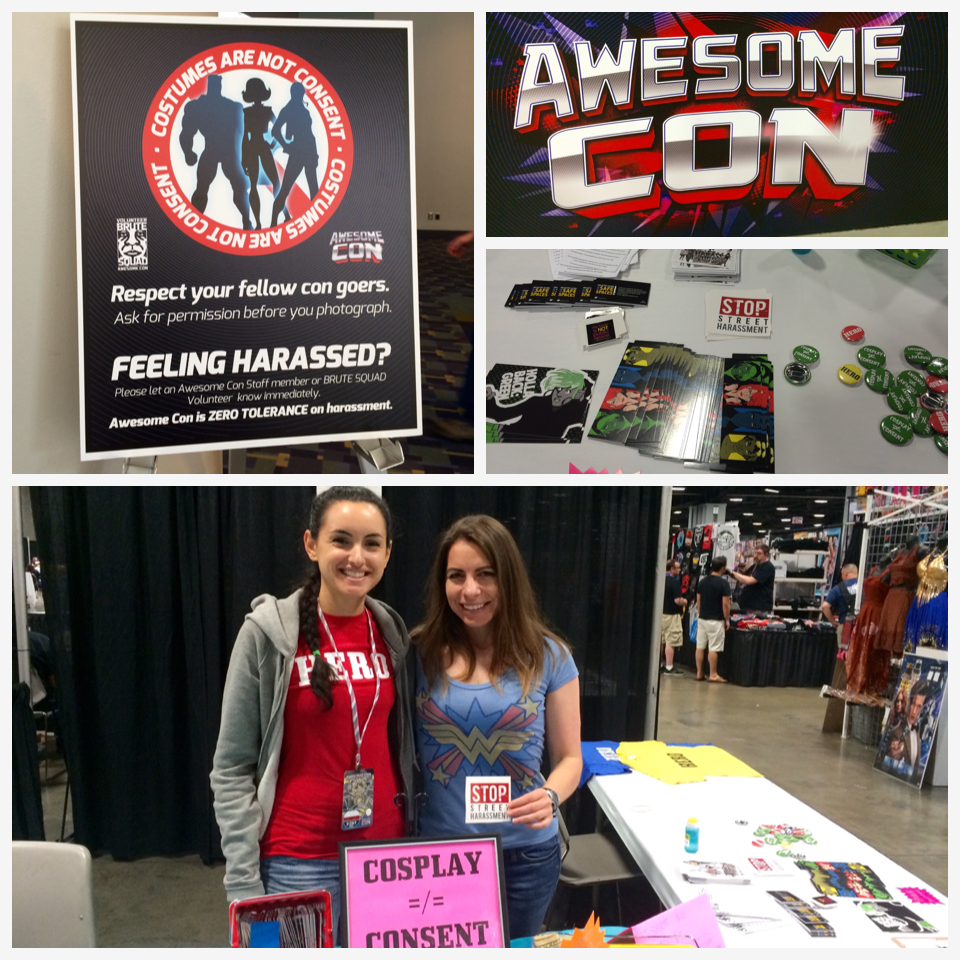
5.31.15 Awesome Con, DC collageUSA: Geeks for CONSent worked with comic conference organizers to address sexual harassment at Comic-Con and Awesome Con.

USA: CTA Courage Campaign worked hard to get the Chicago Transit Authority to launch an anti-harassment transit campaign.

USA: Conceived by site-specific narratologist and writer Jay Pitter, #mysafetyselfie is a project that is curating selfies + stories from women highlighting spatial and social factors compromising their safety in public spaces.

USA: Shaun Bennet Fauntleroy and Flux Theatre Ensemble produced #SpeakUp: The Street Harassment Plays and it featured five monologues written by playwrights who have been asked to reflect on their feelings as victims of street harassment.

USA: In North Carolina, a college class created a participatory map to document ‪‎street harassment in their city.

USA: Girl World in Chicago created downloadable and shareable anti-harassment cards.

USA: On International Women’s Day, UN Women hosted a walk from their headquarters to Times Square in New York City. SSH joined the Brazil anti-street harassment group Chega de Fiu Fiu and the American group Voices of Men to send the clear message that street harassment is an issue we must address globally if we want to see equality for women!!

Activists in Zambia. Image via All Africa

USA: An artist stood for 8 hours in a San Francisco gallery window to raise awareness about street harassment.

Zambia: Women took a stand against street harassment, including by organizing a march.

Here’s Part 2.

Share

Filed Under: News stories, public harassment, Stories, street harassment, year end

Nov. & Dec. 2015 News Round-Up

December 29, 2015 By HKearl

I haven’t made time to do news round-ups over the past two months (!!) but finally, here are some global highlights of stories about street harassment, broken out by country.

Afghanistan:

“On one recent weekend in Kabul, I sat on a ratty couch in one of the city’s beauty parlors, one of the few safe spaces for women in Afghanistan. Squeezed between a pile of handbags and a five-year-old boy waiting for his mother’s curls to set, a dozen women turned to look at me.

“Repeat your question,” one of them commanded. “Have any of you been sexually harassed in public?” I asked. The parlor exploded in bitter laughter. “Get ready,” Mariam said to me. “If you ask each of us, you’re going to fill that notebook of yours.”

The types of public harassment they described ranged from sexually charged comments about appearance, indecent whistling, and physical attacks like groping, pinching, and slapping. In Afghanistan, this objectification and mistreatment of women is all too common. Research shows that nearly nine out of ten Afghan women are forced to endure such treatment. And there’s seemingly nowhere for them to go. Women are harassed and assaulted in quiet areas when no one else is around, but also in busy public places like bus stations, markets, shops, and parks, where there are plenty of aiders and abettors.”


Australia:

Congrats to our ally MP Fiona Patten whose proposed legislation passed. The legislation “makes it an offence to film people without consent or block access to footpaths, roads and vehicles within the zone around GP clinics, hospitals and other health services offering abortions.”


Brazil:

“How old are young girls when they are “first harassed” by men? Women in Brazil are reflecting on their own childhood experiences – and sharing these stories on the internet in big numbers….

The tag ‪#‎primeiroassedio has been used more than 90,000 times, with women and girls sharing the stories of their first encounter with public sexual harassment. “At 11, I was heading to my dance class and a man touched my bottom,” tweeted one. “13 years old. I was going to the supermarket. Heard from a gentleman that I already had ‘beautiful boobs.’ ‪#‎firstharassment,” said another.”


Costa Rica:

“Cruz was best known as the man who confronted another man for filming an upskirt video in San Jose. He was then stabbed multiple times two days later while walking through San Sebastian…The upskirt videographer has been caught before and even received death threats. Mr. Cruz spent weeks in intensive care and was only able to communicate with blinks and eye gestures. He passed away in the hospital. He is survived by his partner Karol Zúñiga who is expecting a baby girl in 12 weeks.”

So tragic! A life that never should have ended this way or for simply challenging street harassment. Our thoughts go out to his loved ones and friends.


Egypt:

“Uber has announced it will start collaborating with HarassMap خريطة التحرش الجنسي, an Egyptian anti-sexual harassment initiative founded in 2010, to train its drivers in how to “recognize, prevent and take positive action” against inappropriate behavior. The training, which will be compulsory for all the app’s drivers, will be particularly important for female drivers, according to Uber’s Cairo general manager, Anthony Khoury. “This partnership has been done as a response to the general education and training needed against sexual harassment here in Cairo,” he said. “Education is key, which is why this partnership – and the training that comes with it – is a crucial step in stopping sexual harassment.”


ParisAnti-HarassmentTransitCampaignDec2015France:

“Stop – That’s Enough!” This is the tagline used by the French government in an active push to stop sexual harassment on public transport.

The government launched the awareness campaign on Monday together with rail operator SNCF and Paris transport chiefs RATP. It will see flyers handed out and a set of posters put up in key places around the capital, encouraging victims and witnesses to speak out with confidence about sexual harassment. The campaign also aims to remind the culprits that sexual harassment is punishable by law and groping can lead to five years in prison.”


India:

“What do women do when faced with sexual harassment on the streets [of Mumbai]? According to a recent survey of 1,000 women conducted by the We the People Foundation, 34 per cent glared or reacted verbally, 15 per cent asked bystanders for help and 35 per cent did nothing.”


Iran:

“TNS: What should be done then to counter the problem of street harassment? How can we ensure safety of women in public spaces in a broader sense?

HH: The fact is that veil isn’t the solution. The political will to end harassment is the solution because in the context of Egypt and Saudi Arabia, the veil hasn’t actually helped. Today if a veiled woman walks in a street in Egypt, relative to the 1980s when I was there, she would face as much harassment as a woman wearing western style clothing… because most women are also wearing the veil anyway. So it no longer signifies class like it used to. It was adopted in a way to negotiate, but when everybody does it, the value of negotiation comes down.”


Italy:

“Over 10 million tourists are expected to visit Rome during the Holy Year of Mercy. Hundreds of security men in uniform are patrolling our streets in order to protect the citizens. But when it comes to a girl strolling all by herself, it appears that the stereotypical Italian male traits take precedent over any official role. It’s an attitude that may Italians are used to, but it could prove uncomfortable for foreign visitors. We filmed a young woman walking on the streets of Rome all by herself, and we asked women – both Italian and foreigner – what do they feel when comments come from law enforcement men (video by Fabio Butera)”


The Philippines:

“The ‪#‎FreeFromFear social media campaign is part of the program that aims to resolve the problem of women experiencing street harassment. Through the campaign, women share their experiences to raise awareness and join calls for the end of street harassment. The incidents are very common in crowded spaces like public vehicles where people are sitting or standing very close to each other.”


Morocco:

“A man was reportedly left unconscious for more than two hours after being knocked out by a woman whose bottom he had pinched. CCTV footage taken in the town of Inezgane in Morocco shows the woman wearing yellow robes and standing next to a motorcycle when the man approaches. The balding attacker then moves close to the victim and appears to grope her bottom. Without missing a beat, the woman spins around and delivers a single punch to the back of the unidentified man’s head, sending him careering into a stack of rugs in a nearby shop.”


UK:

“What traveling with a man taught me about street harassment à ‘Not having to deal with this bullshit and all the other seemingly harmless infractions in between has made me realise just how pernicious it is, just how unfair. These past four months of freedom have taught me that what I accept as life in London is unacceptable. I’m not yet sure if this realisation, this newfound intolerance, is a good or a bad thing. All I know for sure is that I’m not looking forward to finding out.’”


UK:

“A group of teenage girls are taking action to stamp out groping at venues – in a drive to make live performances safe spaces for music fans of both genders. The five girls aged 15 to 17 – Hannah, Ava, Anna, Anni and Bea – launched Girls Against last month to raise awareness of sexual assaults at concerts. Their ultimate aim is to eliminate mosh-pit groping “for good”. In the short term, they want to see the perpetrators identified and stopped from entering future gigs. With several indie bands including Peace, Slaves and Wolf Alice backing the campaign, and more than 7,000 Twitter followers, the girls are already claiming practical results in their drive to create a zero-tolerance approach. ”


USA:

“In the window of a gallery in San Francisco’s Mission district, Mirabelle Jones paced the enclosed space in nothing but nude underwear. Razor blades suspended from balloons hung just over her head. In this pink-tinted, claustrophobic exhibition, the San Francisco performance artist stripped down and endured a barrage of real (recorded) catcalls. For eight hours. The idea behind the exhibition To Skin A Catcaller is to change what we see when we hear the term “catcall.”…

In its rawness and brutality, Jones’s performance showed the reality of street harassment that women encounter everywhere, especially in supposedly pedestrian-friendly cities like San Francisco or New York. This is why women have a newfound sense of urgency in the ongoing effort to effect change by, say, criminalizing street harassment and finding effective ways to prevent these all-too-common attacks on our personal safety. Misogyny in America is not a neat and tidy issue. It’s the kind of trauma that sticks with you and festers until you’re a little afraid to go anywhere alone.

Jones’s exercise in exposure speaks to the sad fact that most victims of a sexual assault do not file a police report. When people try to excuse catcalling as harmless or downplay it as a compliment, it only increases trepidation about seeking help for fear of being blamed or slut-shamed. The reality is that being sexually harassed makes women feel exposed, vulnerable, defensive. Catcalling is ultimately somewhere between micro-aggression and actual threat, the kind of imperative grey area that sometimes only art alone can translate.”


USA:

“Gay, bisexual, transgender and queer men need to elevate their own narratives and use the examples provided by feminism to stage sustainable interventions and engage in consciousness raising about eradicating toxic masculinity from the community once and for all.

The community has long prided itself on celebrating and enjoying an array of sexual proclivities, but not every unsolicited advance, or act of sexual aggression, is fun for every man. The only reason that’s hard to recognize is that we’re still being held back by the heterosexual masculinity that so much of queer culture has worked to reject. We must foster community that celebrates a healthy, pleasurable sexuality – one that respects bodies and boundaries.”


USA:

“”We do an annual Halloween rally every year to protest against street harassment and rape culture [in Santa Barbara, CA],” fourth year global studies and feminist studies double major and TBTN Co-Chair Ashley Morgan said. “It gets pretty hectic during the holidays; there’s a lot of grabbing and sexual comments that are very much unwelcome. We just want to make sure that people understand that’s not a joke, it’s not a compliment — it’s violence.”

The demonstration began at 11 AM at Harold Frank Hall, and students marched to the front of the UCen. Several groups of people touring campus looked on as participants chanted “Hey-Ho, Hey-Ho, Catcalling has got to go,” “Whistles are for dogs, not for women,” “However we dress, wherever we go, yes means yes, no means no,” among other statements.

“We’re having a safe space this Friday and Saturday from 10 PM to 2 AM in the Pardall Center,” Morgan said. “We’re going to have…advocates there as well as CAPS counselors for anyone; it’s specifically for sexual assault, but it’s also for anyone that’s feeling unsafe or triggered.”

Share

Filed Under: LGBTQ, News stories, street harassment, weekly round up Tagged With: bystander murdered, girls, performance art, story sharing, transit campaign, young age

Islamophobia Spreads – But Some Challenge It

December 27, 2015 By HKearl

After the recent attacks in Paris and San Bernardino, California, which were both carried out by Islamic radicals, there has been an increase in Islamophobia. For example, in the U.S., we have seen support for terrible ideas like banning all Muslims from this country or rejecting Syrian refugees fleeing ISIS. This is despite that fact that around one billion other Muslims are perfectly peaceful and 70 thousand Muslim clerics have issued a fatwa denouncing terrorist organizations and attacks.

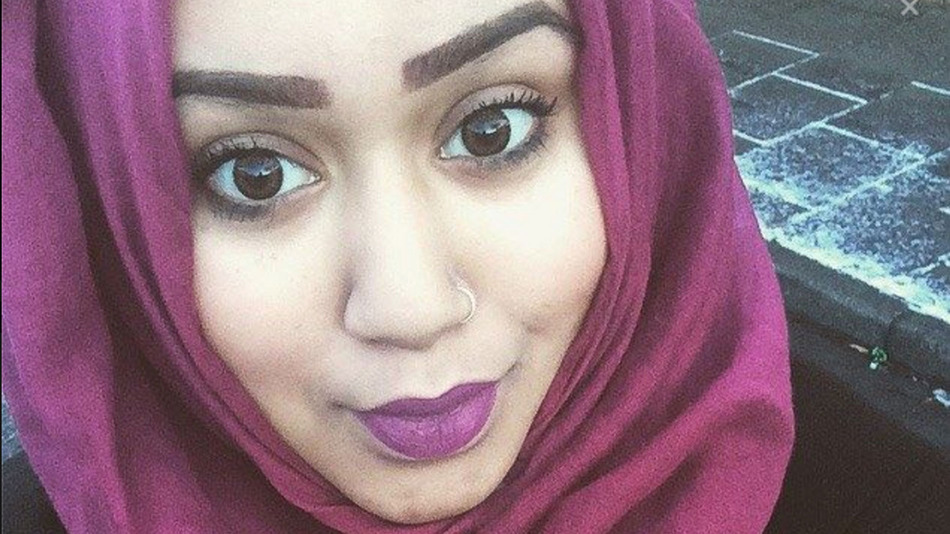
The rise is Islamophobia also plays out in public spaces. For example, NPR recently produced a story about an increase in backlash and harassment toward Muslim women who wear hijabs.

Other countries are seeing a rise in harassment, too. In the UK, the Independent reported “that there’s been a sharp increase in hate crimes towards British Muslims after the Paris attacks. In the week following the killings, there have been 115 incidents mostly towards girls and women aged between 14 and 45.”

Fortunately, various media outlets are speaking out against this behavior, like the Washington Post: “In communities across America, we are turning on each other, on the very neighbors who have been part of the fabric of our country for decades…The rhetoric dominating our nation right now is anything but civil. It’s time for all of us to put a stop to it.”

23-year-old Ruhi Rahman thanked passengers for the support in a Facebook post.

Two of my favorite stories of resistance come from the UK:

“23-year-old Ruhi Rahman said a woman sitting next to her jumped in to help after a man started to make racially threatening comments towards her. After the woman intervened, most of the other passengers on the Tyne and Wear Metro also stepped in forcing the man to leave the train…

Last week, a London commuter stepped in to defend a young Muslim woman after she was racially abused in a rant on the tube. 22-year-old Ashley Powys wrote in a Facebook post that he was travelling on a Victoria line train on Nov. 16 when he saw a man in his 30s shouting at the teenager and calling her a terrorist.”

I encourage everyone to stand up and speak out against Islamophobia! It is unwarranted and unacceptable.

Share

Filed Under: News stories Tagged With: harassment, hijab, Islamophobia, muslim

Three Years Since Delhi Gang Rape

December 16, 2015 By HKearl

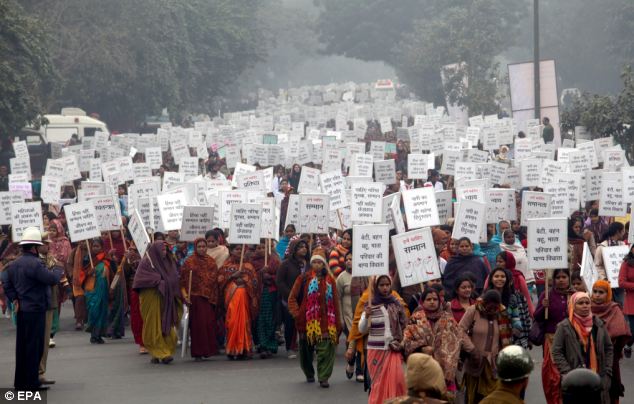
Thousands of women marched in Delhi on January 2, calling for an end to sexual violence.

Today marks three years since the horrific Delhi gang rape of a young woman – dubbed Nirbhaya by the media — at the hands of several men on a bus in India. Their attack ultimately led to her death and sparked some of the largest anti-rape protests the world has seen.

 
This incident and the response of ordinary people, activists and the Delhi government comprises one of the case studies in my new book Stop Global Street Harassment.
 
Today, let’s remember Nirbhaya. She was a university student who was simply trying to get home safely after seeing a movie with her male friend. She should have been able to. In her honor, let’s double our efforts to make public spaces safe for everyone.
Share

Filed Under: News stories Tagged With: activism, Delhi Gang Rape, India

Sexual Abuse by American Police Officers

December 16, 2015 By HKearl

Sadly, there are street harassers and sexual abusers among the members of the (mostly male) law enforcement in the U.S. and internationally (and of course, in the U.S. we also have racists and murderers among them too). This is a topic I touch on in my new book Stop Global Street Harassment: Growing Activism Around the World.

But I also want to highlight two recent news stories in the U.S. that exemplify this problem… and show why so many people hesitate to or refuse to go to law enforcement officers for help when they do face street harassment or other forms of sexual violence. We need a law enforcement #revolution before many of us will ever feel safe turning to them.

From the Washington Post:

“In a yearlong investigation of sexual misconduct by U.S. law enforcement, The Associated Press uncovered about 1,000 officers who lost their badges in a six-year period for rape, sodomy and other sexual assault; sex crimes that included possession of child pornography; or sexual misconduct such as propositioning citizens or having consensual but prohibited on-duty intercourse.

The number is unquestionably an undercount because it represents only those officers whose licenses to work in law enforcement were revoked, and not all states take such action. California and New York — with several of the nation’s largest law enforcement agencies — offered no records because they have no statewide system to decertify officers for misconduct. And even among states that provided records, some reported no officers removed for sexual misdeeds even though cases were identified via news stories or court records.

‘It’s happening probably in every law enforcement agency across the country,” said Chief Bernadette DiPino of the Sarasota Police Department in Florida, who helped study the problem for the International Association of Chiefs of Police. “It’s so underreported and people are scared that if they call and complain about a police officer, they think every other police officer is going to be then out to get them.’….

Even as cases around the country have sparked a national conversation about excessive force by police, sexual misconduct by officers has largely escaped widespread notice due to a patchwork of laws, piecemeal reporting and victims frequently reluctant to come forward because of their vulnerabilities — they often are young, poor, struggling with addiction or plagued by their own checkered pasts.

In interviews, lawyers and even police chiefs told the AP that some departments also stay quiet about improprieties to limit liability, allowing bad officers to quietly resign, keep their certification and sometimes jump to other jobs.

The officers involved in such wrongdoing represent a tiny fraction of the hundreds of thousands whose jobs are to serve and protect. But their actions have an outsized impact — miring departments in litigation that leads to costly settlements, crippling relationships with an already wary public and scarring victims with a special brand of fear.”

Via CNN.com:

“For about six months, [Oklahoma City police officer Daniel] Holtzclaw preyed on women — all African-American — in one of Oklahoma’s poorest neighborhoods, exploiting his police badge to intimidate them into keeping quiet.

Prosecutors say the Oklahoma City officer selected his victims based on their criminal histories, figuring their drug or prostitution records would undermine any claims they might make against him.

Then, he would subject them to assaults that escalated from groping to oral sodomy and rape.

On Thursday, his 29th birthday, Holtzclaw rocked back and forth in his chair, sobbing, as the judge read the verdict [convicting him on 18 of 36 counts of rape and other sexual offenses against women he encountered on patrol. Jurors recommended a total of 263 years of prison time. He will be sentenced in January.]”

Read about the brave women who reported him, eventually leading to his conviction.

Share

Filed Under: News stories, police harassment, race Tagged With: black women, Daniel Holtzclaw, oklahoma, police abuse, police harassment

« Previous Page
Next Page »

Share Your Story

Share your street harassment story for the blog. Donate Now

From the Blog

  • #MeToo 2024 Study Released Today
  • Join International Anti-Street Harassment Week 2022
  • Giving Tuesday – Fund the Hotline
  • Thank You – International Anti-Street Harassment Week 2021
  • Share Your Story – Safecity and Catcalls Collaboration

Buy the Book

  • Contact
  • Events
  • Join Us
  • Donate
  • Facebook
  • Instagram
  • Pinterest
  • Tumblr
  • Twitter
  • YouTube

Copyright © 2026 Stop Street Harassment · Website Design by Sarah Marie Lacy