• About Us
    • What Is Street Harassment?
    • Why Stopping Street Harassment Matters
    • Meet the Team
      • Board of Directors
      • Past Board Members
    • In The Media
  • Our Work
    • National Street Harassment Hotline
    • International Anti-Street Harassment Week
    • Blog Correspondents
      • Past SSH Correspondents
    • Safe Public Spaces Mentoring Program
    • Publications
    • National Studies
    • Campaigns against Companies
    • Washington, D.C. Activism
  • Our Books
  • Donate
  • Store

Stop Street Harassment

Making Public Spaces Safe and Welcoming

  • Facebook
  • Instagram
  • Pinterest
  • Tumblr
  • Twitter
  • YouTube
  • Home
  • Blog
    • Harassment Stories
    • Blog Correspondents
    • Street Respect Stories
  • Help & Advice
    • National Street Harassment Hotline
    • Dealing With Harassers
      • Assertive Responses
      • Reporting Harassers
      • Bystander Responses
      • Creative Responses
    • What to Do Before or After Harassment
    • Street Harassment and the Law
  • Resources
    • Definitions
    • Statistics
    • Articles & Books
    • Anti-Harassment Groups & Campaigns
    • Male Allies
      • Educating Boys & Men
      • How to Talk to Women
      • Bystander Tips
    • Video Clips
    • Images & Flyers
  • Take Community Action
  • Contact

UK: Art and Objectification

July 20, 2015 By Correspondent

Ruth Mair, UK, SSH Blog Correspondent
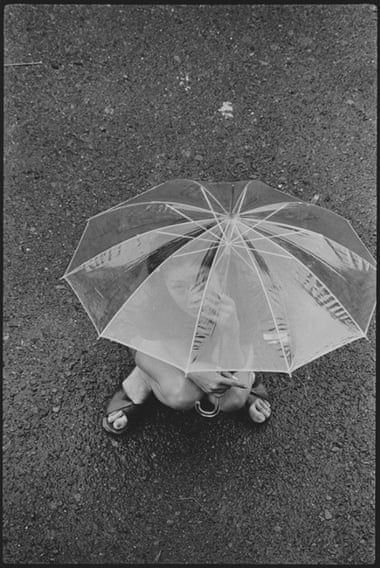
Yoko Fukase, image via The Guardian

I have caught people photographing me without my permission and I usually try to mess up their photo in some silly small way, like pulling a face or rolling my eyes. I have also caught people drawing me on the bus, and I have heard of others having similar experience. Sometimes those creating their art based on strangers are repeat offenders (“Oh that dude on that bus with the sketchbook, yeah I’ve seen him before”), and somehow, they are almost always men. I do not know whether this is because men are the ones confident enough to pull such tricks, or defend themselves if caught at it. Perhaps it’s because there is a surplus of male artists out there without willing and consenting subjects for their art. Or maybe the women doing the equivalent thing are better at not getting caught.

In this context, I have been thinking a lot about women in art. Both as subjects of art, and also as artists. But the problem about women who have art made about them, is that they are subjects of it, subjected to it. Guerilla Girls have made some great pieces concerning this issue; it was via Guerilla Girls that I learned about the difference in number of women portrayed in art in major American art galleries, versus the number of pieces of art by women that were displayed in those galleries. And that was before even getting into question of the vast chasm between the money earned by female artists and that earned by male artists.

These are things we’ve come to expect one we acknowledge the existence of the patriarchy, and once you start digging, there is a lot of discussion concerning this. However what I am writing about here is the position of the woman as a subject, and fact that this can be done secretly, without consent, in passing, in the street, raised a lot of questions for me. It was a Guardian article that led me to this topic, and it’s been stewing in my head for several days, with a lot of related feelings and thoughts about consent and the feeling of being watched, or being a performer.

Subject of art, or complicit in its creation. Masahisa Fukase created a collection of photographs in 1974 that focused entirely on his wife Yoko. She is in every photo, complicit, consenting, even performing for him, the creator of the photo of which she is a subject. This project was 13 years in the making, and throughout that time, Fukase focused intensely on his wife and the creation of images of her. It might seem an obvious outcome to say that they got divorced. Yoko was quoted in the article as having said that her life with Fukase was “suffocating dullness interspersed by violent and near suicidal flashes of excitement”. This surprised me, but then I’m not married to an artist so it’s likely that I was interpreting her position as muse and subject in a different way to someone who has actually experienced that kind of life would have done.

All I could think was how suffocating it would be, how intrusive and exhausting, to have been observed in all that detail, through the eye of a lens for 13 years. And although Yoko was clearly an active participant in this project, I found that the photos begged the question of where the personal ended and the performance began.

Further, the question of consent, and the potential for violation through the medium (and even using the excuse) of art, is something I find deeply troubling. Like the story of Yoko Fukase which still troubles me. There are so many questions I would love to ask her about those 13 years; whether she knew which photos were to be used in the collection, whether she had any say in this, and what happened when she did not feel like having her photograph taken.

Aside from my small moments of messing up photos strangers have tried to take of me, I’ve never confronted anyone doing things like that. Like many other forms of street harassment, confronting those perpetrating it is full of difficulties and second guessing; were they really photographing me? Will they think I’m arrogant for assuming it’s me? Am I arrogant for assuming that? Shouldn’t I be complimented that someone wants to use my face or silhouette or passing blurred figure for their work?

But the in the same way that street harassment is a violation, so is this.

Ruth is a human rights MA student finishing her MA dissertation on the legal and normative rights of terror suspects in the UK (spoiler alert: rights are being violated). She also plays bass in a band called Kinshot, sews as often as she can, and spends time getting annoyed at the cat sleeping on top of her computer.

Share

Filed Under: correspondents, News stories, street harassment

July 20, 2015: News Round-Up

July 20, 2015 By HKearl

“Video Showing Sexual Harassment of Two Girls in Saudi Arabia“

“A video that shows a group of young boys harassing two women in Jeddah’s Corniche sparked an outrage in social media last week. The video, which was uploaded to YouTube, went viral on social media, with statements denouncing the “barbaric” behaviour of these teenagers toward two veiled women on the Corniche.”

“Egyptian police arrest 29 men for sexual harassment during Eid: MOI“

“Police in Cairo have arrested 29 men for sexual harassment since the beginning of the Eid Al-Fitr holiday on Friday, Al-Ahram Arabic reported.

Police said one man was arrested for physically harassing a woman in downtown Cairo’s Qasr El-Nil area, while others were caught verbally harassing girls outside cinemas in the Roxy area in the district of Heliopolis.

During the three-day Eid Al-Fitr holiday, which marks the end of Ramadan, families and young people often celebrate with outings to parks, cinemas, fairs and other public spaces.

Reports of sexual harassment and assault in crowded areas increase during the holiday.”

“141 sexual harassment incidents reported in 3 days during Eid al-Fitr“

“A total of 141 police reports were issued on sexual harassment incidents during Eid al-Fitr 2015, according to the National Council for Woman (NCW.)

“A total of 136 verbal and five physical harassment incidents were reported,” said NCW, noting that most of the girls dropped the reports.

NCW said it received 50 verbal harassment reports in Cairo and one physical harassment report on Sunday.

Moreover, Egyptian grassroots initiative “I Saw Harassment” published its final report on the sexual harassment during Eid al-Fitr; it stated that the rates of the harassment were higher than the feats of the last few years.”

“Ottawa [Canada] pick-up artist controversy fuels conversation about street harassment”

“What started out as a few tweets on Friday about an Ottawa pick-up artist who secretly films women has now evolved into a broader discussion about street harassment and personal privacy.

The Carleton University Sexual Assault Support Services Twitter account appears to be the first to sound the alarm about Luke Howard, a local hypnotist and YouTuber who engages in conversations with women on the street and uploads the encounter on the video sharing website.

In an interview with Metro last Friday, Howard said his videos are meant to show guys with social anxiety how to talk to women they’re attracted to in the daytime.

While Ottawa police have previously said secretly filming people over 18 in a public space is legal, women say what he is doing is unethical and constitutes harassment.

Soon after the public outcry, local women condemned his behaviour, which prompted him to hide his series of YouTube videos from public view.

At the time, Howard said he temporarily blocked his videos after receiving threats of violence online.

As his YouTube channel remained quiet on Sunday, there was a loud rumbling on social media that spawned the #corneredinottawa hashtag and a Twitter account of the same name.

Maya Shoucair, a woman who says she has been confronted by Howard on the street, said she hosted an informal meeting with about a dozen concerned women at her house on Sunday to discuss how to proceed.

“This is what it looks like when Ottawa women have had enough,” said Shoucair, referring to the social media uproar.

“We just want to feel safe in our streets.”

“After Anand Parbat stabbing case, alleged eve-teasers seriously injure Rohtak schoolgirl”

“A day after a minor girl died after being allegedly stabbed by two men in Delhi`s Anand Parbat locality for resisting a molestation attempt, a schoolgirl from Lonal village in Haryana`s Rohtak district on Saturday has sustained grievous injuries following an attack by three alleged [harassers] while she was on her way to school.

The victim has been admitted to a hospital in Rohtak where she is undergoing treatment for multiple wounds on her face and head. The girl`s relative said that a complaint has been lodged with the police, but lamented that no arrests have been made so far.”

“Montreal Police Tell Women To Not Take Taxis In The City Alone Anymore”

After a several women in Montreal came forward saying cab drivers sexually assaulted them, the police “said women should try to not take taxis alone, and to ‘limit their alcohol consumption and stay in control,’ as quoted by the Gazette. If you see a problem with this, then congratulations, you are a sensible person.”

One of SSH’s facebook followers said in a comment it to this story that “In response the STM (transit system) made an announcement reminding women that they don’t have to take the taxi because bus drivers will drop women (or men too) off as close to their house as they can at night if you just ask more than one stop ahead.”

“Men who harass women online are quite literally losers, new study finds”

“Michael Kasumovic and Jeffrey Kuznekoff, researchers at the University of New South Wales and Miami University, respectively…watched how men treated women during 163 plays of the video game Halo 3.

As they watched the games play out and tracked the comments that players made to each other, the researchers observed that — no matter their skill level, or how the game went — men tended to be pretty cordial to each other. Male players who were good at the game also tended to pay compliments to other male and female players.

Some male players, however — the ones who were less-skilled at the game, and performing worse relative their peers — made frequent, nasty comments to the female gamers. In other words, sexist dudes are literally losers.”

“One Perk of Older Age? Fewer Catcalls”

“I wouldn’t trade my quiet morning walks for the hellishness of my teen years for anything. But when you’re brought up to feel that the most important thing you can be is attractive to men, the absence of their attention – even negative attention – can feel distressing.”

“Activists Call On CTA To Post Anti-Sexual Harassment Campaign”

“Despite a high profile PSA campaign about Chicago [USA] Transit Authority courtesy, there are still no ads regarding sexual harassment. One woman is trying to change that and is being rebuffed along the way… Last year Kara Crutcher launched the “Courage Campaign,” which she hoped would bring attention to the issue of sexual harassment on public transportation. As DNAinfo reported at the time, her campaign was attempting to work with the CTA to produce advertisements to fight sexual harassment on city buses and trains and to bring more awareness to the issue….

Fast forward an entire year, and unfortunately those advertisements haven’t materialized. The transit agency’s ad company, Titan Worldwide, has a rule that states PSAs must be posted by a government agency or a registered nonprofit, leaving the Courage Campaign out in the cold. Crutcher and 15 girls from the female youth empowerment group “Girl World” recently met with CTA board members to talk about bringing such advertisements to the public transportation system.

At the meeting, Crutcher was frustrated by the fact that the conversation seemed to center around how to report incidents of sexual harassment, instead of how to create the ads, she said. Jaime Schmitz, a youth development specialist who works with Girl World, agreed, telling DNAinfo, “I don’t think people realize how hard it is for people to share a story like that. They’re under the impression that when you’re harassed it should be so easy to report. But a lot of the time it’s re-traumatizing.”

The point of the ads is to prevent the incident before it even starts, so simply reporting incidents doesn’t necessarily modify behavior, the women argued. While frustrated by the setback, Crutcher is not giving up. “I have no doubt that they care about the safety of their riders. I just think more can be done, and this is great vehicle to do so, and right now I can’t move forward,” she said.”

 “Photographer charged with stalking Grand Rapids woman”

“A man whose picture went viral on social media is now being charged with stalking a woman in Grand Rapids. Thomas Chubinski, 69, is accused of recently harassing a woman who was walking with her daughter near Michigan and Diamond.

“I was just so terrified, I’m shaking. It was 2 o’clock in the afternoon,” said Emily Gray. She says Chubinski was driving slowly beside her. “He’s asking me all kinds of horrible things about my body, every body part you could imagine. I told him, ‘I’m just trying to walk my daughter.'”

Emily did not go to police, but a few days later she saw a post on Facebook about the same man. The woman who posted those pictures said he had taken pictures of her as she walked her dog in East Grand Rapids…

WZZM 13 News talked to Chubinski on the phone earlier this week. He said he didn’t remember an encounter with Gray, but he does remember the woman in East Grand Rapids. He admitted to taking pictures of her in public, but said he did nothing wrong. According to East Grand Rapids police, the woman in that incident never filed a police report. Chubinski says he’s a professional photographer who admittedly likes to take pictures of “beautiful women.” He has no criminal history.”

 “The Brian Lehrer Show: The Unwelcome Harassment Women Face on the Street”

Holly Kearl, founder and executive director of Stop Street Harassment and the author of Stop Street Harassment: Making Public Places Safe and Welcoming for Women (Praeger, 2010), talks about what women are subjected to on the street to make them feel unsafe, from catcalls to groping, and how to end it.

Plus: Anthonine Pierre, Lead Community Organizer at the Brooklyn Movement Center, talks about the Center’s “Anti-Street Harassment Bike Patrol,” which is part of their “No Disrespect” campaign.

Share

Filed Under: News stories, street harassment

Two More Women Dead

July 17, 2015 By HKearl

Trigger Warning

India: So horrific, two harassers stabbed a 19-year-old woman 35 times, killing her, as she entered a market because she protested their actions. Her mother was injured while trying to protect her. She filed a case against the men in 2013 several times, but the police did not do anything. So sad. So enraging. Our thoughts go out to her family.

Sandra Bland, via Heavy Editorial

USA: Sandra Bland just moved to Texas to start a new job when police pulled her over for failing to signal that she was changing lanes. The situation quickly escalated and two officers physically hurt her, slammed her to the ground, possibly broke her arm, and then arresting her for the vague offense of “assaulting an officer.” Bland was in jail for a few days and then allegedly hanged herself. Her relatives don’t believe it and neither do many people in the USA. Whatever the truth is about her death, everything leading up to it is certainly racism and police harassment. And if she was killed by police, which seems probable, there just are no words.

Today people have made #IfIDieInPoliceCustody a trending hashtag on Twitter, imploring people to never believe that if they die in police custody that they committed suicide. It is sobering and sad that Black people feel they must say this because the justice system is not to be trusted. And death is not so unfathomable.

In a recent online video Bland posted, she said, “What I need you guys to understand is that being a black person in America is very, very hard.” ‪

#‎SayHerName‬ ‪#‎SandraBland‬

Share

Filed Under: News stories, race

Selfie Stick Used to Harass

July 10, 2015 By HKearl

It’s unfortunate that some people inevitably use technology to harass others. Take the selfie stick.

Via Washington Post:

“The Bethesda resident and her friend were just watching a football game in her living room.

Then she saw an object waving back and forth outside the sliding glass doors of her apartment.

It was a camera on a stick — a selfie stick, the gizmo invented to let people take photos of themselves from farther away.

Or, in this case, to take illegal photos of other people. Montgomery County police allege that taking pictures is just what the Bethesda resident’s neighbor had been doing, without her knowledge, for more than a year.

Donald Frazier Beard, 60, has now been charged with using his selfie stick to record at least 16 videos of the 58-year-old woman, including one that showed her naked.”

TERRIBLE. I’m glad he was caught (after a year!!) but it makes me wonder how many other people may use it in this way without their targets realizing it?


Share

Filed Under: News stories

Early July 2015 News Round-Up

July 10, 2015 By HKearl

Great news from France!

“France unveils plan to tackle sexual harassment [on public transportation]”

“On Wednesday the government came up with their answer when Ministers unveiled a series of measures aimed at cracking down on harassment.

They included exploring the possibility of allowing passengers on night buses to get on and off where they want and a campaign to remind the general public that groping, verbal harassment and other forms of intimidation are punishable by law.

The measures include:

* A campaign this autumn that will use advertising space on the transport network to remind travellers that harassment and gender-based violence are punishable by law (up to five years in prison), and to encourage witnesses to show solidarity with victims in harassment situations.

* A trial, to take place in Nantes that will allow passengers on night buses to stop the bus on demand rather than only being able to board and alight at bus stops.

* Developing new digital tools to report harassment including text alerts.The emergency number 3117 will be introduced before the end of this year, which can be used to report cases of harassment, and to trigger the intervention of security staff. An app will be created that will allow for reported incidents to be geo-localized.

* Training of transport staff and promoting gender equality within transport companies.Transport staff will attend training modules designed to improve empathy with victims.

* Transport chiefs will work with advertising agencies to prevent adverts using sexist imagery being displayed on the transport network….”

“French campaign against sexual harassment on public transport launched”

“As part of its 12-point plan, the government is inviting passenger groups to visit rail and train stations to identify areas where they feel unsafe and that require more lighting or human presence….This autumn, an awareness campaign will also be launched on how to react to such harassment and what the punishment is for offenders, which will be relayed in schools.

The campaign following a shock survey that found that “every female user of mass transit has been a victim” of “gender harassment or sexual assault” – even though some are “unaware” of this because they have been conditioned to accept low-level abuse.”

Comic-Con is this weekend in San Diego and addressing harassment is on the agenda of Geeks for CONSent.

“Dear Comic-Con attendees, grabbing the lycra-clad backside of a cosplayer is not ok”

“A survey by Bitch Magazine last year revealed that 13 per cent of respondents had received unwanted sexual comments at a convention, while 8 per cent had been groped, assaulted or raped at a convention. 130,000 people attended the San Diego Comic-Con (SDCC) last year. That means that around 10,000 people could have been sexually harassed during the convention.

There was a campaign last year for SDCC to revise their harassment policy to have clearer guidelines as to how sexual harassment will be treated. However, there has been no change to the SDCC code of conduct policy, merely stating that ‘Harassing or offensive behavior will not be tolerated.’ It advises anyone who feels ‘their safety is at risk’ to report the incident to a member of staff. Anyone in breach of the code of conduct can be removed from the convention immediately.”

“Women Are Being Sexually Harassed at Comic-Con—but One of Them Is Making It Stop”

“In 2013, Geeks for CONSent started collecting stories from women who were harassed—it has about 30 formal reports and hundreds of informal complaints to date—and found some organizers were doing “almost nothing” to prevent such behavior. So Geeks for CONsent is pushing Comic-Con International to clearly spell out what counts as harassment (currently, its code of conduct includes one sentence that only generally addresses it); to post the policy prominently online, on social media, and on large posters at the event; and to create an app attendees can use to report incidents.

For its part, Comic-Con International said, via e-mail, “We take any report of harassment very seriously.” But until Keyhan sees more action, she’s vowed to keep fighting. To make sure attendees get the message, Geeks for CONSent members will again add a special touch to their costumes this year: signs reading “Cosplay ≠ Consent.”

Read more about Geeks for CONSent’s campaign via San Diego City Beat


Two important pieces on race + street harassment

“The Right to Be a Black Girl”

“It wasn’t until I started paying attention to the way my white friends spoke about street harassment that I realized what they went through was totally different than what I experienced. When they complained about being catcalled, some of them bragged about telling guys to ‘fuck off.’ What happened to them is terrible, but it made me realize that the street harassment that I and other black girls experience is a lot more aggressive. Being considered a well-spoken, ‘alternative’ black girl didn’t stop boys from telling me, ‘Black girls are good at sucking dick, cuz they got them DSLs,’ meaning ‘dick-sucking lips.’

Street harassers, particularly black men who have internalized white oppression in a way that causes them to devalue black girls in turn, think because I am a black girl, I should be grateful that any man is giving me attention, and they take it as an insult whenever I reject them. This is an obvious form of misogynoir, as I discovered through @feministajones’s hashtag #YouOKSis, a thread where black women discuss their experiences with street harassment. Before I found that hashtag, I thought it was completely normal for men to curse me out or grab me when I didn’t reply to their advances. I quickly learned to smile and respond back when they said hi so I wouldn’t be yelled at or shoved.”

“This is What the N-Word Feels Like”

“Speaker 1: Why can’t I walk from the corner where the cab dropped me off to my apartment without someone yelling the N-word at me outside of a car? Why is that a thing I’m dealing with?

Text: What the N-Word Feels Like

Text: We asked some of our colleagues about the first time they remembered being called the N-word.

Speaker 2: I was eleven years old. I was at a convenience store.

Speaker 3: I was eighteen. I was experimenting with YouTube.

Speaker 4: I was between seven and nine years old, and I was with my mother.“

Last week there was a big rodeo in Calgary, Canada, and a group of women organized a #SafeStampede campaign.

“Does Calgary need #SafeStampede initiative for a harassment-free week?“

“It’s been three months since Calgary streets were filled with a Flames-inspired sea of party-goers, but the stories of sexually-charged street harassment and obscene pranks are still fresh in the minds of some residents, who don’t want to see a repeat this week at Stampede. And so, another campaign has been born out of #SafeRedMile for the Greatest Outdoor Show on Earth: #SafeStampede.

“#SafeRedMile was when the Flames were in the playoffs, and it was very effective in really talking about some of the less positive experiences that people had on the Red Mile,” said Pam Krause, president and CEO of the Calgary Sexual Health Centre.

“Some women got together, talked about repeating that with #SafeStampede, and a lot of the work at Calgary Sexual Health Centre is around issues like consent, so we proudly helped with the campaign.”

Along with the hashtag, the campaign consists of a website with information about sexual harassment, consent and links to resources for support. There’s also a Tumblr account, where you can submit a story of sexual harassment during Stampede week.

The campaign has been endorsed on Twitter by the official event account, Mayor Naheed Nenshi and Stampede CEO Warren Connell.”

“Rodeo, rides and sexual harassment: It’s about time for Calgary to hold a #SafeStampede“

“Some men, instead of embodying Western hospitality, transform into dude-bros who feel entitled to disrespect or harass women. Catcalls. Ass- grabbing. Name-calling if you look less than pleased by these charming advances.

For those who question whether this is really a problem, I conducted a (very unscientific) survey of 10 female friends in their 20s and 30s, all of whom attend Stampede annually, before writing this column. Half of these women — HALF! — have been grabbed at over the years while walking through crowded party tents. The most recent incident occurred Friday at Cowboys, the club with the slogan “The most fun you can have with your boots on.” A guy grabbed under a friend’s skirt. I’m told he got a lecture.

I’ve had my butt grabbed at the Stampede twice. One time, it happened so quickly I couldn’t pick the offender from the jeering herd; the other time, I was told I “overreacted” for telling the guy off.

So I tip my hat to the Calgary Stampede for jumping on the anti-sexual-harassment wagon. It’s about time.

The city’s top brass, including the Stampede CEO and Mayor Naheed Nenshi, quickly endorsed the #SafeStampede campaign, which was created by a group of women to encourage respect and share information about consent and sexual harassment.

Thanks for the leadership, folks. It sends a message to people attending one of Canada’s largest events that harassment isn’t condoned and that donning a plaid shirt and cowboy boots isn’t a licence to make women feel unsafe.”

“‘Just be respectful:’ Calgary Stampede on board with #SafeStampede initiative“

“While it’s hoped the initiative will grow in coming years, for now the #SafeStampede campaign is about raising awareness and starting a conversation, said Pam Krause, executive director with the Calgary Sexual Health Centre.

“It’s really to provide people with a forum to talk about negative experiences but also positive,” Krause said.

Krause pointed to a successful educational program the Calgary Sexual Health Centre runs for junior high boys called WiseGuyz. The program has teens openly discuss consent, and Krause said it’s an important conversation she hopes more people can partake in, especially during Stampede.

“If 14-year-old boys can do this and 14-year-old boys can get a crystal clear understanding of what consent is, my hope is that can start spreading out into the rest of society,” she said.

At this year’s Stampede, a ‘Don’t Be That Guy’ ad campaign (similar to a 2010 campaign launched by Sexual Assault Voices of Edmonton) will be on display at popular party and music destination Nashville North.”

And here are some stories about street harassment:

“Street Harassment & Body Art In The Public Space“

“A heavily tattooed young woman recently recorded all of the unsolicited compliments she got on the street. The video led to the hashtag #tatcalling. We discuss the lines between harassment, compliment and acknowledgment.”

“Morocco joins the miniskirt wars“

“On June 14, Sanae and Siham, 23 and 29 years old respectively, identified as students and professional hair stylists, went to shop in Inezgane, south of Agadir, on the southern part of Morocco’s Atlantic Ocean coast. A shopkeeper attacked them, claiming their skirts were too short. Soon they were surrounded by a more than threatening mob. Terrified, they sought shelter in a boutique and waited for the police to arrive. The police did arrive … and arrested them for “indecent exposure”, or “gross indecency.” Their trial was heard Monday, June 6. If convicted, the two women face up to two years in prison.…

In Morocco, the real story is once more that of women organizing, pushing back and pushing forward, creating new spaces precisely where others try to shut them down. Moroccan women, with male supporters, organized a campaign, using the hashtag #mettre_une_robe_nest_pas_un_crime. Wearing a dress is not a crime. First, they pushed to have the police investigate those who had harassed and threatened the two young women. Finally, the police gave in, investigated and arrested two young men. Demonstrations were organized all over Morocco. Women organized July 6 as a National Day for Our Individual Freedoms, with demonstrations in Rabat, Casablanca, Marrakech, Agadir, Tangiers, and beyond.”

“Moroccan girl tells off man over ‘indecent’ comment“

“In the midst of a busy street in Tangier, Morocco, a man shouts at a passing woman, yelling at her that she’s dressed indecently. Unfortunately, this kind of harassment occurs all the time—it’s a common scenario. Except that, this time, the victim was ready with a comeback. Social media users have gone crazy over this video since it was first posted on June 25. It currently has more than 150,000 views on YouTube.”

“Rachel Colias: Feminist Killjoy“

“I’d say the daily basis of dealing with men is brief, public interactions. If I were to pick one thing that I really do have to deal with on a daily basis, it’ sexual harassment. Any woman who doesn’t have a car, has to take public transportation or has to walk more than two blocks to her job, there’s going to be sexual harassment. For a while when I first started going to college in Chicago I became more aware of it. I don’t want anyone to think living in a small town there wasn’t any of that. I remember being, I don’t know, 15, and one of my female friends hit puberty a lot sooner than I did and was a bustier person. When I would hang out with her and hadn’t hit puberty yet, we would still get yelled at. Men would still bother us. I remember some guy trying to get me into his car when I was a younger kid. That’s something I think about.”

“An Open Letter to My Harasser“

“When you follow me I don’t feel honored, I feel afraid. When you stare at my body while standing next to me, I don’t feel wanted, I feel disgusted by you. As you open your mouth to say something crass, I already turned up the music on my phone because I know you’re about to be rude. I have to turn my back on my senses in order to walk to the train so often that I don’t even notice it. That should not be the norm. This is a problem. And sadly, you will have to take all the first steps for this to have an impactful change.”

“Catcalling is not a compliment: Why men catcall brings up bigger issues than just sexuality“

“Actually, public street harassment is part of a larger effort to make public spaces uncomfortable for women,” said UH Professor of Women’s Studies Meda Chesney-Lind. 

She recently collaborated on article about violence against women with student Gita Neupane. The authors explore male harassment of women in public and its underlying meaning.

According to the article, “[Catcalling] is designed to undermine the recipient’s image and self-confidence by sexualizing them, and this is more, the enforcement of gender expectations rather than seeking sexual favors.” Catcalling is a form of street harassment and has little to do with sexual acts, but rather, establishes the domination a man has over a woman. It is anything but a compliment. 

“It is an assertion of male privilege [and power],” Chesney-Lind said.

“The Fear Factor” (Runner’s World)

“Katie gave me a look that our government should immediately weaponize and use against our enemies. “Men,” she said evenly, “are in danger of, at worst, being laughed at by a woman. Women are in danger of being killed by men.”

It is odd to be shocked by something you already know. Of course, male on female violence is a horrendous problem, but at the same time, to be told that this statistic means a friend sees herself as prey, and your own kind as the predator, is disorienting. We protest and sputter, “But I never would do anything like that…” or “I can’t imagine…” But other men would, and Katie and other women can easily imagine it. We encourage women to “choose not to be a victim,” but when has it ever been their choice?

We left the ugly threat of violence behind and talked further about the intricacies of male and female interaction. According to Katie, it’s not that intricate: If you know a woman and she’s dressed to impress, and you’re in a safe mutually chosen environment for such things (a party, a date, your wedding to her), you can let her know she’s succeeded. Katie further says that if you happen to see her running, and you don’t know her, you should feel free to compliment her pace or strength. Katie remembers—fondly—an old man on a bus which she’d been racing for blocks, who shouted out a window: “Goddamn, you’re fast!” Other women told me, however, that they strongly disagree—when they’re running, well or poorly, fast or slow, they would very much like to be left alone. In general, you might want to follow Katie Prout’s First Principle, when encountering a woman on the road or trail: “Don’t be a douche. I’m not here for you.”

And never ever suggest to her that she should exercise indoors, or keep herself off the roads to avoid trouble. “I am afraid,” she says, “but I’m not going to let my fear keep me from moving.”

“Why Do (Some) Guys Turn Into Pervs The Minute the Sun Comes Out?”

“You know what I’m really not in the mood for? Catcalls. Street harassment. Random guys’ shades bobbing up and down as they take in my legs. Admittedly, there’s never yet been a day when I’ve skipped down the street longing for a stranger to give me a verbal appraisal of my buttcheeks, but there’s something about the hot weather that really brings them crawling out of the woodwork. Unwanted attention, it seems, goes up with the thermometer’s reading.”

“The Girls Behind The Viral Drive-By Street Harassment Video Tell Us What They Learned”

“We’ve seen the more serious video, and have read the statistics. But unfortunately sometimes these campaigns don’t drive the message home enough. That’s where entertainment and humor can play a role other mediums and industries cannot.

Just recently, two awesome women Ginny Leise and Soojeong Son who founded comedy troupe The Shame Game, created a viral video about street harassment but with a decidedly different perspective and outcome. Their video went viral with close to 2 million views (1.7+ at the time of writing this).

They wanted to shed light on the drive-by street harassment phenomenon where men walk up to women and throw a sexual phrase or two at them. They did this by having SJ walk up to random men around New York serving up one-liners such as “uh dat ass!” and “mmm that dick” and observing their reactions…

Street harassment is something that pretty much every woman in her life has faced at some point, what are some of your personal experiences?

G: Ugh, comments and stares every time I leave my apartment. It sounds like an exaggeration, but I think that is most women’s experience.

SJ: You’d think that the konichiwa’s, ni-hao’s, and ching-chongs wouldn’t happen anymore. How old-fashioned! No, but seriously a group of white male 20-somethings in Williamsburg street harassed me that way a few weeks ago. And really I try not to give a shit cuz this stuff happens all the time, but it still sets me off sometimes.”

Share

Filed Under: News stories, street harassment

« Previous Page
Next Page »

Share Your Story

Share your street harassment story for the blog. Donate Now

From the Blog

  • #MeToo 2024 Study Released Today
  • Join International Anti-Street Harassment Week 2022
  • Giving Tuesday – Fund the Hotline
  • Thank You – International Anti-Street Harassment Week 2021
  • Share Your Story – Safecity and Catcalls Collaboration

Buy the Book

  • Contact
  • Events
  • Join Us
  • Donate
  • Facebook
  • Instagram
  • Pinterest
  • Tumblr
  • Twitter
  • YouTube

Copyright © 2026 Stop Street Harassment · Website Design by Sarah Marie Lacy