• About Us
    • What Is Street Harassment?
    • Why Stopping Street Harassment Matters
    • Meet the Team
      • Board of Directors
      • Past Board Members
    • In The Media
  • Our Work
    • National Street Harassment Hotline
    • International Anti-Street Harassment Week
    • Blog Correspondents
      • Past SSH Correspondents
    • Safe Public Spaces Mentoring Program
    • Publications
    • National Studies
    • Campaigns against Companies
    • Washington, D.C. Activism
  • Our Books
  • Donate
  • Store

Stop Street Harassment

Making Public Spaces Safe and Welcoming

  • Facebook
  • Instagram
  • Pinterest
  • Tumblr
  • Twitter
  • YouTube
  • Home
  • Blog
    • Harassment Stories
    • Blog Correspondents
    • Street Respect Stories
  • Help & Advice
    • National Street Harassment Hotline
    • Dealing With Harassers
      • Assertive Responses
      • Reporting Harassers
      • Bystander Responses
      • Creative Responses
    • What to Do Before or After Harassment
    • Street Harassment and the Law
  • Resources
    • Definitions
    • Statistics
    • Articles & Books
    • Anti-Harassment Groups & Campaigns
    • Male Allies
      • Educating Boys & Men
      • How to Talk to Women
      • Bystander Tips
    • Video Clips
    • Images & Flyers
  • Take Community Action
  • Contact

USA: Rolling Stone’s Failure is Our Opportunity to Believe Survivors

April 7, 2015 By Correspondent

LB Klein, Georgia, USA, SSH Blog Correspondent

Content warning: sexual violence and media attention

Credit: C-Ville

In late 2014, Rolling Stone released an extensive article entitled “Rape on Campus,” that included the story of “Jackie,” a student who reported that she was gang raped in a fraternity. On Sunday night, the Columbia School of Journalism released an investigative report on how Rolling Stone mishandled their reporting of this story. Some have interpreted Rolling Stone’s journalistic failure as a sign that the pervasive public health problem of sexual assault, particularly on college campuses, is overblown. While journalists should certainly use Columbia’s report as a teaching tool, this debacle should have no bearing on how we view the endemic issue of sexual assault on campus or the necessity that we believe survivors. In fact, believing survivors is more important than ever.

I’m grateful to have had many survivors of sexual violence trust me with their stories. I’ve received these stories whispered in anonymous hotline calls; revealed through the course of twelve hours in an ER or full years in the courtroom; screamed into microphones at speak outs; or given to the world through public activism or anonymous reports. These survivors have been strangers, clients, friends, significant others, and family members. I also see a survivor every day when I look in the mirror.

If I did not have this lived experience as a survivor, advocate, and activist, there are countless studies on the endemic nature of sexual assault in our communities and on our campuses. For every survivor who tells their* story publicly, there are countless others who choose silence as the best decision for their survival. Our culture so endorses the silencing of survivors that speaking out is considered exceptionally brave. The scope of gender-based violence spans all spaces in which we live our lives from the bedroom to the boardroom to the street. Even though street harassment occurs in a public place, speaking out about it is rare and survivors fear the consequences of calling it out, even anonymously.

I have watched the horrified faces of hundreds of survivors as they turn over choices no one should have to make in their minds. Risk scrutiny or to stay silent? Seek justice or to stay silent. Seek solidarity or stay silent? Each choice has drawbacks and is subject to endless public or private criticism. Many survivors choose silence or telling only a few people, chosen strategically. Even after this careful deliberation, survivors are still blamed, betrayed, and called “liars” and “crazy” by the loved ones and systems they hope will help them.

Many survivors certainly live in fear of their abusers but all survivors live in a greater fear of disbelief, harassment, criticism, isolation, community retaliation, loss, and judgment. Survivors who have gone public or sought justice face these issues on an amplified scale and the backlash they face shows other survivors the costs of coming forward.  The response to Rolling Stone’s poor reporting choices is yet another example to survivors that if one story faces scrutiny, all survivors will be assumed to be lying.

Over the past few years, I have read many stories of people faking a cancer diagnosis to solicit donations for their own personal gain. This exploitation of real tragedy is clearly far more nefarious than journalistic or police investigations have even insinuated “Jackie” to be.  These stories of faked illnesses for cash, however, have not inspired us to question friends or strangers when they disclose their suffering to us. We don’t ask, “are you sure you really have cancer? I hear a lot of people lie about having cancer, can you show me your medical records? Are you sure you’re not just looking for attention? You look fine to me, do you really need time off of work or school to get treatment for cancer?”

As a culture, we become collectively appalled that someone would make up a cancer diagnosis, and anyone who tries to use one of these stories as evidence that “cancer survivors lie” would be lambasted. The same consequences should be dealt for those who disbelieve the staggering numbers of survivors of sexual assault on college campus due to scrutiny applied to one story. Even if “Jackie’s” story is patently false, it should not lessen our outrage when we hear about sexual violence. In fact, the response to “Jackie’s” story should cause us to redouble our efforts to believe survivors. This backlash is a reminder of how far we still have to go to foster a survivor supportive culture that is truly intolerant of sexual violence.

Our culture is a rape culture.  Through disbelieving survivors, we perpetuate abuse, violence, and trauma.   According to FBI crime statistics, about 2% of reports of rape prove false, which is consistent with false reporting of other violent crimes. I would much rather give the unwavering benefit of the doubt on the side of that 98%, especially knowing that the reaction a survivor receives when disclosing what happened is the single best predictor of the severity of their trauma reaction and time it will take them to heal.

While none of us truly know “Jackie’s” truth and lived experience, even if her story could be proven to be fabricated, I remain steadfast in my stance that we must believe survivors.  If “Jackie” is a part of that 2%, the potential debunking of her story does not cause the other 98% to evaporate. The public attention to rare false reports, however, does cause survivors to remain silent. The spectacle created by the Rolling Stone story requires us to increase our public, unapologetic support of survivors. We must recognize the suffering of survivors that is exacerbated by the attention paid to this one story and this one article. There has been immense harm done to survivors through this very public scrutiny of one case. Because of Rollins Stone’s failures, we must commit to believing survivors now more than ever.

*I use “their” as a gender neutral pronoun to refer to survivors, recognizing that women and trans people  disproportionately experience sexual violence but men are also sexually assaulted, particularly before the age of 18.  The vast majority of perpetrators are men but there are perpetrators of all genders.

LB is an Atlanta-based advocate, student, educator, and consultant who has dedicated her professional and academic career to ending gender-based violence, supporting survivors, and advancing social justice.  You can follow her on twitter @LB_Klein.

Share

Filed Under: News stories

New Resource for Runners in Philadelphia

March 26, 2015 By HKearl

Credit: Samantha Varnum

Alon Abrahamson is the creator of the Philadelphia-based running website Run Philly and created an “Incident Report” page that allows runners to log in incidents of harassment, physical assault, muggings and more that happen while they are running.

Via Runner’s World:

““These incidents must happen every single day, multiple times per day,” Abramson told Runner’s World Newswire. “I want to provide a mechanism to capture that. In doing so, we would actually have material to give to decision-makers and people with actual power to makes some changes like fixing bad intersections or putting out more patrols. It’s a bit of a civic experiment.”

After crowdsourcing data through this fall, Abramson will create a heatmap, which will ideally reveal hotspots of trouble for runners in Philadelphia.”

H/T Michelle Hamilton

Share

Filed Under: News stories, Resources, street harassment

Kenyan program improves boys’ attitudes towards girls

March 26, 2015 By HKearl

We need this kind of programming in every country, every school!

Via Reuters:

“The schoolboy watched as a man tried to remove the nappy of a little girl he was dragging along a Nairobi riverbank, suspecting that he was going to rape her. Having been trained to defend girls against sexual assault, the boy called other young men to help him confront the man and rescue the child.

“It would have been fatal,” said Collins Omondi, who taught the boy as part of a program to stamp out violence against women and girls in Nairobi slums. “If this man would have assaulted this kid, he would have thrown her inside the river.”

Omondi teaches a program called ‘Your Moment of Truth’, run by the charity Ujamaa Africa which encourages adolescent boys to stand up against violence toward women.

The training is “highly effective” in improving attitudes toward women and increasing the likelihood of successful intervention, researchers from Stanford University, University of Nairobi and United States International University-Africa said. The training increased boys’ successful interventions when witnessing physical or sexual assault by 185 percent, from 26 to 74 percent, according to their study to be published later this year in the Journal of Interpersonal Violence.Interventions in verbal harassment also increased, and rape by boyfriends and friends of girls in schools where ‘Your Moment of Truth’ was taught dropped by 20 percent, from 61 to 49 percent, the researchers said.”

H/t Soraya Chemaly

Share

Filed Under: male perspective, News stories, Resources

Update on Detained Chinese Activists

March 26, 2015 By HKearl

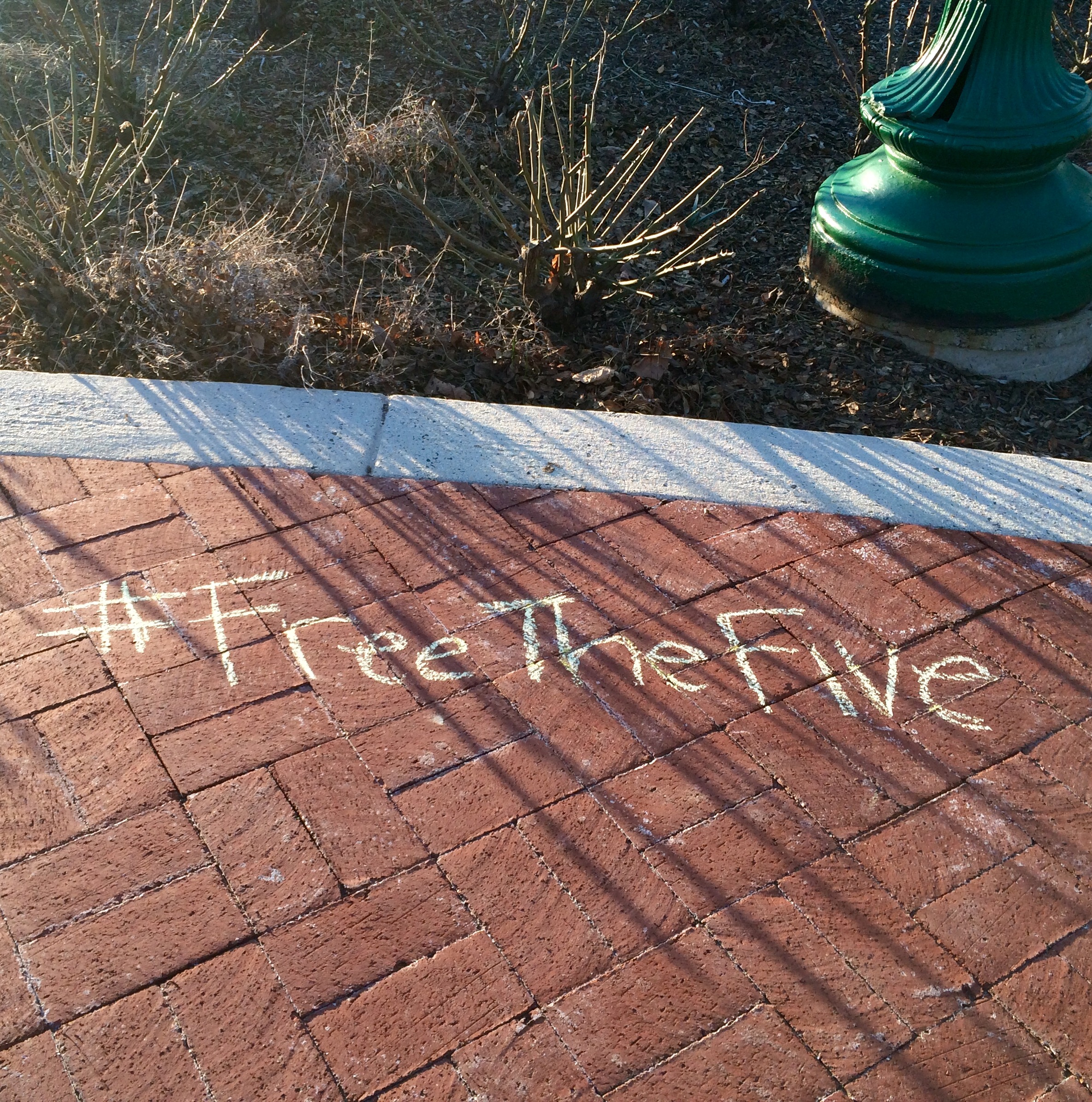
As I’ve shared here before, on March 6 and 7, public security officials detained five feminist activists in China who planned to distribute stickers and leaflets on March 8, International Women’s Day, to raise awareness about the problem of sexual harassment on public transportation (something SSH does and advocates others do in their communities). Nearly 3 weeks later, they are still being detained.

The New York Times reported yesterday that “Lawyers for the detainees, who were held on suspicion of ‘picking quarrels and provoking trouble,’ say their clients are being maltreated in jail. The police took away the eyeglasses of Ms. Wei and Ms. Zheng. Ms. Wang was hospitalized with heart problems after interrogations continuing far into the night. Ms. Wu has been denied medication for her hepatitis.” (More on their health conditions.) The article also talks about how people speaking out against their detention within China are facing backlash.

On Monday I joined Allie of SlutWalk DC held a protest at the Chinese Embassy in Washington, DC. Here are stories about it by Voice of America and RFA Cantonese

Protests have also been held outside the UN in New York and in New Delhi, Hong Kong, and Seoul, Korea. UN Ambassadors and EU representatives have called for their release. Unfortunately, yesterday the BBC reported that “China has rejected calls from several foreign governments to free five women’s rights activists who have spent nearly three weeks in detention.”

For the latest updates on the five women, follow the Free Chinese Feminists Facebook page.

Share

Filed Under: News stories, street harassment

Peru Passes a law, one is introduced in Panama

March 26, 2015 By HKearl

The Peruvian government officially passed the law against street harassment that the Congress approved earlier this month.

Meanwhile in Panama, Ana Matilde Gómez, an independent member of Panama’s National Assembly introduced a bill that would criminalize street harassment. It would also outlaw bullying, stalking, racism and all forms of sexual harassment. It also calls for developing public policies aimed at preventing these problems.


Share

Filed Under: News stories, street harassment

« Previous Page
Next Page »

Share Your Story

Share your street harassment story for the blog. Donate Now

From the Blog

  • #MeToo 2024 Study Released Today
  • Join International Anti-Street Harassment Week 2022
  • Giving Tuesday – Fund the Hotline
  • Thank You – International Anti-Street Harassment Week 2021
  • Share Your Story – Safecity and Catcalls Collaboration

Buy the Book

  • Contact
  • Events
  • Join Us
  • Donate
  • Facebook
  • Instagram
  • Pinterest
  • Tumblr
  • Twitter
  • YouTube

Copyright © 2026 Stop Street Harassment · Website Design by Sarah Marie Lacy