• About Us
    • What Is Street Harassment?
    • Why Stopping Street Harassment Matters
    • Meet the Team
      • Board of Directors
      • Past Board Members
    • In The Media
  • Our Work
    • National Street Harassment Hotline
    • International Anti-Street Harassment Week
    • Blog Correspondents
      • Past SSH Correspondents
    • Safe Public Spaces Mentoring Program
    • Publications
    • National Studies
    • Campaigns against Companies
    • Washington, D.C. Activism
  • Our Books
  • Donate
  • Store

Stop Street Harassment

Making Public Spaces Safe and Welcoming

  • Facebook
  • Instagram
  • Pinterest
  • Tumblr
  • Twitter
  • YouTube
  • Home
  • Blog
    • Harassment Stories
    • Blog Correspondents
    • Street Respect Stories
  • Help & Advice
    • National Street Harassment Hotline
    • Dealing With Harassers
      • Assertive Responses
      • Reporting Harassers
      • Bystander Responses
      • Creative Responses
    • What to Do Before or After Harassment
    • Street Harassment and the Law
  • Resources
    • Definitions
    • Statistics
    • Articles & Books
    • Anti-Harassment Groups & Campaigns
    • Male Allies
      • Educating Boys & Men
      • How to Talk to Women
      • Bystander Tips
    • Video Clips
    • Images & Flyers
  • Take Community Action
  • Contact

March 2018 Global News Round-Up

March 30, 2018 By HKearl

Here are some street harassment stories from March that caught my eye:

Global: Who maps the world?

In Argentina, RussellCar recruits women as drivers to give them economic empowerment and reduce sexual harassment in taxis.

94% of women have experienced sexual harassment on public transport in Bangladesh.

A man in Belgium became the first person to be convicted of “Sexism in the Public Space.”

Women in Edmonton, Canada, talk about street harassment in a new video.

In Canada, a man on a bus confronted another passenger for taking upskirt photos of a female passenger.

The women-only cars on the subway in Guangzhou, China are ineffective as men rush in to use them, too.

France’s parliamentarians commissioned a working group to define street harassment as the legislature considers a new law to fine men for harassing women in public
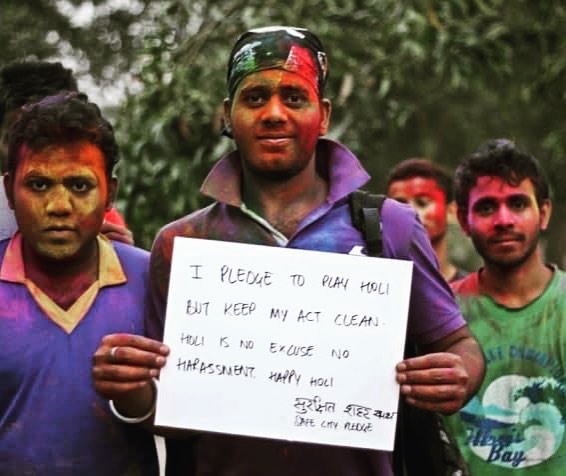
Pledging to have a safe Holi

Blank Noise in India called for a safe and harassment-free Holi celebration.

An Irish journalist called for a legal ban on street harassment in Ireland.

Teaching boys not to rape, in Kenya.

How the #MeToo Movement varies across Latin America.

A new app launched in Morocco to address gender-based violence, including street harassment.

FREE FROM FEAR exhibit

Safe Streets Philippines FREE FROM FEAR exhibit featured 11 Filipinas who shared their experiences of street harassment.

Labour MP Melanie Onn urged parliament in the UK to make street harassment a hate crime.

A history of sexual harassment in the UK.

There’s a new Safe & the City app in the UK.

Wera Hobhouse MP laid before Parliament a new bill to update the UK voyeurism laws to include up-skirt photos.

Women are “walking taller” in Nottingham, UK, because street harassment is illegal.

“Building better men: how we can begin to redefine masculinity.”

A woman in AZ (US) posted a video of her harasser to encourage bystanders to speak up.

A punk rocker in NYC (US) takes on street harassment.

Street harassment song from Maea Lenei Buhre on Vimeo.

Share

Filed Under: News stories, Resources, street harassment, weekly round up

February 2018 News Round-Up

February 28, 2018 By HKearl

Here are some of the news stories on my radar this month:

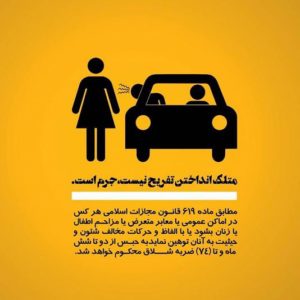
“It’s not fun to ‘taunt’ women in the street, it is a crime.” COURTESY SAMAN SALIMIAN

Muslim women globally shared their stories of sexual harassment with the hashtag #MosqueMeToo.

A TV reporter in Australia was sexually threatened on the street and then told it wasn’t a crime.

Men raped 21 women on public transport in Bangladesh.

A poster campaign against street harassment went viral in Iran.

New research came out about sexual harassment and children in Pakistan.

A Palestinian-American brought #MeToo to the West Bank.

Women spoke out about sexual harassment during Hajj in Saudi Arabia.

If you’re in the UK, share your views on SH with a government entity by March 5.

The Alabama Senate passed a bill to criminalize non-consensual upskirt photos.

New research is out about how US women respond to and cope with catcalling.

Why I’m teaching my daughters to be rude.

How first-generation New Yorkers deal with street harassment.

Cities are designed around men. It’s time for equality in city planning.

Share

Filed Under: News stories, street harassment, weekly round up

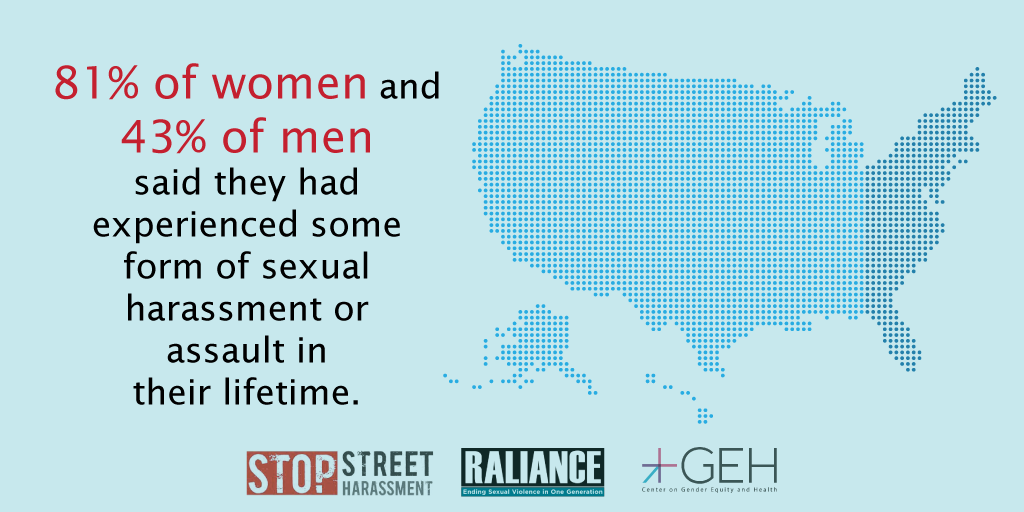
81% of Women and 43% of Men Have Experienced Sexual Abuse in USA

February 21, 2018 By HKearl

I’m excited to share that our new study was released this morning!

In January 2018, SSH commissioned a 2,000-person, nationally representative survey on sexual harassment and assault, conducted by GfK. It found that nationwide, 81% of women and 43% of men reported experiencing some form of sexual harassment and/or assault in their lifetime.

While verbal sexual harassment was the most common form (77% of women and 34% of men), an alarming 51% of women and 17% of men said they were touched or groped in an unwelcome way, and 27% of women and 7% of men survived sexual assault.

This survey is the first to look at a range of sexual harassment behaviors, track the various locations where people experience sexual harassment and assault (from public spaces to homes to schools to workplaces to online etc), and identify who perpetrators are in relation to the respondents (e.g. strangers, coworkers, family members).

When the sample size allowed, the report breaks down people’s experiences by demographics like race/ethnicity, sexual orientation, household income, disability status, age, and region of the country.

READ: Full Report | Two-Page Executive Summary | Survey Questions | Press Release 

Pro bono data analysis for the survey was completed by the UC San Diego Center on Gender Equity and Health. Their team, the team at Raliance and a dozen advisory committee members offered input and invaluable help throughout the process.

Here’s the media coverage so far!

New York Times, “Numbers Hint at Why #MeToo Took Off: The Sheer Number Who Can Say Me Too.“

NPR, “A New Survey Finds 81 Percent Of Women Have Experienced Sexual Harassment.“

VOX News, “Measuring #MeToo: more than 80 percent of women have been sexually harassed or assaulted.“

Ms. Magazine Blog, “What the Numbers Behind the #MeToo Movement Show Us.“

Many thanks to our donors, board and advisory committee for helping make this happen, as well as our partner orgs!!

Share

Filed Under: LGBTQ, national study, News stories, online harassment, race, Resources, SSH programs, street harassment Tagged With: metoo, national study, research

January 2018 News Round-Up

January 31, 2018 By HKearl

Here are some of the big stories from this month!

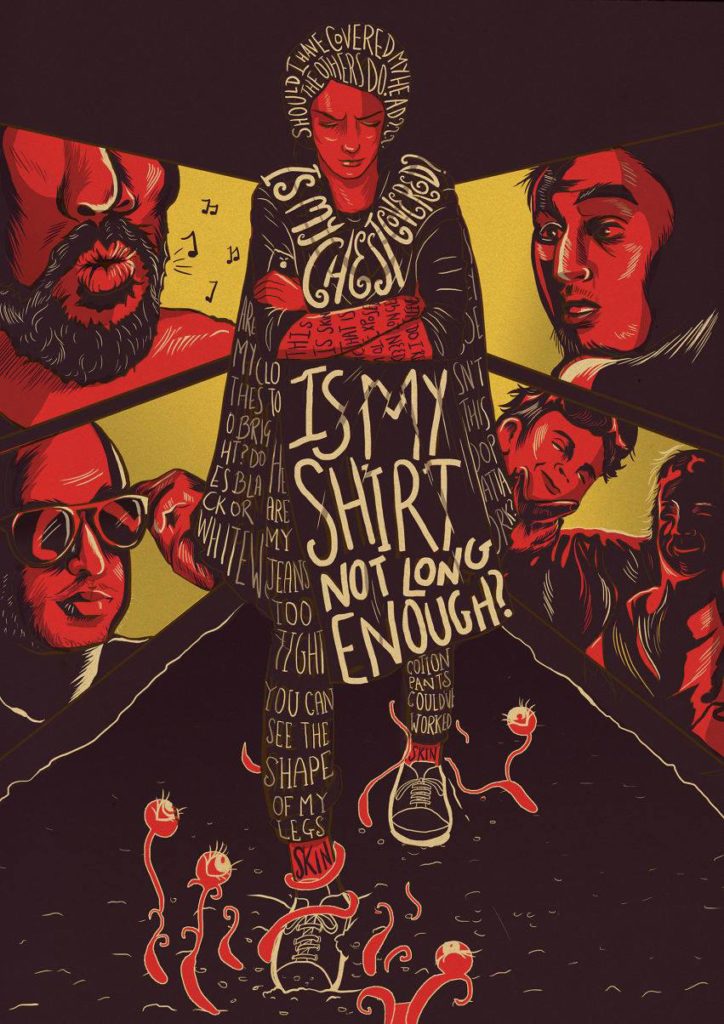
Artwork by Shehzil Malik

Global: Apps that let women say #MeToo about street harassment.

Street harassment in Melbourne, Australia.

Politicians in France continue to consider making street harassment a fine-able offense.

In Paris (France) there is a new policy of “on demand bus stops” to help reduce harassment.

Rema Rajeshwari is a female superintendent of police in India working to stop sexual violence.

In Indonesia, a woman’s video of a man assaulting her on the street went viral and became the country’s most high-profile “Me Too” movement.

A woman in New Zealand fought a man who groped her at a concert.

In Pakistan, several young girls were abducted, raped and murdered by men, sparking national protests.

Pakistani artist Shehzil Malik creates graphics on feminist topics, including street harassment.

Scotland is considering making misogyny (including street harassment) a hate crime.

Promundo released research about sexual abuse by men in Mexico, UK and USA.

A woman in the UK helped another woman who was facing harassment.

The Women and Equalities Committee’s in the UK is conducting an inquiry on the sexual harassment of women and girls in public places as part of a plan to potentially pass a national law.

The number of sexual assaults committed by taxi or private hire drivers is on the rise in the UK.

Recy Taylor, a U.S. Civil Rights hero who fought for justice after white men harassed and raped her in 1944, died.


Share

Filed Under: News stories, street harassment, weekly round up

Highlights of Street Harassment News, Efforts & Activism in 2017

December 29, 2017 By HKearl

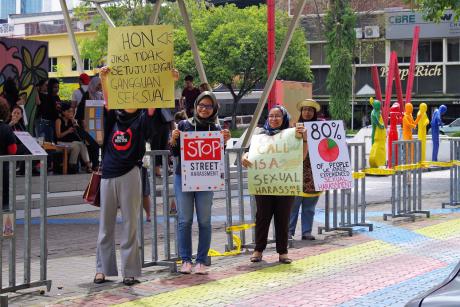
Students in Malaysia protest street harassment in Dec. 2017. Image via Open Democracy

Here is our annual round-up of some of the government actions, glorious activism, studies, and big news stories of 2017. And of course, there were hundreds of actions that took place in 40 countries over International Anti-Street Harassment Week, too.

Government Action:

The first mandatory legal mediation in the first ever street sexual harassment case in the country took place in Buenos Aires, Argentina.

Argentina’s Lower House approved a bill that will criminalize street harassment nationally and set-up a free hotline.

A new mobile app will launch soon in Belgium to help survivors and witnesses of sexual harassment.

The city of London in Ontario (Canada) is planning efforts to prevent street harassment.

In November, French President Emmanuel Macron unveiled measures aimed at educating the public and schoolchildren about sexism and violence against women, a national law on street harassment and more.

In India, the Alwar police formed an all-women team to crack down on people harassing women and girls on city streets.

New posters by the Dublin City Council (Ireland) say, “A sexist remark is not a compliment.”

A new cartoon character tells people to report street harassment in Japan.

There was a death penalty ruling in a forced public stripping case in Kenya.

The gang rape of a woman on a bus in Morocco led to protests and promises of action by the Prime Minister.

There’s a new sexual harassment hotline for transit riders in Kathmandu (Nepal).

A new fine and jail time will be enforced on street harassment in Rotterdam, the Netherlands.

In December, Rotterdam (Netherlands) became the first city in Europe to launch a mobile app that allows victims of sexual harassment to report the incidents instantly and anonymously. People can give their locations, a description of the harassment and any additional information they wish to share. The information will allow the city council to see where there are hotspots of harassment.

In November, two harasser police officers were the first ones tried under Quezon City’s anti-harassment ordinance (Philippines).

An anti-street harassment ordinance is under consideration in Manilla, Philippines, as of December.

An anti-harassment ordinance was proposed in October in Baguio City, Philippines.

The penalty for taking non-consensual upskirt photos increased in Thailand.

There’s a new dress code being enforced in Uganda, including against mini-skirts.

A Labour MP in the UK suggested women-only train carriages – but the idea is insulting.

The category of “gender hate crime” became recognized in Bristol (UK) in October.

Following the lead of the cities like Bristol and Nottingham, as of December, the whole of the UK may soon begin to classify sexual abuse (including street harassment) as a hate crime.

Upskirt photos and videos may become a crime in UK.

TFL and Met Police in the UK launched a ‘Report It to Stop It’ campaign to raise awareness about how to report sexual harassment on the London transit systems.

Legislation introduced in New York City would require police officers to undergo sensitivity training on dealing with sexual assault and street harassment.

The Los Angeles Metro launched a hotline staffed by professional counselors to help people facing sexual harassment on the transit system.


Grassroots & Organizational Activism:

Women in Argentina held a topless protest over men’s censorship of their bodies in public spaces.

Calls for bystanders to stop sexual assault in festival crowds in Australia.

A female-only ridesharing service launched in Queensland, Australia… but addressing root causes of street harassment is a must, too.

Women in Barbados, Trinidad and Tobago, Dominica, Guyana, Jamaica, and The Bahamas marched to protest sexual violence. #LifeinLeggings

A pop up exhibit at MacEwan University (Canada) showed men what it feels like to be catcalled.

Pressure is mounting for music venues in Canada to address sexual harassment.

Street artists in Colombia challenge sexism, street harassment with spray paint.

The new film “The People’s Girls” about street harassment in Egypt is now available.

The Egyptian anti-harassment initiative HarassMap is the subject of a new 17-minute documentary, The Campaign, shedding light on the advocacy group’s effort to mount a massive ad campaign.

Men in Egypt are working with other men to discuss their role and actions as bystanders, perpetrators and victims of violence, including street harassment.

Outraged women in an eastern Parisian district of France staged demonstrations and launched an online petition in May over a “male den” where women are subject to harassment and sexist remarks.

Women across France rallied against sexual violence under the #MeToo banner in October while a national law against street harassment inched closer to passage.

An anti-harassment hotline in France quickly had to shut down due to trolls.

TBILISI-Safari Union launched an anti-harassment campaign in Georgia, including legislation and education suggestions.

Activists in Guyana discussed how to address street harassment in their country. | Members of the Witness Project in Guyana put up posters that say “It’s Not a Compliment. It’s Street Harassment.”

School girls in India went on a hunger strike to protest the men who harassed them on their way to and from school and the lack of action by local officials to stop them.

Safecity (India) launched a mobile app for reporting incidents of sexual harassment.

In India, a female brigade helps women catch their harassers.

On Jan. 21, women across India marched to protest sexual harassment and misogyny using the hashtag #IWillGoOut.

Air India launched a women-only section of their airplane due to incidents of sexual harassment.

To commemorate the brutal gang rape and murder of Jyoti Singh in Delhi, India, Blank Noise organized action in parks for women to claim public spaces, safely.

From offline activism by girls in PLAN International to online mapping by Safecity, young women are leading the efforts to stop street harassment in India.

Rickshaw drivers in Delhi, India, are taking gender classes in the hopes of curbing harassment.

Women in Jakarta, Indonesia, are taking action against street harassment. | Activists in Indonesia began bringing attention to the widespread problem of street harassment.

Tambourine Army is a new organization fighting gender-based violence in Jamaica.

There was a new anti-harassment campaign in Lebanon, #mesh_basita.

Students in Kuala Lumpur, Malaysia, held street action against street harassment at Petaling Jaya city council square. They held signs with slogans like, “Cats are cute, catcalls are not”; “Don’t keep calm and stop sexual harassment”; “My name is not baby.”

Mexico City has a “sexist” seat on the subway to raise awareness about sexual harassment.

A college student in the Netherlands took selfies with many of her street harassers across one month.

Stop Straatintimidatie launched a new anti-harassment campaign in the Netherlands.

Teenage girls in Wellington, New Zealand, protested street harassment and other forms of sexual violence outside Parliament.

The punk band Sløtface in Norway is tackles street harassment and rape culture in their video Bright Lights.

In Punjab, Pakistan, the Women Safety Smart Phone App launched.

Three women’s groups urged Panamanian President Juan Carlos Varela Monday to sign a bill meant to prohibit and punish sexual harassment, stalking, sexism and racism in all areas.

Beauty pageant contestants in Peru gave PSAs about sexual violence, including street harassment.

A construction site in Peru posted a sign saying they are against street harassment.

Patricia in Spain launched a Change.org petition calling for studying and stopping street harassment in Madrid.

Bars and clubs in Switzerland are doing more to address sexual abuse.

Women in Trinidad asked men to leave them alone during Carnival.

From Uganda to Tajikistan, women are fighting to enjoy the freedom of bicycling.

A woman in the UK made a map of street harassment hotspots.

In the UK, a bar posted a sign to deter male customers from harassing the female bartender.

The “Unmute” badge fosters bystander action on public transit in the UK.

Thousands of people took to the streets of Manchester (UK) during the annual Reclaim the Night march.

Women in Bristol (UK) are mapping street harassment.

“Cheer Up Luv” is a new UK-based photo series project. “Road to Equality” is a seven-minute documentary about street harassment in the UK.

Womanability released a new video on women’s safety in public in Uruguay.

Through the The Talk Project, teens in California (USA) educate each other about sexual harassment and assault.

Prior to the Lightning in a Bottle music festival in Los Angeles (USA), there was a class offered for fans and staff about sexual harassment at festivals, “Creating Safer-Braver Spaces: Consent Culture & Social Care”.

A Sacramento (USA) artist did an audio art project on street harassment called “This is What It Feels Like.”

Student Elena Czarnik Deeter created a sound art piece based on catcalling called “Hear Us.”

The Muslim self-empowerment group WISE + two Muslim girls created a self-defense toolkit.

Women of color in Washington, D.C. (USA) organized against street harassment.

Latina and African American women in the USA created a choreo-film on street harassment.

With her project Catcalls of NYC, NYU student Sophie Sandberg has been using bold colors to chalk stories of street harassment. She said she hopes that writing down the harassment people endure will help them reclaim their own voice. “I want people who feel silenced, objectified or victimized, to understand that they can be agents of change,” she said. “One voice can contribute to a collective movement. With that, we have power and we cannot be silenced.”

Netflix launched an anti-street harassment campaign called #MyNameIsnt to go along with Spike Lee’s new TV show “She’s Gotta Have It.”

Studies and Reports:

The Global Mobility Report (by World Bank-led partner SuM4All) shows that “harassment and physical abuse are preventing women around the world from being able to use public transportation safely.”

A new study conducted in the MENA region sheds light on why men street harass.

A study published in the Australian and New Zealand Journal of Public Health found strong links between women’s experience of sexual violence – including street harassment — and poor mental health.

A study found that 23% of female commuters in Dhaka, Bangladesh, faces sexual harassment on the buses.

Reports of sexual harassment are up on Brussels’ (Belgium) public transport.

A study in the British Journal of Social Psychology shows street harassment negative impacts how women think about themselves.

In Egypt, the Central Agency for Public Mobilization and Statistics surveyed young people ages 15 to 29 in “informal urban areas of Greater Cairo” and 48% viewed street harassment as a problem.

France’s ONDRP found that 267,000 people (85% women) faced sexual harassment on public transport between 2014-2015.

43% of women in Germany have faced some form of sexual abuse, with most occurring in public spaces.

A new study of boys in Mumbai (India) shows they think “good girls” don’t experience street harassment.

In an informal survey conducted in Myanmar, more than 80% of women had faced street harassment.

Karachi’s (Pakistan) Urban Resource Center found most female commuters experience some form of sexual harassment while using public transport.

Eighty-four percent of women experience sexual harassment in Rotterdam, Netherlands, including street harassment.

A survey conducted by United Nations Population Fund found that 90% of women and girls in Sri Lanka have faced sexual harassment on public transport.

In the UK, a poll showed that younger women face higher rates of harassment and are more likely to see wolf-whistling as unacceptable compared with older women.

Almost 80% of women and 26% of men ages 18 to 24 have been sexually harassed during “a night out” in the UK.

In the UK, 34% of teenage girls worry about being followed by a stranger and many girls cited experiences of street harassment.

Reports of street harassment are on the rise in Cambridge, UK.

An undergraduate poll shows that 48.2 percent of female-identifying students report facing catcalls at least once a month while at Brown University (USA).

A new survey shows 1 in 3 men don’t think catcalling is harassment (USA)

A high percentage of Missoula (MT, USA) patrons experience sexual harassment.

A new report from Harvard Graduate School of Education found that 87% of women in the U.S. have faced sexual harassment. Among 18 to 25 year olds, most said they had faced sexual harassment, including 41% saying a stranger had touched them without permission.

A new study says sexually objectifying a woman, including through catcalling, can lead to aggression towards women.


Story-Telling and Op-Eds:

How #MeToo turned into a cultural moment.

The Silence Breakers of 2017 who have spoken publicly against sexual harassment and sexism are the “TIME person of the year.”

A CNN article in November traced statistics on sexual harassment globally. The U.S. statistic was from SSH’s 2014 study!

BBC’s global 100 Women campaign included harassment on public transit.

Women in Afghanistan weigh the pro’s and con’s of speaking out against street harassment and other forms of sexual abuse they face daily.

The VICE Arabia offices asked their women staff about their experiences of street harassment.

A woman in Adelaide, Australia, wrote about being scared to walk the streets of her own town after dark.

Women in Brazil shared their stories of harassment and abuse by taxi and rides-sharing drivers.

Young women in Egypt face harassment in public spaces and restrictions at home.

A woman in Hong Kong spoke out against people who victim-blame women facing street harassment.

Women in India shared their street harassment stories using the hashtag #NotMyShame.

The powerful Irish spoken word piece “Heartbreak” addressed street harassment.

A teenager’s account of harassment went viral in Italy.

A growing number of Jamaican women stood up to abusers, using social media as a platform of empowerment through the creation of hashtags such as #metoo, #weknowwhatyoudid, #saytheirnames and #dearJamaicanmen.

A New Zealand woman wrote an open letter to all cat-callers.

In Pakistan, sisters Zara and Zoya Khan stood up to street harassers, garnering national attention.

A woman in South Africa wrote about wishing she was a man so she didn’t face harassment.

Best-selling author and comedian Jen Kirkman tackled street harassment in her stand-up special Just Keep Livin’?.

In the U.S., Feminista Jones began responding to strange men who “complimented” her by agreeing… and then the men get mad. She said in an interview: “For a man to be comfortable sending an unsolicited comment about your body via text or Tinder or Bumble or whatever, or to feel comfortable yelling some shit at you on the sidewalk, he has to feel — at least in some small way — like you exist for him. If you take those compliments in stride instead of blushing and cooing and being the Good Modest Woman he hopes your mother raised you to be, you’re proving you don’t exist for him at all. Your “great body” belongs to you, and of course that’s gonna piss this exact type of dude off.”

What it’s like to be street harassed while seven months pregnant.

“Where do Harvey Weinsteins come from?”

“Russell Simmons, R. Kelly and Why Black Women Can’t Say #MeToo.”

“My daughter got her first catcall [at age 11, from an adult man], and I didn’t know what to tell her.”

“On being a woman alone in the woods.”

“Why it’s never okay for men to ask women to smile.”

“I recorded every time I was catcalled this summer: Here’s what I learned.”

When fellow women are your first line of defense on Muni.”

“My body doesn’t belong to you.”

“The thrill and fear of ‘Hey, Beautiful’”

“I don’t accommodate uncontrolled men”

“9 types of street harassment you’ve probably experiences if you’re a woman”

“After fighting off mid-run attack, she’s using her voice to help others”

“12 moms share gross stories of getting catcalled while with their kids”

What it’s like to cycle as a woman in various parts of the world.

The exhibition El Tendedero/The Clothesline Project, at the National Museum of Women in the Arts, tackled sexual harassment/abuse.


Other News:

Hundreds of men sexually assaulted women in Bangaluru, India, on New Year’s Eve. Among those speaking out afterward were those advocating for education and socialization of children to be respectful.

In Dallas, Texas, LeDajrick Cox, who just graduated from high school, and two male friends and a female friend were out celebrating. In a 7-11 parking lot, three men in another car started street harassing their female friend, and Cox intervened to defend her. Eventually, Cox and his friends left but the three men followed them and shot into the car. Cox and the two other young men were all injured and Cox died from his injuries. A young life is needlessly over. I applaud him for doing the right thing and am so saddened he is dead.

In Portland, Oregon, a white supremacist began harassing two young women on a train, using anti-Muslim slurs. One woman was wearing hijab. When three men intervened to help the young women, the man attacked, killing two of them and injuring one. Again this is just unbelievably horrific and sad. There have been many news stories about the tragedy and praise given to the three men. I glad they intervened but feel so saddened that for two of them, it cost them their lives. That never should have happened.

In College Park, Maryland, a white supremacist seemingly randomly stabbed and killed a recent African American college graduate near the University of Maryland campus.

In Manchester, UK, a suicide bomber attacked an Ariana Grande concert that was mainly attended by teenage and tween-age girls. More than 20 people died and even more were injured.

A teenage boy defended his teenage female friends against a 47-year-old street harasser, only for the man to pull a gun on them. Fortunately, the teens were safe, and the man was arrested.

A man in his 20s or 30s repeatedly grabbed and harassed teenage girls near their school in Flagstaff, AZ.

A Detroit woman was maced and beaten after rejecting the advances of street harassers.

A runner in Salt Lake City stabbed a man with the knife she carries running after he groped her.

A man in China stabbed a woman on the bus after she protested his harassment.

42 gay men in Nigeria were arrested simply for organizing a HIV awareness event in a public venue. Sign a petition for their release.

Female students at the University of Delhi (India) were locked in the dorm due to fears of sexual harassment at the Holi festival.

Why street harassers speak the same language across the USA.

A guitarist in the USA stopped his performance after witnessing sexual harassment in the audience.

Pakistani singer Atif Aslam called out and interrupted an incident of sexual harassment happening at his concert in Karachi

A man in Florida called out a street harasser – that man then punched him and sent him to the hospital. The harasser/assailant was arrested.

Most U.S. cities were designed around men and it’s time for that to change.

“Paying to stay safe: why women don’t walk as much as men.”

Saturday Night Live’s “Welcome to Hell” skit focused on street harassment and other forms of sexual abuse.

Share

Filed Under: News stories, public harassment, Resources, Stories, street harassment, year end

« Previous Page
Next Page »

Share Your Story

Share your street harassment story for the blog. Donate Now

From the Blog

  • #MeToo 2024 Study Released Today
  • Join International Anti-Street Harassment Week 2022
  • Giving Tuesday – Fund the Hotline
  • Thank You – International Anti-Street Harassment Week 2021
  • Share Your Story – Safecity and Catcalls Collaboration

Buy the Book

  • Contact
  • Events
  • Join Us
  • Donate
  • Facebook
  • Instagram
  • Pinterest
  • Tumblr
  • Twitter
  • YouTube

Copyright © 2026 Stop Street Harassment · Website Design by Sarah Marie Lacy