• About Us
    • What Is Street Harassment?
    • Why Stopping Street Harassment Matters
    • Meet the Team
      • Board of Directors
      • Past Board Members
    • In The Media
  • Our Work
    • National Street Harassment Hotline
    • International Anti-Street Harassment Week
    • Blog Correspondents
      • Past SSH Correspondents
    • Safe Public Spaces Mentoring Program
    • Publications
    • National Studies
    • Campaigns against Companies
    • Washington, D.C. Activism
  • Our Books
  • Donate
  • Store

Stop Street Harassment

Making Public Spaces Safe and Welcoming

  • Facebook
  • Instagram
  • Pinterest
  • Tumblr
  • Twitter
  • YouTube
  • Home
  • Blog
    • Harassment Stories
    • Blog Correspondents
    • Street Respect Stories
  • Help & Advice
    • National Street Harassment Hotline
    • Dealing With Harassers
      • Assertive Responses
      • Reporting Harassers
      • Bystander Responses
      • Creative Responses
    • What to Do Before or After Harassment
    • Street Harassment and the Law
  • Resources
    • Definitions
    • Statistics
    • Articles & Books
    • Anti-Harassment Groups & Campaigns
    • Male Allies
      • Educating Boys & Men
      • How to Talk to Women
      • Bystander Tips
    • Video Clips
    • Images & Flyers
  • Take Community Action
  • Contact

Street Harassment Weekly – Jan. 19-25

January 26, 2015 By BPurdy

Catcalling is More Sinister Than You Might Think – “Our research supports previous findings that the rampant sexual objectification of women, an act of sexual terrorism, can heighten women’s fears of incurring physical and sexual harm,” says lead author Dr. Laurel Watson, a psychology professor specializing in traumatology at the University of Missouri-Kansas City.

I Confronted Every Man Who Catcalled Me (And It Didn’t End Well) – “How can you explain to a stranger that a compliment makes us feel afraid? That words like “gorgeous” and “beautiful” sound like threats when we hear them whispered to us on an empty street late at night? That we feel uneasy, objectified and uncomfortable when you say this to us while we’re going about our normal routine, not asking to be judged on our appearance out loud? That this thing they do for fun is at the expense of our peace of mind?”

Victim of Eve-Teasing, Teenager Kills Self – “A family member of the victim said, “We had gone to the police and complained about the incident. They did not take appropriate action against the guilty, which led to the girl’s death.””

SHE Teams Power Fight Against Eve-Teasing– ““We have constituted 100 such teams where police personnel in plainclothes mix with the crowd outside colleges, popular hangouts, cinemas and in public transport. They go armed with a small hidden camera that records the goings-on as they happen.” Sometimes, women police personnel themselves end up as “victims” and the entire act is caught on camera. The eve-teasers are immediately taken to the police station where his family is called in and he is let off with a warning and a petty fine.”

Ain’t No Hollaback Girl – Men And Women Speak Out Against Street Harassment Through Hollaback!NOLA– “Hollaback, which started in New York, is a non-profit movement that aims to end street harassment. Hollaback branches exist in 25 countries and 84 cities. The city of New Orleans was finally added to the list last December. According to Hollaback’s mission statement, street harassment is a form of sexual harassment that takes place in public spaces. They claim that at its core, street harassment is a power dynamic that constantly reminds historically subordinated groups of their vulnerability to assault in public places.”

Students Enact Skits About Violence Against Women – “Concerns about violence against girls and security of school students were highlighted in a unique drama competition on Sunday. Students’ groups from 15 schools performed on issues like eve teasing, addiction, sexual abuse of girls, adolescence and crime against women. The competition was part of ‘Nirbhay Vidyarthi Abhiyaan’-an initiative taken up by the Pune police to create awareness about crimes against students. A total of 116 schools in the city had registered for the drama competition. Eighty-five schools came up with performances and 15 were selected for the finals.”

Video: When Men Accidentally CatCall Their Own Mothers – “Often in trying to get men to understand how awful street harassment is, we use rhetorical techniques like “Would you talk to your mother like that?” But thanks to a project by Everlast, the men in this video really did catcall their mothers. The results are exactly as epic as you’d expect.”

Wearing Her “Whorepants” – How One Runner Turned Getting Harassed Into a Movement– “A year ago, I wrote a column for the Philadelphia Inquirer about female runner harassment. I didn’t offer safety tips. Instead, I called for us to take the blame off women who were harassed and hoisting it on to the people doing the harassing. To prove that point, I wrote about what had happened to me when I wore a pair of purple below-the-knee Nike capris, which I’d bought for $10 at the Nike outlet in Atlantic City. Reaction was swift and fierce.”

Are Women Traveling Into a Safer 2015? – “Every 51 minutes, a woman faces harassment or assault in India’s public spaces, according to a 2011 report by the National Crime Records Bureau. Staggering numbers of reported and unreported cases of violence and harassment make transportation difficult and dangerous for women and girls, especially after dark. So should safety issues simply keep women and girls indoors—or does their vulnerability in public spaces highlight a desperate need for gender considerations in designing and planning public transport?”

Share

Filed Under: News stories, weekly round up Tagged With: hollaback, India, NOLA, philadelphia, SHE team

Gender and Public Transportation

January 21, 2015 By HKearl

Here’s an interesting article from the World Bank about transportation and gender. Excerpt:

“One World Bank Group report, Mainstreaming Gender in Road Transport, highlights the differences between men and women in travel patterns in relation to trip purpose, frequency, and distance of travel. It finds that women make more and more complex trips than men.

These differences stem from differences in the social and economic roles of men and women. For women, transport provides access to various resources and opportunities, such as jobs, childcare, education, and health facilities, whereas men are far more likely to rely on private vehicles. Yet women’s safety is most often overlooked….

Safe roads and transportation rank as a top priority globally. UN-led polling as part of consultations on what targets will succeed the anti-poverty Millennium Development Goals, “better transport and roads” was listed in the top 10 by more than 7 million men and women who voted.

The message is getting through. In Washington this week, for example, the U.S. National Academy of Sciences convenes the world’s largest meeting of transportation experts, with a number of gender-related sessions on the agenda.”

Share

Filed Under: News stories

“The objectification of women increases their fears of sexual assault”

January 20, 2015 By HKearl

Via Vocativ:

“In a study published late last week, researchers found the treatment of women as sexual objects has been shown to contribute to anxiety over their physical safety.

“Our research supports previous findings that the rampant sexual objectification of women, an act of sexual terrorism, can heighten women’s fears of incurring physical and sexual harm,” says lead author Dr. Laurel Watson, a psychology professor specializing in traumatology at the University of Missouri-Kansas City…

The study looked at a sample of 133 African-American and 95 white female undergraduates—a demographic for which the incidence of rape is believed to be five to seven times higher than the general population. The African-American respondents reported more sexual objectification experiences and fear of crime than white women, and therefore experienced more psychological stress.

Regardless of race, though, all women (consciously or not) took various measures to alleviate their fears, from avoiding walking alone at night to carrying pepper spray in their handbags. And while such behaviors may be seen as common sense, Watson argues they should not be misinterpreted as solutions because they place the burden of maintaining safety on women, rather than on the perpetrators themselves.

“Partnerships with men in stopping violence may help transform unequal power distributions between men and women—a chief reason why violence against women occurs in the first place,” says Watson says.

Share

Filed Under: News stories, Resources, street harassment

Street Harassment Weekly – Jan. 12-18, 2015

January 19, 2015 By BPurdy

In Less Than a Month, Cyberabad SHE Teams Arrest 50 Eve-Teasers – “A lady constable in plain clothes was standing at the KPHB bus stand when a 51-year-old man made a pass at her. A concealed video camera recorded the man’s every move so that he can’t deny it later. The constable is a member of a SHE team constituted by woman IPS officer R Rama Rajeshwari, deputy commissioner of police of Malkajgiri zone under Cyberabad Police, to keep an eye on eve-teasing, sexual harassment and stalking in the IT corridor, at bus stations, and in areas where working women and students travel alone.”

Teen Kills Youth for Harassing His Sister – “Annoyed over continuous eve-teasing of his sister, a 17-year-old boy (age yet to be verified) and his accomplice allegedly murdered a 21-year-old man working as a sanitation worker at a private college in Shivdaspura locality in the wee hours on Sunday.”

Alicia Wallace To Receive Queen’s Young Leader Award – “Alicia Wallace is the director of Hollaback Bahamas an organisation that works to end street harassment in the Bahamas, and co-founder of the Coalition to End Gender-based Violence and Discrimination. She is also launching a new 16-week programme to provide vital life skills education and mentoring to local high school students. As a child, Alicia grew up thinking she did not have a voice. Now she says, “I am no longer a quiet little girl. I am a force. My voice is powerful and I have learned to use it.””

Panti Bliss Just Made Another Important Statement About Street Harassment – “I am 45 years old and I have never once unselfconsciously held hands with a lover in public,” Bliss says. “I am 45 years old and I have never once casually, comfortably, carelessly held hands with a partner in public.” Why? Because around the world still today, street harassment is a major problem for women, LGBT people, people of color, people with disabilities, and low-income people.

Opinion: Harassment at School – “The connection between harassment and rape culture, then, becomes a matter of the beliefs that the perpetrators of these acts share. A culture in which harassment is normal directly contributes to a culture in which rape is common and permissible; in which Title IX is a joke, not a law that prohibits unsafe accommodations and environments for women; in which domestic violence leads three women every day to be killed by an intimate partner or former partner. It is important to take these abstract notions of gender and sexuality seriously because beliefs about gender and inequality influence women’s safety.”

Video: Street Harassment Is Even More Gross When It’s Scrawled On the Actual Street – “While traversing a jogging path in his hometown of Seattle, Marion spotted a message scrawled on the asphalt spelling out what your average catcaller shouts at female joggers — complete with the oh-so-wonderful command to smile (and some pretty dicey language — so be warned).”

Egyptian Women Take to Social Media to Expose Harassers – “Egyptian women have been using a number of hashtags — among them #Idon’tFeelSafeOnTheStreet, #AntiHarassment and #ExposeHarasser — on social networking sites to speak up about the daily sexual harassment they experience. These campaigns are part of an effort to expose harassers and break the silence surrounding their crimes, which are haunting women in Egypt. Women have tweeted myriad incidents along with advocating the courage to expose and confront harassers.”

Nashik Cops Launch Mobile App for Citizens – “The application helps citizens contact the police immediately, along with audio and video situational information. The app can be used to register incidents of robbery, accident, stalking, domestic violence, eve-teasing, unruly mob, road rage, security threat, medical emergency, sexual harassment, among others.”

#WhatMySHSaid Raises Awareness of Street Harassment – “California teen Chloe Parker came up with an idea to help combat the problem of street harassment. On her Instagram, @rebel.grrrl, women from all over the world submit pictures of themselves holding up a piece of paper. The words a street harasser said to them are written on the paper.”

The Bachelor Group Date That No One Is Talking About – “Let me repeat. The show’s producers (two out of three of whom are men, along with the show’s writer) equated ‘being country’ to women parading around downtown Los Angeles in only their bikinis while straddling tractor seats (no sexual innuendo there or anything). Not only this, but ‘being country’ also meant being subjected to street harassment as cars honked at them and men whistled at the nearly naked women – moments that have been conveniently edited out of the clip on YouTube.* Additionally, seeing as how Chris wore a zip-up sweatshirt on the date, one can assume that the weather was not conducive to swimsuit attire. Television at its finest.”

Walking Alone: Graphic Essay Takes on Street Harassment – “What seems like an erratic course through a familiar place is a way to survive. I walk through a city that is not made for me although I call it mine.”

Opinion: Why Good Men Catcall – “Guys – can we talk for a second? How is this normal? This is a big deal. Over the summer, I was talking with my fifteen year-old little sister and she told me that thirty and forty-year old guys harass and catcall her constantly. We have to do better than this. I have to do better than this.”

Share

Filed Under: News stories, street harassment, weekly round up

Street Harassment Weekly – Jan. 5-11, 2015

January 12, 2015 By BPurdy

Welcome to the Street Harassment Weekly, your update on all the street harassment news you missed from the past week. Here’s what’s been going on:

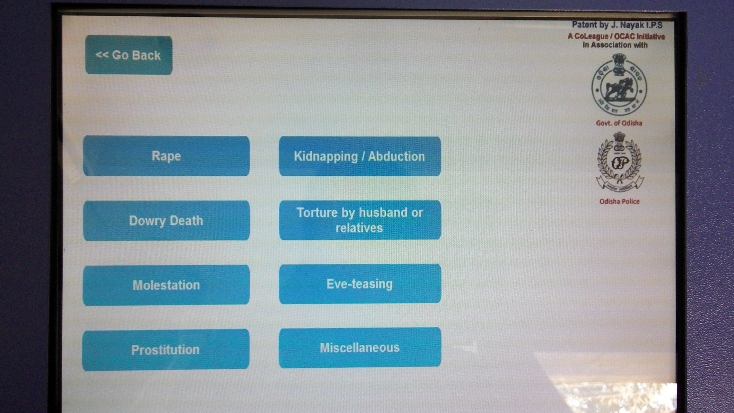
The ATM At Which Women Can Report Sexual Assault – “In the Indian state of Odisha, the state government estimates that around 60 per cent of sexual assaults against women go unreported. The ICLIK, developed by the Odisha government and OCAC, a local computer company, allows women to log a report of assault or harassment while appearing to visit a bank machine.”

Indian “Sex Offender” Forced to Bend Over To Be Smacked By Women– “Is this India’s new, creative way of disciplining sex offenders? A man, 23, accused of sexually harassing several young women in central India was reportedly forced to bend over in the middle of a public street to have his buttocks smacked by a group of angry schoolgirls.”

Commentary: Why Do We Ask For Gender-Segregated Transport For Women If The Problem Is Men Behaving Badly? – “Women need to be able to occupy public spaces and use public transport in the same way that men do. We need to go to work and school and walk the streets without fear – and a women-only train car doesn’t do anything but offer a temporary solution filled with too many gaps. If we want to stop harassment on subways and buses, we need to start with men and getting them to change their actions.”

Acid Attacks: The Other Half of the Story You Don’t Know– “Acid attacks are seen as one of the most horrendous crimes against women. However, not only women, men are equally prone to the attacks. Chandras Mishra from Meerut is an acid attack victim. He was attacked with the lethal chemical three years back by his landlord’s son, who he had stopped from eve teasing a woman.”

Four Arrested for Eve-Teasing in Hyderabad – “The victim, in her complaint to the police, said that on Friday while she and her sister were returning from a shop the accused started to tease her. When she stopped and questioned them, one of the accused tried to pull her scarf.”

One Tweet Sums Up The Struggle Every NYC Woman Faces On the Sidewalk – “This is called “manslamming,” which Jessica Roy, who interviewed Breslaw about her experience for the Cut, defines as “the sidewalk M.O. of men who remain apparently oblivious to the personal space of those around them” who “will walk directly into you without even acknowledging it” should someone fail to move out of their path.”

It Happened To Me: I Was Catcalled Wearing the Equivalent of a Down Comforter – “Women get catcalled in skirts. They are catcalled in jeans. They get whistled at in trench coats, in yoga pants, in business suits. The problem with catcalling does not lie with women’s clothing. Rather, the problem is with the men who do it.”

The Backlash Against African Women – “Public strippings represent the front lines of a cultural war against women’s advancements in traditionally conservative but rapidly urbanizing societies. They aren’t really about what women are wearing. They are much more about where women are going.”

Street Harassment: Why It’s Not Ok To Comment On Me – “A woman’s body is part of a person; it’s not an object. I am a woman, and my body belongs to me and no one else. Strangers on the street having the right to comment on it? When did that happen? Did I miss the memo?”

CONTEST:
Female Singer-Songwriters wanted to help create anti-street harassment video

UPCOMING EVENT:
Challenging Violence Against Women and Girls on UK Public Transport–
DATE: Tuesday 20th January 2015
TIME: 10.45 to 13.00 (with lunch provided 13.00-14.00)
VENUE: Room G1 & G2, British Transport Police Force Headquarters, 25 Camden Road, London NW1 9LN


Share

Filed Under: News stories, street harassment, weekly round up Tagged With: acid attacks, Hyderabad India, ICLIK, India, jessica valenti, manslamming, NYC, Odisha, public stripping, UK Public Transport, women-only public transportation

« Previous Page
Next Page »

Share Your Story

Share your street harassment story for the blog. Donate Now

From the Blog

  • #MeToo 2024 Study Released Today
  • Join International Anti-Street Harassment Week 2022
  • Giving Tuesday – Fund the Hotline
  • Thank You – International Anti-Street Harassment Week 2021
  • Share Your Story – Safecity and Catcalls Collaboration

Buy the Book

  • Contact
  • Events
  • Join Us
  • Donate
  • Facebook
  • Instagram
  • Pinterest
  • Tumblr
  • Twitter
  • YouTube

Copyright © 2026 Stop Street Harassment · Website Design by Sarah Marie Lacy